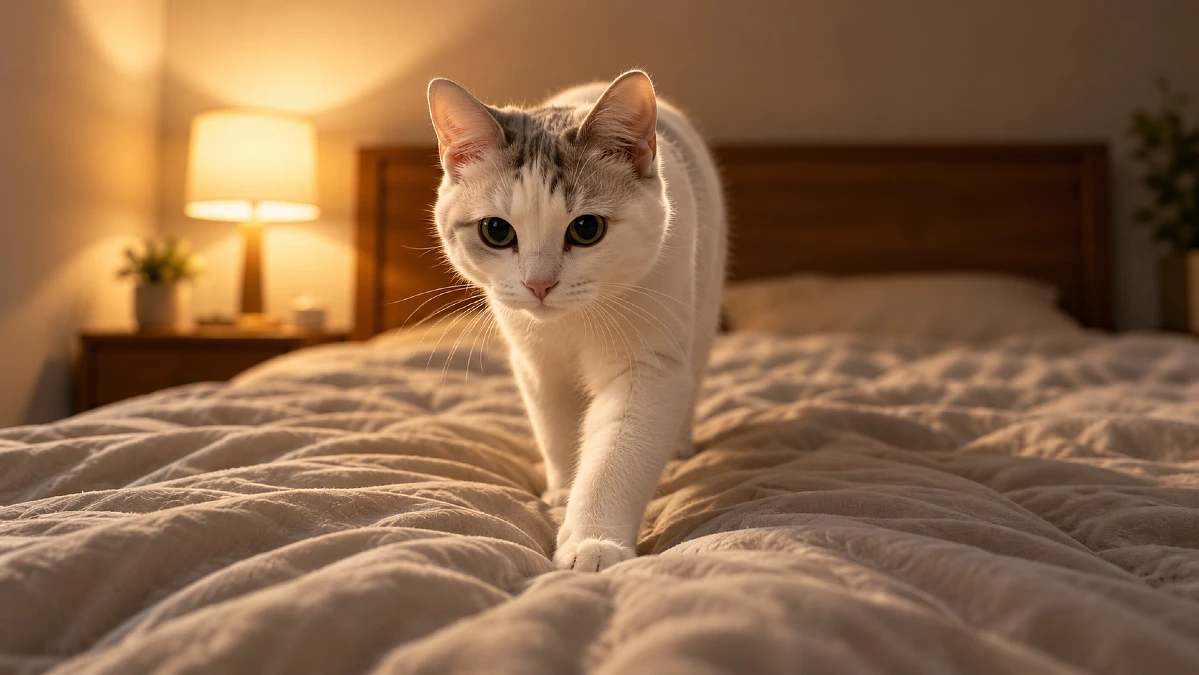
You have finally settled into bed, pulled up the blanket, and closed your eyes. Just as you begin to fall asleep, you feel a familiar little weight land beside you. Your cat has decided that your bed is exactly where they want to be tonight.
Maybe your cat curls up against your legs, climbs onto your chest, or settles right beside your pillow. Sometimes they stay for hours. Other nights, they jump down and return several times, leaving you wondering what they actually want.
Why does your cat jump on your bed at night when there are so many other comfortable places to sleep? Is it affection, habit, warmth, or something else?
The answer is usually a mix of simple needs and natural cat behavior. Cats care about where they sleep because comfort, safety, and familiar surroundings matter to them.
And their choice to sleep beside you may reveal something about how comfortable they feel in your company.
Why Your Cat Chooses Your Bed Instead of Their Own

You might have bought your cat a beautiful little bed, placed it in a quiet corner, and filled it with soft blankets. Yet every night, your cat walks straight past it and jumps onto your mattress. There is a simple reason for this preference.
Your bed offers several things cats naturally look for in a sleeping place. It is soft, usually warm, and raised above the floor. It also gives them room to stretch, curl up, or change positions.
Cats Protection explains that cats often choose comfortable sleeping places where they feel secure. A raised sleeping spot can also give them a better view of their surroundings.
Your mattress may offer a better combination of these features than a small cat bed sitting on a cold floor.
Why Height Makes a Difference
Many cats enjoy resting above ground level because an elevated position lets them watch the room. Your bed may provide that advantage without requiring much climbing.
For example, a cat might ignore a soft basket beside the bedroom door but happily settle on the middle of your mattress. The basket may feel exposed, while the bed offers a quieter resting place with a clear view.
This does not mean your cat dislikes the bed you purchased. Cats Protection notes that cats often switch between different sleeping locations, so their favorite spot may change over time.
What you can do: Place your cat’s bed in a quiet, warm location that is easy to reach. Try adding a familiar blanket, and give your cat several resting options instead of expecting them to use just one.
Does Your Cat Jump on Your Bed Because They Trust You?
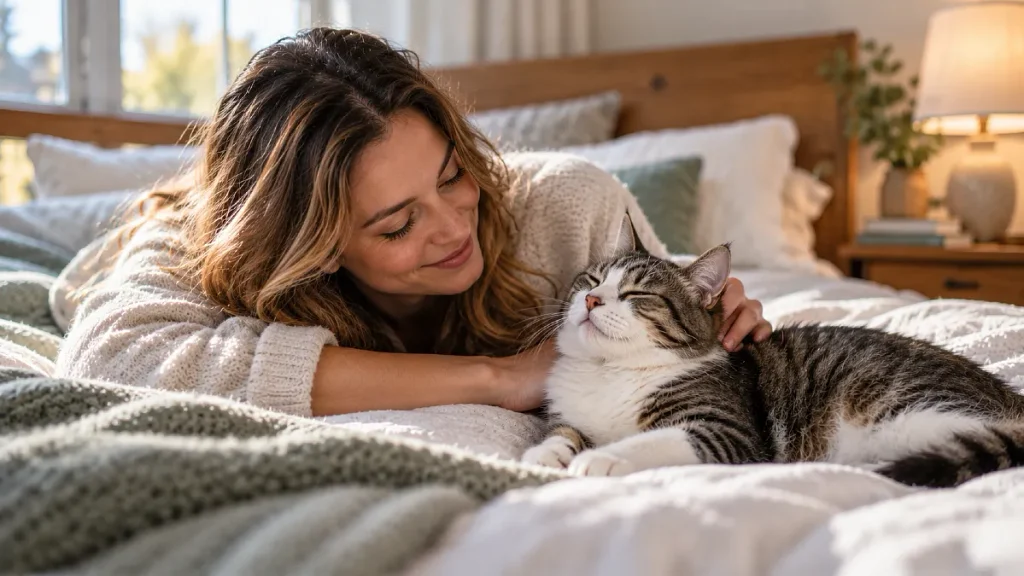
There is something special about a cat choosing to sleep beside you when the house becomes quiet. Cats need to feel secure enough to rest, especially when they cannot keep watching everything around them.
When your cat voluntarily settles close to you, it may be a sign that your presence feels safe and familiar.
Cats Protection explains that cats who share a friendly bond sometimes sleep touching one another. Domestic cats may show similar social behavior with people they know well.
A cat that repeatedly chooses to rest beside you may associate you with comfort and security. This can be especially meaningful if your cat is normally shy or prefers personal space during the day.
But sleeping together does not automatically prove that your cat loves you more than everyone else. Warmth, comfort, and habit may also influence the decision.
Look at What Your Cat Does Before Falling Asleep
A relaxed cat may approach with a loose body, gently rub against you, or settle with their paws tucked beneath them. Some cats knead the blanket before lying down.
Slow blinking, calm breathing, and choosing to remain nearby can also fit with a cat feeling comfortable.
However, no single movement tells the whole story. A purring cat may feel content, but cats can also purr when stressed or uncomfortable.
Notice how your cat behaves across the day rather than judging your relationship from one sleeping position.
And if your cat prefers sleeping a short distance away, that is fine too. Some cats enjoy companionship without needing constant physical contact.
Why Your Warmth and Familiar Smell Matter at Night
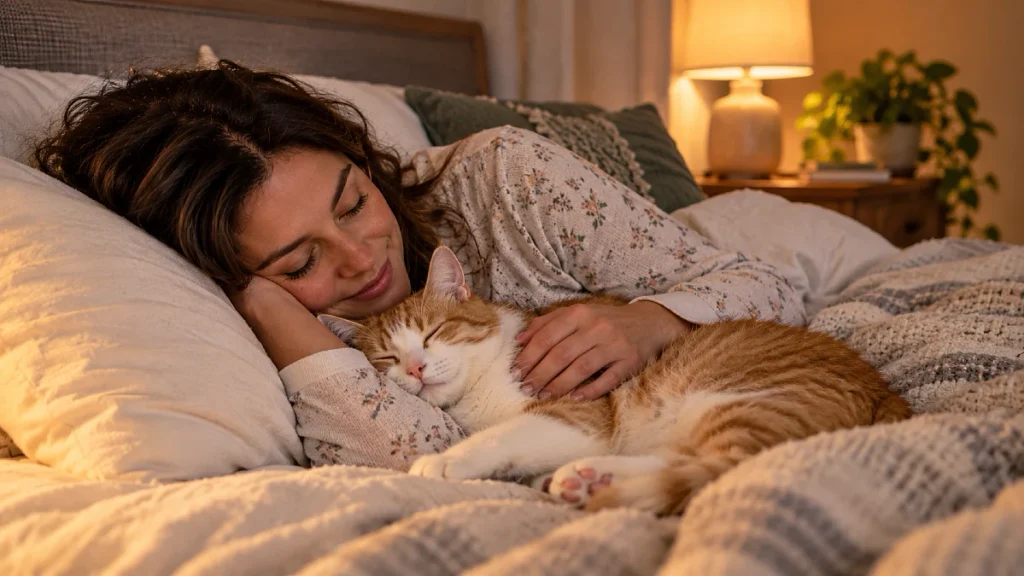
Have you noticed how your cat always seems to find the warmest place in the house? They might stretch out in sunlight, settle near a radiator, or curl up on a blanket that has just come out of the dryer.
Your bed offers another inviting source of warmth.
Purina’s October 2026 guidance on cat sleeping behavior explains that cats are naturally attracted to warmth. Resting against your body gives them a comfortable place to settle, particularly when the bedroom feels cool.
A cat may curl against your stomach, lie beside your back, or position themselves between your legs because these areas offer warmth and shelter.
But heat is only part of the attraction.
Your Familiar Smell Can Make the Bed More Appealing
Cats rely heavily on scent to recognize familiar places and objects. Your bedding carries smells that your cat encounters every day.
A pillow, blanket, or recently worn shirt may therefore make a resting spot more familiar. That can help explain why your cat sometimes sleeps on your side of the bed even when you are somewhere else.
Cats may also rub their cheeks or bodies against nearby objects, leaving their own scent behind.
This is a normal part of how cats interact with their surroundings. It does not mean your cat is trying to claim ownership of you.
If you want to encourage your cat to use another bed, place a blanket they already sleep on inside it. A familiar smell may make the new spot more appealing than a completely fresh cushion.
How Your Cat Learns to Follow Your Bedtime Routine

Your cat may seem to know exactly when you are getting ready for bed. You turn off the television, brush your teeth, and walk into the bedroom. Before you even pull back the covers, your cat appears in the doorway.
This is often a learned routine rather than a mysterious ability.
Cats are good at noticing repeated events in their environment. If the same activities happen each evening, your cat can learn that they usually lead to a quiet period.
For example, your cat might associate the sound of your bedroom door opening with a chance to sleep on the mattress. They may also learn that you sometimes offer a little attention before turning out the light.
VCA Animal Hospitals explains that feeding, play, and social contact can influence a cat’s daily activity pattern. When those activities follow a regular schedule, cats can begin to respond to familiar cues.
Why Some Cats Arrive at Exactly the Same Time
A predictable routine may help explain why your cat appears beside your bed at nearly the same hour each night.
They may be following a familiar pattern that has worked well before. If climbing onto the bed usually leads to warmth, gentle attention, or a comfortable sleep, they have a reason to repeat it.
However, your response matters.
If you regularly get out of bed to serve food whenever your cat wakes you, the cat may learn that interrupting your sleep brings a reward.
You do not need to stop showing affection. Simply keep meals, play, and attention on a schedule that works for both of you.
What Your Cat’s Favorite Sleeping Spot Might Tell You
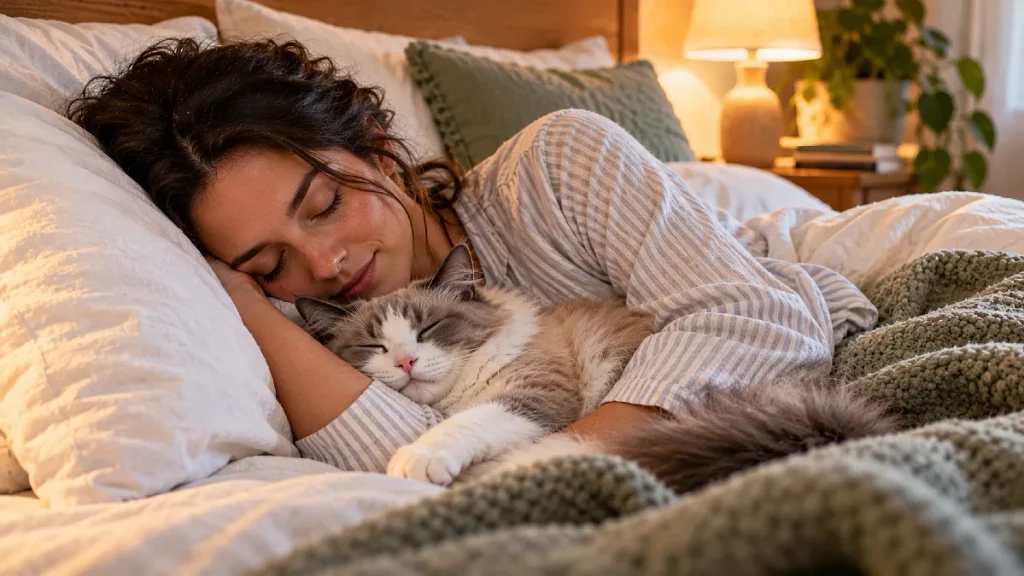
Your cat has the entire mattress available, yet they always choose one particular spot. Maybe they curl up beside your head, settle against your legs, or squeeze into the narrow space between your knees.
Different areas offer different kinds of comfort.
Purina and Cats Protection both discuss how warmth, contact, softness, and personal space can influence where cats rest beside their owners.
The important thing is to avoid giving every position one fixed meaning. Your cat’s favorite spot may reflect several needs at once.
Why Your Cat Sleeps Near Your Head or Pillow
Your pillow is soft, warm, and full of familiar smells. Your head may also move less than your arms and legs while you sleep.
These features can make the area especially comfortable for some cats.
If your cat repeatedly settles beside your face, they may enjoy being close to you. But the same behavior can also reflect a preference for the pillow itself.
Why Your Cat Sleeps on Your Chest or Between Your Legs
A cat resting on your chest gets warmth and close physical contact. Your breathing and heartbeat may also provide familiar sensations while they settle.
Between your legs, your cat can find a small, enclosed resting area. This position offers warmth while providing contact on more than one side.
Both spots can be comfortable, although they may make it harder for you to move freely.
What Different Sleeping Positions May Suggest
These common positions can offer clues about what your cat finds appealing. None of them can prove a specific emotion on its own.
| Sleeping spot | Possible reason | Important detail |
|---|---|---|
| Near your head | Warmth and familiar scent | Pillow may be the attraction |
| On your chest | Body heat and close contact | May disturb your breathing comfort |
| Between your legs | Warm, sheltered space | Can limit your movement |
| Near your feet | Space and an easy exit | Allows more freedom to move |
| Under the covers | Warmth and shelter | Cat needs a clear exit |
| Facing away from you | Comfortable resting position | Does not mean rejection |
The best clue is how relaxed your cat appears while resting. A cat that settles easily and remains comfortable is likely happy with that sleeping arrangement.
If your cat sleeps facing away from you, do not assume they are upset. They may simply have found a position that feels comfortable while still enjoying your company.
Why Your Cat Keeps Jumping On and Off the Bed at Night
Your cat jumps onto the bed, curls up for a short rest, and then disappears into the hallway. Half an hour later, you hear another soft landing on the mattress.
If this sounds familiar, your cat may simply be following a normal pattern of activity and rest.
Cats Protection reports that cats commonly sleep for 12 to 18 hours daily. However, that rest is often spread across multiple periods instead of one continuous night of sleep.
PetMD’s April 2026 article, reviewed by veterinarian Sandra C. Mitchell, explains that cats are naturally most active around dawn and dusk. This pattern is called crepuscular behavior.
That means your cat may feel ready to explore or play when you are getting ready to sleep or just beginning to wake up.
Why Nighttime Visits Sometimes Become a Habit
Some cats visit the bed because they want attention rather than sleep. They may paw at your face, meow beside your pillow, or walk across your body.
VCA Animal Hospitals explains that owners can accidentally encourage these habits by providing food or attention each time their cats wake them.
For example, if your cat discovers that stepping on your pillow makes you get up and fill their food bowl, they may repeat that behavior.
Other visits are less demanding. Your cat might simply check the room, rest briefly, and leave without asking for anything.
How to Tell What Your Cat May Want
The pattern of your cat’s behavior is often more helpful than the fact that they jumped onto the mattress. Watch what happens immediately before and after each visit.
| Nighttime behavior | Possible reason | What to check |
|---|---|---|
| Quietly curls up | Comfort or rest | Relaxed body and breathing |
| Jumps up repeatedly | Normal activity or habit | Evening play routine |
| Meows near your face | Attention or another need | Food, water, litter, health |
| Paws at your hands | Seeking interaction | Response to your attention |
| Suddenly becomes restless | Stress or illness | Other behavior changes |
A predictable pattern in an otherwise healthy cat is often less concerning than a sudden change. Pay attention to how often the behavior happens and whether anything else seems different.
What you can do: Keep a simple record of when your cat wakes you and what they do. This may reveal a link with feeding, play, or household activity.
When a Sudden Bedtime Change Could Signal a Health Problem
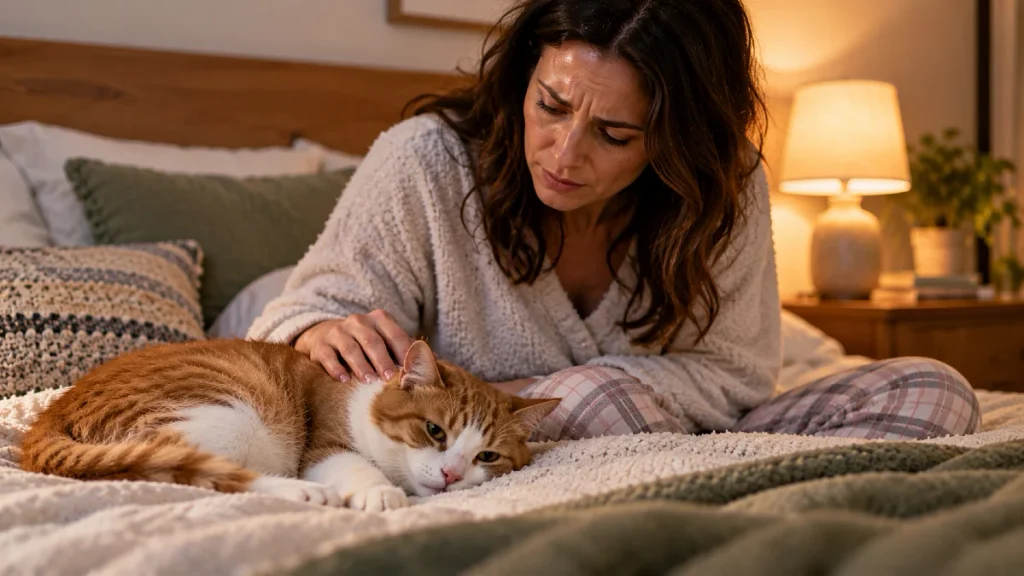
Most cats jumping onto beds at night are doing something ordinary. But a sudden change in sleeping behavior can sometimes be an early sign that something is wrong.
For example, a cat that has always slept quietly in another room may suddenly become restless and seek constant attention. Another cat might begin crying loudly at night or seem unable to settle anywhere.
These changes deserve attention, especially if they continue or appear alongside other symptoms.
The RSPCA advises owners to rule out medical problems when cats develop unusual nighttime activity. Pain and conditions affecting the thyroid are among the possible causes a veterinarian may consider.
Watch for Changes Beyond the Bedroom
Your cat’s overall behavior offers important clues. Look for changes that extend beyond sleeping habits.
- Unusual crying: Frequent nighttime yowling, especially in an older cat.
- Appetite changes: Eating much more or less than usual.
- Increased thirst: Drinking more water or urinating more often.
- Movement problems: Hesitating to jump, limping, or appearing stiff.
- Confusion: Seeming lost or unsettled in familiar rooms.
- Litter box changes: Urinating outside the box or struggling to pass urine.
Older cats may experience pain, changes in their senses, or age related changes that affect their sleep. Younger cats can also become restless because of illness, stress, or discomfort.
A cat that strains to urinate without passing urine needs emergency veterinary care. Breathing trouble, collapse, or severe weakness also requires urgent attention.
If your cat suddenly starts jumping onto your bed much more often, do not assume they have simply become more affectionate. Arrange a veterinary check if the new habit comes with other concerning signs.
Is It Safe to Let Your Cat Sleep Beside You?
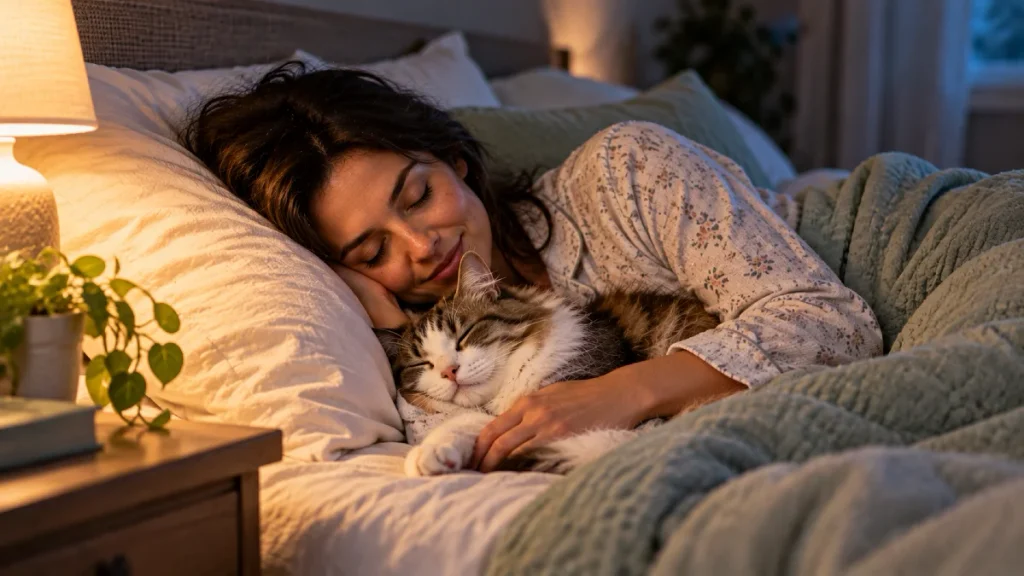
For many healthy adult cats and their owners, sharing a bed can be a comfortable arrangement. Some people enjoy the companionship, while their cats benefit from a warm and familiar resting place.
However, sleeping with a cat is not the right choice for every household.
Cat behavior expert Mikel Delgado explained in an interview with Inverse that bed sharing is generally safe for many cats. He also advised caution with very young kittens because of their small size.
Cats Protection recommends keeping cats out of babies’ and young children’s bedrooms for safety.
Your Sleep Quality Matters Too
A cat walking across your pillow several times each night can interrupt your sleep. Even if you enjoy having your cat nearby, frequent waking may leave you feeling tired the next morning.
Cleveland Clinic sleep psychologist Alicia Roth has explained that sharing a bed with a pet depends on the comfort and sleep needs of both the person and the animal.
Pet allergies can also make sharing a bed uncomfortable. Cat hair and allergens may collect on bedding, particularly when a cat sleeps close to your face.
The CDC also reminds cat owners that cats can carry germs and parasites even when they appear healthy. Routine veterinary care, parasite prevention, and clean bedding help reduce avoidable risks.
Should You Let Your Cat Sleep in Your Bed?
Different households need different sleeping arrangements. Use this table to decide what may work best for you and your cat.
| Situation | Suggested approach | Main reason |
|---|---|---|
| Healthy adult cat | Bed sharing may be suitable | Comfort and companionship |
| Very young kitten | Provide a separate safe bed | Risk of accidental injury |
| Baby or young child | Keep cat out of sleeping area | Child safety |
| Cat allergies | Use a separate bedroom | Reduce allergen exposure |
| Frequent sleep disruption | Provide another resting place | Protect sleep quality |
| Cat with fleas or illness | Seek veterinary advice | Health and hygiene |
You do not need to feel guilty if your cat sleeps outside your bedroom. A separate, comfortable sleeping place can meet your cat’s needs without affecting your rest.
If anyone in your household has a weakened immune system, ask a healthcare professional about additional precautions. Your veterinarian can also advise on hygiene and parasite prevention.