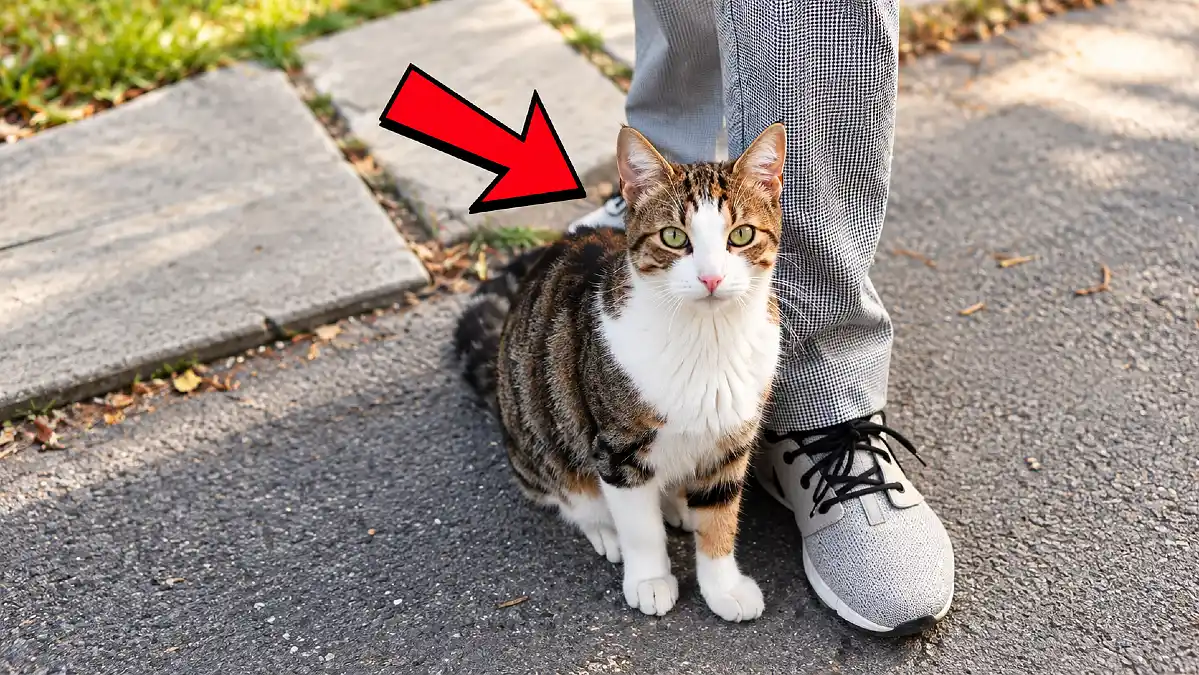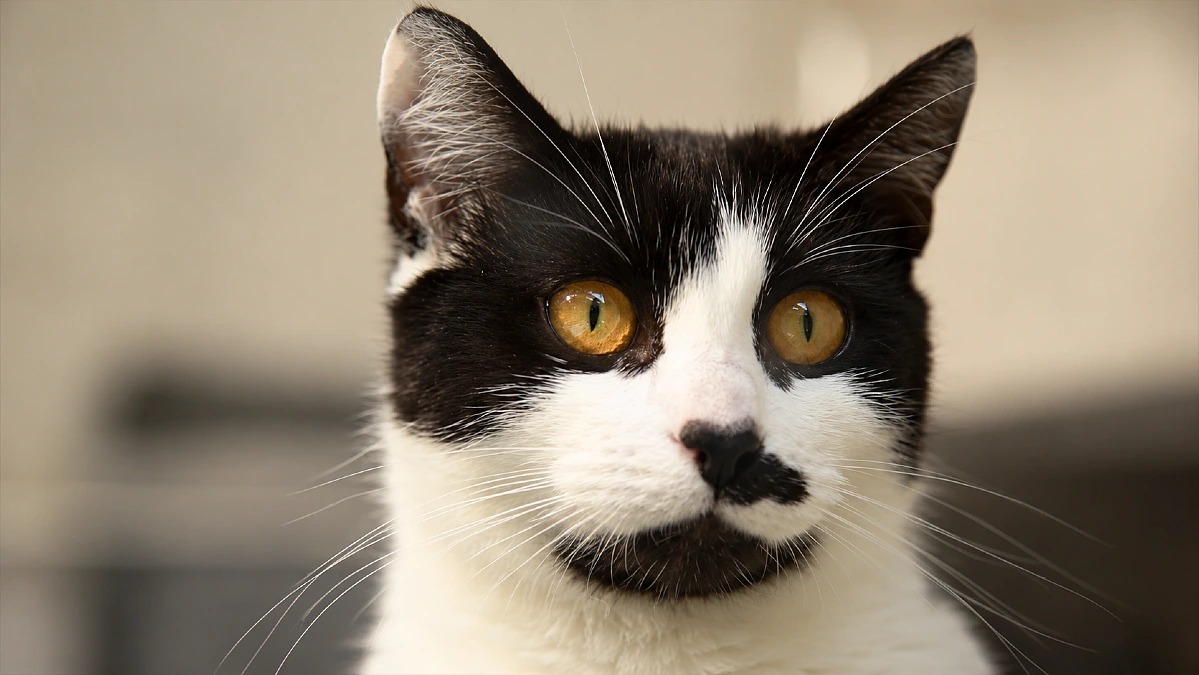
Have you ever caught your cat staring at an empty wall, with its ears pointing forward and its eyes following something you cannot see? You look around, check the ceiling, and find absolutely nothing. Yet your cat seems completely focused on whatever caught its attention.
Sometimes your cat suddenly runs out of a room for no clear reason. Other times, it sits beside the front door before you even pull into the driveway. These strange moments can make you wonder whether cats have senses that humans simply do not possess.
The answer is more fascinating than you might expect. There are things your cat can see and hear that your senses are unable to detect, thanks to differences in feline eyesight, hearing, and other sensory abilities.
Cats can detect much higher sounds than humans, see better in dim light, and notice tiny movements that escape our attention. They can also learn familiar sounds and respond to certain emotional signals from people.
1. Your Cat May See Ultraviolet Light That Your Eyes Cannot Detect

That ordinary white shirt hanging over your chair might look different to your cat. The flowers on your windowsill may also contain visual details that are invisible to human eyes. One possible reason is your cat’s ability to detect ultraviolet light.
Ultraviolet light, often called UV light, sits just beyond the violet end of the light spectrum humans normally see. Our eyes block most of this light before it reaches the retina, but some animals have eyes that allow more of it through.
A 2014 study published in Proceedings of the Royal Society B examined how different mammals’ eyes transmit light. Researchers Ron Douglas and Glen Jeffery found that cats have eye lenses that allow significant amounts of ultraviolet light to pass through.
This suggests that cats may detect ultraviolet information that humans cannot see. However, the study did not prove exactly what those patterns look like to a cat or how strongly ultraviolet light affects its everyday behavior.
Why Your Cat Might See Ordinary Objects Differently
Certain flowers, fabrics, and natural surfaces reflect ultraviolet light in ways that humans cannot easily notice. A cat may receive some of this extra visual information, although scientists have not fully established how it appears in feline vision.
Cats also have excellent eyesight in low light. According to the Merck Veterinary Manual, cats can see much better than humans in dim conditions, which helps them move and hunt around dawn and dusk.
Their eyes contain many rod cells, which help detect light when conditions are dark. This gives cats an advantage in dim rooms, although they still need some light to see and cannot see in total darkness.
The differences are easier to compare when you look at what each species does best. Cat vision has strengths, but human eyes remain better at some tasks.
| Visual Ability | Cats | Humans |
|---|---|---|
| Ultraviolet light | Possible sensitivity | Mostly blocked |
| Dim light | Very strong vision | Less sensitive |
| Fine details | Less sharp at a distance | Better detail |
| Color differences | More limited | Broader color range |
Your cat’s eyesight is built for a different set of tasks than yours. This explains why an animal that moves confidently through a dim hallway may have more trouble seeing a tiny object directly under its nose.
What you can do: Give your cat access to a safe window with a comfortable resting spot. Natural daylight, birds outside, and changing shadows provide visual activity without needing special ultraviolet lamps.
Avoid using UV lamps or lasers to test your cat’s eyesight. Such experiments are unnecessary and could expose your cat’s eyes to harmful light.
2. Your Cat Can Hear Tiny Sounds That Are Completely Silent to You

Have you noticed your cat suddenly turning its ears toward a wall while the room seems perfectly quiet? It might sit motionless for several seconds before moving away as though nothing happened. You heard silence, but your cat may have heard something real.
Cats have an impressive hearing range that extends far beyond what most people can hear. Their ears are especially good at detecting high frequency sounds, including some noises made by small animals.
A study by Rickye Heffner and Henry Heffner, published in Hearing Research in 1985, measured the hearing range of two domestic cats. Under the study’s test conditions, the researchers recorded hearing from 48 hertz to 85,000 hertz.
For comparison, young humans with healthy hearing typically detect sounds up to around 20,000 hertz. Many adults cannot hear frequencies that high because sensitivity to high sounds often declines with age.
This means cats can detect certain ultrasonic sounds, which are sounds above the normal range of human hearing. These abilities developed partly because hearing high pitched noises helps cats locate small prey.
What Could Your Cat Be Hearing Around the House?
A tiny mouse moving inside a wall may produce faint scratching sounds. Insects, distant animal calls, pipes, and outdoor activity can also attract your cat’s attention before you notice anything unusual.
Some electronic equipment can produce high frequency noise as well. However, this does not mean every phone charger, light bulb, or television produces an ultrasonic sound that bothers cats.
The table below shows why the same home can sound very different to two species.
| Sound Type | Human Hearing | Cat Hearing |
|---|---|---|
| Normal conversation | Clearly audible | Clearly audible |
| Quiet scratching | May be missed | Often easier to detect |
| Sounds above 20,000 Hz | Usually inaudible | Some can be detected |
| Distant faint noises | Limited detection | Often more sensitive |
Your cat’s reaction depends on the sound’s volume, frequency, and distance. Having sensitive hearing does not mean every noise sounds loud or frightening.
Cats can also move their outer ears to locate sounds more precisely. When your cat’s ears turn in different directions, it may be gathering clues about where a noise is coming from.
How to help a sound sensitive cat
If your cat regularly hides when certain appliances are running, look for a pattern. Vacuum cleaners, loud music, alarms, and sudden construction noises are more common sources of stress than harmless background sounds.
Give your cat access to a quiet room and a covered hiding spot. Never force it to remain near a frightening noise just because you want it to become accustomed to that sound.
The American Animal Hospital Association notes that cats may show fear through hiding, crouching, flattened ears, and sudden attempts to escape. Watching these signs helps you tell the difference between harmless curiosity and real distress.
3. Your Cat May Sense an Approaching Storm Before You Notice It
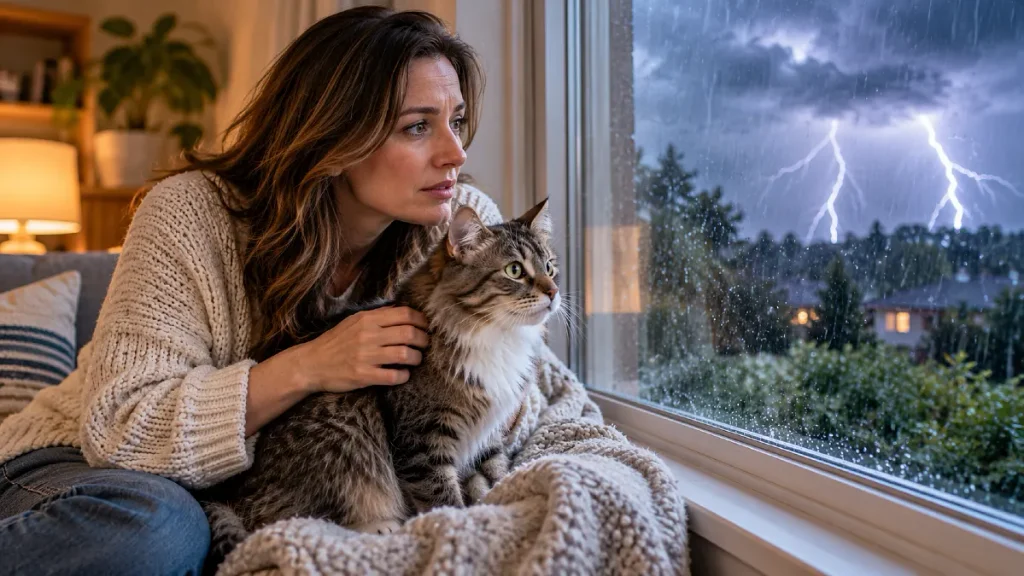
Your cat has been sleeping peacefully on the sofa all afternoon. Suddenly, it becomes restless, walks toward the hallway, and disappears under the bed. A little later, the sky grows dark and thunder begins rolling across the neighborhood.
It is tempting to believe your cat somehow knew the storm was coming. There may be ordinary sensory explanations for this behavior, although scientists have not confirmed that cats can reliably forecast storms.
Your cat might hear distant thunder long before you notice it. Changes in wind, rain striking distant surfaces, and unfamiliar sounds outside may also catch its attention.
Another suggested explanation involves changes in air pressure before certain weather events. Cats may respond to environmental changes, but there is limited direct research proving that they use pressure changes to anticipate storms.
Can Cats Really Detect Earthquakes Before Humans?
Stories about animals behaving strangely before earthquakes have circulated for centuries. Some describe cats hiding, running away, or becoming unusually vocal before the ground begins shaking.
The U.S. Geological Survey explains that an earthquake sends out different types of seismic waves. The faster P waves arrive before the stronger shaking commonly associated with later waves.
Some animals may feel these early waves shortly before people notice an earthquake. However, this is very different from predicting an earthquake hours or days in advance.
Scientists have not found a consistent pattern of cat behavior that can reliably predict where or when an earthquake will happen. A cat running away from its favorite chair is not a dependable earthquake warning.
What Should You Do When Your Cat Suddenly Hides?
A change in behavior is worth noticing, but it does not automatically mean dangerous weather is approaching. Cats hide for many reasons, including unfamiliar visitors, loud noises, stress, and illness.
Use your cat’s body language and the surrounding situation to decide how to respond.
| Cat Behavior | Possible Reason | Best Response |
|---|---|---|
| Hiding during thunder | Fear of loud sounds | Provide a quiet shelter |
| Pacing near windows | Outdoor activity | Check the surroundings |
| Flattened ears | Fear or stress | Reduce noise |
| Sudden running | Startle response | Allow space |
| Repeated unexplained hiding | Stress or illness | Contact your veterinarian |
A single unusual reaction may be harmless, especially if your cat returns to normal quickly. Repeated changes, especially when combined with poor appetite or low energy, deserve more attention.
For cats frightened by storms, prepare a quiet resting place before bad weather arrives. A covered cat bed, a familiar blanket, and access to fresh water can help your pet feel safer.
Keep windows secure, especially when strong wind or thunder is expected. If your cat prefers hiding, allow it to stay there rather than pulling it out for reassurance.
Remember: Your cat’s senses can be useful clues about its surroundings, but they should never replace official weather alerts or earthquake safety advice.
4. Your Cat May Recognize That You’re Home Before You Open the Door
You have barely parked your car when you notice your cat waiting at the window. By the time you open the front door, it is sitting in the hallway as though it knew exactly when you would arrive.
You might wonder how your cat knew you were coming. The explanation probably has more to do with memory, familiar sounds, and daily routines than any mysterious ability.
Cats are capable of recognizing familiar human voices. A 2013 study in Animal Cognition, conducted by Atsuko Saito and Kazutaka Shinozuka, tested how 20 domestic cats reacted to unfamiliar voices and their owners’ voices.
The researchers found evidence that cats could distinguish their owners’ voices from those of strangers. Many responded by moving their ears or turning their heads rather than approaching or meowing.
This means your cat can recognize your voice even when it cannot see you. It also shows that a cat does not have to come running to demonstrate that it recognizes someone.
Familiar Sounds May Give Your Arrival Away
Your cat spends a great deal of time listening to the normal sounds around your home. Over time, it can learn associations between certain sounds, events, and rewards.
For example, your cat may connect a familiar car sound with your arrival. It might also recognize the sound of your keys, the opening of a gate, or footsteps outside.
These are reasonable explanations for waiting at the door, although the 2013 voice study did not specifically test recognition of car engines or individual footsteps. Cats may combine familiar sounds with their daily routines.
If you usually arrive home around the same time and offer food shortly afterward, your cat may begin expecting that event. Both the time of day and familiar sounds could help explain its behavior.
You can see a similar effect during feeding time. Some cats appear in the kitchen as soon as they hear a familiar cupboard opening or the sound of food being prepared.
Try this simple observation: Notice whether your cat reacts differently when you enter the house compared with an unfamiliar visitor. Look at ear movements, tail position, vocal sounds, and whether it approaches.
Do not be disappointed if your cat barely looks up when you come home. Recognition and affection do not always appear as excited greetings, and some cats are naturally less expressive than others.
A cat that feels comfortable enough to remain relaxed may be showing that your arrival is a familiar and safe event. That quiet response can be meaningful too.
5. Your Cat Can Spot Tiny Movements That Your Eyes Completely Miss

You are watching television when your cat suddenly raises its head and begins staring at an empty corner. Its eyes follow something slowly across the wall, and its tail starts moving. You look in the same direction but see nothing.
This behavior can feel strange, especially when your cat appears ready to chase an invisible object. In many cases, however, it is simply responding to movement or sound that escaped your attention.
Cats are highly sensitive to movement, particularly in dim conditions. Their eyes contain many rod cells, and their visual system is well suited to spotting potential prey.
A tiny insect moving near a curtain might attract your cat’s attention. So might a shifting shadow, a small spider, or movement outside a window.
According to VCA Animal Hospitals, cats may stare at apparently empty spaces because they have noticed small animals, faint sounds, or other subtle activity. Most occasional staring is normal feline behavior.
Your Cat’s Whiskers Help When Its Eyes Cannot Focus
Something else makes this ability even more interesting. Cats are not especially good at focusing on objects that are extremely close to their faces.
Their eyesight works differently from ours, and nearby objects can become blurry. When something moves directly beneath a cat’s nose, its whiskers provide additional information.
Whiskers are specialized sensory hairs connected to sensitive nerve endings. When the hairs bend or vibrate, they help a cat detect nearby objects and changes in air movement.
VCA Animal Hospitals explains that whiskers help cats gather information about spaces, nearby objects, and movement. This is especially useful during hunting or when moving through narrow areas.
Cats also have whiskers on the backs of their front legs. These are called carpal whiskers, and they can help detect movement from something held near the paws.
These whiskers do not work like electronic radar, despite that popular comparison. They are touch sensors that provide valuable information when eyesight alone is less useful.
Turn Your Cat’s Hunting Skills Into Safe Play
Your cat’s interest in tiny movements is a natural part of its hunting behavior. Indoor cats still benefit from activities that let them stalk, chase, and catch moving objects.
A feather wand can help you copy the movement of a small animal. Move it along the floor, let it disappear behind furniture, and give your cat chances to catch it.
You can also use a puzzle feeder, such as the Catit Senses Food Tree or PetSafe SlimCat, to encourage searching and problem solving. The ASPCA recommends play and food puzzles as useful forms of feline enrichment.
Always supervise toys containing strings or small parts that could be swallowed. Put wand toys away after play and avoid shining lasers into your cat’s eyes.
When staring becomes a concern: Occasional staring is usually harmless, but sudden changes in vision or behavior need attention. Cornell Feline Health Center advises owners to watch for signs such as bumping into furniture, unequal pupils, or confusion.
If your cat begins staring blankly for long periods, seems unresponsive, or develops unusual behavior, contact your veterinarian. Do not assume every strange reaction is simply the result of superior eyesight.
6. Your Cat May Notice Changes in Your Body and Emotions Before You Realize It

Have you ever noticed your cat becoming unusually attentive when you feel upset? Perhaps it settles beside you on the sofa, follows you into another room, or quietly watches your face. The change may feel almost too well timed to be a coincidence.
Cats spend a great deal of time observing the people they live with. They can learn familiar expressions, voices, movements, and routines, which may help them respond when something changes.
The supplied story suggests that cats can hear your heartbeat and detect changes inside your body. While cats have sensitive hearing, scientists have not established that they can routinely hear their owners’ heartbeats or use them to identify specific emotions.
A heartbeat might be physically detectable in some close and quiet situations. However, that possibility is different from proving that a cat uses heartbeat sounds to know when you are sad, stressed, or sick.
There is stronger evidence for cats responding to certain emotional signals that humans give off.
Your Voice and Facial Expressions May Tell Your Cat More Than You Think
A study published in the journal Animals in 2020 examined how cats respond to emotional signals. Researchers Angelo Quaranta and colleagues found that cats could connect certain facial expressions with related vocal sounds.
The researchers used emotional signals from both cats and humans. Their findings suggest cats can recognize some emotional information by combining what they see with what they hear.
This does not mean cats can read thoughts or identify every human feeling. It does suggest that your facial expressions and the tone of your voice can provide clues about your emotional state.
For example, a person who is upset might speak more loudly, move differently, or become quieter than usual. A cat familiar with that person’s normal behavior may notice some of these changes.
Cats also react differently depending on their personalities and previous experiences. One might approach a quiet owner, while another may prefer to remain at a distance.
Why Some Cats Stay Close When You Feel Upset
Cats can develop strong social bonds with their owners, but those bonds do not produce identical behavior in every animal. Some cats enjoy close physical contact, while others prefer resting nearby without being touched.
Your cat may settle beside you because you are sitting quietly in a familiar place. It may also respond to your voice, posture, or a change in the way you interact with it.
There is no reliable evidence that every cat can detect sadness, sickness, or anxiety through heartbeats alone. It is better to interpret affectionate behavior as a possible response to several familiar cues rather than proof of a special medical ability.
The following table can help you observe your cat without assigning human thoughts to every action.
| Cat Behavior | Possible Meaning | What You Should Do |
|---|---|---|
| Sitting beside you | Seeking comfort or company | Allow closeness |
| Watching your face | Paying attention | Speak gently |
| Moving away | Wants space | Avoid forcing contact |
| Rubbing against you | Familiar social behavior | Respond if welcomed |
| Sudden hiding | Fear, stress, or illness | Check for other symptoms |
A single behavior cannot tell you exactly what your cat is thinking. Look at the whole situation, including its ears, tail, posture, appetite, and usual habits.
You can support your relationship by keeping interactions predictable and gentle. If your cat approaches, offer attention when it seems comfortable, and let it move away whenever it wants.
Can Cats Tell When You’re Sick?
Some owners report that their cats become more affectionate during illness. These experiences are interesting, but they do not prove that cats can diagnose human medical conditions.
Changes in a person’s movement, routine, voice, or activity may attract a cat’s attention. Scientists have not shown that cats can consistently identify diseases through these clues.
Never use a cat’s unusual attention as evidence that something is medically wrong. If you have concerning symptoms, rely on qualified healthcare professionals rather than changes in your pet’s behavior.
The same caution applies to your cat’s health. If an affectionate cat suddenly becomes withdrawn or unusually clingy, consider whether it may be stressed or unwell.
The most useful lesson is simple: Your cat may notice more about your behavior than you expect, but its reactions still need careful interpretation.
A strong bond grows through regular care, safe surroundings, play, and respect for your cat’s boundaries. You do not need a supernatural explanation to appreciate how closely cats can pay attention to the people around them.