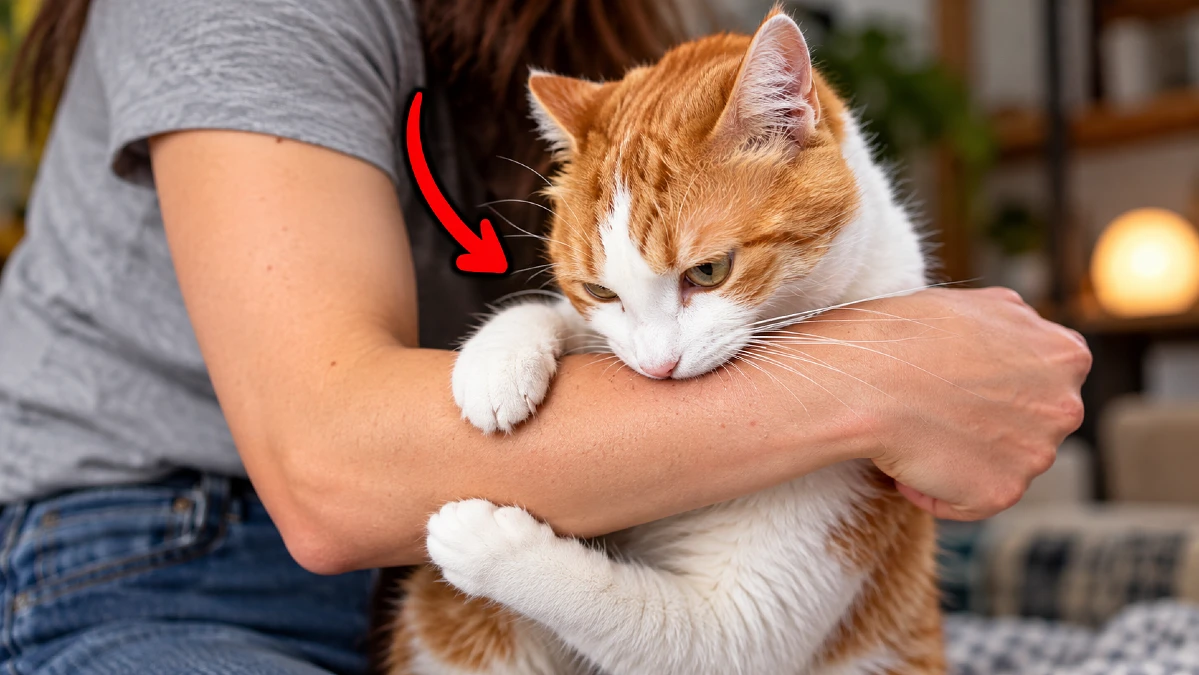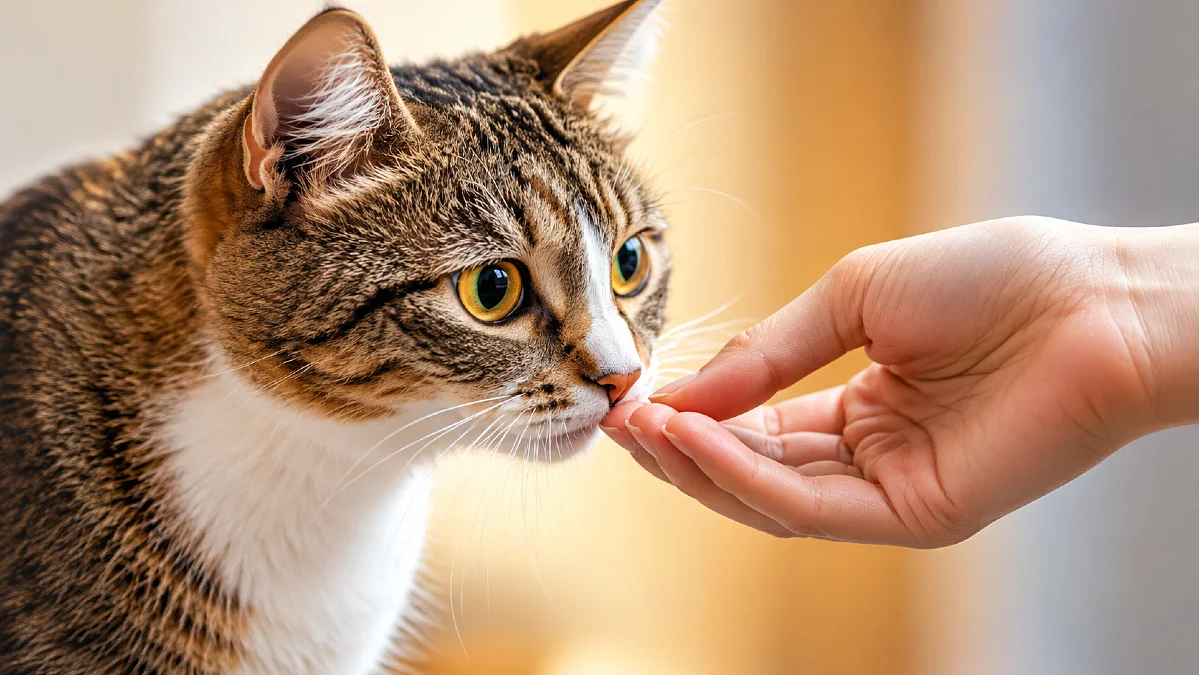
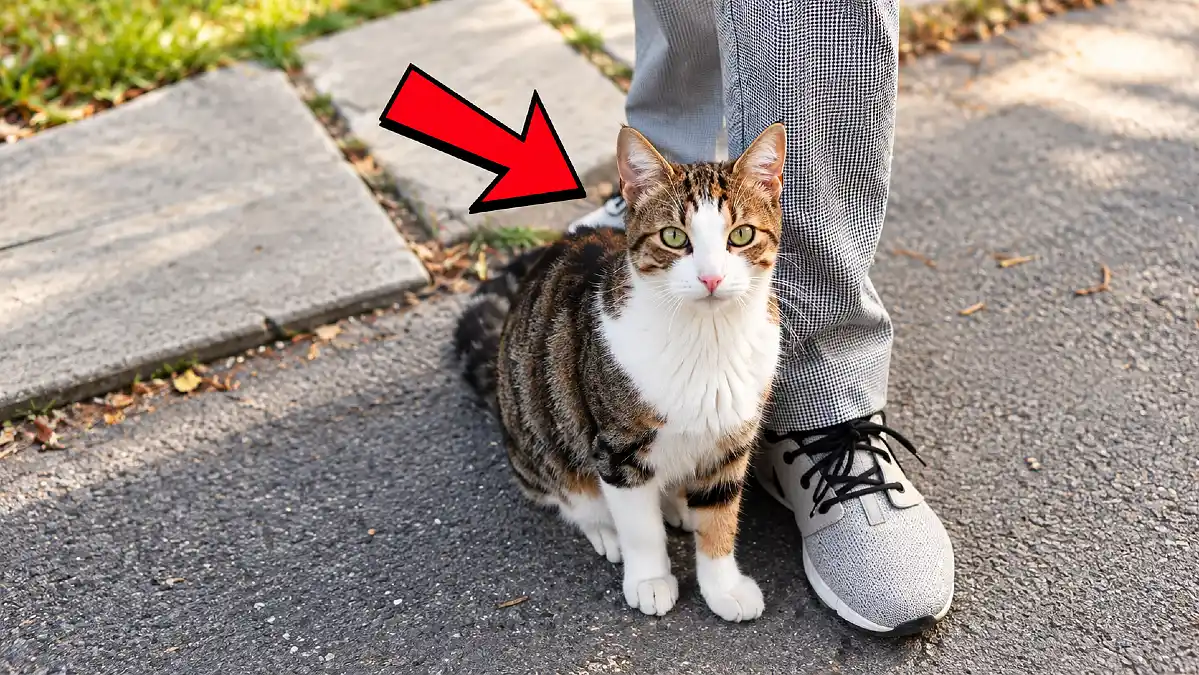
You are walking through your home when your cat suddenly steps directly in front of you. You stop to avoid tripping, but your cat refuses to move. Sometimes, they even sit down and stare at you as if they have something important to say.
If your cat blocks your path regularly, you probably wonder why they do it. Are they asking for attention, trying to show affection, or simply being stubborn? The answer may surprise you because this common behavior can have several different meanings.
Cats communicate through body movements, sounds, smells, and daily habits. Standing in your way may be one way your cat gets your attention, but it can also happen when they feel curious, playful, or excited about food.
Why Your Cat Blocks Your Path to Get Your Attention
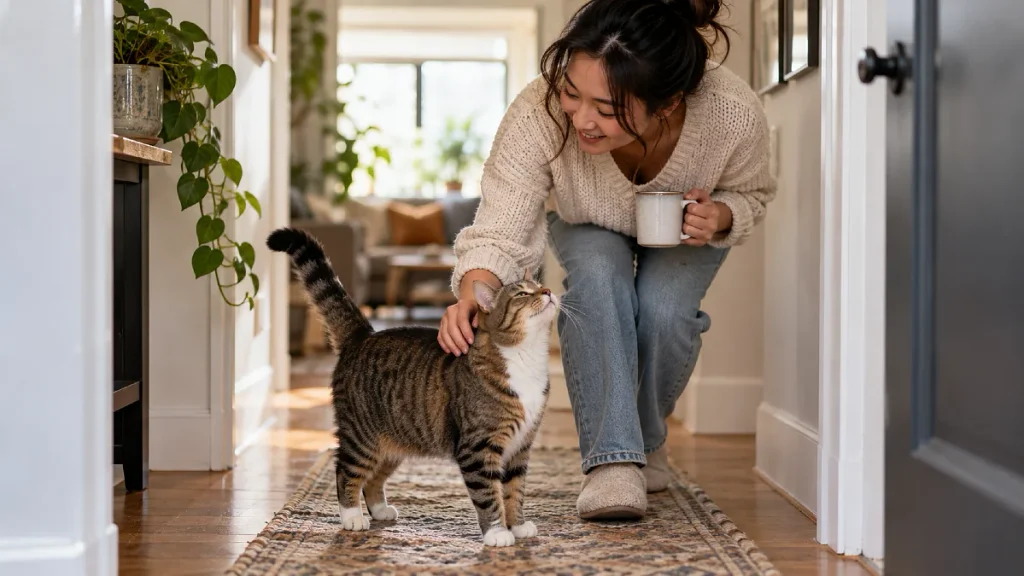
Your cat may have discovered something surprisingly effective. Standing directly in front of you makes you stop whatever you are doing and look at them. For an animal that enjoys your company, that can be a powerful way to get attention.
Cats learn from repeated experiences. If blocking your path usually results in petting, talking, or playing, your cat may begin repeating that behavior whenever they want your attention.
You might notice this happening when you return home after work or finish a long phone call. Your cat walks toward you, stops in front of your feet, and looks up with an expectant expression.
According to PetMD’s 2026 guidance on cats following their owners, attention, affection, curiosity, and routine are common reasons cats stay close to people. These behaviors are often normal parts of the relationship between cats and their caregivers.
How to Tell If Your Cat Wants Attention
Look for a relaxed body, an upright tail, gentle meowing, or repeated attempts to make eye contact. Your cat might also rub against your legs or follow you when you change rooms.
If your cat seems comfortable, offer a little affection once you are safely out of the walkway. Some cats enjoy petting, while others prefer sitting nearby or watching you.
However, avoid rewarding dangerous blocking every single time. Instead, encourage your cat to approach you in a safer location, such as beside the sofa or near their favorite resting spot.
This gives your cat the social contact they want while helping them learn a better way to ask for it.
When Standing in Your Way Means Your Cat Wants Food
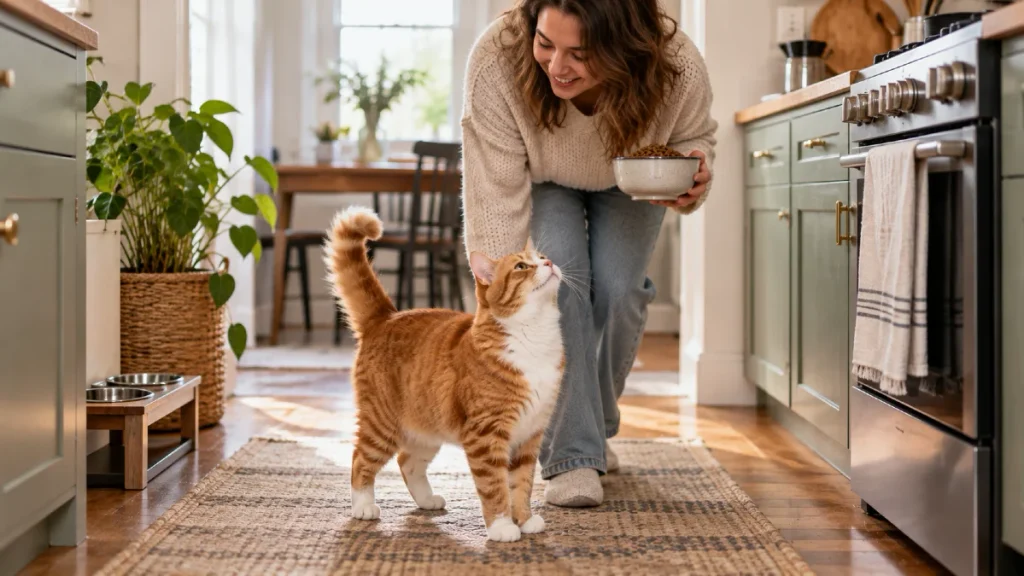
Sometimes, your cat is less interested in affection and more interested in dinner. If they regularly stand in front of you around mealtime, they may have learned that your movements lead to something delicious.
Cats can become familiar with daily routines. They notice when you get out of bed, enter the kitchen, or approach the cupboard where their food is stored.
For example, your cat might walk in front of you every morning before breakfast. They may stop, meow, and begin moving again when you take a step toward the kitchen.
This behavior can also happen when your cat wants fresh water or expects another familiar activity. The key is to examine what usually follows the interaction.
What Your Cat Wants Based on the Situation
The location and timing of the behavior can help you identify the likely cause. Use this table as a starting point, then compare it with your cat’s usual habits.
| Situation | Possible Meaning | What to Check |
|---|---|---|
| Before breakfast | Expecting food | Feeding schedule |
| Near the kitchen | Food or water request | Bowl and water |
| After you return home | Greeting or attention | Relaxed body language |
| Near a toy basket | Wants to play | Interest in toys |
| Beside a closed door | Wants access | Safe room access |
| At random quiet moments | Curiosity or company | What happens next |
These clues are possibilities rather than fixed rules. A cat standing near the kitchen may want company instead of food, so consider their other signals before responding.
Ohio State University’s Indoor Pet Initiative recommends predictable routines for household cats. Keeping regular feeding times can help reduce confusion about when food will arrive.
If your cat keeps demanding food between meals, consider a puzzle feeder such as the Catit Senses Food Tree. It allows cats to work for portions of their regular food while offering mental activity.
Just remember to use food from their daily allowance rather than adding extra meals. If your cat suddenly seems unusually hungry, especially with weight loss or increased thirst, contact your veterinarian.
Why Rubbing Against Your Legs Can Be a Sign of Affection
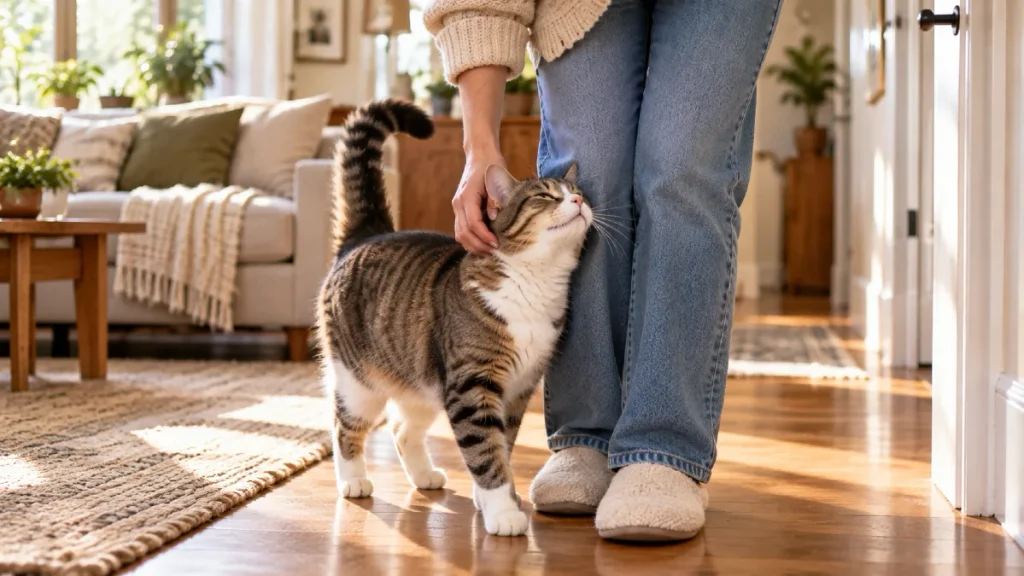
One of the sweetest reasons your cat blocks your path is that they may be greeting you. If your cat rubs their head or body against your legs while walking, the behavior can be part of friendly social contact.
Cats have scent glands around their cheeks, forehead, and other parts of their bodies. When they rub against people or objects, they leave behind scent signals that help make their surroundings feel familiar.
Battersea Dogs & Cats Home explains that scent plays an important role in how cats communicate and feel secure. Their July 2026 guidance describes rubbing as a way cats create familiar social and physical surroundings.
This means your cat may be greeting you and sharing familiar scents rather than trying to claim ownership of you. The behavior can be a sign of comfort, especially when paired with relaxed body language.
How to Read Your Cat’s Body Language
Your cat’s movements provide more reliable information when you look at several signals together. A raised tail may suggest a friendly greeting, but a tense posture can change the meaning.
| Body Language | Possible Meaning | Best Response |
|---|---|---|
| Tail held upright | Friendly greeting | Offer gentle contact |
| Cheek rubbing | Familiarity or greeting | Allow safe contact |
| Relaxed body and slow blink | Comfortable and calm | Stay gentle |
| Playful crouch with loose movements | Interested in play | Offer a wand toy |
| Ears pinned back | Fear or discomfort | Give space |
| Stiff body and growling | Feels threatened | Stop approaching |
Cats Protection explains that body language should be judged as a whole. One tail movement or sound cannot tell you everything about how a cat feels.
If your cat weaves around your ankles affectionately, stop walking until they move into a safer position. You can then give them the attention they want without risking an accidental injury.
And if your cat rolls onto their back in front of you, remember that showing their belly does not always mean they want it touched. Many cats prefer a gentle scratch around their cheeks or chin.
How to Tell When Your Cat Is Blocking You to Start Playing
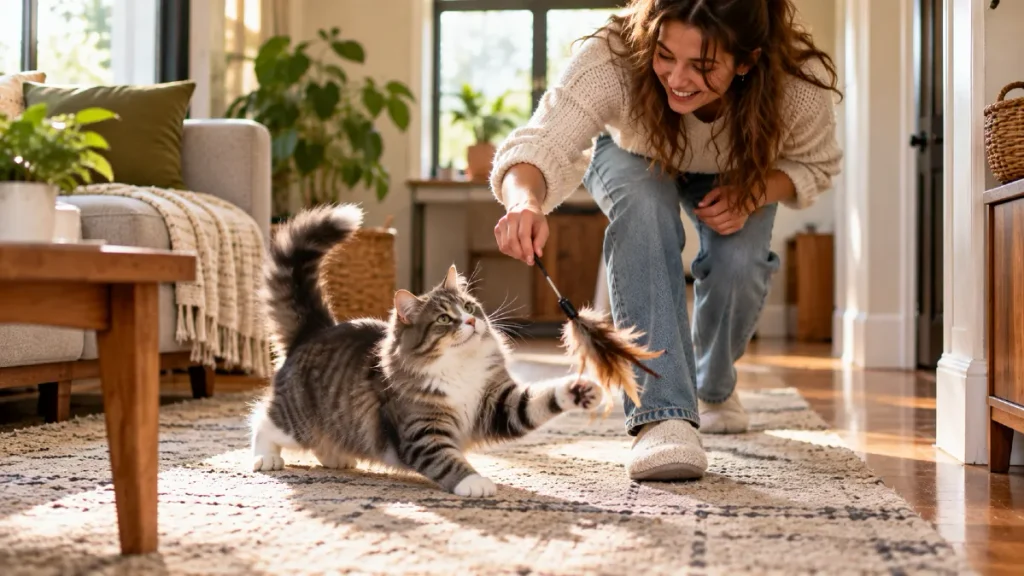
Your cat may also stand in your way because they want something more exciting than sitting together. Some cats use quick movements, sudden stops, and playful crouching to invite interaction.
You might notice your cat running ahead of you, hiding behind furniture, and jumping back into view. This can resemble the stalking and chasing movements cats use during hunting.
Indoor cats still have natural hunting behaviors, even when they receive regular meals. Toys and interactive games give them a safe way to express these instincts.
Cats Protection recommends interactive toys that allow cats to chase, pounce, and catch. Short play sessions can be useful, especially when your cat has bursts of energy throughout the day.
What to Do When Your Cat Wants to Play
Instead of encouraging your cat to chase your moving feet, redirect their attention to a toy. A feather wand can be especially useful because it keeps the activity away from your ankles.
Move the toy across the floor like a small animal escaping into hiding. Let your cat stalk it, chase it, and catch it before ending the game.
You can also provide a cardboard box, a soft toy, or a food puzzle for additional entertainment. Rotate toys occasionally so your cat has different activities to investigate.
Always supervise play with toys that contain strings or loose parts. Put these toys away afterward so your cat cannot become tangled or swallow pieces.
If your cat begins blocking your path at the same time each evening, try scheduling a short play session before that behavior usually starts. Meeting their need for activity early may reduce the habit.
Why Your Cat Keeps Stopping in Doorways and Hallways
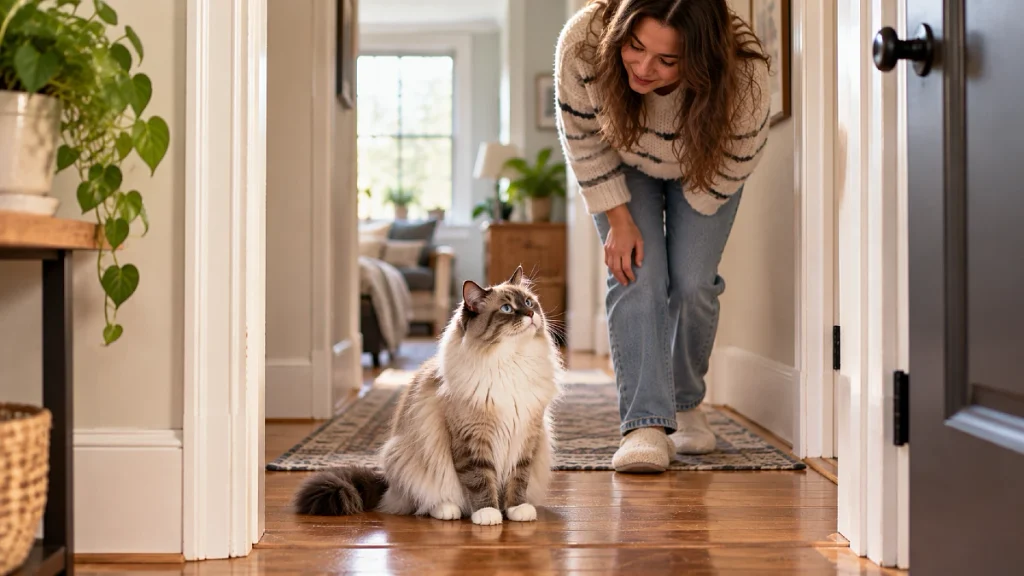
Have you noticed your cat choosing the exact doorway you need to walk through? They might sit there for several minutes, watching everyone move around the house.
Doorways and hallways can be interesting places for cats because people regularly pass through them. From these locations, your cat may be able to watch several activities without moving very far.
Some cats also have favorite places where they feel comfortable resting. A doorway that catches sunlight or provides a clear view into another room may be especially appealing.
There is also a connection to scent marking. Cats often rub against doorframes, furniture, and other familiar objects as part of their normal scent communication.
However, sitting in your doorway does not automatically mean your cat is trying to dominate you. The 2024 AAFP guidelines on tension between cats explain that feline social behavior cannot be reduced to a simple struggle for dominance.
How to Keep Doorways Clear
If your cat repeatedly settles in a busy hallway, consider placing a comfortable cat bed nearby. Choose a quiet corner where they can still watch household activity without blocking the walking area.
A window perch or cat tree can also provide a useful observation spot. Many cats enjoy resting somewhere they can see what is happening around them.
If your cat uses a doorway to hiss at another cat or prevent access to food, water, or litter boxes, the situation may involve tension between pets. Provide separate resources and seek professional guidance if the conflict continues.
For ordinary doorway sitting, gentle redirection is often enough. There is no reason to punish your cat for choosing a place that seems comfortable or interesting.
Why Curious Cats Follow You and Suddenly Stop
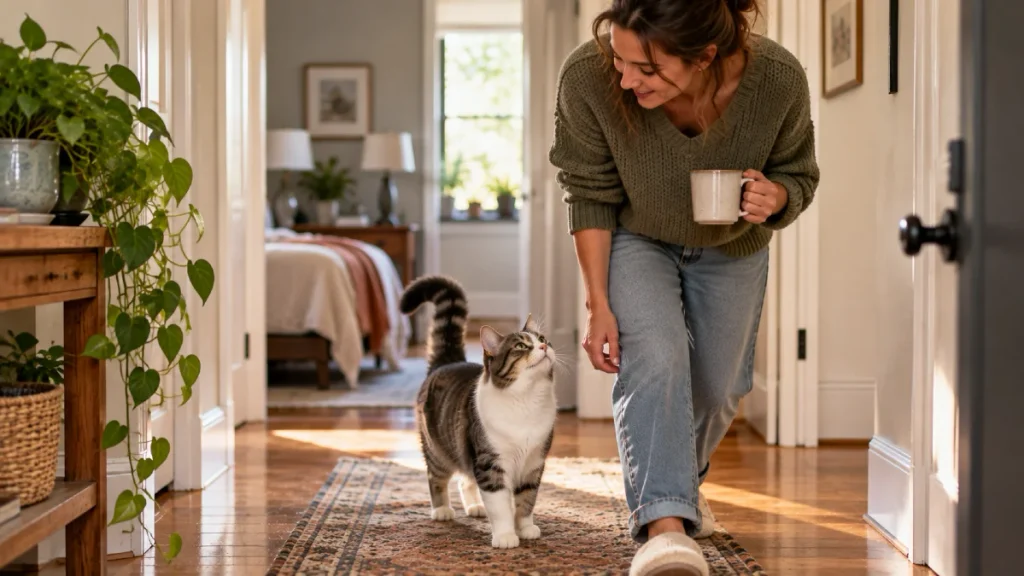
Some cats seem determined to know everything their owners are doing. They follow people into bedrooms, kitchens, bathrooms, and even laundry rooms.
This behavior may be connected to curiosity. Cats often pay close attention to movement, unfamiliar objects, and changes in their surroundings.
Your activities provide many interesting sights, sounds, and smells. Opening a cupboard, moving furniture, or carrying a bag can give your cat something new to investigate.
When your cat suddenly walks in front of you, they may simply be trying to reach the same interesting place. What looks like an attempt to block you may be an ordinary part of exploration.
You might notice your cat stopping to sniff something on the floor or inspect an object you are carrying. Their attention may be focused on the environment rather than on stopping you.
How to Recognize Normal Curiosity
A curious cat usually appears alert without looking frightened. Their ears may point forward, their body may remain loose, and they may move toward something interesting with confidence.
Cats Protection describes forward ears and interested facial expressions as possible signs of curiosity. However, body language still needs to be considered alongside the situation.
If your cat enjoys following you, allow them to investigate safe household activities. You can also offer supervised exploration with cardboard boxes, scratching posts, and suitable climbing spaces.
Just check your feet before changing direction. Curious cats can move quickly, and their sudden stops may catch you by surprise.
Is Your Cat Blocking Your Path to Protect You?
Some cat owners believe their pets stand in doorways or block their movement because they are trying to protect them. This idea can feel convincing when a cat suddenly becomes alert near a strange sound.
Cats have sensitive hearing and closely monitor their surroundings. A noise outside, an unfamiliar smell, or movement near a window may capture their attention before you notice anything unusual.
Your cat might stop near a doorway and stare into another room. They may appear focused, with their ears moving as they listen.
However, this does not prove that your cat is guarding you from danger. There is no reliable way to conclude that a cat is protecting its owner simply because it stands in front of them.
Sometimes the cat is investigating something unfamiliar. In other situations, they may feel nervous and stop moving because they are unsure what to do next.
How to Tell Alertness From Fear
A calm but alert cat may hold their body naturally while watching a sound or movement. They might look toward the source, listen briefly, and then return to their normal activities.
A frightened cat may crouch low, flatten its ears, tuck its tail, or try to hide. These signals suggest discomfort rather than a confident attempt to protect someone.
If your cat suddenly blocks a doorway and appears frightened, avoid forcing them through the area. Check for unusual noises, unfamiliar animals, or other changes that might be causing stress.
Your cat may be reacting to something you have not noticed, but that does not mean there is a hidden threat. Respond to the signs you can actually observe rather than assuming your cat knows something dangerous is about to happen.
How to Stop Your Cat From Walking Under Your Feet
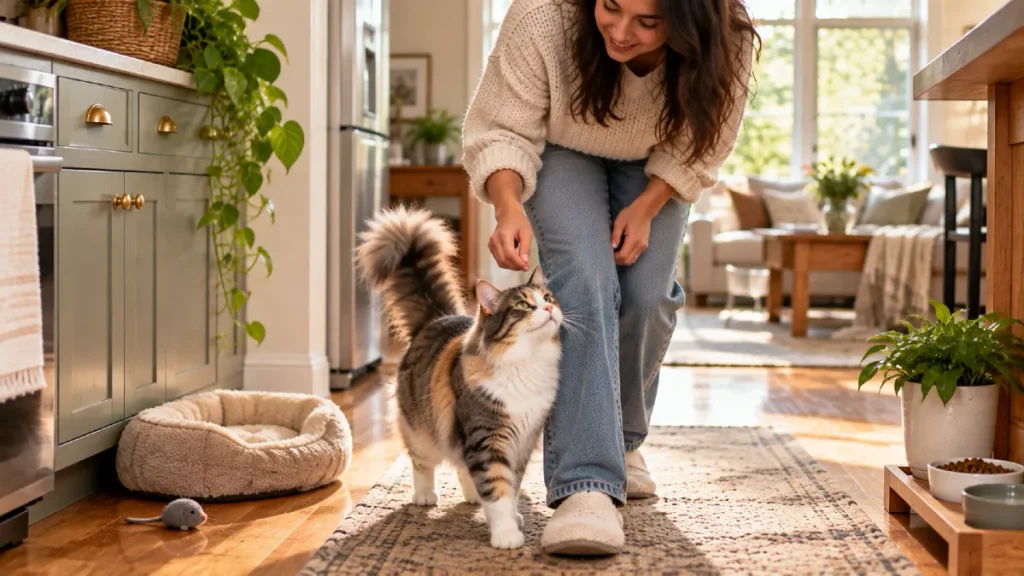
A cat that constantly gets under your feet can create a real safety problem. This is especially concerning near stairs, while carrying heavy objects, or when walking through your home at night.
The goal should not be to stop your cat from approaching you altogether. Instead, teach them that they can receive attention, comfort, and play in places where neither of you is likely to get hurt.
The Feline Veterinary Medical Association recommends positive reinforcement and predictable interactions to encourage desirable behavior. Cats can learn to repeat actions that lead to rewards, including moving to a chosen resting spot.
Teach Your Cat to Move to a Safe Place
Start by placing a small mat or cat bed beside the area where your cat commonly blocks you. Choose somewhere easy for them to reach but safely outside your normal walking path.
Encourage your cat onto the mat with a treat or toy. When they step onto it, reward them immediately with something they enjoy.
Repeat this during calm moments, using the same simple verbal cue. Over time, your cat may learn to move to the mat when you ask.
If your cat blocks you while you are walking, stop first and gently invite them to the safer spot. Avoid stepping over them, pushing them with your foot, or rushing past.
Prevent the Habit Before It Starts
Pay attention to when blocking happens most often. If your cat gets underfoot just before dinner, a predictable feeding routine may reduce the need to chase after you.
If the behavior happens during quiet evenings, regular play and interaction may help. Interactive feeders such as the PetSafe SlimCat can also offer activity between your usual play sessions.
Keep stairs and narrow hallways clear of clutter, and use enough lighting to see your cat at night. Small changes like these are especially useful in homes where several people move around frequently.
Most importantly, do not yell, spray water, or frighten your cat to make them move. Fear can damage trust and may create new behavior problems.
Be patient and consistent with safer alternatives. Your cat can still enjoy being close to you without making every movement through your home risky.
When Blocking Your Path Could Be a Warning Sign
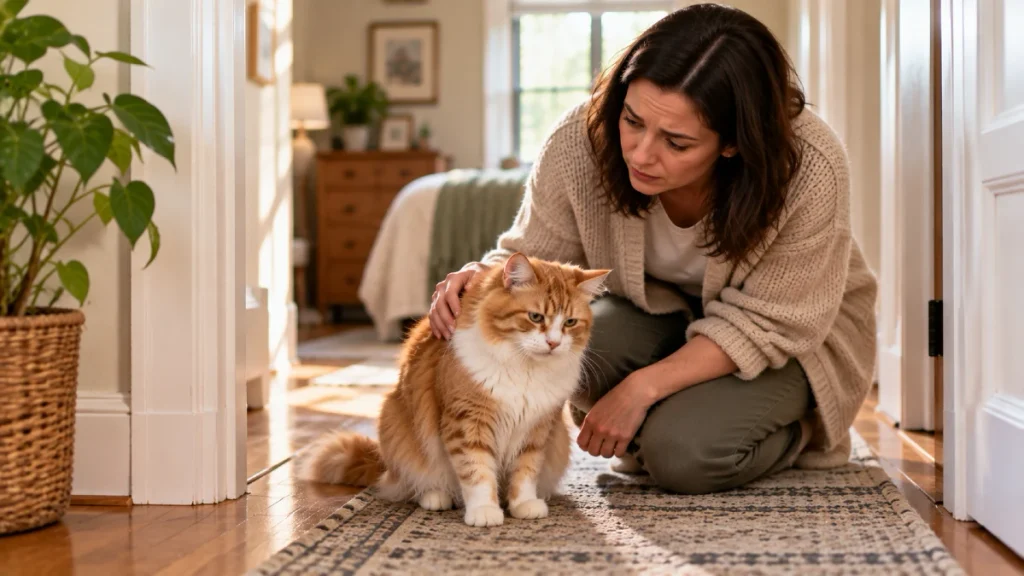
Most cats that block their owners are showing ordinary behavior connected to attention, routine, or social contact. However, a sudden and unusual change deserves a closer look.
For example, a cat that has always been independent might suddenly begin following you constantly. They may stand directly in front of you, vocalize more often, or seem unwilling to leave your side.
These behaviors can sometimes happen during stress. Changes in household routines, unfamiliar visitors, or the arrival of another pet may affect how comfortable your cat feels.
Physical discomfort can also change a cat’s behavior. Some cats become more clingy when they feel unwell, while others hide or avoid social contact.
VCA Animal Hospitals advises owners to watch for changes in activity, appetite, appearance, social behavior, and litter box habits. These signs can provide valuable information when something is wrong.
When Your Cat’s Behavior Needs Attention
Not every new habit requires urgent care, but some combinations of symptoms need prompt action. The following table helps separate everyday behavior from possible medical concerns.
| What You Notice | Possible Concern | What to Do |
|---|---|---|
| Friendly greeting as usual | Normal social behavior | Observe and enjoy |
| Sudden clinginess | Stress or illness | Contact your vet |
| Eating less than normal | Possible illness | Call your vet |
| Difficulty jumping or walking | Pain or mobility problem | Arrange veterinary care |
| Straining with little or no urine | Possible urinary blockage | Emergency vet immediately |
| Labored or open mouth breathing | Breathing emergency | Emergency vet immediately |
The biggest clue is whether the behavior is new or accompanied by other changes. A cat that occasionally stands in your way while looking relaxed is very different from one that suddenly becomes distressed and refuses food.
If your cat has trouble urinating or breathing, seek emergency veterinary care. Do not wait to see whether the behavior improves on its own.
What to Watch Before Calling Your Vet
If the situation is not an emergency, keep a simple record of your cat’s behavior. Note when they started blocking your path, how often it happens, and whether their appetite, energy, or litter box habits have changed.
You can also record a short video of the behavior to show your veterinarian. A video may help explain movements or reactions that are difficult to describe during an appointment.
Remember that cats are good at hiding discomfort. When a familiar behavior changes suddenly or comes with other symptoms, getting professional advice is safer than assuming your cat simply wants more attention.