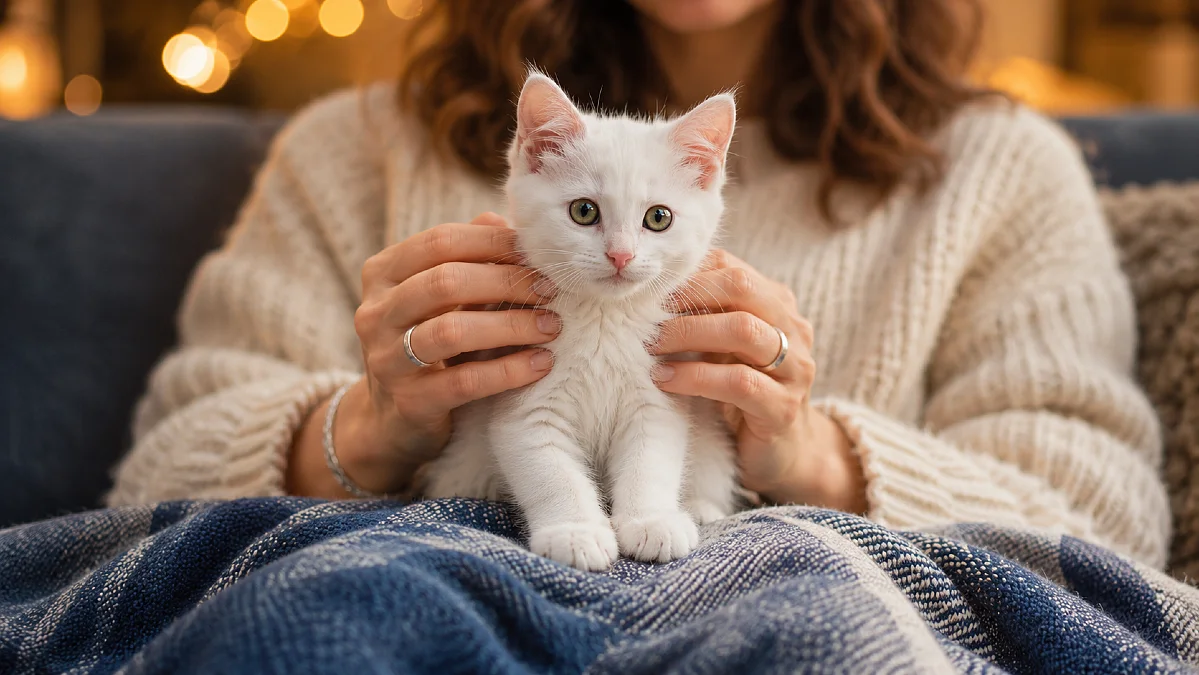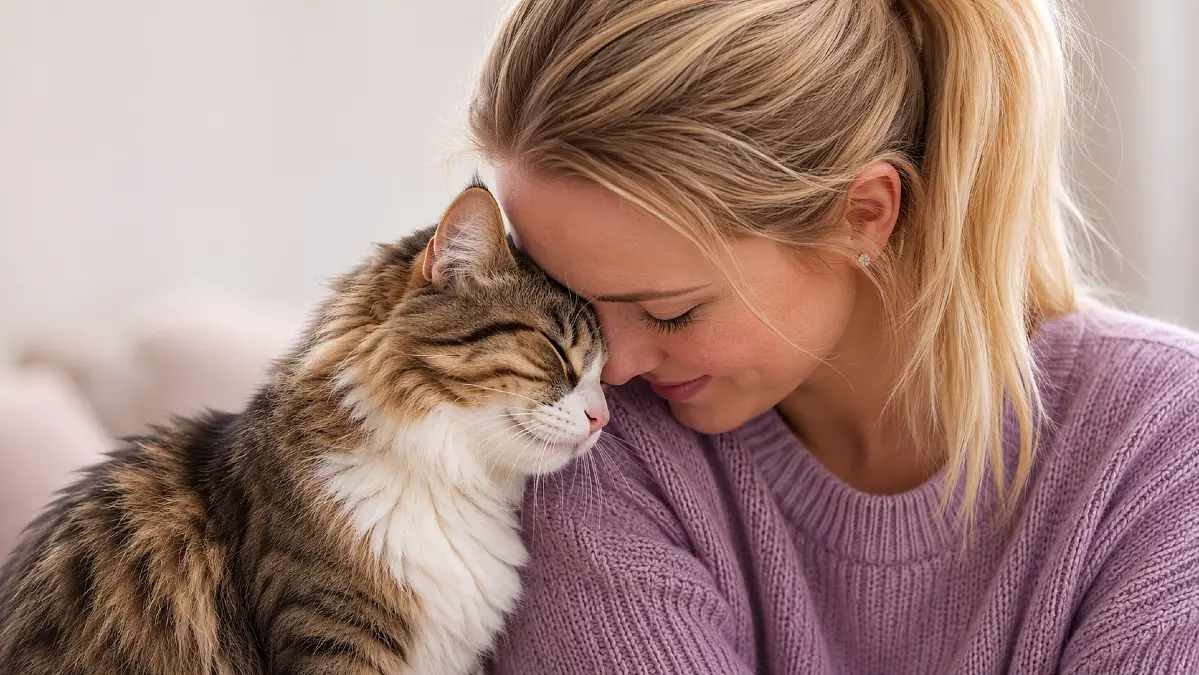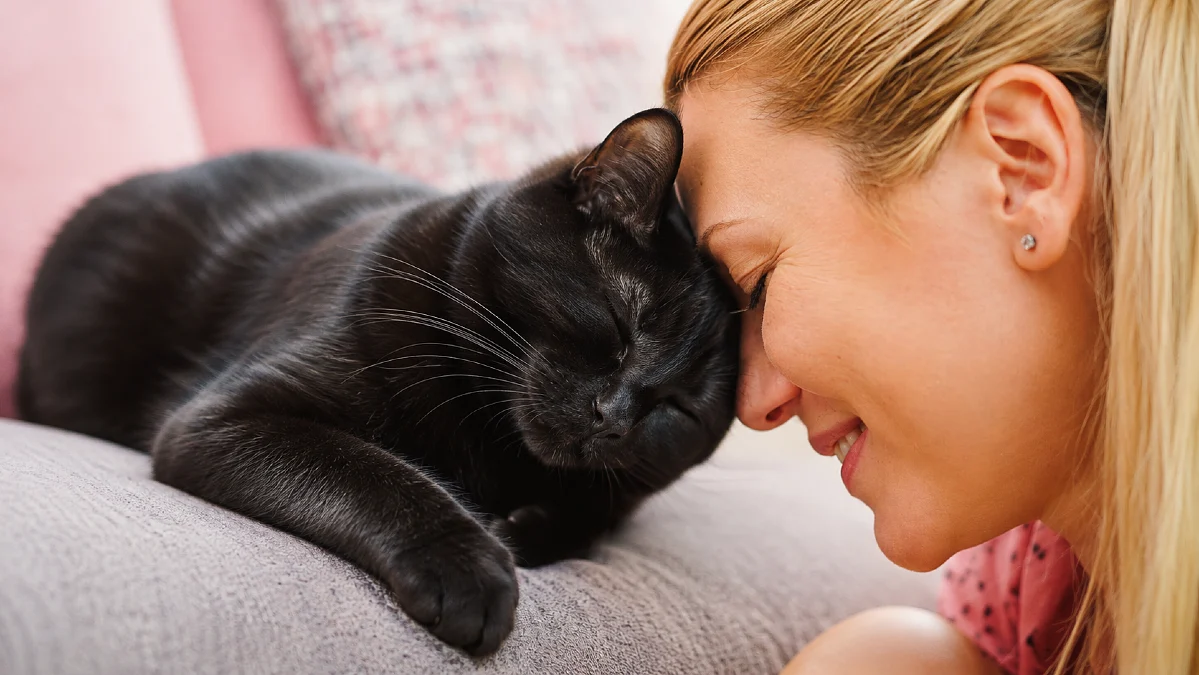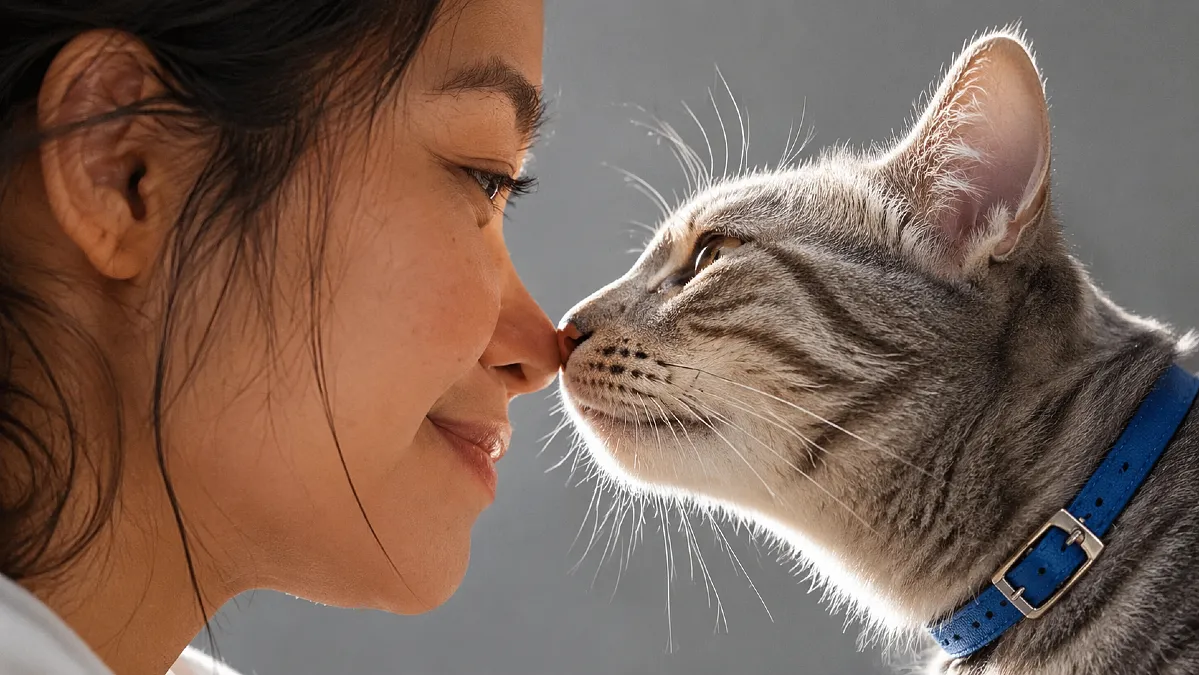
Your cat follows you into the bedroom, bumps your face in the morning, or curls up on your clothes when you’re away. These little habits might seem normal, but they can leave you wondering what your furry friend is trying to say. Are these simply everyday cat behaviors, or are they signs your cat loves you more than you realize?
Cats have their own ways of showing affection. Some use gentle touches, while others communicate through their eyes, tails, or scent. Many of these behaviors are connected to trust, comfort, and the close relationships cats build with people.
Research shows that cats can form attachment bonds with their caregivers, although that doesn’t mean they literally see you as a baby. Still, some of the things cats do around their favorite humans can feel surprisingly sweet.
1. They Raise Their Tail to Give You a Friendly Hello
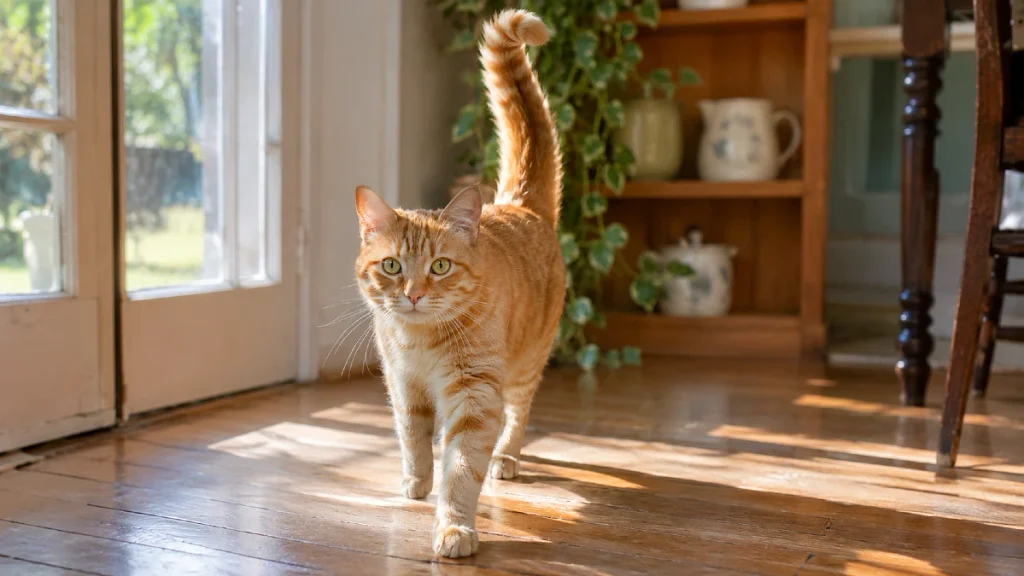
You walk through the front door, and your cat comes straight toward you with its tail pointing high in the air. Sometimes the tip curves slightly, and your cat lets out a cheerful little chirp. Before you put your bag down, your furry companion is already rubbing against your legs.
That raised tail is more meaningful than you might think. According to Cats Protection, a cat approaching with an upright tail and relaxed body is usually offering a friendly greeting. Cats use this signal when they feel comfortable approaching another cat or person.
What Your Cat’s Tail Is Telling You
A raised tail can be a welcome sign, but other positions may tell a different story. Look at the rest of your cat’s body before deciding how to respond.
| Tail position | Possible meaning | Your response |
|---|---|---|
| Upright and relaxed | Friendly greeting | Offer a gentle hello |
| Tucked underneath | Fear or worry | Give them space |
| Puffed up | Feeling threatened | Avoid approaching |
| Fast side movements | Agitation or frustration | Stop touching |
A relaxed tail greeting is especially meaningful when your cat chooses to approach you without being called. It suggests your presence is welcome, although it doesn’t prove you’re the only person your cat trusts.
The next time your cat welcomes you home, crouch down and let them approach your hand. If they rub against you, offer a gentle scratch around the cheeks or chin.
You don’t need to pick them up or demand a cuddle. Sometimes a quiet greeting is exactly what your cat wants.
2. They Slow Blink at You When They Feel Relaxed
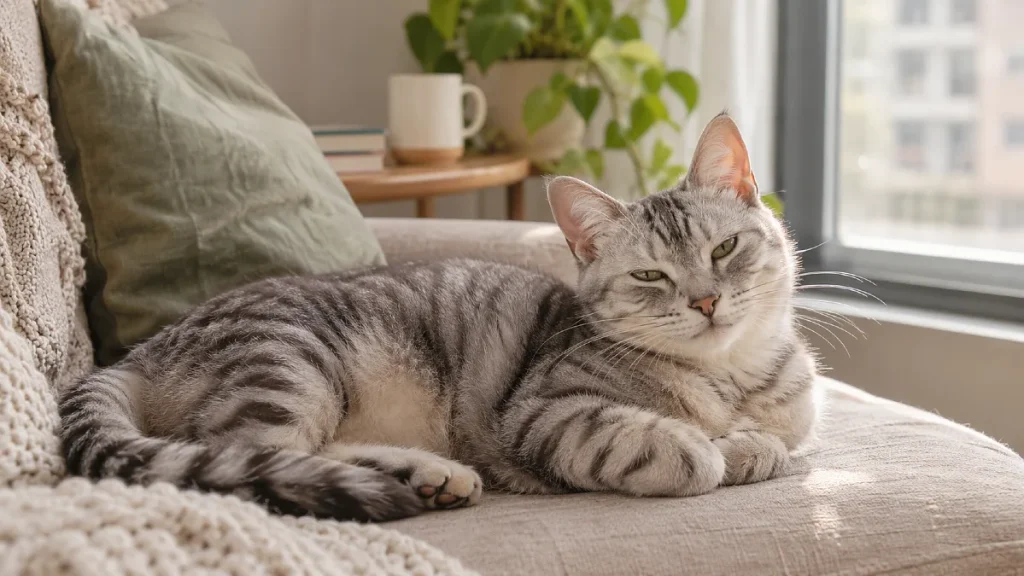
Have you caught your cat watching you from across the room before slowly closing its eyes? Instead of staring, your cat gently narrows its eyes, pauses, and opens them again. This peaceful little expression is known as a slow blink.
Cats often use their eyes to communicate how they feel. A tense stare can happen during conflict, while soft eyes and a relaxed face are commonly linked with comfort. Slow blinking is one of the more interesting signs of friendly cat communication.
A 2020 study published in Scientific Reports by researchers including Tasmin Humphrey found that cats responded to people who slowly blinked at them. The researchers also found that cats were more willing to approach an unfamiliar person following a slow blink interaction than after a neutral expression.
How to Slow Blink Back at Your Cat
You can try this simple interaction when your cat is already calm. Sit nearby without leaning over them, and wait until they seem comfortable looking in your direction.
Slowly narrow your eyes, close them briefly, and gently open them again. Then look slightly away rather than holding a hard stare.
Your cat might return the blink, move closer, or simply continue resting. Each response is fine because the goal is to offer friendly communication without pressure.
Remember that slow blinking should happen alongside other relaxed body signals. If your cat keeps one eye closed, squints repeatedly, or has eye discharge, that may indicate an eye problem rather than affection.
3. They Greet Your Face With Gentle Nose Bumps
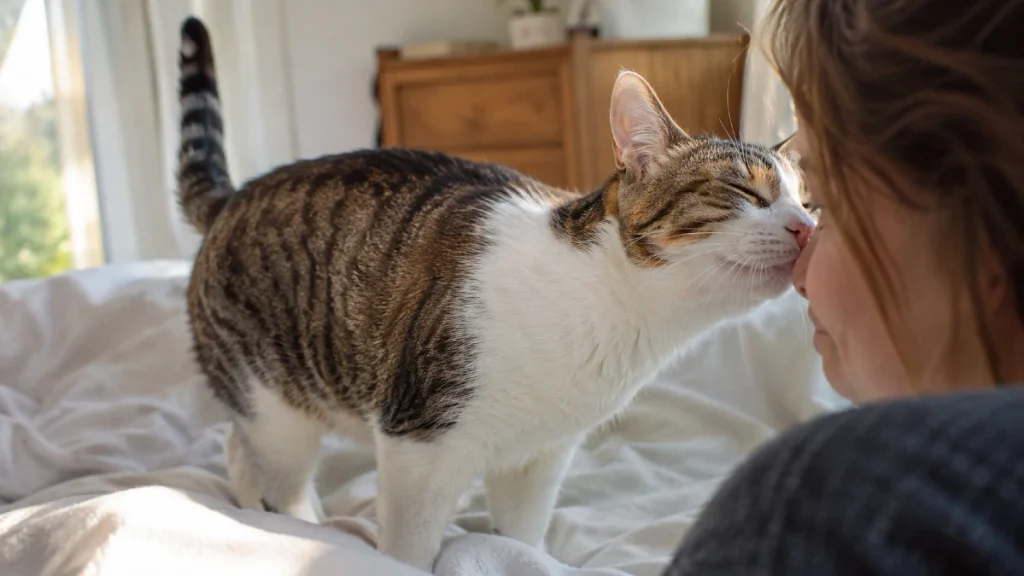
You are still half asleep when something cool and slightly wet touches your cheek. Your cat has climbed onto the bed and is gently pressing its nose against your face. Sometimes the greeting continues with a soft cheek rub against your forehead or chin.
Cats use physical contact to communicate with familiar companions. VCA Animal Hospitals explains that cats may rub noses with friendly cats and use facial scent glands during head rubbing.
Their cheeks, forehead, and chin contain glands that leave scent signals on objects and other animals. These scents help cats maintain familiarity with their surroundings and social companions.
When your cat rubs its cheek against your face, it may be strengthening that sense of familiarity. The behavior can be part of a friendly greeting rather than an attempt to claim ownership of you.
Why These Morning Greetings Matter
Cats are often active around dawn, so morning visits can also involve hunger, attention, or an established routine. A nose bump is not automatic proof of affection, especially if your cat immediately leads you to the food bowl.
Still, repeated gentle greetings paired with relaxed body language are encouraging signs. Your cat is choosing to approach you at close range, where it needs to feel comfortable.
If your cat enjoys these moments, stay relaxed and let them make contact. A gentle cheek scratch can be a nice response when they lean into your hand.
Avoid pushing your face toward a nervous cat. Allowing them to decide how close they want to come makes the interaction safer and more comfortable.
4. They Rest a Paw on You to Ask for Closeness
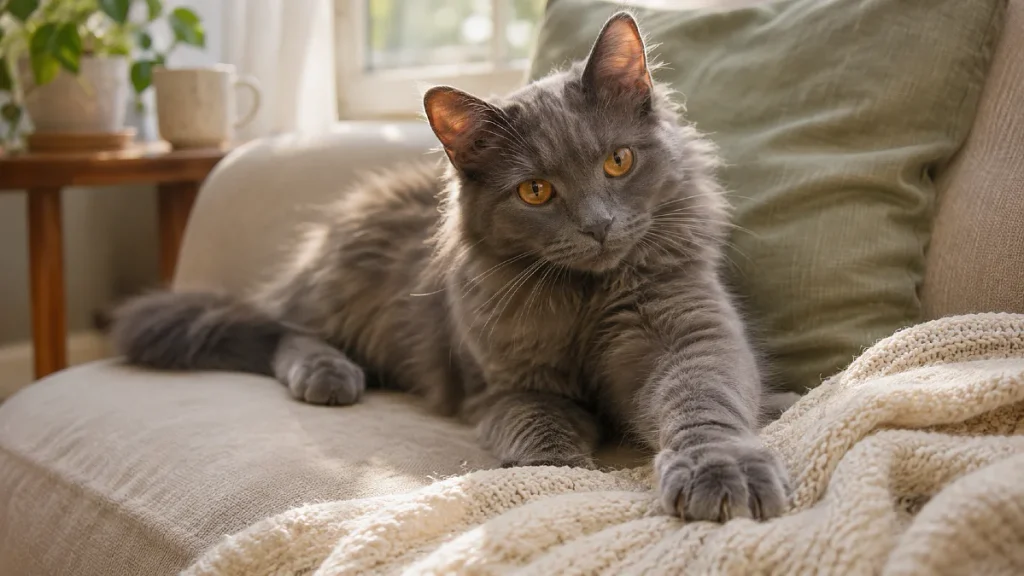
You’re sitting on the couch when your cat suddenly places one soft paw on your arm. There is no scratching or grabbing, just a quiet touch while your cat settles beside you. It can feel almost like your cat is holding your hand.
A gentle paw rest might be an attempt to get your attention or maintain contact. Some cats also use their paws when asking for petting, food, or play, so the meaning depends on what happens next.
Another familiar paw behavior is kneading, often called making biscuits. According to Blue Cross, kittens knead their mother’s belly while nursing, and some continue this movement into adulthood.
When an adult cat kneads a soft blanket or your lap, it may be feeling comfortable. However, a single resting paw is different from kneading and doesn’t necessarily have the same cause.
What Different Paw Gestures May Mean
Not every paw movement is an affectionate touch. These simple differences can help you decide how to respond.
| Paw behavior | Possible reason | Best response |
|---|---|---|
| Gentle resting paw | Contact or attention | Stay relaxed |
| Slow kneading | Comfort or settling | Offer a soft blanket |
| Quick playful tap | Interest in playing | Offer a cat toy |
| Tense swat | Discomfort or warning | Give them space |
Look at your cat’s ears, posture, and overall mood before reaching for another cuddle. A cat that remains loose and relaxed is sending a very different message from one that stiffens or prepares to swat.
If your cat kneads your lap with sharp claws, place a thick blanket between you. This protects your skin without punishing a natural behavior.
Most importantly, don’t force your cat to maintain physical contact. Letting them move away freely helps keep those peaceful moments pleasant.
5. They Bring You Toys and Other Odd Gifts
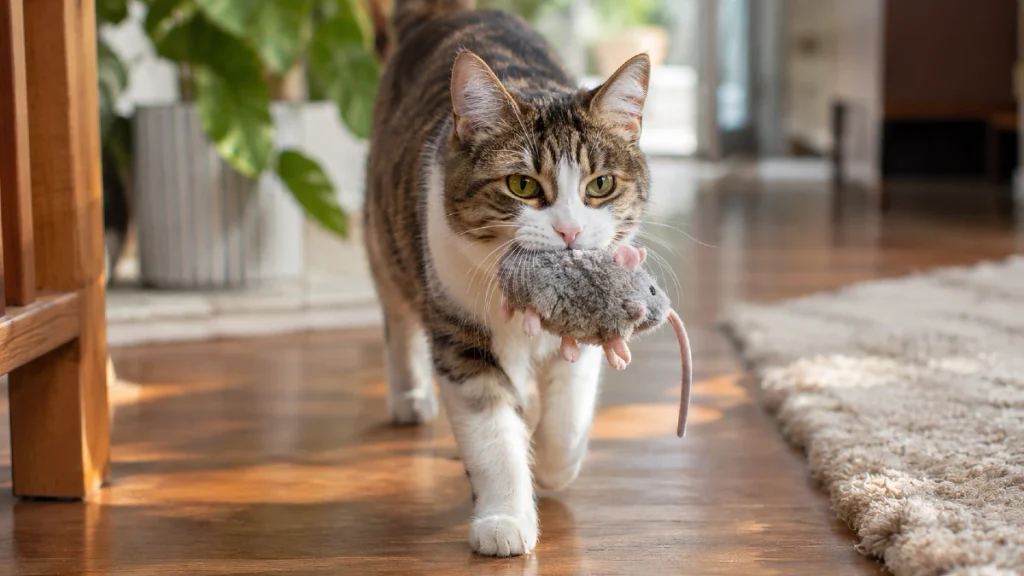
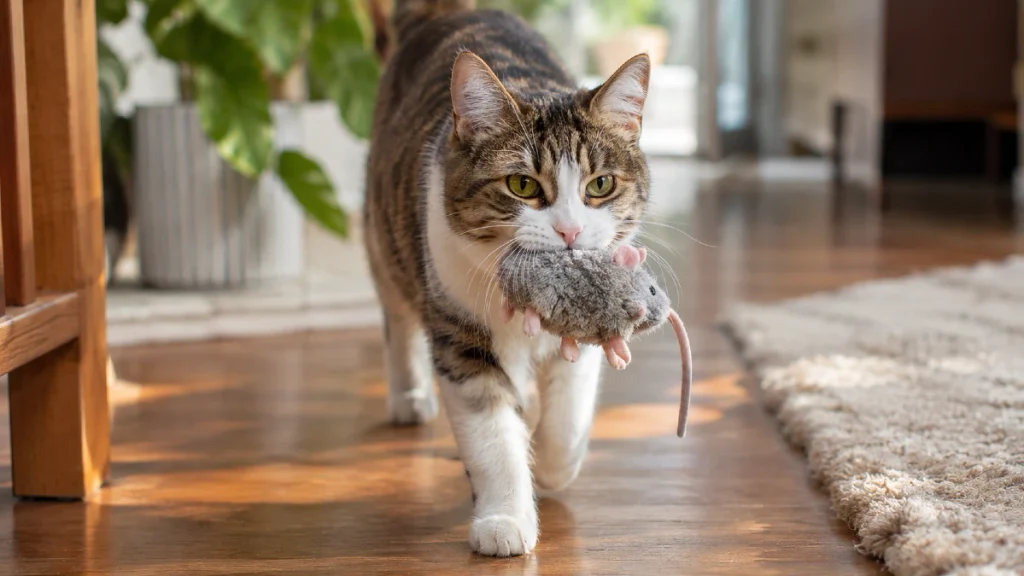
You wake up and discover a toy mouse beside your pillow. Another day, your cat leaves a small ball near your shoes or carries a favorite toy into the living room. Sometimes outdoor cats bring home something much less pleasant.
These surprises can feel like presents, and they sometimes happen during friendly interactions. However, cats also carry objects because hunting, carrying prey, and playing are natural behaviors.
Veterinarian Hannah Hart explains in PetMD that there are several theories about why cats bring objects to their owners. Some may be bringing something to a safe place, while others might be inviting their human to play.
Mother cats also carry prey to their kittens as part of natural hunting behavior. That connection is interesting, but it doesn’t prove your cat thinks you’re a helpless kitten who needs feeding.
How to Respond to Your Cat’s Gifts
Different objects call for different responses. You can encourage safe play while avoiding unnecessary handling of wildlife.
| Item brought | Possible reason | What to do |
|---|---|---|
| Toy mouse | Hunting play | Start a play session |
| Small ball | Carrying or play | Toss it gently |
| Dead prey | Hunting instinct | Remove safely |
| Live prey | Hunting behavior | Keep pets away and seek humane help |
You don’t need to praise or reward your cat for catching wildlife. Removing prey safely and keeping your cat indoors or in a secure outdoor enclosure can help protect other animals.
For indoor cats, hunting games can meet some of the same natural needs. Cats Protection recommends toys that encourage stalking, chasing, and pouncing.
Try using a wand toy or a small toy mouse for regular play sessions. Let your cat catch the toy sometimes so the activity feels rewarding.
If your cat carries toys to you, see what happens when you offer a little playtime. That may be exactly the interaction they were seeking.
6. They Sleep on Your Clothes to Keep Your Scent Close
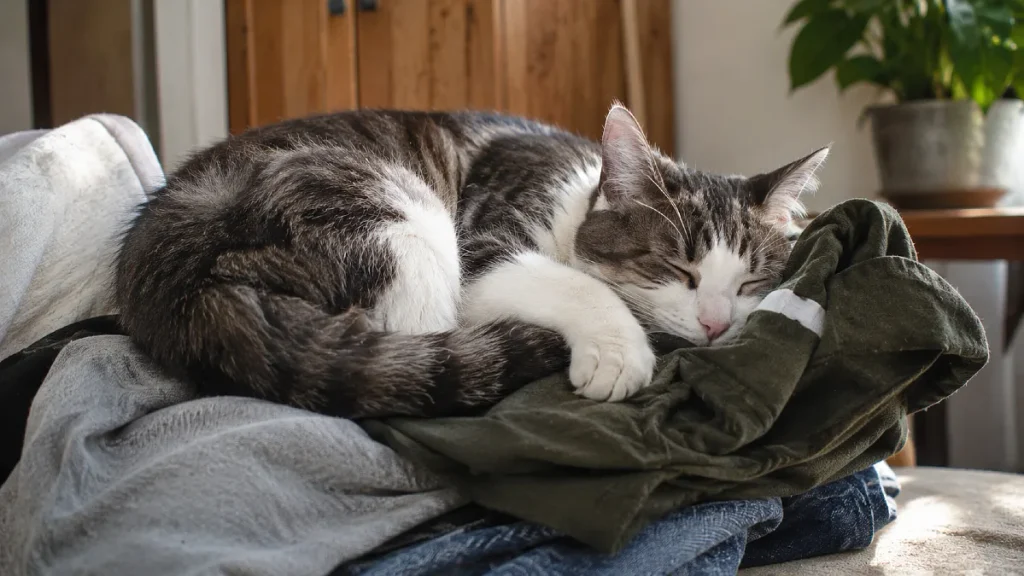
You buy your cat a soft new bed, but they ignore it completely. Instead, you find them sleeping on your worn sweatshirt, yesterday’s jacket, or the clothes you left on the chair. They seem perfectly happy surrounded by your laundry.
This behavior makes more sense when you consider how much cats depend on their sense of smell. Familiar scents help them recognize places, objects, and companions.
Cats Protection explains that some cats prefer dirty laundry because it carries the familiar scent of their owner. Others prefer clean laundry because it is warm, soft, or comfortable.
Your clothes may offer several things your cat likes at once. They can provide a cozy resting place while carrying a smell your cat already knows.
Why Your Scent Can Be Comforting
When you leave home, the environment stays familiar, but your presence is missing. An item carrying your scent may offer comfort to some cats, particularly during changes in their surroundings.
Cats Protection recommends familiar bedding and an owner’s unwashed clothing when helping cats settle into new surroundings. Familiar smells can make an unfamiliar space feel more reassuring.
If you’re planning a trip, you can leave a clean, safe resting area with a recently worn shirt. Make sure there are no loose strings, buttons, or other items your cat could chew or swallow.
A familiar shirt is not a replacement for human care during long absences. Your cat still needs appropriate feeding, fresh water, clean litter, attention, and regular checks from a responsible caregiver.
And if your cat chooses your favorite sweater over an expensive bed, there is no need to feel disappointed. Sometimes the familiar smell and comfortable fabric are exactly what they prefer.
7. They Sit Beside You When Your Mood Changes
You’ve had a difficult day, and instead of following your usual routine, you sit quietly on the edge of your bed. Your cat walks into the room, climbs up beside you, and settles against your leg. They don’t demand food or attention, but they seem content to stay nearby.
Moments like these can feel surprisingly comforting. You might wonder how your cat knew something was different when you hadn’t spoken a word.
Research suggests cats can respond to human emotional signals. A study by Moriah Galvan and Jennifer Vonk, published in Animal Cognition, examined how domestic cats respond to emotional cues from people.
Other research has found that cats can use visual and sound signals when responding to emotional expressions. This suggests that changes in your face, voice, or behavior may influence how your cat reacts.
Can Your Cat Really Tell When You’re Sad?
It is tempting to believe your cat knows exactly what you’re feeling. However, researchers have not shown that cats experience human sadness in the same way people do or always recognize when someone needs comfort.
Your cat might notice that you’re moving less, speaking differently, or sitting somewhere unusual. They may also simply enjoy being close to you.
Either way, quiet companionship can be a lovely part of your relationship. If your cat settles beside you, let them choose their position and offer gentle affection if they seem interested.
You don’t have to turn every moment into a cuddle session. Sitting quietly together can be enough, especially for a cat that prefers gentle contact.
If your cat suddenly becomes unusually clingy or withdrawn, watch for other changes in eating, activity, or litter habits. Sudden behavior changes can also signal stress or illness and deserve veterinary attention.
8. They Show You Their Belly Because They Feel Safe
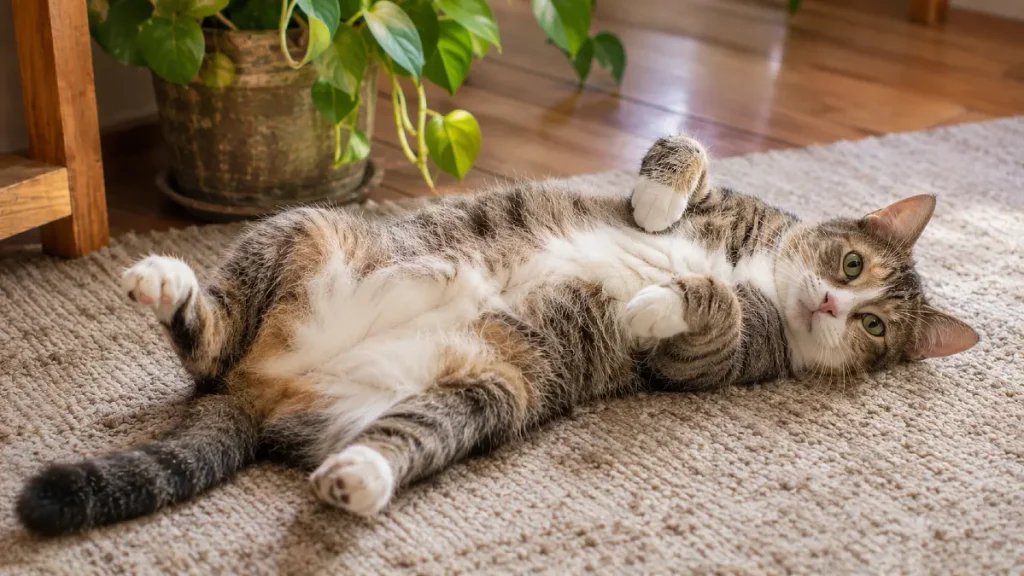
Your cat stretches across the living room floor, rolls onto its back, and shows you its fluffy belly. You reach down for a quick tummy rub, expecting a sweet moment. Instead, your cat catches your hand with its paws or quickly moves away.
This confusing reaction has a simple explanation. Showing the belly and inviting someone to touch it are two different things.
Cats Protection explains that a relaxed cat exposing its belly is often showing that it feels comfortable in your presence. The stomach is a sensitive area, and a cat resting with it exposed may feel safe enough to relax in that position.
However, many cats dislike having their bellies touched. A belly display is not a promise that your cat wants more physical attention.
When a Belly Display Is Safe to Approach
Before touching your cat, pay attention to the whole body rather than focusing on the belly. These signals can help you tell the difference between comfort and discomfort.
| Body language | Likely mood | What to do |
|---|---|---|
| Belly up, soft eyes | Relaxed | Admire without touching |
| Belly up, tail flicking | Becoming irritated | Pause interaction |
| Belly up, ears flattened | Worried or defensive | Give them space |
| Relaxed, leaning into cheek rub | Enjoying contact | Gently stroke cheeks |
The safest approach is to let your cat choose the next interaction. If they stretch and remain relaxed, you can speak softly or offer your hand near their face.
If they lean into your hand, a brief cheek or chin scratch may be welcome. Stop if their tail starts lashing, their ears turn back, or their body becomes tense.
Some cats genuinely enjoy belly rubs, but many do not. Respecting your own cat’s preferences is more useful than expecting them to behave like another cat.
When your cat exposes its belly and stays comfortable around you, enjoy the moment without feeling the need to touch. Trust often grows when your cat learns that you respect their space.