Your cat climbs onto your lap, settles down, and suddenly starts pressing its paws into your legs. One paw pushes down, then the other, over and over. Sometimes the claws come out, and what began as a sweet moment becomes a little painful.
You may wonder why your cat does this, especially when it starts purring or looks ready to fall asleep. Is it showing love, asking for attention, or trying to tell you something?
The answer begins much earlier than you might expect. Cat kneading is a natural behavior that starts when kittens are nursing from their mothers. Even after they grow up, many cats continue using the same movement during moments of comfort and relaxation.
But kneading does not always mean the same thing. Your cat might be preparing a place to sleep, leaving its scent, or calming itself when something feels wrong.
Why Does Cat Kneading Begin During Kittenhood?
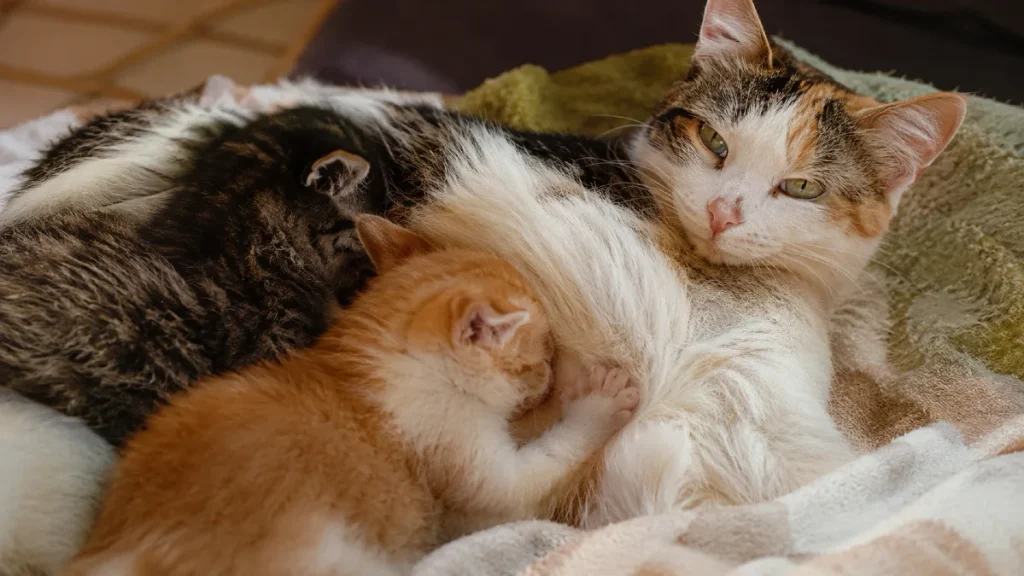
The first time a kitten kneads, it is doing something useful. While nursing, kittens press their front paws against their mother’s belly in a steady, alternating motion. This helps stimulate milk flow, making feeding easier.
That simple movement happens while the kitten is close to its mother, feeling her warmth and receiving food. These early experiences can make kneading part of a familiar, comforting routine.
According to VCA Animal Hospitals, kneading is an important kitten behavior that can continue into adult life. PetMD’s March 2026 veterinary review also explains that adult cats may repeat the movement because it is associated with calm and relaxation.
How does a nursing habit become an adult behavior?
A kitten eventually stops drinking its mother’s milk, but the paw movement does not always disappear. Some cats continue kneading whenever they find a soft, warm, or familiar place.
A warm lap or favorite blanket may offer some of the same comforting sensations. This helps explain why an adult cat might knead just before falling asleep.
Here is how early kneading may connect with behaviors you see later.
| Kitten behavior | Original purpose | Adult connection |
|---|---|---|
| Alternating paw pressure | Helps milk flow | Familiar paw movement |
| Nursing beside mother | Feeding and contact | Seeking comfort |
| Resting after feeding | Sleep and recovery | Kneading before naps |
| Suckling | Drinking milk | Occasional fabric suckling |
These connections help explain why the habit lasts. However, they do not prove your cat is consciously remembering its mother.
Your cat is repeating an instinctive behavior associated with comfort, rather than necessarily recalling a specific kittenhood event. That distinction matters when deciding what kneading really means.
What Does It Mean When Your Cat Kneads on You?
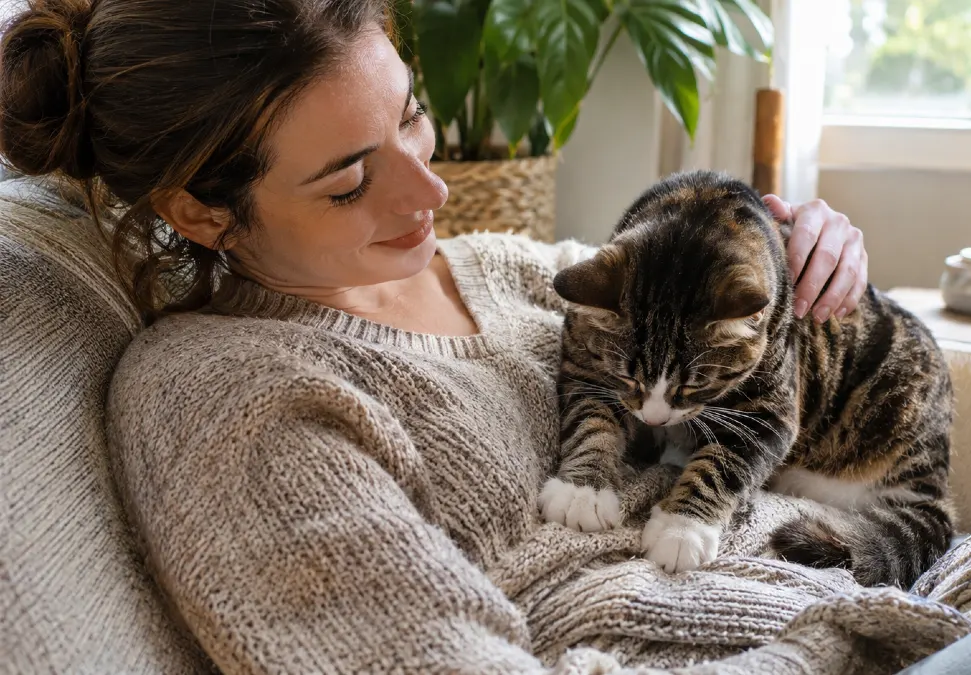
When your cat chooses your lap for kneading, it often suggests that your company feels safe and familiar. Cats frequently use this movement while settling down, especially around people they trust.
Your warmth, clothing, and the softness of your lap can make it an inviting place to rest. The kneading may begin naturally as your cat gets comfortable.
The American Animal Hospital Association explains that adult cats may knead their favorite people as a sign of affection. That does not mean kneading is a clear message of love every time, but it can be one sign of a positive bond.
Is your cat treating you like its mother?
It is tempting to think your cat sees you as a replacement mother. After all, the movement looks almost identical to what a kitten does while nursing.
However, there is no clear evidence that kneading means an adult cat believes its owner is its mother. It is more accurate to say your cat may associate being close to you with safety and comfort.
There is another possible reason your cat chooses you. Cats have scent glands around their paw pads, and kneading can leave scent on the surface they touch.
VCA Animal Hospitals describes this as one way cats may mark familiar people and resting places. The scent is part of how cats interact with their surroundings.
So your cat might be expressing comfort while also adding its scent to a favorite spot. These reasons can happen together, and you do not need to pick just one.
How Can You Tell If Your Cat Kneading Means Trust or Stress?
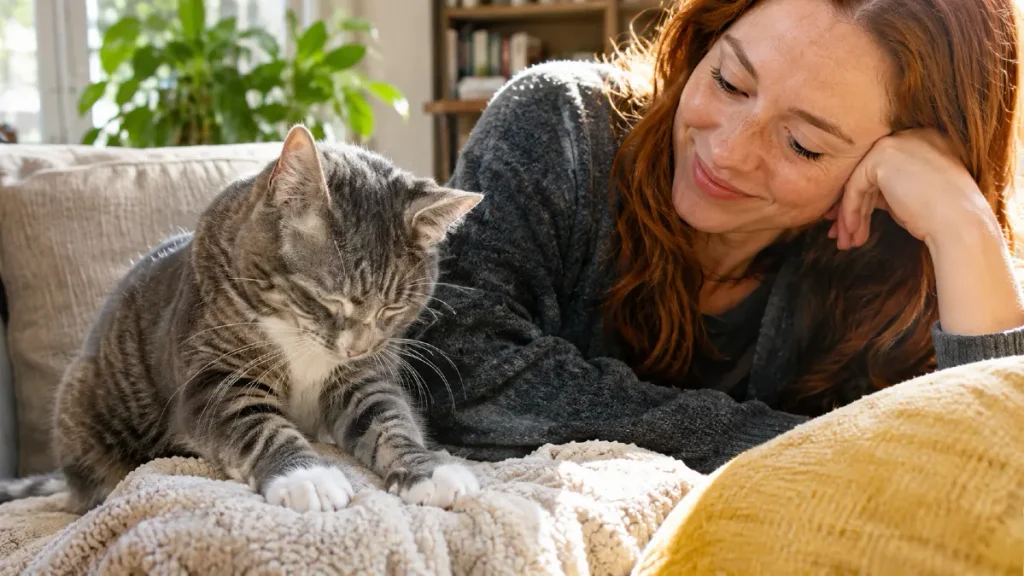
A cat pressing its paws into your lap might look completely happy. But kneading alone cannot tell you exactly how your cat feels.
Most relaxed kneading happens alongside other calm behaviors. Your cat may have soft eyes, a loose body, and a comfortable resting position.
Some cats purr during kneading, while others become quiet and sleepy. These are often reassuring signs when the rest of their behavior is normal.
However, a cat that feels anxious or uncomfortable may also knead to soothe itself. This is why watching the whole body matters more than watching the paws.
Read the body language before reacting
Look at your cat’s ears, tail, posture, and recent behavior. The table below can help you decide what to do.
| What you notice | Possible meaning | Best response |
|---|---|---|
| Soft eyes and loose body | Relaxation | Let your cat rest |
| Purring before sleep | Often comfort | Keep things calm |
| Flattened ears and tension | Fear or stress | Give more space |
| Fast tail movements and growling | Irritation | Stop touching |
| New kneading with hiding | Possible discomfort | Contact your vet |
These signs are clues rather than a final diagnosis. A cat can purr while stressed or in pain, so purring should never be the only sign you trust.
PetMD and the American Animal Hospital Association both advise paying attention to changes in kneading patterns. If your cat suddenly kneads much more than usual and seems unwell, a veterinary check is sensible.
What should you do during relaxed kneading?
If your cat looks comfortable, there is usually no reason to interrupt. Let it choose whether to settle on your lap, move away, or continue pressing its paws.
You can offer gentle petting if your cat enjoys it. Watch for signs that the contact is becoming unwanted, and stop before your cat feels the need to pull away or swat.
Why Does Your Cat Knead Blankets, Beds, and Clothes?
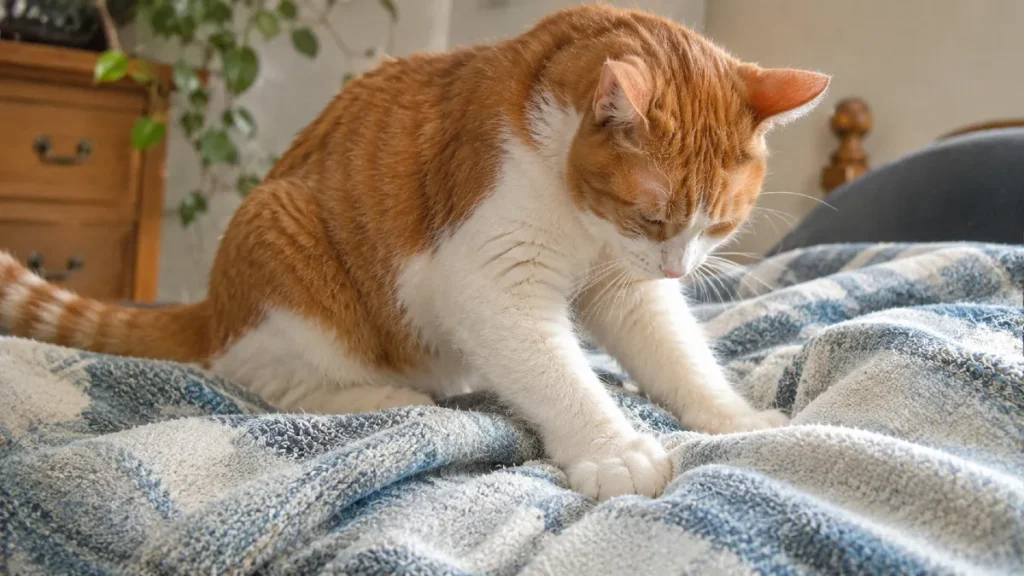
Your cat may ignore its expensive bed and spend several minutes kneading an old blanket instead. Sometimes the same cat chooses a pillow, sofa cushion, or pile of clean clothes.
Soft surfaces can make the movement more comfortable. They may also remind your cat of the warmth and texture associated with nursing.
Purina’s October 2026 cat behavior guidance explains that kneading may have several purposes, including relaxation, scent marking, and preparing a resting spot. Some of these explanations are theories, so they should not be treated as proven reasons for every cat.
Why does your cat knead before sleeping?
One explanation is that kneading helps cats prepare a place to rest. Their wild ancestors may have pressed down grass or soft ground cover before settling into a sleeping spot.
A house cat may repeat a similar movement on a blanket or cushion. The behavior can appear even when the surface is already soft enough.
Where your cat chooses to knead may offer another clue.
| Surface | Possible reason | Helpful response |
|---|---|---|
| Your lap | Warmth and closeness | Use a soft blanket |
| Fleece blanket | Pleasant texture | Offer a favorite throw |
| Cat bed | Preparing to rest | Keep it comfortable |
| Your clothes | Familiar scent | Allow a safe spot |
| Sofa cushion | Comfort or scent marking | Offer another cushion |
These patterns are possible explanations, not fixed rules. A cat may choose the same place for several reasons.
If your cat strongly prefers one blanket, you can keep it available in a quiet resting area. Choose fabric that does not shed loose fibers, especially if your cat also chews or suckles it.
Why Does Your Cat Purr, Drool, or Suckle While Kneading?
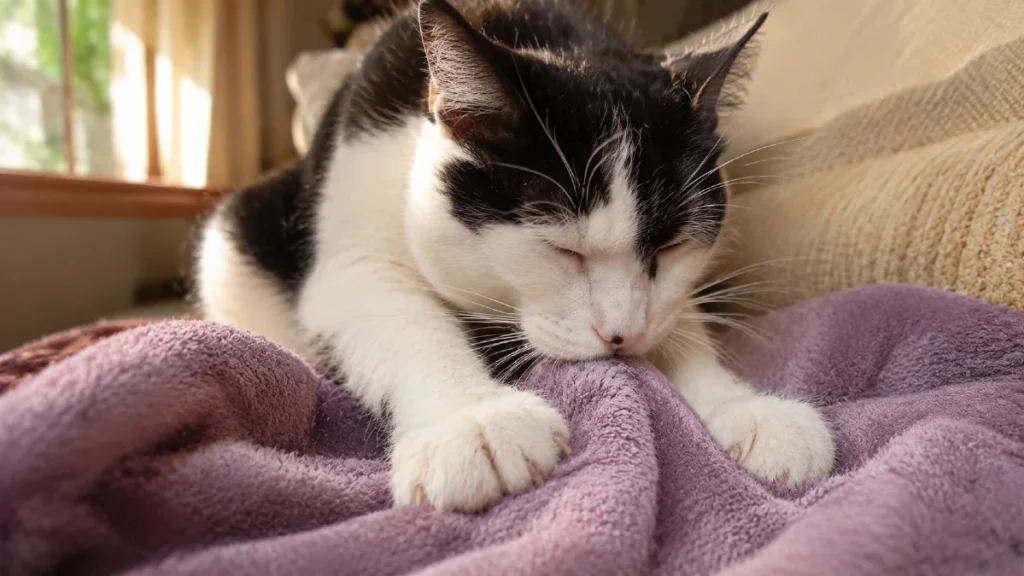
Some cats knead quietly, but others make the moment much more noticeable. They may purr loudly, close their eyes, or gently suck on a blanket while their paws keep moving.
These extra behaviors can make the link to kittenhood even more interesting. Suckling is another action cats first use while nursing, and some continue doing it after they grow up.
Veterinarian Hannah Godfrey explained in an August 2026 Cats.com article that adult blanket suckling can be a comforting behavior. It may happen when a cat feels relaxed, although stress can also play a part.
Why does your cat drool while making biscuits?
Some cats release a little saliva while kneading and purring. WebMD’s February 2026 veterinary review notes that drooling can happen during this behavior, possibly because of its connection to nursing.
If your cat has always done this while appearing relaxed, it may be part of its usual routine. However, new or heavy drooling should not be dismissed as affection.
Mouth pain, dental problems, nausea, and other illnesses can also cause drooling. If it begins suddenly or comes with trouble eating, bad breath, or discomfort, speak with your veterinarian.
Is blanket suckling safe?
Gentle suckling is often harmless when your cat is not swallowing fabric. The concern begins when a cat bites off pieces or eats material.
Cornell University’s College of Veterinary Medicine warns that swallowed fabric can cause serious intestinal blockages. This makes chewing and swallowing very different from ordinary kneading.
If you notice your cat pulling threads from a blanket, remove that item and offer a safer alternative. If your cat may have swallowed fabric, contact your veterinarian promptly rather than waiting for symptoms.
How Can You Keep Cat Kneading From Hurting Your Skin?
A cat’s kneading can feel gentle at first, then suddenly become painful when sharp claws press through your clothes. Your cat may be perfectly relaxed, even while you are trying not to move.
The good news is that you can protect yourself without stopping this natural behavior. The simplest solution is often a thick blanket placed between your skin and your cat’s paws.
PetMD recommends redirecting uncomfortable kneading to a suitable surface rather than punishing the cat. The goal is to make the behavior safer, not teach your cat to fear you.
Give your cat a comfortable place to knead
Start with a folded fleece blanket or tightly woven throw. Place it on your lap before your cat settles down, then allow it to knead the fabric instead of your skin.
If your cat prefers a particular cushion, you can move that cushion to a suitable resting area. Reward your cat when it chooses the new spot willingly.
Different problems call for different solutions.
| Problem | Practical solution | Why it helps |
|---|---|---|
| Claws digging into skin | Folded blanket | Creates a barrier |
| Claws catching fabric | Tightly woven throw | Reduces snagging |
| Overgrown claws | Cat nail trimmer | Maintains claw length |
| Kneading an unwanted spot | Dedicated resting cushion | Offers an alternative |
| Stress during handling | Calm breaks and treats | Builds positive contact |
Try one change at a time so your cat can adjust. If it does not accept a new blanket immediately, place it near a favorite resting spot and allow some time.
Should you trim your cat’s claws?
Some cats need help with claw care, especially older cats who have trouble maintaining their claws. Others keep their claws in good condition through normal scratching and may need little or no trimming.
Cats Protection recommends using clippers designed for cats and cutting only the tip when trimming is needed. The sensitive area inside the claw, called the quick, must be avoided.
Safari by Coastal Cat Nail Trimmer is one real example of a tool made for this purpose. A small reward such as Inaba Churu can help make gentle paw handling more pleasant for a cat that enjoys the treat.
If your cat resists, do not force the process. Ask your veterinarian or veterinary nurse to show you how to trim safely.
Never punish, spray, or hit a cat for kneading. The movement is natural, and frightening your cat can damage the trust you are trying to protect.
Declawing is not an appropriate solution either. It involves removing part of the toes and can cause lasting harm.
When Should a Change in Cat Kneading Concern You?
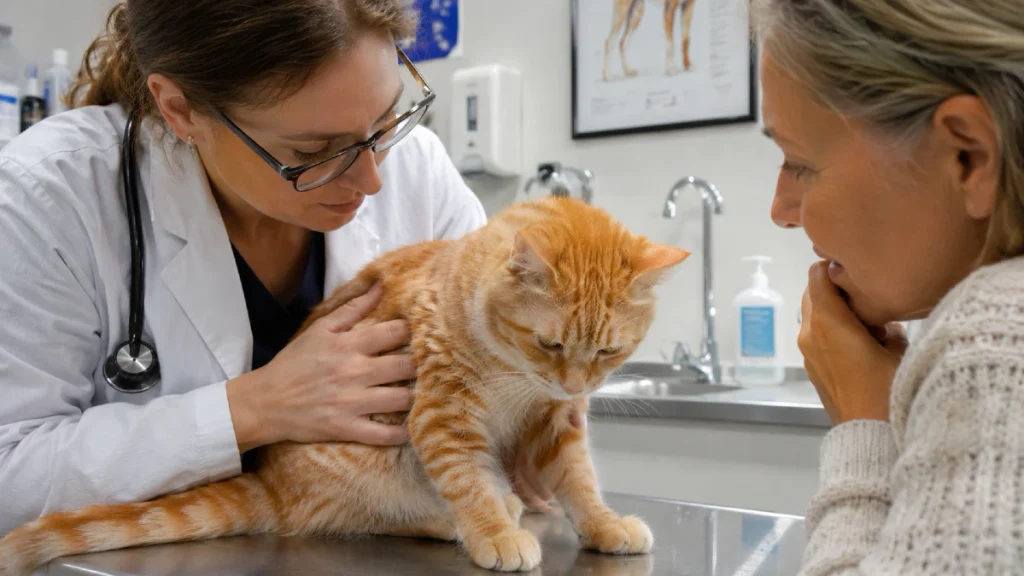
Kneading is usually a harmless part of cat behavior. But a sudden change in how often your cat kneads, or the way it acts during kneading, deserves attention.
For example, a cat that normally kneads briefly before sleeping may suddenly begin doing it for long periods while appearing restless. Another cat may stop a familiar routine and start avoiding contact.
Neither change proves there is a medical problem. Still, unusual behavior can be an early clue that something is bothering your cat.
Watch for changes beyond the paws
Pay attention if a new kneading pattern appears alongside other signs, such as:
- Hiding more often or avoiding familiar people
- Eating less or losing interest in normal activities
- Stiff movement, limping, or difficulty jumping
- Unusual vocal sounds or signs of pain
- Persistent suckling, chewing, or swallowing fabric
- Sudden changes in grooming or litter box habits
These signs deserve a closer look because cats can hide discomfort. The American Animal Hospital Association advises owners to consider possible stress or pain when kneading becomes unusually frequent or changes sharply.
If your cat has suddenly changed its behavior, contact your veterinarian. More urgent care may be needed if your cat has swallowed fabric, is vomiting repeatedly, or appears seriously unwell.
What if your cat never kneads?
Some cats knead often, while others do it rarely or seem to stop after kittenhood. The absence of kneading does not mean your cat dislikes you or lacks a strong bond with you.
Cats show comfort in several ways. Your cat might choose to sit beside you, rub its head against your hand, or sleep peacefully nearby instead.
What matters most is your cat’s individual pattern. Learning what is normal for your own cat makes unusual changes much easier to spot.