Your cat walks up to you, presses its little forehead against your face, and gives you a gentle bump. Sometimes it follows with a long cheek rub. Other times, your cat simply walks away as if nothing happened.
You might wonder whether your cat is saying it loves you, asking for food, or trying to get your attention. The behavior seems sweet, but its meaning is not always obvious. And when your cat does it several times a day, you may start wondering whether there is something important behind those little bumps.
The good news is that cat headbutting is usually a positive social behavior. It often means your cat feels comfortable with you and wants to share its familiar scent.
Veterinary experts call this behavior head bunting. It is one of the ways cats communicate with people, other cats, and their surroundings.
What Is Your Cat Really Saying When It Headbutts You?
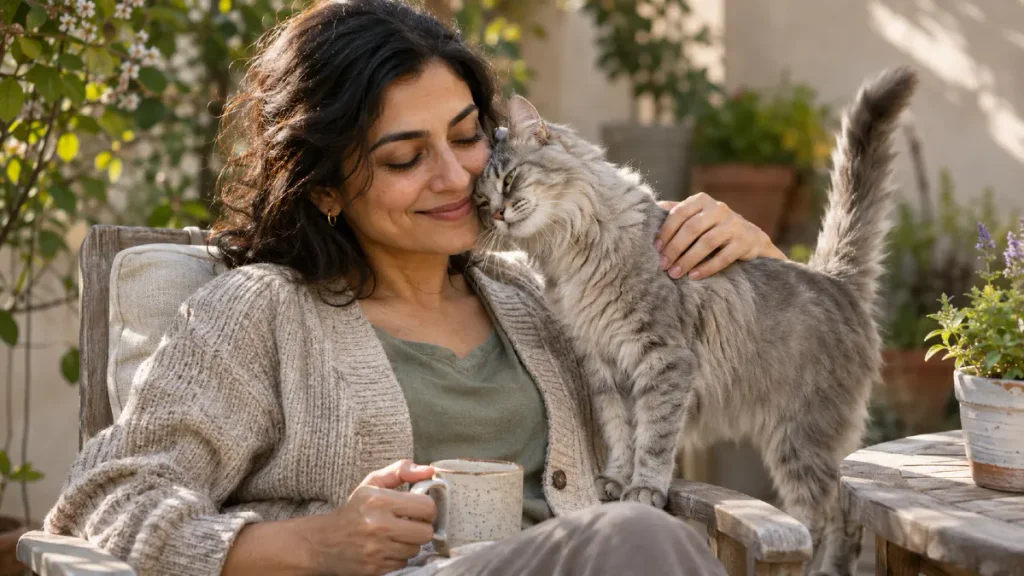
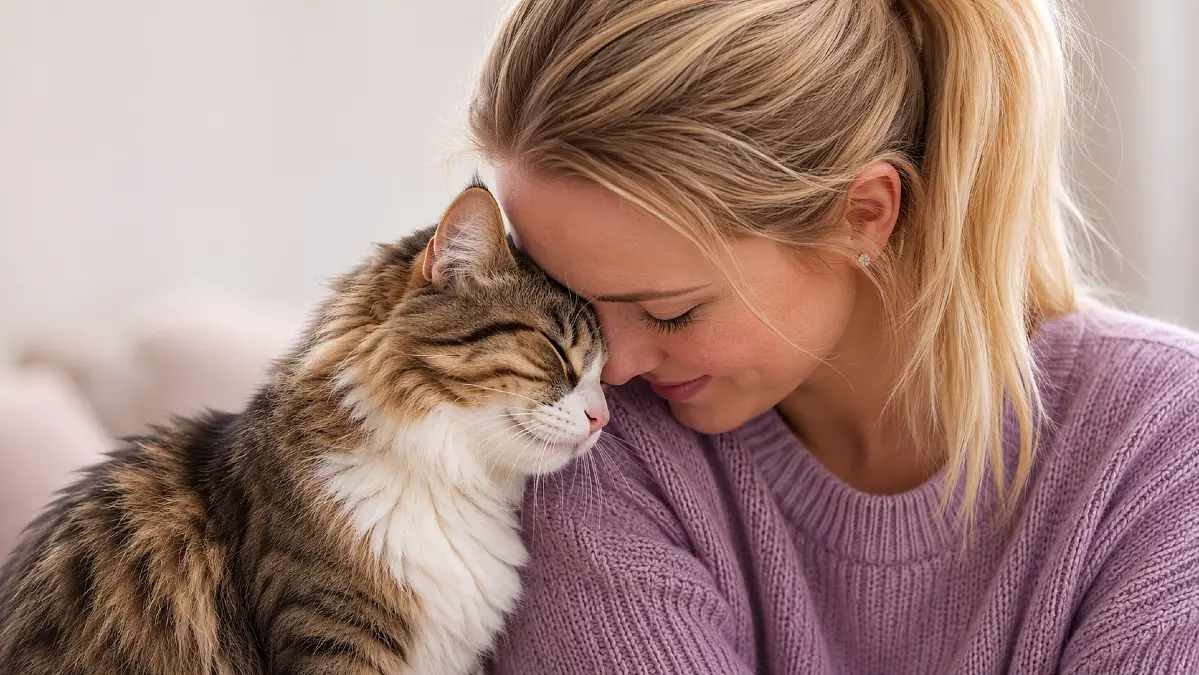
When your cat gently pushes its forehead against your hand, arm, or face, it is usually performing a behavior called head bunting. Cats use this movement to make contact with familiar individuals and objects. It is a natural part of feline communication.
According to VCA Animal Hospitals, head bunting often reflects trust and comfort. Cats may use it when greeting people they know or interacting with other friendly cats. The behavior can also help them spread familiar scents.
Think about what happens when you come home after several hours away. Your cat may approach with its tail raised, brush its face against your legs, and press its forehead into your hand. These actions often form part of a friendly greeting.
The important message is often that your cat recognizes you as someone familiar and safe. That does not mean every headbutt expresses the same feeling. The situation and your cat’s body language help reveal the likely reason.
A cat may also learn that headbutting gets your attention. If you usually respond with petting, play, or conversation, your cat may repeat the behavior when it wants to interact.
So, when your cat gives you a gentle bump, look at what happens next. Does it stay close, ask for petting, or move toward its food bowl? Those small details can help you interpret the message.
Why Does Your Cat Rub Its Head on You to Share Its Scent?
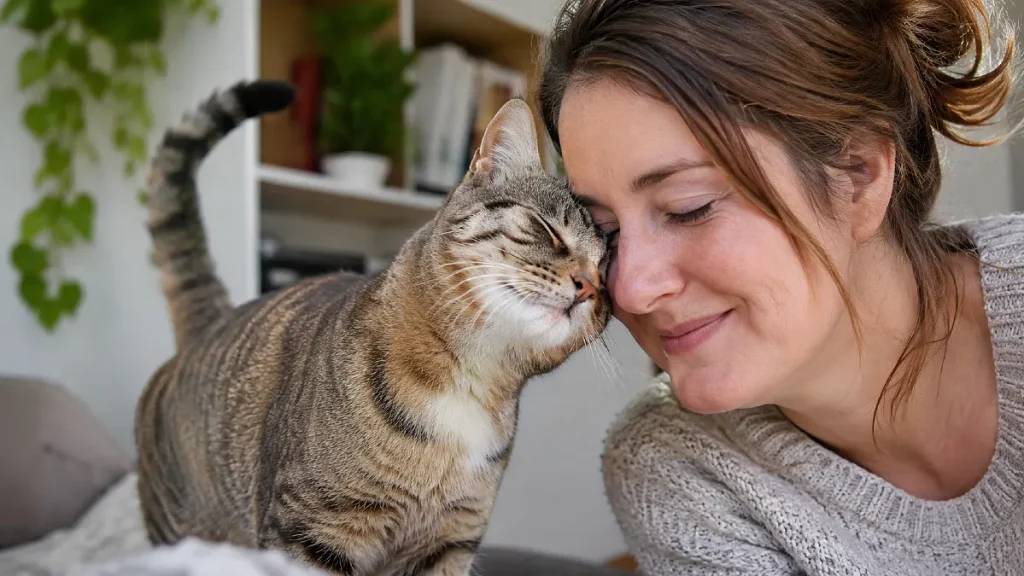
Your cat has a way of communicating that you cannot smell. Special scent glands around its cheeks, forehead, chin, and mouth produce chemical signals. These signals help cats gather and share information about their surroundings.
When your cat rubs its face against you, it can transfer scent from these glands onto your skin or clothing. Other cats can detect some of these chemical signals, even though people cannot. This process is called scent marking.
Battersea Dogs & Cats Home explained in its July 2026 guidance that cats use scent to make their surroundings feel familiar. Their own scent can help them feel more comfortable in a place. That is one reason cats repeatedly rub against furniture and people.
Your Cat May Be Adding You to Its Familiar Social Group
Cats that have friendly relationships sometimes rub their heads and bodies against one another. This behavior helps exchange scents between members of a social group. Cats Protection explains that scent sharing can help cats maintain a sense of familiarity.
Your cat may use similar behavior with you. When it presses its cheek against your hand, it may be treating you as a familiar social partner.
This does not mean your cat thinks you are another cat. It means scent sharing can be part of the relationship it has built with you.
Why Your Cat Keeps Doing It Again
Scent marks do not remain unchanged forever. Cats may return to familiar people and objects to deposit scent again.
This helps explain why your cat might rub against the same chair every morning. It may also explain why you get another headbutt shortly after coming home.
The repeated behavior is usually normal. In a relaxed cat, it can simply be part of maintaining a comfortable, familiar environment.
Does a Cat Headbutt Mean Love, Trust, or Just a Friendly Hello?
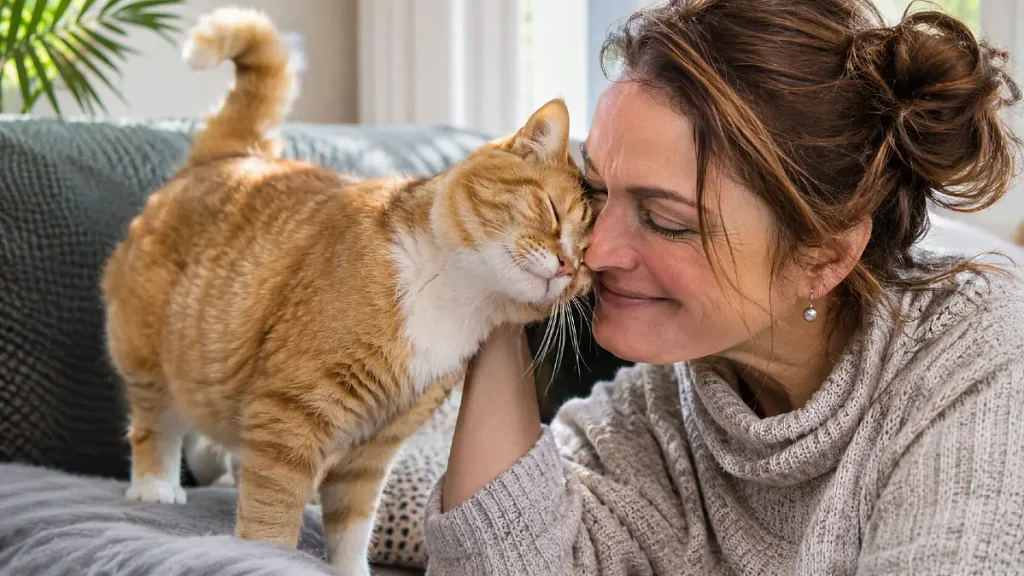
A gentle headbutt often suggests your cat feels safe around you. However, cats do not express emotions in exactly the same way people do. It is better to read the full interaction rather than treat one bump as proof of love.
Purina’s October 2026 cat behavior guide describes headbutting as a common sign of affection and trust. Cats may also use it to greet familiar people or request attention. The same movement can serve several purposes.
A 2026 study published in the Journal of Applied Animal Welfare Science examined reports from 443 dog and cat caregivers. The researchers found an association between bunting and higher reported wellbeing in cats. However, the results did not prove that headbutting itself makes cats happier.
How to Read the Message From Your Cat’s Body Language
Your cat’s tail, ears, eyes, and movements provide useful clues. PDSA explains that relaxed cats often hold their tails upright, keep their ears in a natural forward position, and show soft eyes.
The table below helps you compare common situations. These are possible interpretations, not exact translations of what your cat is thinking.
Table 1: What Your Cat’s Headbutt Might Mean
| Cat Behavior | Possible Message | What to Check |
|---|---|---|
| Headbutts with tail raised | Friendly greeting | Relaxed body |
| Rubs face and stays close | Wants social contact | Soft eyes |
| Bumps hand repeatedly | May want petting | Leans into touch |
| Headbutts near feeding time | May want attention or food | Walks to bowl |
| Rubs once and walks away | Brief greeting or scent marking | Calm movement |
| Headbutts with tense posture | Mixed signals or discomfort | Ears and tail |
The clearest signs usually appear when you consider several behaviors together. A relaxed cat that gently approaches you and stays nearby is giving a much different message from one that looks tense or tries to escape.
Also, remember that purring is not a perfect sign of happiness. Cats Protection notes that cats may purr when stressed or in pain, so body language still matters.
Why Does Your Cat Headbutt Your Face, Legs, or Furniture?
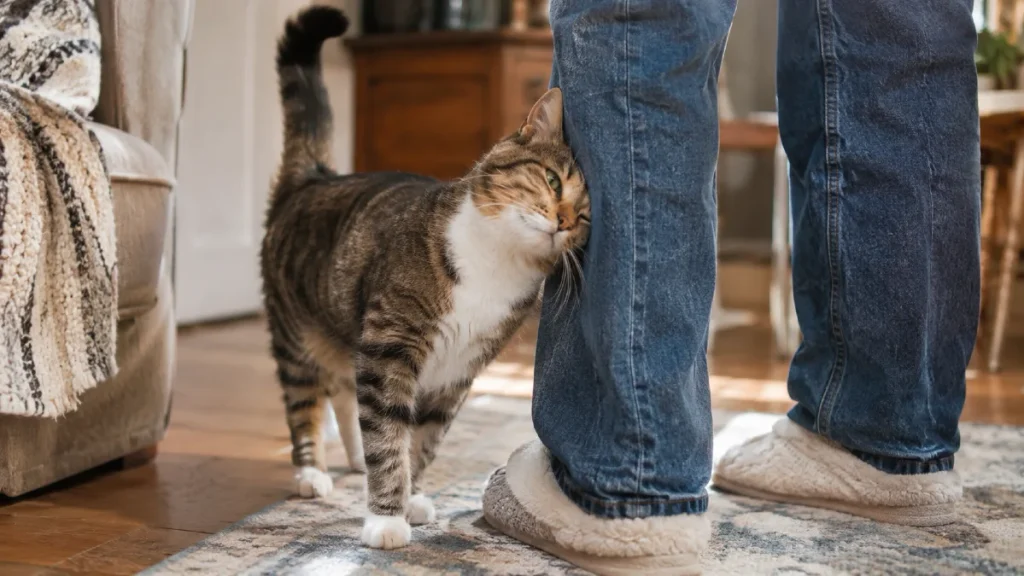
The place where your cat headbutts you can offer clues about the interaction. Your cat may choose whatever part of your body is easiest to reach. It may also target familiar objects around your home.
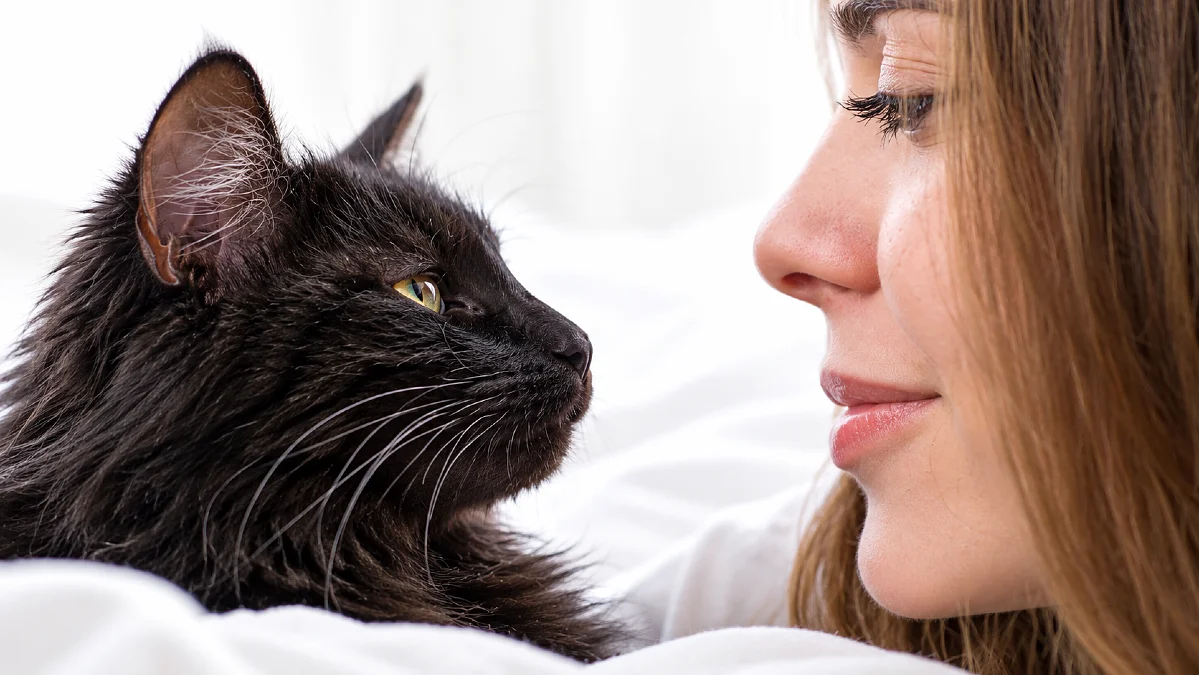
When your cat headbutts your face, it is often seeking close contact. This may happen when you are resting on the couch or lying in bed. Your face is simply within reach, and your cat may feel comfortable approaching it.
Some cats gently press their foreheads against an owner’s nose or chin. Others rub their cheeks across the person’s face before settling down.
When your cat headbutts your legs, the behavior often happens during a greeting. You may notice it when you enter a room or return home. Cats can combine facial rubbing with walking around your ankles.
The same behavior may occur when your cat wants something. If it repeatedly rubs against your legs near feeding time, it may have learned that this gets your attention.
When your cat rubs against furniture, scent communication becomes especially important. Cats commonly rub their faces against table legs, door frames, sofas, and scratching posts. These familiar scents may help make their environment feel secure.
VCA Animal Hospitals explains that facial rubbing on objects differs from urine spraying. Facial scent marking often occurs during normal, relaxed activity.
A cat may also rub against a new visitor. However, this does not automatically mean the visitor should begin petting it.
Some cats investigate unfamiliar people through scent and contact. Give them space to decide whether they want further interaction.
Why Does Your Cat Headbutt You and Then Suddenly Bite?
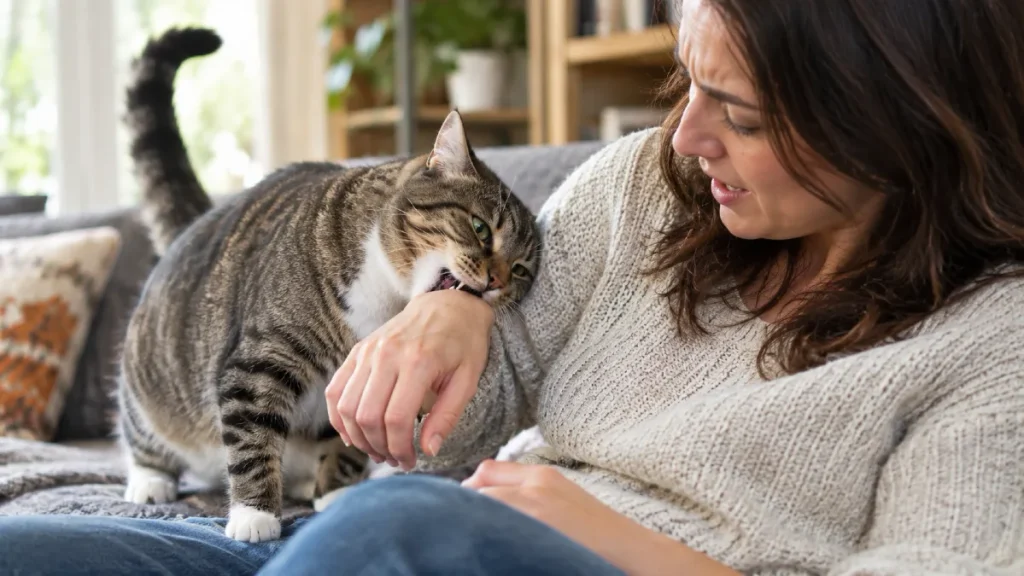
Few cat behaviors feel more confusing than receiving a sweet headbutt followed by a bite. One moment, your cat seems friendly. The next moment, it has its teeth around your hand.
This can happen for several reasons. Sometimes a cat gives a gentle nip during an excited interaction. In other situations, the bite means the cat has had enough physical contact.
Your Cat May Have Reached Its Petting Limit
Some cats enjoy brief petting but become uncomfortable when the touching continues. They may initially lean into your hand before showing signs that they want you to stop.
Battersea Dogs & Cats Home recommends allowing cats to control how much contact they receive. This means watching their reactions rather than assuming they want more petting.
Warning signs can include a swishing tail, ears turning backward, tense muscles, or a sudden turn toward your hand. If you notice these changes, stop touching your cat and give it space.
A Headbutt Does Not Always Mean Your Cat Wants Petting
Your cat may simply want to greet you or rub its scent against your hand. It might not want you to continue touching its body afterward.
This is especially important with a cat you do not know well. Let the cat approach, and wait for a clear sign that it wants more contact.
Never punish a cat for pulling away or showing discomfort. Instead, respect its boundaries and allow it to settle.
If biting becomes frequent, painful, or happens without a clear reason, speak with your veterinarian. Sudden aggression can sometimes be linked to pain or illness.
How Should You Respond When Your Cat Headbutts You?
When your cat gives you a gentle headbutt, you do not need to do anything dramatic. A calm response is often the best way to keep the interaction pleasant. Your goal is to let your cat decide how much contact it wants.
Start by relaxing your hand and allowing your cat to approach. If it rubs its cheek against your fingers, you can offer a gentle stroke around the cheeks or chin. Many cats enjoy contact in these areas.
Research published in Frontiers in Veterinary Science supports giving cats choice and control during human interactions. In one study, following simple handling guidelines increased friendly behavior and reduced signs of conflict. The advice focused on letting cats initiate contact and respecting signs that they wanted to stop.
What to Do During Different Headbutting Situations
Your response should match your cat’s behavior. The following table gives you a simple guide to use at home.
Table 2: How to Respond to Your Cat’s Headbutting
| What Your Cat Does | Your Best Response | What to Avoid |
|---|---|---|
| Gently bumps your hand | Offer a soft cheek rub | Grabbing its head |
| Rubs against your face | Stay calm and let it choose | Forceful head contact |
| Leans into your fingers | Give brief gentle strokes | Long forced petting |
| Walks away after a bump | Let it leave | Following to touch |
| Swishes tail or turns away | Stop petting | Continuing contact |
| Comes back for more | Offer another short stroke | Holding it in place |
You do not have to respond to every headbutt with petting. Sometimes sitting quietly beside your cat is enough, especially if it seems content simply being near you.
The most useful habit is to pause after a few strokes. If your cat leans back into your hand, it may want more attention.
Can You Headbutt Your Cat Back?
It might be tempting to copy the behavior by pressing your forehead against your cat’s head. However, PetMD advises against doing this. Your movement may feel unexpected or uncomfortable to the cat.
Instead, let your cat initiate any head contact. You can respond with soft speech, a slow blink, or a gentle scratch if it welcomes touch.
Play is another useful way to strengthen your relationship. An interactive wand toy gives your cat a chance to chase and move while spending time with you.
Scratching posts and cat trees also offer natural places for cats to rub their faces and leave scent. A soft grooming brush can be another option for cats that already enjoy brushing.
What If Your Cat Never Headbutts You or Suddenly Stops?
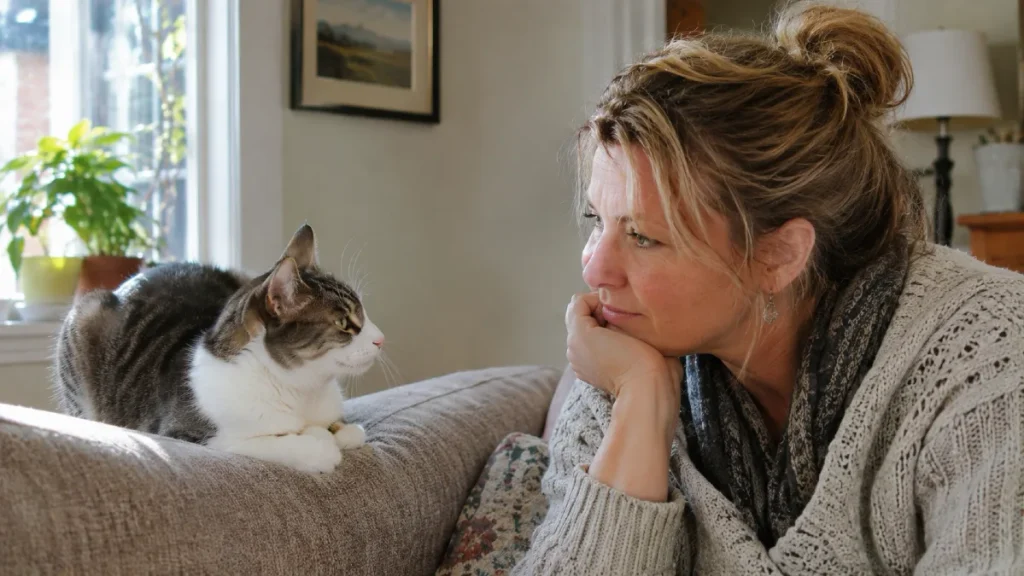
If your cat never headbutts you, that does not mean your relationship is weak. Cats have different personalities and preferences for physical contact. Some enjoy frequent rubbing, while others prefer to stay nearby without touching.
Your cat might show friendly feelings in quieter ways. It may sit beside you while you work, greet you with its tail raised, or slowly blink in your direction.
These behaviors can be signs that your cat feels comfortable around you. A cat does not need to headbutt you to have a positive relationship with you.
When a Change in Headbutting Deserves Attention
A different concern appears when a cat that normally loves headbutting suddenly stops. A change in social behavior can sometimes be related to stress, pain, or illness.
PetMD recommends speaking with a veterinarian when reduced headbutting occurs alongside other concerning behavior changes. Look for changes in appetite, activity, grooming, or willingness to interact.
For example, a cat that usually greets you every morning might suddenly hide under the bed. If it also seems tired or refuses food, the change deserves veterinary attention.
Do not force a cat to return to its previous behavior. Give it a calm environment while you look for possible causes and seek veterinary guidance when needed.
How Can You Tell Normal Cat Headbutting From Dangerous Head Pressing?
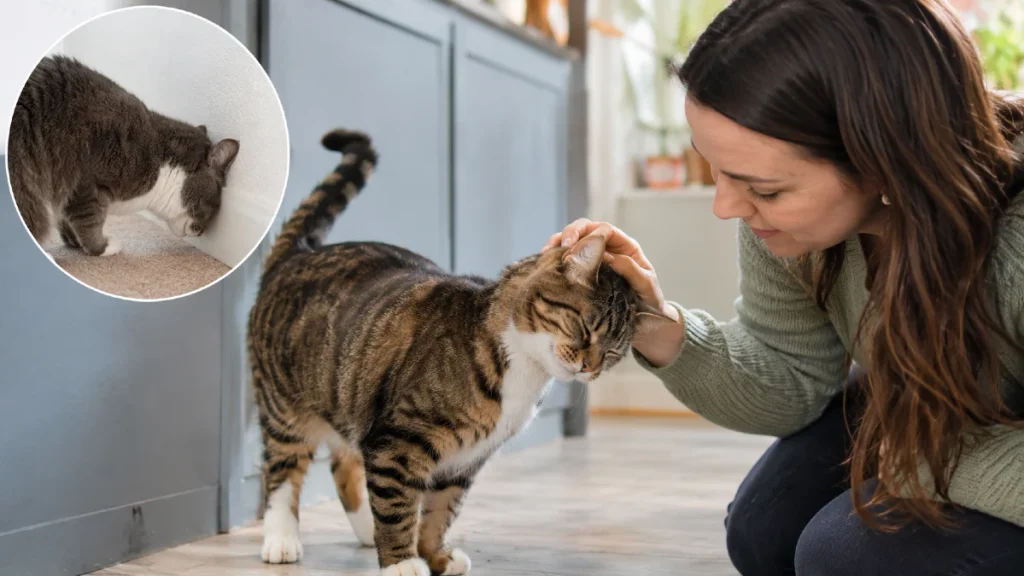
Most headbutting is harmless, but there is one important behavior every cat owner should recognize. It is called head pressing, and it is very different from a normal friendly headbutt.
Head pressing happens when a cat pushes its head against a wall, corner, floor, or another firm surface and holds it there. The cat may appear confused, distressed, or unusually still. This is not normal scent marking.
According to PetMD, persistent head pressing can be associated with serious problems affecting the nervous system. Some possible causes include brain disease, exposure to toxins, and certain metabolic disorders. The exact cause requires veterinary testing.
The Difference Between Friendly Bunting and Head Pressing
The key difference is what the cat does during the contact. Normal bunting usually involves a brief bump or rub, followed by ordinary movement.
Head pressing often involves sustained pressure without the relaxed social behavior seen during bunting. The table below shows when to act.
Table 3: Cat Headbutting vs. Head Pressing
| Behavior | What It Looks Like | What You Should Do |
|---|---|---|
| Normal head bunting | Brief bump against you | Enjoy if cat is relaxed |
| Facial scent marking | Cheek rubbing on furniture | Usually no action needed |
| Sudden loss of social contact | Hiding or avoiding touch | Contact your veterinarian |
| Persistent head pressing | Head held against a wall | Seek urgent veterinary care |
| Pressing with confusion | Circling or acting disoriented | Emergency veterinary care |
| Pressing with seizures | Abnormal movements or collapse | Emergency veterinary care |
Not every cat that rests its head against a soft surface is head pressing. Cats may sleep with their faces tucked into blankets or cushions. The concern is unusual, sustained pressure, especially when accompanied by changes in behavior or awareness.
If your cat repeatedly presses its head against a hard surface, seek urgent veterinary care even if you do not notice other symptoms. Do not assume the cat is simply asking for affection.
What If Your Cat Suddenly Headbutts Much More Than Usual?
An increase in headbutting does not automatically mean something is wrong. Your cat may have learned that the behavior gets attention, or it may be responding to changes in its surroundings.
However, a sudden and marked change in behavior should not be ignored. If your cat also seems restless, uncomfortable, or unusually needy, consider discussing the change with your veterinarian.
Watch the whole pattern rather than counting individual headbutts. A cat that is eating, playing, resting, and interacting normally is different from one showing several new concerning behaviors.