You feed your cat, buy them comfortable beds, and make sure they have everything they need. Yet sometimes, they walk away when you try to pet them or ignore you when you want to cuddle. It can leave you wondering whether your cat truly feels close to you.
The surprising part is that what your cat needs from you may have very little to do with expensive toys or extra treats. Your cat may simply want you to notice the quiet ways they communicate. A small tail movement, a slow blink, or a gentle turn of the head can tell you whether they welcome your attention.
Many cat owners miss these signals because cats express their feelings differently from people. What looks like rejection may simply be your cat asking for space, while sitting quietly beside you can be a sign of comfort.
Why Letting Your Cat Approach You Builds More Trust
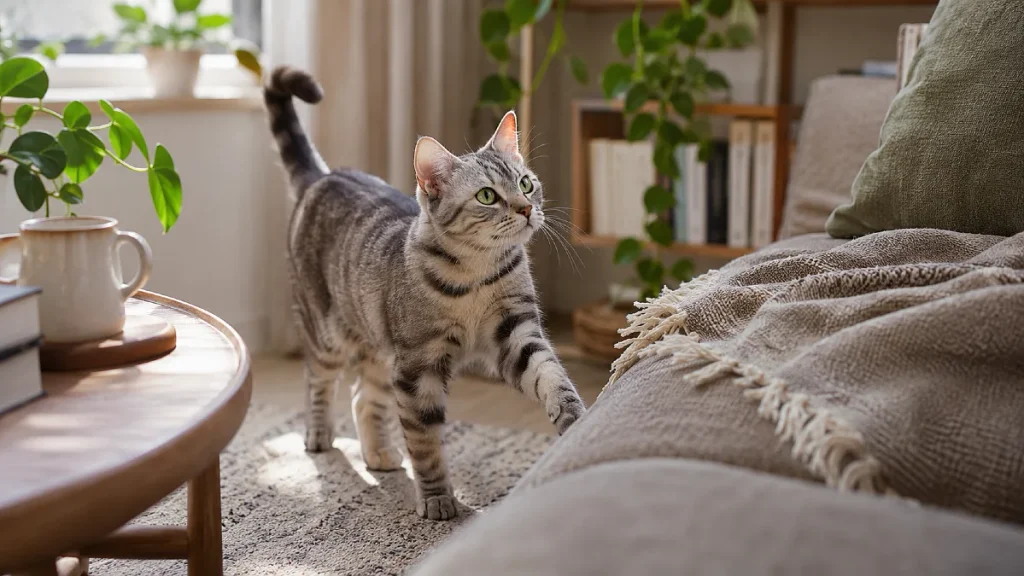
Your cat is sitting across the room, looking relaxed and comfortable. You pat the sofa beside you, hoping they will come over, but they simply look away or begin grooming. Your first thought might be to walk over and pick them up.
However, giving your cat the choice to approach you can make interactions more comfortable. Cats often prefer having control over how close they get to people. When you respect that choice, you give them a chance to interact without pressure.
The American Association of Feline Practitioners and International Society of Feline Medicine recommend allowing cats to initiate and control friendly social contact whenever possible. This helps support positive interactions that match each cat’s preferences.
Try sitting quietly near your cat without reaching for them. Keep your body relaxed and avoid staring directly into their eyes. If they become curious, allow them to walk closer and investigate.
Some cats will jump onto your lap, while others prefer sitting a short distance away. Neither behavior automatically means your cat loves you more or less. Each cat has different comfort levels.
The important thing is to let your cat decide when they want closeness. Over time, these calm interactions can make spending time with you feel more pleasant and predictable.
How Slow Blinking Helps Your Cat Feel Comfortable Around You
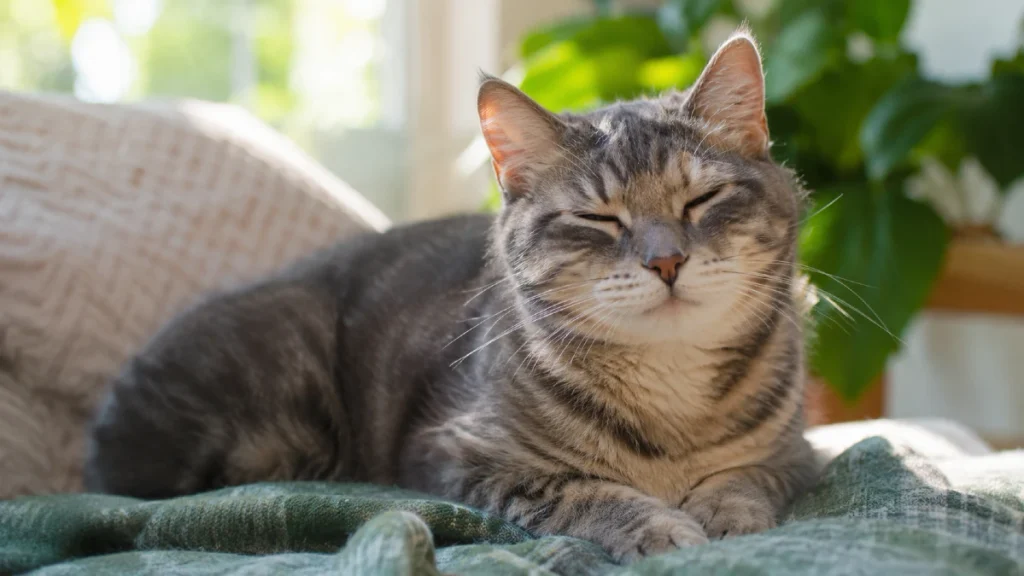
You might have noticed your cat looking at you with partly closed eyes. Sometimes, they slowly close their eyes before opening them again. This small movement can be part of friendly cat communication.
Cats Protection explains that a fixed stare may feel threatening to some cats, especially when they are already nervous. Softer eye contact, however, can help make an interaction feel less intense.
Research published in Scientific Reports in 2020 explored slow blinking between cats and humans. Researchers found that cats showed more eye narrowing movements when people slowly blinked at them compared with certain control conditions.
You can try this simple behavior when your cat is calm and resting nearby. Look gently in their direction, soften your eyes, and slowly close them for a brief moment. Open them again without staring.
Your cat might blink back, look away, or simply continue relaxing. All of these reactions are possible, and you should avoid pushing for a response.
Slow blinking is a gentle way to communicate without touching your cat. It can be especially useful with cats that prefer quiet companionship or need extra time before accepting physical affection.
Why You Should Let Your Cat Sniff Your Hand Before Petting
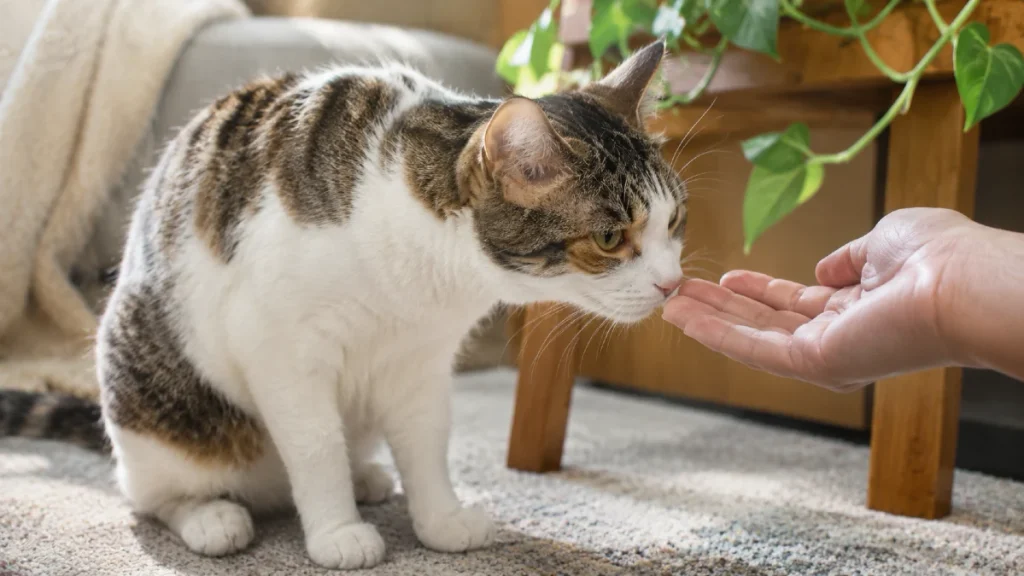
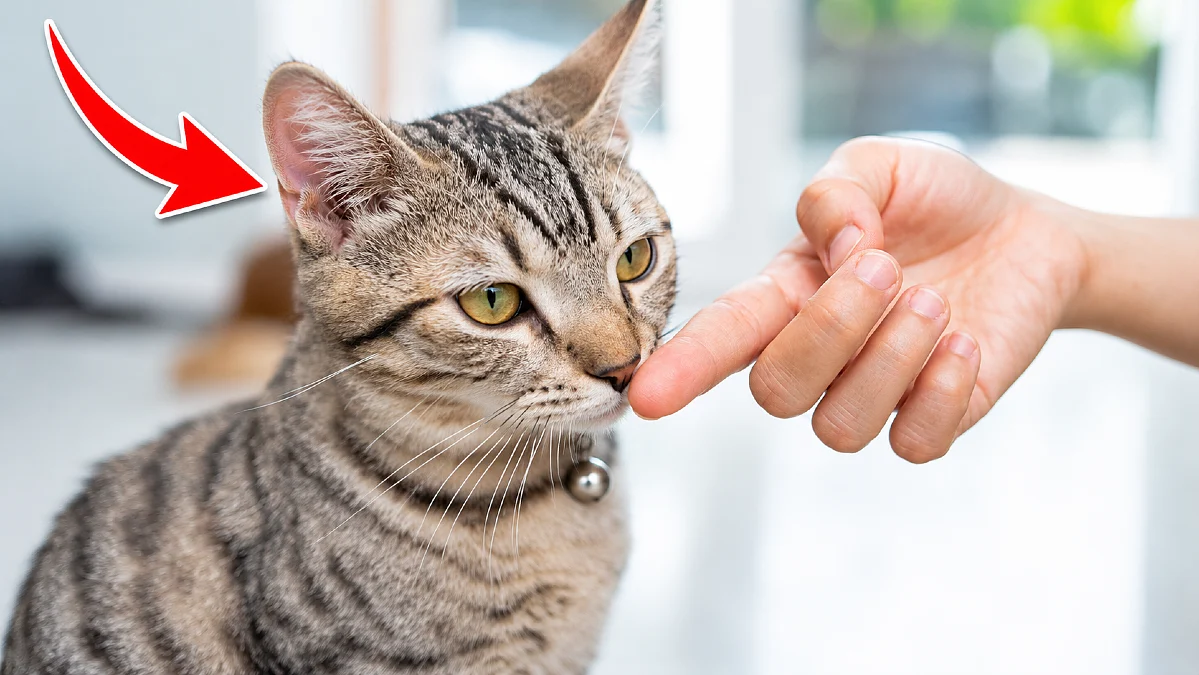
Your cat comes near you, and your first instinct is probably to reach down and stroke their head. However, approaching with your hand too quickly can make some cats uncomfortable. A calmer greeting gives them time to decide whether they want contact.
Start by offering a relaxed hand a short distance away from your cat. Keep your movements slow and allow them to approach if they want to. Avoid pushing your fingers directly into their face.
RSPCA New South Wales explained in its August 2026 guidance that sniffing a hand does not always mean a cat wants to be touched. A cat that gently rubs against your hand is giving a clearer sign that contact may be welcome.
How to Tell Whether Your Cat Wants Attention
Your cat’s behavior can help you decide whether to begin petting. These common responses offer useful clues, although you should always consider the full situation.
| Cat behavior | Possible meaning | Best response |
|---|---|---|
| Sniffs your hand | Gathering information | Wait calmly |
| Rubs their cheek on you | May welcome contact | Try gentle petting |
| Walks away | Wants space | Let them leave |
| Leans closer | May want more contact | Continue gently |
| Stiffens or freezes | May feel uncomfortable | Stop and give space |
Watch what happens after the first touch rather than assuming your cat wants a long cuddle. A cat that chooses to return for more affection is giving you valuable information about what they enjoy.
When your cat welcomes touch, focus on places many cats prefer, such as the cheeks, forehead, and under the chin. Start with gentle strokes, then pause to see whether they lean back toward your hand.
Avoid assuming that an exposed belly is an invitation to rub it. Some cats enjoy belly contact, but many do not. Respecting these personal preferences helps keep affection pleasant for both of you.
How Keeping Your Cat’s Environment Familiar Reduces Stress
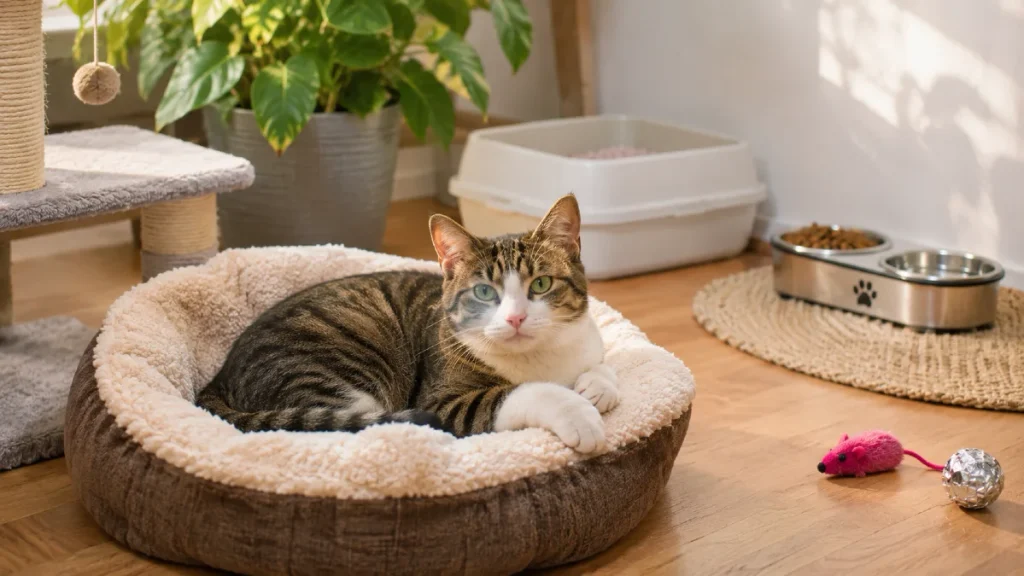
You might decide to move your cat’s food bowl, replace their favorite bed, or rearrange the room. These changes may seem harmless to you, but familiar spaces and resources can be important for your cat’s comfort.
Cats use scent, memory, and familiar surroundings to move through their environment. When important resources suddenly change location, some cats may become unsure or stressed. This is especially true during larger changes such as moving house.
Cats Protection’s June 2026 advice about moving homes emphasizes maintaining familiar resources and giving cats time to adjust to new spaces. The same general approach can help when making smaller changes around your home.
How to Change Your Cat’s Space Without Upsetting Them
You do not need to keep your furniture in the same place forever. The goal is to make important resources easy to find while introducing changes at a comfortable pace.
| Household change | Better approach | What to monitor |
|---|---|---|
| Moving food bowls | Introduce the new spot gradually | Normal eating |
| Moving water bowls | Keep familiar water access available | Drinking habits |
| Changing litter location | Keep the old tray while adding a new one | Normal litter use |
| Replacing a favorite bed | Leave the old bed available at first | Resting choices |
These approaches help your cat adjust without suddenly losing access to familiar places. If your cat seems worried, slow down and allow more time before making another change.
It also helps to provide quiet hiding places, scratching areas, and comfortable spots where your cat can rest. In homes with several cats, separate resources can help prevent competition.
A familiar home gives your cat more chances to feel secure. When changes are necessary, patience is usually more helpful than forcing your cat to accept everything at once.
Why Your Cat Needs Peaceful Sleep and Grooming Time
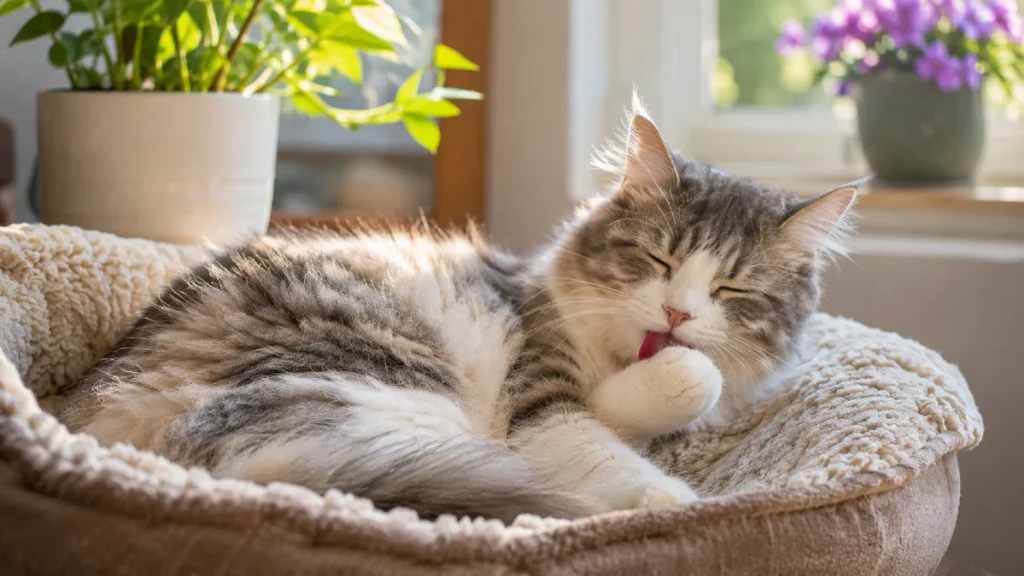
Your cat is curled up on the sofa, sleeping so peacefully that you want to reach over and stroke their fur. They look adorable, and waking them for a cuddle may seem harmless. However, interrupting their rest can make some cats startled or uncomfortable.
Cats Protection advises allowing cats to sleep without unnecessary disturbance. Cats spend much of their time resting, and they benefit from having quiet places where they can relax without being handled.
When your cat is sleeping, enjoy watching them from a distance. Avoid picking them up simply because you want attention. If they wake naturally and approach you, you can offer affection then.
Grooming deserves similar respect. Cats clean their fur for several reasons, including normal coat care, and grooming can sometimes be linked to settling after excitement or stress. Letting your cat finish without repeated interruptions gives them space for this natural behavior.
A cat that chooses to rest near you may feel comfortable in your presence. However, sleeping nearby does not mean they want to be touched every time.
Also, watch for changes in normal grooming habits. Excessive licking, bald patches, poor coat care, or a sudden change in sleep patterns may point to a health or stress problem. A veterinarian can help check for medical causes.
Sometimes, the kindest attention you can give your cat is simply allowing them to rest.
How to Recognize When Your Cat Wants You to Stop Petting
Your cat is enjoying a gentle stroke, and everything seems fine. Then their tail begins moving, their ears turn sideways, or their body suddenly becomes stiff. These small changes may mean they are becoming uncomfortable.
The problem is that people often continue petting because their cat has not walked away. However, cats may communicate discomfort before they hiss, scratch, or bite. Recognizing those earlier signals gives you a chance to stop.
RSPCA New South Wales and Wisconsin Humane Society both advise paying attention to changes in posture, ears, and tail movement during petting. These signals can help you avoid pushing an interaction beyond your cat’s comfort level.
What Your Cat’s Body Language May Be Telling You
A single movement does not always tell the whole story. Watch for several signals together and consider what happened just before your cat’s behavior changed.
| Body signal | Possible message | What to do |
|---|---|---|
| Tail flicking or swishing | Rising excitement or irritation | Pause petting |
| Ears turning back | Possible discomfort | Give space |
| Body becoming stiff | Tension or uncertainty | Stop touching |
| Head turning toward your hand | May be reaching their limit | Move your hand away |
| Leaning into your hand | May welcome affection | Continue gently |
| Hissing or swiping | Strong request for distance | Stop and move back |
These behaviors are not signs that your cat is being mean. They can be ways of telling you that the interaction needs to change.
Why Stopping Early Makes Such a Difference
Try petting your cat gently for a few seconds before removing your hand. If they lean forward, rub against you, or seek more contact, they may want you to continue. If they move away or appear tense, let the interaction end.
Your cat should be able to say no without needing to scratch or bite. Respecting those quiet signals can help make future contact safer and more pleasant.
Avoid punishing your cat for showing discomfort. Punishment can increase fear and make it harder for your cat to feel comfortable around you.
If your cat suddenly begins avoiding touch they previously enjoyed, arrange a veterinary check. Pain, skin problems, and other medical conditions can change how a cat reacts to handling.
How Daily Hunting Games Help Your Cat Feel Happier
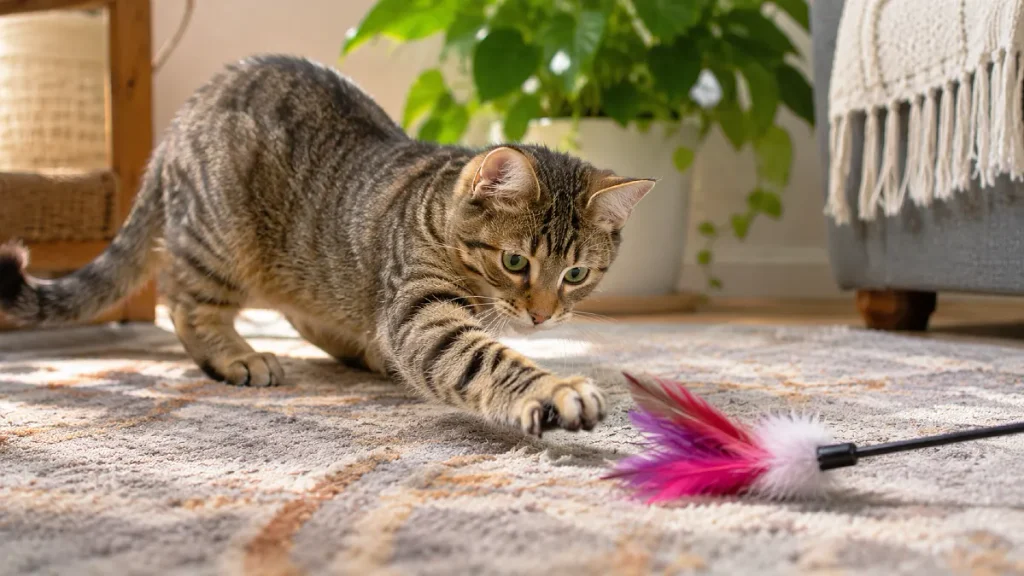
Your cat might spend hours relaxing before suddenly racing across the room or chasing your feet. While this behavior can seem strange, cats have a natural drive to stalk, chase, and catch moving objects.
Living indoors does not remove these instincts. Even cats that receive regular meals can enjoy activities that allow them to practice natural hunting behavior.
Cats Protection recommends making interactive play part of a cat’s daily routine, particularly for cats that live indoors. Play can provide exercise, mental activity, and enjoyable time with you.
How to Make Play Feel Like Hunting
Instead of waving a toy directly in front of your cat’s face, move it like a small animal. Let it disappear behind furniture, move along the floor, or pause before suddenly moving again.
Give your cat opportunities to stalk, chase, pounce, and catch the toy. Ending some games with a successful catch can make the activity more satisfying than constantly keeping the toy out of reach.
Which Hunting Game Is Right for Your Cat?
Different cats enjoy different kinds of play. Choosing an activity that matches your cat’s interests can help make playtime more enjoyable.
| Play preference | Suitable toy | How to play |
|---|---|---|
| Stalking | Wand toy | Hide and slowly move it |
| Chasing | Small rolling ball | Roll it across the floor |
| Pouncing and grabbing | Kicker toy | Offer something safe to grab |
| Searching for food | Puzzle feeder | Hide part of their usual food |
You can use simple household items or products such as Cat Dancer interactive toys, KONG Kickeroo toys, and the Catit Senses Food Tree. No expensive toy is required if your cat already enjoys a safe, simple alternative.
Watch your cat’s energy and allow breaks when needed. Older cats or cats with joint problems may prefer slower games that do not require jumping.
Never use your hands or feet as hunting toys. This can teach cats to grab or bite people during play. Use suitable toys instead, and put string or wand toys away when playtime ends.
A little regular play can give your cat a healthy way to express natural behavior. It also creates positive moments that you can share together.
Why a Predictable Daily Routine Helps Your Cat Trust You
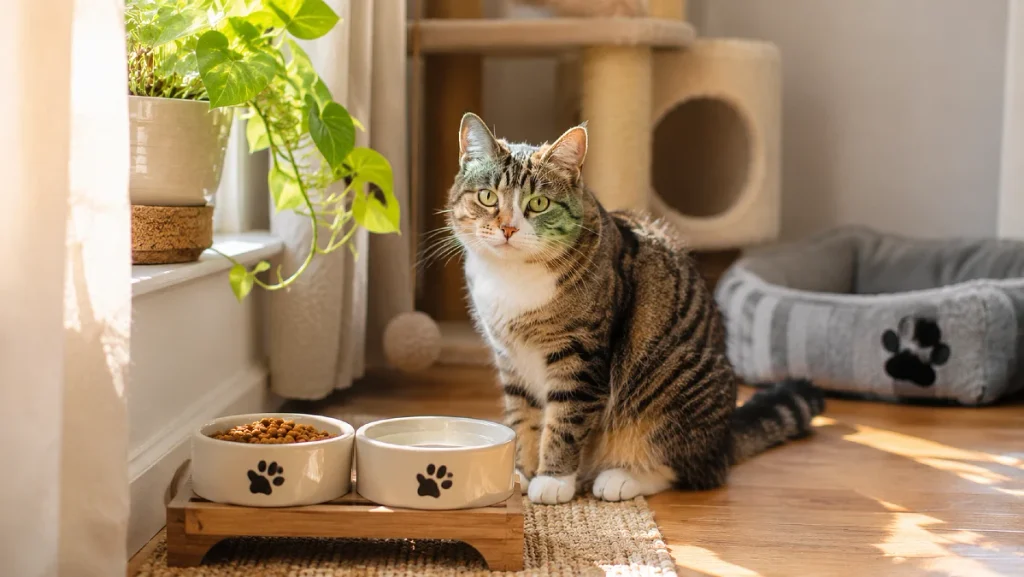
Your cat does not need every day to be exactly the same. However, having a familiar pattern for meals, play, rest, and attention can make daily life easier for many cats.
The AAFP and ISFM feline environmental needs guidelines recommend positive, consistent, and predictable interactions between cats and people. Cats also benefit from having choices about when and how they take part in those interactions.
Try feeding your cat at roughly consistent times and setting aside regular periods for play. You might spend a few minutes playing after work, then allow your cat to settle down while you relax nearby.
Keep your reactions consistent as well. If your cat walks away from petting, respect that choice even when you want more attention. If they approach you calmly, respond in a gentle way that matches their preferences.
A Simple Daily Cat Bonding Routine
You can start with a routine that fits naturally into your day. The goal is to offer pleasant opportunities without demanding that your cat take part every time.
- Morning: Refresh food and water, clean the litter tray, and greet your cat calmly.
- Afternoon: Provide access to a comfortable resting place and safe enrichment activities.
- Evening: Offer a short interactive play session and allow your cat to catch the toy.
- Quiet time: Sit nearby and let your cat decide whether they want affection.
These activities do not need to follow a strict clock. A familiar order and gentle responses can be enough to create a routine your cat recognizes.
Remember that every cat has a different personality. Some enjoy frequent contact, while others prefer brief interactions throughout the day.
Building trust with your cat means accepting the kind of relationship they are comfortable having. When you respond to their needs in a steady and respectful way, you give them more reasons to feel safe around you.