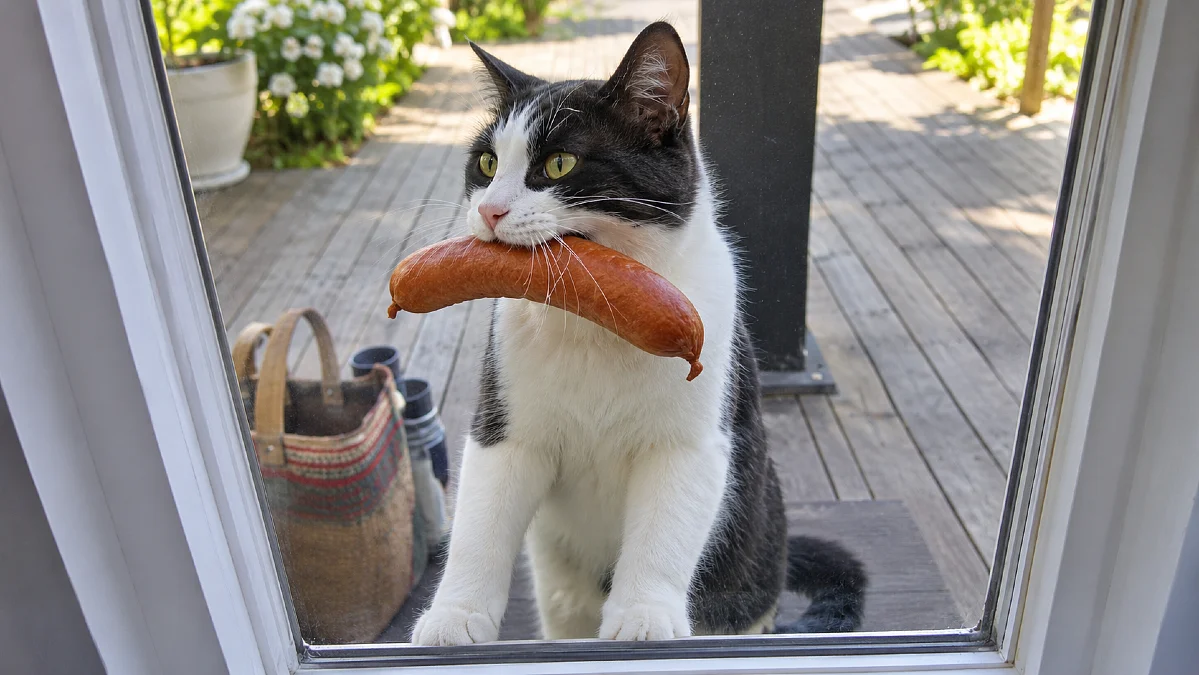
Your cat just dropped a dead mouse on your kitchen floor. Or perhaps you woke up to find a small toy, a sock, or something even stranger beside your pillow. You look at your cat, and they seem completely unbothered by your surprise.
Naturally, you start wondering what it means. Is your cat trying to show affection, share food, or get your attention? And why would a well fed pet bring you something you never asked for?
When your cat brings you gifts, the behavior often comes from natural hunting instincts and a desire to carry interesting objects somewhere safe. Your home may be where your cat feels secure enough to leave a prized catch or favorite toy.
But there is more to the story than a simple display of love. The kind of object your cat brings, where they leave it, and how they act afterward can offer useful clues.
Why Does Your Cat Carry Prey Back Into the House?
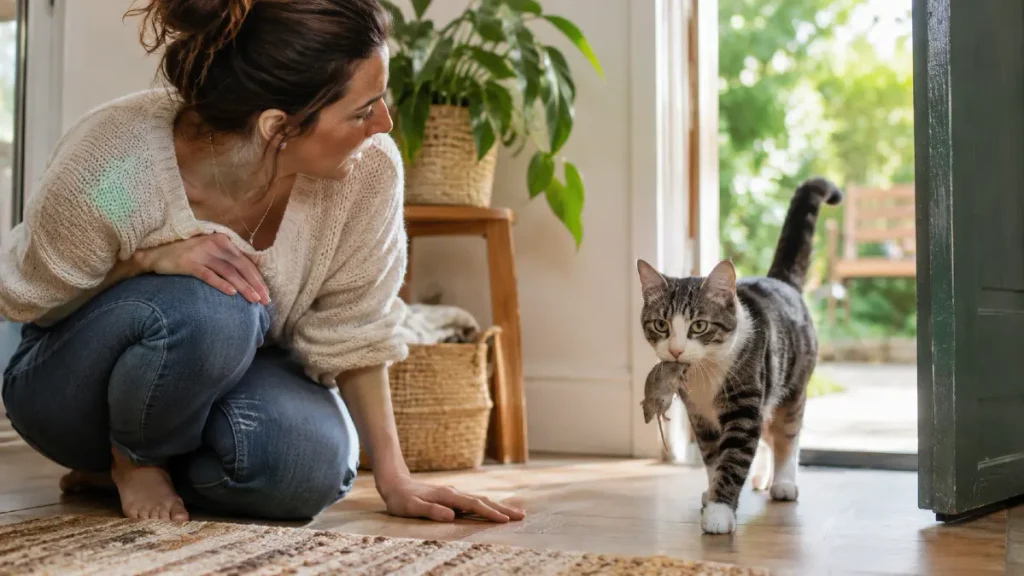
Finding a mouse near your front door might seem like a strange way for your cat to say hello. But from your cat’s point of view, carrying prey home can serve a useful purpose. The house is familiar territory where your pet may feel safer handling a catch.
Cats are natural hunters, even after thousands of years of living with humans. Their instincts encourage them to stalk, chase, catch, and sometimes carry small animals. These behaviors can appear even when a cat has no need to hunt for food.
According to Cats Protection, cats may bring captured prey back to their main territory because they feel more secure there. They may want to eat it later, examine it, or keep it away from other animals.
Think about a cat that catches a mouse in a busy garden. Staying outside could mean dealing with other cats, dogs, or unfamiliar noises. Carrying the mouse indoors allows the cat to return to familiar surroundings.
This also explains why cats sometimes leave prey in unexpected places. A bedroom, hallway, or favorite resting spot may simply be an area they use often and feel comfortable in.
The important clue is the location your cat chooses. Bringing prey into your home can suggest that the space feels safe to them, even when the delivery itself is unpleasant for you.
Does Bringing Gifts Mean Your Cat Loves You?
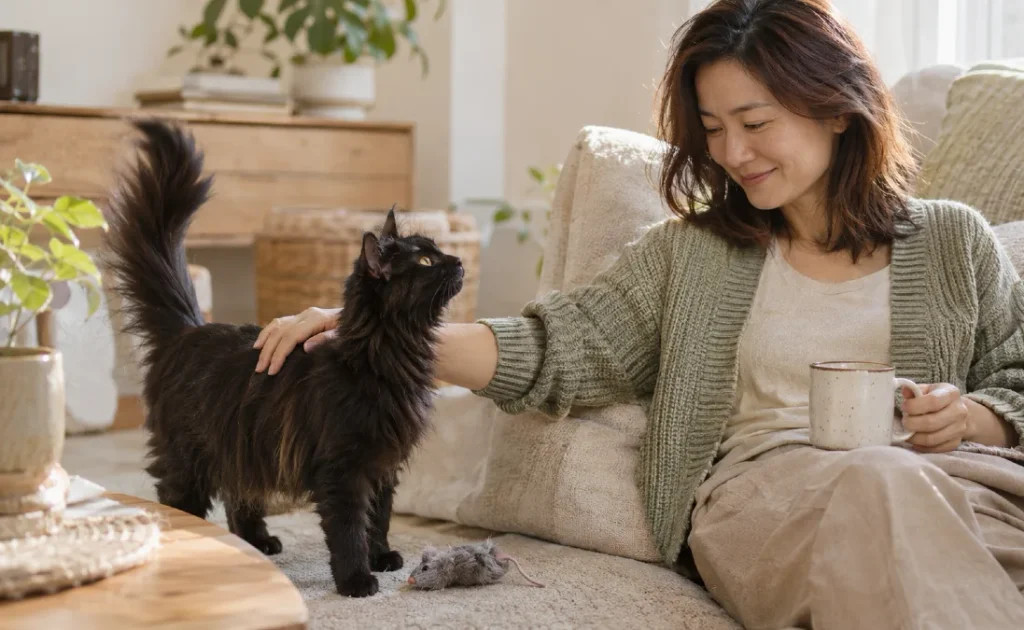
It is tempting to believe your cat has brought you a present because they love you. After all, people share gifts to show affection, and finding a toy beside your bed feels personal.
However, animal behavior experts are careful about giving cats human motives. A cat bringing prey home is not proof that it is deliberately giving you a reward or expressing gratitude.
Cats Protection explains that returning prey to safe territory is a more likely reason for many of these deliveries. Purina’s 2026 guidance also discusses this explanation rather than treating every catch as a present for the owner.
There is another popular idea that cats bring people mice because they believe humans cannot hunt. This theory comes partly from the way mother cats bring prey to their kittens as they learn hunting skills.
Mother cats do use prey during their kittens’ development. But there is not enough evidence to conclude that your adult cat is trying to teach you the same lesson.
That does not mean your relationship is unimportant. A cat that regularly returns to your home with treasured objects may see it as a secure place. Feeling safe around you can be part of that picture, even if the object itself was not meant as a gift.
Why Does a Well Fed Cat Still Hunt and Bring You Animals?

You might wonder whether your cat is hungry when it brings home a mouse. Perhaps its food bowl is full, yet it still spends hours chasing birds or searching beneath bushes.
The reason is simple. Hunting and hunger are related, but they are not the same thing.
PDSA explains that many cats will hunt even after eating a meal. The movement of a small animal can trigger stalking and chasing behavior regardless of how recently the cat was fed.
A mouse running across the grass or a bird moving through a hedge can attract a cat’s attention. Your pet may crouch, wait, and pounce almost automatically when the right opportunity appears.
Cats also practice these skills through play. A kitten chasing a feather toy is using many of the same movements it would need to catch prey.
This is why giving your cat extra food is not a reliable way to stop unwanted hunting. Overfeeding can cause weight problems without removing the urge to chase.
Instead, focus on meeting your cat’s needs for activity and mental stimulation. Regular play gives your pet opportunities to use its hunting skills on safe objects rather than wildlife.
If hunting has increased and your cat also seems unusually hungry or is losing weight, speak with your veterinarian. Those changes deserve attention rather than simply increasing meal portions.
What Do Toys, Socks, and Leaves Mean When They Turn Up at Your Feet?
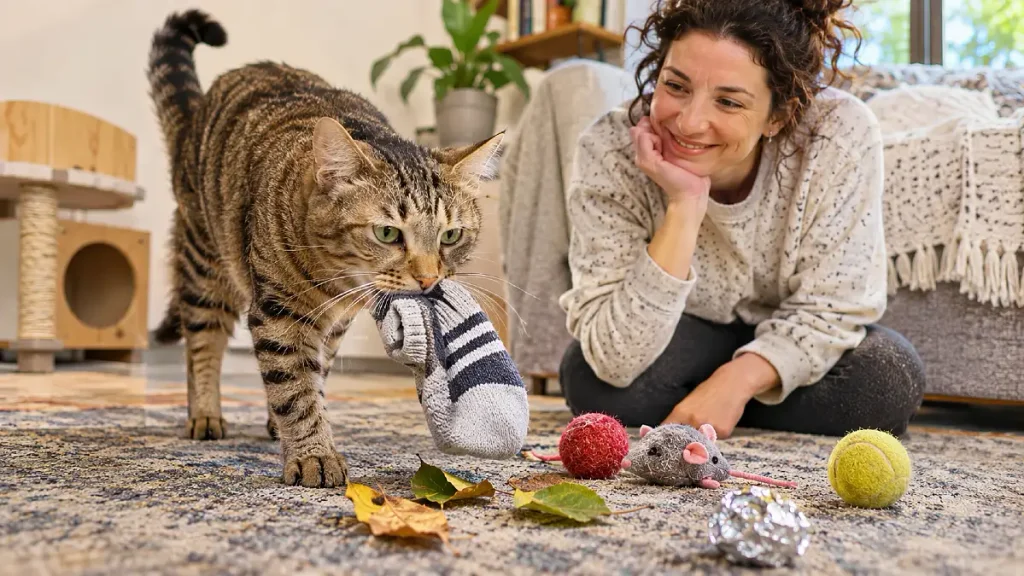
Outdoor cats may bring home mice or birds, but indoor cats can have their own unusual collections. You might find stuffed animals, soft balls, socks, or other household objects left around the house.
These items may serve as substitutes for prey. A small plush mouse is easy to grab, carry, toss, and hold between the paws.
Some cats become especially attached to certain toys. They carry them between rooms, leave them near resting areas, or bring them to people who regularly play with them.
According to Cats Protection, cats may collect objects because they are interesting to carry, smell, or explore. Bringing an object home does not necessarily mean the cat wants to give it away.
What Your Cat Brings and What It May Mean
The object itself can help you decide how to respond. Look at what your cat usually does with it before assuming it is a request for attention.
| Object | Possible reason | What to do |
|---|---|---|
| Soft toy mouse | Hunting play | Offer a short game |
| Sock or clothing | Interesting smell or texture | Replace with a safe toy |
| Leaf or small branch | Curiosity and exploration | Remove sharp pieces |
| Captured prey | Hunting and safe storage | Follow wildlife safety advice |
These are possible explanations, not fixed meanings. Two cats might carry the same toy for very different reasons.
Pay attention to whether your cat drops the object and walks away or stays nearby waiting. That difference can help you decide whether to start a game or simply let your pet settle.
Why Some Cats Bring Toys to Their Owners Repeatedly
Your own response may help turn toy delivery into a habit. If your cat brings you a ball and you throw it, the cat may learn that carrying the ball to you starts an enjoyable game.
Over time, this can become a regular part of your relationship. The cat may return with the same toy whenever it wants another chance to chase or play.
You can encourage this behavior by responding with a brief, gentle play session. Just make sure the object is safe and does not contain loose strings, sharp parts, or pieces your cat could swallow.
How Can Body Language Help You Read the Moment?
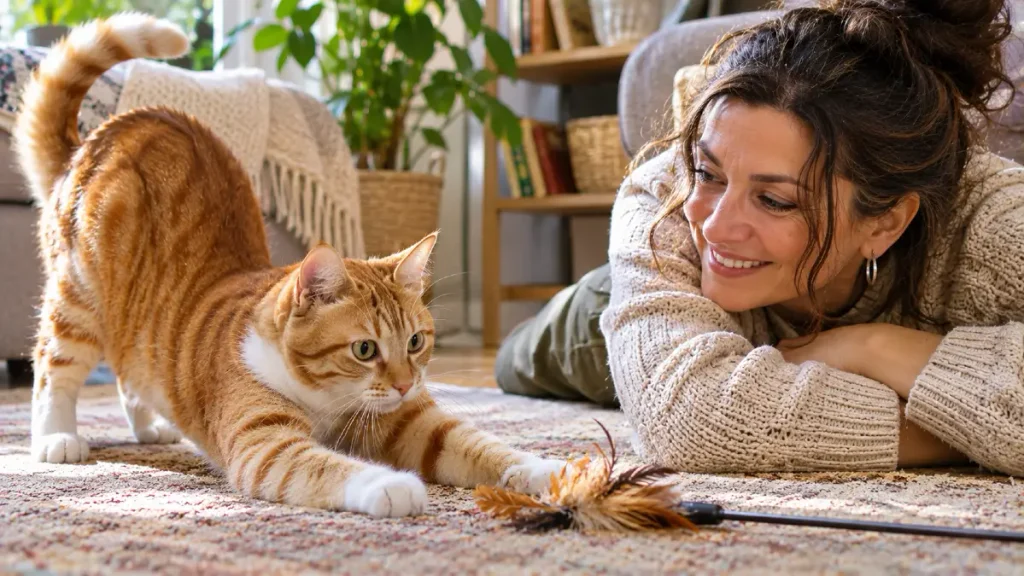
The object your cat brings is only part of the story. What happens immediately before and after the delivery can provide useful clues about your pet’s mood.
For example, a cat that drops a toy near you and watches it closely may be interested in starting a game. If it reaches toward the toy or follows it when you move it, that gives you another clue.
A cat that carries an object to a quiet room and settles beside it may prefer to keep it nearby. In that situation, there may be no reason to interfere unless the object is unsafe.
The RSPCA recommends looking at a cat’s whole body when reading its behavior. Its posture, tail, ears, and movements can help you recognize whether it seems relaxed, excited, or worried.
Watch for these clues when your cat arrives with something:
- Relaxed body and upright tail: Your cat may feel comfortable and confident.
- Watching a toy and reaching for it: Your cat may be ready to play.
- Flattened ears and a tense body: Your cat may feel worried or defensive.
- Carrying an object into hiding: Your cat may want to keep the item somewhere quiet.
- Meowing while carrying a toy: Your cat may be excited or seeking interaction, but the sound alone does not reveal its exact goal.
Avoid reading one movement in isolation. A moving tail, for example, can appear in several situations and does not always mean happiness.
The most useful approach is to watch patterns over time. When you notice what normally happens before your cat brings an object, you become better at responding to its needs.
What Should You Do When Your Cat Brings You Live or Dead Prey?
Discovering a living mouse or injured bird in your home can be upsetting. Your first reaction may be to shout or rush toward your cat, but staying calm makes the situation easier to manage.
Cats Protection advises against punishing cats for hunting. Your pet is following a natural instinct and is unlikely to connect punishment with the behavior you want to prevent.
Start by keeping your cat away from the animal. Close the cat in another comfortable room with access to water while you assess the situation.
What to Do With Your Cat’s Hunting Gifts
Different situations call for different responses. The most important goal is to protect yourself, your cat, and the wild animal.
| Situation | First response | Next action |
|---|---|---|
| Bird caught by your cat | Separate the cat | Contact wildlife rescue urgently |
| Live mammal caught by your cat | Prevent further contact | Ask a wildlife expert for advice |
| Dead mouse or rat | Keep pets and people away | Disinfect and dispose safely |
| Injured or unknown wild animal | Keep the area quiet | Contact a wildlife professional |
A bird caught by a cat needs prompt professional care, even if no injury is visible. BC SPCA and PDSA warn that tiny wounds and infections can be dangerous for birds.
Do not release a captured bird without professional advice. If you must contain an animal, follow a wildlife rehabilitator’s instructions and avoid handling it with bare hands.
How to Clean Up a Dead Mouse Safely
The CDC recommends wearing rubber or plastic gloves when handling dead rodents. The area should be treated with an appropriate household disinfectant before cleanup.
For a small dead rodent, follow these steps:
- Move your cat and other pets away from the area.
- Put on protective gloves.
- Apply disinfectant to the rodent and surrounding area according to the product instructions.
- Place the rodent in a sealed plastic bag, then seal that bag inside another.
- Put the bags in a covered trash container according to local disposal rules.
- Wash your gloves and hands thoroughly after cleaning.
Do not sweep or vacuum contaminated rodent waste before disinfecting it. This can spread harmful particles into the air.
Also check your cat for bites, scratches, or unusual behavior after a hunting encounter. If your pet has eaten prey, appears sick, or may have been exposed to poison, contact your veterinarian for advice.
How Can You Cut Down on Hunting Without Scolding Your Cat?

You cannot simply remove your cat’s natural hunting instincts. But you can give those instincts safer outlets and reduce opportunities to catch wild animals.
One useful approach is to make indoor play more interesting. Cats enjoy games that allow them to watch, stalk, chase, catch, and sometimes kick an object.
A study published in Current Biology in 2021 found that introducing five to ten minutes of daily object play reduced the number of animals cats captured and brought home by 25% in the study. The research was carried out by a team including scientists from the University of Exeter.
This does not mean every cat will show the same improvement. However, it provides evidence that regular play can help some cats reduce their hunting of wildlife.
Better Ways to Satisfy Your Cat’s Hunting Instincts
Choose activities based on what your cat enjoys. A playful young cat may prefer chasing toys, while a quieter older cat may enjoy slower games or food puzzles.
| Activity | Main benefit | How to use it |
|---|---|---|
| Wand toy | Chasing and pouncing | Short supervised games |
| Kicker toy | Grabbing and kicking | Offer during active play |
| Food puzzle | Mental activity | Use part of daily food |
| Secure catio | Outdoor enrichment | Supervised or secure access |
| Wildlife safe garden | Fewer hunting opportunities | Protect feeding and nesting areas |
Start with one or two activities rather than buying every toy at once. Watch which games hold your cat’s attention, then build a simple routine around them.
Turn Ordinary Play Into a More Interesting Hunt
Moving a toy directly in front of your cat’s face may not be as interesting as making it behave like prey. Try moving a wand toy along the floor, hiding it behind furniture, and letting it appear again.
Allow your cat to catch the toy regularly. A game where the toy always escapes may become frustrating for some cats.
You can also use a soft kicker toy after a chasing game. This gives your cat something safe to grab and kick with its back legs.
KONG Kickeroo toys and similar products are examples of toys made for this type of activity. Check them regularly for damage, and put string toys away when playtime ends.
Give Outdoor Cats Safer Choices
For cats that spend time outdoors, preventing access to wildlife is especially important. Keeping your cat indoors or using a secure outdoor enclosure can help protect both your pet and local animals.
Cats Protection also recommends keeping cats inside around dawn and dusk, when many prey animals are active. Bird feeders should be placed away from spots where cats can hide and pounce.
Some owners use colorful collar covers such as Birdsbesafe to make cats easier for birds to notice. If your cat wears a collar, choose a properly fitted quick release safety design and remember that collar devices cannot prevent every hunting attempt.
A complete, balanced diet is important, too. Although research has examined the effects of meat rich diets on hunting, there is no reason to switch every cat to grain free food simply to discourage prey capture.
The goal is to give your cat safe ways to act on its instincts while reducing harm to wildlife. You can support natural cat behavior without allowing your pet to catch animals outdoors.