Your cat might have told you they feel happy several times today, and you probably missed every signal. Maybe they blinked slowly while watching you, brushed their cheek against your leg, or followed you into another room. These small actions may seem ordinary, but they can reveal a great deal about how your cat feels.
The tricky part is that cats rarely express happiness the way dogs do. They have their own body language, sounds, and habits. A cat that quietly sits beside you may feel just as comfortable as one that curls up in your lap. But some behaviors, such as purring or showing their belly, can also be misunderstood.
So, how can you tell if your cat is happy? The answer is to look for several positive signs rather than relying on one behavior. From slow blinking and raised tails to playful moments and gentle head bumps, these clues can help you recognize when your cat feels safe, relaxed, and comfortable around you.
Why Your Cat’s Slow Blinks Are a Sign of Trust
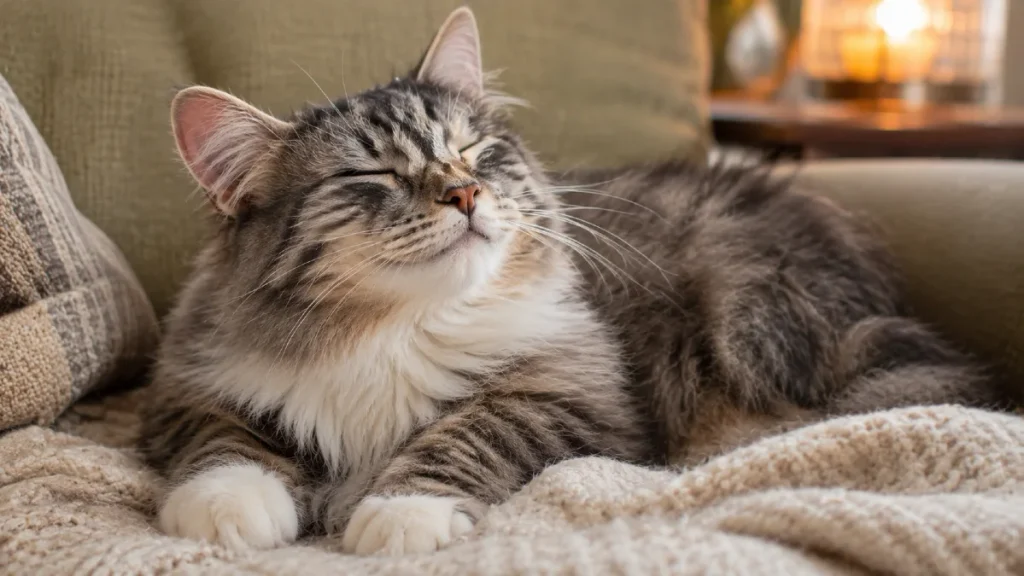
Have you ever looked at your cat and noticed them slowly closing their eyes before opening them again? That gentle movement is often called a slow blink. It is one of the clearest signs that your cat feels relaxed in your presence.
A 2020 study published in Scientific Reports found that cats were more likely to narrow their eyes when people slowly blinked at them. The researchers also found evidence that slow blinking could encourage friendly interactions between cats and unfamiliar people.
You can try this with your own cat. Sit nearby, soften your gaze, and slowly close and open your eyes without staring. Your cat may return the gesture or simply remain relaxed.
What makes this special: Cats do not need to keep a constant watch on someone they feel comfortable around. A slow blink, especially with relaxed ears and a loose body, can be a small but meaningful sign of trust.
What an Upright Tail Tells You About a Happy Cat
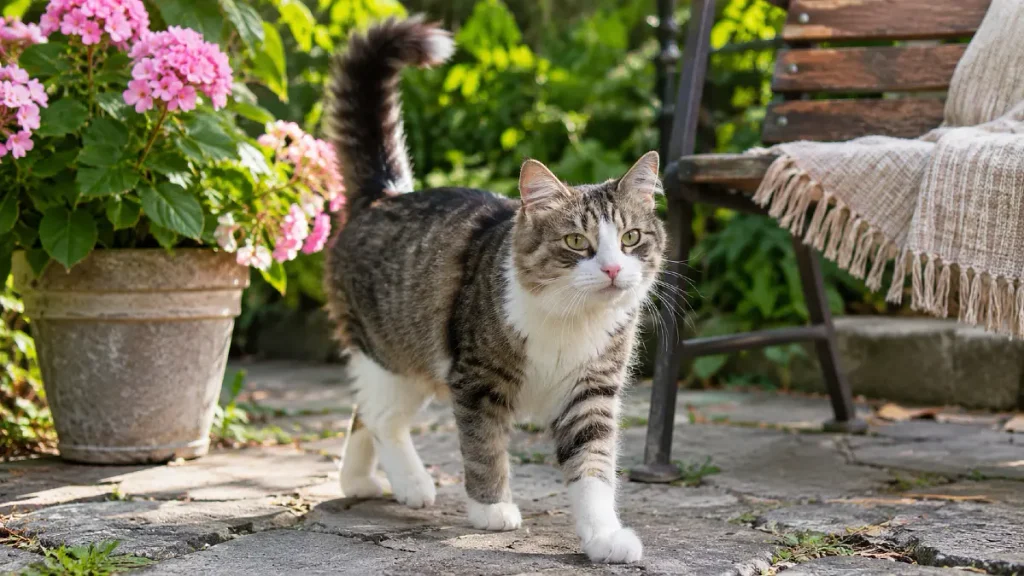
Your cat’s tail can reveal a surprising amount about their mood. One of the most common signs of a happy cat is a tail held upright while they walk toward someone familiar.
Sometimes the tip curves slightly, making a shape similar to a question mark. According to Cats Protection, this position often appears during friendly greetings. You might see it when your cat welcomes you home or approaches for attention.
However, tail movements have different meanings depending on the situation. A rapidly moving tail can signal frustration, while a tightly tucked tail may suggest fear or worry.
What Your Cat’s Tail Position May Mean
Your cat’s tail is useful, but it is not a perfect mood detector. Use this table alongside their ears, eyes, and overall posture.
| Tail position | Possible meaning | Best response |
|---|---|---|
| Upright with curved tip | Friendly greeting | Offer gentle attention |
| Relaxed and loosely held | Calm or comfortable | Let them continue |
| Low or tucked | Fear or worry | Give them space |
| Puffed up | Fear or strong excitement | Avoid approaching |
| Fast flicking or thumping | Irritation or intense focus | Watch for other signals |
A raised tail during a relaxed greeting is usually encouraging. But no single tail position can reveal exactly what your cat feels, so always consider the whole body.
When Your Cat’s Purring Really Means Contentment
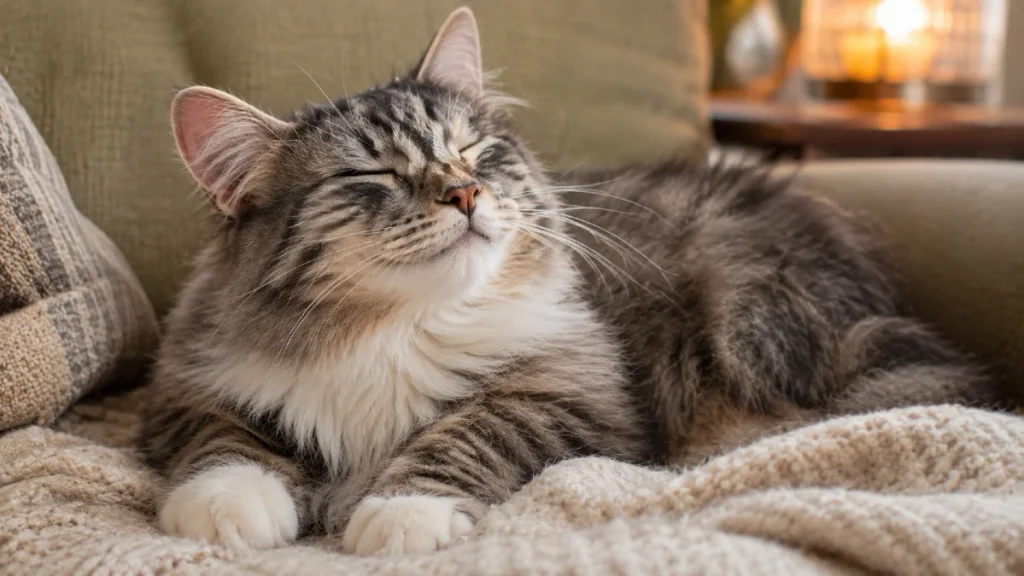
Few sounds are more comforting than a cat purring while curled up beside you. When your cat has relaxed muscles, soft eyes, and a comfortable resting position, gentle purring often suggests contentment.
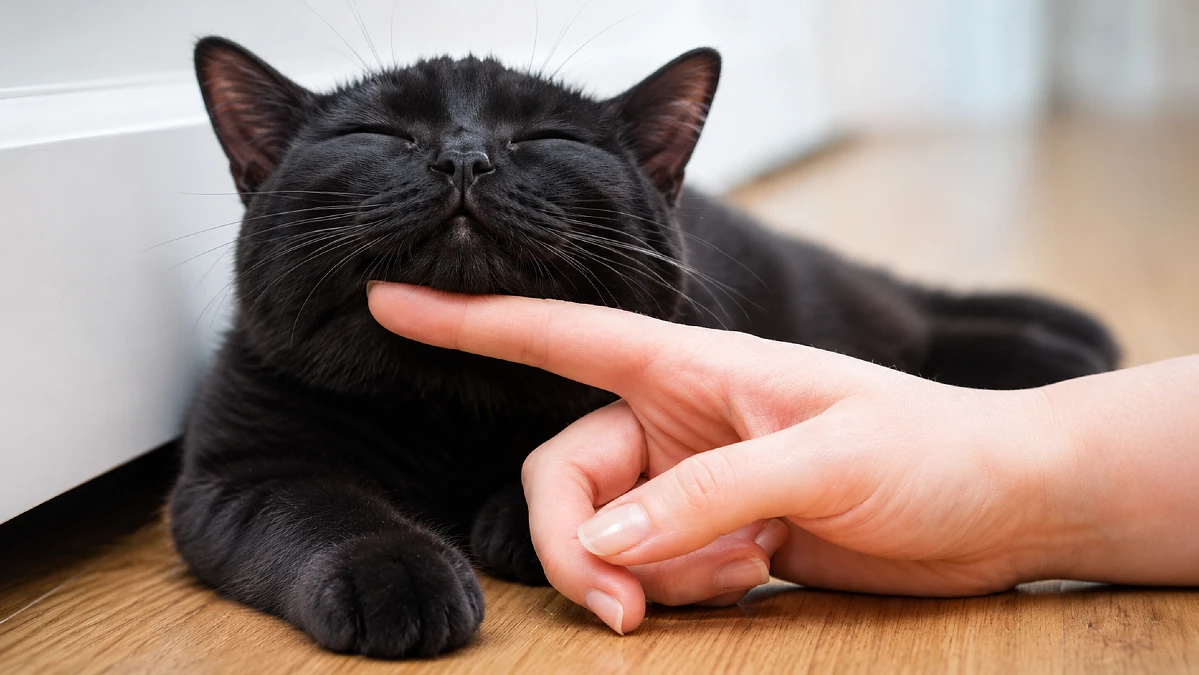
You might notice this when they settle on a warm blanket or rest against your legs. Some cats also purr while receiving gentle strokes around their cheeks and chin. These moments can be signs that your cat enjoys the interaction.
But there is something important many owners miss. Purring does not always mean happiness. Cats may also purr when they feel stressed, uncomfortable, or unwell.
The PDSA and Cats Protection both recommend checking the rest of your cat’s body language. If your cat is hiding, acting unusually quiet, or showing signs of pain, purring should not be taken as proof that everything is fine.
Why a Cat Showing Their Belly May Feel Safe
When your cat rolls onto their back and exposes their belly, it can look like an invitation for a good scratch. However, the meaning is often quite different.
A relaxed cat may expose their stomach because they feel safe enough to rest in a vulnerable position. You might notice their legs stretched out, eyes partly closed, and body resting comfortably against the floor.
The RSPCA explains that belly exposure can be a sign of trust. But that does not mean your cat wants you to touch their stomach.
Many cats prefer gentle strokes around the cheeks, chin, or head. Reaching for the belly can cause them to grab your hand or kick with their back legs.
Try this instead: If your cat rolls over beside you, let them enjoy the moment. Offer your hand nearby and allow them to choose whether they want contact.
Why Your Cat Chooses to Spend Time Near You
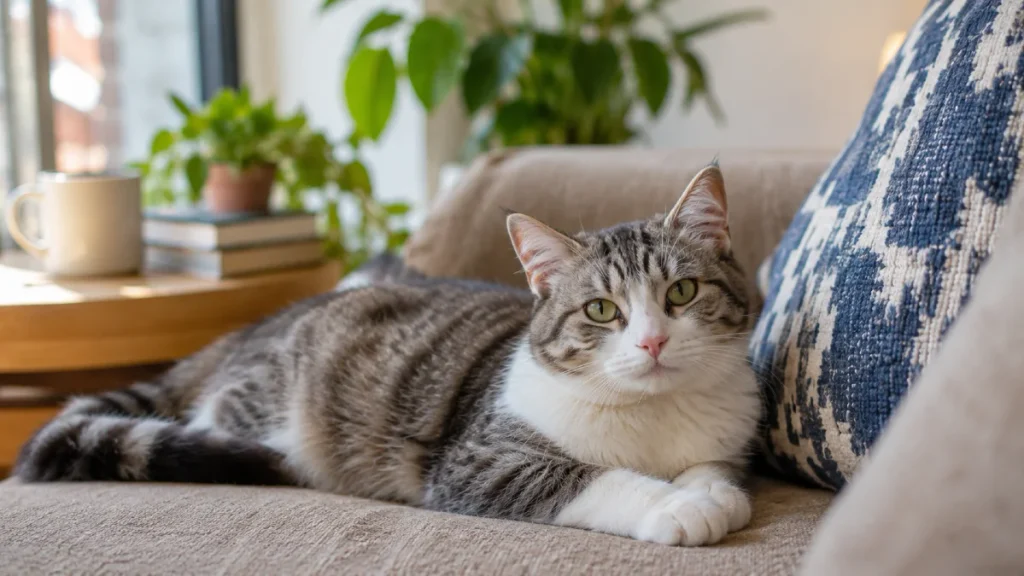
Does your cat follow you into the kitchen, sit outside the bathroom, or quietly settle nearby while you work? Those small moments may reveal something important about your relationship.
Cats often choose to spend time near people they feel comfortable around. Your cat does not need to sit on your lap or demand constant attention to show that they enjoy your company.
Some cats are naturally independent. They may prefer sleeping on a nearby chair instead of being held. Others enjoy physical contact and regularly seek cuddles.
Following you can also mean your cat wants food, play, or help with something. The best clue is whether they appear relaxed and choose to stay nearby when nothing is being offered.
How to Tell if Your Cat Wants Attention
Being near you does not always mean your cat wants to be touched. Learning when to offer affection and when to stop can make your cat more comfortable.
| Behavior | What it suggests | What to do |
|---|---|---|
| Rubs against your hand | Welcomes contact | Gently stroke the cheek |
| Leans into your touch | Enjoys the interaction | Continue briefly |
| Sits nearby without approaching | Wants company | Respect their space |
| Flicks tail during petting | May be getting irritated | Pause the strokes |
| Walks away | Wants the interaction to end | Let them leave |
The best approach is to give your cat control over affection. When they know they can approach and leave freely, social time is more likely to remain a pleasant experience.
What Friendly Chirps and Trills Mean When Your Cat Greets You
Some cats greet their owners with soft sounds that are different from an ordinary meow. You might hear a short chirp, a rolling trill, or a quiet little greeting when you enter the room.
These sounds can be part of friendly social communication. Mother cats also use certain calls to communicate with their kittens, but an adult cat making a trill does not prove they see you as their parent.
Cats Protection notes that cats use different sounds to communicate with people. Some may greet you with a vocal sound, while others prefer rubbing against your legs or raising their tails.
It is also important to recognize the difference between friendly chirping and distressed vocalizing. A cat making repeated loud cries, especially with other changes in behavior, may need attention.
Remember: A quiet cat can be just as happy as a talkative one. What matters most is whether their vocal behavior is normal for them.
How Confident Exploring Shows Your Cat Feels Secure
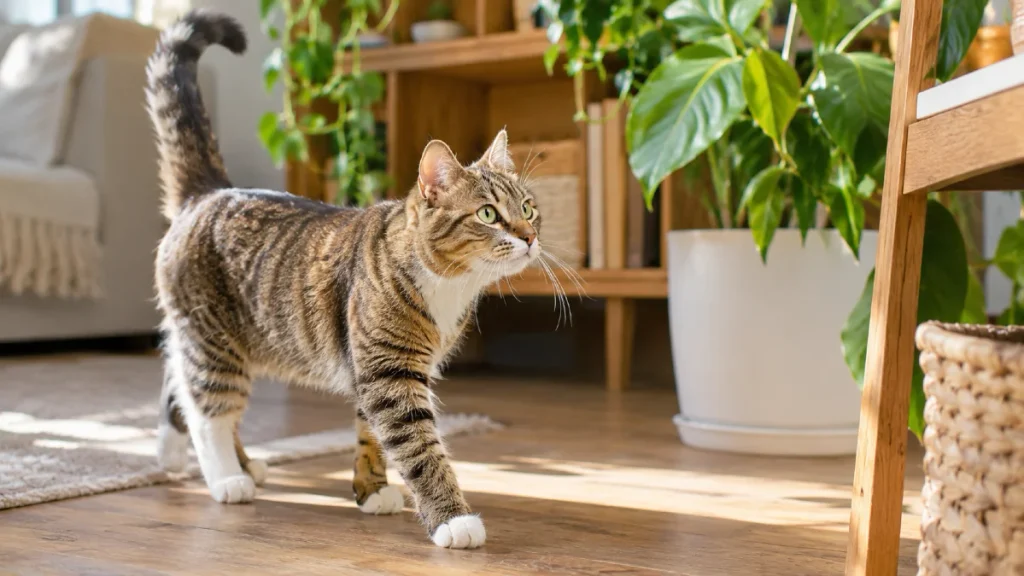
A comfortable cat usually feels free to move around their home. They may investigate a new cardboard box, walk through familiar rooms, or climb onto a favorite resting spot.
Look at how your cat moves when the house is peaceful. A loose body, natural ear position, and calm interest in the surroundings can suggest that they feel secure.
Cats also need places where they can hide without being disturbed. According to the Feline Veterinary Medical Association, safe resting and hiding spaces are important parts of a healthy home environment.
A newly adopted cat may spend considerable time hiding while adjusting. That does not automatically mean they are unhappy, but they should gradually become more comfortable at their own pace.
If a normally confident cat suddenly starts hiding all day, however, pay attention. Pain, illness, or changes in the household may be affecting their behavior.
Why Short Play Sessions Can Reveal a Happy Cat
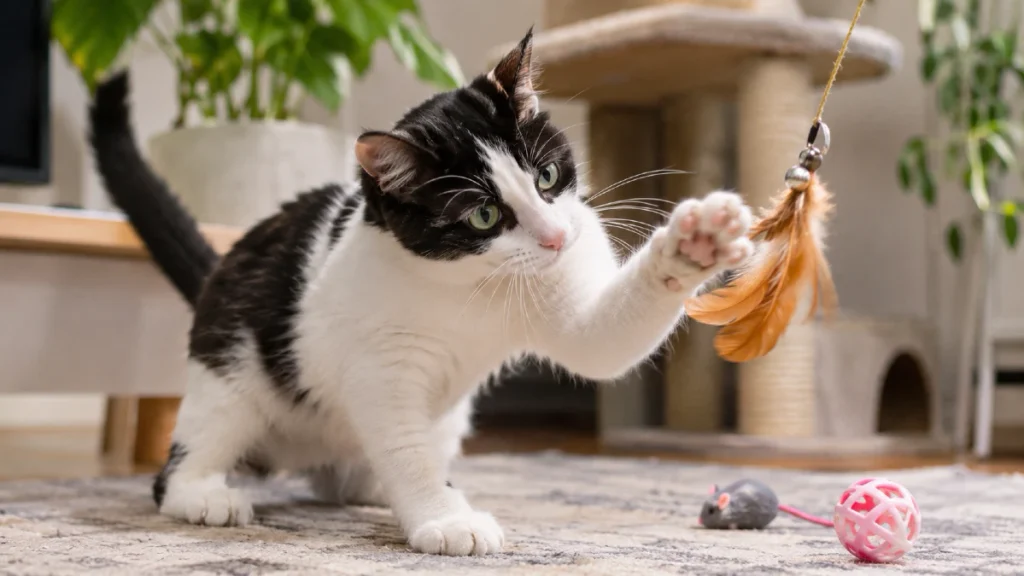
A cat that regularly shows interest in play is often displaying healthy curiosity and natural hunting behavior. Even indoor cats benefit from opportunities to stalk, chase, pounce, and capture toys.
You might see your cat suddenly race across the living room or crouch behind furniture before jumping toward a toy. These playful movements can be entertaining, but they also allow cats to practice natural behaviors.
Cats Protection recommends interactive games that copy the movement of prey. Feather wands, soft toy mice, and small balls can encourage physical activity and mental stimulation.
Older cats may prefer slower movements and shorter games. Some may simply watch a toy before gently reaching out with one paw, and that can still be useful activity.
Easy way to encourage play: Move a wand toy across the floor like a small animal. Allow your cat to catch it regularly, and stop when they seem tired or lose interest.
A sudden loss of interest in favorite games deserves attention, especially when accompanied by reduced appetite, hiding, or changes in movement.
What Your Cat’s Head Bumps Say About Their Bond With You
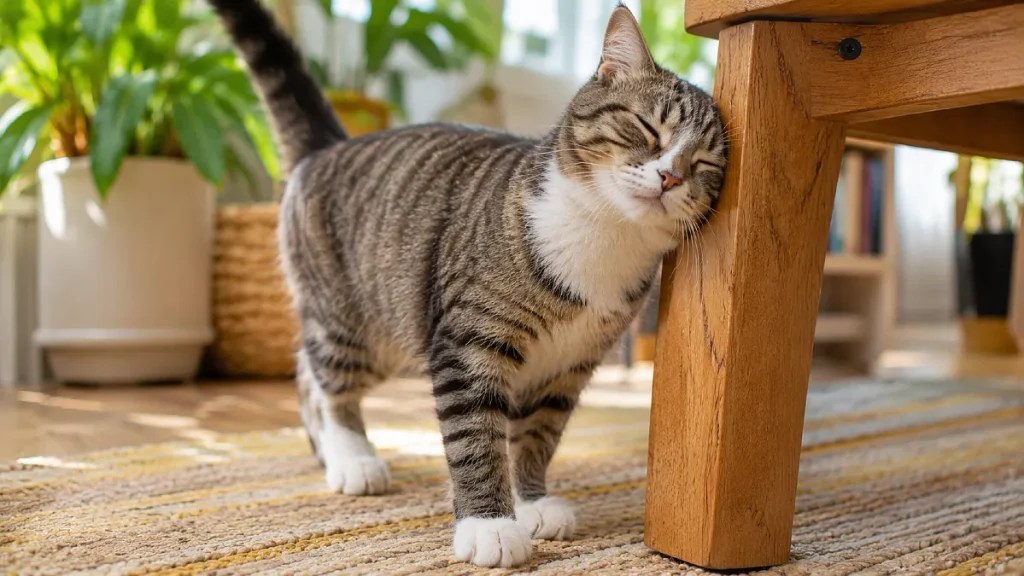
When your cat presses their forehead or cheek against your hand, face, or leg, they are performing a behavior called bunting. It may look like a tiny head bump, but it serves an important purpose.
Cats have scent glands around their faces. When they rub against familiar people or objects, they leave scent signals that help make their surroundings feel familiar and safe.
Cats Protection explains that head rubbing is part of feline social communication. Cats may perform this behavior with trusted people, other cats, and familiar objects.
You might notice your cat rubbing against your legs when you come home. Sometimes they will repeat the action several times before settling nearby.
How to respond: Let your cat finish the greeting, then offer gentle cheek or chin strokes if they seem interested. Avoid holding their head or forcing contact.
Why Kneading Is Often a Sign of Comfort
Does your cat press their front paws into a blanket, pillow, or your lap in a slow, repeated motion? This behavior is called kneading, and it often appears when cats are relaxed.
Kittens use a similar movement while nursing from their mothers. Many adult cats continue kneading soft surfaces, especially when preparing to rest or settling into a comfortable position.
Cats Protection describes kneading as a common sign of contentment. You may notice it alongside purring, soft eyes, or a relaxed body.
If your cat kneads your lap with sharp claws, place a thick blanket between you and their paws. Avoid punishing them because this is a normal behavior.
Some happy cats rarely knead, so its absence is nothing to worry about. Like other happiness signs, it is one helpful clue rather than a requirement.
When Gentle Licking Shows Your Cat Feels Close to You
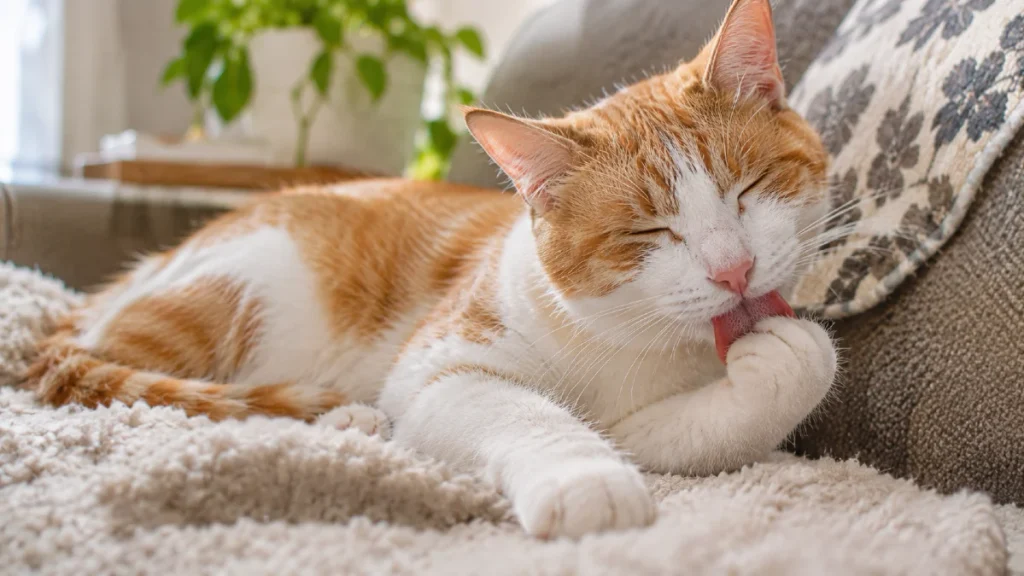
If your cat occasionally licks your hand or arm while resting beside you, it may be a friendly social behavior. Cats sometimes groom other cats they have positive relationships with, and similar behavior can extend to people.
This behavior is called social grooming. It can help cats maintain familiar scents and strengthen social bonds.
Cats Protection explains that licking can be associated with affection, but it has several possible meanings. Some cats lick because they want attention or find a particular scent interesting.
Be careful if your cat begins licking repeatedly while flicking their tail or showing signs of irritation. This can sometimes happen when they are becoming uncomfortable with physical contact.
You should also avoid letting your cat lick skin covered in medication, lotion, or other products that could be unsafe to swallow. A gentle lick during a calm moment can be sweet, but your cat’s safety always comes first.
How to Check Your Cat’s Mood in 30 Seconds
You do not need a special device to observe your cat’s mood. A short, quiet interaction can help you notice whether they seem comfortable around you.
This is an informal observation exercise, not a medical or scientific happiness test. It cannot tell you everything about your cat’s well being in 30 seconds, but it can help you pay closer attention to their behavior.
Try these steps when your cat is already awake and relaxed.
- Sit quietly nearby. Choose a comfortable distance without blocking your cat’s escape route.
- Give one gentle slow blink. Avoid staring directly into their eyes.
- Allow your cat to make the next move. Keep your hands relaxed and wait without calling or reaching.
- Watch their response. Notice their eyes, ears, tail, posture, and willingness to approach.
What to Look for During a Quick Happiness Check
Your cat may respond in several ways, and not all of them involve approaching you. Use these observations to decide whether to interact or simply give them space.
| What you notice | Possible meaning | Next step |
|---|---|---|
| Returns a slow blink | Feels relaxed | Stay calm |
| Approaches with tail raised | Friendly interest | Offer your hand |
| Remains comfortably resting | Content staying where they are | Do not disturb |
| Moves away or hides | Does not want interaction | Give them space |
| Tenses or flattens ears | Feels uncomfortable | End the interaction |
Do not treat a lack of response as failure. A cat may be sleepy, distracted, or simply uninterested in interacting at that moment.
For a better picture of happiness, watch your cat’s behavior across several days. Their usual eating, sleeping, grooming, playing, and social habits are more useful than a single short observation.
How to Make Your Cat Happier With Simple Home Changes
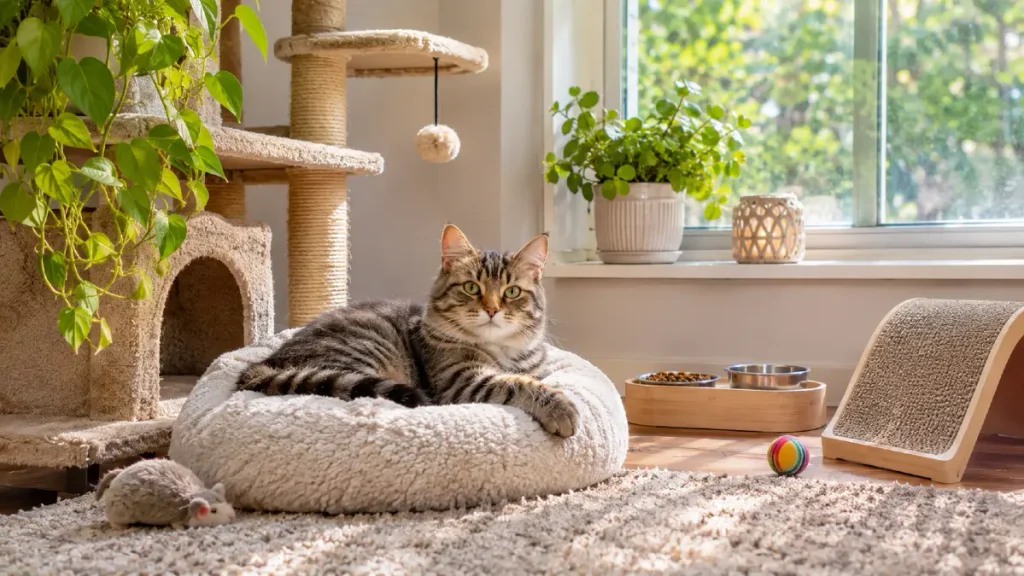
Recognizing happiness signs is useful, but helping your cat feel comfortable every day matters even more. Many cats benefit from small changes that support their natural behaviors.
The Feline Veterinary Medical Association recommends offering safe places, access to essential resources, opportunities to play, and social interactions that respect each cat’s preferences.
You do not need expensive equipment to start. A cardboard box, a sturdy scratching post, or a few minutes with a favorite toy can add useful activity to your cat’s routine.
Simple Ways to Make Your Cat Happier
These improvements focus on the needs that cats naturally have. Choose options that fit your cat’s personality, age, and physical abilities.
| Cat’s need | Simple improvement | Why it helps |
|---|---|---|
| Hunting and play | Feather wand toy | Encourages natural play |
| Safe resting | Covered bed or cardboard box | Offers a retreat |
| Scratching | Stable scratching post | Supports scratching behavior |
| Climbing | Secure cat tree | Adds vertical space |
| Food exploration | PetSafe SlimCat feeder | Encourages food seeking |
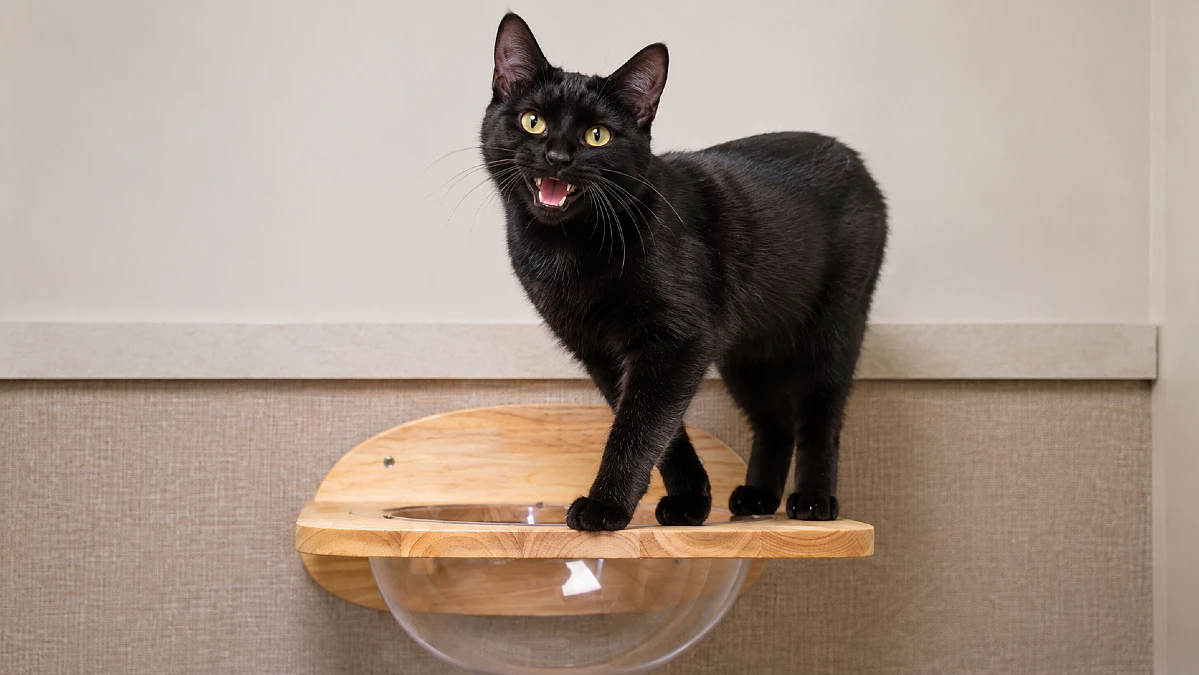
| Visual stimulation | Secure window perch | Offers things to observe |
Start with one or two changes and notice what your cat enjoys. A quiet resting area may be more valuable to a shy cat, while an energetic cat may prefer additional play opportunities.
Give Your Cat a Safe Window Watching Spot
Watching birds, leaves, and other outdoor activity can be an interesting form of enrichment for indoor cats. The ASPCA recommends comfortable window viewing areas as one way to provide mental stimulation.
Place a stable perch beside a secure window where your cat can sit comfortably. Make sure the window cannot open unexpectedly and that any screen is strong enough to prevent a fall.
However, window watching is not relaxing for every cat. Seeing unfamiliar cats or other animals outside may make some cats feel threatened or frustrated.
If your cat becomes tense, repeatedly attacks the window, or seems distressed, reduce the view and offer another activity. You can also try a supervised wand toy session to give them a chance to chase and catch something safely.