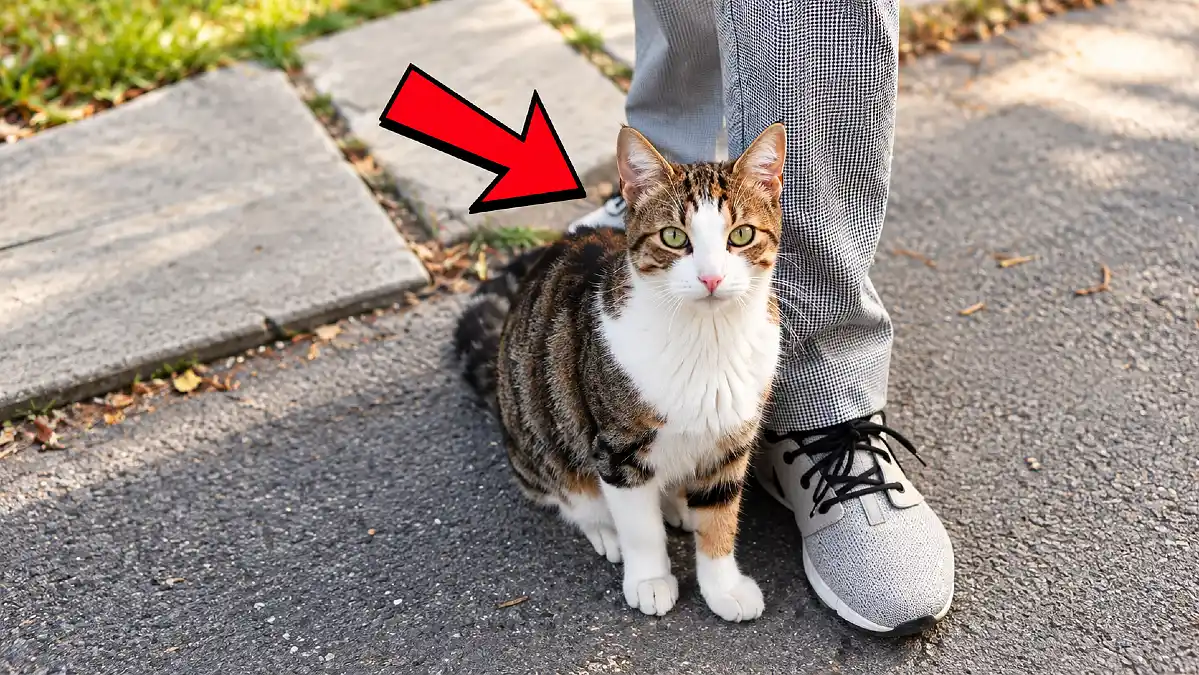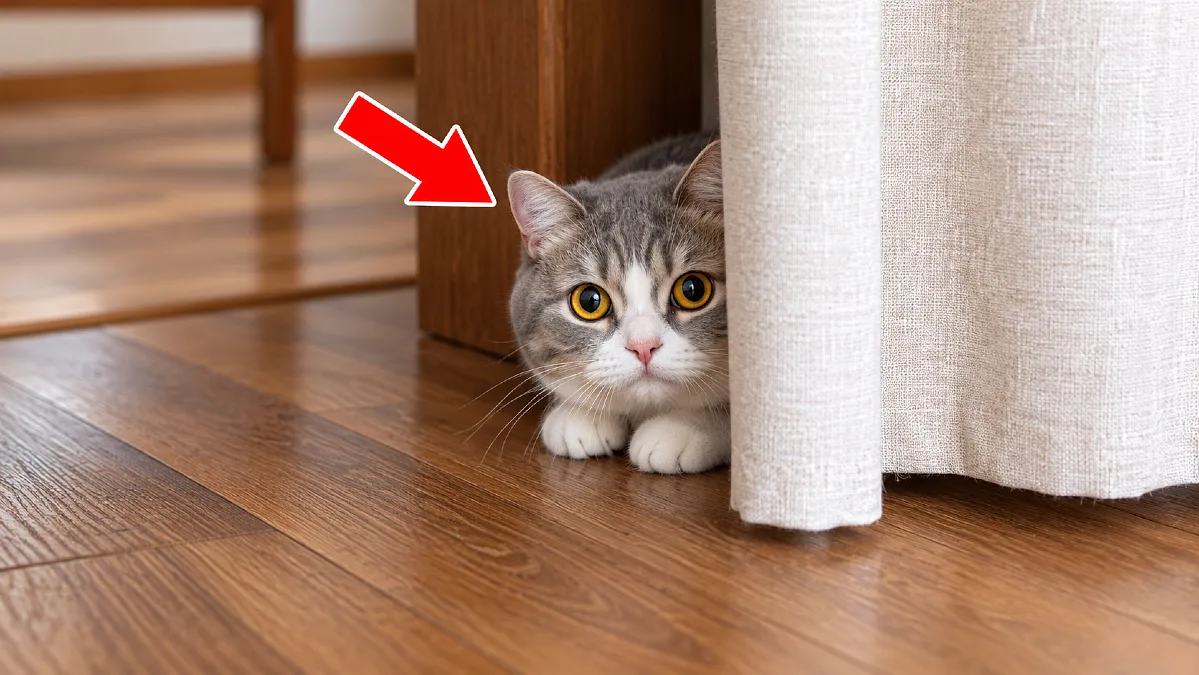
Your cat suddenly disappears when a certain visitor walks through the door. Or perhaps they start hiding the moment you take their carrier out of the closet. You might wonder how they know what is coming or why they react so strongly to something that happened months ago.
Cats have a remarkable ability to learn from experience. Some of the things your cat remembers can affect how they respond to people, places, sounds, and daily routines.
But cat memory works differently from human memory. Researchers cannot prove that cats remember every event forever, yet studies show they can recognize familiar people and form lasting associations with important experiences.
And some of those memories may involve you more than you realize.
1. Your Cat’s Earliest Experiences Can Shape Trust for Years

Long before your cat learned where you keep the treats, they were learning something much more important. They were discovering whether people, sounds, and everyday experiences were safe.
According to Cats Protection and VCA Animal Hospitals, kittens go through a sensitive socialization period between approximately two and seven weeks of age. Experiences during this stage can have a lasting effect on how comfortable they feel around people.
A kitten that receives gentle handling and positive contact may become more relaxed around humans as it grows. Friendly voices, calm movements, and pleasant interactions can help build confidence during this early stage.
However, kittens that have little human contact or experience frightening situations may become more cautious adults. Some may hide from strangers, dislike being picked up, or react defensively when someone reaches toward them.
These early experiences can shape future behavior, but they do not decide a cat’s entire personality. Genetics, health, and later experiences matter too.
For example, a rescued adult cat might run away whenever someone raises a hand nearby. This could reflect an earlier unpleasant association, although that reaction alone cannot reveal exactly what happened.
The good news is that adult cats can still learn to feel safer. You can help by offering choices and allowing your cat to approach you when they feel comfortable.
Start with quiet time together and gentle play. Offer treats when your cat chooses to come closer, and stop touching them when they move away.
Avoid forcing affection to prove that you are friendly. Trust develops through repeated positive experiences, especially when your cat learns that you respect their boundaries.
A difficult start may affect a cat for years, but it does not mean the future cannot be better.
2. The First Days in Your Home Can Leave a Strong Impression

Bringing a cat home feels exciting to you, but it can be a confusing experience for your new companion. Everything that once seemed familiar has suddenly changed.
Your cat faces different smells, unfamiliar footsteps, new furniture, and perhaps other animals. Even a quiet house can feel overwhelming when nothing in it is familiar.
Cats Protection explains that cats often need time to adjust to a new environment. Some explore quickly, while others spend days hiding before they feel confident enough to come out.
Does your cat remember the exact day you brought them home? Research cannot tell us whether cats recall adoption day as a complete event, but they can learn associations with their new surroundings.
If your cat found a quiet hiding place and received gentle care, those repeated safe experiences could help them become comfortable. If they were chased, grabbed, or surrounded by noise, they might become more cautious in similar situations.
Consider a cat that spends its first evening behind the sofa. When nobody forces it to come out, it can gradually learn that the room is safe to explore.
Helping a Newly Adopted Cat Feel Safe
Your cat’s behavior can help you decide how much interaction to offer. These common responses call for different approaches.
| What You Notice | What It May Mean | What Helps |
|---|---|---|
| Hiding under furniture | Needs a secure place | Provide a quiet room |
| Avoiding your hands | Unsure about contact | Allow voluntary approach |
| Exploring at night | More confident in quiet | Keep access safe |
| Startling at noises | Sensitive to unfamiliar sounds | Reduce loud activity |
These responses are common during the settling period, and improvement may happen gradually. The goal is to give your cat enough control to explore at their own pace.
A familiar blanket, a cardboard hiding box, and easy access to food, water, and a litter tray can help. Keep the litter tray away from food and water, and let your cat decide when to leave their safe room.
If your cat refuses food, seems ill, or shows prolonged distress, contact your veterinarian. A calm beginning helps, but patient care during the following weeks matters just as much.
3. Your Cat Remembers People Who Made Them Feel Safe or Scared
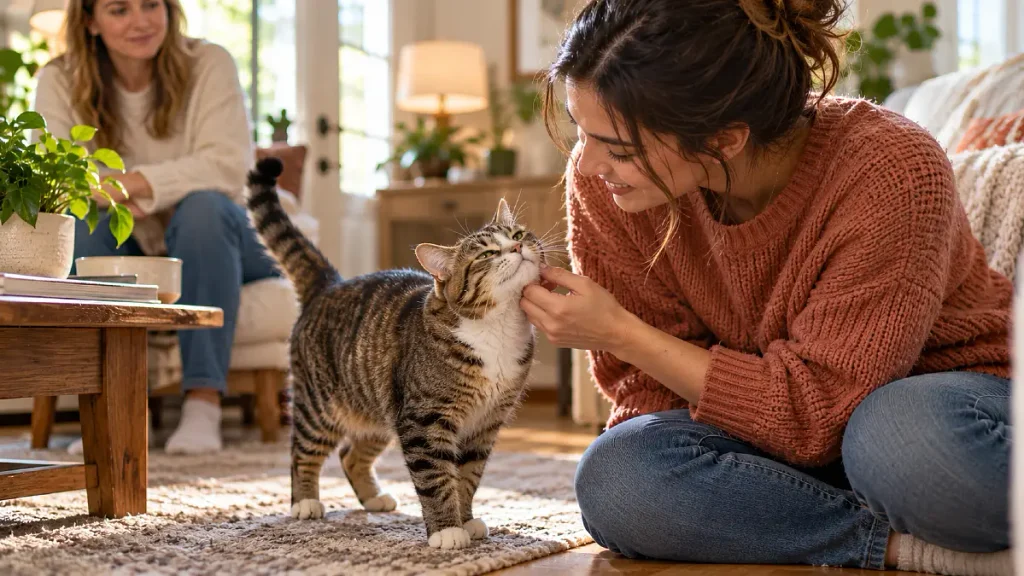
Have you ever noticed your cat greeting one visitor like an old friend while avoiding someone else completely? Sometimes, the difference has less to do with the person standing there and more to do with what your cat has learned about them.
Cats can recognize familiar humans through several kinds of information. Their voices, smells, movements, and past interactions may all help them decide how to respond.
A study published in PLOS One in May 2025 examined how domestic cats responded to familiar and unfamiliar human odors. Researchers found that cats spent longer sniffing an unfamiliar person’s odor than their owner’s odor.
That finding suggests cats can use scent to distinguish familiar humans from unfamiliar ones. However, the researchers noted that the study did not establish whether cats could identify a particular individual from scent alone.
Your cat may associate specific people with pleasant or unpleasant experiences. A visitor who regularly sits quietly and offers gentle play may become familiar in a positive way.
Someone who repeatedly chases the cat, makes sudden movements, or insists on picking them up could become associated with discomfort. That does not prove your cat hates the person, but it may explain why they keep their distance.
The surprising part is that you might barely remember the interaction yourself. A noisy visit that seemed ordinary to you could have been especially upsetting to your cat.
What Your Cat’s Reaction to People May Tell You
Instead of deciding that your cat loves or hates someone, pay attention to their full body language. Different reactions can help you choose a safer response.
| Cat’s Behavior | Possible Meaning | Your Best Response |
|---|---|---|
| Walks over with relaxed body | Comfortable approaching | Let the cat initiate contact |
| Rubs against a visitor | Friendly social behavior | Offer gentle contact if welcomed |
| Watches from a distance | Checking the situation | Give space |
| Walks away or hides | Wants distance | Do not follow |
| Hisses with tense posture | Feels threatened | Stop the interaction |
No single behavior tells the whole story, so look at your cat’s ears, tail, posture, and recent experiences. A cat that wants distance is communicating a need, not misbehaving.
If your cat fears someone, ask that person to sit quietly and avoid reaching toward them. They can offer a treat from a distance or gently toss a toy without expecting immediate contact.
Over several visits, your cat may learn that the person is no longer a threat. Some cats become friendly with time, while others simply become comfortable sharing the same room.
And that is enough. Your cat does not need to love everyone to feel secure in your home.
4. Painful Experiences Can Teach Your Cat What to Avoid

Sometimes your cat avoids a place they used to enjoy, and you cannot figure out why. The reason could involve a past experience that made the place feel unpleasant or unsafe.
Cats can learn associations between uncomfortable events and the situations surrounding them. This helps explain why some cats become fearful around certain objects, people, or handling methods.
For example, suppose a cat gets its paw caught near a closing door. After that experience, the cat might hesitate whenever it approaches the same doorway.
Another cat might resist being lifted after a painful handling experience. Even when the original problem is over, the cat may still respond cautiously to similar movements.
Veterinary behavior guidance recognizes that previous negative experiences can affect how cats react to handling. This is one reason professionals recommend gentle methods that allow cats as much control as possible.
However, avoidance does not always mean your cat is remembering something frightening. A cat that suddenly stops jumping onto the sofa may be experiencing joint pain rather than fear of the sofa itself.
Cats Protection warns that changes in activity, grooming, appetite, and tolerance of touch can be signs of pain. Sudden or persistent behavior changes deserve veterinary attention.
If your veterinarian rules out a health problem, you can work on making the situation feel safer. Start by removing the source of fear and allowing your cat to approach the area voluntarily.
For a cat nervous about being touched, begin with brief contact in places they enjoy. Stop before they become uncomfortable and reward calm behavior when appropriate.
Never punish a cat for growling, hiding, or pulling away. These reactions tell you that the situation has become too difficult for them.
You may not know which past event shaped their response. What matters now is helping them build safer associations without adding more fear.
5. Your Cat Learns Which Hiding Spots Feel Safest
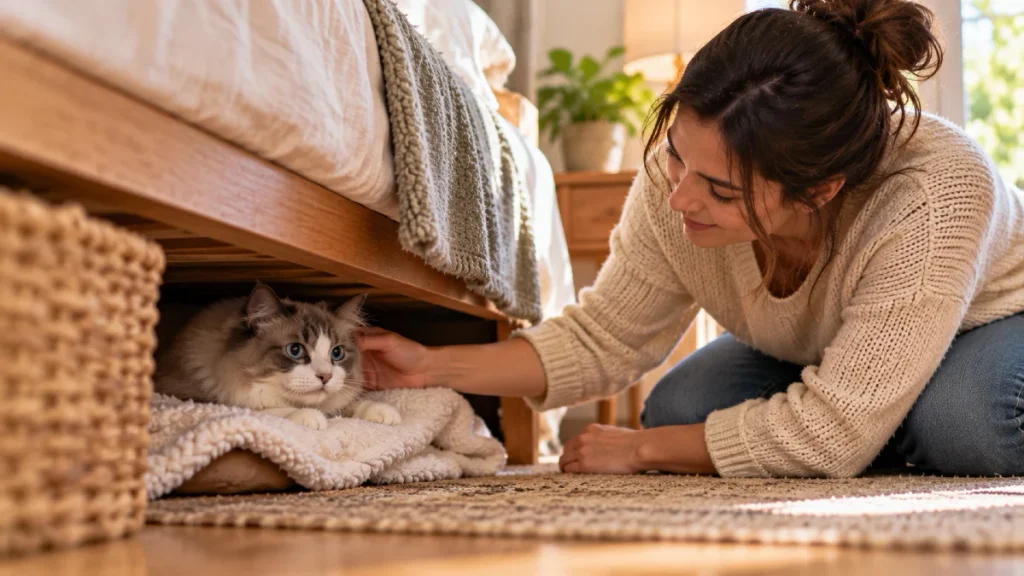
Your cat has an entire home to explore, yet they keep returning to the same cardboard box. Sometimes, they choose that box over the expensive bed you bought especially for them.
This preference may seem strange, but familiar hiding places serve a useful purpose. They give cats a place to retreat when the surrounding environment feels busy or uncertain.
International Cat Care explains that cats need access to places where they can rest, hide, and observe their surroundings. These options help them feel more in control.
A cat might choose a high shelf because it offers a clear view of the room. Another may prefer a covered bed tucked into a quiet corner away from household activity.
Over time, your cat can learn which locations offer comfort and allow them to relax without being disturbed. That familiarity may help explain why they return to the same spot when guests arrive.
Think about what happens when you start vacuuming. Your cat may head straight for the bedroom cupboard because it offers a familiar escape from the noise.
The best hiding place is one your cat can enter and leave freely. It should be secure, comfortable, and away from hazards such as exposed wires or unstable furniture.
You can create several safe options without spending much money. A sturdy cardboard box with a soft blanket works for many cats, while others enjoy a stable cat tree or enclosed bed.
If your cat is older or has trouble jumping, make sure they have comfortable hiding and resting places at floor level. High shelves are less helpful when getting onto them causes pain.
Avoid pulling your cat out of hiding simply because visitors want to see them. Respecting that private space helps prevent an already stressful situation from becoming worse.
There is one important exception to remember. If your cat suddenly hides much more than usual, especially with changes in eating, movement, or litter box habits, arrange a veterinary check.
A familiar hiding spot can be a healthy comfort. A sudden change in hiding behavior can also be an early warning that something is wrong.
6. Your Cat Remembers the Daily Routine You Created

Your cat starts meowing before breakfast, waits near the door around your usual arrival time, or appears whenever you prepare for bed. Sometimes, it seems as if they know your schedule better than you do.
Cats are good at learning repeated patterns. When the same activities happen regularly, they can begin to anticipate what usually comes next.
Your morning alarm might signal that breakfast is approaching. The sound of a cupboard opening could mean food is coming, while your evening movements may suggest that playtime is near.
These learned connections help explain why your cat becomes interested before you even pick up their food bowl. They have experienced the same sequence enough times to associate certain cues with a reward.
International Cat Care notes that routine and predictability can reduce distress and support feline welfare. Familiar patterns can make daily life feel more manageable for an animal that has little control over household schedules.
But your cat does not necessarily know the exact time or understand why you are late. They may be responding to learned cues, changes in activity, and their own daily rhythms.
When a familiar pattern changes, some cats become more vocal or restless. Others adapt without much difficulty because their personalities and experiences are different.
You can make your cat’s routine dependable without making every minute identical. Aim for consistent feeding habits, regular opportunities to play, and a comfortable place to rest.
For example, if your work schedule changes, gradually adjust meals and play sessions when possible. A timed automatic feeder may also help provide regular meals without depending entirely on when you are home.
Avoid responding to every demand for food with an extra snack. That can teach your cat that persistent meowing brings additional treats, which may encourage the behavior.
Daily play is another useful part of the routine. A wand toy or food puzzle can give your cat a chance to use natural hunting behaviors while spending enjoyable time with you.
If your cat’s appetite or begging changes suddenly, do not assume they are simply upset about the schedule. Hunger changes can have medical causes and should be discussed with a veterinarian.
7. A Stressful Vet Visit Can Change How Your Cat Sees the Carrier
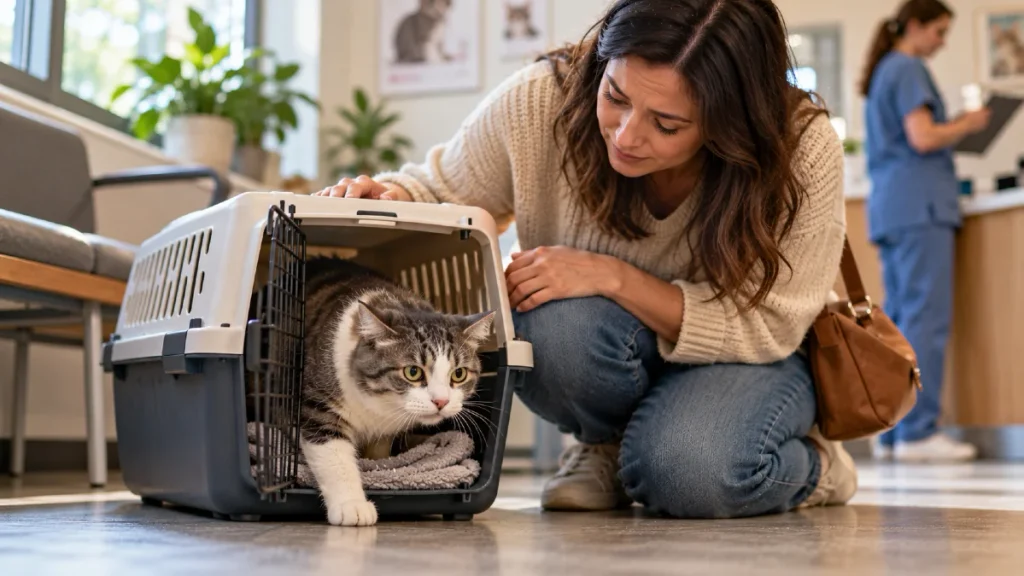
Your cat can be sleeping peacefully on the sofa until you open the cupboard that holds their carrier. Suddenly, they disappear beneath the bed as though they know exactly what is about to happen.
For some cats, the carrier has become linked with unpleasant experiences. They may associate it with being confined, traveling in a car, meeting unfamiliar animals, or receiving medical treatment.
This type of learned response can develop when the carrier appears only before stressful trips. Even the sound of its door opening may become a signal that something uncomfortable is coming.
The 2022 AAFP and ISFM Cat Friendly Veterinary Interaction Guidelines explain that previous experiences influence how cats respond to veterinary handling. They recommend giving cats choices, reducing fear, and using positive reinforcement whenever possible.
That means you can start improving your cat’s experience well before their next appointment. The first step is making the carrier part of normal life instead of something that appears only on veterinary days.
Leave the carrier in a quiet part of your home with its door open and secured so it cannot swing shut. Put familiar bedding inside and occasionally offer treats near the entrance.
When your cat willingly enters, reward them without immediately shutting the door. Over time, brief periods with the door closed can become part of gentle training, provided the cat stays comfortable.
Making Veterinary Visits Less Stressful
Different parts of a veterinary trip can create different reactions. The following approaches can help you decide what to practice before your next visit.
| Stress Trigger | Practice at Home | Helpful Change |
|---|---|---|
| Carrier appears | Leave it out regularly | Add familiar bedding |
| Carrier door closes | Practice brief closures | Reward calm behavior |
| Being lifted | Practice gentle handling | Stop when uncomfortable |
| Car movement | Build up very short trips | Keep carrier secure |
| Clinic examination | Practice cooperative handling | Ask for a gentle approach |
Start with whichever activity your cat can manage comfortably and progress slowly. If they panic, stop and return to an easier step rather than forcing the next stage.
A secure carrier with a removable top can make examinations easier for some cats. Clinics may also use towels, treats, quiet rooms, and other cat friendly methods to reduce stress.
Synthetic feline pheromone products, such as FELIWAY, are another option to discuss with your veterinary team. They may help some cats, but they are not a guaranteed solution to severe anxiety.
For cats with intense fear, veterinarians may recommend medication before a scheduled appointment. Never give your cat calming medication without veterinary instructions.
A previous stressful visit does not mean every future visit must be the same. Careful preparation and a supportive veterinary team can help your cat develop more comfortable experiences.
8. Your Cat Can Recognize Your Voice, Scent, and Familiar Presence

Perhaps the most meaningful thing about cat memory is that your cat can learn to recognize you. Even when they appear busy doing something else, they may be paying closer attention to your familiar sounds than you think.
A study by researchers Atsuko Saito and Kazutaka Shinozuka, published in Animal Cognition in 2013, found that cats could distinguish their owners’ voices from unfamiliar voices.
Interestingly, the cats did not always respond by running toward their owners. Many showed smaller reactions, such as turning their heads or moving their ears toward the sound.
That matters because owners sometimes assume that a cat who ignores their voice has failed to recognize them. Recognition and choosing to respond are two different things.
Another study by Charlotte de Mouzon and colleagues, published online in 2022, found that cats responded differently to speech directed at them when it came from their owners. The same difference was not seen when strangers used different speaking styles.
Your familiar voice may therefore carry information that goes beyond the actual words you say. The tone and way you usually speak to your cat can become part of your shared communication.
Scent may matter as well. The 2025 PLOS One study found that cats behaved differently when investigating odors from familiar and unfamiliar humans.
There is also evidence that cats can form meaningful attachment bonds with caregivers. Research published in Current Biology in 2019 by Kristyn Vitale and colleagues found distinct patterns of attachment between domestic cats and people.
This does not mean every cat shows love through cuddling. Some enjoy sitting on your lap, while others prefer resting nearby or following you between rooms.
A cautious cat might feel comfortable sharing the sofa but dislike being picked up. Another may greet you at the door and then return to its favorite sleeping place.
Neither behavior proves that one cat loves its owner more than the other. Cats have different social preferences, and affection may be expressed in quieter ways.
If you have been away, your cat may show recognition through familiar responses to your voice or presence. However, science has not established an exact length of time that every cat can remember a particular person.
To support your bond, spend time together in ways your cat enjoys. Regular play, gentle talking, and respect for personal space can all contribute to positive interactions.
Try sitting nearby and offering a relaxed, slow blink without staring. If your cat approaches, give them the chance to choose whether they want contact.
And when they settle beside you without asking for anything, appreciate that quiet moment. Your familiar presence may be one of the things that helps them feel comfortable.
You do not have to be the center of your cat’s attention every minute to be an important part of their life.