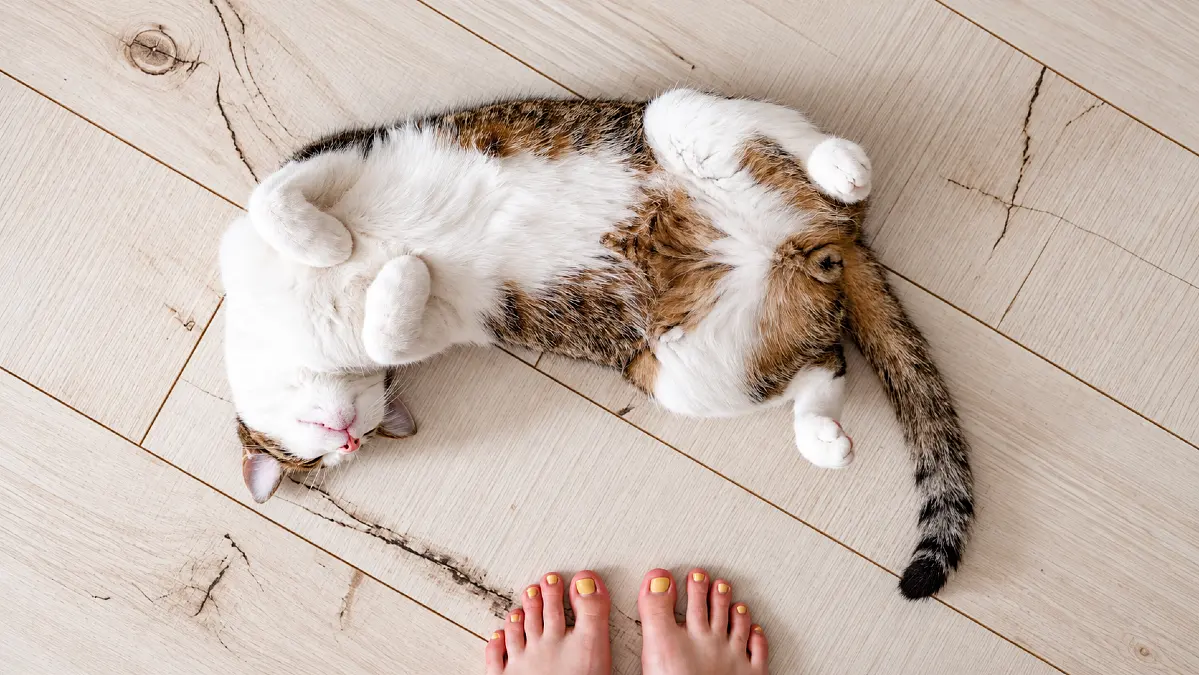
Your cat has an entire house to explore, a comfortable bed, and plenty of quiet corners. Yet, for some reason, they choose to drop right in front of you, sometimes rolling onto their back and showing their fluffy belly.
You might laugh, reach down to pet them, or wonder why they picked that exact spot. But when your cat lies down in front of you, their behavior may reveal something about how they feel around you.
Sometimes, it is a sign of trust. Other times, your cat may be asking for attention, enjoying your company, or simply choosing a comfortable place to rest.
The interesting part is that two cats can perform almost the same movement for different reasons. The answer often depends on their eyes, ears, tail, body position, and what happened just before they lay down.
Once you learn to notice these small details, you can respond in ways that help your cat feel comfortable. You may also recognize when an ordinary resting position is actually a sign that something is wrong.
Why Your Cat Suddenly Flops Down When They Feel Safe
Have you ever watched your cat walk toward you, stop suddenly, and fall onto their side? The movement can look so dramatic that you might think they have forgotten how their legs work.
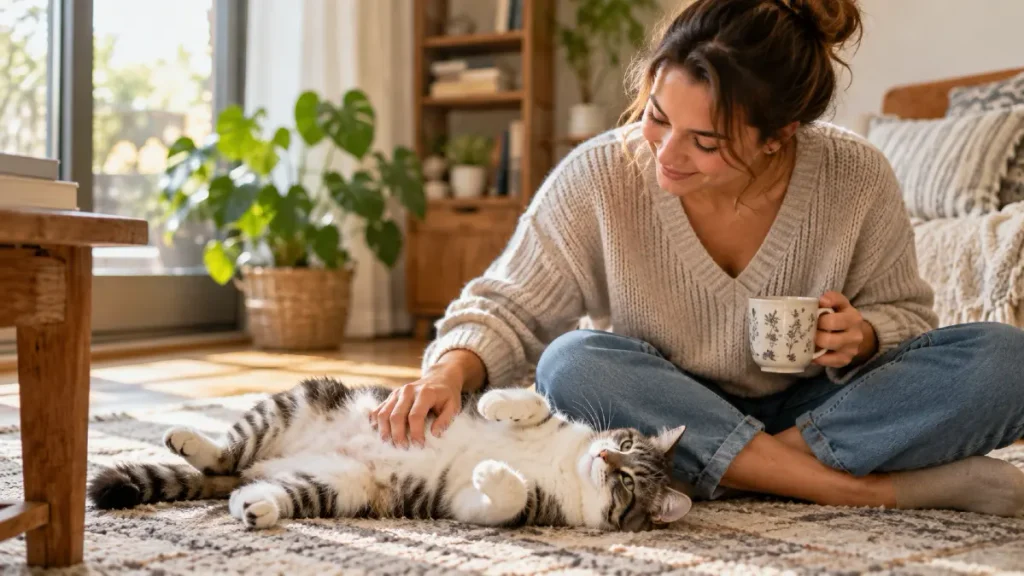
This behavior is sometimes called a social roll or social flop. When it happens with loose muscles, relaxed eyes, and friendly behavior, it can be a sign that your cat feels comfortable in your presence.
Cats Protection explains that cats sometimes roll onto their sides or backs when greeting familiar people. A cat may feel relaxed enough to expose a sensitive part of its body rather than keeping it protected.
Think about what happens when you come home after being away. Your cat might approach with their tail raised, rub against your legs, and then roll onto the floor as you greet them.
That combination can suggest a friendly welcome. Your cat is comfortable being close to you and may be interested in some gentle interaction.
Research also shows that cats can develop meaningful social bonds with people. In 2019, researcher Kristyn Vitale and her colleagues published findings in Current Biology showing that many cats form attachment bonds with their caregivers.
That does not mean every flop proves your cat loves you more than anyone else. It does show why social behavior around familiar humans deserves attention.
The important clue is what happens before and after the flop. A relaxed cat that approaches you willingly, rolls over, and remains comfortable is giving you a different message from one that suddenly falls onto its side while frightened.
What Showing Their Belly Really Means About Trust
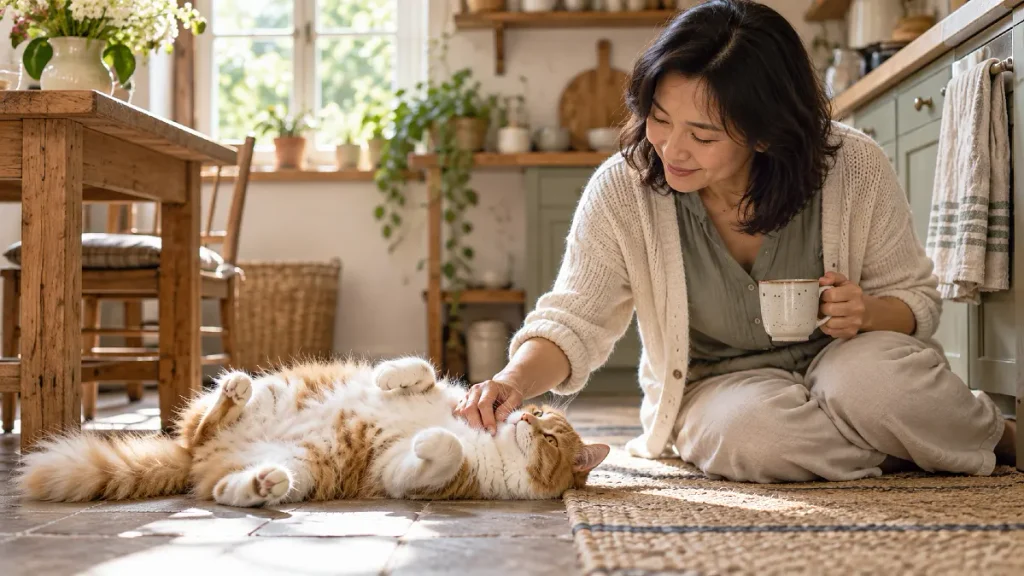
Few things are harder for cat owners to resist than a fluffy belly pointing toward the ceiling. Your cat looks peaceful, their paws are curled, and everything about the moment seems to invite a gentle rub.
But this is where one of the most common misunderstandings between cats and humans begins. Showing the belly does not automatically mean your cat wants it touched.
A cat’s stomach protects sensitive areas of the body. Many cats are uncomfortable when someone suddenly reaches toward this area, even when they were perfectly relaxed a moment earlier.
Cats Protection and the Toronto Humane Society both explain that an exposed belly often signals comfort rather than permission for stomach rubbing.
That helps explain the famous belly trap. Your cat rolls over, you reach toward their stomach, and suddenly your hand is being grabbed by four paws.
Your cat is not necessarily trying to fool you. They may simply be responding to touch they did not want.
How to Tell Whether Your Cat Welcomes Touch
A cat’s reaction can tell you more than the exposed belly itself. Watch their movements carefully before deciding what kind of contact to offer.
| Cat’s posture | Possible message | Best response |
|---|---|---|
| Belly up, body loose | Comfortable and relaxed | Speak softly |
| Rolling onto one side | Friendly social greeting | Offer your hand |
| Belly up, paws tense | Uncertain or defensive | Keep your distance |
| Rolling with playful movements | Interested in play | Offer a toy |
| Claws extended, ears flattened | Feeling threatened | Give space |
The position matters, but it is only part of the picture. A cat that rolls over peacefully may still prefer gentle cheek scratches instead of a belly rub.
Some cats genuinely enjoy stomach contact, especially when they are familiar with it. Even then, stop if their body becomes tense, their tail starts lashing, or they move away.
One of the simplest ways to build a comfortable relationship is to let your cat choose how much physical contact they want. That gives them more control over the interaction.
Why Your Cat Lies Directly in Your Walking Path
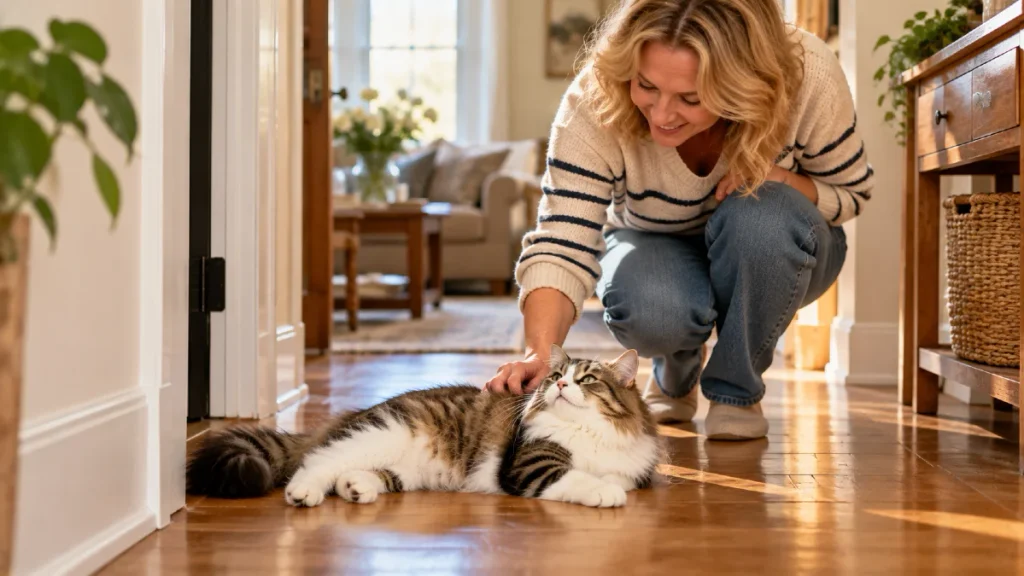
You are carrying laundry, heading toward the kitchen, or trying to reach the bathroom. Suddenly, your cat stretches across the floor directly in front of your feet.
It can seem as though your cat has chosen the most inconvenient place in the house. But there may be a practical reason for that choice.
Cats quickly become familiar with household routines. They notice where you walk, where you spend time, and what tends to happen when you enter certain rooms.
A cat that lies down near the kitchen before dinner may be expecting food. Another that settles by your desk might be looking for company while you work.
PetMD veterinarian Hannah Hart explained in a March 2026 article that cats may follow their caregivers for several reasons, including attention, food, curiosity, and feelings of security.
Lying directly in your path may serve a similar purpose in some situations. However, there is no reason to assume every cat is deliberately trying to control where you walk.
What Your Cat’s Favorite Blocking Spot May Reveal
Pay attention to when and where your cat chooses to stop you. The location often gives useful clues about what they might want.
| Where your cat lies | Possible reason | What to try |
|---|---|---|
| Kitchen before dinner | Expecting food | Keep a regular feeding routine |
| Hallway when you return | Greeting you | Pause and acknowledge them |
| Beside your desk | Wants nearby company | Add a comfortable bed |
| Bathroom doorway | Curious about your activity | Allow safe access |
| Living room walkway | Resting or seeking attention | Offer a nearby resting spot |
These explanations are possibilities rather than fixed rules. Your cat might choose the hallway simply because the floor feels cool or provides a good view.
Never assume your cat will move before you step forward. Stop, check where their paws and tail are, and walk around them carefully.
If your cat frequently blocks a busy area, place a comfortable bed nearby and reward them for resting there. This gives them another way to stay close without creating a tripping risk.
Why Your Cat Stretches Out Beside You Instead of Walking Away
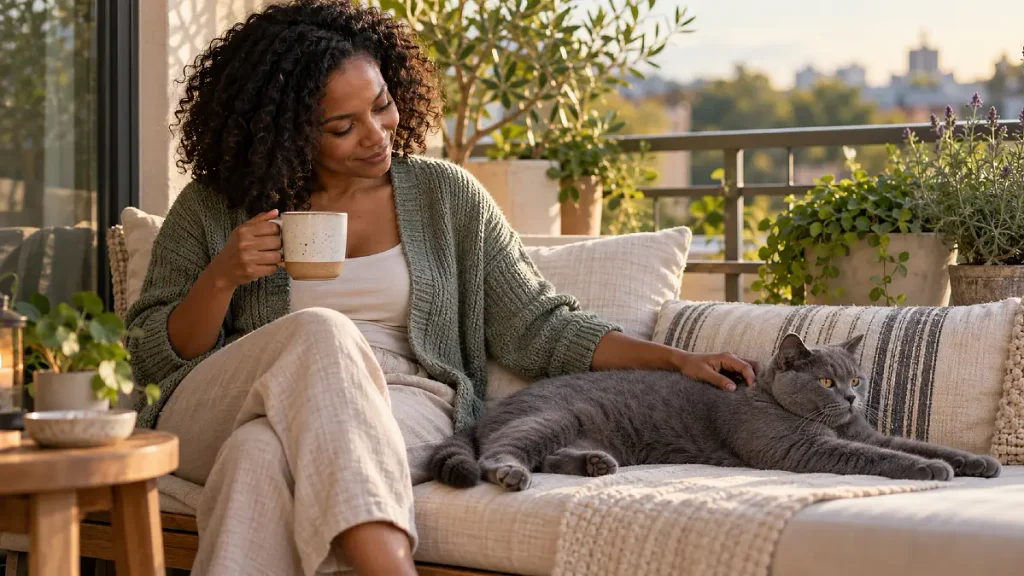
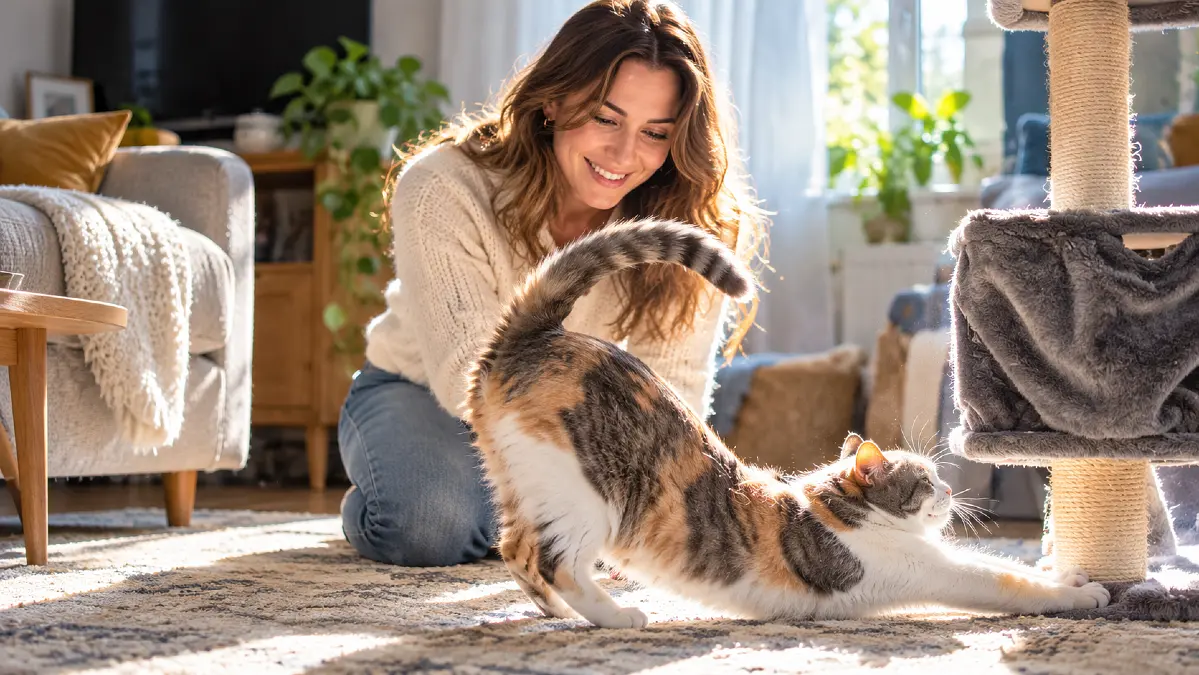
Sometimes your cat does not perform a dramatic roll at all. Instead, they slowly lower themselves onto one side, extend their front paws, and stretch their body across the floor.
This can be an ordinary sign of comfort. Cats often stretch after resting, and a relaxed animal may choose to remain stretched out in a familiar place.
The interesting detail is that your cat sometimes chooses to do this close to you. They may settle beside your chair even when another comfortable spot is available across the room.
Cats do not need constant physical contact to enjoy being around familiar people. Some prefer sharing a quiet space rather than sitting on someone’s lap.
For example, your cat might lie beside the couch while you watch television. They may close their eyes, stretch occasionally, and remain nearby without asking you to do anything.
That peaceful routine can be part of your relationship. Your cat has found a place where they can rest while remaining close to familiar household activity.
But the stretch itself is not proof of an especially strong bond. Cats also stretch to loosen their muscles after sleeping or to change positions.
A useful way to interpret the behavior is to watch what follows. If your cat stays relaxed, begins grooming, or settles into a comfortable nap, they are probably enjoying a peaceful moment.
If they stretch and immediately walk away, they may simply have been preparing to move. You do not need to turn every ordinary movement into a secret message.
Sometimes sharing the same room is enough for your cat. Respecting that quiet companionship can be just as valuable as giving them attention.
When a Dramatic Flop Means Your Cat Wants Attention or Play
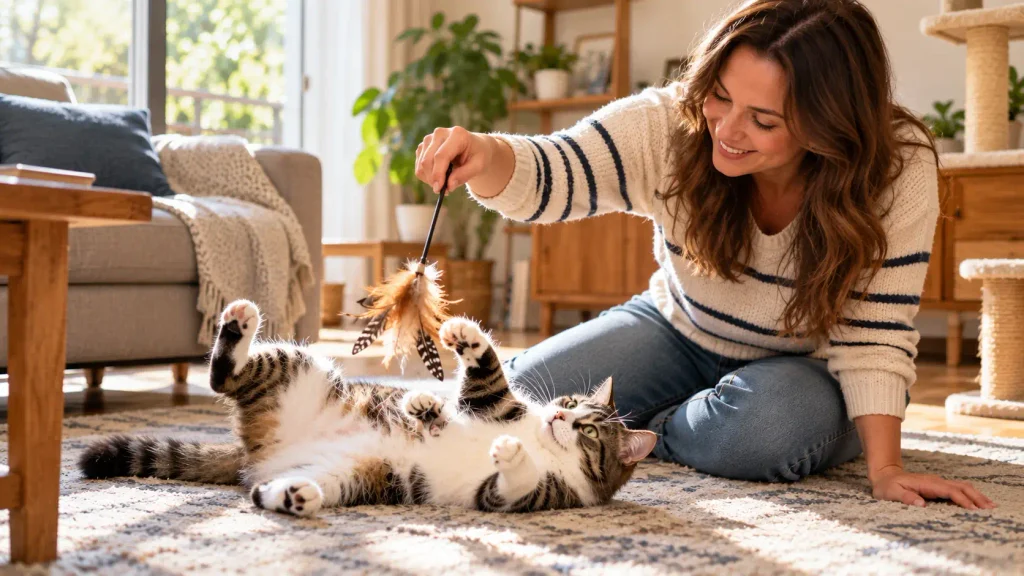
Some cats seem to have a special talent for making an entrance. They rush toward you, drop onto the floor, roll dramatically, and then look up as though waiting for your reaction.
These playful flops can be especially common during familiar activity periods. You might notice them before a favorite game or when your cat expects you to spend time together.
Cats can learn from the results of their behavior. If rolling over leads to gentle attention or an enjoyable activity, a cat may repeat that movement in similar situations.
The Merck Veterinary Manual explains that positive reinforcement can help cats learn which actions bring rewarding results. The same general learning process can influence ordinary household habits.
That means your cat might discover that a dramatic flop gets you to stop what you are doing. Over time, the behavior may become part of how they invite interaction.
How to Tell Whether Your Cat Wants to Play
Look at what happens immediately after your cat falls onto the floor. A playful cat may roll again, reach toward a nearby toy, or get up and move around with interest.
Try moving a wand toy gently along the floor and see whether your cat wants to chase it. Keep the toy far enough from your hands that your cat can grab it safely.
If your cat remains stretched out with sleepy eyes, play may not be what they want. They might simply be resting and enjoying your company.
You also do not need to respond with treats every time your cat flops. If you do, your cat may begin repeating the behavior whenever they expect food.
A short play session, a gentle greeting, or a nearby resting spot can provide attention without encouraging constant demands for snacks. The best response depends on your cat’s mood and normal routine.
How Your Cat’s Eyes, Ears, and Tail Reveal the Real Message
A cat’s body position tells part of the story, but the smaller signals often explain much more. Two cats can lie in the same position while experiencing very different emotions.
A relaxed cat usually has softer facial features and loose muscles. A worried cat may become stiff, flatten its ears, or move its tail sharply.
The RSPCA and VCA Animal Hospitals recommend considering the whole body when interpreting feline behavior. Looking at only one movement can lead to mistakes.
The Small Signals That Change the Meaning
Your cat’s eyes are especially useful. Slow blinking often happens during calm social interactions, although it does not always mean the cat wants to be touched.
A 2020 study published in Scientific Reports found evidence that slow blinking can support positive communication between cats and people. Cats in the experiments responded to human slow blinking and were more willing to approach after certain slow blink interactions.
Ears and tails provide additional clues. Relaxed ears often suggest comfort, while flattened ears and repeated tail lashing can indicate that your cat is worried or becoming irritated.
Use the following signs as a quick guide rather than treating any single movement as a certain answer.
| Body signal | Possible meaning | Best response |
|---|---|---|
| Soft, partly closed eyes | Calm or resting | Keep things peaceful |
| Gentle slow blink | Comfortable social signal | Blink back slowly |
| Ears facing forward | Alert or interested | Watch for other cues |
| Ears flattened back | Fear or discomfort | Give more space |
| Strong tail lashing | Irritation or high arousal | Pause interaction |
| Tense body, fixed stare | Uneasy or defensive | Avoid reaching in |
A relaxed tail does not guarantee that a cat wants to be picked up. Likewise, a moving tail can sometimes signal excitement during play rather than anger.
The safest approach is to watch several signals together. Consider what your cat was doing before they lay down and whether their behavior changes when you approach.
Why Purring Does Not Always Settle the Question
You may also hear your cat purr while resting near you. Purring often accompanies comfortable moments, especially when the body is loose and the cat looks peaceful.
However, cats can also purr when stressed or uncomfortable. If your cat is unusually withdrawn, breathing differently, or showing signs of pain, purring alone should not reassure you.
Your cat’s normal habits provide an important comparison. A familiar, relaxed flop is different from an unexpected change in posture or movement.
When Lying Down Could Mean Your Cat Is Unwell
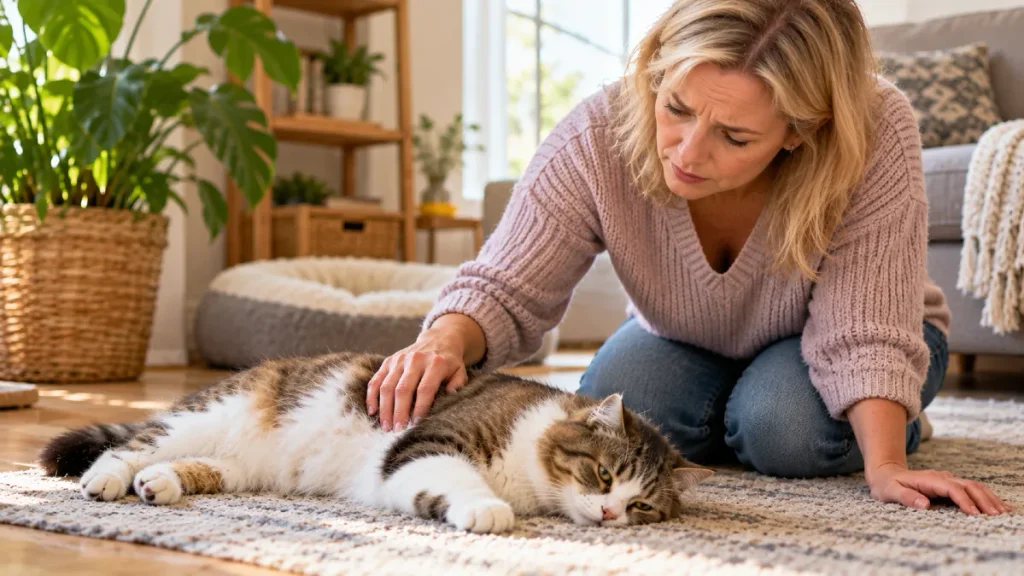
Most of the time, a cat lying comfortably on the floor is doing something completely normal. Cats spend plenty of time resting, and they often change sleeping spots throughout the day.
However, an unusual increase in lying down or a sudden collapse deserves attention. The difference between comfortable rest and illness can sometimes be difficult to recognize.
Cats Protection explains that cats often hide pain, which means small changes in movement or routine can be important. A cat might stop jumping onto furniture, become less interested in food, or begin resting in places they rarely used before.
PDSA also identifies unusual lethargy as a possible sign of illness. A cat that seems too weak to play or respond normally may need veterinary care.
How to Tell Normal Rest From a Warning Sign
Pay close attention to changes rather than judging your cat by one resting position. These signs can help you decide whether simple observation is enough or whether veterinary care is needed.
| What you notice | What it may suggest | What to do |
|---|---|---|
| Relaxed rest, normal activity afterward | Ordinary resting | Continue normal care |
| Sleeping much more than usual | Possible illness | Contact your vet |
| Stiff movement after resting | Possible pain | Arrange a vet visit |
| Less interest in food | Possible health problem | Call your vet promptly |
| Sudden collapse or inability to stand | Medical emergency | Seek emergency care |
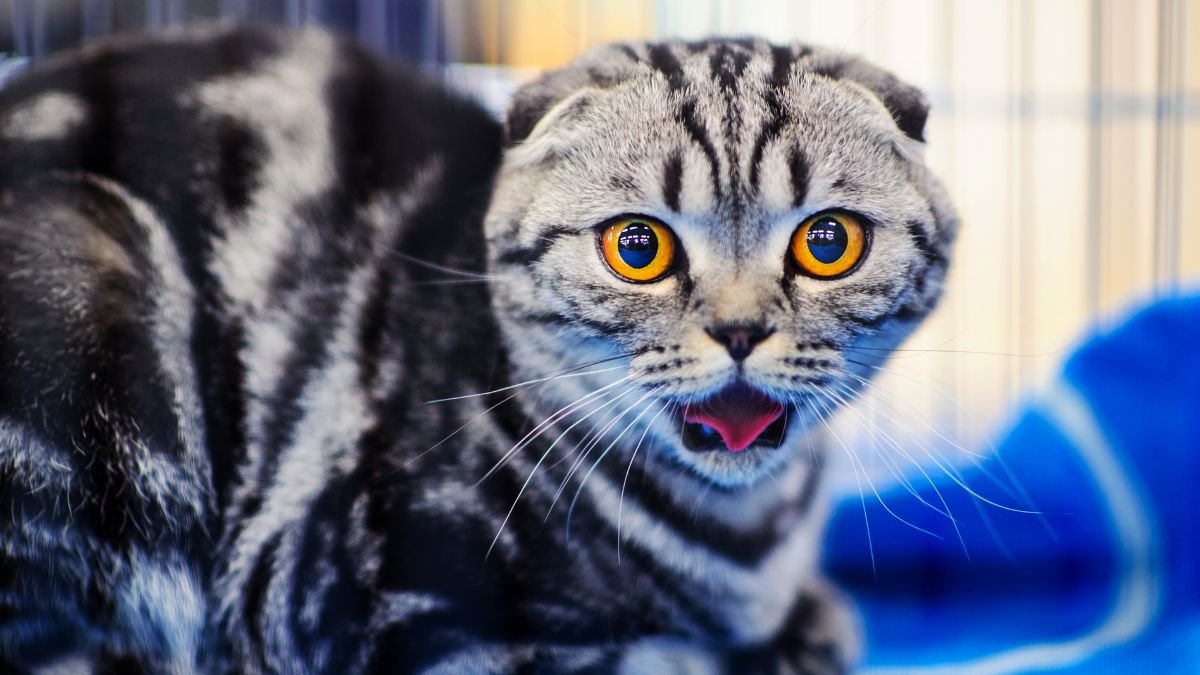
| Open mouth or difficult breathing | Medical emergency | Seek emergency care |
A cat that becomes suddenly weak, collapses, or struggles to breathe should receive urgent veterinary attention. Do not assume they are just tired or performing an unusual flop.
You should also contact your veterinarian when a sudden behavior change comes with reduced appetite, hiding, or signs of pain. Recording a short video of the unusual movement can help explain what you observed.
Remember: Normal flopping is usually a relaxed movement followed by ordinary behavior. Collapse, severe weakness, or breathing trouble is different and should never be treated as a cute habit.
How to Respond When Your Cat Lies Down in Front of You
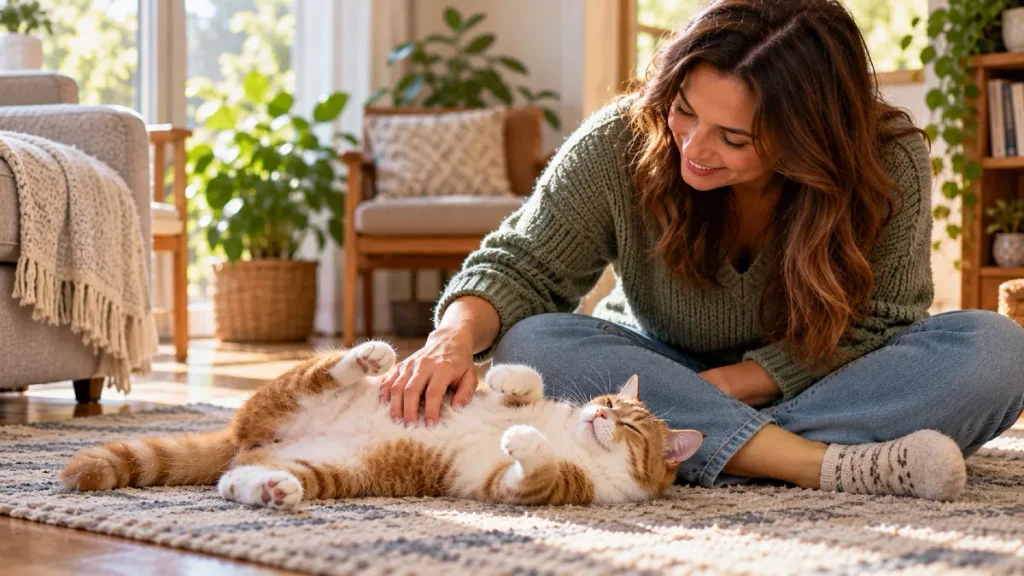
When your cat suddenly drops to the floor, your response can help make the interaction comfortable. You do not need an elaborate routine or constant petting to acknowledge them.
The most useful habit is to notice what your cat seems to want before reaching toward them. A friendly greeting, some play, and quiet companionship are all different possibilities.
Offer a Gentle Greeting First
Start by speaking softly or pausing near your cat. You can offer a relaxed slow blink if they are looking at you comfortably.
There is no need to lean over them immediately. Some cats enjoy being greeted without being touched at all.
Let Your Cat Decide Whether They Want Contact
Hold your hand nearby without pushing it into your cat’s face. Give them the option to approach, sniff, or rub against it.
If your cat leans into your hand, you can try a gentle stroke around the cheeks or chin. RSPCA NSW identifies these areas as common preferences for many cats.
Keep the first few strokes brief. If your cat turns away or becomes tense, stop and allow them to move freely.
Offer Play When Your Cat Seems Interested
If your cat rolls around and appears energetic, try an interactive toy. A feather wand or another safe cat toy may be a better choice than reaching for their stomach.
Let your cat chase and capture the toy during play. This provides an appropriate outlet for hunting behavior without encouraging them to grab your fingers.
Respect the Moments When Your Cat Wants Nothing
Sometimes your cat lies in front of you simply because that is where they want to rest. You can acknowledge their presence without interrupting them.
If they close their eyes, settle down, and remain quiet, allow them to enjoy that comfort. Being near you does not create an obligation to interact.
The more familiar you become with your cat’s preferences, the easier these decisions become. You will start to recognize the difference between a playful invitation, a peaceful greeting, and a request for space.