Your cat hears the word “treat” from across the room and comes running. But when you tell them to get off the kitchen counter, they suddenly act like they cannot hear you at all. It can leave you wondering whether your cat actually knows what you are saying.
The surprising answer is that cats can recognize certain human words. Research shows they can identify their own names, notice changes in familiar voices, and form associations between sounds and experiences.
But there is an important difference between recognizing a word and following an instruction. Your cat might hear you perfectly well without knowing what action you expect.
Scientists have spent years studying how cats respond to human speech. Their findings suggest that cats pay more attention to our voices than their quiet behavior might lead us to believe.
1. Your Cat’s Name: How Cats Recognize Their Own Name

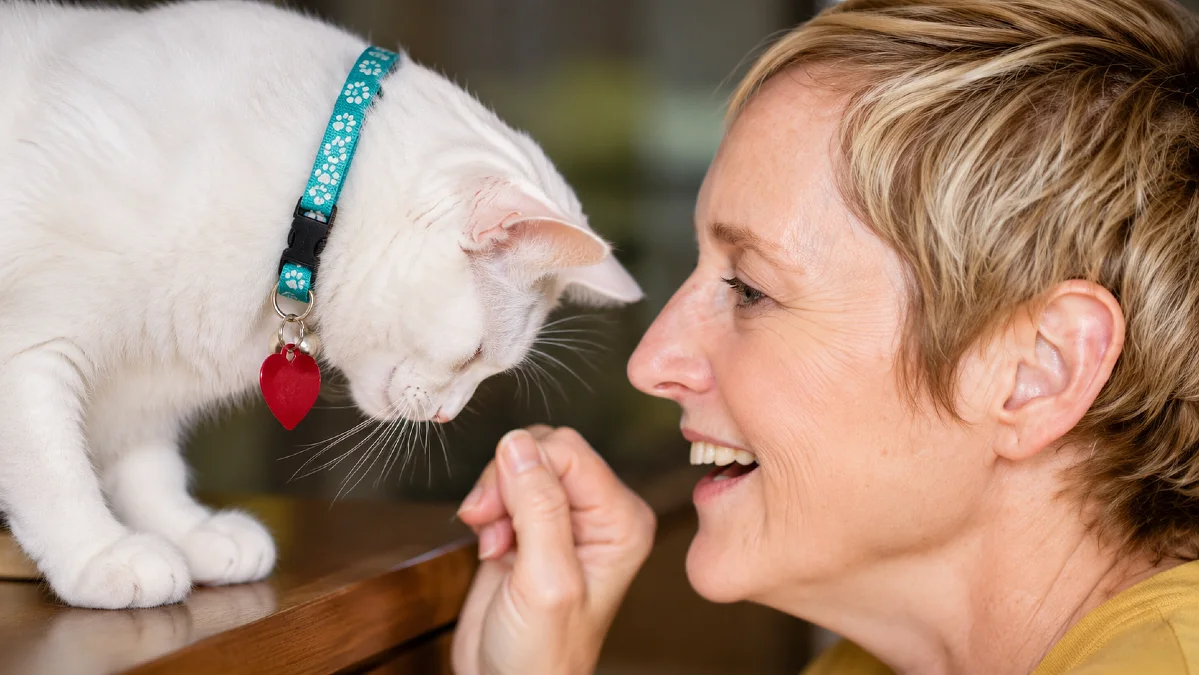
Have you ever called your cat several times without getting a response, only to notice one ear move slightly in your direction? That tiny movement might tell you more than you think.
Scientific research shows that cats can distinguish their own names from other spoken words. They do not always come running, but many notice when they hear their names.
What Scientists Discovered About Cat Names
In 2019, researcher Atsuko Saito and her colleagues published a study in Scientific Reports examining whether domestic cats could recognize their names.
The researchers played recordings of several words before playing each cat’s name. They watched for changes in the animals’ reactions, including head movements, ear movements, and other signs of attention.
Household cats often showed less interest as ordinary words were repeated. When their own names were spoken, however, they showed a stronger response.
Some cats also distinguished their names when an unfamiliar person spoke them. This suggested that the response was not limited to recognizing their owner’s familiar voice.
The findings were less clear for cats living in cat cafés when researchers compared their names with the names of other cats. This is an important reminder that a cat’s environment and daily experiences can affect what it learns.
How to Tell Whether Your Cat Recognizes Its Name
You might expect your cat to walk over whenever you say its name. But researchers often look for smaller changes in behavior.
Watch your cat carefully the next time you call them. The signs below can help you decide whether they noticed your voice, although none proves name recognition by itself.
| Cat’s response | What it may suggest | What to watch |
|---|---|---|
| Ears turn | Attention to sound | Ears point your way |
| Head turns | Sound caught interest | Face moves toward you |
| Looks at you | Increased attention | Brief eye contact |
| No visible response | No clear reaction | Try again later |
A small reaction can still matter, especially when it happens after your cat has ignored other words. However, one response is not enough to prove that your cat recognizes its name.
Try This Simple Name Recognition Test
Wait until your cat is calm and awake. Say a few ordinary words in the same gentle voice, leaving a short pause between them.
Then say your cat’s name without moving toward them or showing food. Watch for a change in their ears, head, or eyes.
Repeat the test on different occasions rather than calling their name over and over. If your cat responds more often to its name than to other words, that is a useful clue.
Your tone matters, too. A 2022 study led by Charlotte de Mouzon found that cats in a small study responded differently when their owners used speech directed at them rather than speech directed at other adults.
The takeaway: Your cat may recognize its name even when it stays exactly where it is. Looking for small signs of attention can tell you more than waiting for a dramatic reaction.
2. Treat: Why Food Words Get Your Cat’s Attention
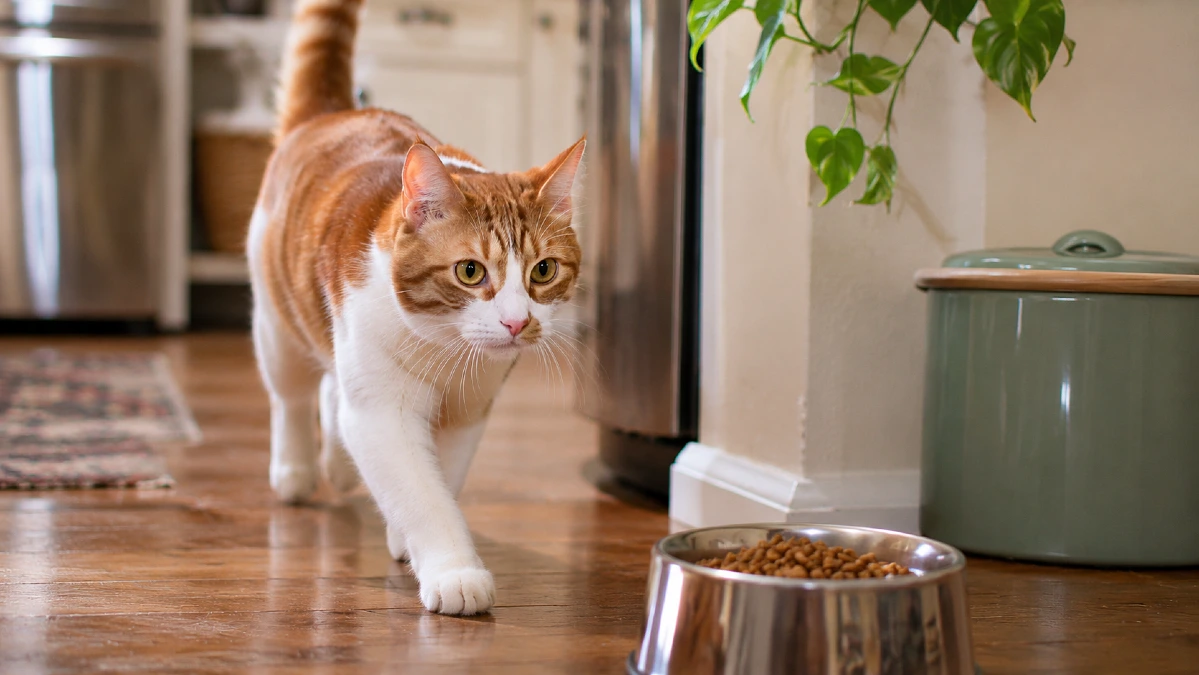
You can call your cat’s name several times and get nothing. But the moment you say “treat,” their head turns, their ears lift, and they appear beside you.
Why does this happen so easily with food related words?
One likely reason is that your cat has learned to connect certain sounds with rewarding experiences. If you often say “treat” just before giving food, that word can become a useful signal.
How Cats Connect Human Words With Food
Cats learn through associations. When one event regularly happens before another, they can begin to expect what comes next.
For example, suppose you say “treat” every evening before offering your cat a small snack. Over time, your cat may start paying attention as soon as they hear that familiar sound.
This form of learning is called classical conditioning. The word becomes meaningful because of what has repeatedly followed it.
But there is a catch. Your cat might be reacting to your movements, the sound of a treat bag, or the time of day rather than the spoken word.
That is why hearing your cat come running does not automatically prove they recognize “treat” on its own.
Science Shows Cats Can Form Word Associations
A 2024 study published in Scientific Reports provides interesting evidence about how cats connect spoken sounds with other information.
Researcher Saho Takagi and her colleagues tested whether cats could form associations between words and pictures. They found that cats showed evidence of learning these pairings during the experiments.
This research does not prove that every cat knows the word “treat.” It does, however, support the idea that cats have the ability to connect human speech with specific things.
And that makes everyday food words worth paying attention to.
How to Teach Your Cat the Word Treat
Start by choosing one word for a small food reward. If you prefer saying “snack” instead of “treat,” that can work too.
Use the same word each time you offer a reward during a short practice session. Say it clearly, then provide the food.
As your cat learns the routine, try saying the word before reaching for the treat bag. This helps you see whether they are reacting to your voice rather than the packaging.
You can also ask another household member to say the word in a similar way. If your cat reacts before seeing food or hearing the bag, that gives you another clue.
Keep the rewards small and include them in your cat’s daily food allowance. Too many extra treats can add unwanted calories, even when you are using them for training.
The takeaway: Food words can become powerful signals because they predict something your cat enjoys. Consistency matters more than choosing a special word.
3. No: Why Your Cat May Hear It but Keep Going
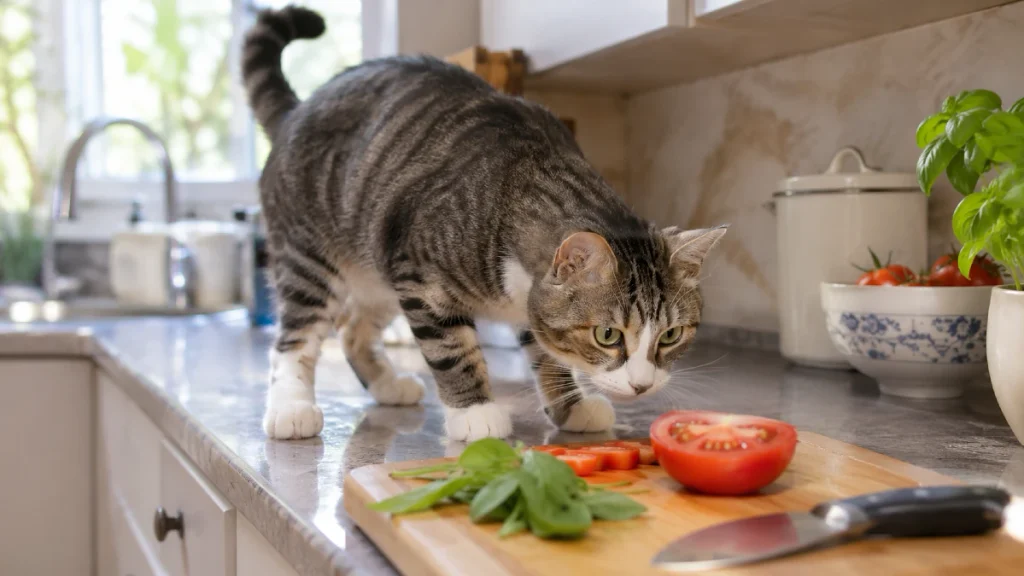
Your cat jumps onto the kitchen counter while you are preparing dinner. You say “No,” and they pause for a moment before continuing to investigate your food.
Does that mean your cat knows exactly what No means and has decided to ignore you?
Not necessarily. There is no strong evidence that cats naturally recognize No as a universal command to stop. A cat can notice your voice, your tone, or your sudden movement without knowing what behavior you want instead.
Why Saying No Often Does Not Work
Think about the different situations where you might say No to your cat. You might use it when they scratch the sofa, climb onto a table, bite your hand, or try to steal food.
The problem is that the same word is being used for several different behaviors. Even if your cat learns that No predicts an unpleasant reaction, it may not tell them what they should do next.
Your cat also has natural reasons for many of these actions. Cats climb because they enjoy high places, scratch to maintain their claws and leave scent marks, and chase moving objects because of their hunting instincts.
Simply saying No does not remove those needs. Your cat still needs an acceptable way to express them.
Why Punishment Can Make Things Worse
Some owners raise their voices when their cats keep repeating unwanted behavior. While shouting may interrupt an action, it can also frighten the animal.
Battersea Dogs & Cats Home explains in its cat training guidance, updated in 2026, that punishment may make cats anxious or frustrated. The cat may begin to associate unpleasant experiences with the person doing the shouting.
The Feline Veterinary Medical Association also addressed this issue in its 2026 Positive Reinforcement Training Educational Toolkit. Its guidance favors rewarding useful behavior rather than relying on punishment.
This matters because a frightened cat is not necessarily learning what you want. They may simply be learning to avoid you when you sound angry.
What to Do Instead of Saying No
You will often get better results by making an acceptable behavior more rewarding. That means giving your cat something appropriate to climb, scratch, chase, or explore.
Here are practical alternatives for common problems. Each one works with normal feline behavior rather than expecting your cat to stop having that need.
| Unwanted behavior | Better response | Helpful alternative |
|---|---|---|
| Jumping on counters | Reward another spot | Cat tree or perch |
| Scratching furniture | Encourage nearby scratching | Stable scratching post |
| Biting during play | Stop hand play | Wand toy |
| Climbing curtains | Offer safe climbing | Tall cat tree |
| Meowing for attention | Reward calm moments | Planned play sessions |
These methods do not promise an instant change. Your cat needs repeated chances to discover that the new behavior leads to something good.
For example, if your cat enjoys watching you cook from the counter, place a stable perch in a safe area away from the stove. Reward them for using it while keeping tempting food off the counter.
Can Your Cat Learn What No Means?
A cat can learn that a particular sound predicts a certain response from you. But that is different from proving that they know No means they must stop every possible action.
If you use a gentle interruption cue, follow it with a clear alternative. Then reward your cat when they choose the behavior you want.
Avoid spraying water, frightening your cat, or using physical punishment. These methods can harm trust without teaching a useful replacement behavior.
If unwanted behavior starts suddenly or becomes extreme, speak with your veterinarian. Pain, stress, and illness can sometimes change how a cat behaves.
The takeaway: Your cat may hear No without knowing what you expect. Showing them what to do instead usually gives them a much clearer lesson.
4. Come Here: How to Teach Your Cat to Come When Called
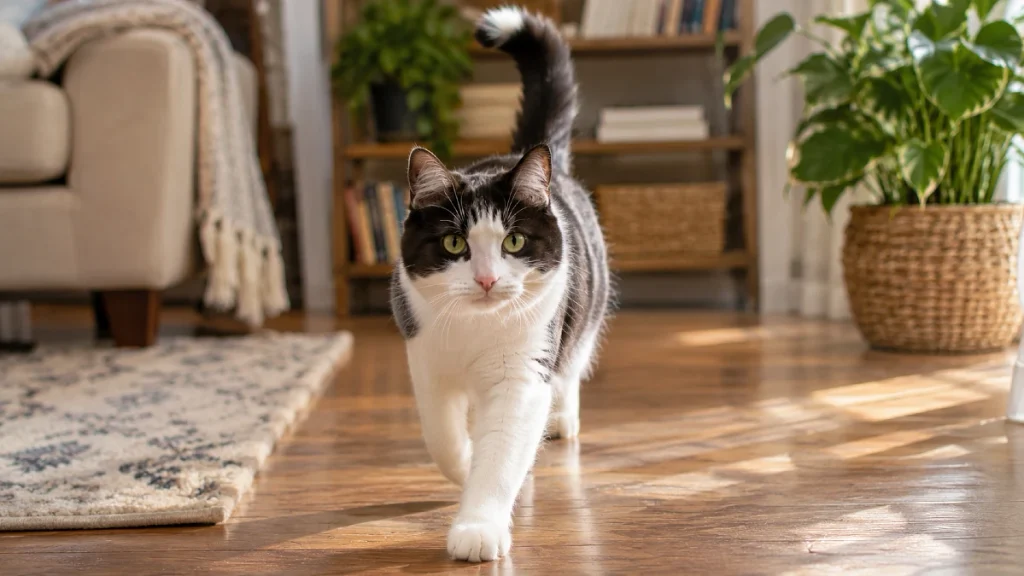
Wouldn’t it be useful if your cat came to you when you called? You could invite them inside, bring them over for playtime, or help them move to a safe area.
The good news is that cats can learn to respond to a recall cue. But you need to teach that cue through repeated, positive experiences.
Why Come Here Needs to Be Taught
Unlike their own names, which cats hear throughout daily life, a phrase such as “Come Here” may have no clear meaning at first. Your cat needs to learn that moving toward you after hearing it can lead to a pleasant result.
The Ontario SPCA published cat recall training guidance in March 2026. It recommends beginning in a quiet setting, rewarding attention, and gradually increasing the distance between you and your cat.
This gives your cat a chance to learn the behavior before facing more difficult situations. It also helps you avoid turning training into a frustrating experience.
Teach Come Here With Positive Rewards
Choose one recall cue and use it consistently. You can say “Come,” “Here,” or “Come Here,” but avoid switching between several phrases during early training.
Begin when your cat is alert and relaxed. Have a few small treats ready, and practice somewhere without distractions.
- Get your cat’s attention. When your cat is near you, say your chosen cue once in a gentle voice.
- Reward a small response. If your cat looks toward you, mark that moment with “Yes” and give a treat.
- Encourage movement. When your cat responds to the cue, practice from a short distance and reward them for walking toward you.
- Increase the distance. Gradually move farther away once your cat responds well nearby.
- Practice in other places. Try the cue in different quiet areas before adding mild distractions.
Do not rush the process. Some cats learn quickly, while others need more practice before a response becomes reliable.
Build a Reliable Recall Routine
The biggest mistake is expecting your cat to come from another room before they have mastered the cue nearby. Start with easy situations and make the task harder only after they are succeeding.
This table shows how to build the skill. Each stage adds a small challenge while keeping rewards consistent.
| Training stage | What you do | What you reward |
|---|---|---|
| Getting attention | Say cue nearby | Looking at you |
| Short distance | Call from a few steps | Moving toward you |
| Longer distance | Move farther away | Coming to you |
| Mild distractions | Add quiet activity | Responding despite noise |
| Daily practice | Use cue in new rooms | Successful recall |
Move forward only when your cat is comfortable with the earlier stage. If they stop responding, return to an easier setting instead of repeating the command more loudly.
Training should feel like a short, enjoyable activity. A few successful repetitions are more useful than a long session where your cat loses interest.
Why Your Cat Might Ignore Come Here
Sometimes the problem is not the word itself. Your cat may have learned that coming to you leads to something they dislike.
For example, suppose you frequently say “Come Here” before giving medication or trimming their nails. Your cat might become less willing to approach because they expect an unpleasant experience.
Ontario SPCA advises against using recall to bring a cat into situations they dislike. Keeping the cue associated with rewards helps maintain a positive response.
Another common mistake is showing the food before saying the cue. If your cat sees the reward first, they might approach because of the food rather than the sound.
Say the cue before revealing the treat. This gives your cat a chance to connect the word with the action.
Never assume recall training makes outdoor roaming safe. Even a well trained cat may not respond when frightened, chasing something, or faced with heavy distractions.
The takeaway: Come Here can become a useful communication tool when your cat learns that responding brings a positive result. Regular practice, suitable rewards, and patience are the keys.
5. Good Job: How Your Cat Learns Words of Praise
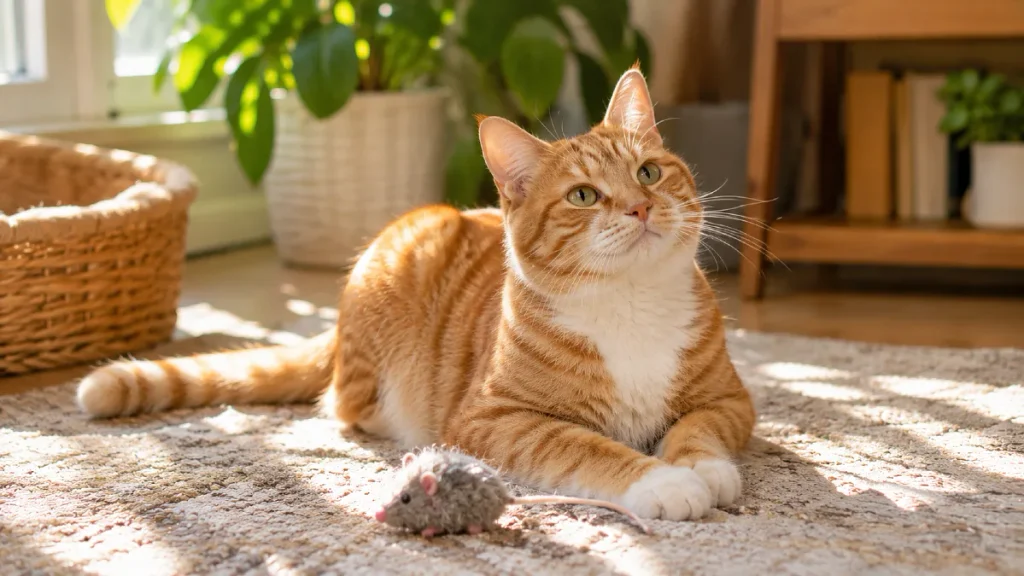
You see your cat use their scratching post instead of the sofa. You smile and say, “Good Job!” in a happy voice.
But does your cat actually know you are praising them?
The answer depends on what your cat has learned from that phrase. Cats can learn to connect a spoken sound with rewards, but research has not shown that every cat automatically knows the meaning of Good Job.
Can Cats Recognize Positive Words?
Cats pay attention to more than the words we say. Our voice, movements, and familiar routines can all influence how they respond.
The 2022 research led by Charlotte de Mouzon found that cats could distinguish speech directed at them from ordinary adult speech when it came from their owner. This suggests that familiar speaking styles may be important in communication.
However, that study did not establish that cats know the meaning of praise words. Recognizing a familiar voice or speaking style is different from knowing that a specific phrase means approval.
This is where training can help.
How Good Job Can Become a Reward Signal
Battersea Dogs & Cats Home recommends building an association between a word such as “good” and an immediate treat. After repeated pairings, the sound can become a useful signal during training.
For example, suppose your cat sits calmly while you prepare their food. You say “Good Job” at the moment they sit, then give them a small reward.
With practice, your cat may begin to connect the praise phrase with something pleasant. The word can help mark the exact behavior you want them to repeat.
The timing matters. If you wait until your cat has walked away or started another activity, the praise may be less clear.
Some Cats Prefer Attention Over Food
Food is a common reward, but it is not the only thing cats enjoy. Some cats respond well to gentle attention or a favorite game.
In a 2017 study published in Behavioural Processes, Kristyn Vitale Shreve and her colleagues examined whether cats preferred social interaction, food, toys, or scent.
Human social interaction was the most commonly preferred category among the cats tested. However, the researchers also found clear differences between individual cats.
This does not mean verbal praise alone is always better than food. The study measured broader forms of interaction, so it cannot prove that cats prefer hearing Good Job.
If your cat enjoys being petted, gentle affection may help make praise rewarding. If they prefer toys or food, those rewards may be more effective.
Make Your Praise Clear and Consistent
Choose one short phrase and use it whenever your cat performs a behavior you want to encourage. Keep your voice calm and friendly rather than suddenly becoming loud.
If your cat enters the carrier voluntarily, say “Good Job” and provide a reward. If they use their scratching post, do the same.
Avoid giving praise while your cat is frightened or trying to get away. Respecting their comfort is just as important as rewarding good behavior.
You can also use a clicker or a short word like “Yes” to mark successful actions. The Feline Veterinary Medical Association’s 2026 training resources describe how consistent signals can be paired with rewards to support learning.
The takeaway: Good Job is a phrase your cat can learn to associate with something pleasant. The value comes from the experiences connected with it, rather than from the words having a built in meaning.