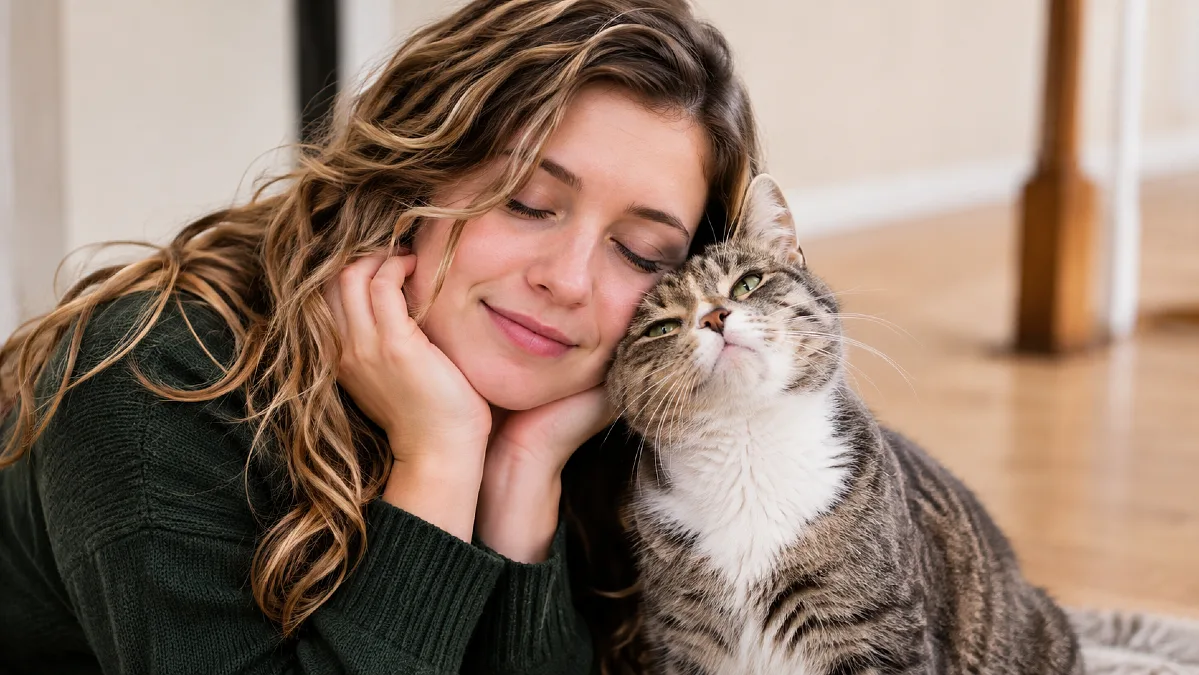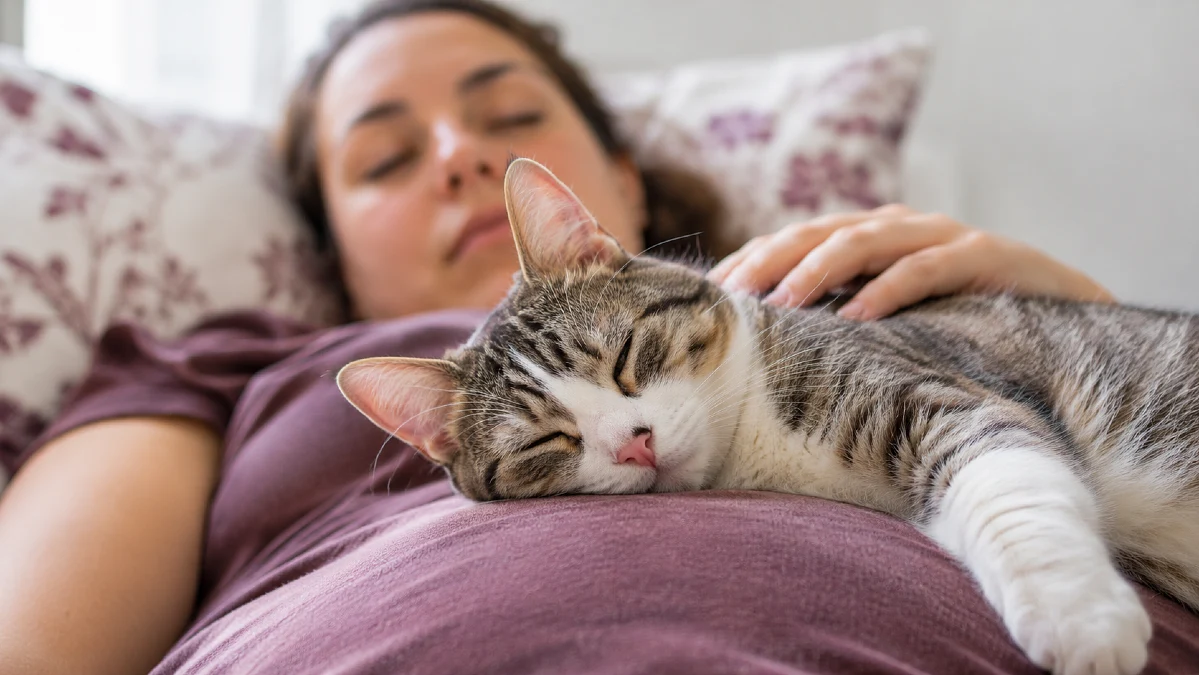
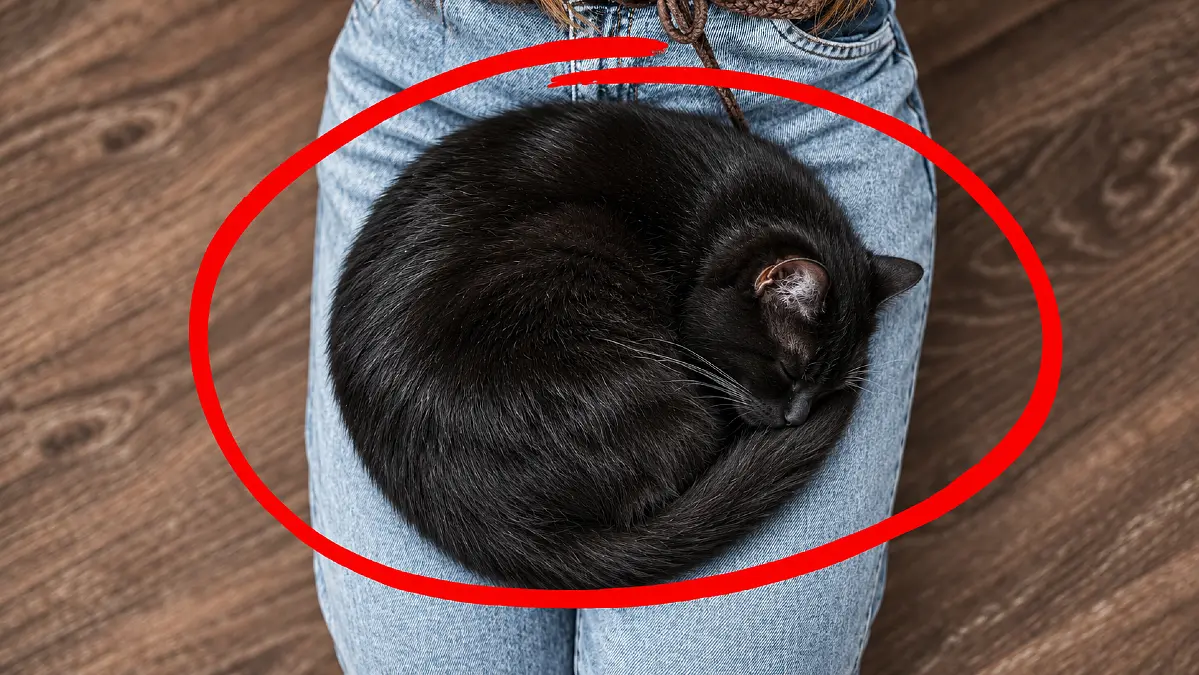
Your cat loves being around you, follows you into the living room, and sometimes sleeps right beside you. But the moment you try to bring them onto your lap, they walk away. You might wonder why your cat seems comfortable with you but refuses to settle down for a cuddle.
It can feel disappointing, especially when you see other cats happily sleeping in their owners’ laps. Maybe you have a playful kitten that never stays still, a shy rescue cat that avoids being picked up, or an older cat that has never enjoyed cuddling.
The good news is that you can gently encourage your cat to feel more comfortable sitting on your lap. The secret is making the experience pleasant while allowing your cat to make the choice.
Why Your Cat Resists Being Put on Your Lap
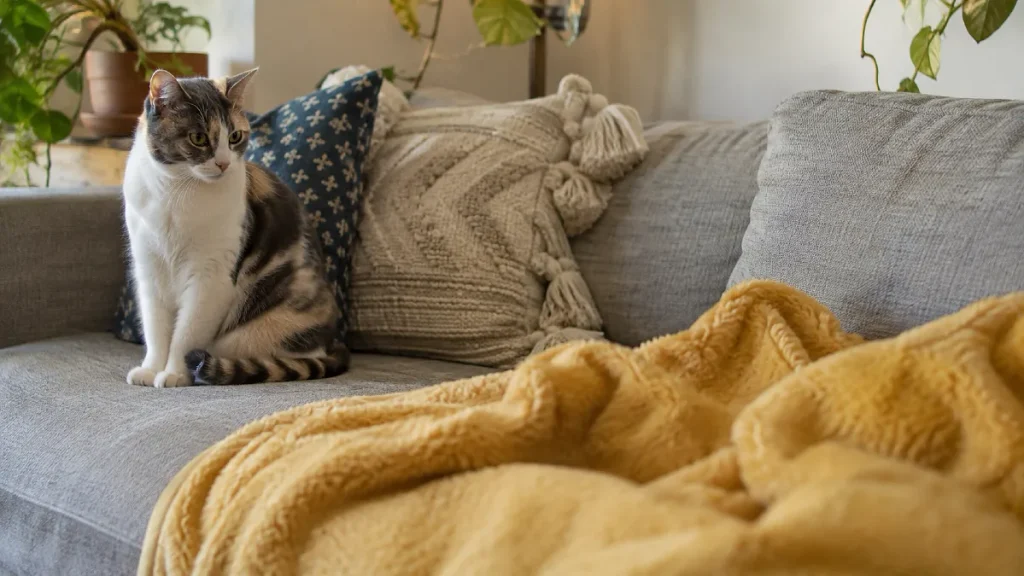
Picking your cat up and placing them on your lap can make cuddling feel like something they cannot control. Even a friendly cat may dislike being held when they did not choose it.
Cats often feel safer when they can decide where to sit and when to move. If you hold your cat in place or stop them from leaving, they may begin to avoid your lap because they expect another unwanted interaction.
Battersea Dogs & Cats Home recommends giving cats control over physical contact. This means allowing your cat to approach, accept attention, and leave whenever they want.
For example, your cat might jump onto the couch and sit beside your leg. You reach over, lift them onto your lap, and start petting. Instead of relaxing, they jump down and leave the room.
The problem may not be your affection. Your cat simply wanted to sit beside you rather than be picked up.
Avoid these common mistakes when encouraging your cat to cuddle:
- Picking up your cat every time they walk past.
- Holding them down when they try to leave.
- Chasing them after they move away.
- Petting them when they are eating, hiding, or resting.
- Scolding them for refusing physical attention.
Instead, let your cat approach at their own pace. When they learn that sitting near you does not lead to unwanted handling, they may feel more comfortable moving closer.
How to Make Your Lap Warm, Safe, and Easy to Reach
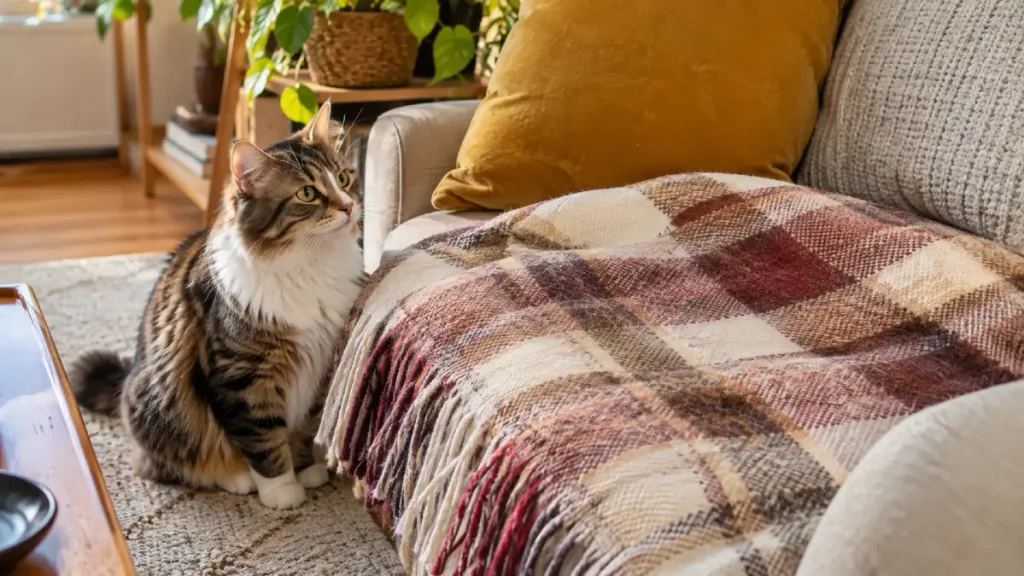
A soft blanket and a quiet place can make your lap more appealing to a cat that prefers comfortable resting spots. This simple change is worth trying before you begin any formal training.
Start by choosing a couch or chair your cat already likes. A familiar place is usually better than an unfamiliar room where your cat might feel uneasy.
Spread a clean, soft fleece blanket across your legs. If your cat has a favorite washable blanket, using it may make the surface more familiar and inviting.
Make sure your legs are steady and your sitting position feels natural. A cat trying to settle on moving knees may decide that the cushion beside you is a better place to rest.
Choose a Time When Your Cat Is Already Relaxed
Your cat may be more interested in cuddling when they are ready to rest. After a gentle play session and a meal, some cats naturally begin looking for a peaceful place to sleep.
Try sitting on the couch when your cat usually settles down. Keep the television at a comfortable volume and avoid sudden movements.
You can read a book, watch a show, or simply sit quietly while your cat explores the room. The goal is to let your cat discover that your lap is a pleasant resting place.
Keep hot drinks away from the area where your cat might jump. Avoid electric heating pads, hot water bottles, or other heat sources that could burn your cat.
A normal blanket is usually enough to make your lap more comfortable. You do not need special equipment to begin.
How to Invite Your Cat Without Staring or Grabbing
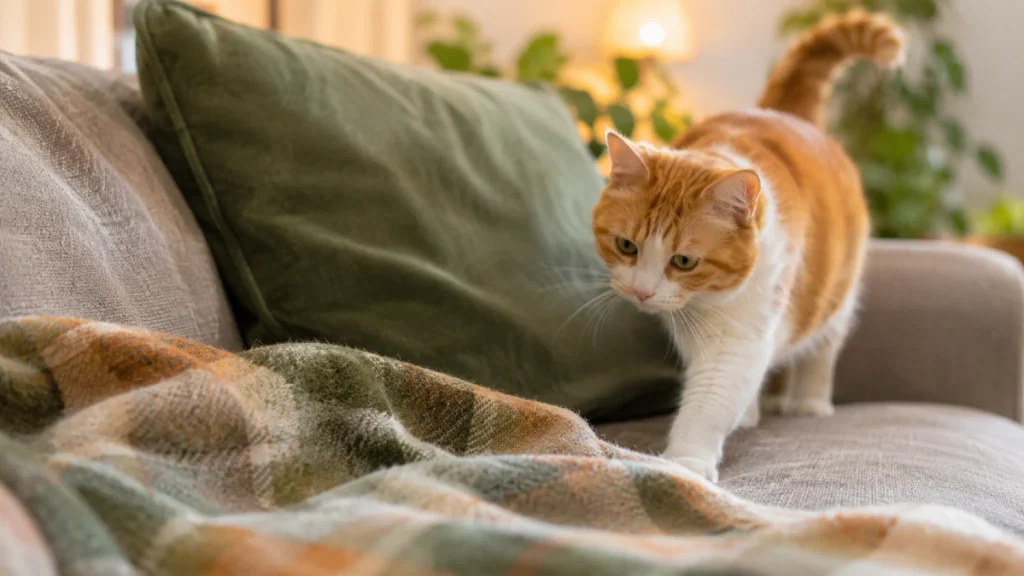
Your cat may feel safer approaching you when you appear calm and give them room to decide what happens next. You do not need to call them repeatedly or reach out every time they walk nearby.
Sit comfortably with your shoulders relaxed and your hands resting naturally. If your cat enters the room, acknowledge them with a soft voice rather than immediately reaching for them.
Avoid staring directly at your cat for a long time. Depending on the situation, fixed eye contact can make some cats uncomfortable.
Instead, you can try slowly closing your eyes and opening them again. This is commonly called a slow blink.
A study published in Scientific Reports in 2020 found that cats responded to slow blinking from people. The researchers also found that cats were more willing to approach an unfamiliar person after a slow blink interaction than after a neutral expression.
This does not mean slow blinking will automatically make your cat jump onto your lap. It is simply one gentle way to communicate without demanding physical contact.
If your cat comes closer, offer your hand at a comfortable distance. Let them sniff it or rub their cheek against it if they wish.
RSPCA New South Wales explains that a cat rubbing against your hand can be a sign that they are open to friendly interaction. A cat that merely sniffs your hand may still prefer not to be touched.
If your cat walks away, allow it without following them. Giving your cat space today can make future interactions feel more predictable.
How to Train Your Cat to Sit on Your Lap With Treats
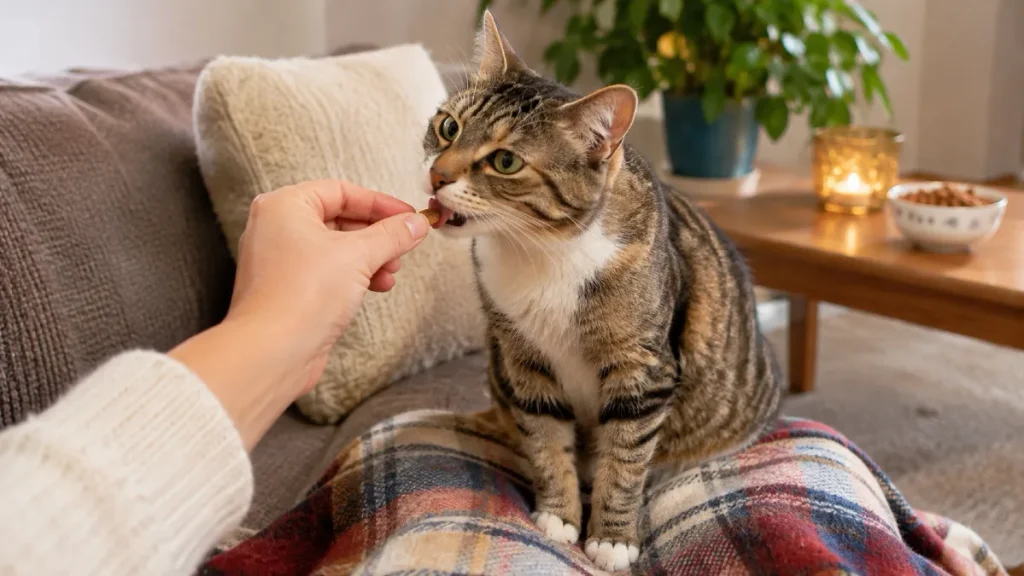
Rewarding your cat for coming closer is one of the most practical ways to encourage voluntary lap sitting. The idea is to help your cat connect being near you with something enjoyable.
Petplan recommends gradually using rewards to encourage a cat to move from sitting nearby to stepping onto a person’s lap. This method works best when the cat already feels reasonably safe around the owner.
Begin by sitting on the sofa with a few small cat treats nearby. Choose a time when your cat is awake, calm, and interested in food.
Start by Rewarding Your Cat for Coming Near You
When your cat enters the room, place a small treat on the floor near the couch. Let them approach, eat it, and move away if they wish.
After your cat becomes comfortable approaching that spot, reward them for coming a little closer. You can gradually place rewards on the sofa beside you.
Do not rush to put treats directly onto your lap. Your cat should feel comfortable sitting nearby before you ask for closer contact.
The table below shows how to make progress without pushing your cat beyond their comfort level. Only move forward when the current stage feels easy for your cat.
Table 1: Gentle Lap Training Stages
| Training stage | What you do | What to reward |
|---|---|---|
| Approaching | Sit quietly nearby | Walking toward you |
| Sitting beside you | Place a treat on the sofa | Relaxed nearby sitting |
| Exploring your blanket | Let your cat investigate | Sniffing or touching |
| Stepping onto your lap | Offer a reward on your lap | Voluntary steps |
| Settling down | Stay calm and still | Relaxed resting |
Every cat moves through these stages differently. If yours hesitates, return to the last stage they enjoyed and practice there instead.
Reward Small Steps Instead of Waiting for a Full Cuddle
Your cat does not have to sit completely on your lap to make progress. Even placing one paw on your leg can be worth rewarding.
Keep sessions brief and end while your cat still seems comfortable. If your cat becomes distracted or walks away, try again during another quiet moment.
Use small pieces of your cat’s usual food or suitable cat treats. The American Animal Hospital Association recommends keeping treats within 10% of a cat’s daily calorie intake.
For cats on a special diet, ask your veterinarian which rewards are appropriate. Food rewards should help with training without interfering with your cat’s health.
Over time, you can offer fewer food rewards and let the comfort of sitting near you become part of the experience. Some cats may begin visiting your lap on their own.
How to Tell If Your Cat Wants to Stay or Leave
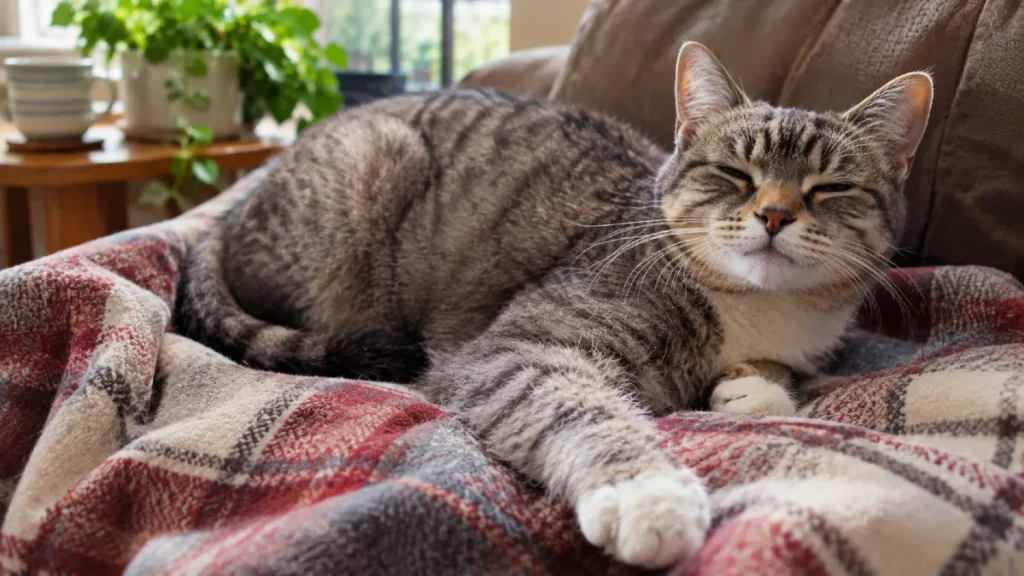
Watching your cat’s body language helps you avoid turning a pleasant cuddle into an uncomfortable experience. Cats often give small signals before they decide to leave.
A relaxed cat may have soft eyes, loosely positioned ears, and a comfortable body. They might lean into your hand, rub against you, or slowly settle into a resting position.
However, a cat that becomes stiff or begins swishing its tail may be asking for more space. If you ignore these signals, your cat may suddenly jump away or use its claws to end the interaction.
RSPCA New South Wales advises paying attention to these changes rather than assuming every cat enjoys the same kind of contact.
Use this table to decide how to respond when your cat is near or on your lap.
Table 2: Cat Body Language During Lap Time
| Cat’s behavior | Possible meaning | Your response |
|---|---|---|
| Loose, relaxed body | Feeling comfortable | Remain calm |
| Leans into your hand | May welcome touch | Pet gently |
| Slow blinking | Relaxed social signal | Respond softly |
| Repeated tail flicking | Possible irritation | Pause petting |
| Stiff body | Possible discomfort | Give space |
| Flattened ears | Fear or distress | Stop touching |
| Gets up to leave | Wants to move | Let them go |
A single behavior does not tell you everything about your cat’s mood. Look at their whole body and the situation before deciding whether to continue.
Try the Three Second Petting Rule
Battersea Dogs & Cats Home suggests briefly petting a cat and then pausing to see whether the cat requests more attention. You can try this during a relaxed lap visit.
Gently stroke your cat’s cheek or head for about three seconds, then stop. If your cat leans into your hand or rubs against you again, they may want more.
If they turn away, remain still, or move off your lap, respect that choice. Your cat might enjoy being close to you without wanting to be touched.
Also remember that purring does not always mean a cat is happy. Cats can purr in different situations, including when they are uncomfortable, so always check their body language.
How to React When Your Cat Finally Chooses Your Lap
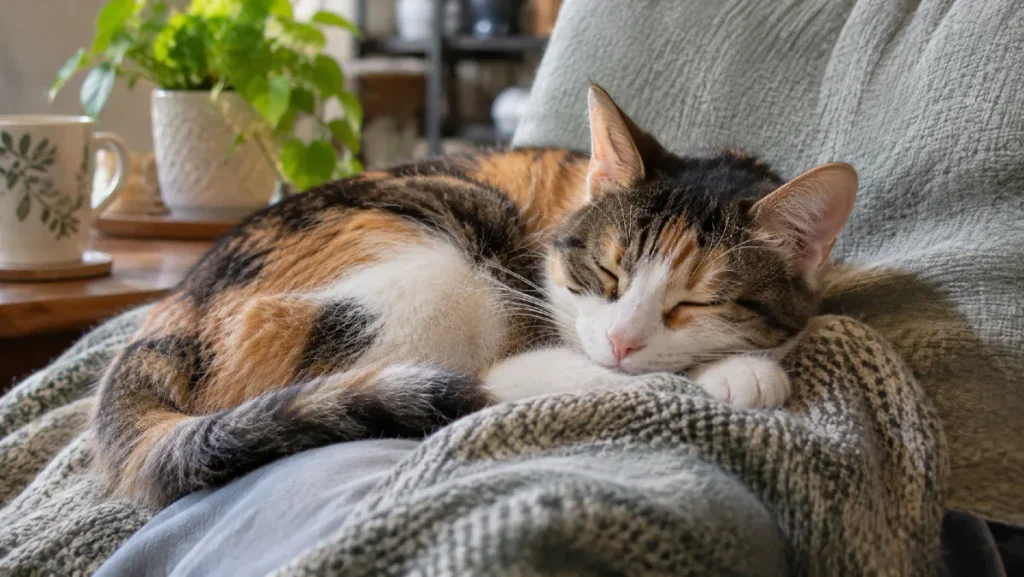
Your cat has finally climbed onto your lap and settled down. Your first reaction might be to laugh, call someone into the room, or immediately start stroking their fur.
The best response is to remain calm and let your cat enjoy the moment. Sudden movement or loud excitement may startle a cat that is still learning to feel comfortable there.
Continue breathing normally and keep your legs steady. If your cat seems relaxed, you can quietly praise them or offer a small treat.
Do not assume that choosing your lap means your cat wants to be petted. Some cats enjoy resting on people but prefer to be left alone while they settle.
If your cat invites touch, start with a gentle stroke around the cheeks, forehead, or chin. RSPCA New South Wales identifies these as areas many cats enjoy having touched.
Avoid reaching straight for your cat’s belly or grabbing their paws. Even a relaxed cat may dislike contact in those sensitive areas.
If your cat remains on your lap, enjoy the moment without trying to control how long it lasts. Let them get up whenever they want.
The most helpful lesson your cat can learn is that your lap is a place they can visit and leave without being restrained. That sense of control can support better experiences in the future.
Why Your Cat Still Won’t Sit on Your Lap
Some cats seem to enjoy cuddling from the day they arrive home. Others prefer sitting on a windowsill, sleeping beside their owner, or following people from room to room.
A cat that avoids your lap is not automatically a cat that dislikes you. Lap sitting is a personal preference, and individual cats can enjoy very different kinds of interaction.
Your cat’s past experiences, age, personality, and home environment may all influence how comfortable they feel with close contact.
Your Cat May Prefer a Different Kind of Affection
A playful young cat may choose chasing toys over settling down. A recently adopted cat may need more time to feel comfortable in its new home.
Cats that had limited positive contact with people when they were young may also be more cautious around physical handling. The Merck Veterinary Manual discusses the role of early social experiences in how cats respond to people.
Breed can influence some behavior patterns, but it cannot tell you exactly how affectionate an individual cat will be. Two cats of the same breed may have very different preferences.
The following table can help you decide what to try based on what you see.
Table 3: Reasons Cats Avoid Laps and What to Try
| Possible reason | What you may notice | What to try |
|---|---|---|
| Shy personality | Keeps a little distance | Offer quiet company |
| High energy | Wants to play instead | Use a wand toy |
| Recent adoption | Hides or avoids contact | Build a calm routine |
| Household stress | Leaves noisy rooms | Create a quiet space |
| Physical discomfort | Avoids jumping or touch | Arrange a vet visit |
| Personal preference | Sits nearby, not on you | Respect their choice |
The goal is to respond to your cat’s needs rather than keep repeating an approach they dislike. If your cat consistently enjoys sitting beside you, that can still be a positive result.
Why Your Cat May Cuddle Less as They Grow Older
Kittens often change how they interact with people as they mature. A kitten that once slept on your chest may become more interested in exploring and playing.
This does not mean they will stop showing affection forever. Their preferred activities and resting places can change throughout life.
International Cat Care and feline veterinary guidelines explain that cats have different social needs and that these preferences can shift with age. It is better to respond to your cat’s current behavior than expect them to act exactly as they did when they were younger.
When a Sudden Change in Lap Time Needs a Vet Check
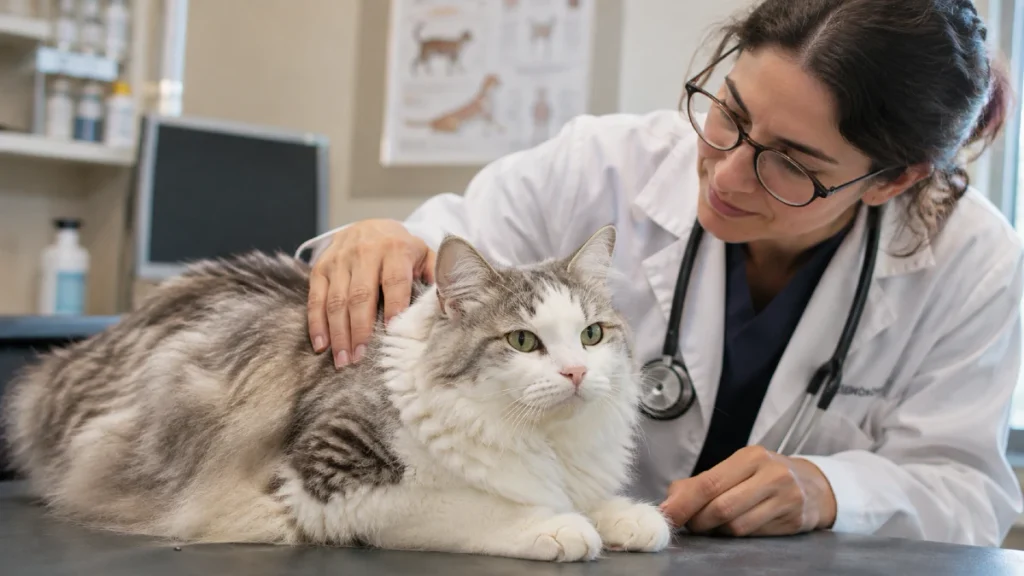
If your cat used to enjoy sitting on your lap but suddenly avoids it, consider whether something physical has changed. A new dislike of being touched or picked up can sometimes be a sign of pain.
For example, an older cat with sore joints may find jumping onto the couch uncomfortable. They might still want to be near you but choose a resting place that is easier to reach.
VCA Animal Hospitals explains that arthritis in cats can cause changes in jumping, movement, and daily activity. Its 2026 guidance identifies reluctance to jump onto furniture as a possible sign.
Watch for other changes such as:
- Hesitating before jumping onto the couch.
- Moving more slowly or appearing stiff.
- Avoiding touch around certain body areas.
- Grooming less than usual.
- Hiding more or becoming unusually irritable.
- Showing less interest in play.
These signs can have several causes and do not confirm arthritis by themselves. If your cat’s behavior changes suddenly or you suspect pain, arrange a veterinary examination rather than continuing lap training.
For an older cat with mobility problems, a stable pet step or low resting spot beside you may make spending time together easier. Never give human pain medicine to your cat unless your veterinarian specifically directs you to do so.
How to Keep Building Trust Even If Your Cat Isn’t a Lap Cat
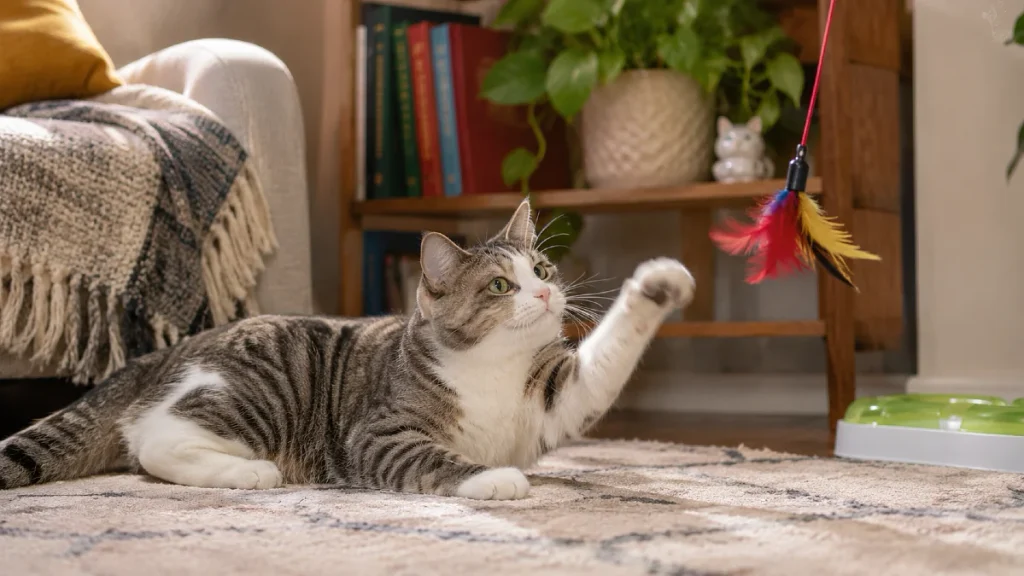
The best way to encourage closeness is to make everyday interactions safe, pleasant, and predictable. Lap training is just one small part of your relationship with your cat.
If your cat enjoys playing with you, spend time using a wand toy or another favorite toy. If they prefer quiet company, sit nearby and allow them to rest without interruption.
A cat that feels secure around you may show affection in ways that have nothing to do with sitting on your lap.
Your cat might greet you at the door, follow you into another room, rub their face against your hand, or choose to sleep near you. These behaviors can be signs that they enjoy your company.
Try a Simple Daily Bonding Routine
Choose a quiet time when your cat is usually relaxed. Repeat the following routine when your cat seems interested in interacting.
- Spend a few minutes playing with your cat if they want to play.
- Sit in their favorite room with a soft blanket on your lap.
- Allow your cat to approach without calling or reaching for them.
- Reward relaxed contact if your cat seems comfortable.
- Let your cat leave whenever they choose.
Avoid measuring progress by how many minutes your cat spends on you. Instead, notice whether they are becoming more relaxed, approaching more often, or choosing to sit closer.
Your cat may eventually decide that your lap is a wonderful resting spot. But even if they continue choosing the cushion beside you, that does not make your relationship any less meaningful.