Your cat is curled up beside you, purring softly while you stroke their fur. Everything seems peaceful until they suddenly turn around and bite your hand. One second, they’re enjoying your attention, and the next, you’re wondering what went wrong.
If you’ve ever asked, “Why does my cat bite me when they seem perfectly happy?” you’re certainly not alone. Cat biting can be confusing because the same behavior can have very different meanings depending on the situation.
Sometimes, a bite means your cat has had enough petting. Other times, they might be excited, frightened, playful, or trying to get your attention. A sudden change in biting behavior can even point to physical pain.
The interesting part is that your cat’s body language often tells you what is happening before their teeth ever touch your skin. Small changes in their ears, tail, posture, and movements can provide important clues.
Why Your Cat Bites When Petting Becomes Too Much

You sit down with your cat, gently stroke their back, and hear that familiar purring sound. Then, without much warning, they turn their head and bite your fingers. It can feel like your cat changed their mind for no reason.
But your cat may have reached their limit for physical contact. What felt pleasant at first can become irritating when the touching continues for too long.
Veterinary behavior specialists call this petting induced aggression. Cornell Feline Health Center explains that some cats have a lower tolerance for repeated touching, even when they initially seem relaxed.
How to Tell When Your Cat Has Had Enough
Every cat has different preferences when it comes to being touched. Some enjoy long petting sessions, while others prefer only a few strokes around their cheeks or chin.
The Wisconsin Humane Society explains that cats often show changes in body language before biting during petting. Learning to spot those changes gives you a chance to stop before your cat becomes more uncomfortable.
| Body Signal | Possible Meaning | Best Response |
|---|---|---|
| Tail flicking quickly | Growing irritation | Pause petting |
| Ears turning backward | Discomfort or tension | Remove your hand |
| Head turning toward your hand | Watching or warning | Stop touching |
| Body becoming stiff | Rising stress | Give them space |
| Skin twitching along the back | Possible sensitivity | End the session |
The important thing is to notice changes from your cat’s usual behavior. A single tail movement does not always mean irritation, but several warning signals appearing together deserve attention.
Try petting your cat for a few seconds, then pause. If they lean into your hand or rub against you, they may want more. If they remain still, turn away, or walk off, let the interaction end.
Why Your Cat Bites Your Hands During Playtime

Your kitten grabs your finger, gives it a quick bite, and runs across the room like nothing happened. A moment later, they’re hiding behind the sofa, waiting for another chance to attack your hand.
This is often playful behavior rather than a serious threat. Young cats naturally explore their surroundings through chasing, grabbing, biting, and wrestling.
The ASPCA explains that kittens learn important social skills through play with other cats. When one kitten bites too hard, the other may stop playing, helping them learn how much force is acceptable.
However, kittens that regularly play with human hands may learn that fingers are toys. That habit can become painful when their teeth and jaws grow stronger.
How to Stop Play Biting Without Scaring Your Cat
Start by changing what your cat is allowed to chase. Instead of moving your fingers under a blanket, introduce a fishing rod toy, soft ball, or long kicker toy.
When your cat grabs your hand, avoid turning the moment into an exciting wrestling game. Stay calm, safely end the interaction, and offer an appropriate toy once your cat has settled.
Cats Protection recommends using toys that keep some distance between your hands and your cat’s teeth. This allows your cat to enjoy chasing and grabbing without learning to attack people.
Consistency matters more than punishment. If everyone in the home stops using hands as toys, your cat has a better chance of learning the right way to play.
Are Gentle Cat Love Bites Really a Sign of Affection?

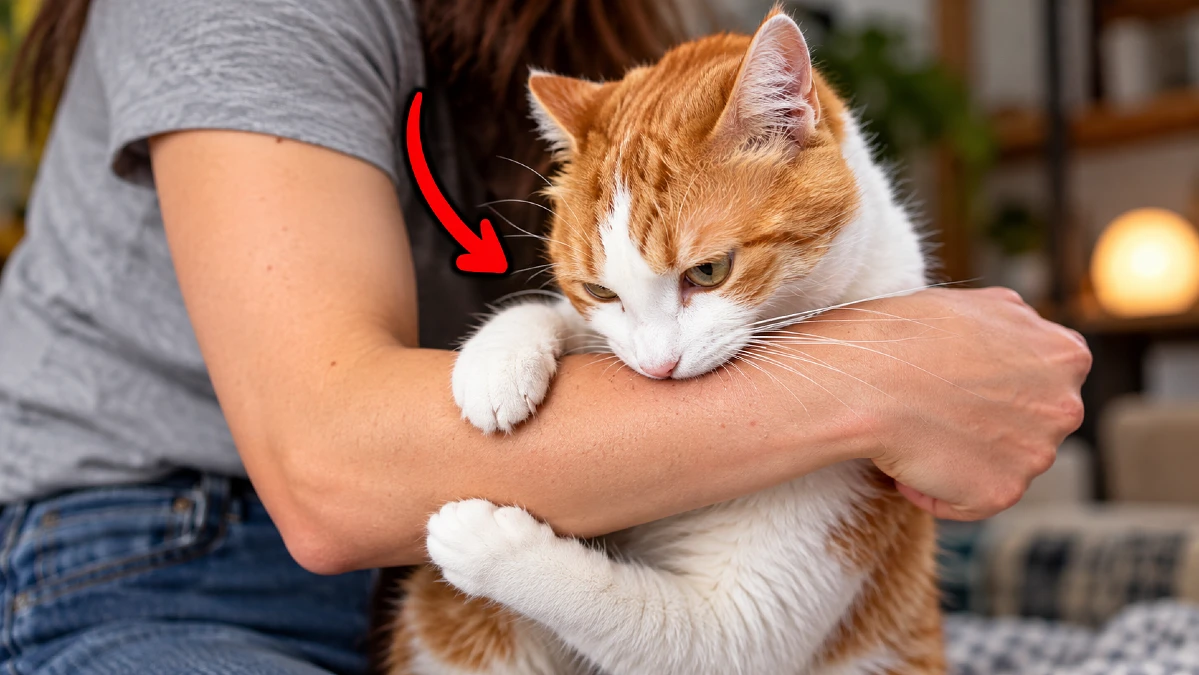
Your cat settles beside you, rubs their face against your arm, and gives your hand a gentle nibble. The bite barely hurts, and your cat seems completely relaxed afterward.
Many cat owners call these little nibbles love bites. The name comes from the idea that cats sometimes use gentle mouth contact during friendly social interactions, including grooming.
Cats do use their mouths while grooming themselves and other cats. A relaxed cat may occasionally include soft nibbling during contact with a familiar person.
However, a gentle bite is not proof that your cat is expressing affection. Veterinary behavior guidance from VCA Animal Hospitals explains that cats may bite during otherwise friendly interactions because they want the touching to stop.
How to Tell Whether a Gentle Bite Is Friendly or Unwanted
Look at what happened immediately before the bite. A cat that briefly mouths your hand during calm contact is showing different behavior from one that grabs your arm while becoming tense.
The following situations can help you compare common biting patterns. They are clues rather than definite diagnoses, so always consider your cat’s full body language.
| Bite Situation | Possible Explanation | What to Do |
|---|---|---|
| Gentle nibble during calm contact | Social contact or excitement | Pause and observe |
| Quick bite after repeated strokes | Petting limit reached | Stop petting |
| Grabbing and kicking your hand | Rough play | Switch to a kicker toy |
| Bite while being held tightly | Fear or discomfort | Allow an escape |
| Strong bite without a clear cause | Pain, fear, or high arousal | Give space and assess |
The strength of the bite alone cannot tell you whether your cat is happy. A soft nibble can still be a request to stop, while rough play can sometimes cause an unexpectedly painful bite.
If your cat regularly gives gentle bites, watch what happens when you pause the interaction. You can enjoy a close bond without encouraging your cat to put their teeth on your skin.
Why Your Cat Bites You When They Want Attention

You’re working at your desk when your cat walks over and gently bites your ankle. You look down, and they stare back at you as though they’re expecting something.
Some cats learn that biting gets an immediate response from their owners. Even if you react by saying their name or moving your feet, your cat may have achieved what they wanted: your attention.
This behavior can develop when a cat wants food, play, or social contact. If biting regularly leads to a reward, the habit may continue.
The Feline Veterinary Medical Association recommends rewarding calm behavior and creating predictable opportunities for positive interaction. This helps cats learn safer ways to ask for what they need.
How to Respond Without Encouraging More Bites
If your cat bites for attention, avoid immediately rewarding the behavior with food or play. Calmly end the interaction and wait until your cat is settled before offering attention.
Look for better ways your cat already communicates. They might approach you quietly, sit nearby, rub against furniture, or wait beside their toys.
Give attention to those calmer behaviors whenever possible. Over time, your cat may learn that gentle approaches work better than biting.
You can also build regular play sessions into your daily routine. A cat that knows when to expect interaction may have less reason to demand it through unwanted behavior.
Why Your Cat Suddenly Bites After Seeing Something Outside
Your cat is sitting peacefully by the window when another cat appears in the yard. Suddenly, your cat’s body becomes stiff, their tail starts moving, and they seem intensely focused on the visitor.
You reach down to stroke them, and they turn around and bite. The reaction feels surprising because you weren’t involved in whatever caught their attention.
This behavior may be an example of redirected aggression. It happens when a cat becomes highly upset or excited by something they cannot reach and reacts aggressively toward someone nearby.
Cornell Feline Health Center identifies outdoor cats, loud noises, and conflicts with other animals as possible triggers. The reaction is not necessarily directed at the person who gets bitten.
What to Do When Your Cat Is Highly Agitated
The safest response is to avoid touching your cat while they are tense or visibly upset. Trying to pick them up or comfort them physically can make the situation worse.
Give your cat room to move away and settle on their own. If another animal outside is the trigger, closing the curtains or blocking that view may help.
Do not attempt to handle an agitated cat or separate fighting cats with your bare hands. Wait until their posture and behavior have returned to normal before trying to interact.
If this happens often, keep track of the triggers. A veterinarian or qualified cat behavior professional can help you develop a plan that makes these situations less likely.
How to Recognize Warning Signs Before Your Cat Bites

One of the most useful things you can learn about cat behavior is that biting often follows other signals. Your cat may have been communicating discomfort before you noticed anything was wrong.
A cat that wants space might turn away, move backward, stop rubbing against you, or become unusually still. If those signals do not work, the cat may respond with a swat or bite.
The ASPCA describes several signs associated with fear or defensive aggression. These include a crouched posture, flattened ears, wide pupils, hissing, and attempts to move away.
Why Your Cat’s Whole Body Matters
You cannot judge a cat’s mood from one body part alone. Large pupils, for example, can appear during play, fear, or excitement, and they also change with lighting.
Instead, pay attention to the whole situation. Ask yourself whether your cat is moving freely, choosing to approach you, or trying to escape.
An especially useful warning is a sudden change from relaxed behavior to tension. If your cat stops purring, stiffens, or sharply turns toward your hand, stop and give them room.
Never punish your cat for growling, hissing, or moving away. Those behaviors provide valuable information about their comfort. Respecting them can help prevent a stronger reaction.
When you respond to the early signals, your cat has less need to communicate through biting.
Why Teething Kittens Bite Everything, Including You
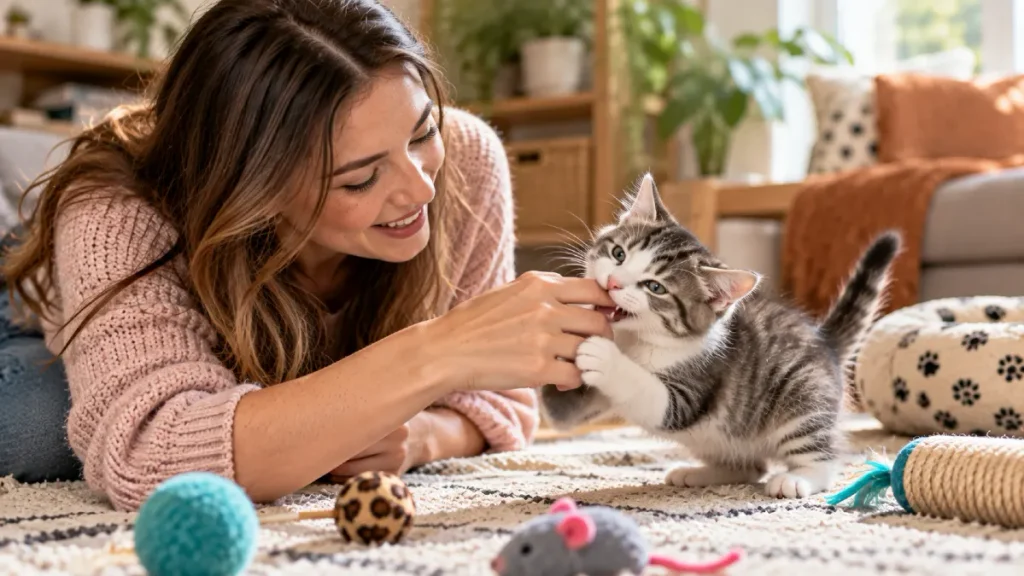
If your kitten seems determined to chew your fingers, clothing, and nearby objects, their developing teeth may be part of the reason. Young kittens often explore objects with their mouths, and teething can increase their urge to chew.
VCA Animal Hospitals explains that kittens begin replacing their baby teeth with permanent teeth at around three months of age. Most have their full set of adult teeth by approximately six to seven months.
During this period, kittens may experience tender gums and mild mouth discomfort. You might also notice increased chewing, occasional drooling, or baby teeth around their sleeping area.
What You Can Give a Teething Kitten
Offer soft toys made specifically for kittens and check them regularly for damage. Choose objects that are too large to swallow and avoid very hard items that could hurt their developing teeth.
A soft, clean, slightly chilled cloth may be suitable for supervised chewing, but remove it if your kitten starts pulling out threads. Never leave string, loose fabric, or small pieces where your kitten might swallow them.
Avoid encouraging chewing on your fingers, even when the bites are gentle. That playful habit can become difficult to manage as your kitten grows.
If your kitten refuses food, seems very uncomfortable, has significant mouth bleeding, or develops ongoing bad breath, contact your veterinarian. Not every mouth problem in a young cat is caused by normal teething.
Why a Scared Cat Bites When You Pick Them Up
Your cat is resting in a quiet corner when you reach down to pick them up. Instead of settling into your arms, they twist their body, flatten their ears, and bite your hand.
It may seem like your cat is rejecting you, but the reaction could come from fear. Cats sometimes bite when they feel trapped or believe they cannot safely escape.
A loud sound, unfamiliar visitor, sudden movement, or unwanted handling can trigger this response. Even a normally affectionate cat may react defensively when frightened.
The ASPCA explains that fearful cats are more likely to use defensive behavior when they cannot move away from something they perceive as threatening.
How to Help Your Cat Feel Safer
Start by letting your cat decide when to approach. If they remain under furniture or move away from your hand, avoid following them and forcing contact.
Provide quiet hiding places where your cat can rest without being disturbed. A covered cat bed, open carrier, or sheltered corner can help them feel more secure.
When you need to handle your cat, move slowly and watch for tension. For routine tasks such as brushing or nail trimming, introduce handling gradually and reward relaxed responses.
Some cats simply dislike being carried, even when they enjoy sitting beside you. Respecting that preference can make your relationship more comfortable for both of you.
Why Your Cat Attacks Your Feet Like Moving Prey
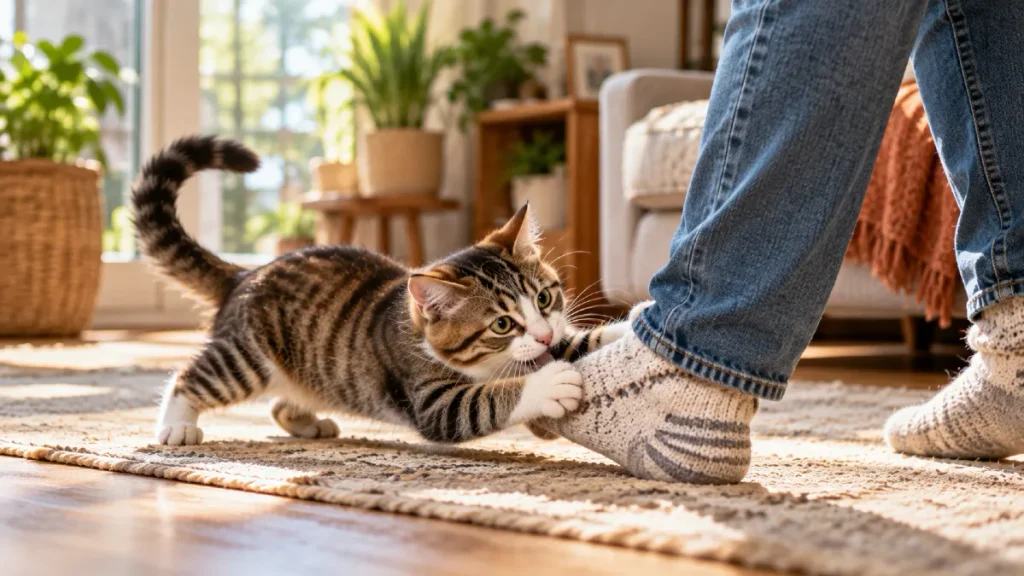
You’re walking through the hallway when your cat suddenly jumps out from behind the sofa. They grab your ankle, give it a quick bite, and disappear around the corner.
This behavior often comes from a cat’s natural hunting and play instincts. Moving feet, swinging clothing, and hands under blankets can all resemble things worth chasing.
Cats are natural predators, and hunting behaviors remain important even for indoor pets that receive plenty of food. Stalking, pouncing, grabbing, and biting are all normal parts of feline play.
Cats Protection recommends giving cats regular opportunities to express those behaviors through suitable toys. Without enough appropriate play, some cats may turn their attention to people’s moving hands and feet.
How to Keep Your Feet Out of the Game
Try using a fishing rod toy that moves across the floor like small prey. Let your cat follow, chase, and eventually catch it so the game has a satisfying ending.
You can also provide larger kicker toys for cats that enjoy grabbing something with their front paws and kicking with their back legs. This gives them an appropriate object for rougher play.
Offer regular interactive play sessions, especially if your cat spends most of the day indoors. A food puzzle or a few small toys that can be chased may provide additional activity between sessions.
When your cat grabs your ankle, avoid kicking, shouting, or making sudden movements that could cause injury. Calmly disengage when safe, then offer an appropriate play activity once your cat has settled.
When Sudden Cat Biting Could Mean Pain or Illness

Your cat has always enjoyed being stroked along their back. But recently, touching that same area causes them to tense up, turn around, or bite.
This is a behavior change you should take seriously. Sometimes, biting is a cat’s way of protecting a painful or sensitive part of their body.
The ASPCA identifies pain as an important cause of aggression in cats. Dental disease, arthritis, injuries, skin problems, and other medical conditions may make normal handling uncomfortable.
Signs That Your Cat May Be Hurting
Watch for changes beyond the biting itself. A cat that suddenly avoids being touched may also stop jumping onto furniture, hide more often, eat differently, or spend less time grooming.
Some cats become unusually quiet when they feel unwell. Others may growl or bite when you attempt to pick them up.
If the biting is new, getting worse, or happens when you touch a particular area, arrange a veterinary examination. It is better to check for a medical problem before assuming the behavior is simply a bad habit.
Avoid pressing on painful areas or attempting to test how much touching your cat will tolerate. Let your veterinarian examine the problem safely.
What to Do if a Cat Bite Breaks Your Skin
Even when your cat is playing, their teeth can puncture human skin. These wounds can become infected, so a bite should never be dismissed simply because it came from a familiar pet.
The CDC’s 2026 guidance recommends washing cat bites immediately with warm, soapy water. Medical care may also be needed depending on the wound, its location, and your cat’s health and vaccination status.
| Situation | Risk or Concern | Next Step |
|---|---|---|
| Skin is not broken | No open bite wound | End contact and observe |
| Small puncture wound | Bacterial infection | Wash and seek prompt medical advice |
| Bite on hand or finger | Higher risk of complications | Seek prompt medical care |
| Redness, swelling, or fever | Possible infection | Get urgent medical assessment |
| Unknown rabies vaccination status | Possible rabies exposure | Seek urgent medical advice |
After washing a wound, cover it with a clean dressing. If the bleeding is heavy or will not stop, seek emergency medical care.
A clinician can assess whether you need antibiotics, a tetanus booster, or rabies prevention treatment. This is especially important for deep punctures, bites involving the hands, and bites from unknown or potentially sick cats.