Have you ever looked at your cat and wondered whether they truly love you or simply enjoy having someone around to fill their food bowl? One minute, your cat is curled up beside you, looking perfectly content. The next, they walk away as though you barely exist.
Cats have a reputation for being independent, but that doesn’t mean they cannot form strong emotional bonds with people. They simply express affection differently from dogs and humans.
The good news is that some of the strongest signs your cat loves you happen during ordinary moments at home. A gentle blink, a familiar sound, or the choice to sleep beside you may tell you something about your relationship.
1. Your Cat Gives You Slow Blinks Because They Feel Safe With You
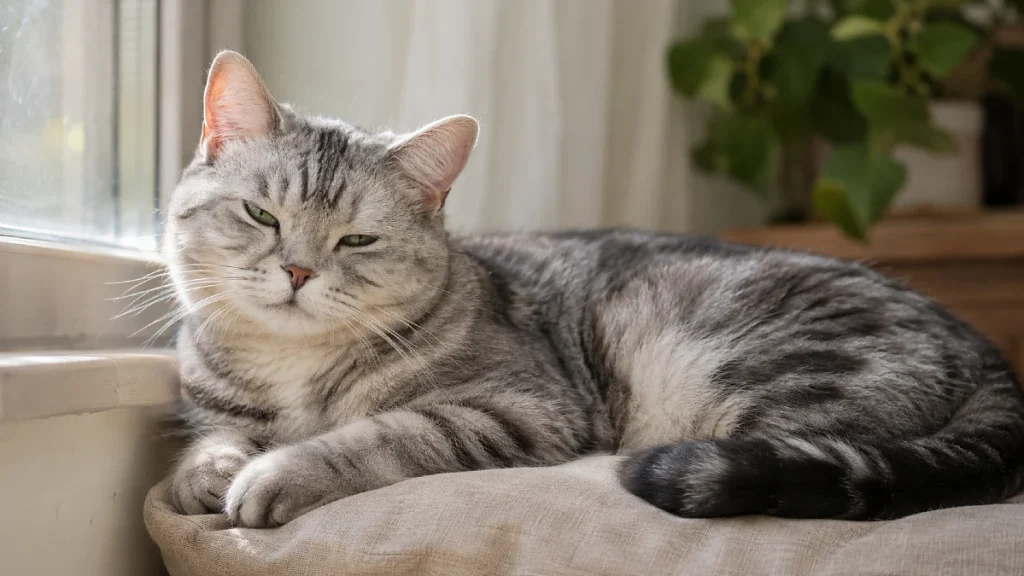
Have you ever noticed your cat looking directly at you before slowly closing and opening their eyes? You might assume they’re feeling sleepy or struggling to stay awake. However, this gentle movement can be one of the sweetest signs your cat feels comfortable around you.
Cats use their eyes to communicate. A hard stare combined with a stiff body can signal tension, while soft eyes and relaxed blinking can suggest comfort. When your cat gives you a slow blink while resting peacefully, it may mean they feel safe in your presence.
Research published in 2020 by scientists at the University of Sussex found that cats responded to slow blinking from humans with similar eye movements. The researchers also found that cats were more willing to approach an unfamiliar person after a slow blink interaction than after a neutral facial expression.
How to Give Your Cat a Slow Blink Back
You can try responding to your cat without moving closer or touching them. Look at them with a relaxed expression, gently narrow your eyes, and slowly close and reopen them. Then look away and allow your cat to decide whether they want to interact.
Before interpreting a slow blink as affection, pay attention to the rest of your cat’s body. The same eye movement can have different meanings depending on the situation. These clues can help you decide what your cat needs.
Reading Your Cat’s Slow Blinks
| Body Language | Possible Meaning | Best Response |
|---|---|---|
| Soft eyes and relaxed ears | Feeling comfortable | Blink gently back |
| Stiff body and flattened ears | Feeling uneasy | Give them space |
| Frequent squinting or one closed eye | Possible eye discomfort | Contact your vet |
A relaxed body makes a slow blink more likely to be a friendly signal. Cats Protection also advises looking at the full situation rather than treating every slow blink as proof of trust.
Your cat doesn’t need to blink back for the interaction to be positive. Some cats communicate affection in other ways, and that’s perfectly normal.
2. Your Cat Brings You Toys or Random Objects Because Home Feels Safe
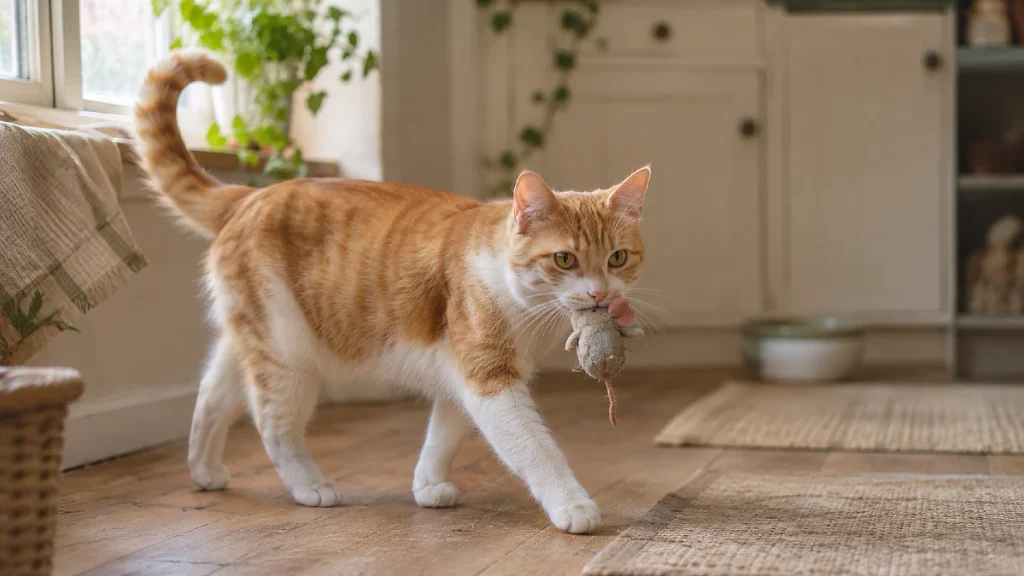
Finding a toy mouse beside your bed or a small ball outside your bedroom door might seem strange. Some cats even carry socks, leaves, or other objects around the house. While these deliveries can look like presents, there is more happening than you might realize.
Cats are natural hunters, even when they receive plenty of food every day. Their instincts encourage them to chase, catch, and carry objects that resemble prey. That behavior can continue during indoor play, especially when your cat has a favorite toy.
Cats Protection explains that cats often bring captured prey into their homes because they feel secure there. This doesn’t necessarily mean they’re bringing dinner to their human family. Instead, they may be returning to a familiar place where they can keep or investigate what they’ve found.
But there’s still something meaningful about that behavior. Your cat treats your shared home as part of their safe territory. If they regularly bring toys near you and invite you to play, that interaction may also reflect a positive bond.
What Should You Do When Your Cat Brings Something Home?
Your response should depend on what your cat has carried inside. A harmless toy is very different from a live animal, and each situation calls for a different approach.
What Your Cat Brings Home
| Object | Possible Reason | What You Should Do |
|---|---|---|
| Favorite plush toy | Play or carrying instinct | Offer gentle play |
| Sock or soft item | Interesting scent or texture | Check that it’s safe |
| Dead prey | Returning to secure territory | Remove it safely |
| Live or injured animal | Natural hunting behavior | Separate your cat and seek appropriate help |
If your cat carries a toy to you, try starting a short play session. A KONG Kickeroo or another safe plush toy can provide an outlet for normal hunting and wrestling behavior.
Never punish your cat for bringing home prey. Instead, focus on supervised indoor play and safe ways to reduce hunting around wildlife.
And remember, cats that never bring you objects can still be deeply attached to you. Carrying behavior is one possible clue, not a requirement for affection.
3. Your Cat Sleeps on You Because They Feel Comfortable Around You
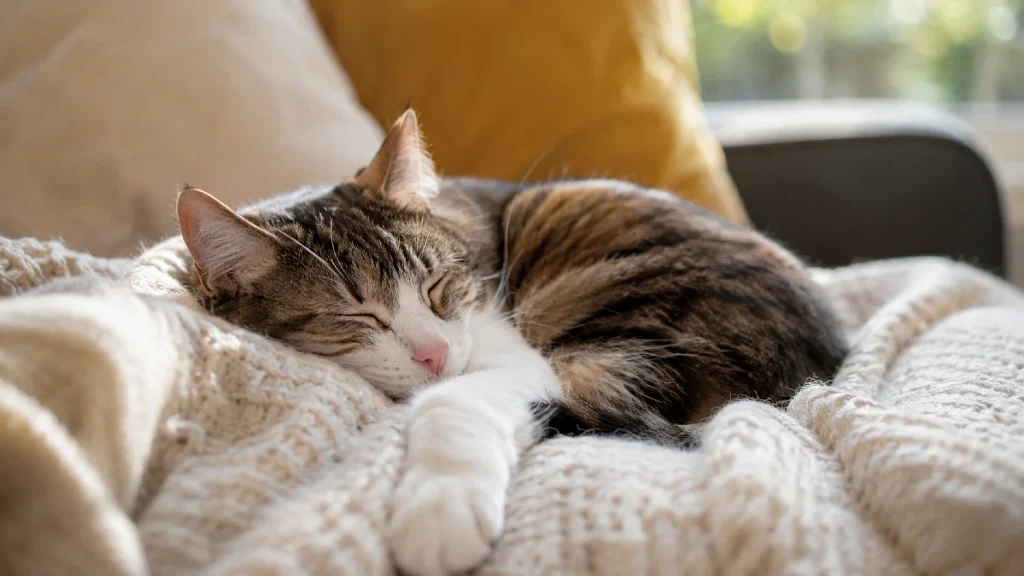
There is something special about a cat choosing your lap over every soft bed in the house. You might be reading, watching television, or sitting quietly when your cat suddenly climbs onto you and settles down. Within minutes, they’re curled up and sleeping peacefully.
Cats naturally look for places where they feel warm and secure. Your lap provides body heat, a comfortable resting surface, and a familiar scent. When your cat chooses to settle close to you, that decision may reflect both physical comfort and social bonding.
Cats Protection explains that cats sometimes sleep beside people they trust. Cats that share a close relationship may also choose to rest in physical contact with one another. That makes sleeping near you a possible sign that your cat enjoys your company.
Why Does Your Cat Knead You Before Sleeping?
Some cats gently press their front paws against your legs or a soft blanket before settling down. This behavior is called kneading, although many cat owners affectionately call it making biscuits. It often appears when a cat feels relaxed.
Kneading begins during kittenhood, when kittens press their paws against their mothers while nursing. Adult cats may continue doing it because it feels comforting or because it helps them prepare a resting spot. VCA Animal Hospitals also notes that kneading can play a role in scent marking.
Your cat’s preferred sleeping position can offer clues about what makes them comfortable. However, no single sleeping position can tell you exactly how much affection they feel.
What Your Cat’s Sleeping Spot May Mean
| Sleeping Spot | Possible Reason | Best Response |
|---|---|---|
| On your lap | Warmth and closeness | Let them settle |
| Beside your legs | Comfort with some space | Avoid crowding them |
| Near your pillow | Familiar scent and warmth | Keep the area safe |
| In a separate bed | Personal sleeping preference | Respect their choice |
A cat that sleeps next to you rather than directly on you may still feel completely secure. Some cats prefer a little distance, especially when they are warm or want room to stretch.
You can strengthen this bond by allowing your cat to choose when they approach. Avoid waking them for cuddles or forcing them to remain on your lap when they want to leave.
4. Your Cat Follows You Around Because They Enjoy Being Near You
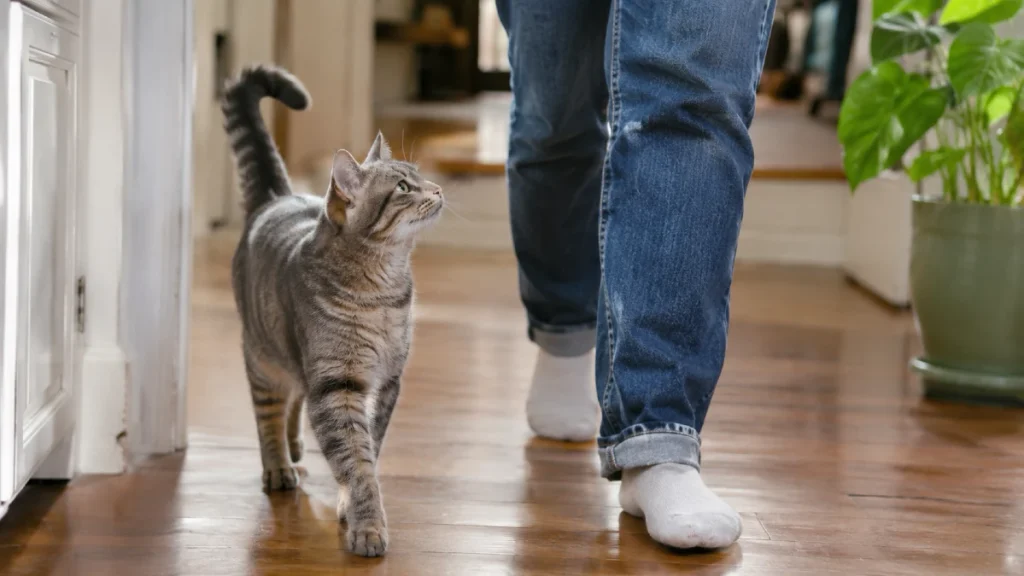
Does your cat seem to appear wherever you go? You walk into the kitchen, and they’re suddenly beside your feet. You sit down at your desk, and a moment later, they’re watching you from a nearby chair.
This behavior can feel like having a small, furry shadow following you around the house. While cats are often described as independent animals, many enjoy spending time with familiar people. Some become especially interested in their owner’s daily routines.
A veterinary article written by Hannah Hart, DVM, for PetMD in March 2026 explains that cats follow people for several reasons. These include affection, curiosity, attention, hunger, and the desire to feel secure. Following behavior alone cannot tell you exactly what your cat wants.
How Can You Tell Whether Your Cat Wants Affection or Food?
Pay attention to when your cat follows you and what happens next. If they appear only when you prepare their meals, they may have learned that your movements predict food. That’s normal behavior and doesn’t mean they dislike you.
However, a cat that regularly chooses to sit near you after eating may simply enjoy your presence. You might notice them relaxing beside you while you work, folding laundry, or watch television. They may stay even when you’re offering no food or attention.
Look for other positive signs at the same time. A relaxed tail, soft eyes, gentle rubbing, or peaceful resting can provide more clues about how your cat feels.
You can encourage this comfortable companionship by making your home a pleasant place to spend time together. Try the following habits:
- Offer regular interactive play using a safe fishing rod toy.
- Place a comfortable cat bed near your usual sitting area.
- Allow your cat to approach you without being picked up.
- Keep feeding and play routines predictable.
- Give your cat quiet places to rest when they want privacy.
These small habits can help your cat associate time with you with enjoyable experiences. The goal isn’t to make your cat follow you everywhere but to help them feel free to choose your company.
One important warning is worth remembering. If your normally independent cat suddenly becomes unusually clingy, especially alongside changes in appetite, sleep, or activity, speak with your veterinarian. A sudden behavior change can sometimes signal stress or illness rather than affection.
5. Your Cat Talks to You With Special Meows and Friendly Trills
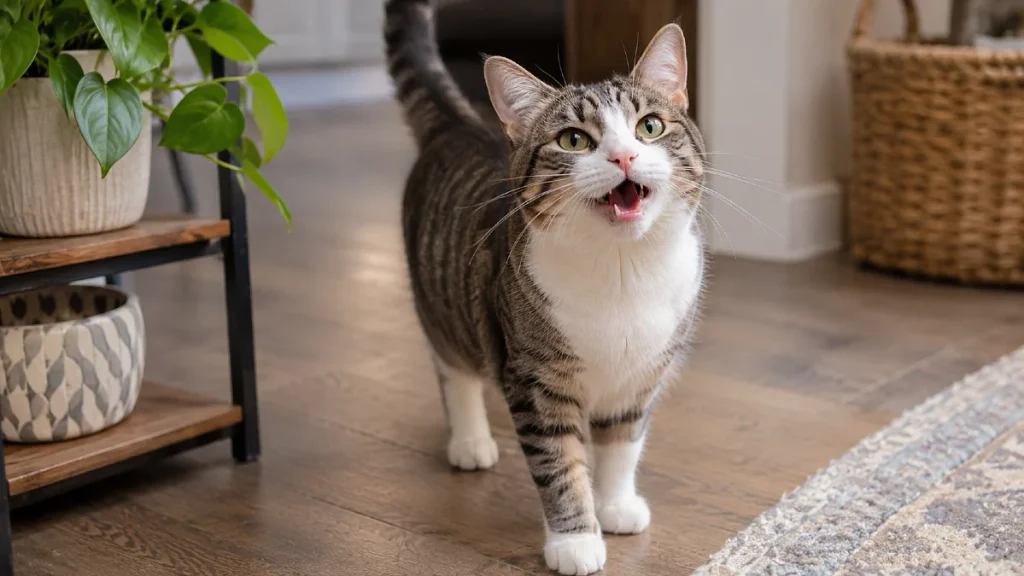
Have you ever spoken to your cat and received a little meow in return? Maybe they greet you with a cheerful sound when you come home or make a soft trill when walking into the room. These small conversations can become a familiar part of your relationship.
Cats communicate through sounds, body language, touch, and scent. Although adult cats can vocalize to one another, many domestic cats use meowing frequently when interacting with humans. Over time, they may learn which sounds get your attention.
VCA Animal Hospitals explains that cats use meows for several reasons, including greeting people, requesting food, and seeking attention. This means a vocal cat isn’t automatically expressing love every time they make a sound. However, friendly vocal exchanges can form part of a close relationship.
Why Does Your Cat Make Different Sounds Around You?
You might notice that your cat uses a short sound when greeting you but a longer meow when requesting something. Some cats make gentle trilling noises as they approach a familiar person. Others prefer to communicate through quiet movements instead.
The sounds matter most when you consider what your cat is doing at the same time. A relaxed cat greeting you with an upright tail presents a very different picture from a tense cat making loud, repeated cries.
What Your Cat’s Sounds May Be Telling You
| Sound | Possible Meaning | Your Response |
|---|---|---|
| Short, gentle meow | Greeting or attention | Speak softly |
| Friendly trill | Social greeting | Offer interaction |
| Repeated meowing near food | Requesting a meal | Check the routine |
| Sudden loud yowling | Stress or discomfort | Check for a problem |
You don’t need to respond to every meow with food or treats. Instead, observe what your cat seems to need and offer the appropriate response, whether that’s attention, play, or access to a comfortable resting place.
It’s also important to know your cat’s normal voice. Cats Protection advises speaking with a veterinarian when a cat suddenly changes how often or how loudly they vocalize.
Does a Talkative Cat Love You More Than a Quiet Cat?
A cat that often greets you with friendly sounds may have learned to enjoy vocal exchanges with you. That can be a lovely part of your relationship, especially when these conversations happen during relaxed moments.
But being talkative isn’t a rare achievement or proof of a stronger bond. Some affectionate cats barely meow at all, choosing instead to rub against you, sleep nearby, or greet you with gentle movements.
The important thing is how comfortable your cat feels around you, not how much noise they make. When you pay attention to their personal communication style, it becomes easier to respond in ways they appreciate.