You love your cat, but does your cat actually know it? You give them treats, buy them toys, and try to cuddle them whenever you get the chance. Yet sometimes, they walk away when you reach for them or look completely uninterested in your affection.
The problem might not be how much you love your cat. It could be how you’re showing it. Cats communicate differently from people, and some things we consider loving, like tight hugs or picking them up without warning, can make them uncomfortable.
The good news is that you don’t need expensive toys or constant attention to build a stronger bond. Small daily habits, such as speaking gently, playing together, and respecting your cat’s personal space, can help them feel more comfortable around you.
1. Talk Softly to Your Cat So They Recognize Your Voice
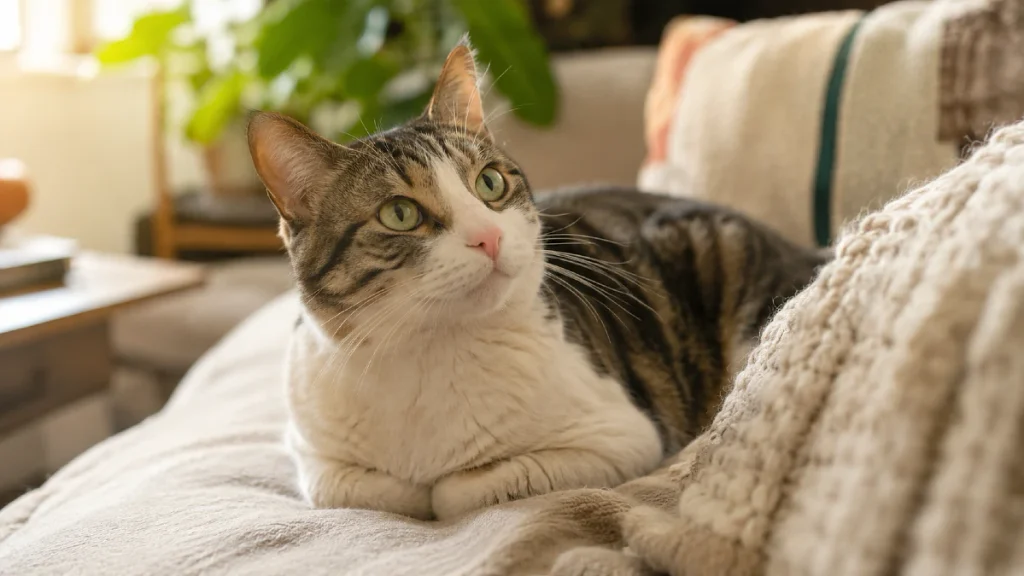
Have you noticed how your voice changes when you speak to your cat? Maybe you use a softer tone, stretch out their name, or speak a little higher than usual. That gentle voice could be more meaningful to your cat than you realize.
In 2022, researchers Charlotte de Mouzon and her colleagues published a study in Animal Cognition involving 16 companion cats. They found that cats could tell the difference between speech directed at them and ordinary adult speech when it came from their owner. The same clear difference was not seen when strangers spoke.
This suggests that cats can learn to recognize the special way their owners communicate with them. It doesn’t mean you must use a baby voice, but a calm, familiar tone can become part of your daily bond.
Try speaking gently whenever you feed your cat, walk into the room, or notice them watching you. You might say, “Good morning, sweetheart,” or simply call their name in your usual friendly voice. Keep the volume comfortable, and watch how your cat responds.
Some cats will turn their heads, move their ears, or come closer when they hear you. Others may remain relaxed without moving at all, and that’s normal. You don’t need to make your cat respond every time.
The most important part is keeping your voice pleasant and predictable. Avoid yelling or using loud sounds to demand attention, since sudden noise can frighten cats. A familiar voice paired with gentle interactions can help make your presence feel reassuring.
2. Give Your Cat Slow Blinks to Help Them Feel Safe
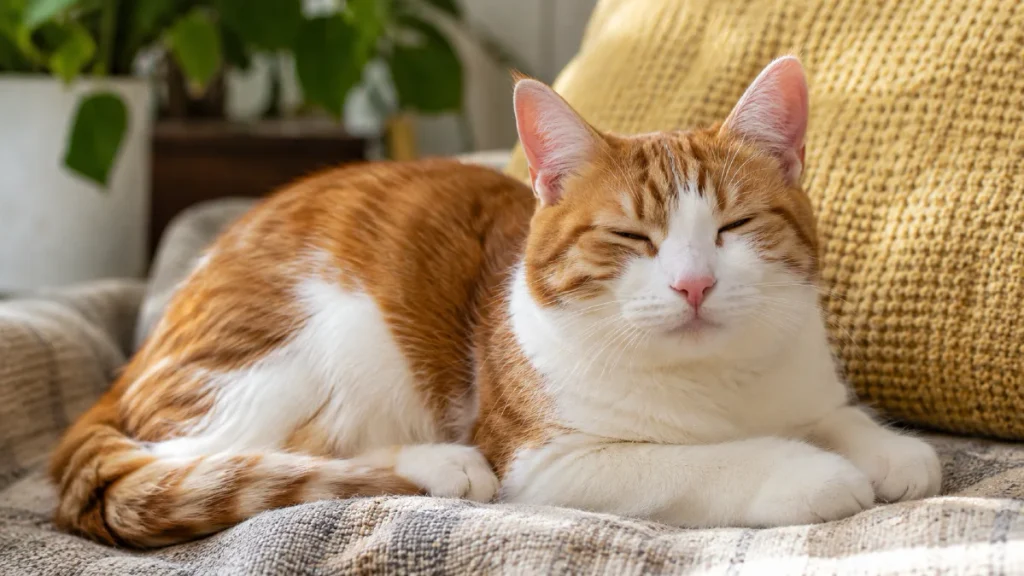
Have you ever caught your cat looking at you before slowly closing their eyes? It might seem like they’re getting sleepy, but that gentle blinking can also be part of how cats communicate. And it’s something you can try yourself.
Researchers at the University of Sussex studied slow blinking in cats, with findings published in Scientific Reports in 2020. They found that cats were more likely to narrow their eyes after their owners slow blinked at them. Cats were also more willing to approach an unfamiliar person who had slow blinked at them during a separate experiment.
Slow blinking appears to be a positive way for cats and humans to communicate. It doesn’t prove that a cat is saying “I love you,” but it may help create a calm and friendly interaction.
To try it, sit where your cat can see you without feeling trapped. Soften your gaze, slowly narrow your eyes, and gently close them for a moment before opening them again. Don’t hold a hard stare or lean directly into your cat’s face.
Your cat might blink back, relax their eyes, or simply continue resting. You should also pay attention to the rest of their body, since eye movements alone don’t tell the whole story.
How to Read Your Cat’s Eye Signals
Your cat’s eyes can offer helpful clues, especially when you consider their ears, posture, and behavior together. Use this guide to decide whether to continue interacting or give them some space.
| What You Notice | Possible Meaning | What to Do |
|---|---|---|
| Slow, relaxed blinking | Comfortable interaction | Blink gently back |
| Soft eyes and loose body | Relaxed and settled | Stay calm |
| Wide eyes with a tense body | Fear or high alert | Give them space |
| Turns away or moves off | Wants distance | Stop seeking attention |
A slow blink doesn’t need to turn into a petting session. Sometimes your cat may be perfectly happy sharing a quiet moment from across the room.
Try this habit when your cat is already relaxed, such as when they’re resting on the couch or sitting near a window. Over time, these small, peaceful interactions can become a familiar part of your relationship.
3. Play With Your Cat in a Way That Feels Like Hunting
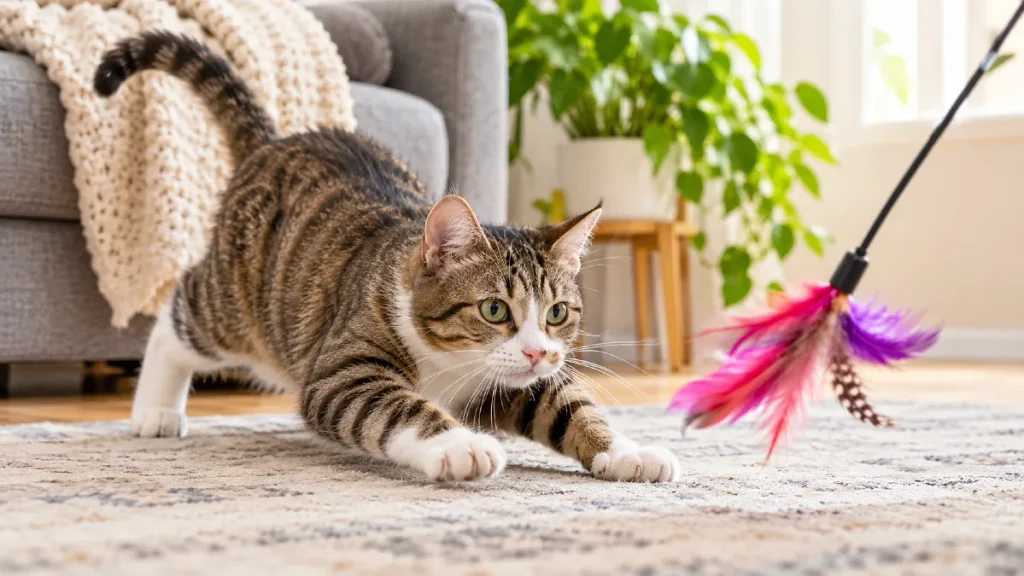
Your cat might have a full bowl of food and a comfortable bed, but they still have natural hunting instincts. That’s why they suddenly chase a moving shadow, hide behind furniture, or pounce on a toy mouse. Play gives them a safe way to practice those behaviors.
One common mistake is waving a toy in front of a cat without changing how it moves. Some cats quickly lose interest because the toy doesn’t give them much to chase. The trick is to make play feel more like a real hunt.
Instead of shaking a feather wand in one place, drag it along the floor and move it away from your cat. Let it disappear behind a chair, pause for a moment, and then move again. Give your cat a chance to stalk, chase, and finally catch it.
Cats Protection and VCA Animal Hospitals recommend using play that allows cats to express their natural hunting behaviors. The Ontario SPCA also emphasizes letting cats capture toys during interactive play. Catching the toy helps make the game rewarding rather than frustrating.
Which Play Style Is Best for Your Cat?
Not every cat enjoys the same movements or toys. Some prefer jumping after feathers, while others enjoy chasing objects that stay close to the ground.
| Your Cat’s Behavior | Play Method | Helpful Adjustment |
|---|---|---|
| Loves chasing on the floor | Soft mouse or wand toy | Move in short bursts |
| Enjoys jumping | Feather wand | Keep jumps safe |
| Loses interest quickly | Rotate toys | Change movements |
| Prefers gentle activity | Slow rolling toy | Keep play low |
| Grabs and kicks toys | Soft kicker toy | Offer room to wrestle |
Try several short play sessions throughout the day rather than expecting one long session to suit every cat. Younger cats may want more active games, while older cats may prefer shorter and gentler play.
Always supervise play with string or feather wands, and put them away afterward. Never use your hands or feet as toys, since that can teach your cat to bite and scratch people during games.
You can finish a successful play session with a small treat or part of your cat’s normal meal. This gives the activity a satisfying ending without adding unnecessary food.
4. Spend Quiet Time Near Your Cat Without Demanding Attention
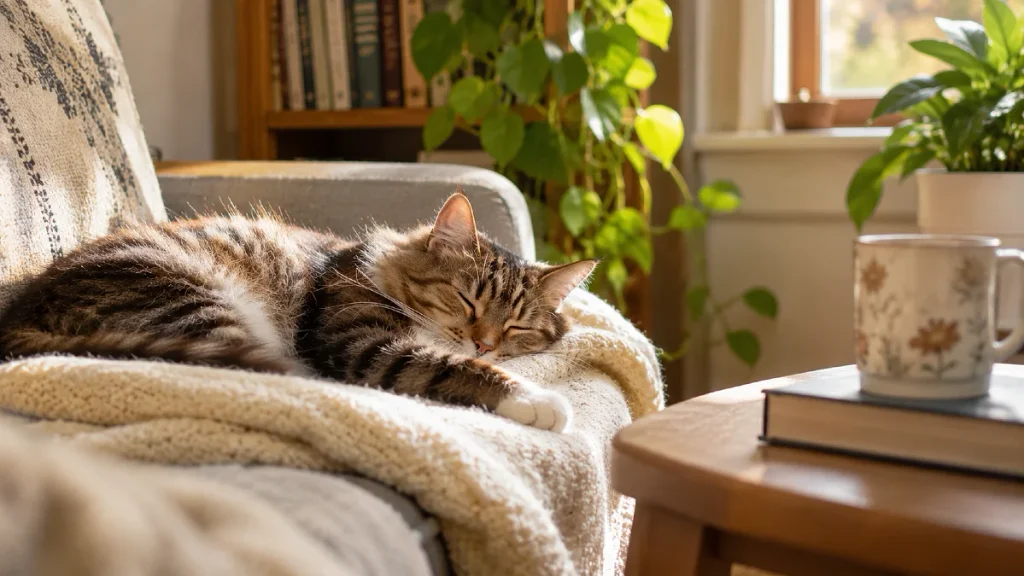
Sometimes the best way to make your cat feel loved is to stop trying so hard to get their attention. You don’t always need to pet them, call their name, or encourage them onto your lap. Simply spending time nearby can be a pleasant experience for both of you.
Cats have different social preferences. Some love being held, while others prefer sitting a few feet away from their favorite person. A cat that chooses the same room as you may enjoy your company even when they aren’t asking to be touched.
The AAFP and ISFM Feline Environmental Needs Guidelines emphasize giving cats control over their interactions with people. This includes allowing them to approach, remain nearby, or leave when they choose. Respecting those choices is an important part of building trust.
Here’s a simple habit to try today. Sit on the couch with a book or your phone while your cat rests nearby, and continue with your normal activity. Don’t reach for them or repeatedly call them over.
Your cat might remain in the same spot, move to a nearby chair, or eventually settle beside you. None of these responses needs to be forced. The goal is to make sharing space feel peaceful.
Your cat doesn’t have to sit on your lap to enjoy being around you. Some cats show comfort through quiet companionship rather than constant physical affection.
If your cat walks away, let them go without following. Having the freedom to leave can make future interactions more comfortable, especially for shy cats or those still settling into a new home.
5. Let Your Cat Sniff Your Hand Before You Start Petting
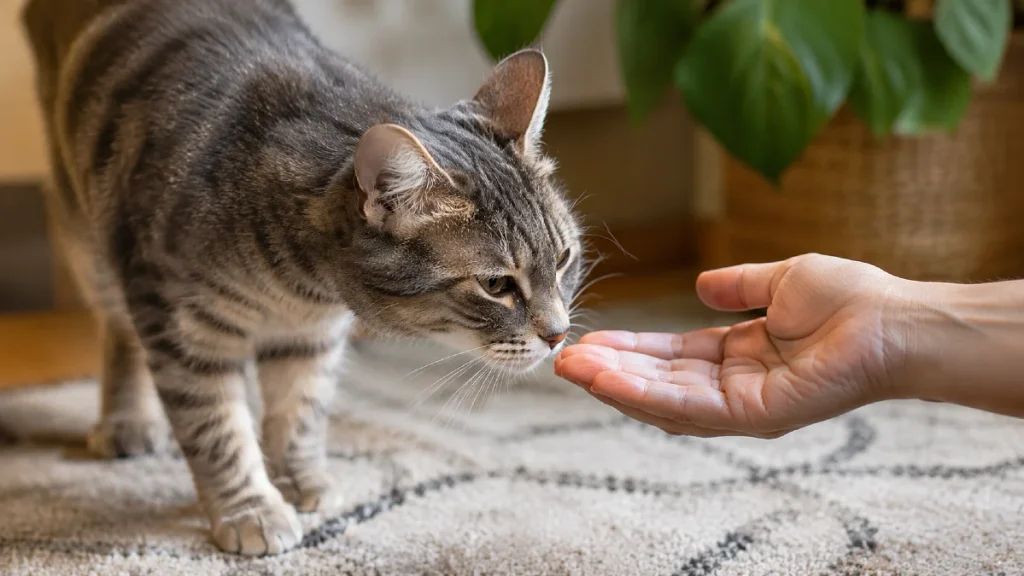
When you see your cat sitting nearby, your first instinct might be to reach down and stroke their head. But before touching them, there’s a simple thing you can do. Give your cat the choice to approach your hand first.
Cats use scent as an important source of information about their surroundings. Letting your cat investigate your hand can be a gentle way to begin an interaction without surprising them.
Cats Protection recommends approaching cats slowly and allowing them to decide whether they want contact. The 2026 guidance from RSPCA NSW also emphasizes watching your cat’s body language and allowing them to end physical interactions.
Start by lowering yourself closer to your cat’s level. Hold out a relaxed hand a short distance away without pushing it into their face, and allow your cat to move forward if they want to.
If your cat sniffs your fingers and rubs their cheek against your hand, you can try a gentle stroke. If they turn away or stay out of reach, leave them alone for now. The important habit is asking for contact rather than assuming your cat wants it.
How to Tell Whether Your Cat Wants Affection
A cat’s body language often changes during an interaction. These signals can help you decide when to offer affection and when to stop.
| Your Cat’s Signal | What It May Indicate | Your Response |
|---|---|---|
| Approaches and sniffs | Curious or interested | Keep your hand still |
| Rubs cheek on your hand | Welcomes contact | Offer gentle petting |
| Stays still without engaging | Preference is unclear | Pause and observe |
| Flicks tail with a tense body | May be uncomfortable | Stop petting |
| Flattens ears or pulls away | Wants contact to end | Give them space |
Even if your cat enjoyed the first few strokes, they might change their mind. Pause occasionally and let them move back toward your hand if they want more.
You can practice this every time you greet your cat. It takes very little effort, but it helps create interactions where your cat has a real choice.
6. Let Your Cat Sleep Peacefully So They Feel Secure
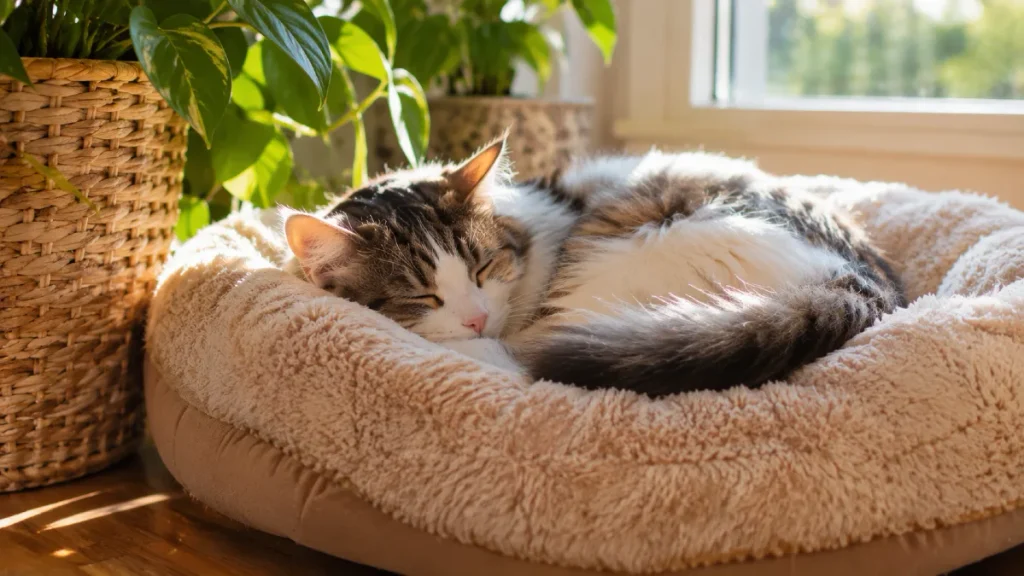
Your cat looks adorable when they’re curled up asleep, especially when their paws are tucked under their chin. It’s tempting to pick them up or wake them for a cuddle. But leaving them alone is often a kinder choice.
Cats Protection reports that domestic cats typically sleep around 12 to 18 hours a day. Their rest is spread across different periods, and they often choose warm, quiet places where they feel comfortable.
Sleep also helps cats recover from daily activity. When you suddenly pick up a sleeping cat, they may wake in confusion or react defensively because they weren’t expecting to be touched.
Some cats tolerate being disturbed more than others, but that doesn’t mean they enjoy it. If your cat has chosen a place to rest, letting them sleep without interruption is a simple way to respect their comfort.
The Ohio State University Indoor Pet Initiative recommends providing quiet resting places where cats can get away from household activity. This can be especially helpful in busy homes with children or other pets.
You don’t need an expensive cat bed to create a comfortable sleeping area. A soft blanket on a quiet shelf, a cardboard box with bedding, or a cozy cat tree can provide useful options. Make sure your cat can enter and leave these places freely.
Try keeping at least one favorite resting area free from unwanted handling. If your cat is sleeping there, avoid picking them up simply because you want attention.
Remember that cats naturally change sleeping spots, so a new nap location doesn’t automatically mean they’re avoiding you. However, a sudden major change in sleeping behavior, especially with poor appetite or unusual tiredness, deserves a call to your veterinarian.
7. Gently Pet Your Cat’s Head and Cheeks When They Invite You
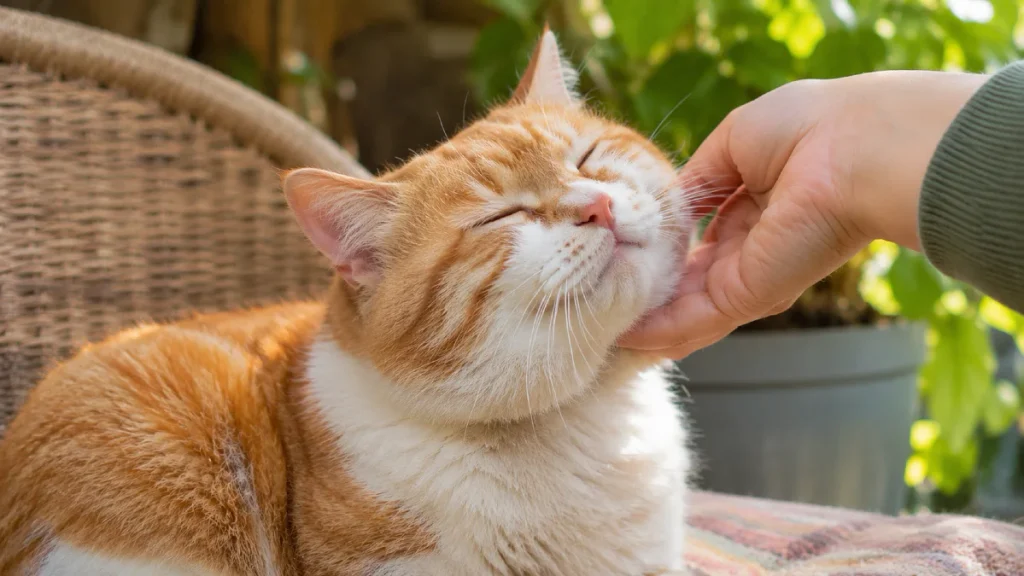
Have you noticed your cat pushing their head against your hand or rubbing their cheeks along your furniture? Cats often use facial rubbing during friendly interactions. For many cats, these same areas are pleasant places to receive gentle affection.
The AAFP and ISFM feline behavior guidelines explain that cats often prefer being touched around their head and neck, especially near the facial scent glands. These areas include the cheeks, chin, and parts of the head.
Cats also groom one another during friendly social interactions, a behavior called allogrooming. This often involves the head and neck, although it doesn’t mean that human petting creates exactly the same feelings or chemical responses.
To try this daily habit, begin only after your cat welcomes contact. Use your fingertips to gently stroke the top of their head, around the cheeks, or behind the ears if they enjoy it. Keep the pressure light and follow the natural direction of their fur.
You may notice your cat leaning into your fingers, relaxing their face, or rubbing against your hand. These can be encouraging signs, especially when the rest of their body looks loose and comfortable.
But remember that not every cat enjoys being touched in the same places. Some prefer chin rubs, while others dislike having their head touched at all. Your cat’s preferences matter more than any general petting rule.
A useful habit is to pause after a few gentle strokes. If your cat moves closer, rubs against your hand again, or clearly seeks more contact, you can continue. If they turn away, tense up, or flick their tail with irritation, stop.
Avoid assuming that purring always means your cat wants more petting. Look at their whole body and the situation before deciding how they feel.
You don’t need to keep stroking your cat until they walk away. Ending an interaction while they’re still comfortable can help keep physical affection pleasant.