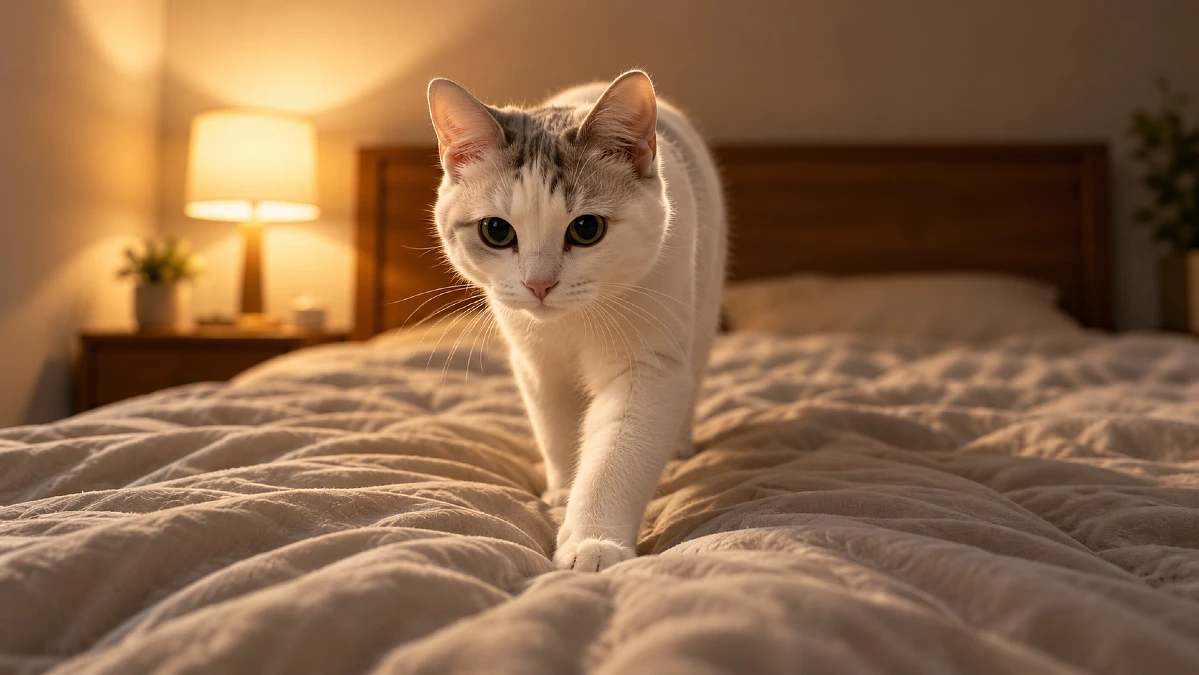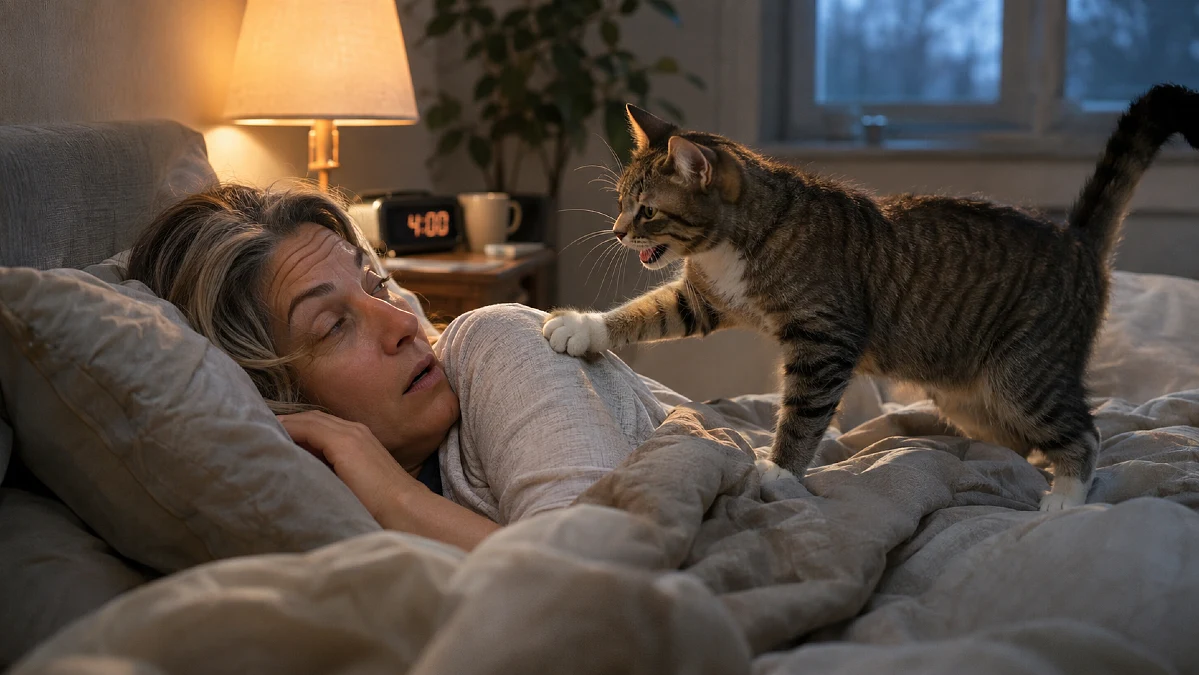
It is 4 A.M., and your cat is standing beside your pillow, meowing like breakfast is already late. You pull the blanket over your head, but the noise continues. Then comes a gentle paw on your face, followed by your cat walking across your chest.
If this happens every morning, you probably wonder why your cat wakes you up at 4 A.M. when the rest of the house is still asleep. You love your cat, but losing sleep night after night can leave you tired, frustrated, and desperate for a solution.
The surprising part is that your cat probably isn’t trying to annoy you. Cats have natural activity patterns that make early mornings appealing. Hunger, boredom, and habits learned from your reactions can make those wakeups even more frequent.
Why Your Cat Wakes You Up at 4 A.M. in the First Place

Your cat isn’t following the same sleep schedule as you. While you prefer several hours of uninterrupted sleep, cats naturally alternate between sleeping, resting, exploring, and playing throughout the day and night.
According to Cats Protection, cats are generally most active around dawn and dusk. This behavior is called crepuscular activity, and it comes from their natural hunting instincts.
In the wild, early morning and evening are useful times for hunting small animals. Your indoor cat still carries those instincts, even when dinner arrives in a bowl and hunting involves chasing a toy mouse.
Your Cat Has a Different Sleep Schedule
VCA Animal Hospitals explains that cats commonly sleep around 12 to 16 hours each day. However, that sleep is usually spread across several periods rather than one long stretch.
This means your cat might enjoy a peaceful afternoon nap while you’re working. By the time you’re ready to sleep, your cat may be ready to explore, chase toys, or seek attention.
And here is another detail that matters. Your cat may have learned that 4 A.M. is a very effective time to get something from you.
Perhaps you fed your cat early one morning because the meowing wouldn’t stop. Maybe you opened the bedroom door or gave your cat a cuddle to settle things down.
Your cat may remember what happened next. If waking you up leads to food, play, or attention, that behavior becomes worth repeating.
The solution starts with discovering which reward your cat expects and how to provide it at a better time.
How to Tell What Your Cat Is Asking for Before Dawn

Not every cat wakes its owner for the same reason. Some cats want breakfast, while others are looking for play, comfort, or access to another room.
Before changing your routine, pay attention to what happens during those early morning wakeups. Your cat’s actions can offer useful clues about what it wants.
Watch What Happens Before the Meowing Starts
A cat that runs straight toward its food bowl may be expecting breakfast. A cat that jumps on your feet or attacks moving blankets may be looking for something to chase.
Other cats sit outside closed doors and cry until someone opens them. Some simply climb beside their owners because they want company.
The San Francisco SPCA explains that nighttime activity can have several causes, including natural activity patterns, learned behavior, and changing needs as cats grow older.
The following table can help you decide what to investigate first. These clues are starting points, not a way to diagnose your cat.
What Your Cat’s Early Morning Behavior May Mean
| What You Notice | Possible Reason | What to Check |
|---|---|---|
| Meowing beside the food bowl | Hunger or learned feeding time | Meal schedule |
| Jumping on your feet | Play or hunting behavior | Daily play |
| Scratching the bedroom door | Wants access or attention | Door routine |
| Running around the house | Activity and stimulation needs | Evening enrichment |
| Following you and meowing | Social attention or discomfort | Recent behavior changes |
| New loud crying or pacing | Pain, illness, or confusion | Veterinary assessment |
The table helps narrow down the possible causes, but context matters. A normally quiet cat that suddenly begins crying at night needs a different response from a healthy young cat that has always wanted breakfast early.
Keep a Simple Morning Behavior Log
For several mornings, write down what time your cat wakes you and what it does. Also record when you last fed your cat and when it last played.
You may notice that the wakeups happen earlier after a quiet evening. Or perhaps your cat becomes especially demanding when breakfast follows immediately after you get out of bed.
These patterns can help you choose the right change instead of trying several solutions at once.
Why Responding at 4 A.M. Can Make the Wakeups Worse
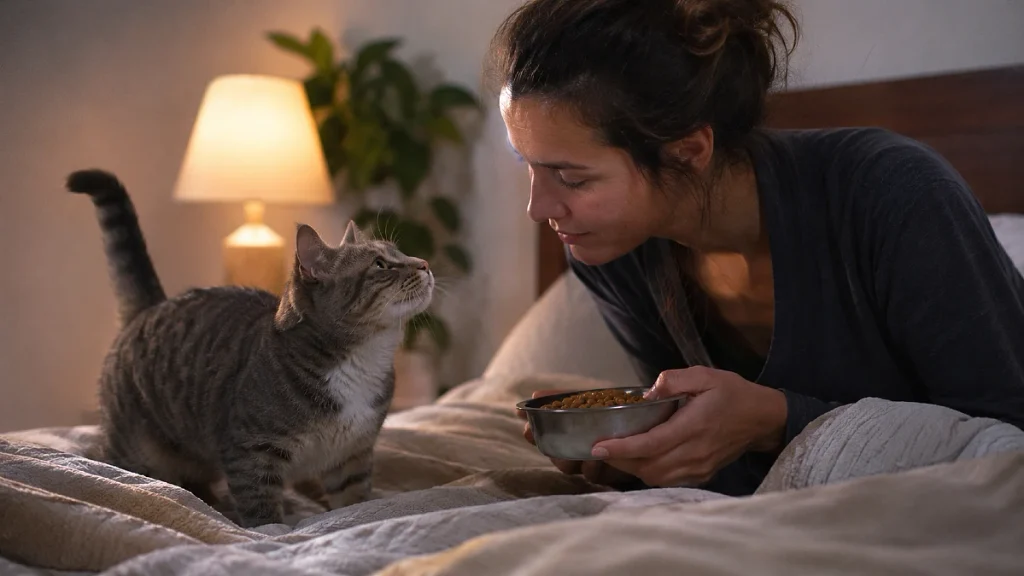
One of the most common mistakes cat owners make is accidentally rewarding the exact behavior they want to stop. It often happens when you’re exhausted and simply want a few more minutes of sleep.
Your cat meows, so you get out of bed and refill the food bowl. The meowing stops, and you think you have solved the problem.
But your cat may have learned something different. Making noise brought breakfast, so trying again tomorrow seems like a good idea.
Veterinary behavior specialists Debra Horwitz and Gary Landsberg explain through VCA Animal Hospitals that food, affection, and attention can reinforce nighttime activity.
Stop Rewarding Wakeups You Want to End
If your veterinarian has ruled out medical causes and your cat’s basic needs are met, begin responding differently to attention seeking at night.
Avoid offering treats, starting a play session, or getting up to provide breakfast because your cat is meowing. Even talking to your cat can provide attention that encourages some cats to keep trying.
Instead, provide food, affection, and play at planned times when your cat is calm. Make your normal morning routine the signal for breakfast rather than the sound of meowing.
Consistency matters more than a perfect routine. If you respond differently every morning, your cat may continue experimenting to see which behavior gets results.
Never Punish Your Cat for Waking You
Yelling, spraying water, or frightening your cat can create stress without solving the reason behind the behavior. Wisconsin Humane Society recommends avoiding punishment when managing early morning attention seeking.
Punishment can also damage the trust your cat has in you. A calm response and a predictable daily schedule are better ways to teach the behavior you want.
Do not ignore a cat that appears distressed, sick, or unable to access food, water, or a litter box. The goal is to stop rewarding unnecessary wakeups, not to overlook genuine needs.
How to Stop Hunger From Becoming Your Morning Alarm

If your cat wakes you up because it expects food, changing the feeding routine may be one of the most helpful steps.
The problem often begins when breakfast happens immediately after you wake up. Your cat learns that getting you out of bed is the first step toward a full bowl.
Over time, your cat may begin asking for breakfast earlier. Even a small response from you can keep that habit going.
Make Breakfast Less Connected to Your Alarm
Try separating your wakeup time from your cat’s breakfast. For example, complete your usual morning tasks before serving the first meal.
This gives your cat fewer reasons to believe that waking you immediately leads to food. Keep the feeding schedule steady, even on weekends when you might sleep later.
If your cat gets hungry before breakfast, discuss whether smaller, more frequent meals would suit its needs. Cats Protection suggests adjusting meal schedules as one possible way to manage early morning waking.
Do not simply increase the amount of food. Divide your cat’s normal daily allowance into suitable portions so you aren’t adding extra calories.
Let an Automatic Feeder Handle Early Meals
An automatic feeder can be helpful when your cat is focused on food rather than attention.
For example, the PetSafe 5 Meal Pet Feeder allows you to schedule portions at selected times. Your cat can begin associating mealtime with the feeder instead of waking you.
Place the feeder away from your bedroom so the sound of food being served is less likely to disturb your sleep.
Choose a time that fits your cat’s needs and gradually adjust the schedule if necessary. Feeding at 4 A.M. is not automatically the best choice, especially if it encourages your cat to remain active at that hour.
Make sure the feeder works properly, provides the correct amount, and is suitable for the food you use. Cats on prescription diets or special feeding plans may need veterinary advice before you change their routine.
The Evening Play Routine That Makes Bedtime Calmer
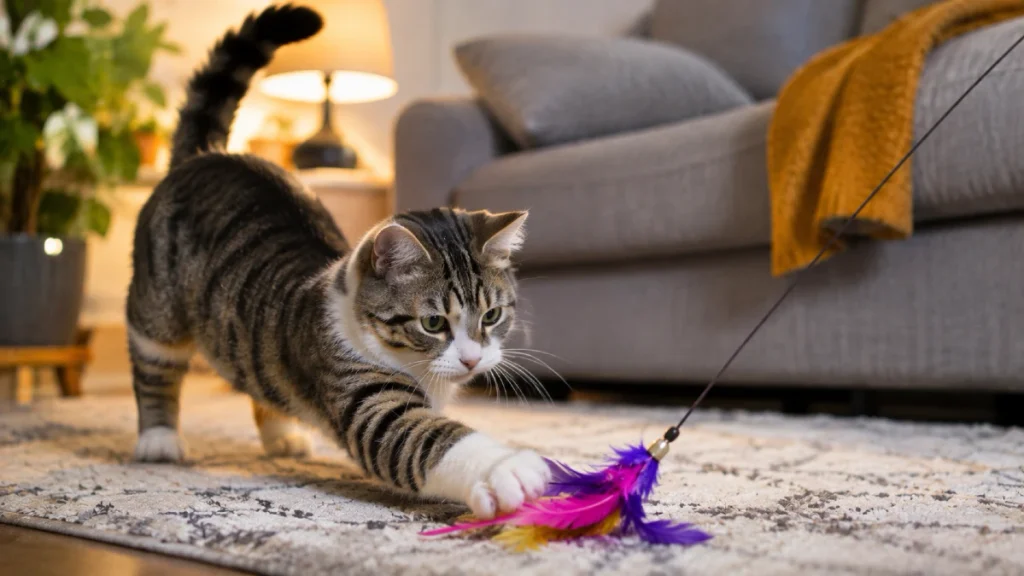
If your cat spends most of the afternoon sleeping, it may have plenty of energy when you go to bed.
A cat that hasn’t had enough chances to chase, climb, explore, or play may look for those activities at inconvenient hours. That sometimes means racing through the hallway or attacking your feet under the blanket.
The RSPCA recommends active play during the afternoon and early evening to help meet a cat’s activity needs.
Give Your Cat a Chance to Hunt Through Play
Interactive wand toys can help your cat practice natural hunting behavior in a safe environment.
Move the toy like a small animal instead of waving it constantly in front of your cat’s face. Let it disappear behind furniture, move across the floor, and pause before darting away.
Allow your cat to catch the toy occasionally. This makes the game more satisfying than chasing something it can never reach.
Finish with a calm period and an appropriate meal or food portion. This creates a useful routine of activity followed by eating and settling down.
Build a Simple Evening Routine
You don’t need to spend the entire evening entertaining your cat. A few planned activities can provide better stimulation than waiting until your cat becomes restless.
Try the following routine as a starting point. Adjust it to your cat’s age, health, energy level, and usual feeding schedule.
Evening Routine for a Calmer Night
| When | What to Do | Why It Helps |
|---|---|---|
| Late afternoon | Short interactive play | Provides activity |
| Early evening | Puzzle feeder or exploration | Encourages mental activity |
| Before bedtime | Supervised chasing game | Offers a hunting outlet |
| After final play | Planned meal and quiet time | Builds a calming routine |
This routine gives your cat more chances to use its energy before you go to sleep. It also makes nighttime less dependent on you being awake and available.
Some cats prefer several brief games instead of one long session. Watch your cat’s interest and stop when it appears tired or no longer wants to play.
Choose Toys That Are Safe for Your Cat
VCA Animal Hospitals warns that wand toys and fishing pole toys should not be left with cats unattended. Loose strings can become tangled around a cat or cause serious harm if swallowed.
Put string toys away after playtime. For unsupervised activity, choose sturdy cat toys without loose parts that could be swallowed.
You can also rotate toys rather than leaving every toy out all the time. A familiar toy may become interesting again after it has been put away for a while.
How to Set Up a Quiet Nighttime Space Your Cat Enjoys
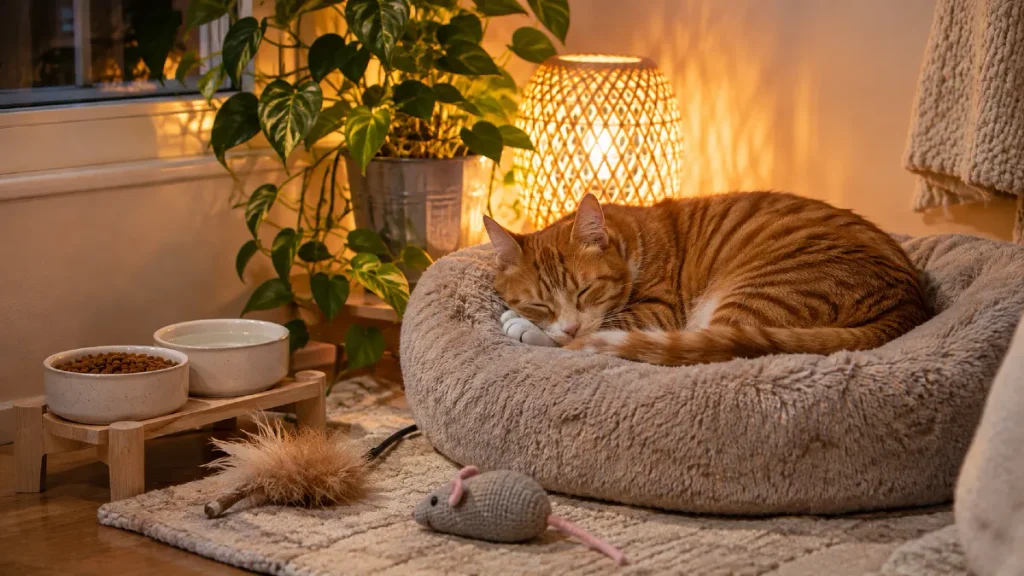
Your cat needs somewhere comfortable to spend the night, even if it doesn’t sleep through all of it.
A room with nothing interesting to do can leave an active cat looking for attention. A better setup offers quiet activities, comfortable resting places, and easy access to basic needs.
Make Your Cat’s Resting Area More Appealing
Start with a comfortable cat bed or soft blanket in a place your cat already likes. Some cats prefer sleeping in high places, while others feel safer in covered beds or quiet corners.
Give your cat access to fresh water and a clean litter box. If you’re keeping your cat in a separate room overnight, those resources should remain available.
You can also provide a sturdy scratching post and a stable climbing area. These give your cat something to do without needing to wake you.
For cats that enjoy working for food, a puzzle feeder can provide mental activity. The Catit Senses 2.0 Food Tree, for example, encourages cats to use their paws to retrieve dry food or treats.
Use food from your cat’s planned daily allowance rather than adding unnecessary snacks. Choose puzzles that are stable, easy to clean, and safe for your cat to use.
Remove the Things That Make Nighttime Noisy
Some cats enjoy batting hard toys across wooden floors. Others climb onto furniture and knock objects onto the ground.
Look around your home for toys or items that make loud noises when moved. Put those away before bedtime and leave quieter, safe options available.
Avoid leaving dangling strings, ribbons, or small objects within reach. A quiet nighttime environment should still be a safe one.
You can also close curtains if outdoor animals or passing lights appear to excite your cat. The aim is to reduce things that trigger unwanted activity while leaving your cat comfortable.
Should You Keep Your Cat Out of the Bedroom?
Sometimes the biggest sleep problem is simply that your cat has direct access to your bed.
Even a friendly cat can disturb your sleep by walking across your pillow, climbing onto your chest, or chasing movement beneath the blanket. If other changes haven’t helped, a different sleeping arrangement may be worth trying.
However, closing the bedroom door isn’t the best choice for every cat. Some cats become distressed when separated from their owners, especially if the change happens suddenly.
Choose a Sleeping Arrangement You Can Maintain
You can allow your cat to sleep in the bedroom, encourage it to use a separate bed, or create a comfortable sleeping space elsewhere in the home.
Each choice has advantages and limits. The most useful option is one that meets your cat’s needs while allowing you to rest.
Which Nighttime Setup Fits Your Cat?
| Sleeping Setup | Best For | Main Consideration |
|---|---|---|
| Cat sleeps on your bed | Calm cats that rarely disturb sleep | Movement may wake you |
| Cat bed in your room | Cats that want to stay nearby | Needs gentle training |
| Separate sleeping room | Cats comfortable with independence | Provide all basic resources |
| Bedroom door closed | Cats that settle well elsewhere | Door scratching may occur |
If you decide to close the bedroom door, build positive associations with your cat’s new resting area during the day. Offer comfortable bedding, play, and calm attention there before trying overnight separation.
Don’t wait until 4 A.M. to introduce the change while your cat is already upset. Start with short periods and gradually build toward a nighttime routine when your cat appears comfortable.
What If Your Cat Scratches the Closed Door?
Opening the door after several minutes of scratching may teach your cat that persistence eventually works. That can make the problem harder to change.
For a healthy cat whose needs are met, keep your response consistent and reward calm behavior at appropriate times.
If your cat becomes highly distressed, injures itself, or appears panicked, don’t force the separation. Ask your veterinarian or a qualified cat behavior professional for guidance.
When Early Morning Meowing Means It Is Time for a Vet
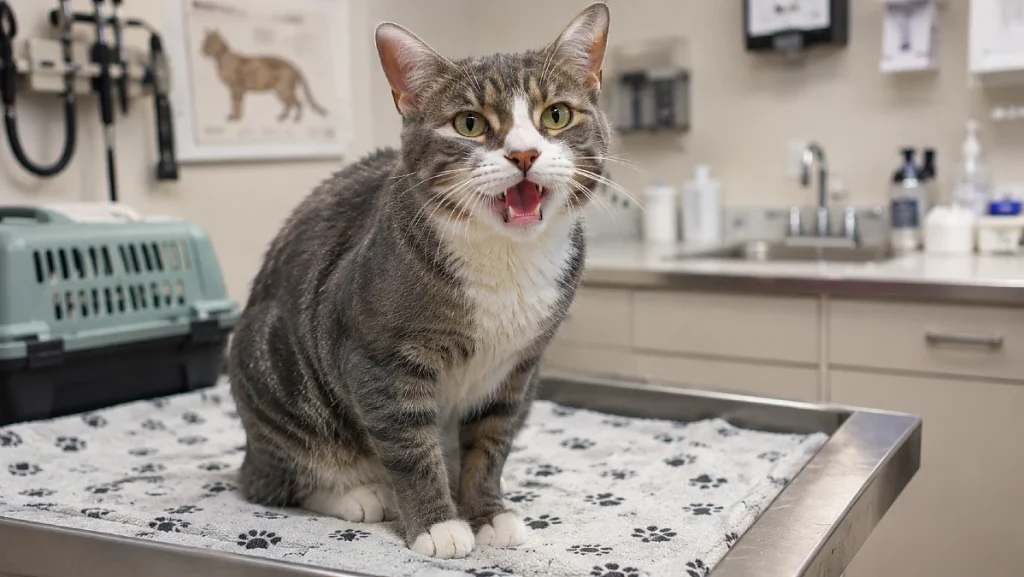
Most familiar early morning activity isn’t an emergency. However, a sudden change in your cat’s sleep, appetite, or behavior should never be dismissed as a bad habit.
A cat that previously slept quietly but begins crying at night may be experiencing discomfort or illness. This is especially important for older cats.
Cornell Feline Health Center identifies several medical conditions that can affect nighttime behavior, including thyroid disease, high blood pressure, pain, and cognitive dysfunction.
Look for Changes Beyond the Meowing
Hyperthyroidism is one possible cause of increased activity and vocalization in middle aged and older cats. Cornell’s veterinary guidance lists signs such as weight loss, increased appetite, thirst, urination, and hyperactivity.
An older cat may also experience changes in sleep patterns or become confused at night. Cognitive dysfunction is one possible explanation, but a veterinarian needs to assess other medical causes before reaching that conclusion.
Arthritis or other painful conditions may also affect where a cat sleeps and how comfortably it moves. If your cat suddenly avoids jumping, seems stiff, or cries when moving, arrange a veterinary examination.
The table below helps separate signs that need a scheduled examination from symptoms requiring immediate care. These are possible concerns, not confirmed diagnoses.
When to Call the Vet About Nighttime Behavior
| Warning Sign | Possible Concern | Next Step |
|---|---|---|
| Sudden loud meowing | Pain or illness | Arrange a prompt vet visit |
| Weight loss with strong appetite | Thyroid disease or another illness | Book a vet examination |
| Increased thirst and urination | Kidney or hormonal disease | Arrange a prompt vet visit |
| New confusion or nighttime pacing | Illness or age related changes | Book a vet examination |
| Straining with little or no urine | Possible urinary obstruction | Emergency vet immediately |
The most urgent warning is repeated attempts to urinate with little or no urine produced. Cornell Feline Health Center identifies urinary obstruction as a medical emergency that requires immediate treatment.
Do not wait until morning or try behavior training if your cat appears unable to urinate. Seek emergency veterinary care right away.
Pay Extra Attention to Older Cats
If your senior cat suddenly begins waking you, look for other changes in its daily habits.
Notice whether it is eating normally, moving comfortably, using the litter box, and responding to familiar people. Changes in hearing or vision may also affect how secure your cat feels at night.
A veterinarian may recommend an examination, blood testing, a urine test, or blood pressure measurement based on the signs.
Treating an underlying medical condition may improve the behavior without any need for training. That is why ruling out health problems comes before ignoring persistent nighttime crying.
What to Do If Your Cat Still Wakes You After a Week
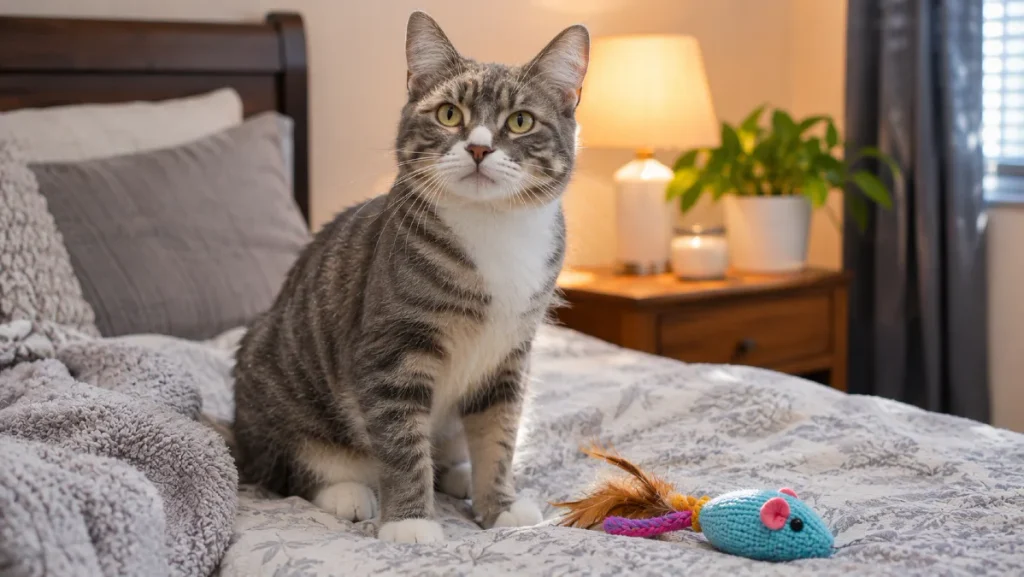
You have changed the feeding schedule, added evening play, and stopped serving breakfast during early morning meowing. Yet your cat still appears beside your pillow before sunrise.
That doesn’t necessarily mean your efforts have failed. Some cats need more time and practice before they respond to a different routine.
The important thing is to look for progress rather than expecting one perfect night.
Look for Small Signs of Improvement
Your cat may begin waking you less often or spend more time playing independently. Perhaps the meowing becomes shorter, or your cat settles down more easily after the evening routine.
Use your behavior log to compare what happens from one morning to the next. Record the time, the activity, and whether you responded.
If your cat continues waking you, consider what the original cause might have been. For example, feeding changes may do little for a cat that mainly wants companionship.
Change One Part of the Routine at a Time
Avoid changing feeding times, sleeping arrangements, toys, and bedroom access all at once. It becomes difficult to tell which change is actually helping.
Instead, start with the most likely cause and give the adjustment time to become familiar. Keep the rest of your cat’s routine as predictable as possible.
A young, active cat may benefit most from additional play and enrichment. A cat that wakes specifically for breakfast may respond better to a planned feeding schedule or automatic feeder.
For a cat that seems anxious or cannot settle, a more gradual plan may be needed.
Cats Protection recommends consulting a veterinarian about referral to a qualified cat behaviorist when nighttime waking remains difficult to manage.
Getting professional support is especially useful when the behavior is severe, distressing, or continues despite a careful routine.