One minute, your cat is peacefully sleeping on the couch. The next, they’re racing through the hallway, jumping over furniture, and running across the floor like something is chasing them. And somehow, this wild burst of energy always seems to happen when you’re trying to relax.
These sudden bursts of activity are called cat zoomies, and they can leave even experienced cat owners confused. Why does your normally calm cat suddenly run around like crazy? Are they happy, bored, stressed, or trying to tell you something?
Here’s what makes this behavior interesting. Your cat’s zoomies may have more to do with your daily habits than you realize. The way you play with your cat, respond to their behavior, and organize their day can influence when these bursts happen.
What Are Cat Zoomies, and Why Do They Happen So Fast?
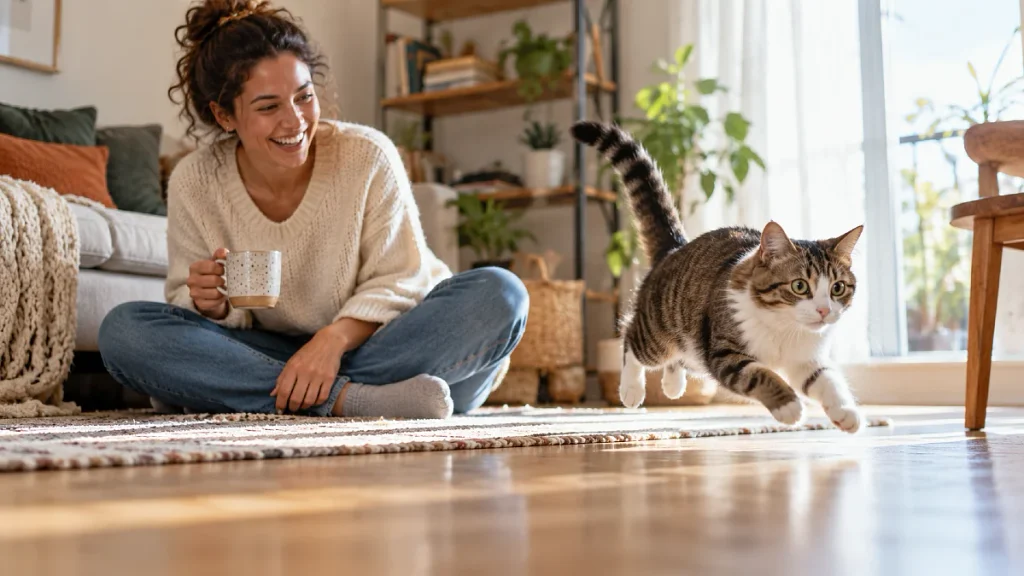
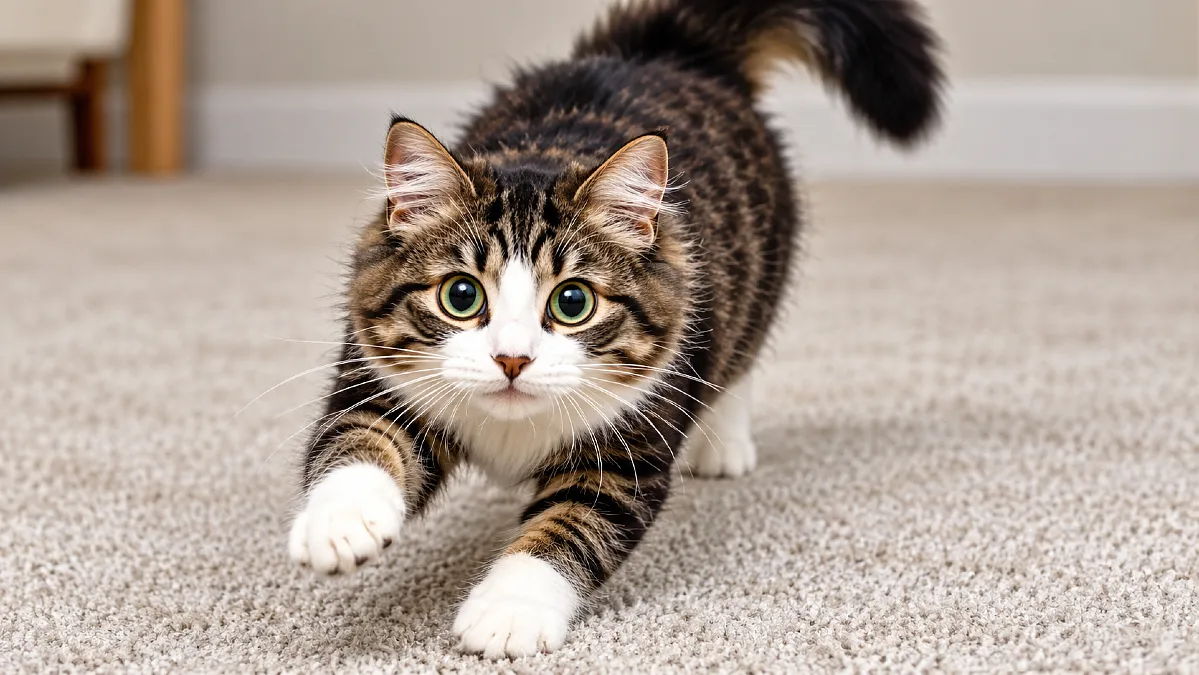
Cat zoomies are sudden bursts of running, jumping, and playful movement that seem to appear without warning. Veterinarians call them frenetic random activity periods, or FRAPs. They can happen to kittens, adult cats, and even older cats.
During a typical episode, your cat might sprint between rooms, leap onto a chair, and make a sharp turn before racing away again. These movements often look completely random. However, they can reflect normal feline activity, excitement, or a response to something in the environment.
The timing of these episodes can offer useful clues. Pay attention to what happens just before your cat starts running.
What Your Cat’s Zoomie Timing May Tell You
| When It Happens | Possible Trigger | What to Check |
|---|---|---|
| After a long nap | Stored energy | Daily playtime |
| Around sunset | Natural activity pattern | Evening routine |
| After using the litter box | Relief or discomfort | Normal bathroom habits |
| After a loud noise | Fear or surprise | Household sounds |
| When you arrive home | Excitement or anticipation | Greeting behavior |
These patterns are clues rather than firm answers. A cat that runs after waking up may simply feel energetic, while one that races away from a loud sound could be frightened.
PetMD’s March 2026 veterinary review explains that zoomies are generally normal and often linked to energy, hunting instincts, or environmental triggers. The important thing is to watch your cat’s body language and behavior before and after the episode.
Why Indoor Cats Suddenly Race After Resting
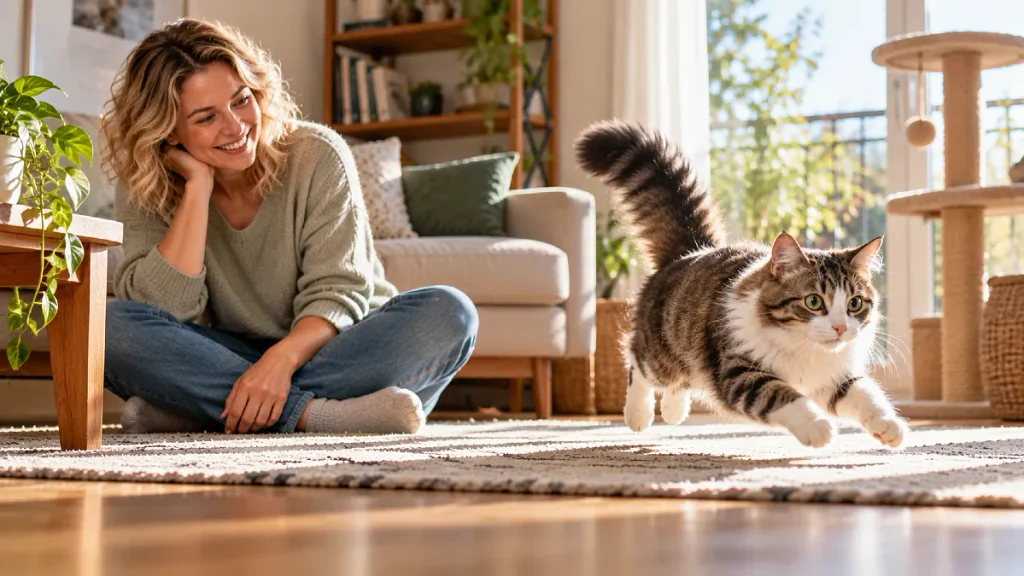
Your cat might spend hours sleeping in a sunny spot, only to wake up and race around the entire house. This can happen because cats naturally alternate between periods of rest and bursts of activity. They are built for short, powerful movements rather than constant exercise.
Wild cats conserve energy between hunting opportunities. Domestic cats still have many of those natural instincts, even when dinner arrives in a food bowl. They may have plenty of energy left after resting indoors.
For indoor cats, this energy can build when there are few chances to climb, chase, or explore. A home with limited play opportunities may leave a cat looking for ways to entertain itself. Running through the hallway becomes one possible outlet.
Your daily play habits can make a difference. If your cat spends most of the day resting while you’re busy, they may become especially active when you finally sit down.
Cats Protection recommends spreading short play sessions throughout the day rather than relying on one long session. A few minutes of chasing a feather toy or batting a ball can give your cat a healthy way to use that energy.
The goal isn’t to stop your cat from running altogether. It’s to provide more chances for natural movement so that sudden bursts of activity are less likely to become disruptive.
How Your Cat’s Hunting Instinct Turns Into Zoomies
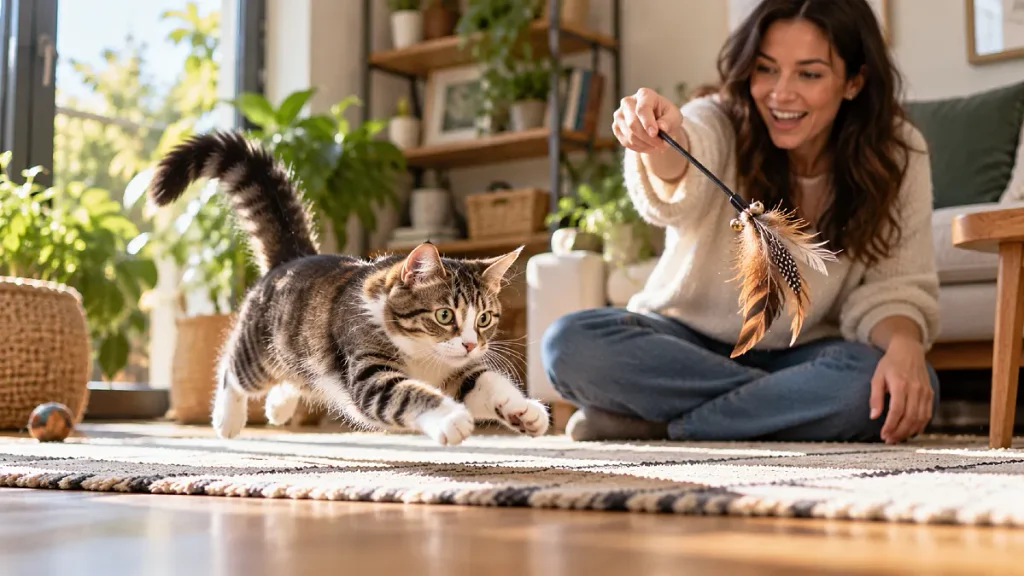
Your cat may look like they’re chasing an invisible enemy, but their movements can come from a very real instinct. Cats are natural hunters. Even well fed house cats can feel driven to stalk, chase, and pounce.
Watch what happens when a small object rolls across the floor. Your cat might crouch low, wiggle their body, and suddenly race forward. Those same quick movements can appear during a zoomie episode, even without an obvious target.
Sometimes a moving shadow, tiny insect, or unexpected sound catches a cat’s attention. Other times, the burst of movement may be part of spontaneous play. You may never identify exactly what started it.
Cornell Feline Health Center explains that feline play can involve stalking, hiding, and pouncing. These behaviors are especially noticeable in younger cats, but adult cats can enjoy them too.
Try giving your cat something appropriate to chase. A feather wand, rolling ball, or soft toy can encourage hunting behavior without sending your cat across every piece of furniture.
Let your cat catch the toy during play. Cats Protection warns that chasing something they can never catch, such as a laser dot, may cause frustration in some cats.
Why Cats Get Zoomies After Using the Litter Box
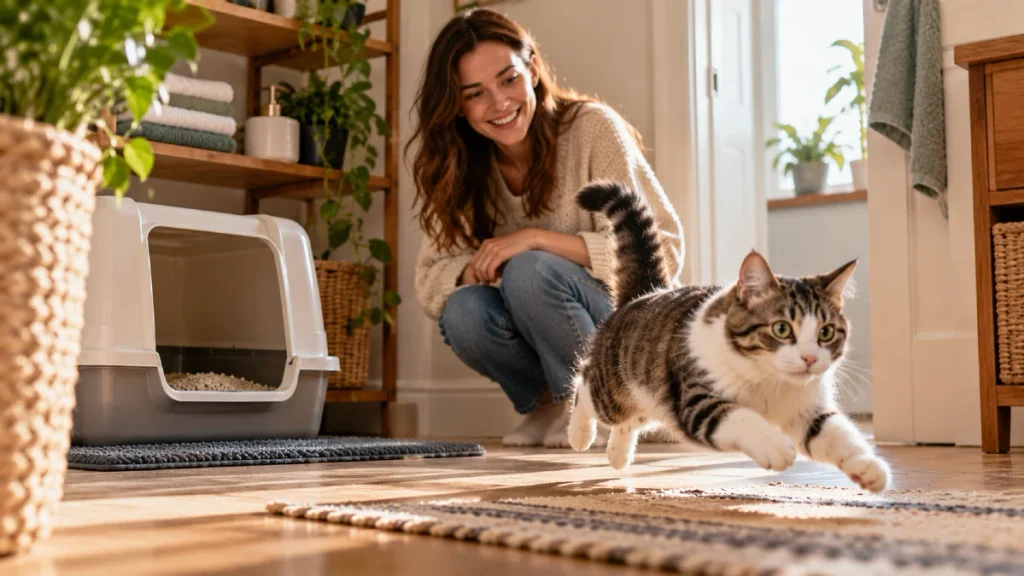
Some cats seem to finish using their litter box and immediately run away at full speed. They might race down the hallway, jump onto the couch, or sprint into another room. This behavior often leaves owners wondering what just happened.
One possible explanation is physical relief after passing stool. Veterinarians note that defecation can stimulate the vagus nerve, which may contribute to a feeling of relief. However, researchers have not confirmed one explanation that applies to every cat.
Your cat might also be reacting to an unpleasant sensation, such as litter stuck to their paws or feces caught in their fur. This is worth checking, especially with cats that have long coats.
Most brief episodes after normal litter box use are not a reason to worry. But running away from the litter box is not always playful behavior.
If your cat cries, strains, repeatedly enters the box, or seems uncomfortable, contact your veterinarian. Constipation and urinary problems can cause pain that may look like unusual behavior.
A cat that is trying to urinate but cannot pass urine needs emergency veterinary care. This is particularly important for male cats, which are at greater risk of dangerous urinary blockages.
Why Cat Zoomies Strike at Night or Before Sunrise
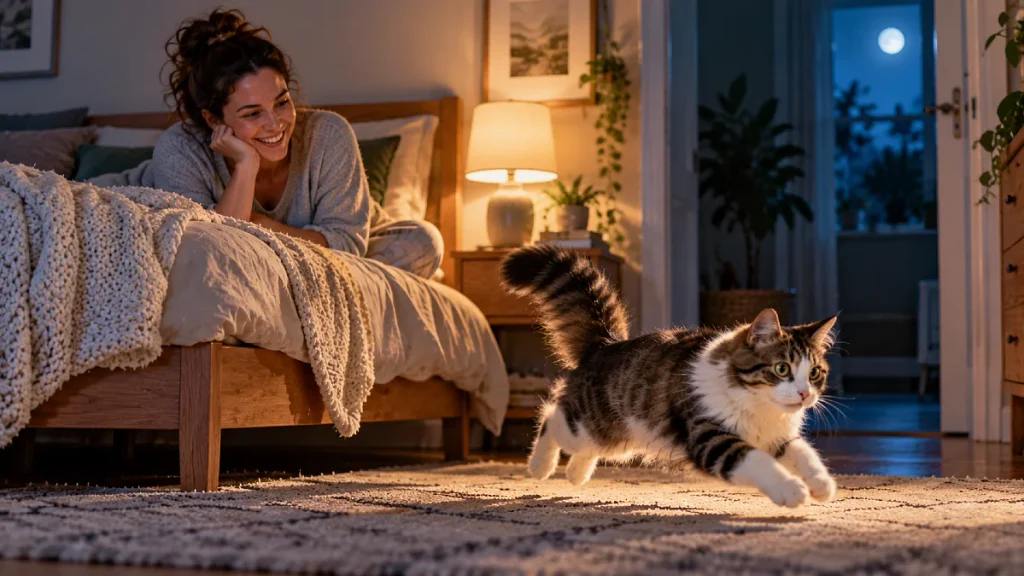
Your cat has been quiet all afternoon, but the moment you turn off the bedroom lights, the running begins. Suddenly, your hallway sounds like a racetrack. For many owners, nighttime cat zoomies are the most frustrating part of feline behavior.
Cats are naturally crepuscular, meaning they tend to be especially active around dawn and dusk. These are useful hunting periods for many feline species. Domestic cats have kept some of these activity patterns.
This doesn’t mean every cat follows the same schedule. Your cat’s routine can change based on feeding times, play opportunities, household activity, and individual habits.
A cat that sleeps through a quiet afternoon may become energetic during the evening. If you’re busy throughout the day, that may also be when your cat finally gets your attention.
One useful change is to schedule an active play session before your usual bedtime. Let your cat chase, pounce, and catch a toy, then provide their normal evening meal if it fits their feeding plan.
This can help some cats settle afterward. It won’t guarantee a completely quiet night, but it gives your cat a more suitable outlet for their evening activity.
How Loud Noises Can Cause Fearful Zoomies
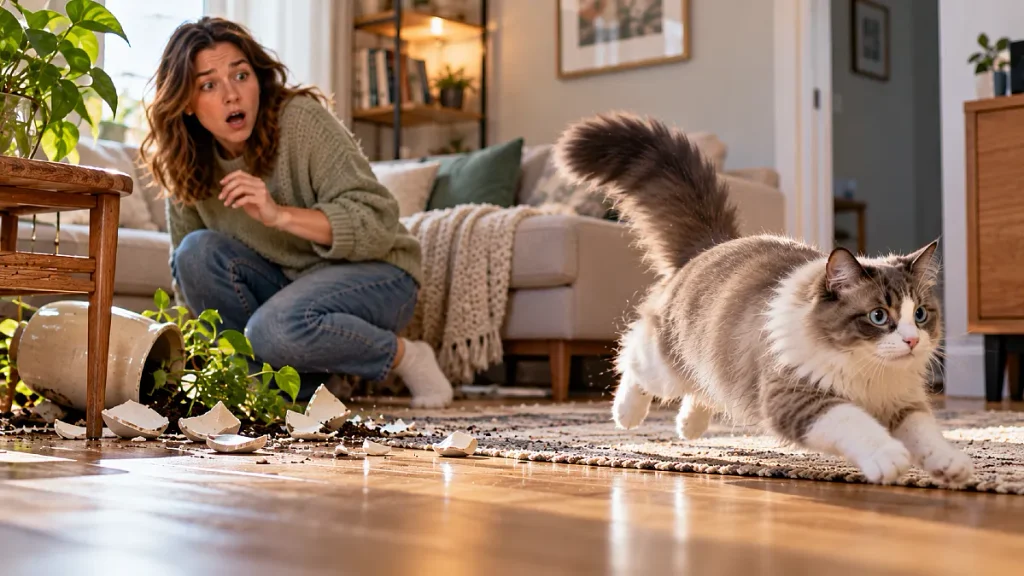
Not every burst of running means your cat is having fun. Sometimes, a cat suddenly races away because something has frightened them. A dropped pan, slamming door, or vacuum cleaner can trigger a quick escape.
Cats have sensitive hearing, and unexpected sounds can make them react immediately. Their natural response may be to reach a hiding place or move away from what they see as a threat.
This can look like ordinary zoomies from across the room. However, your cat’s body language may tell a different story.
A frightened cat may crouch low, flatten their ears, puff up their tail, or hide after running. A playful cat is more likely to return to normal activity without continuing to show signs of fear.
Cornell Feline Health Center identifies flattened ears, tense posture, and changes in tail position as useful signs of fear. Looking at the entire situation is more helpful than judging running speed alone.
If your cat bolts after a loud sound, give them space. Allow them to retreat somewhere quiet rather than chasing them or trying to pick them up.
Can Your Attention Trigger Your Cat’s Zoomies?
You might be surprised to learn how your own reactions can affect your cat’s behavior. Cats learn which actions lead to interesting results, including attention from their favorite people.
Suppose your cat races across the living room while you’re working. You immediately look up, call their name, and reach for a toy. Over time, your cat may learn that sudden activity sometimes brings attention.
That doesn’t mean all zoomies are planned attempts to interrupt you. But your response can influence what your cat chooses to do again.
Small changes in your daily habits may help reduce unwanted excitement. The following examples show where to begin.
How Your Habits May Affect Cat Zoomies
| Your Habit | Possible Effect | Better Approach |
|---|---|---|
| Little daily play | More unused energy | Plan regular play |
| Chasing your running cat | Encourages more excitement | Stay calm |
| Giving treats during wild running | May reward disruption | Reward calm behavior |
| Changing feeding times often | Creates uncertainty | Keep regular meals |
| Making sudden loud noises | May trigger fear | Provide quiet spaces |
The main lesson is to make healthy play predictable instead of rewarding disruptive running. You can still give your cat attention without teaching them that racing across the furniture is the best way to get it.
Try initiating play when your cat is calm and interested. Over time, a regular routine may help them find more suitable ways to interact with you.
Does Your Mood or Homecoming Make Your Cat Excited?
Have you noticed your cat suddenly racing around when you return home? Perhaps they hear your keys, follow you through the doorway, and begin sprinting between rooms. This can happen because your arrival is an exciting event in their daily routine.
Cats learn to recognize familiar sounds, movements, and patterns. The sound of your footsteps might signal that you’re home, while your movement toward the kitchen could mean food is coming.
Research from Oregon State University has also shown that cats can develop attachment bonds with their human caregivers. This helps explain why interactions with familiar people can be important parts of a cat’s day.
Your mood may play a smaller role too. Research published in Animal Cognition has found that some cats use information from their owners’ emotional reactions when responding to unfamiliar situations.
However, there is no firm evidence that your happiness or excitement directly causes cat zoomies. Your cat may be responding to changes in your voice, body movements, or usual routine instead.
If your cat gets excited when you come home, try greeting them calmly and offering a short play session. This gives them a positive way to interact with you without encouraging frantic running.
Why Changes to Your Routine Can Set Off Zoomies
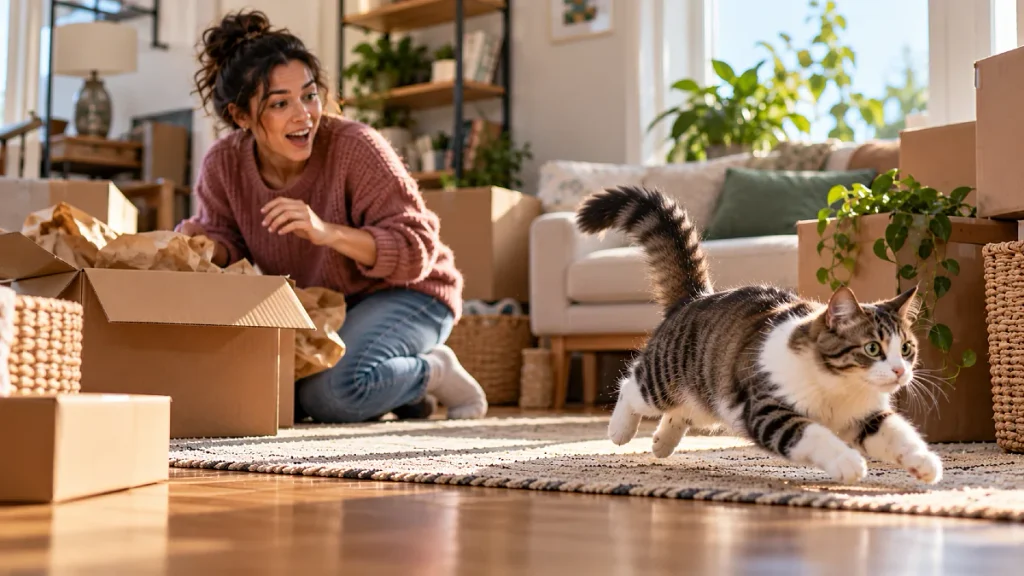
Cats often feel more comfortable when their surroundings and daily routines are predictable. Changes to feeding times, visitors, furniture, or household activity can sometimes increase their stress or excitement.
Your cat may react by hiding, becoming more vocal, moving around more often, or showing unusual bursts of activity. These behaviors can have different causes, so a zoomie episode alone doesn’t prove your cat is stressed.
For example, your cat may become excited when you prepare food later than usual. Another cat might race away after a visitor enters the room or after an unfamiliar pet approaches their favorite resting place.
It’s tempting to describe these moments as your cat protesting or getting revenge. But there is no good reason to assume that running around is a deliberate attempt to punish you.
Look for changes in behavior that happen alongside the running. Reduced appetite, hiding, tense posture, or avoiding familiar people can suggest that something is bothering your cat.
Try keeping regular feeding, play, and rest times whenever possible. If a major household change is necessary, provide quiet hiding places and let your cat adjust at their own pace.
How to Help Your Cat Burn Energy Before Bed
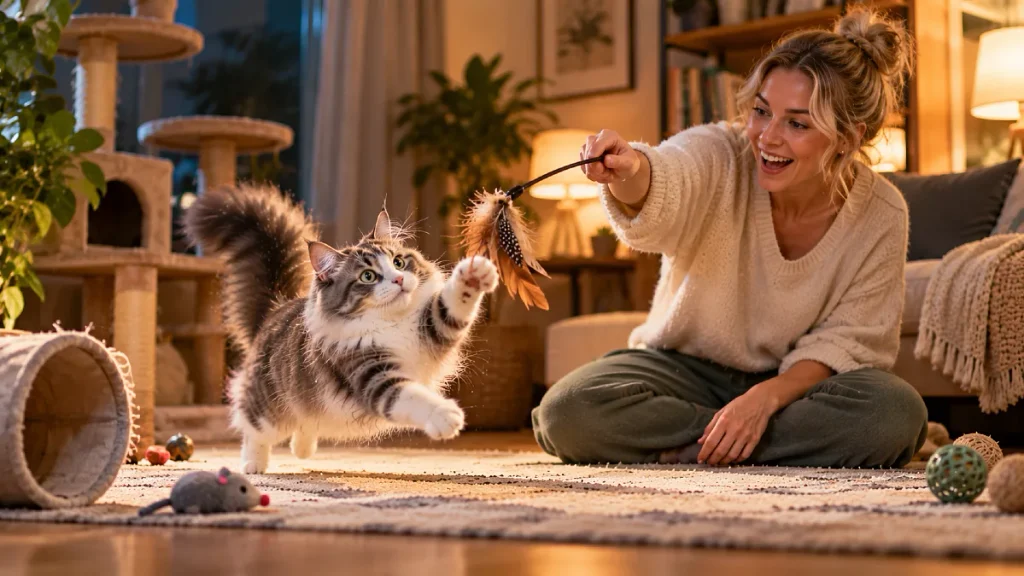
You don’t need to stop every zoomie episode. Healthy running and playful movement are normal parts of being a cat. The better goal is to help your cat use their energy safely throughout the day.
Many cats benefit from short play sessions that mimic hunting. You can encourage them to stalk, chase, catch, and then relax without turning your home into an obstacle course.
Here are some practical ways to help:
- Play in short sessions: Try about five minutes at a time, adjusted to your cat’s age, fitness, and interest.
- Use a wand toy: Move it like small prey, pausing occasionally so your cat can stalk and catch it.
- Add a puzzle feeder: Let your cat work for part of their normal food allowance.
- Create climbing opportunities: Stable cat trees and secure perches offer healthy movement.
- Rotate favorite toys: Switching toys can help keep play interesting.
- Keep an evening routine: Follow play with a calm period and a normal meal when suitable.
For interactive play, Go Cat Da Bird is one example of a feather wand designed for chasing and catching. The Catit Senses Food Tree and PetSafe SlimCat Interactive Feeder are examples of products that encourage cats to work for their food.
You don’t need expensive equipment to try these ideas. A sturdy cardboard box, suitable ball, or safe homemade puzzle can add variety to your cat’s day.
Always supervise play with strings, feathers, and toys that contain small parts. Put wand toys away afterward so your cat cannot become tangled or swallow anything.
If your cat becomes too excited during play, reduce the intensity instead of pushing them to continue. Older cats or cats with health problems may need gentler activities.
When Cat Zoomies Are a Sign to Call Your Vet
Most cat zoomies are harmless, especially when your cat returns to normal behavior afterward. But sudden changes in activity can sometimes be linked to pain, fear, or an underlying health condition.
VCA Animal Hospitals notes that unusual hyperactivity can occur in cats with hyperthyroidism. This condition is more common in older cats and may also cause weight loss, increased appetite, and restlessness.
The best way to spot a problem is to compare your cat’s current behavior with what is normal for them. A young cat who has always enjoyed evening sprints is different from an older cat who suddenly becomes unusually restless.
When Cat Zoomies Need More Attention
| Behavior | Possible Concern | What to Do |
|---|---|---|
| Brief playful sprints | Normal activity | Observe |
| Sudden major increase | Stress or illness | Book a vet visit |
| Running with crying or pain | Physical discomfort | Contact your vet promptly |
| New restlessness and weight loss | Possible medical problem | Arrange a vet exam |
| Straining with no urine | Urinary blockage | Emergency vet care |
These signs help you decide when your cat needs more than a change in playtime. They cannot replace a veterinary examination, especially when your cat appears unwell.
Watch for changes in appetite, drinking, grooming, litter box habits, and coordination. If your cat seems disoriented, has trouble breathing, collapses, or cannot urinate, seek emergency veterinary attention.
Recording an unusual episode can also help your veterinarian assess it. A short video and notes about when it happened may provide useful details that are difficult to explain later.