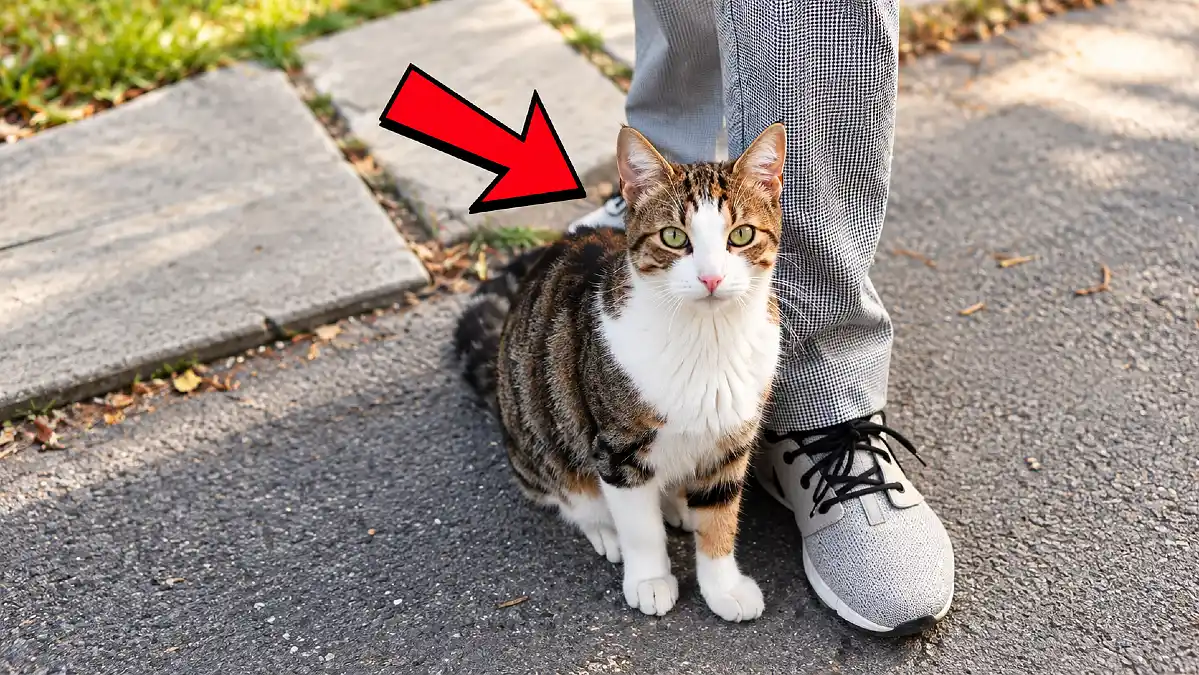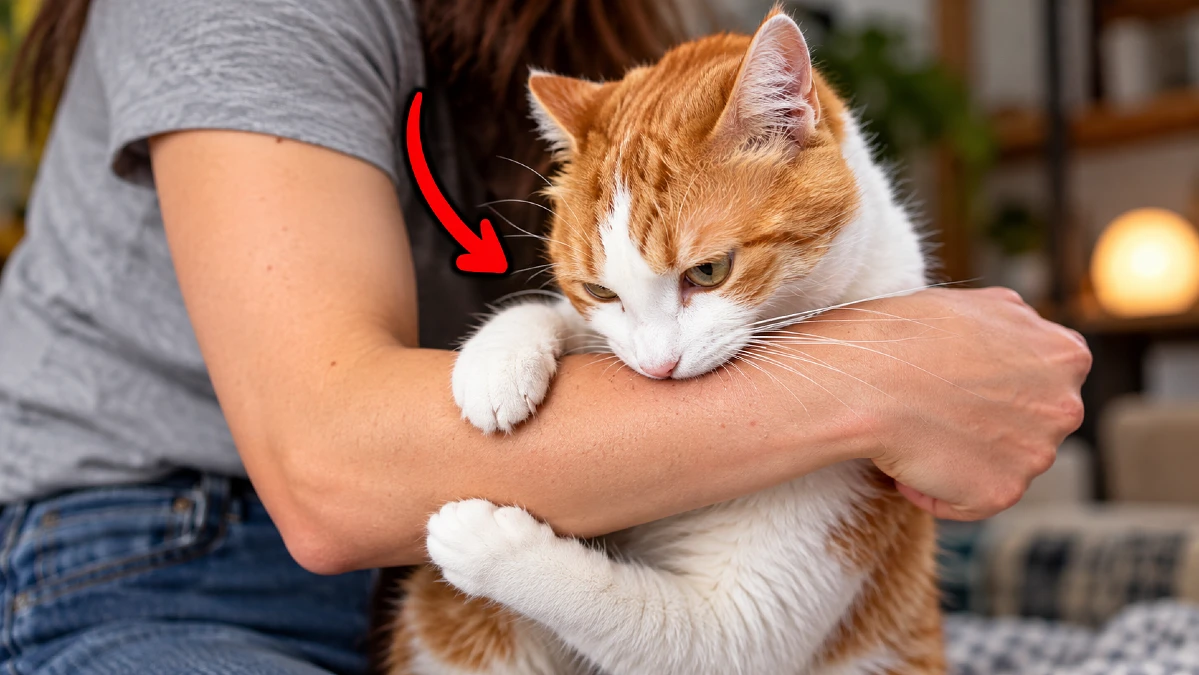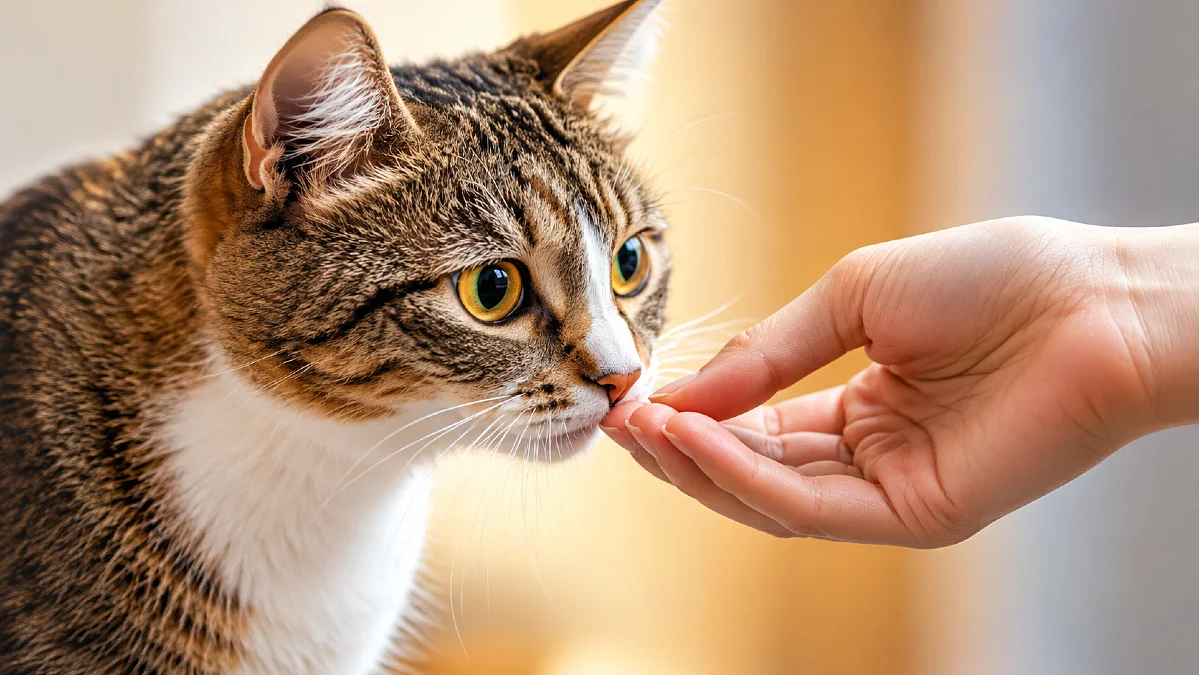
Your cat suddenly stops playing and stares at an empty corner. A few minutes later, your normally friendly kitty starts meowing, pacing around the house, or refusing to enter a room. You look around, but nothing seems wrong.
So what is your cat trying to tell you? Is something bothering them, or have they noticed something you cannot see, hear, or smell? These strange moments can leave even experienced cat owners wondering whether they should be worried.
Cats experience their surroundings differently from humans. Their sensitive ears, powerful sense of smell, and ability to see well in dim light help them notice small changes that often escape our attention. Sometimes those changes explain behavior that looks completely mysterious to us.
But there is a big difference between noticing something unusual and predicting danger. Learning to recognize cat warning signs can help you spot fear, illness, discomfort, and possible problems around your home.
Why Your Cat Acts Nervous Around Certain People

Have you ever introduced your cat to someone new, only to watch your usually affectionate pet disappear under the sofa? Perhaps your cat hisses at one visitor but happily approaches another person they have never met.
It is tempting to believe your kitty has discovered something bad about that person. However, cats cannot judge someone’s character or know their hidden intentions. They respond to what they experience through their senses.
Your Cat Notices Small Changes in Human Behavior
Cats are sensitive to sudden movements, unfamiliar voices, strong scents, and direct approaches. A visitor who walks quickly, speaks loudly, or reaches toward your cat may seem threatening even when they mean no harm.
Cats Protection explains that some cats remain cautious around unfamiliar people throughout their lives. Early experiences, personality, and past interactions can all affect how comfortable a cat feels around strangers.
Your cat’s body language offers better clues than the identity of the visitor. Look at their ears, tail, posture, and willingness to approach before deciding how to respond.
The following signs can help you recognize whether your cat feels comfortable or needs more personal space. Remember to look at several signals together because one movement rarely tells the full story.
| Cat’s behavior | Possible meaning | What you should do |
|---|---|---|
| Hiding under furniture | Feeling anxious | Leave them alone |
| Flattened ears and tense body | Fear or discomfort | Stop approaching |
| Upright tail and relaxed posture | Friendly or curious | Let them approach |
| Hissing or growling | Wants more space | Step away calmly |
A cat that hides from visitors is not necessarily warning you about a dangerous person. More often, they are communicating that the situation feels uncomfortable.
What to Do When Your Cat Dislikes Someone
Ask visitors to ignore your cat at first and allow them to approach voluntarily. Avoid picking up your kitty or forcing an introduction because this can increase fear.
If your cat consistently becomes frightened around one person, pay attention to how that person handles them. Respect your cat’s boundaries, supervise interactions, and make sure they always have a safe place to retreat.
Can Your Cat Tell When You Are Sick or Under Stress?
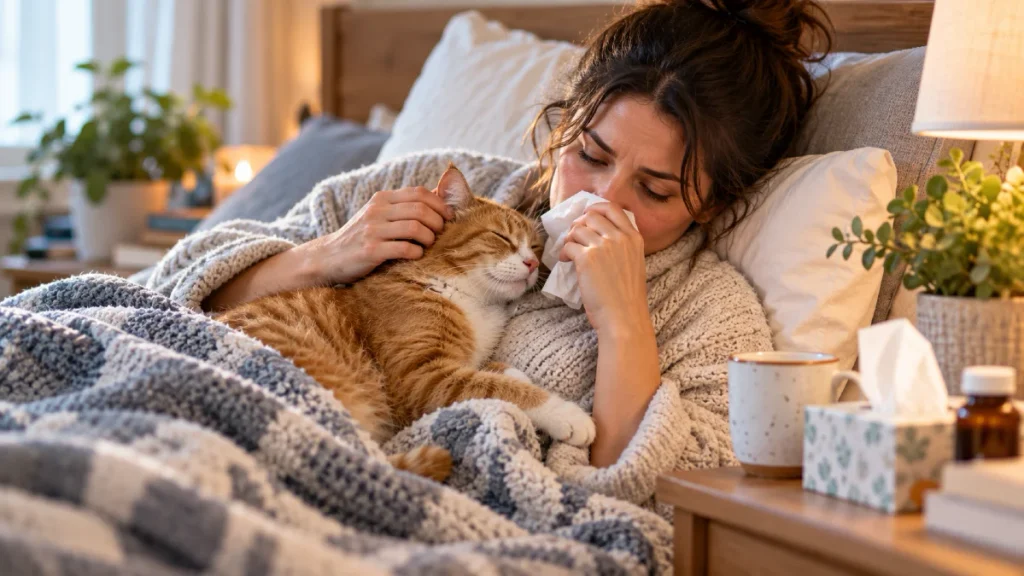
Your cat usually spends the afternoon sleeping alone, but today they refuse to leave your side. They follow you between rooms, curl up beside you, and seem unusually interested in everything you do.
Then you realize you are starting to feel sick. Could your cat have noticed something before you did?
Cats Can Notice Changes in Familiar Scents
VCA Animal Hospitals explains that cats have a highly developed sense of smell. They can detect certain odors that humans cannot notice, including subtle changes in their surroundings.
Illness can affect a person’s scent, movements, and daily routine. A cat may notice these differences, although there is no reliable evidence that ordinary pet cats can diagnose specific human diseases.
Your kitty might also react to simpler changes. If you spend more time in bed, move slowly, or stop following your normal schedule, your cat may become curious or seek extra attention.
Some cats become more affectionate when their owners feel unwell. Others become distant or behave exactly as they normally would.
The Reported Story of Rusty the Cat
In June 2011, a Pennsylvania woman named Claire Nelson credited her adopted cat, Rusty, with helping save her life.
According to a UPI news report, Nelson had been experiencing chest discomfort when Rusty began following her around, jumping up against her, and making unusual sounds. His persistent behavior helped persuade her to seek medical attention.
Doctors later found that Nelson was having a heart attack. Rusty’s behavior was remarkable, but nobody could establish exactly what he had detected.
The lesson is not to depend on your cat for a medical warning. If you experience chest discomfort, breathing difficulty, or other possible heart attack symptoms, seek emergency medical care immediately.
And if your cat becomes unusually clingy, remember that the change could also reflect their own needs. Look for changes in eating, grooming, activity, and litter box habits, and contact your veterinarian if their behavior remains unusual.
Why Your Cat May React Before a Storm Arrives
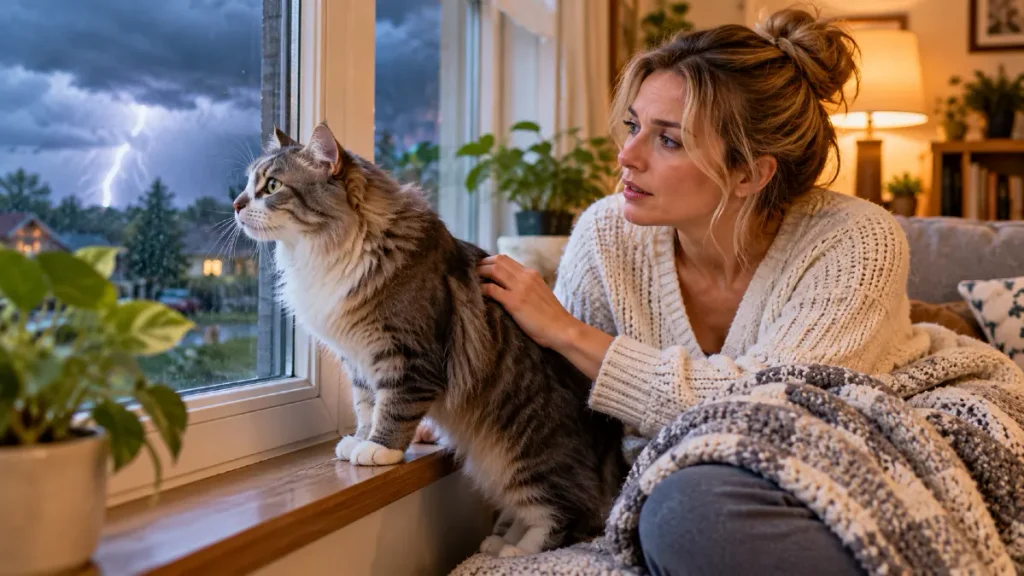
Your cat is resting peacefully beside a window when they suddenly get up and run into the bedroom. The sky still looks clear, but your kitty refuses to come back out.
An hour later, heavy rain and thunder begin outside. It might seem like your cat knew exactly what was coming.
Cats Can Detect Some Weather Changes
Cats have sensitive hearing and may notice distant storm sounds before humans do. Some may also respond to changes in atmospheric pressure that happen before or during bad weather.
Veterinarian Janelle Priestas, writing for PetMD, explains that cats with thunderstorm fears can react to thunder, lightning, rain, and changes in air pressure. Common responses include hiding, restlessness, increased vocalizing, and trembling.
But this does not mean every nervous cat is predicting a storm. Sudden noises, unfamiliar visitors, and other sources of stress can produce similar behavior.
How to Help Your Cat Feel Safe During Storms
If your cat becomes frightened by storms, try making one room feel more secure. Keep the space quiet and let your cat choose where to rest.
A covered cat bed, familiar blanket, and access to a favorite hiding place can help. Close curtains to reduce sudden flashes of lightning, and keep your cat indoors when dangerous weather is expected.
Avoid pulling your cat out of hiding to comfort them. Cats Protection recommends allowing frightened cats to retreat somewhere safe rather than forcing interaction.
Helpful tip: Watch for patterns across several storms. If your cat regularly becomes anxious during bad weather, ask your veterinarian about ways to manage that fear.
Your cat may be responding to weather changes, but official forecasts and weather alerts remain the reliable tools for planning your safety.
When Your Cat Keeps Returning to One Spot, Check for Danger
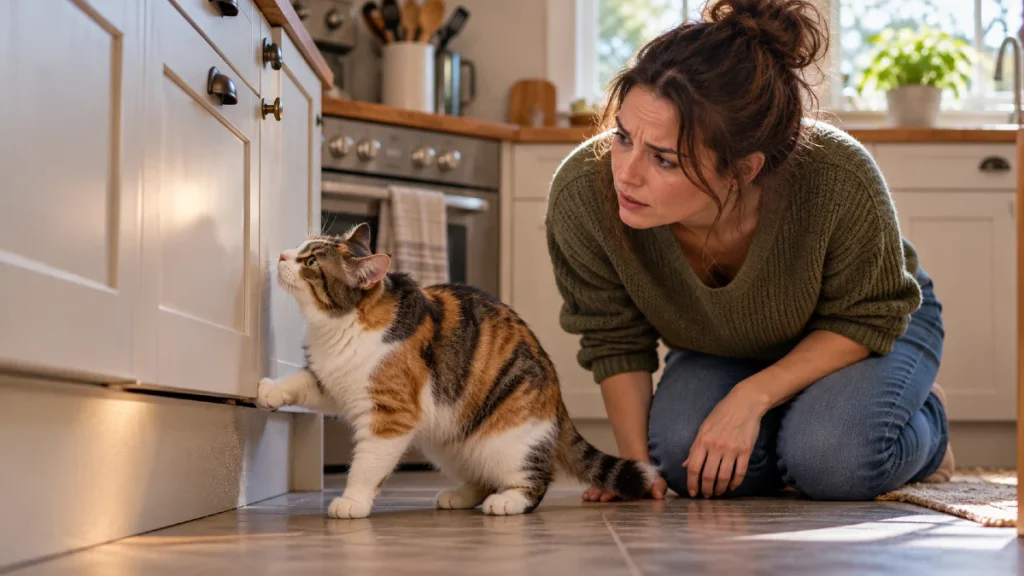
Your cat keeps walking to the kitchen cupboard, staring at it, and returning to you. Every time you look away, they head straight back to the same spot.
You have already checked the area once, but your kitty will not stop. Could they be trying to alert you to something important?
Sometimes there is a simple explanation. Your cat might hear an insect behind the cupboard, smell food, or notice movement you missed.
Still, repeated attention to one unusual location can be a good reason to check your surroundings, provided it is safe.
Why Cats Sometimes Notice Household Problems First
Cats can hear high frequency sounds that fall outside the normal range of human hearing. Cornell University’s College of Veterinary Medicine explains that their acute hearing helps them detect small animal movements and other sounds.
Their sense of smell is also stronger than ours in several important ways. This means a strange odor or faint noise might attract your cat before it catches your attention.
However, your cat is not a substitute for household safety equipment. An unusual reaction cannot reliably tell you whether gas, smoke, or another hazard is present.
Use this table to decide what to do when something else suggests a possible problem around the house. These warning signs matter whether your cat notices them or not.
| Warning sign | Possible concern | Safe response |
|---|---|---|
| Smell of natural gas | Gas leak | Leave and call for help outside |
| Carbon monoxide alarm | Possible toxic gas | Evacuate and call emergency services |
| Smoke or burning odor | Possible fire | Leave and contact emergency services |
| Cat focused on a closed room | Noise, movement, or someone inside | Check if safe |
The important difference is that real warning signs require action, while an attentive cat alone does not prove that danger exists. Never delay evacuation to investigate what your cat may have noticed.
Never Rely on Your Cat to Detect a Gas Leak
Natural gas is commonly given a distinctive warning odor so people can recognize leaks. If you suspect a leak, leave the area, avoid operating electrical switches or creating sparks, and contact the gas emergency service from a safe location.
Carbon monoxide is different because humans cannot smell or see it. The CDC warns that this gas can cause serious illness or death, making properly installed carbon monoxide alarms essential.
Can Cats Sense Earthquakes Before Humans?
A 2014 study in the journal Animals examined reports of unusual pet behavior before the 2011 earthquake in Japan. Researchers found that 115 of 703 surveyed cat owners reported unusual behavior in their pets.
However, these were reports collected after the disaster, and the findings do not establish a reliable way to predict earthquakes. The U.S. Geological Survey states that consistent animal behavior capable of forecasting earthquakes has not been demonstrated.
Cats may notice early shaking before humans recognize stronger movement. That is different from knowing that an earthquake will happen hours or days later.
Why Repeated Meowing Sometimes Means Someone Needs Help
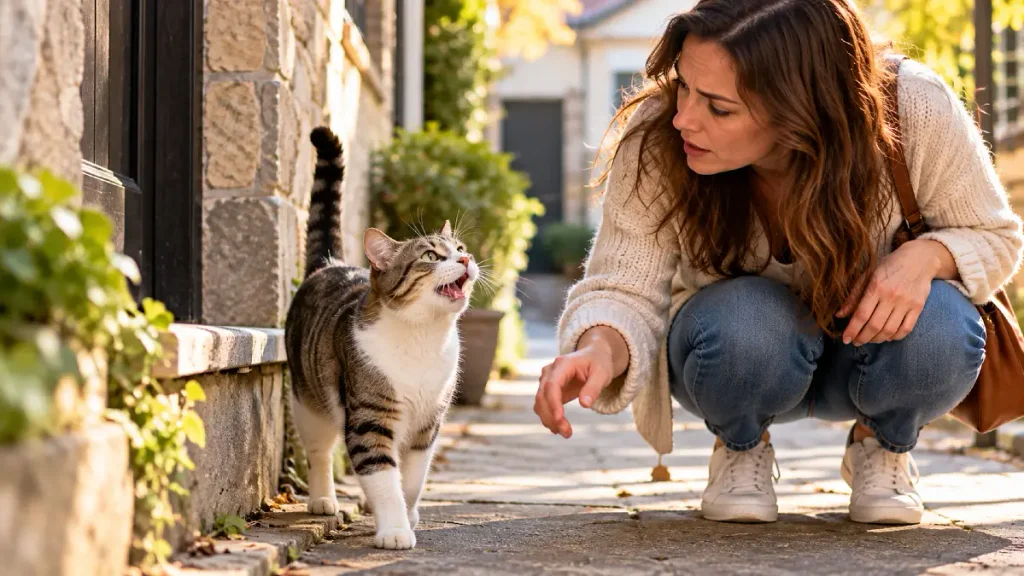
Cats can be very persistent when they want attention. Your kitty might sit beside the door and meow until you open it, or follow you around the house making sounds that seem more urgent than usual.
Most of the time, there is a simple reason behind this behavior. Your cat may want food, play, company, or access to another room.
But occasionally, persistent vocal behavior has brought attention to something unexpected.
The Remarkable Story of Masha the Cat
In January 2015, news reports described an unusual rescue involving a cat named Masha in Obninsk, Russia.
A baby boy had been abandoned near the entrance of an apartment building during freezing weather. Masha, a cat cared for by local residents, was found beside the infant after apparently helping keep him warm.
Residents heard cries and discovered the child, who was taken to a hospital. According to reports carried by Agence France Presse and The Moscow Times, the baby was found to be in good health.
Masha became famous for her role in the discovery. However, it is impossible to know whether she was deliberately seeking human help or responding naturally to the infant and the situation.
What Persistent Meowing Usually Means
Cats Protection explains that domestic cats often use meowing to communicate with people. Over time, many learn which sounds get a response from their owners.
If your cat suddenly starts meowing repeatedly, check the basics before assuming something dramatic has happened.
- Make sure food and fresh water are available.
- Check whether your cat can access their usual rooms.
- Look for anything unusual around their favorite resting areas.
- Notice whether the meowing happens during movement or litter box use.
- Watch for changes in appetite, sleep, and normal activity.
Pay special attention to a cat that cries while trying to urinate. The American Veterinary Medical Association warns that urinary blockage is a medical emergency, particularly in male cats.
Sudden excessive meowing can also be linked to pain, stress, or illness. If the behavior is new or comes with other symptoms, contact your veterinarian rather than assuming your cat simply wants attention.
What Your Cat Sees When It Stares at Nothing

You are relaxing in the living room when your cat suddenly freezes. Their eyes widen, their ears point forward, and they begin staring at an empty corner of the ceiling.
You follow their gaze, but there is absolutely nothing there. Then your cat starts tracking something with their head, even though you still cannot see anything moving.
It is easy to understand why people have spent centuries wondering whether cats can see ghosts. Their mysterious staring can make an ordinary room feel strangely unsettling.
But science offers much more practical explanations.
Your Cat Can Detect Things You Might Miss
VCA Animal Hospitals explains that cats have strong vision in dim light and excellent sensitivity to many high frequency sounds. These abilities can help them notice tiny insects, small movements, and sounds behind walls.
Research published in Proceedings of the Royal Society B in 2014 also found that cats’ eye lenses transmit significant amounts of ultraviolet light. This suggests cats may have some sensitivity to wavelengths that humans cannot see.
However, the study did not establish exactly how cats experience ultraviolet light in everyday life. It also provides no evidence that cats can see supernatural beings.
A cat staring at an apparently empty wall may simply be watching a tiny spider or listening to something behind it.
The following examples can help you decide whether your cat is responding to an ordinary part of their surroundings. Look for matching clues before becoming concerned.
| What you notice | Possible explanation | What to check |
|---|---|---|
| Eyes tracking a small spot | Tiny insect or movement | Wall and ceiling |
| Ears turning toward a wall | Faint sound | Pipes or nearby rooms |
| Watching changing light | Reflections or shadows | Windows and lamps |
| Staring with confusion or unusual movements | Possible health problem | Contact your vet |
Most brief staring episodes are harmless, especially when your cat remains alert and behaves normally afterward. A sudden change accompanied by confusion, poor balance, or unusual movements deserves veterinary attention.
When Staring Becomes a Warning Sign
An occasional fixed gaze is usually part of normal cat behavior. But a cat that suddenly seems confused, fails to respond normally, or has repeated unusual episodes may need medical care.
Try recording the behavior if it is safe to do so. A short video can help your veterinarian assess what happened, especially if your cat acts normally during the appointment.
What to remember: Your cat may notice something you cannot detect, but that does not mean something frightening is hiding in your home.
Can Your Cat Notice Pregnancy Before You Do?
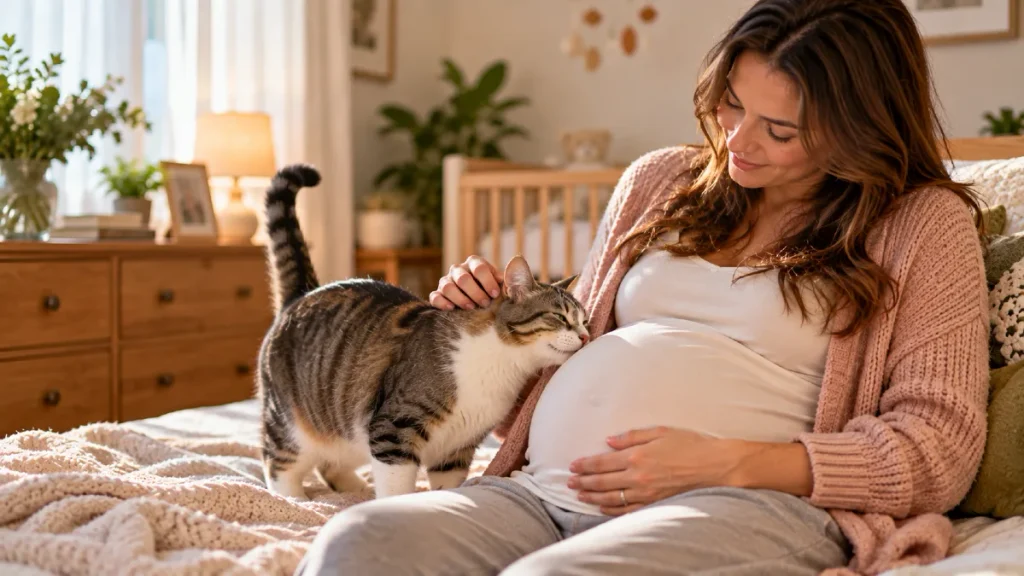
Some cat owners notice an unexpected change in their pet during pregnancy. A cat that usually sleeps at the foot of the bed may suddenly want to rest beside their owner’s stomach.
Other cats become more interested in following their owners around the house. This can lead people to wonder whether their kitty knows about a pregnancy before anyone else does.
Why Pregnancy May Change Your Cat’s Behavior
Cats Protection explains that pregnancy can change a person’s natural body odor because of hormonal changes. Cats may notice these scent differences, along with changes in routine and behavior.
Your cat may also notice that you are resting more, moving differently, or spending extra time at home. Some cats respond with increased affection, while others become cautious or withdrawn.
A warm, comfortable place to sleep can also attract a cat. If your kitty suddenly prefers curling up near your stomach, warmth and closeness may be part of the reason.
However, a cat becoming more affectionate is not a reliable sign of pregnancy. The same behavior can happen for many unrelated reasons.
If you think you might be pregnant, use a pregnancy test rather than relying on your pet’s behavior. The NHS explains that home pregnancy tests are most reliable from the first day of a missed period.
How to Help Your Cat Adjust to Pregnancy
Pregnancy can bring new furniture, different routines, unfamiliar sounds, and changes in the household. Cats often feel more comfortable when their daily schedule stays predictable.
Keep feeding and playtimes consistent whenever possible. Provide familiar resting places and introduce changes gradually, especially when preparing a nursery or rearranging rooms.
Cats Protection recommends giving cats time to adjust before a baby arrives. Avoid suddenly removing access to favorite spaces without providing comfortable alternatives.
The CDC also recommends that pregnant people have someone else change the cat litter when possible. If that is not possible, wear disposable gloves, clean the litter box daily, and wash your hands thoroughly afterward.
There is usually no reason to stop enjoying ordinary affection from your healthy pet during pregnancy. Good hygiene, routine veterinary care, and a calm home can help protect both you and your cat.