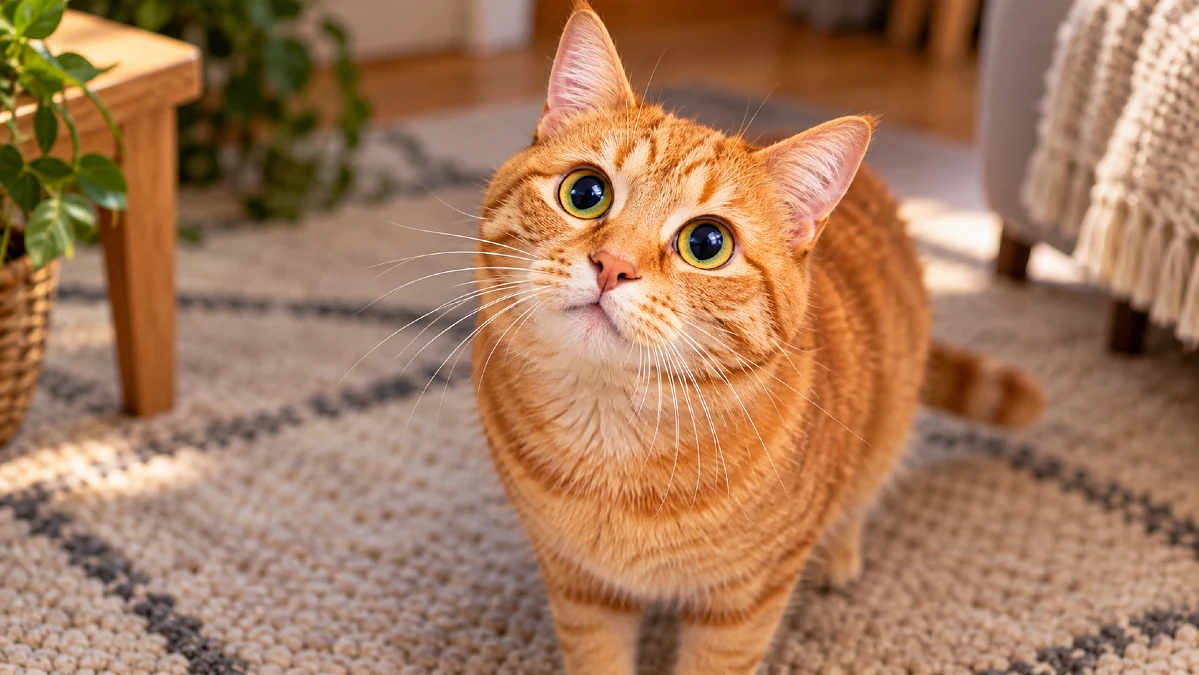
Your cat knocks your favorite mug off the table. You raise your voice, and suddenly, your normally affectionate little companion starts acting strange. They turn away, avoid your eyes, or quietly sit across the room as though nothing happened.
You might wonder whether your cat feels guilty or simply does not care. Sometimes, they return a few minutes later, rubbing against your legs or blinking slowly. It almost feels like your cat is apologizing, but is that really what is happening?
Cats communicate very differently from humans. They cannot explain their feelings with words, but their eyes, tails, sounds, and body movements can reveal whether they feel safe, worried, or ready for friendly contact.
And here is what makes this interesting. Some behaviors that look like an apology are actually signs of trust or efforts to avoid conflict. Others may mean your cat feels stressed and needs space.
Do Cats Really Apologize After Doing Something Wrong?
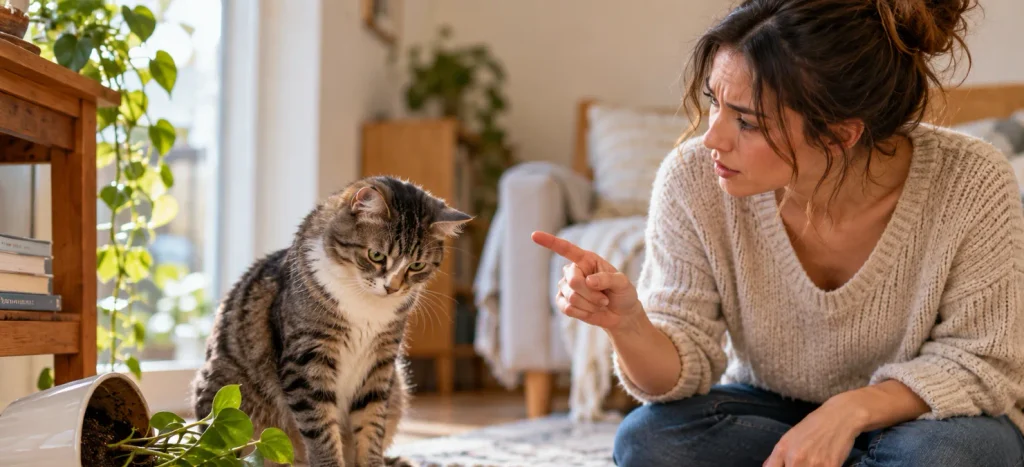
Your cat does something that upsets you, and later they curl up beside you. The timing makes it seem as though they know they behaved badly and want forgiveness. But feline emotions do not work exactly like human emotions.
Veterinarian Dr. Sandra C. Mitchell explained in a 2024 PetMD article that cats do not appear to experience guilt and remorse in the same way people do. Scratching furniture, chasing objects, and exploring countertops are normal cat behaviors, even when humans find them frustrating.
That does not mean your cat has no feelings for you. Research by Kristyn Vitale and colleagues at Oregon State University, published in Current Biology in 2019, found evidence that cats can form attachment bonds with human caregivers.
Your cat may recognize familiar interactions, respond to your behavior, and seek comfort from your presence. However, researchers have not established that cats apologize because they feel guilty about breaking human rules.
What looks like an apology may actually be your cat seeking friendly contact or responding to tension. That distinction matters because your reaction can either help your cat feel safe or make them more nervous.
Instead of waiting for your cat to act sorry, pay attention to what their body is telling you. Their next movement may reveal whether they want attention, need space, or feel comfortable being near you again.
Why Your Cat Looks Away When You Are Upset
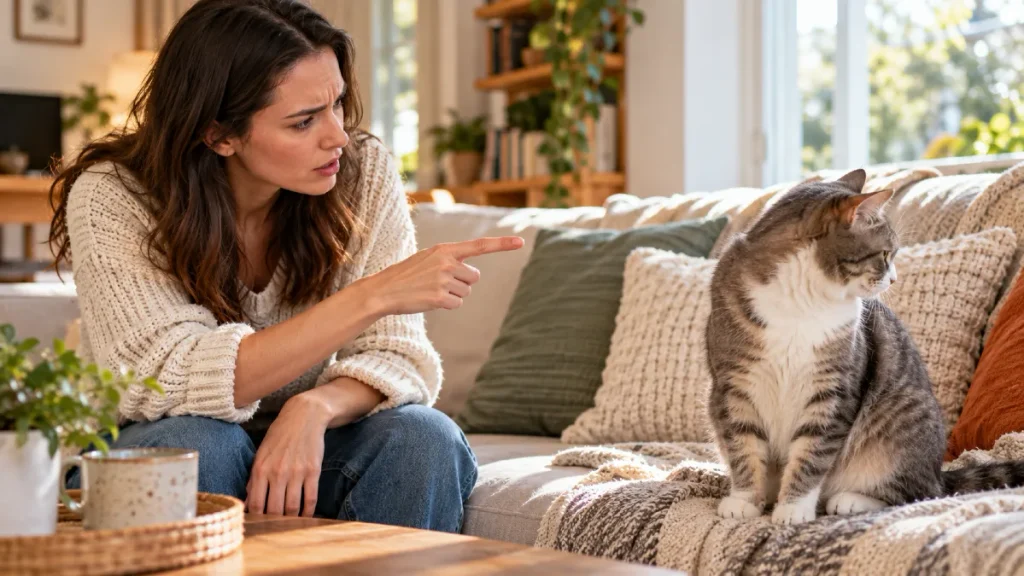
You scold your cat for knocking something over, and they immediately look away. Sometimes, they turn their entire body around and begin cleaning their fur. It can feel like they are deliberately ignoring you.
But looking away does not automatically mean disrespect. Cats sometimes avoid direct eye contact during stressful interactions, especially when they feel threatened or uncertain.
Cats Protection explains that fixed staring can feel threatening to cats. Turning the head away may help avoid a direct confrontation, although it can also happen during ordinary, relaxed behavior.
Grooming can be confusing, too. A relaxed cat may clean its fur because it feels comfortable, while another cat may groom during an uncomfortable moment. The surrounding behavior helps you tell the difference.
Reading Your Cat’s Body Language
A single movement rarely tells you everything about your cat’s emotional state. Look at the ears, eyes, muscles, and tail together before deciding how to respond.
| Behavior | Possible Meaning | Best Response |
|---|---|---|
| Looking away | Avoiding direct contact | Reduce pressure |
| Low crouching | Fear or uncertainty | Give space |
| Relaxed grooming | Normal comfort behavior | Leave undisturbed |
| Frozen posture | Possible fear | Stop approaching |
| Soft, half closed eyes | Relaxation | Stay calm |
The key difference is whether your cat’s body looks loose or tense. A cat sitting comfortably with relaxed ears is giving a different message from one crouching with wide eyes and flattened ears.
If your cat looks away after you raise your voice, lower the tension rather than demanding attention. A quiet room and the freedom to move away can help them settle.
What Staying Close Without Cuddling Says About Your Bond

Have you noticed that your cat sometimes stays in the room after a tense moment but refuses to approach you? They might sit at the far end of the couch or settle in a nearby doorway.
You may expect a loving cat to climb into your lap immediately. However, cats have different preferences for physical contact, and some enjoy being close without being touched.
Research on feline attachment supports the idea that people can become important sources of security for cats. Staying near you may reflect that familiar bond, although it does not prove your cat is trying to repair an argument.
Choosing to share your space can be meaningful even without physical contact. A relaxed cat who follows you into another room may simply enjoy your company.
Watch what happens when you stop trying to interact. If your cat settles comfortably, stretches, or rests nearby, that is a positive sign.
Try sitting quietly and allowing your cat to decide whether to approach. For a cat who values personal space, that freedom can make social time more enjoyable.
How Your Cat’s Slow Blink Shows Trust
One of the most recognizable signs of friendly cat communication is the slow blink. Your cat looks in your direction, gently narrows their eyes, and slowly closes them before opening them again.
It might look like your cat is sleepy, but slow blinking can also be part of positive social communication. Unlike a fixed stare, this gentle expression is commonly seen during comfortable interactions.
Researchers at the University of Sussex examined this behavior in a study published in Scientific Reports in 2020. They found that cats were more likely to narrow their eyes when their owners slowly blinked at them.
In another experiment, cats were more willing to approach an unfamiliar researcher after a slow blinking interaction than after a neutral facial expression. The findings suggest that slow blinking can help communicate friendly intentions.
However, the study did not establish that slow blinking reduces cortisol or acts as a biological reset. It also did not prove that cats use slow blinking specifically to apologize.
How to Return Your Cat’s Slow Blink
You can try this simple interaction when your cat looks relaxed and comfortable. There is no need to force eye contact or move closer.
- Sit at a comfortable distance.
- Look gently in your cat’s direction.
- Slowly narrow your eyes and close them briefly.
- Open your eyes and relax your gaze.
- Allow your cat to respond or look away.
Your cat may return the blink, approach you, or simply continue resting. All of those reactions are fine, and the interaction should remain voluntary.
If your cat slowly blinks after a stressful moment, you can respond gently without assuming they feel guilty. You are offering friendly communication rather than asking them to make up for something.
Why an Upright Tail and Gentle Head Rub Matter
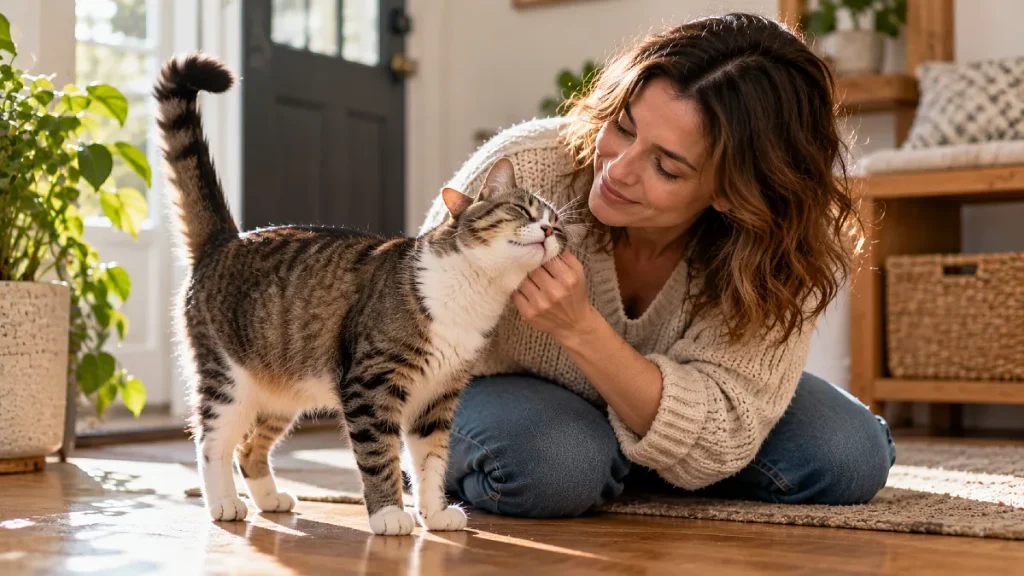
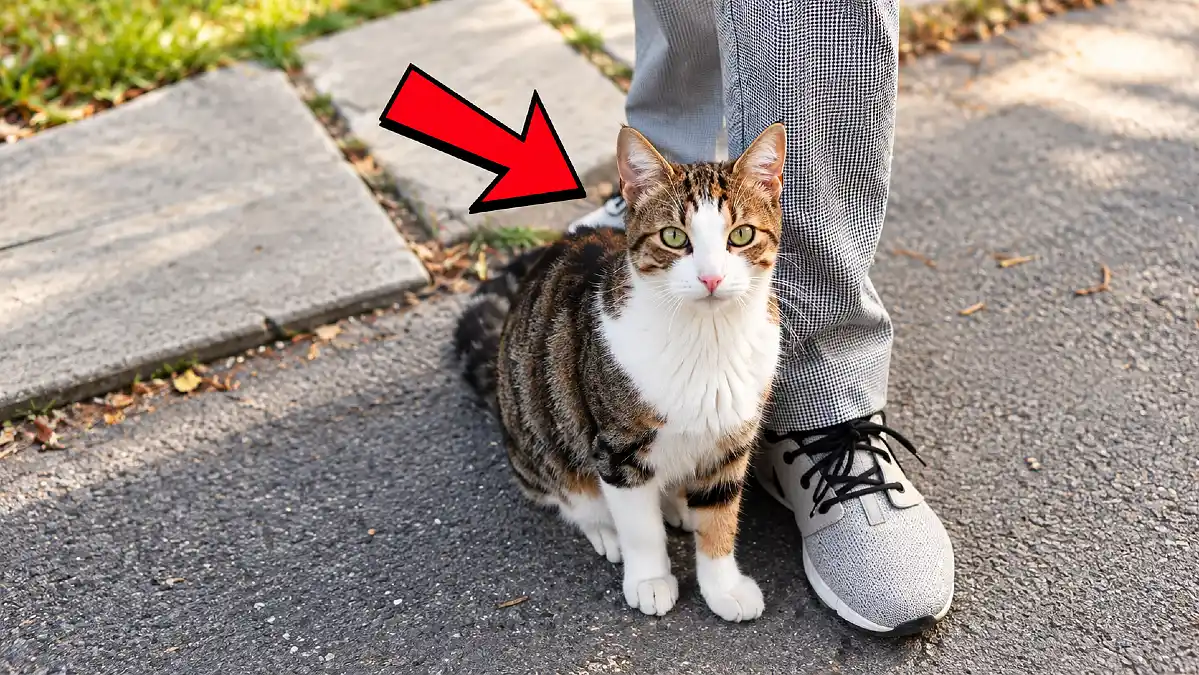
Your cat walks into the room with their tail held high and the tip slightly curved. They approach your legs, brush against you, and continue walking as though they are checking in.
That posture can be an encouraging sign. The RSPCA describes an upright tail, sometimes curved at the tip, as part of friendly and relaxed cat body language.
The curved tip is often compared to a question mark, which makes it easy to remember. However, it has not been shown to be a literal request for forgiveness or permission to approach.
A tail held high during a relaxed approach generally suggests friendly intent. A stiff body, twitching tail, or flattened ears could change the meaning of the interaction.
Head rubbing offers another clue about your cat’s social behavior. Cats have scent glands around their cheeks and face, which they use when rubbing against objects, other cats, and people.
The MSD Veterinary Manual describes scent communication as an important part of feline social behavior. Rubbing helps cats deposit familiar scent information in their surroundings.
Some people believe cats rub against humans after an argument to erase the smell of anger. There is no good evidence that this specific process happens, but rubbing can still be a friendly and familiar interaction.
If your cat gently rubs against you, let them decide how much contact they want. Offer your hand near their cheek and watch whether they lean into it before petting them.
What Purring and Soft Meows Really Mean After Tension
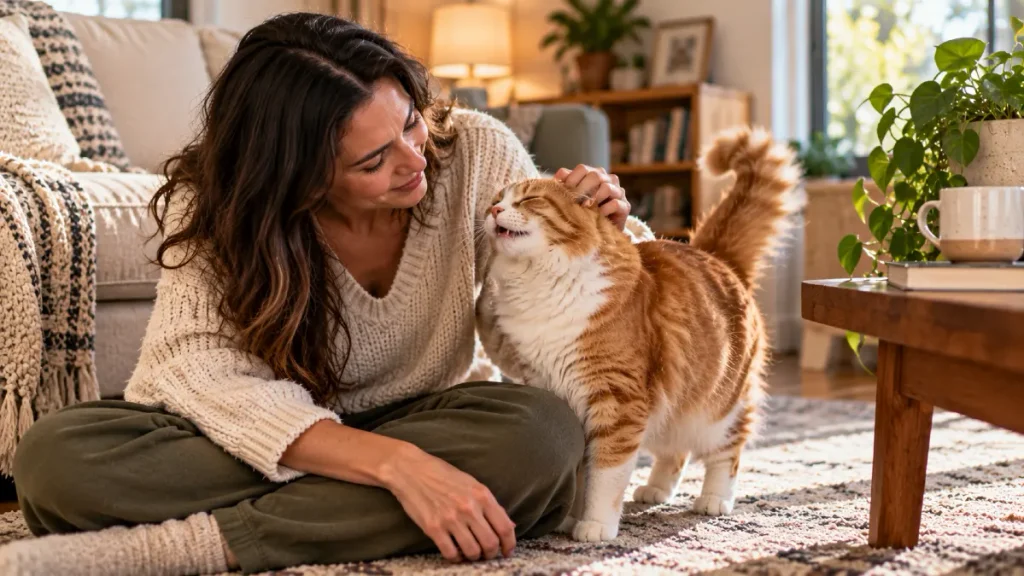
Your cat returns after a difficult moment and begins purring beside you. The sound feels comforting, and you may assume they are trying to make everything better.
Sometimes, purring does happen during pleasant social contact. Cats may purr when resting comfortably, receiving gentle attention, or spending time with familiar people.
But purring is not a perfect happiness signal. Cats Protection and PDSA both explain that cats can also purr when worried, uncomfortable, or experiencing pain.
That is why your cat’s posture matters more than the sound alone. A loose body and relaxed expression suggest something different from a hunched cat hiding under furniture while purring.
Soft meows can also have several meanings. Your cat might be seeking attention, asking for food, or responding to your presence, depending on their usual habits.
What Your Cat’s Sounds May Mean
Listen to the sound, but also notice what your cat is doing at the same time. A change from their normal behavior is often more useful than the noise itself.
| Sound or Situation | What to Check | Your Response |
|---|---|---|
| Purring while relaxed | Loose body, soft eyes | Enjoy quiet contact |
| Purring while hiding | Tension, discomfort | Monitor closely |
| Soft meowing | Attention or needs | Check food and comfort |
| Repeated yowling | Distress or pain | Seek veterinary advice |
These sounds do not have one fixed meaning in every cat. Your cat’s usual behavior, health, and surroundings provide important clues.
If your cat suddenly starts making unusual sounds after an upsetting event, check for signs of injury or discomfort. Do not assume they are asking for forgiveness when they might need help.
Why Your Cat Climbs Into Your Lap After a Difficult Moment
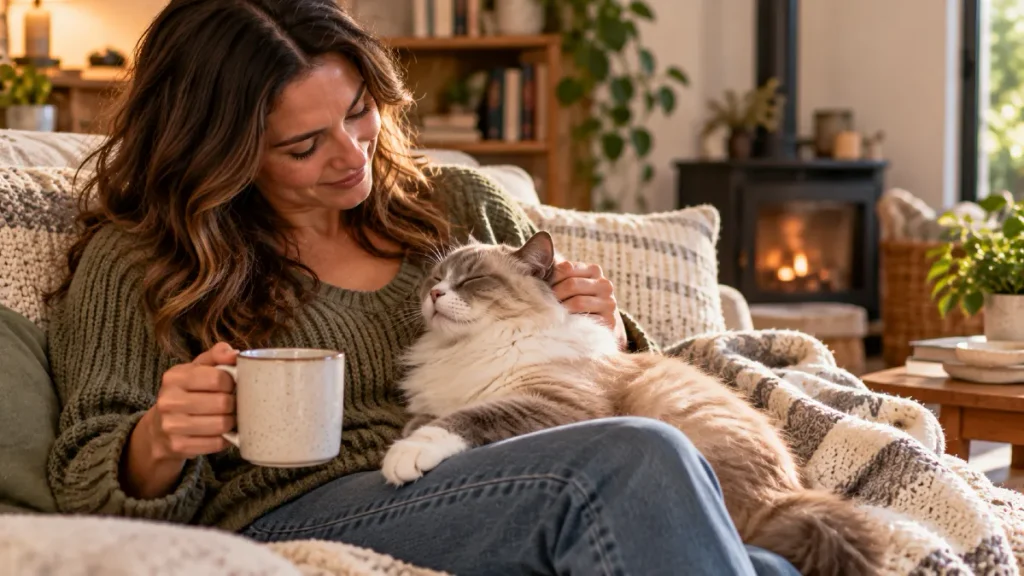
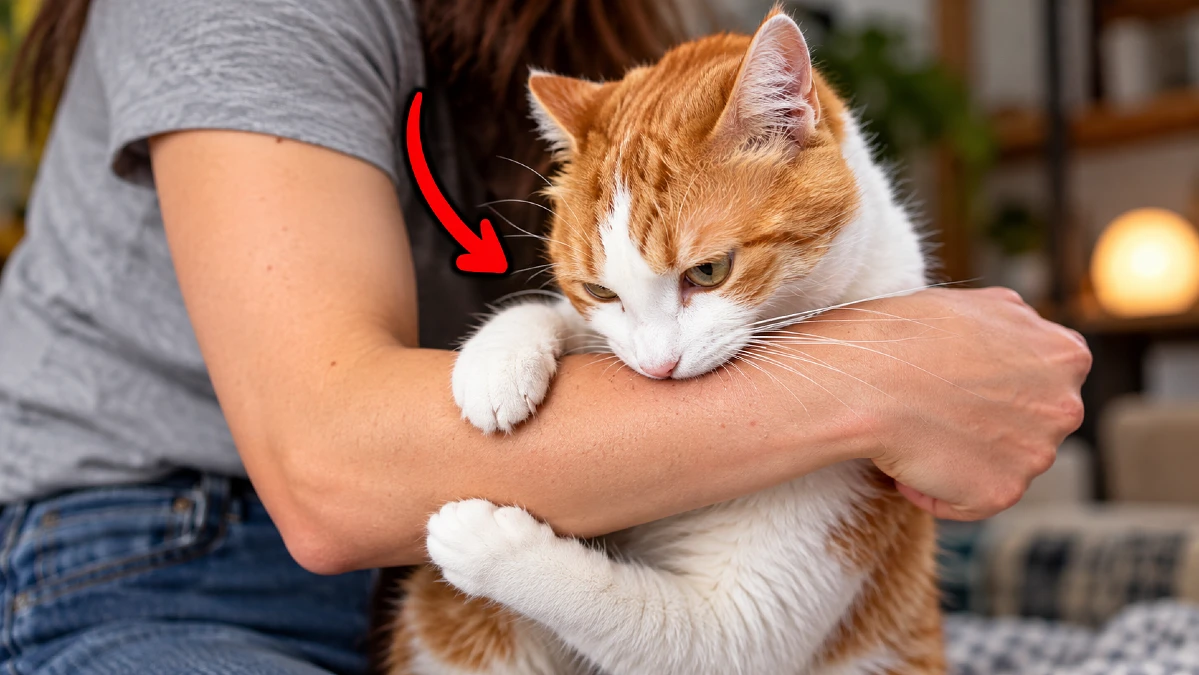
Sometimes, a cat who seemed distant a few minutes earlier suddenly climbs into your lap. They settle against your stomach, rest their paws on you, or curl into a warm ball.
It can feel like a heartfelt apology, especially when the moment follows an argument. But there are several simple reasons your cat might choose physical contact.
Your lap is warm, familiar, and often comfortable. Your cat may also enjoy resting beside someone they trust, particularly when the house has become quiet again.
Cats vary greatly in how much contact they enjoy. Some seek frequent cuddles, while others prefer brief touches before returning to their favorite resting spot.
The feline environmental needs guidelines developed by the American Association of Feline Practitioners and International Society of Feline Medicine encourage positive social contact that cats can control. Allowing a cat to start and end interactions helps respect those preferences.
There is no established evidence that cats intentionally climb onto people to perform deep pressure therapy or repair human emotions. Their presence can still feel comforting without that explanation.
If your cat settles on your lap, let them relax. Avoid holding them in place when they are ready to leave, because freedom of movement helps keep the experience pleasant.
Does Bringing You a Favorite Toy Mean Your Cat Wants Peace?
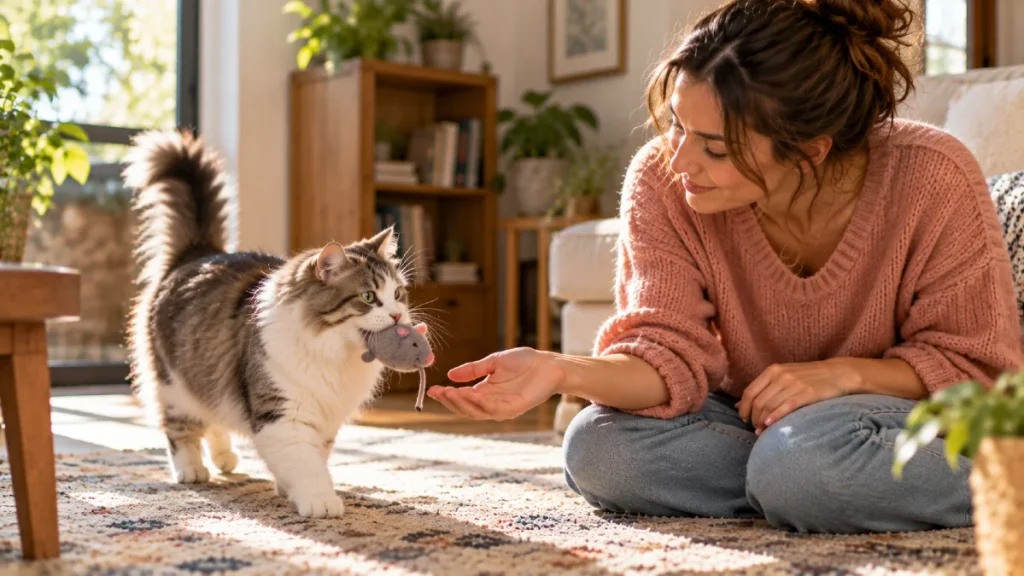
Your cat walks into the living room carrying a favorite stuffed mouse. They drop it beside your feet, look at you, and wait.
You might wonder whether that little toy is a peace offering. After all, your cat brought something they enjoy and placed it directly in front of you.
The behavior is interesting, but it is more closely connected to play than to a proven apology ritual. Cats often carry, chase, and move toys as part of their natural hunting behavior.
A study published in 2024 on fetching behavior in domestic cats found that some cats initiate interactive play by bringing toys to their owners. In the surveyed cats, 39.3 percent were reported to do this at least sometimes.
That finding gives a practical explanation for the toy at your feet. Your cat may be inviting you to interact rather than offering something to make up for an earlier event.
A play invitation can still be a positive social moment. It shows your cat may be interested in spending time with you, even if the behavior has nothing to do with guilt.
If your cat brings a toy, try moving it gently across the floor or offering a short play session. Let them chase and catch it instead of turning the moment into another lesson about bad behavior.
A fishing wand toy or soft plush mouse can work well for this activity. The goal is to offer a healthy outlet for natural behavior while keeping your interaction enjoyable.
Why Gentle Licking Can Be a Sign of Social Connection
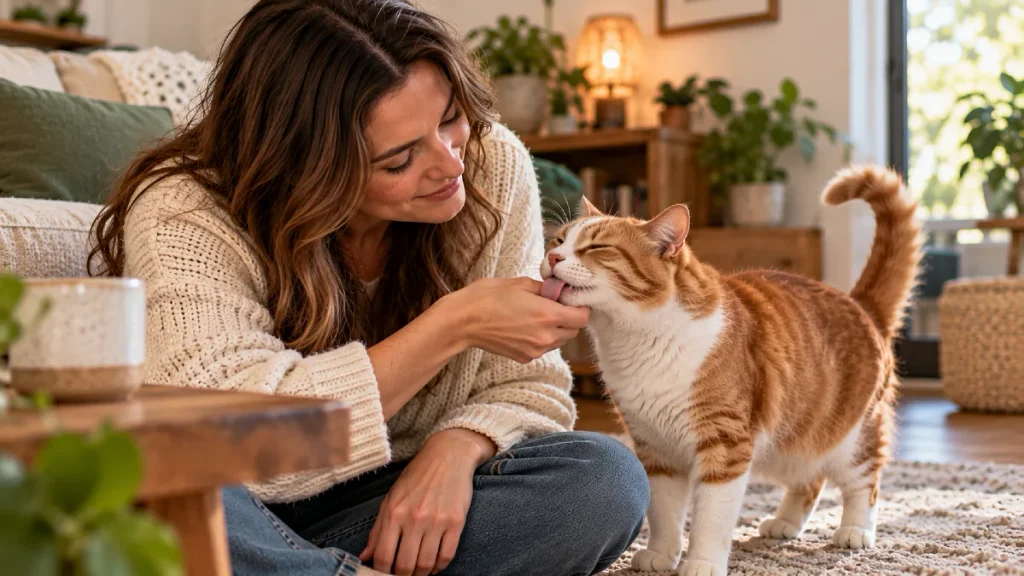
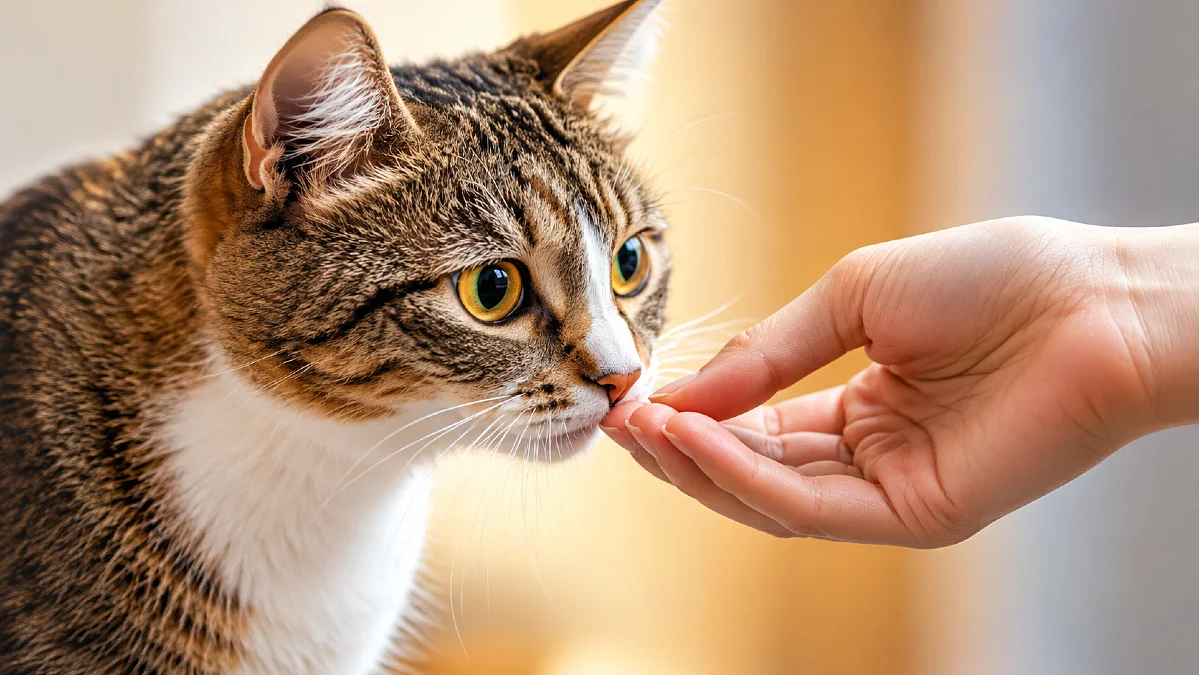
Your cat begins licking your hand while sitting beside you. Maybe they gently lick your arm or attempt to groom your hair.
It feels like an affectionate gesture, especially when your cat has recently been nervous or distant. Social grooming is an important part of feline behavior, although the meaning depends on the situation.
When cats groom one another, researchers call the behavior allogrooming. It often involves licking another cat’s head, face, or neck.
A study published in Applied Animal Behaviour Science in August 2026 examined grooming interactions between domestic cats. Researchers found that grooming can occur during friendly social contact as well as situations involving social tension.
This matters because grooming is not always a simple sign of affection. The cats’ body positions, ear movements, and willingness to stay close helped distinguish the different situations.
The study examined grooming between cats, not apologies from cats to their human owners. Therefore, it would be inaccurate to claim that licking your hand proves your cat is trying to make peace.
Still, gentle licking during a relaxed interaction can be part of friendly social behavior. If your cat looks comfortable and chooses to remain close, you can enjoy the moment without assigning it a human meaning.
If you dislike being licked, calmly move your hand and offer another form of interaction. Avoid punishing your cat for the behavior, and never encourage licking near open wounds.
How to Make Peace With Your Cat Without Scolding
You cannot teach your cat to apologize, but you can help them feel safe after a stressful moment. Your response matters because cats learn from repeated experiences with their environment and the people around them.
VCA Animal Hospitals advises against scolding pets after unwanted behavior. Punishment can cause fear and may fail to teach the animal what you actually want them to do.
For example, if your cat scratches the couch, shouting may make them afraid of your reaction. Providing an appealing scratching post near the couch offers a better way to direct that natural behavior.
The same principle applies when your cat knocks objects off a shelf. Remove fragile objects, offer interesting toys, and provide safe places where your cat can explore.
How to Respond After a Tense Moment
Different situations call for different responses, and trying to force affection can make things worse. Use this simple guide to choose a calmer approach.
| Situation | Avoid This | Better Choice |
|---|---|---|
| Cat breaks an object | Yelling | Clear the hazard calmly |
| Cat scratches furniture | Physical punishment | Provide a scratching post |
| Cat hides after fear | Pulling them out | Offer a quiet hiding space |
| Cat approaches you | Grabbing them | Let them initiate contact |
| Cat exposes belly | Forced belly rubs | Respect their space |
| Cat avoids litter box | Scolding | Check health and box setup |
The goal is to address the cause of the behavior rather than punish the cat afterward. Small changes to the home can prevent many common problems before they become stressful.
A quiet hiding spot, a sturdy scratching surface, and opportunities for daily play can all support normal feline behavior. Consistent routines can also make your cat’s surroundings feel more predictable.
Let Your Cat Decide When to Come Back
After a frightening moment, avoid following your cat around the house or repeatedly trying to pick them up. Give them access to a safe place and allow them to return when they feel comfortable.
You can sit nearby, speak gently, or offer a favorite toy without demanding a response. If your cat approaches with relaxed body language, reward that choice with the kind of attention they enjoy.
Know When the Behavior Could Mean Something More Serious
Not every change in cat behavior is about your relationship. Sudden hiding, unusual aggression, changes in eating, or avoiding the litter box can sometimes indicate pain, illness, or stress.
If your cat acts differently for no clear reason, contact your veterinarian. A cat who strains to urinate, especially with little or no urine produced, needs urgent veterinary attention.
Watching for these warning signs is more important than deciding whether your cat feels sorry. Helping them feel physically comfortable and emotionally safe is what matters most.