Are there signs your cat is protecting you, or is your pet simply being curious? You may have caught your cat staring at the front door, following you into the bathroom, or walking through the hallway when everyone else is asleep.
These moments can make it seem like a tiny security guard is on duty. But cat protective behavior is not always what it appears to be. Cats pay close attention to their surroundings because familiar places help them feel safe.
They also have strong hunting instincts and can form close bonds with their favorite people. Sometimes, a cat’s behavior may look protective when it actually comes from curiosity, affection, or a desire to defend its own space.
That does not make these behaviors any less interesting. Your cat may notice unfamiliar sounds, watch visitors carefully, or stay close to you throughout the day.
1. Why Your Cat Rubs Against You and Marks Familiar Spaces
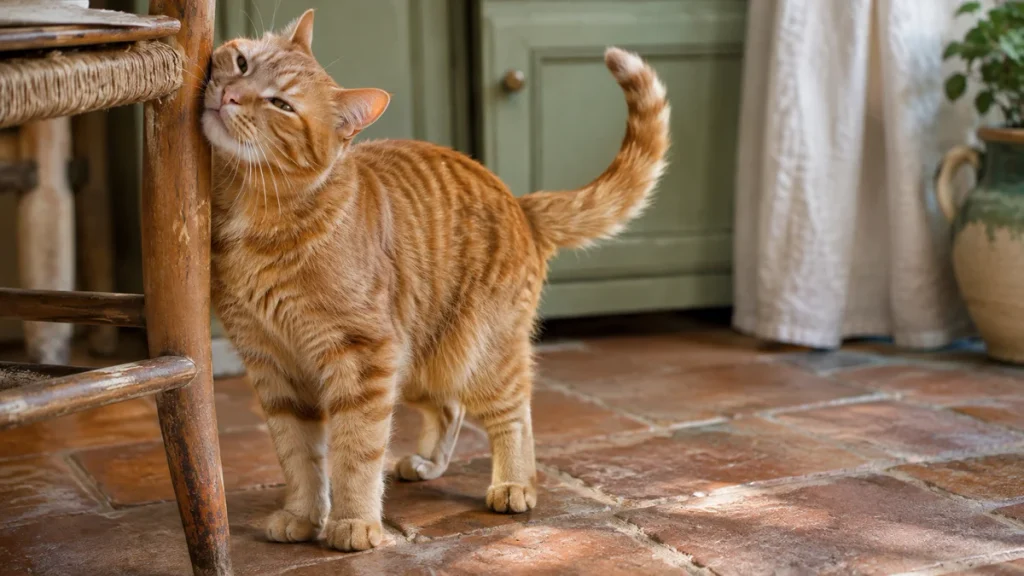
Your cat brushes against your legs as you walk through the kitchen. A moment later, it rubs its cheeks against the corner of the sofa and then returns to rub against your hand.
This familiar behavior can look like your cat is claiming everything around it, including you. There is some truth to the marking part, but the meaning is usually more friendly than defensive.
Cats have scent glands on several parts of their bodies, including their cheeks and forehead. When your cat rubs against you or furniture, it leaves scent signals that help make the surroundings feel familiar.
Battersea Dogs & Cats Home explains that these scent signals help cats recognize familiar people and places. Rubbing can also be a friendly greeting between cats and their human companions.
Does Scent Marking Mean Your Cat Is Protecting You?
A cat that regularly rubs against you may see you as a familiar and trusted part of its social life. However, scent marking is not proof that your cat intends to defend you from danger.
Cats also mark objects for reasons that have little to do with affection. The table below can help you tell normal scent marking apart from behavior that may need attention.
Friendly Scent Marking or a Stress Signal?
| Behavior | Possible Meaning | What to Do |
|---|---|---|
| Cheek rubbing on you | Friendly scent sharing | Offer gentle affection |
| Body rubbing on furniture | Making spaces familiar | Allow normal behavior |
| Scratching furniture | Claw care and scent marking | Provide a scratching post |
| Urine spraying | Territorial communication or stress | Check for triggers and speak to a vet |
Most rubbing is a normal part of cat communication. Urine spraying is different, particularly when it begins suddenly or appears alongside other behavior changes.
If your cat greets you by rubbing its head against your hand, allow it to choose how much contact it wants. This simple interaction can help maintain the trust you share.
2. Why Your Cat Watches the Home From High Places
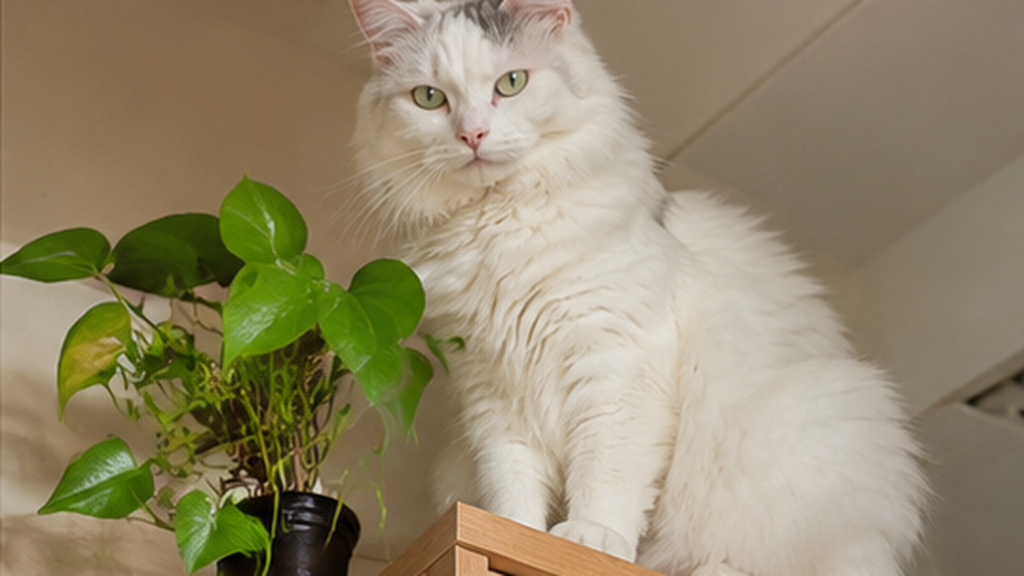
Have you noticed your cat sitting on top of a bookshelf, refrigerator, or cat tree while watching everything below? It may stay there quietly, moving only its head as you walk around the room.
From that raised position, your cat can observe movement without standing in the middle of the action. This gives it a useful view of its surroundings.
Cats have natural instincts that help them notice prey and possible threats. Being above the ground can also make them feel more secure because they have a better view of what is happening nearby.
Cats Protection explains that cats often choose elevated resting areas because they feel safer there. A high perch can be a place to relax, observe, or avoid unwanted contact.
Is Your Cat Watching Over You?
A cat sitting above the living room might notice someone approaching the window before you do. It may suddenly raise its head, turn its ears, or focus on movement outside.
This can look like protective behavior, especially when the cat watches the same doorway you use. However, it may simply be checking its territory for changes.
Your cat might also be watching birds, following the sunlight, or waiting for you to start a familiar activity. Look at the whole situation before deciding what has caught its attention.
If your cat enjoys watching from above, give it a safe place to do so. A stable cat tree, secured window perch, or sturdy shelf can provide a useful lookout.
The Catit Vesper Treehouse is one example of furniture designed to give cats elevated resting areas. Whatever you choose, make sure the surface is secure and that your cat can climb up and down safely.
A cat resting comfortably above you may be showing confidence in its surroundings. It does not need to act like a guard for that behavior to be meaningful.
3. What Your Cat’s Nighttime Rounds Really Mean
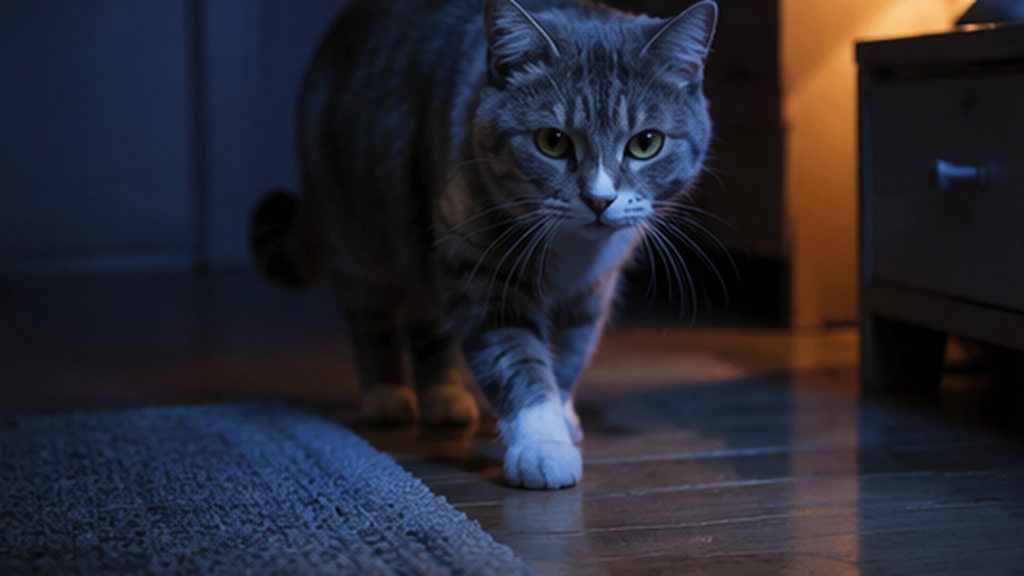
You are getting ready for bed when your cat suddenly becomes active. It walks through the hallway, checks the living room, visits the window, and returns to your bedroom.
The same routine might happen again just before sunrise. It can seem as though your cat is making security rounds while the rest of the household sleeps.
Cats are naturally more active around dawn and dusk. This activity pattern is called crepuscular behavior, and it is linked to the times when many small prey animals are active.
PetMD’s April 2026 guide on cat activity explains that nighttime movement can also be related to hunger, boredom, or daily routines. A cat walking around the house is not automatically searching for danger.
When Nighttime Activity Is Normal
Some cats quietly explore their familiar spaces before settling down. Others run, chase toys, or ask for attention when their owners are trying to sleep.
VCA Animal Hospitals notes that changes in nighttime activity can also have medical or behavioral causes. It helps to recognize the difference between a familiar routine and a new problem.
Normal Night Activity or a Warning Sign?
| Behavior | Possible Cause | Best Response |
|---|---|---|
| Quiet hallway exploring | Natural activity | Let the cat settle |
| Meowing near mealtime | Food seeking | Keep a feeding routine |
| Restless pacing | Stress or discomfort | Watch for other changes |
| New nighttime yowling | Possible health problem | Contact a veterinarian |
A calm cat making its usual rounds generally gives little reason for concern. Sudden changes deserve more attention, particularly in older cats.
A new pattern of loud nighttime crying may be linked to pain, thyroid disease, high blood pressure, or age related changes. Your veterinarian can help identify the cause instead of leaving you to guess.
To make nighttime calmer, offer interactive play during the evening and keep feeding times consistent. A comfortable sleeping spot away from household noise may also help.
If your cat hears an unfamiliar sound during its nightly exploring, it may stop and investigate. That response shows awareness of its surroundings, although it does not prove the cat is deliberately protecting your household.
4. Why Your Cat Brings Toys or Prey Back Home
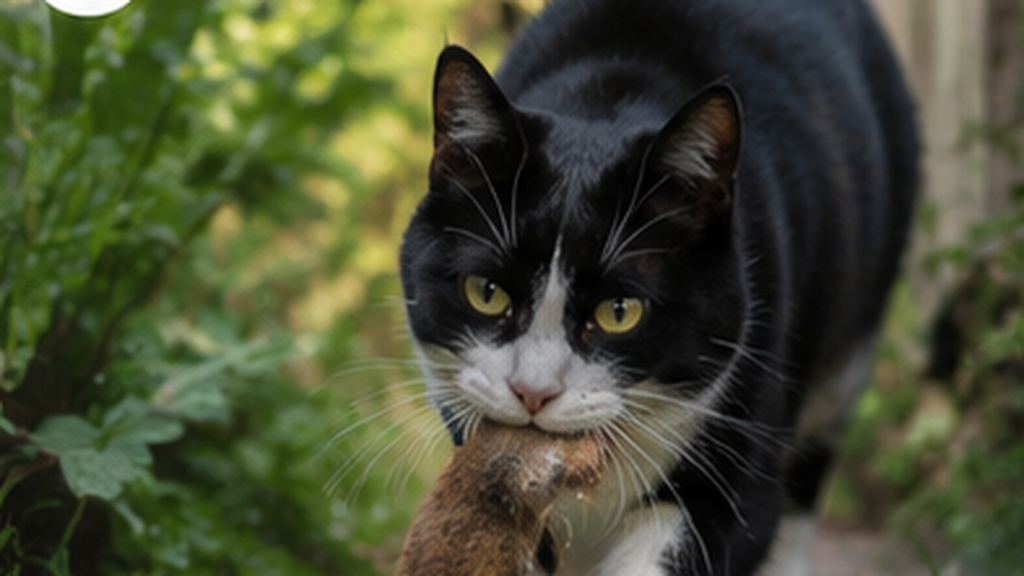
Few things surprise a cat owner more than discovering a mouse near the back door. Indoor cats may do something similar with toy mice, soft balls, or other objects they enjoy carrying.
It is tempting to believe your cat brought the item to feed you or teach you how to hunt. These explanations sound affectionate, but they are not established facts about your cat’s intentions.
Cats have a strong natural hunting drive that can remain active even when they receive plenty of food. They may stalk, catch, carry, and move prey without needing to eat it.
Cats Protection explains that cats commonly bring captured prey back into their familiar territory. For a domestic cat, that safe place is often the house.
Why Does Your Cat Leave Things Near You?
A cat carrying a toy mouse into your bedroom may be bringing an interesting object to a familiar place. It might also want to start a play session, especially if you usually respond when it drops a toy.
When a cat leaves prey near you, the behavior can feel like a gift. But there is no reliable way to conclude that the cat caught the animal specifically to protect you.
Hunting behavior is normal, even in well fed cats. The best response is to provide safe ways for your cat to express that instinct.
Interactive wand toys, soft mice, and suitable balls can encourage chasing and catching without harming wildlife. The Petmate JW Cataction Feather Ball is one example of a toy designed for active play.
If your cat brings home a wild animal, avoid punishment. Cats Protection advises that punishment is unlikely to stop natural hunting behavior and may cause stress.
Keep your cat away from any live or injured animal and contact a local wildlife rescue service for advice. If you find dead prey, avoid touching it with bare hands and clean the area safely.
Your cat may be a skilled hunter, but that does not mean it has been hunting on your behalf.
5. Why Your Cat Follows You From Room to Room
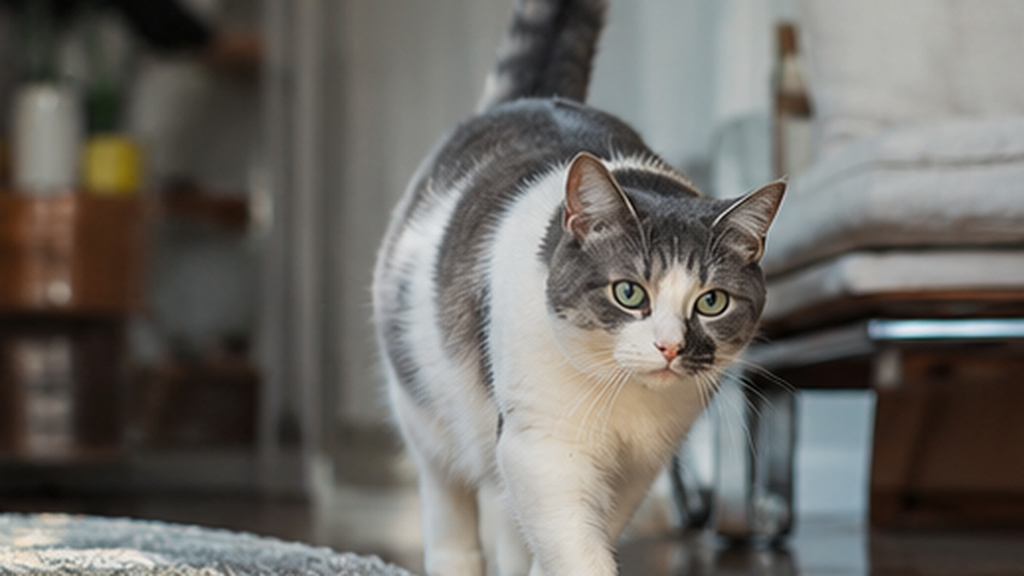
You stand up from the sofa, and your cat follows you into the kitchen. You move toward the bedroom, and a few moments later, the same cat appears in the doorway.
Sometimes, your cat does not seem to want food or attention. It simply sits nearby and watches what you are doing.
This can make it feel as though your cat is keeping an eye on you. And in a simple sense, it is paying attention to where you go and what you do.
Cats can form strong social bonds with people they trust. Some enjoy being close to their owners, even when they do not want to be touched.
Cats Protection explains that following behavior can reflect companionship, curiosity, hunger, or boredom. The reason often becomes clearer when you look at what happens next.
How to Tell Affection From Food Seeking
Suppose your cat follows you into the kitchen at its usual feeding time. It may have learned that your movements often lead to a meal.
But if your cat follows you into the living room and settles nearby without asking for anything, it may simply enjoy your company. That is a useful clue about your relationship.
You can learn more by watching these patterns:
- Relaxed following: Your cat walks behind you and settles comfortably nearby.
- Food seeking: Your cat follows you mainly near meals or the food cupboard.
- Attention seeking: Your cat meows, rubs against you, or starts a familiar play routine.
- Possible distress: Your cat becomes unusually restless or upset when you move away.
A cat that follows you often may feel secure with you. However, following alone is not proof of protective intent.
If the behavior suddenly becomes intense, especially with crying, appetite changes, or signs of distress, speak to your veterinarian. Otherwise, enjoy the company and give your cat opportunities to play and rest independently.
6. What It Means When Your Cat Alerts to Strange Noises
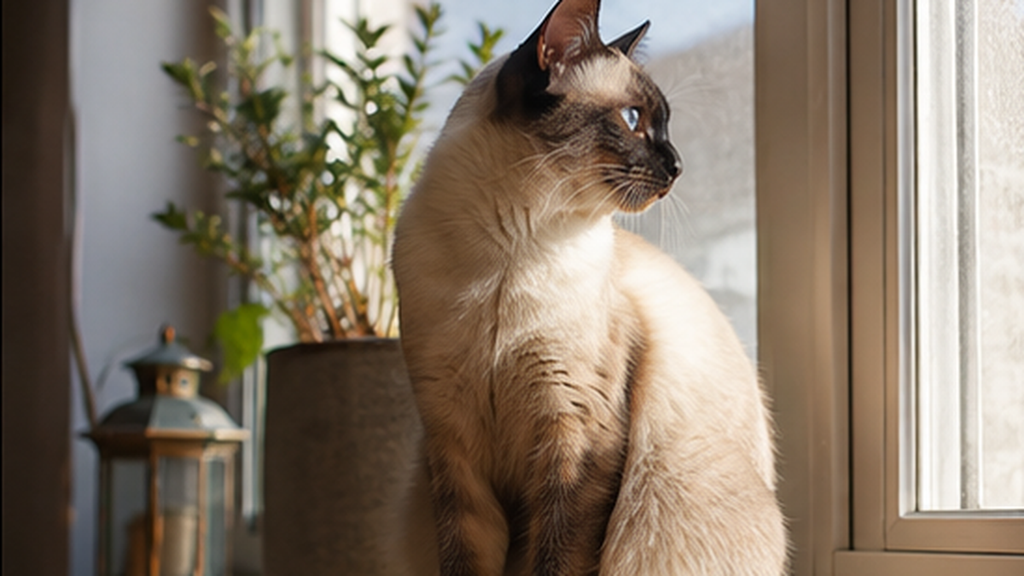
Your cat is resting peacefully when it suddenly lifts its head. Its ears turn toward the front door, and its eyes focus on something you have not noticed.
A moment later, you hear footsteps outside or the sound of a car arriving. Your cat appeared to detect the activity before you did.
Cats have sensitive hearing and can react quickly to changes in their surroundings. They can turn their ears toward different sounds, helping them locate where the noise is coming from.
That ability can make your cat seem like a little household alarm system. It may respond to approaching people, animals outside, or sounds coming from another room.
Is Your Cat Alert or Frightened?
An interested cat may sit upright with its ears forward while watching the source of a noise. Its body may remain relaxed, even though its attention is fixed on something.
A frightened cat may crouch, flatten its ears, widen its eyes, or hurry away. These signals suggest that the situation feels unsafe to the cat.
Humane World for Animals explains that ear position and other body signals can offer clues about a cat’s mood. But one movement should never be treated as the whole story.
For example, your cat may hear a neighbor’s dog and look toward the window. If it returns to resting a few moments later, the event may have been nothing more than a brief interruption.
If your cat becomes tense or frightened, check for a cause without forcing it to investigate. Close the curtains if an outdoor animal is causing stress and allow your cat to retreat.
A cat that notices unusual activity can sometimes draw your attention to something happening nearby. Just remember that cats are responding to what they detect, not necessarily warning people about danger.
7. What Your Cat’s Reaction to a Stranger Can Tell You
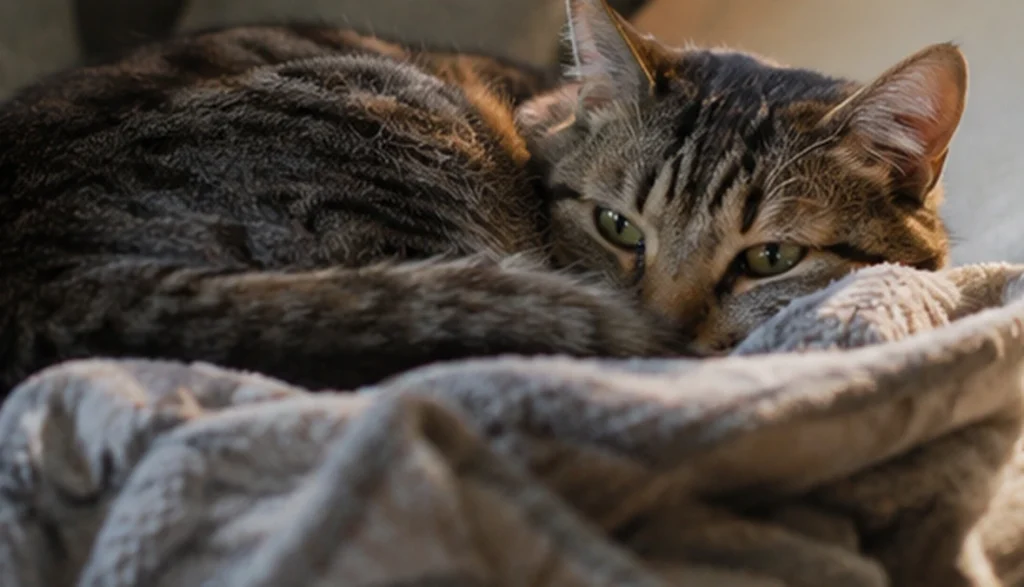
Your cat is friendly and relaxed when the household is quiet. But when a visitor arrives, it suddenly sits near the hallway, watches closely, or makes a low growling sound.
You might wonder if your cat is protecting you from someone unfamiliar. This is one of the more convincing examples of behavior that appears protective, but it still needs careful interpretation.
Cats recognize familiar routines, places, and people. An unexpected visitor may bring new smells, unfamiliar movements, and sounds that make a cat feel uncertain.
Some cats respond by hiding, while others stay nearby and watch. A frightened cat may hiss, arch its back, or try to keep the visitor away.
Is Your Cat Defending You or Itself?
Cornell University’s Feline Health Center explains that aggression can occur when cats encounter unfamiliar people, animals, or other triggers. These reactions may come from fear or a perceived threat.
A cat that hisses at a visitor may be trying to create distance. That does not establish that it is protecting its owner.
The important thing is to recognize your cat’s emotional state and respond safely. Different reactions call for different responses, as shown below.
How to Respond When Your Cat Meets a Stranger
| Cat’s Reaction | What It May Mean | Your Response |
|---|---|---|
| Watches with a loose body | Calm interest | Allow observation |
| Approaches with tail up | Friendly curiosity | Let the cat choose contact |
| Hides from the visitor | Fear or uncertainty | Provide a quiet space |
| Hisses with flat ears | Defensive warning | Give the cat distance |
| Lunges or swats | Strong distress or aggression | Keep people apart safely |
A cat that remains calm around guests may feel confident in its home. A cat that becomes defensive needs safety and space, not praise for acting like a guard.
Never encourage your cat to hiss, chase, or attack unfamiliar people. Aggressive behavior can lead to injuries and may make future visits more stressful.
How to Help Your Cat Feel Safe Around Guests
Start by giving your cat a quiet place where visitors will not disturb it. Make sure it has access to water, a resting area, and a litter box if it will be staying there.
Ask guests to avoid staring, reaching toward, or picking up the cat. Let your cat decide when it feels comfortable approaching.
For cats that struggle with household stress, a veterinarian may discuss additional support, including options such as the FELIWAY Classic Diffuser. However, no product replaces a safe environment and a gentle introduction.
If your cat suddenly becomes aggressive toward familiar people, arrange a veterinary examination. Pain or illness can sometimes contribute to unexpected defensive reactions.
Your cat’s reaction to strangers may be one of the signs that makes you feel protected. But helping your cat feel safe is more important than expecting it to protect you.