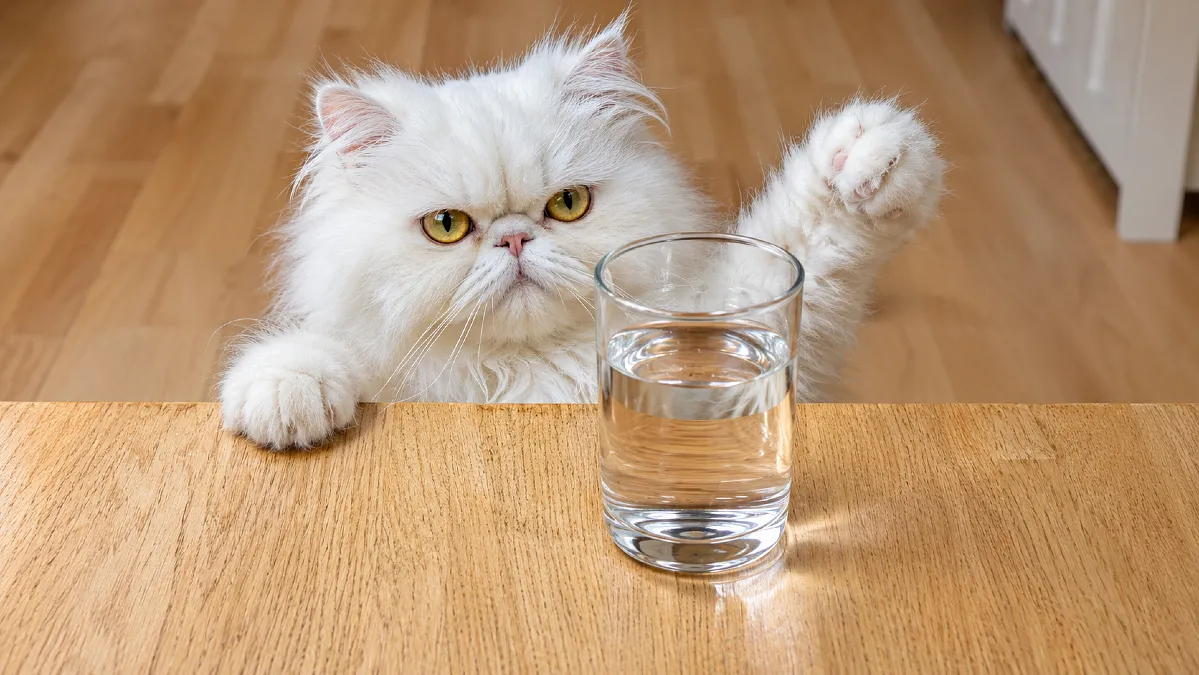
There it is again. Your cat is sitting on the table, staring at your water glass, slowly stretching out one paw. Before you can stop it, the glass slides toward the edge and crashes onto the floor. Your cat simply watches, looking completely pleased with the result.
If you have a cat, this scene probably feels familiar. Maybe it is your coffee mug, your favorite decoration, or the pen you just placed on your desk. No matter how often you pick things up, your cat seems determined to knock them down again.
It is tempting to think your cat is being naughty or trying to annoy you. But cats usually knock things off tables because of natural instincts, curiosity, boredom, or learned behavior. They are not necessarily trying to upset you.
And here is the surprising part. Sometimes, the most interesting thing about knocking something over is what you do afterward.
Why Does Your Cat Push Things Off the Table in the First Place?
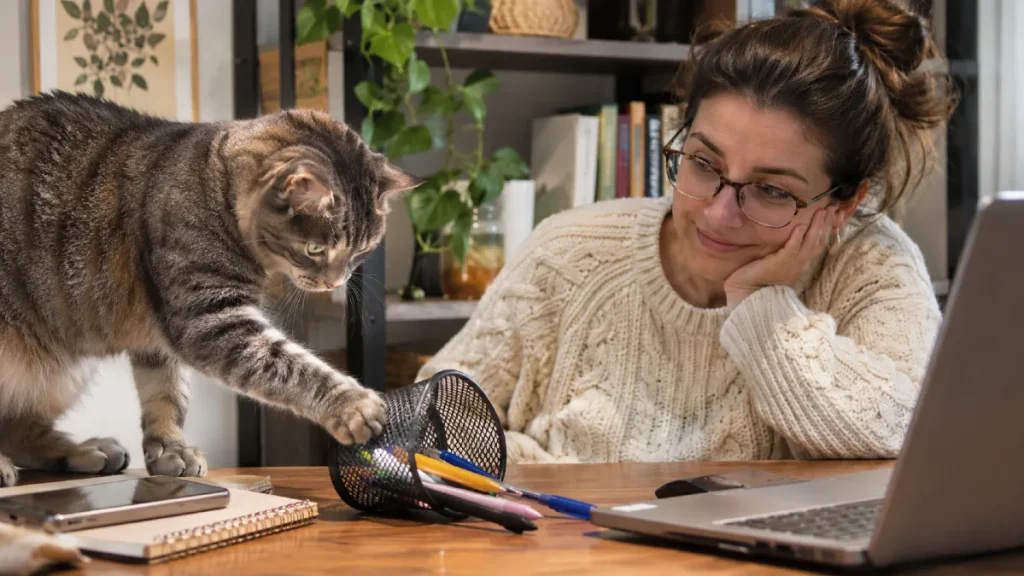
Your cat does not look at a glass, pen, or small decoration the same way you do. To you, these are everyday objects that belong on a table. To your cat, they might be interesting things worth touching, moving, or chasing.
Cats are natural hunters, and their paws play an important role in exploring their surroundings. A quick tap can reveal whether something moves, rolls, or makes a noise. That movement may encourage another tap.
According to VCA Animal Hospitals, knocking objects around can be connected to a cat’s natural hunting instincts. Cats often enjoy batting and chasing objects because these actions resemble parts of hunting behavior.
Consider what happens when your cat finds a pencil on your desk. One gentle push makes it roll, and another sends it sliding across the surface. When it falls, the movement and noise may add to the excitement.
Your cat is often interested in the action, not the damage. There is no good reason to assume it knows how much a broken object costs or that it is trying to teach you a lesson.
Cats Protection also explains that cats naturally use their paws to investigate unfamiliar things. A cat that pushes something off a table may simply be exploring what happens when it touches the object.
This is why moving every loose object away can help. It removes tempting targets while you provide safer things your cat is allowed to bat and chase.
Is Your Cat Knocking Things Down Just to Get Your Attention?
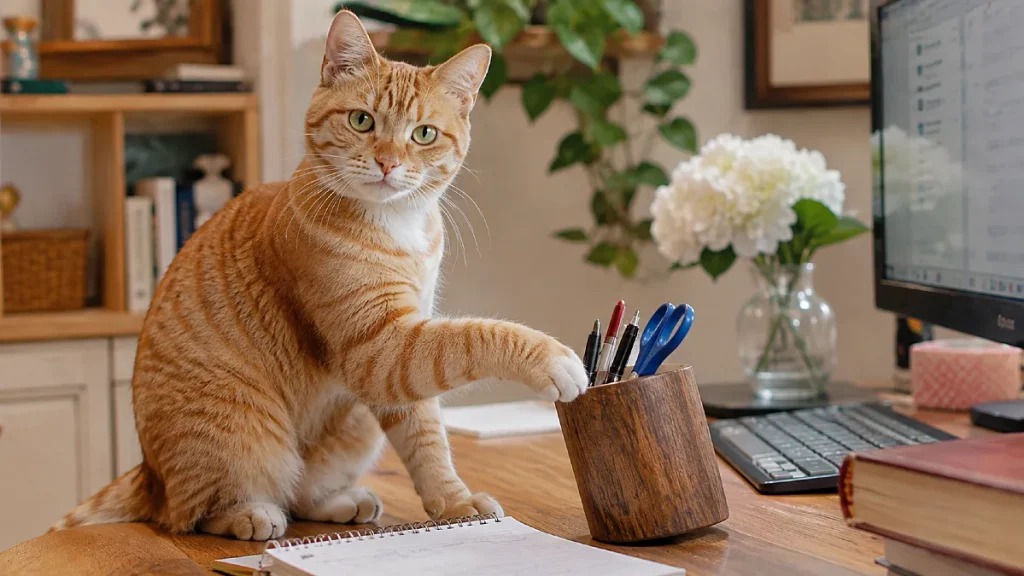
Sometimes, your cat knocks things over because it has learned that doing so makes you react. This can happen even when you believe you are discouraging the behavior.
Think about what happens when your cat pushes a pen toward the edge of your desk. You look up, say its name, and move closer. Your cat has suddenly become the center of your attention.
PetMD explains that owners can accidentally reward this behavior by talking to their cats, picking them up, or offering food after an object gets knocked down.
The important detail is that attention does not always have to be positive to encourage repetition. Even an annoyed reaction can be rewarding for a cat that wants interaction.
How Your Reaction Can Turn Into a Habit
Suppose your cat often approaches your desk while you are working. You are busy, so you do not respond immediately. The cat pushes your pen onto the floor, and you quickly turn around.
If this happens repeatedly, your cat may begin connecting the action with your attention. The behavior can become a reliable way to interrupt whatever you are doing.
That does not mean every cat is deliberately planning to make a mess. It simply means cats can learn which actions lead to interesting results.
You can change this pattern by giving your cat attention before it begins knocking things over. Offer a short play session when your cat approaches calmly, or reward it for settling in its own nearby resting place.
If your cat is already pushing something dangerous, protect it immediately. But for ordinary attention seeking, focus on teaching a better way to ask for interaction.
Does Boredom Make Your Cat Knock Things Over More Often?

A cat that spends hours indoors without much to do may start finding entertainment in everyday household objects. Your desk, shelves, and kitchen table can become an unexpected playground.
Cats need opportunities to move, explore, climb, scratch, and play. When those opportunities are limited, pushing objects around may become one of the more interesting activities available.
Cats Protection explains that play helps cats stay mentally active while giving them a safe outlet for hunting behavior. This is especially important for indoor cats that have fewer chances to stalk and chase things outside.
A cat may have plenty of toys but still feel bored if those toys never change. A toy sitting in the same corner every day may become less interesting than a pen that rolls across the table.
Give Your Cat Something Better to Chase
You do not need an expensive collection of toys to make play more interesting. What matters is offering activities that suit your cat’s natural behavior.
Try moving a wand toy along the floor like a small animal. Allow your cat to stalk it, chase it, and catch it several times during the game.
Cats Protection suggests that even very short play sessions can be helpful. Some cats enjoy several brief games throughout the day rather than one long session.
You can also rotate toys to keep them interesting. Put some away for a few days and bring them back later instead of leaving everything available all the time.
Puzzle feeders can provide another useful activity. They encourage cats to work for part of their normal food allowance, giving their paws and minds something productive to do.
The goal is not to keep your cat busy every minute. It is to offer enough safe and interesting activities that household objects become less tempting.
How Can You Tell What Your Cat Wants Before Something Falls?
The easiest way to figure out why your cat knocks things over is to pay attention to when it happens. The timing, location, and your cat’s behavior beforehand can offer useful clues.
A cat that pushes objects only while you are watching may be seeking interaction. Another cat that bats at small objects while alone may simply enjoy the movement.
PetMD recommends looking for patterns before trying to change this behavior. The following comparisons can help you decide what to observe more closely.
What Your Cat’s Behavior Might Be Telling You
| What you notice | Possible reason | What to check |
|---|---|---|
| Knocks items down while you work | Wants attention | Does your reaction encourage repetition? |
| Pushes loose objects while alone | Play or curiosity | Does the cat have suitable toys? |
| Does it before mealtime | Learned food seeking | Is feeding time predictable? |
| Repeats it after a quiet day | Needs activity | Has playtime been limited? |
| Starts after a household change | Possible stress | Has the cat’s routine changed? |
These are possible explanations, not certain answers. The same behavior can happen for different reasons, so look for patterns over several days.
Watch what your cat does after the object falls. Does it chase the object, stare at you, or immediately walk away? These details may help you decide whether play or attention is involved.
Watch the Whole Cat, Not Just the Paw
Body language can help you judge your cat’s general mood. A relaxed cat with normal movement may simply be exploring, while a tense cat with flattened ears or a tucked tail may be uncomfortable.
One sign by itself does not reveal the full story. Look at your cat’s posture, recent activities, appetite, and the situation around it.
Keep a simple record on your phone for a few days. Write down the time, the object, what happened beforehand, and how you responded.
You may discover that your cat knocks things over at almost the same point in your daily routine. That gives you a chance to introduce a better activity before the behavior starts.
How Do You Stop Your Cat From Knocking Things Off Tables?
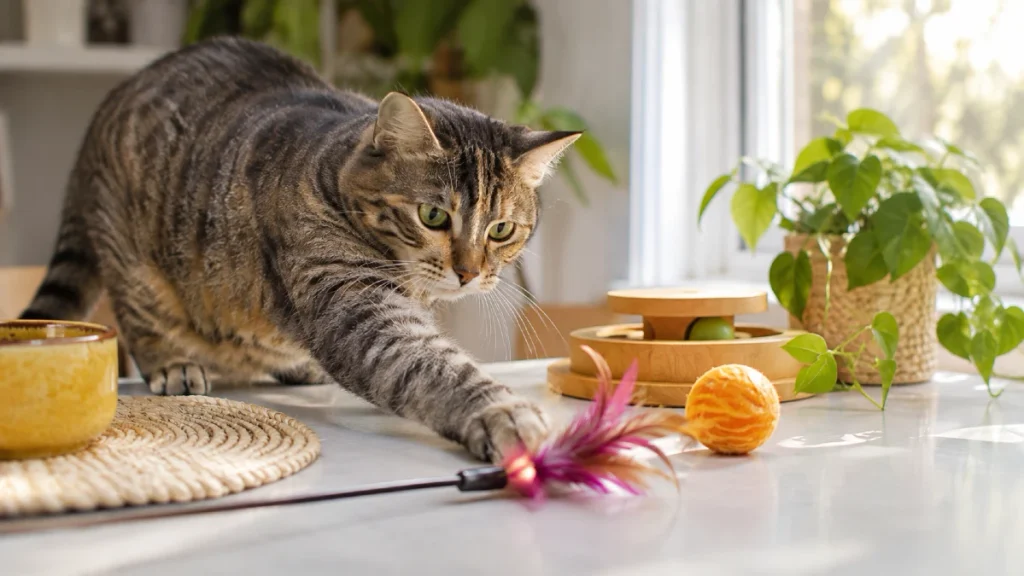
The most effective approach is to make knocking objects over less rewarding while giving your cat better ways to play and seek attention. Punishment may stop the behavior briefly, but it does not address why your cat wanted to do it.
Cats Protection advises against punishing cats for unwanted behavior because it can increase stress. Shouting, chasing, or spraying your cat with water may also make it afraid of you.
Instead, focus on prevention, regular play, and rewarding the behavior you want to see. These changes require consistency, but they give your cat clearer choices.
Give Your Cat an Activity That Matches Its Needs
Different cats enjoy different activities. A cat that likes moving objects may enjoy a ball track, while a cat that seeks food may prefer a puzzle feeder.
Use the table below to choose an alternative based on what your cat appears to enjoy.
| Problem | Better activity | Why it helps |
|---|---|---|
| Swats at moving objects | Wand toy or ball track | Offers safe chasing |
| Looks for attention | Scheduled playtime | Rewards calm interaction |
| Explores food containers | Puzzle feeder | Makes meals engaging |
| Climbs onto crowded desks | Sturdy cat tree | Provides a climbing spot |
| Gets bored with toys | Rotate toy choices | Adds variety |
Start with one or two activities that match your cat’s interests. A toy that works well for one cat may do little for another, so watch what your cat chooses to use.
Try Simple Toys Before Buying More
A cardboard box, a sturdy scratching post, and a supervised wand game may be enough to improve your cat’s daily routine. You can also offer commercially made toys designed for batting and chasing.
For example, the Catit Senses 2.0 Play Circuit holds a moving ball inside a track. The TRIXIE Cat Activity Fun Board allows cats to explore compartments for food, while the KONG Kickeroo offers a larger toy for wrestling and kicking.
Choose toys that suit your cat’s size and play style. Always check them for loose parts, and put away strings or wand toys when you are not supervising.
Reward the Behavior You Want
Suppose your cat often jumps onto your desk while you work. Place a comfortable cat bed or sturdy perch nearby, somewhere your cat can safely watch you.
When your cat chooses that spot, offer gentle praise, attention, or a small treat. This helps teach that resting there can lead to pleasant results.
Avoid giving treats immediately after your cat knocks something down. Otherwise, you may accidentally reward the behavior you are trying to reduce.
You can also teach your cat to move to a designated perch using rewards. Practice when the cat is calm instead of waiting until it is already reaching for your coffee cup.
Most importantly, be patient. A behavior that has worked for your cat many times may take repeated practice to change.
How Can You Make Your Tables and Counters Safer?
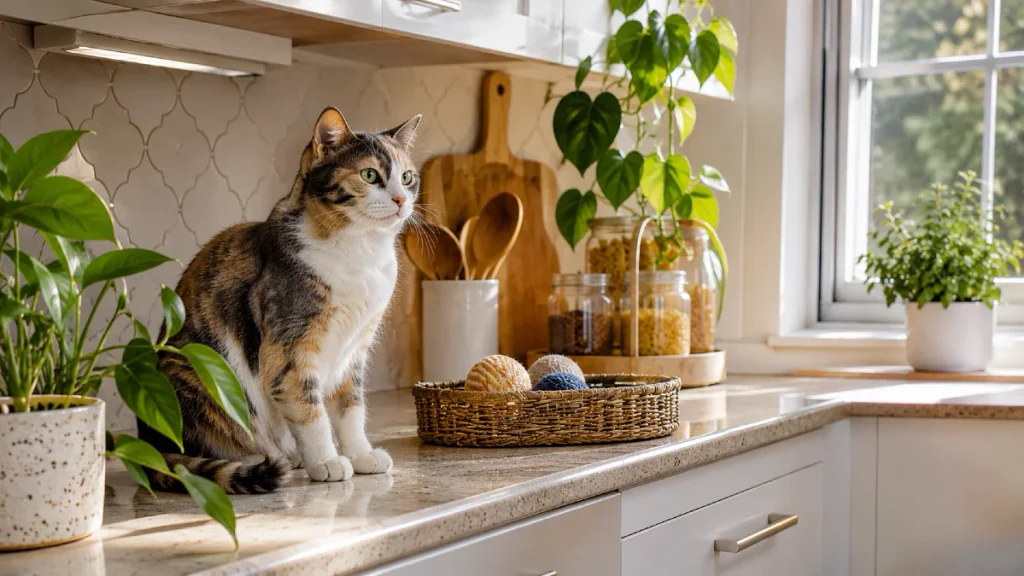
Even with regular play and training, you should expect your cat to explore from time to time. Making your home safer can prevent an ordinary playful moment from turning into an injury.
Start by looking at your tables from your cat’s point of view. Small objects that roll, plants that move when touched, and lightweight containers may all attract curious paws.
Which Household Objects Need Extra Protection?
Some objects are simply messy when knocked over, while others can be dangerous. This table helps you decide what should be moved, secured, or kept out of reach.
| Household item | Possible risk | Safer choice |
|---|---|---|
| Glass cups and vases | Sharp broken pieces | Store away from edges |
| Small loose objects | Swallowing or choking | Use closed containers |
| Open drinks | Spills and unsafe contents | Use secure lids |
| Electrical cords | Damage or injury | Secure and protect cords |
| Toxic flowers or plants | Poisoning | Keep them out of the home |
Start with the items that could harm your cat rather than worrying about every small mess. Removing a fragile vase or an unsafe plant is more important than stopping your cat from touching a harmless coaster.
Be especially careful with flowers. The ASPCA warns that true lilies and daylilies can cause life threatening kidney damage in cats, including through exposure to pollen or vase water.
If your cat might have been exposed to these plants, seek urgent veterinary help. Do not wait for symptoms to appear.
Create Safe Places for Climbing and Watching
Cats often enjoy high places because they offer a good view of their surroundings. If your table is the best elevated spot in the room, your cat may keep returning to it.
A sturdy cat tree, secure window perch, or properly installed climbing shelf can offer a better option. Place it somewhere your cat feels comfortable and can reach safely.
Keep important electronics, medications, sharp tools, and fragile decorations in protected storage. Do not rely on training alone when an object could seriously harm your cat.
These changes make daily life easier for both of you. Your cat can still explore, while you spend less time worrying about what might fall next.
When Should Your Cat’s Knocking Behavior Worry You?
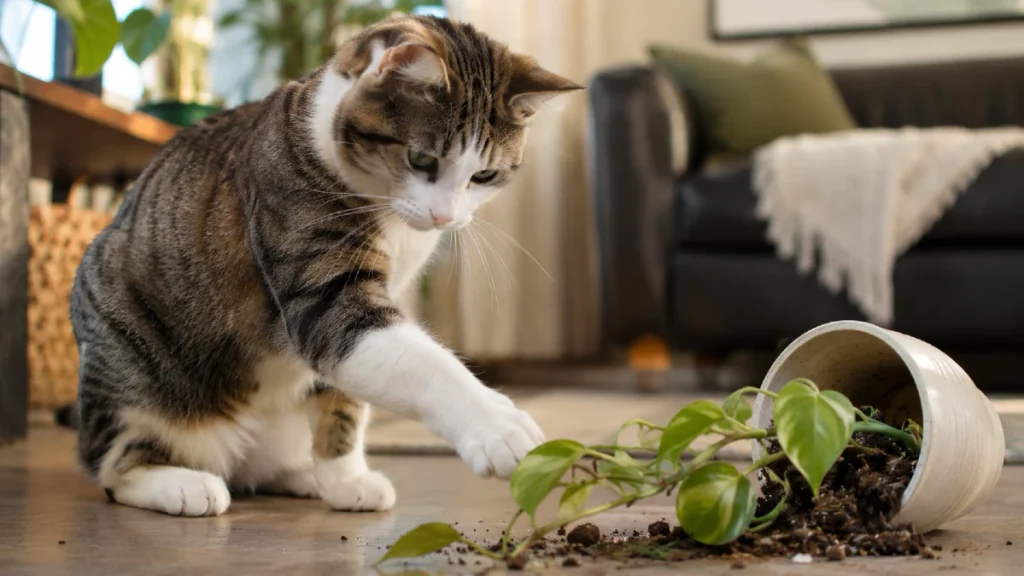
For many cats, knocking things off tables is a normal part of play or exploration. But a sudden change in behavior deserves attention, especially when it appears alongside other unusual signs.
Cats Protection advises owners to contact a veterinarian when a cat starts behaving in a way that is out of character. Changes in behavior can sometimes be linked to illness, pain, fear, or stress.
How Do You Know When to Call a Vet?
The main question is whether the behavior fits your cat’s usual habits. Use these examples to decide when an observation, routine appointment, or urgent call may be needed.
| What you notice | Possible concern | Next step |
|---|---|---|
| Occasional playful batting | Normal exploration | Offer safe toys |
| Sudden behavior change | Stress or illness | Arrange a vet check |
| New clumsiness or stumbling | Possible health problem | Contact a vet promptly |
| Swallowed object or sharp injury | Risk of internal injury | Seek urgent vet advice |
| Possible lily exposure | Serious poisoning risk | Get emergency vet care |
Do not assume that knocking objects over by itself means your cat is sick. What matters is whether the behavior is new, unusually frequent, or paired with other warning signs.
A cat that suddenly becomes clumsy, stops eating normally, hides more often, or seems less active may need a medical examination. VCA Animal Hospitals explains that cats can hide signs of pain, making changes in everyday behavior important to notice.
If your cat has swallowed a small object, been cut by broken glass, or come into contact with something toxic, act promptly. In these situations, protecting your cat matters more than correcting its behavior.
For an otherwise healthy cat that occasionally swats things off furniture, improved play opportunities and a safer home are usually sensible first steps.