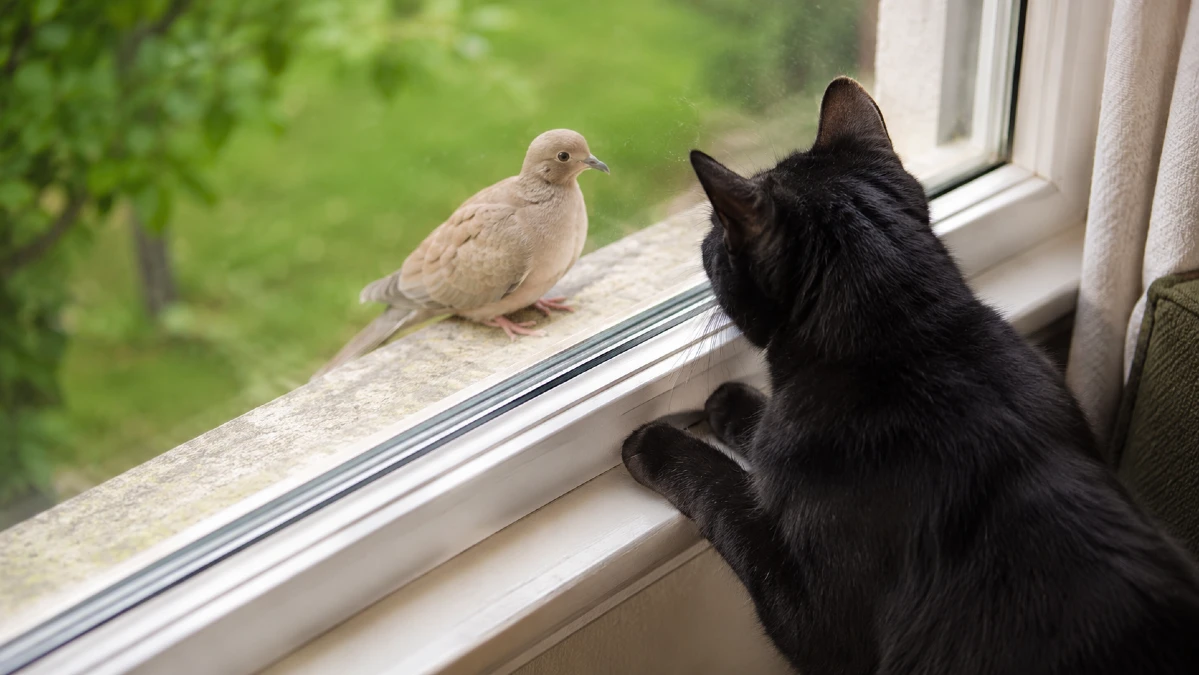
Your cat is sitting quietly by the window, watching a bird hop across the garden. Suddenly, their mouth starts moving, and a strange series of tiny chirps and clicking sounds fills the room. It almost sounds like your cat is trying to have a conversation with the bird outside.
If you have noticed this behavior, you might wonder what your cat is thinking. Are they excited about the bird, annoyed because they cannot catch it, or trying to copy the sounds it makes? The answer is more interesting than you might expect.
Cat chirping at birds is usually linked to natural hunting behavior, even in cats that spend their entire lives indoors. However, excitement and frustration may also play a part, and animal behavior experts are still studying exactly why cats make these unusual sounds.
What Does Cat Chirping at Birds Actually Sound Like?
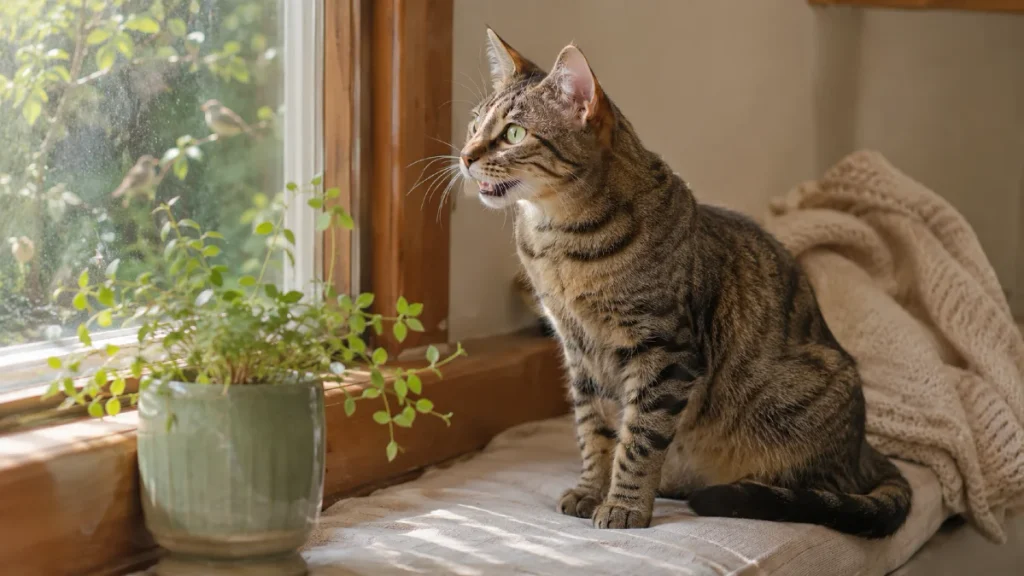
Cat chirping sounds quite different from a normal meow. You might hear several quick squeaks, soft tweets, or tiny clicking noises while your cat stares at something moving outside.
Sometimes, the sound resembles a bird calling from a tree. Other times, it sounds like your cat is rapidly clicking their teeth together.
Veterinarians generally describe two related behaviors.
- Chirping: Short, high pitched sounds that resemble small bird calls.
- Chattering: Quick movements of the jaw that create clicking or clacking sounds.
- Trilling: A soft, rolling sound that cats often use when greeting people or other cats.
According to PetMD, chirping and chattering often happen together when a cat spots an animal they cannot reach. You might also see your cat’s ears point forward, their eyes widen, and their tail move gently from side to side.
Birds are common triggers, but they are not the only ones. Some cats make similar noises when watching squirrels, insects, or even a toy moving across the room.
Cats Protection also notes that some cats rarely chatter, while others do it often. If your cat never makes these sounds, that alone does not suggest anything is wrong.
Why Does Your Cat Chirp at Birds Through the Window?
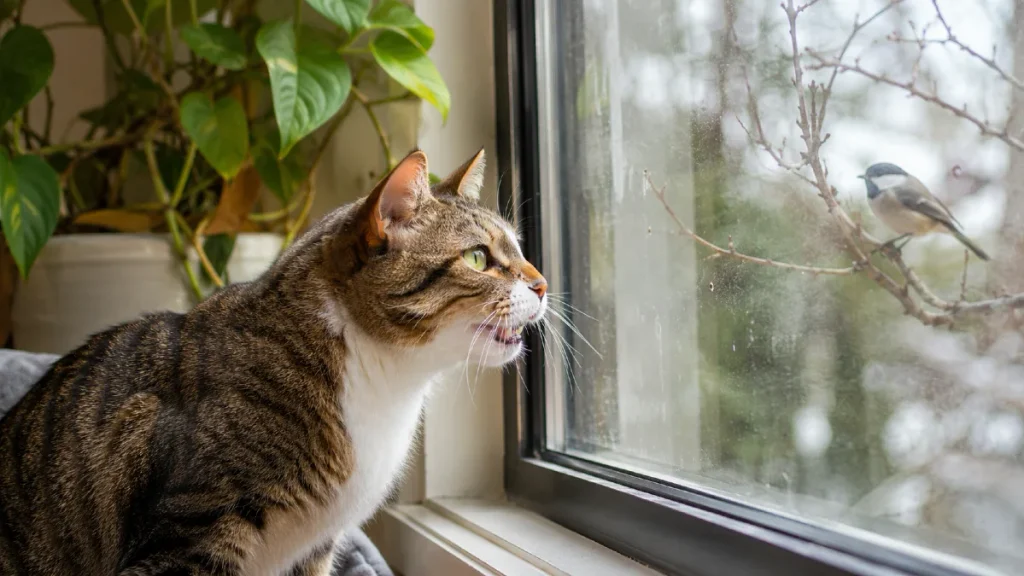
The most likely explanation is that your cat’s natural hunting instincts have become active. A bird moving outside can quickly capture their attention, even when your cat was relaxing just moments earlier.
Cats are natural predators, and their interest in moving animals remains strong even when they have plenty of food. The sight of a bird hopping, fluttering, or changing direction can trigger the urge to watch, stalk, and chase.
Excitement May Be Part of the Reaction
Think about what happens when your cat suddenly notices a bird near the window. Their ears turn forward, their body becomes still, and their eyes follow every movement.
This focused attention is common during hunting behavior. The strange chirping sounds may happen while your cat is highly interested in what they see.
PetMD explains that chirping at unreachable prey is often thought to involve excitement, sometimes mixed with frustration. However, the exact reason for the sound remains uncertain.
The Window Creates a Barrier
Your cat can see the bird clearly, but there is one problem. The glass prevents them from getting any closer.
This may explain why some cats chatter while staring through a window. They are interested in the bird but cannot act on their urge to chase it.
VCA Animal Hospitals also connects this behavior with excitement and possible frustration. But chirping alone does not prove that your cat is unhappy.
Watch what happens after the bird leaves. A cat that relaxes, stretches, or walks away calmly may simply have enjoyed an exciting moment of observation.
Is Your Cat Trying to Copy the Sounds Birds Make?
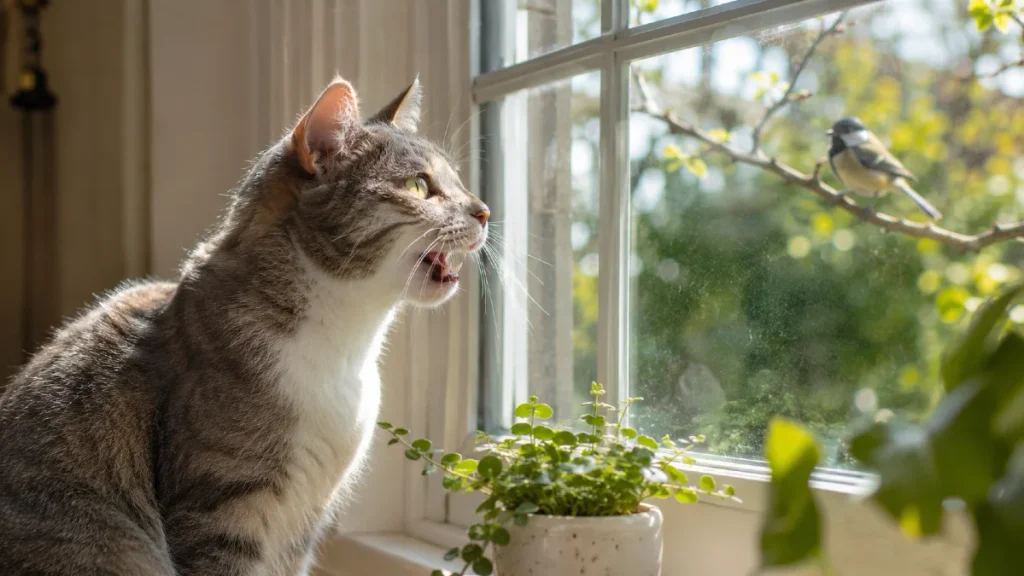
One popular theory suggests that cats chirp because they are trying to imitate their prey. Since some chirps sound similar to bird calls, it is easy to see why people find this idea interesting.
The theory is that copying another animal’s sounds might help a hunting cat get closer without alarming it. However, there is no strong evidence that domestic cats deliberately use their window chirps to fool birds.
Cats Protection discusses this possibility but makes it clear that the exact purpose of chattering remains unknown. VCA Animal Hospitals also notes that prey imitation has not been established by research.
What About Practicing a Hunting Bite?
Another theory focuses on the rapid movement of a cat’s jaw. Some people suggest that chattering imitates the bite a cat might use when capturing prey.
It is an interesting explanation, but it remains speculative. The movement of a cat’s mouth does not prove that the animal is practicing a hunting technique.
There is also a practical reason to be careful with this theory. Cats usually benefit from staying quiet when they are close enough to catch an animal, since noise could alert the prey.
For now, excitement, focused attention, and possible frustration are better supported explanations. Your cat may sound as though they are talking to the bird, but that does not mean they are having a conversation.
Why Do Indoor Cats Chirp Even When They Are Well Fed?
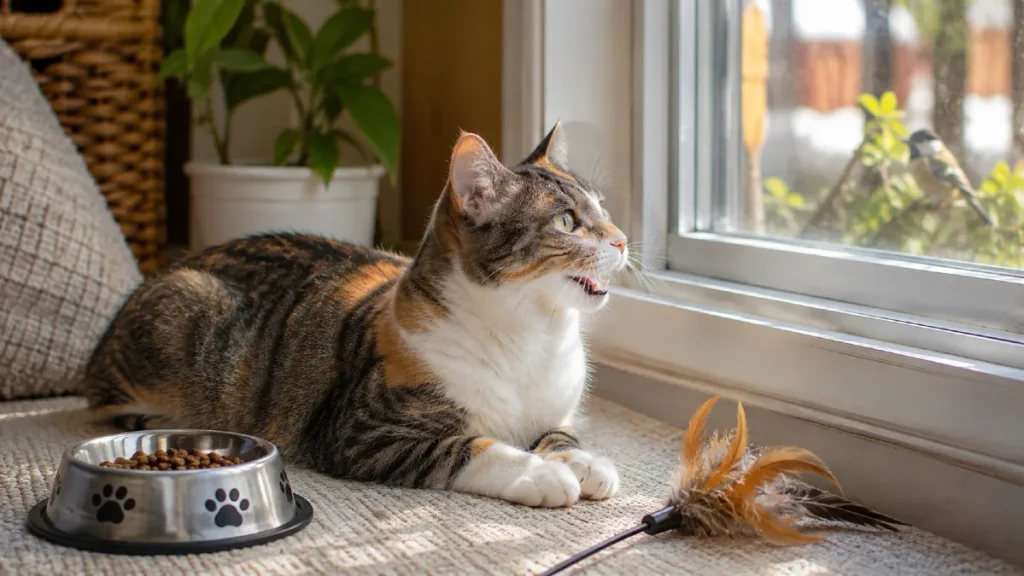
Your cat might have just finished a full bowl of food and still become fascinated by a bird outside. That is because hunting behavior and hunger are not the same thing.
Cats can be interested in chasing moving animals without needing another meal. Their natural behavior includes watching, stalking, pouncing, and exploring.
The Feline Veterinary Medical Association and International Cat Care explain in their 2026 guidance that cats need chances to express these natural behaviors. Interactive toys and food puzzles can help indoor cats meet those needs.
A bird outside offers several things that may grab your cat’s attention. It moves quickly, changes direction, makes sounds, and can appear or disappear without warning.
That makes a window an interesting place for many indoor cats. Even a familiar garden can provide new sights throughout the day.
But every cat is different. One cat may spend a long time watching birds, while another might prefer chasing a toy mouse across the floor.
Age, personality, health, and past experiences can all affect how a cat responds. You do not need to encourage chirping if your cat prefers quieter activities.
The goal is to give your cat safe choices. A comfortable resting spot, interesting toys, and opportunities for gentle play can all support their daily needs.
How Can You Tell If Your Cat Is Excited or Frustrated?
The easiest way to judge your cat’s reaction is to look beyond the sound. Their posture, tail movements, ears, and behavior afterward can offer useful clues.
A cat that watches birds quietly may simply be interested in the activity. But a cat that becomes increasingly restless, vocal, or unable to settle might need a break.
What Your Cat’s Body Language May Be Telling You
No single movement tells you exactly how a cat feels. Use several clues together and pay attention to what is normal for your pet.
| What You Notice | Possible Meaning | What You Can Do |
|---|---|---|
| Ears forward, steady gaze | Focused interest | Allow quiet watching |
| Gentle tail tip movement | Alert attention | Observe other signals |
| Repeated pacing | Possible frustration | Offer interactive play |
| Pawing hard at the glass | Strong urge to approach | Redirect to a toy |
| Walking away calmly | Able to settle | Let your cat rest |
| Flattened ears and hiding | Possible fear or stress | Reduce the trigger |
The most useful clue is often how easily your cat returns to normal. If they watch for a while and then settle down, there may be little reason for concern.
But repeated signs of distress deserve attention. Cats Protection recommends reducing your cat’s view of outdoor animals when watching them seems to cause frustration.
When Bird Watching Becomes Too Much
Some cats remain interested in a window long after the bird has disappeared. They may continue searching, pacing, or trying to reach the outside.
If this happens repeatedly, try offering an activity they can complete. A toy that your cat can stalk, catch, and hold may provide a more satisfying outlet.
Avoid picking up or forcing contact with a highly excited cat. Give them room to settle, and let them choose when to interact with you.
How Can You Make Bird Watching Safe for Your Cat?
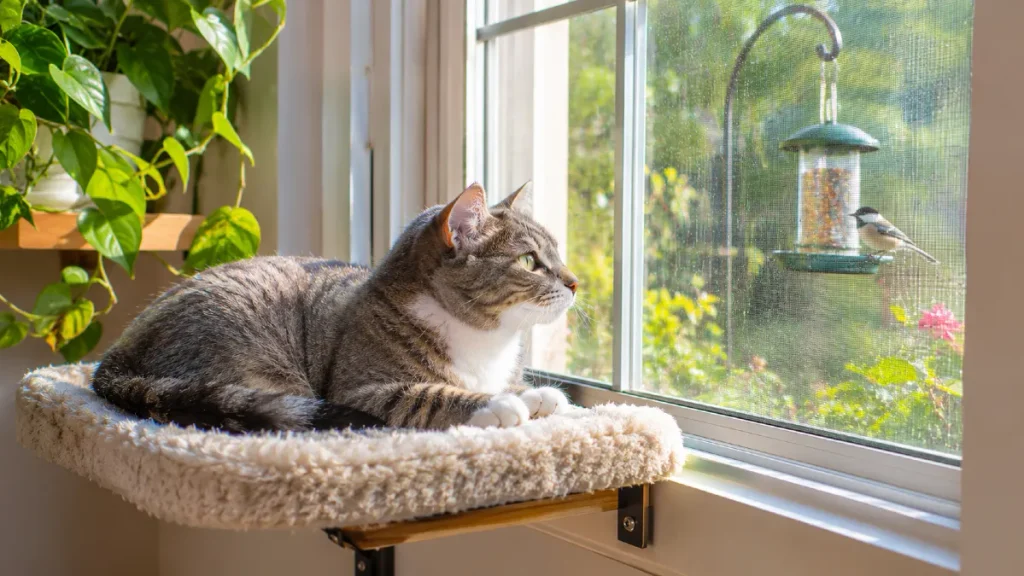
Watching birds can be an enjoyable part of indoor life, but the viewing area needs to be safe. A few simple changes can protect your cat and reduce risks for the wildlife outside.
Start with the place your cat likes to sit. A wide windowsill, stable cat tree, or properly installed window perch can provide a comfortable spot.
ASPCA recommends creating interesting indoor spaces, including comfortable places where cats can watch outdoor activity. However, an enjoyable view should never come at the cost of safety.
Check the Window Before Adding a Perch
An excited cat might suddenly jump or push against a window while following a bird. Make sure the window is closed securely or fitted with a sturdy screen designed to prevent cats from escaping.
Cats Protection warns that open windows can lead to falls and injuries. Tilted windows are especially dangerous because a cat can become trapped in the narrow opening.
If you use a window perch, inspect its supports and follow the manufacturer’s installation instructions. Avoid placing it where a failed attachment could cause a dangerous fall.
A Safer Window Setup for Cats and Birds
Window safety matters for wild birds, too. Use this table to check the most common problems.
| Window Feature | Possible Risk | Safer Choice |
|---|---|---|
| Open window | Cat may escape or fall | Secure the opening |
| Unstable perch | Cat may fall | Use a stable, fitted perch |
| Glass near a feeder | Bird collision risk | Treat the exterior glass |
| Reflective window | Birds may mistake it for open space | Use closely spaced exterior markings |
| Stressful outdoor view | Repeated cat distress | Close blinds or block the view |
The Cornell Lab of Ornithology recommends making dangerous windows more visible to birds through suitable exterior treatments. A few widely spaced stickers are generally not enough to protect the whole window.
If you place a bird feeder outside, consider the safety of the visiting birds as well as your cat’s enjoyment. Keep your cat indoors and check that nearby windows have suitable collision prevention measures.
What Should You Do When Your Cat Keeps Chirping?
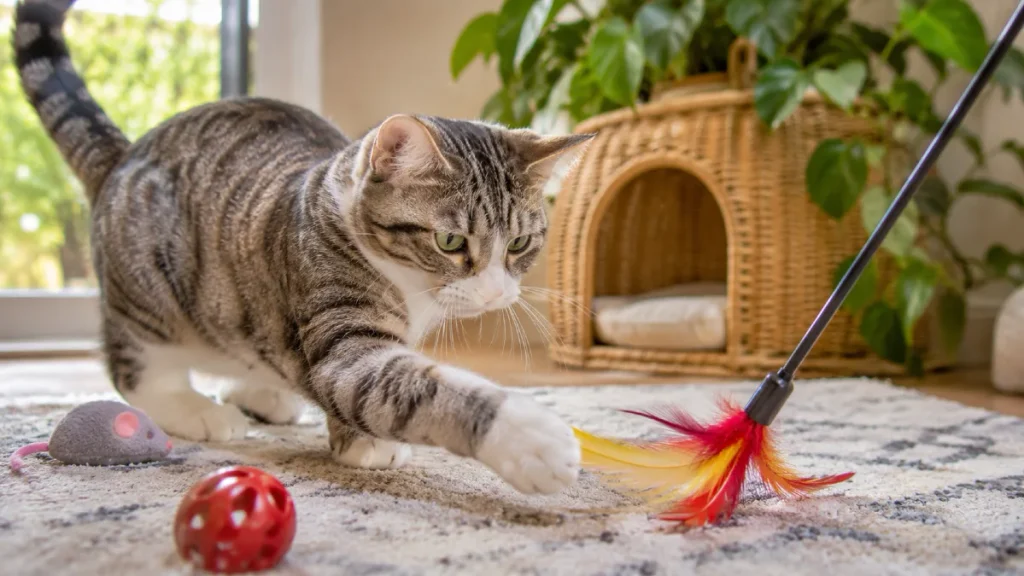
You usually do not need to stop your cat from chirping at birds. But if they seem restless or spend too much time trying to reach the animals outside, a change in activity may help.
Interactive play is one of the simplest ways to give your cat an outlet for hunting behavior. It allows them to do something they cannot do through a closed window: chase and catch a target.
Try a Short Hunting Game
Use a feather wand or soft toy and move it across the floor in quick, unpredictable movements. Allow the toy to pause occasionally, just as a small animal might stop while moving through grass.
Give your cat chances to stalk and pounce before letting them catch the toy. Avoid keeping it out of reach throughout the whole game.
The Feline Veterinary Medical Association recommends allowing cats to capture their play targets at times to reduce frustration. It also encourages food puzzles and changing toys to maintain interest.
Regular short sessions can be easier for many cats than one long session. Watch for signs of tiredness and stop when your cat has had enough.
Best Activities for Cats That Love Watching Birds
Different behaviors call for different activities. You can use this table to choose a suitable option.
| Cat’s Behavior | Activity to Try | Why It May Help |
|---|---|---|
| Stalking birds through glass | Feather wand | Allows chasing and catching |
| Pawing at the window | Moving toy mouse | Redirects attention |
| Restless after watching | Short play session | Provides an active outlet |
| Bored with familiar toys | Rotate toys | Adds variety |
| Interested in finding food | Food puzzle | Encourages searching |
| Calm while watching | Comfortable window perch | Supports quiet observation |
You do not need expensive equipment to make indoor play interesting. A cardboard box, a safe toy mouse, or a simple wand toy can provide plenty of opportunities for activity.
If your cat enjoys food puzzles, the Catit Senses Food Tree is one example that encourages cats to retrieve food using their paws. Catit Senses Circuits offer another option, using balls inside tracks for play.
Introduce new activities slowly and supervise toys with strings, feathers, or loose parts. Put wand toys away after play so your cat cannot become tangled in them.
What If Your Cat Still Seems Frustrated?
Some cats may become more excited when birds gather outside the same window each day. If play does not help them settle, consider changing what they can see.
Cats Protection suggests covering part of a window when outdoor animals appear to trigger distress. You could also move your cat’s favorite perch to a quieter location.
The aim is not to remove every interesting sight from your cat’s day. It is to find a balance between enjoyable stimulation and enough opportunities to rest.
When Could Cat Chattering Mean Something Is Wrong?
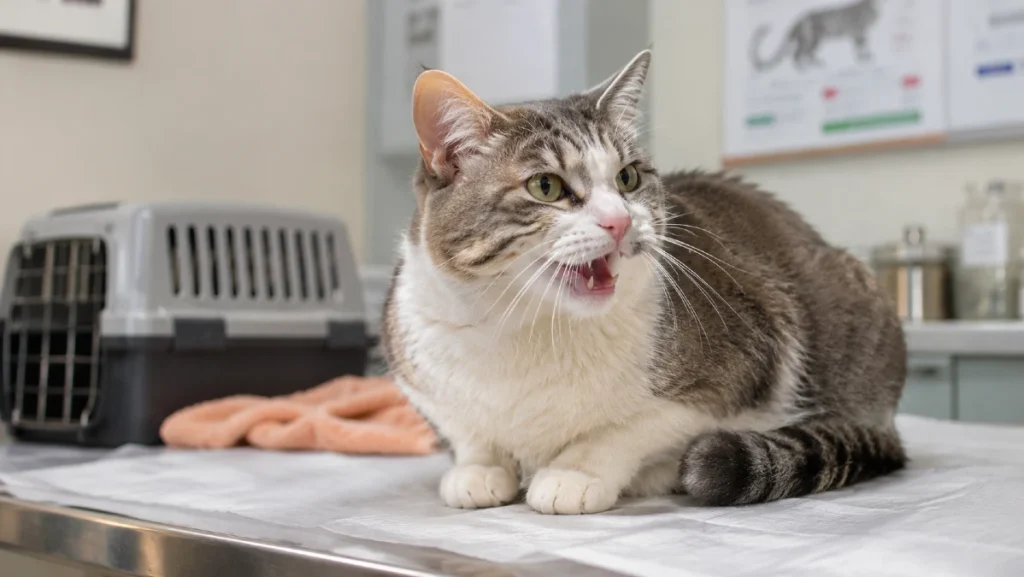
Most cats that chirp while watching birds are showing normal behavior. However, unusual jaw movements are not always connected to excitement or hunting.
If your cat suddenly begins chattering when no birds, insects, or toys are present, pay closer attention. The same applies if the behavior becomes much more frequent or starts happening during meals.
PetMD identifies jaw chattering while eating as one possible sign of dental problems, including painful tooth resorption. Cats with mouth discomfort may also have trouble chewing or begin avoiding certain foods.
Watch for additional warning signs.
- Excessive drooling or blood in the saliva
- Difficulty chewing or dropping food
- Pawing repeatedly at the mouth
- Bad breath with visible mouth discomfort
- Reduced appetite or changes in eating habits
- New or unexplained jaw movements
If you notice these problems, arrange a veterinary examination. Mouth pain can be difficult to recognize because cats may continue acting normally despite discomfort.
A short video of the unusual movement can be helpful when explaining the problem to your veterinarian. Try to record the behavior without disturbing or frightening your cat.
If your cat has difficulty breathing, collapses, or appears to be choking, seek emergency veterinary care immediately. These symptoms should never be treated as normal chirping.
For a cat that only chirps while watching birds and otherwise behaves normally, there is usually no need to panic. Keep an eye on any changes and mention concerns during routine veterinary visits.