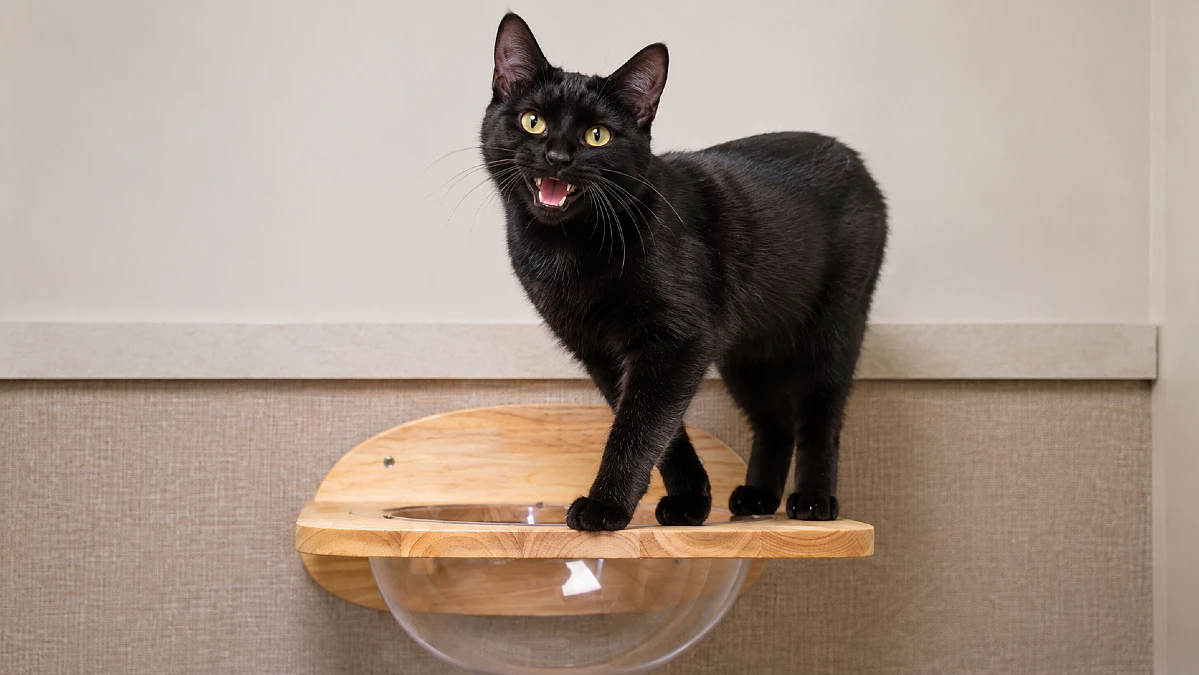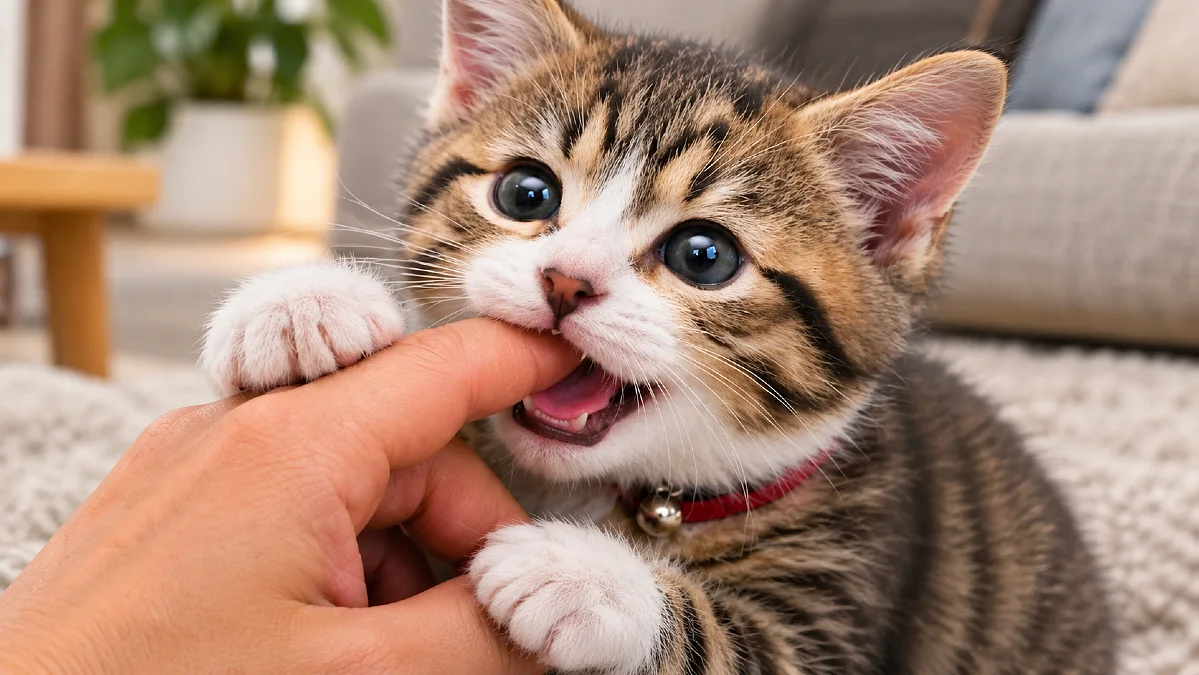
You buy your cat good food, comfortable beds, interesting toys, and perhaps an expensive cat tree. You make sure their bowl is full and their favorite blanket is always nearby. Yet one question still bothers you: Does your cat truly love and trust you, or do they simply enjoy the things you provide?
Cats rarely show affection in the obvious ways people expect. Instead, they communicate through small actions that are easy to overlook. A quiet greeting at the door, a slow blink across the room, or a paw resting against your leg may reveal more than you realize.
The good news is that researchers have found real evidence that cats can develop strong emotional bonds with their caregivers. Many common cat behaviors can also provide useful clues about how safe and comfortable they feel around you.
How Greeting You at the Door Can Reveal a Strong Bond
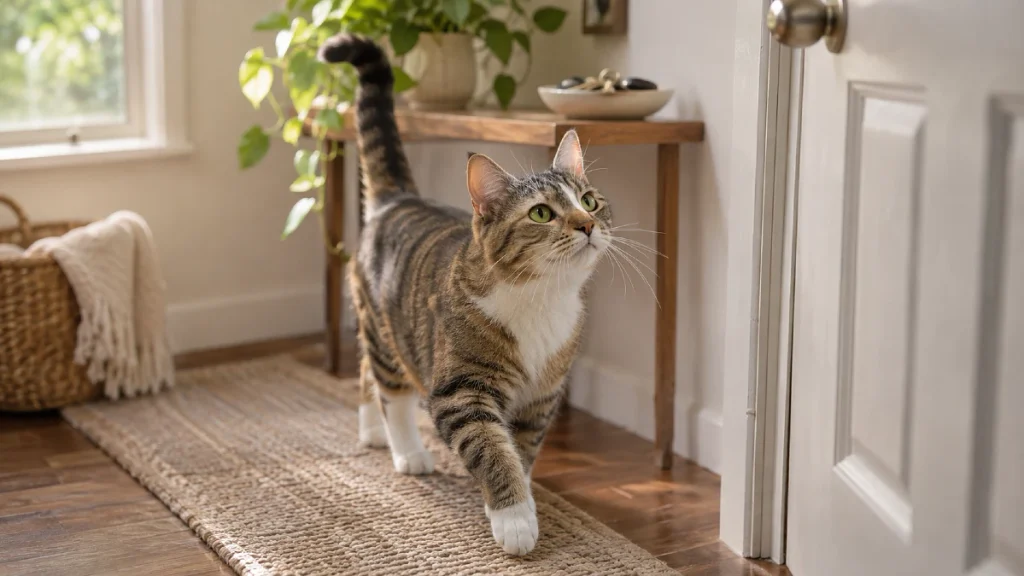
You come home after a long day, turn your key, and find your cat waiting just inside the door. Before you can put down your bag, they walk toward you with their tail raised. They may rub against your legs, make a soft sound, or simply stand nearby.
It’s easy to assume your cat wants dinner. Sometimes that is exactly what they want, but a relaxed greeting can also be a sign that your cat enjoys your company.
Researchers at Oregon State University published an important study in 2019 showing that cats can form secure attachment bonds with their caregivers. Among 70 kittens whose attachment patterns could be classified, 64.3% showed secure attachment behavior.
The researchers also studied adult cats and found similar patterns. Their findings suggest that many cats can use familiar humans as a source of comfort and security.
That does not mean every cat waiting beside a door has been missing you. Cats also learn daily routines and recognize sounds associated with their owners returning home.
Is Your Cat Greeting You or Asking for Something?
Your cat’s behavior immediately after you enter can help you recognize what they might need. Watch their whole body rather than judging the greeting alone.
| Behavior | Possible Meaning | What to Do |
|---|---|---|
| Raised tail and rubbing | Friendly greeting | Offer gentle attention |
| Walking toward the food bowl | Food or routine | Check feeding schedule |
| Hiding with tense posture | Fear or stress | Allow quiet space |
| Unusual crying or agitation | Discomfort or another need | Check for changes |
A friendly greeting is especially encouraging when your cat seems relaxed and stays near you after you have settled in. If they approach without expecting food every time, they may simply enjoy having you home.
You do not need to turn every homecoming into a long cuddle session. A calm greeting and allowing your cat to choose how much attention they want can strengthen your daily routine together.
Why Your Cat’s Slow Blink Is Such a Meaningful Trust Signal
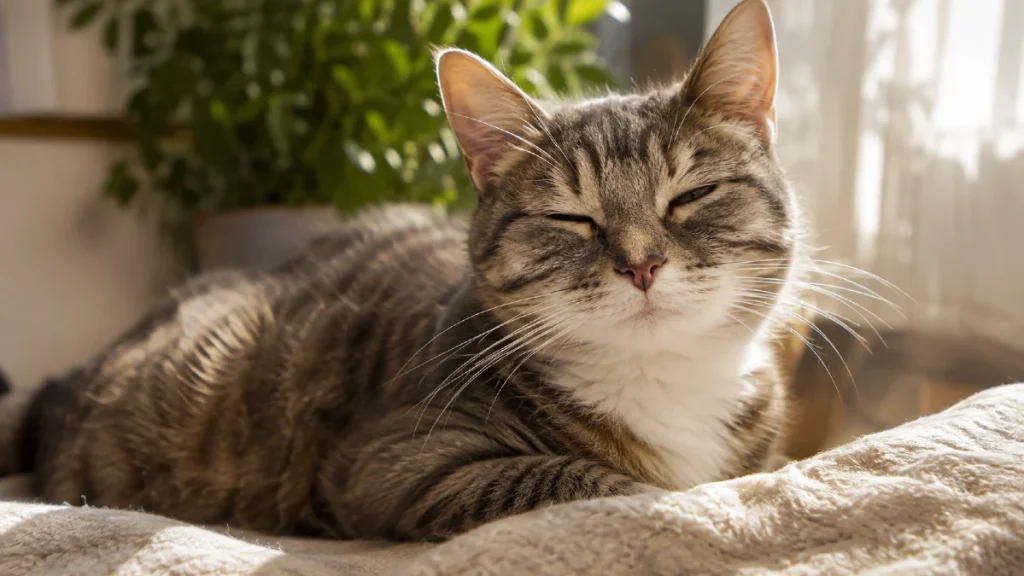
Have you ever noticed your cat watching you from across the room before slowly closing and opening their eyes? The movement may look like a sleepy blink, but it can serve an important role in feline communication.
Cats use their eyes to communicate information about how they feel. A relaxed gaze with soft, partly closed eyes often appears when a cat feels comfortable.
In 2020, researchers at the University of Sussex published a study in Scientific Reports examining slow blinking between cats and humans. They found that cats responded to human slow blinking with more eye narrowing movements.
In another experiment, cats were more likely to approach an unfamiliar researcher after that person used a slow blink expression. The findings suggest that slow blinking can be a form of positive communication between humans and cats.
You can try this simple interaction with your own cat. Sit somewhere comfortable, keep your face relaxed, and slowly narrow and close your eyes before opening them again.
Avoid staring directly at your cat for long periods. Cats Protection explains that prolonged staring can make some cats uncomfortable, while a relaxed expression may encourage a friendlier response.
If your cat slowly blinks back, that is a lovely sign of a comfortable interaction. If they simply look away or go back to sleeping, that is perfectly normal too.
The important thing is allowing your cat to respond naturally. Trust grows when your cat learns that being near you does not come with pressure or unwanted attention.
What Your Cat Is Really Saying When They Bring You Things
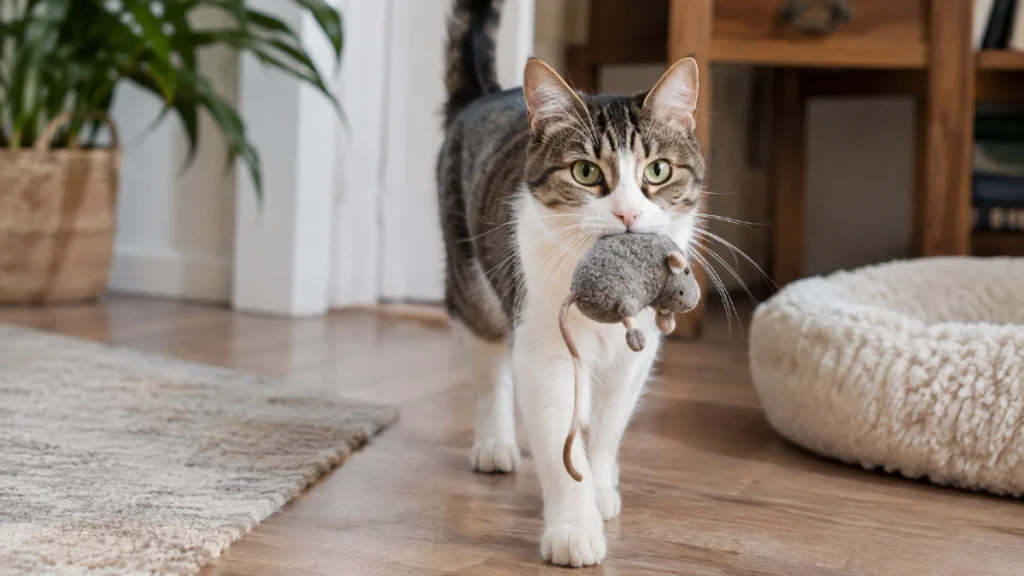
You are sitting on the couch when your cat suddenly appears carrying a toy mouse. They drop it beside your feet, look at you, and perhaps walk away as though their work is finished.
Some cats carry socks, stuffed toys, or other household objects. Cats with outdoor access may even bring home prey, which can be a much less pleasant surprise.
Many people believe these objects are gifts meant to show love. However, the explanation is more complicated than that.
According to Cats Protection, cats may bring captured prey into the home because it is a familiar, secure place. Bringing prey home does not necessarily mean they are trying to feed you or teach you how to hunt.
Cats are natural predators, and hunting behavior remains part of their instincts even when they receive regular meals. Carrying and moving objects can also be part of normal play.
Still, there can be something encouraging about your cat choosing to carry a favorite toy into the room where you spend time. It may be an invitation to play or simply another way they include you in their daily activity.
The best response is to encourage safe, natural play. If your cat brings a toy, try moving it gently across the floor or offering a short game with a wand toy.
Products such as the Cat Dancer interactive toy and KONG Kickeroo can provide different ways for cats to chase, catch, and wrestle with objects. A simple homemade toy can also work well if it is safe and does not contain loose parts that could be swallowed.
If your cat brings home actual prey, avoid punishing them. Focus on safe cleanup, preventing unnecessary hunting when possible, and providing suitable indoor activities.
Your cat does not need to bring you presents to prove affection. What matters more is whether they feel comfortable playing, resting, and interacting around you.
Why Your Cat Shows Their Belly but Might Refuse a Belly Rub
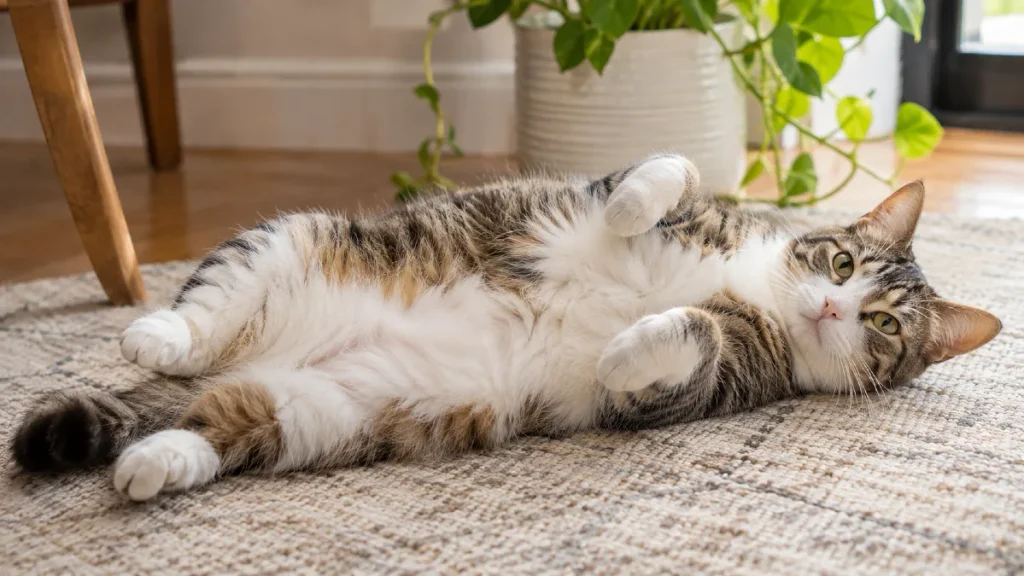
Your cat suddenly rolls onto their back while you are walking through the room. Their paws curl slightly, their stomach faces upward, and they look completely relaxed.
Naturally, you reach down to give them a belly rub. Seconds later, they grab your hand, kick with their back feet, or move away.
This can feel confusing, especially when your cat seemed so friendly just moments earlier. But showing the belly and inviting someone to touch it are two different things.
A cat’s abdomen is a sensitive and vulnerable part of their body. When a relaxed cat exposes it in a familiar setting, the behavior can suggest they feel comfortable with their surroundings.
Cats Protection and PDSA both explain that rolling onto the back can be part of a friendly greeting. However, they also caution that it usually should not be treated as an automatic invitation to rub the stomach.
The meaning also depends on how the rest of the body looks. A loose, comfortable cat is very different from one lying on its back with tense muscles and claws ready to strike.
What Your Cat’s Belly Position Really Means
Before reaching toward an exposed belly, check the cat’s ears, paws, tail, and overall posture. These details help you choose a response that respects their comfort.
| Body Language | Possible Meaning | Best Response |
|---|---|---|
| Loose body and relaxed paws | Comfort | Speak gently |
| Rolling with soft eyes | Friendly greeting | Offer cheek rub |
| Stiff body and flat ears | Fear or tension | Give space |
| Claws out and swatting | Defensive response | Stop touching |
A relaxed cat may enjoy being acknowledged without being touched at all. Others prefer gentle strokes around the cheeks, chin, or head.
The next time your cat shows their belly, resist the urge to reach for it immediately. Letting them feel safe without demanding physical contact is one of the simplest ways to protect their trust.
How Following You Around Can Show Affection Instead of Anxiety
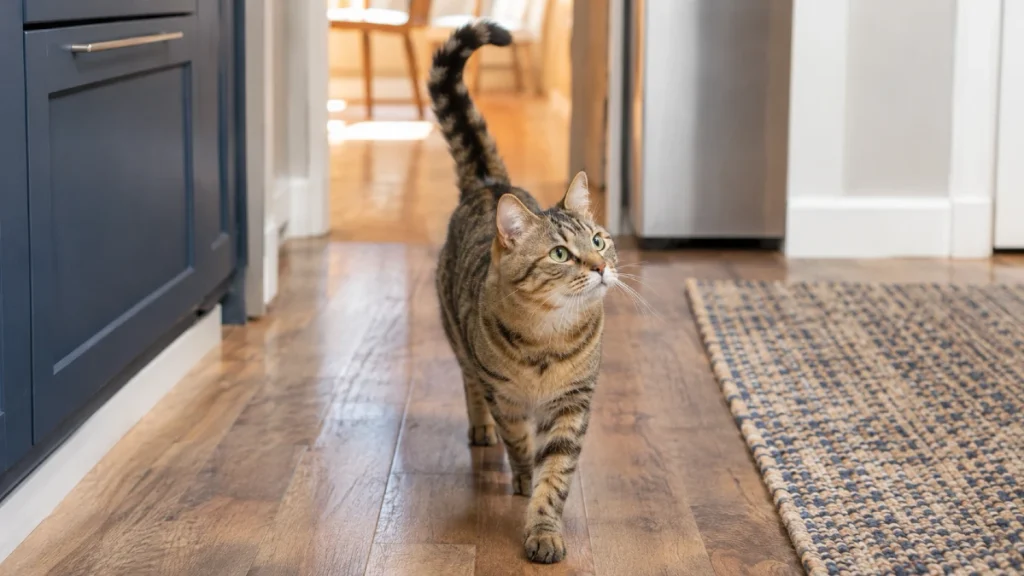
You get up to make coffee, and your cat follows you into the kitchen. You walk into the bathroom, and they settle outside the door. When you sit down to work, they find a comfortable spot nearby.
This behavior can feel like having a tiny shadow following you everywhere. While it can be a sign of affection, cats have several reasons for staying close to their owners.
Some cats follow people because they are curious about what is happening. Others expect food, attention, play, or a familiar part of their daily routine.
PetMD’s 2026 guidance on why cats follow their owners explains that bonding, curiosity, hunger, and stress can all contribute to this behavior. The surrounding circumstances help reveal which explanation is more likely.
A cat that calmly follows you and settles down nearby may simply enjoy your presence. They are choosing to spend time around you without showing obvious distress.
However, constant following is not always a positive sign. Some cats become distressed when separated from familiar people, especially after major changes in their routine.
Affection or Anxiety: How to Tell the Difference
The American Animal Hospital Association identifies several behaviors that can occur when pets experience separation distress. The table below helps distinguish relaxed companionship from behavior that deserves closer attention.
| Behavior | More Likely Explanation | Your Next Step |
|---|---|---|
| Calmly follows and rests | Social interest | Allow companionship |
| Watches you, then relaxes | Curiosity or routine | Continue normally |
| Persistent crying when alone | Possible separation distress | Seek veterinary advice |
| Sudden clinginess with other changes | Possible illness or stress | Arrange a vet visit |
One important clue is whether your cat can settle comfortably when you are not beside them. A cat that follows you sometimes but also enjoys independent rest is generally showing normal social behavior.
If your cat becomes unusually vocal, stops eating normally, or suddenly changes their behavior, do not assume they are simply becoming more affectionate. A veterinarian can help check for illness, pain, or anxiety.
What It Means When Your Cat Sleeps Touching You
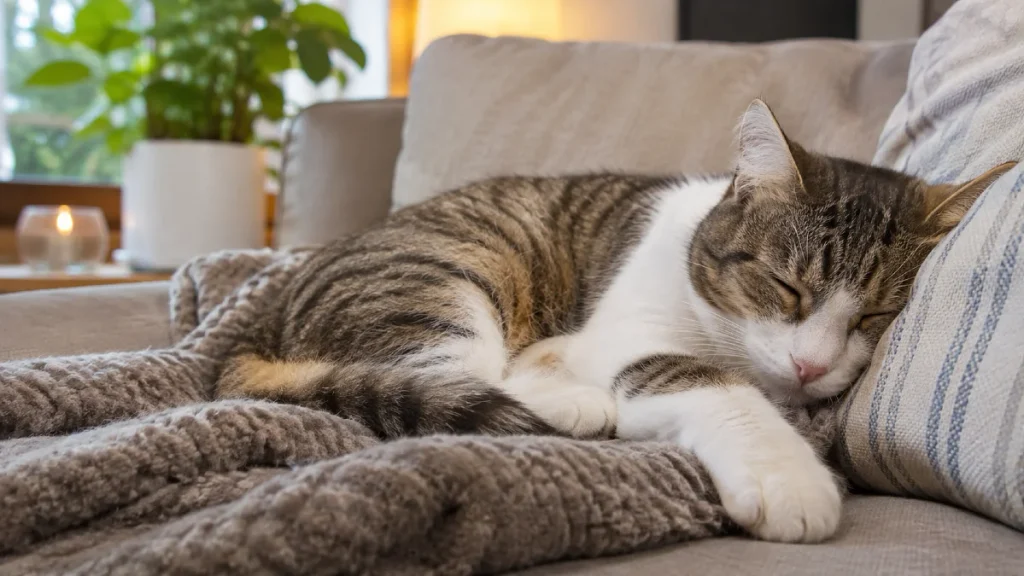
You are relaxing on the couch when your cat climbs beside you and falls asleep. They might rest their head against your arm, stretch a paw across your leg, or press their back gently against you.
Sometimes the contact is so small that you barely notice it. Yet your cat could have chosen another place to rest.
Cats need comfortable sleeping areas where they feel secure. Familiar smells, predictable surroundings, warmth, and peaceful conditions all influence where they choose to settle.
The AAFP and ISFM Feline Environmental Needs Guidelines explain that cats benefit from safe resting places and familiar environments. They also describe close resting as one form of friendly social behavior between cats that share a bond.
When your cat repeatedly chooses to sleep beside you, it may suggest that your presence is comfortable and familiar. Physical closeness can be part of how cats maintain social connections.
However, there are other reasons for this behavior. Your body provides warmth, and your usual seat may simply be one of the most comfortable places in the house.
The strongest clue comes from the overall pattern. A cat that approaches voluntarily, relaxes their muscles, and sleeps peacefully beside you is showing comfort in that moment.
Let your cat choose when to come and go. Avoid holding them in place or waking them just because you want another cuddle.
Some cats prefer sleeping against a person’s legs, while others choose a nearby chair or blanket. Both can be perfectly normal for a cat that feels secure at home.
If your cat chooses to rest with one little paw touching you, enjoy the moment. Quiet companionship is often a wonderful part of sharing your home with a cat.
Why Your Cat Kneads on You When They Feel Comfortable
Your cat climbs onto your lap, settles into a comfortable position, and begins pressing their front paws against you. One paw pushes down, then the other, creating a slow rhythm that looks like someone making bread dough.
Many cat owners call this behavior making biscuits. It can be especially sweet when your cat purrs, closes their eyes, and settles into your lap.
Kneading begins very early in a cat’s life. Kittens press their paws against their mother’s body while nursing, which helps stimulate milk flow.
Some cats continue this behavior throughout adulthood. Blue Cross and VCA Animal Hospitals explain that adult kneading may be linked to comfort, relaxation, preparing a resting place, or scent marking.
Cats have scent glands in their paws, so kneading can also leave familiar scent signals behind. This means the behavior can serve more than one purpose.
When your cat voluntarily climbs onto you and begins kneading with a relaxed body, it can be a sign that they feel comfortable and secure in your presence.
That does not mean kneading happens only with a favorite human. Cats may knead blankets, pillows, beds, and other soft surfaces, and some cats rarely knead at all.
A March 2026 veterinary review published by PetMD confirms that kneading is a normal behavior with several possible explanations. It is not a reliable test of how much a cat loves someone.
If those little claws become uncomfortable, try placing a thick blanket across your lap. You can also keep your cat’s nails properly trimmed and offer a soft resting surface.
Avoid pushing your cat away roughly or punishing them for kneading. They are displaying a natural behavior and may not realize their claws are hurting you.
If kneading suddenly becomes excessive or appears alongside hiding, appetite changes, or other unusual behaviors, consider speaking with your veterinarian. Cats sometimes use comforting behaviors when they are stressed or feeling unwell.
For many owners, a calm kneading session is one of the sweetest ways a cat chooses to spend time with them. The important part is the comfortable interaction, rather than treating the behavior as proof of an exclusive bond.
How to Make Your Cat Feel Safer and Strengthen Their Trust
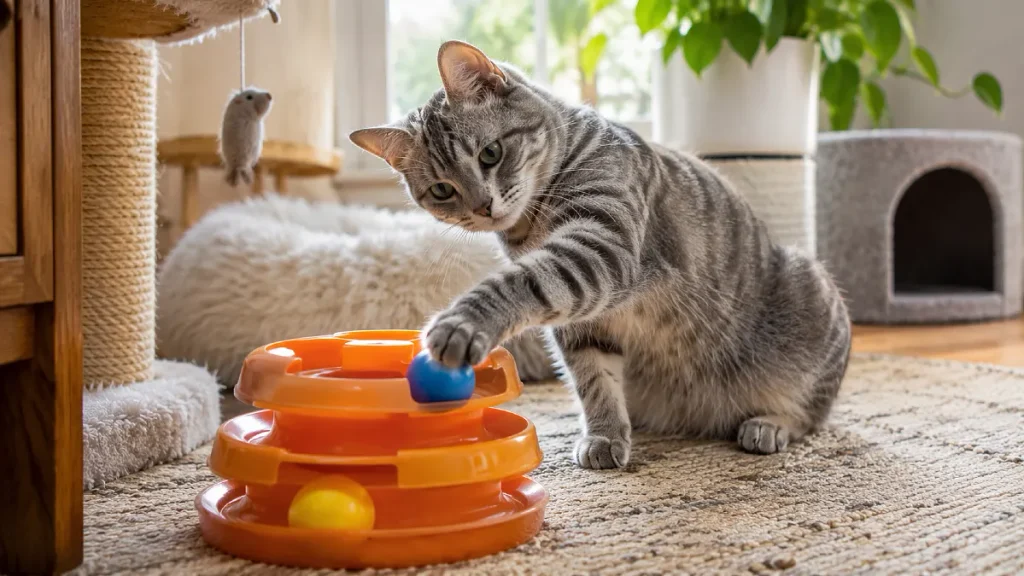
Recognizing the signs your cat trusts you is helpful, but what you do in response matters just as much. A strong relationship develops when your cat can predict your behavior and feels comfortable making choices.
The AAFP and ISFM Feline Environmental Needs Guidelines emphasize positive, predictable interactions, safe spaces, and opportunities for natural behavior. These simple practices help cats feel more secure in their daily surroundings.
You can support that sense of safety without spending much money. Start with a few habits that match your cat’s personality and needs.
- Let your cat approach first. Sit quietly and allow them to choose when they want attention, rather than repeatedly picking them up.
- Keep daily routines predictable. Feed, play, and provide quiet resting opportunities at fairly consistent times.
- Offer appropriate play. Use a wand toy or another safe interactive toy to encourage chasing and catching.
- Provide comfortable hiding spots. Give your cat access to a cardboard box, covered bed, or quiet resting area where they will not be disturbed.
- Respect their stopping signals. If your cat moves away, flattens their ears, swishes their tail sharply, or becomes tense, give them space.
- Watch for changes in behavior. Sudden hiding, unusual aggression, or major changes in affection can sometimes signal stress or illness.
Food puzzles can also make daily life more interesting. A product such as the Catit Senses 2.0 Food Tree encourages cats to use their paws to reach food, although a suitable homemade feeding puzzle can offer similar enrichment.
You do not need to purchase something new every time your cat seems bored. Rotating existing toys, offering supervised play, or creating a quiet resting spot may be enough to improve their routine.
Perhaps the most useful habit is learning when your cat wants interaction and when they want privacy. Cats Protection encourages owners to pay attention to subtle body language rather than assuming every friendly action means the cat wants to be touched.
Remember that every cat has a different personality. A shy cat that quietly sits nearby may feel just as comfortable with you as an outgoing cat that demands attention.
The goal is not to make your cat perform every affectionate behavior. It is to create a home where they can relax, play, rest, and approach you without fear.