Your cat follows you into the bathroom, sleeps beside you, and sometimes stares at you like you are the most important person in the house. But the moment you reach out for a cuddle, they might walk away. It leaves you wondering whether your cat sees you as their mother or simply enjoys having you around.
The answer is more interesting than you might expect. Cats can form strong emotional bonds with their human caregivers, and some of their most familiar behaviors resemble the ways kittens interact with their mothers.
Research from Oregon State University has shown that many cats use their caregivers as a source of comfort and security. That does not mean they literally mistake humans for their mothers, but it does show that these relationships can be meaningful.
How a Belly Display Can Show Your Cat Trusts You
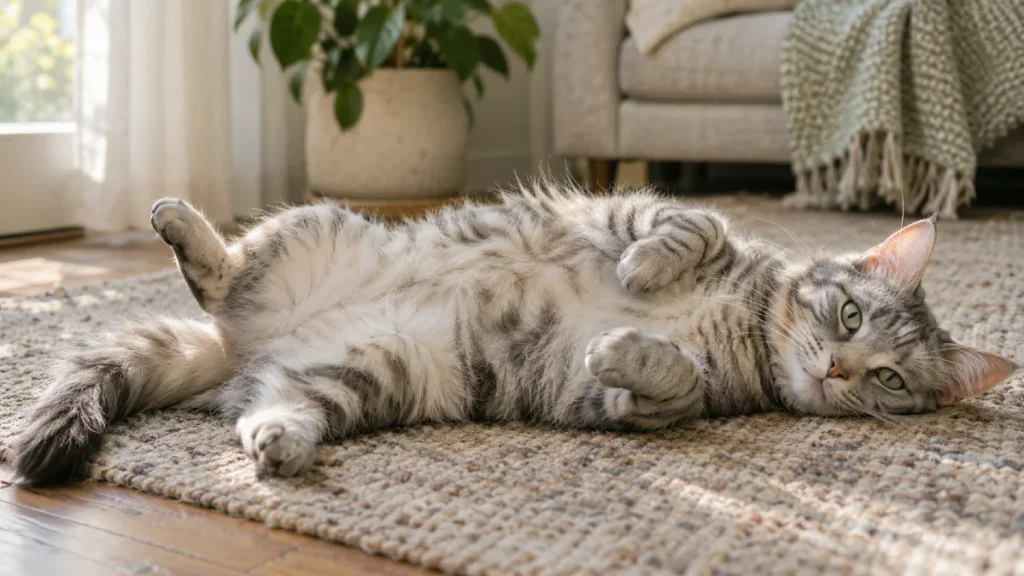
Your cat suddenly rolls onto their back, stretches their paws into the air, and shows you their belly. It looks like an invitation for a good belly rub, but that is not always what they want. In many cases, they are simply feeling relaxed and comfortable.
A cat’s belly is a sensitive area, so displaying it while resting can be a sign of confidence. Cats Protection explains that a relaxed belly display often shows trust, although some cats also use a similar position when defending themselves.
The key is to watch the whole body, not just the exposed belly. Soft eyes, loose paws, and relaxed ears suggest comfort, while stiff muscles or flattened ears may signal something different.
How to Read Your Cat’s Belly Body Language
These clues can help you tell whether your cat is enjoying the moment or wants some space. Always consider what happened just before the behavior.
| Behavior | Likely Meaning | Best Response |
|---|---|---|
| Relaxed body, belly exposed | Comfortable or greeting | Let them relax |
| Stiff body, ears flattened | Fear or defense | Give them space |
| Grabbing your hand | Touch is unwelcome or playful | Stop belly touching |
| Leaning into gentle petting | Enjoying contact | Continue briefly |
Remember that a cat can trust you deeply without wanting their stomach touched. Respecting that boundary helps keep future interactions comfortable.
Why Your Cat Grooms You Like Someone in Their Family
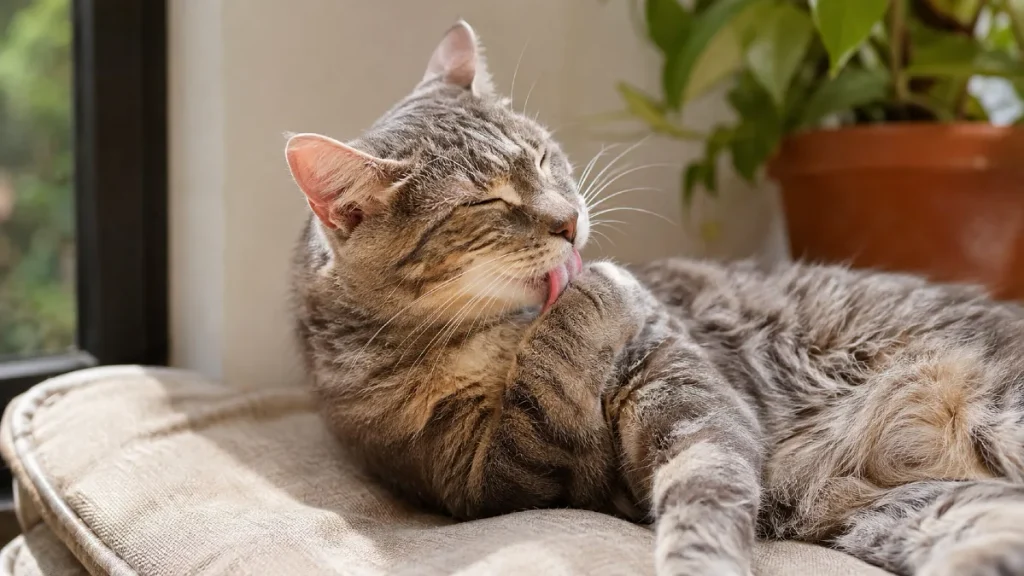
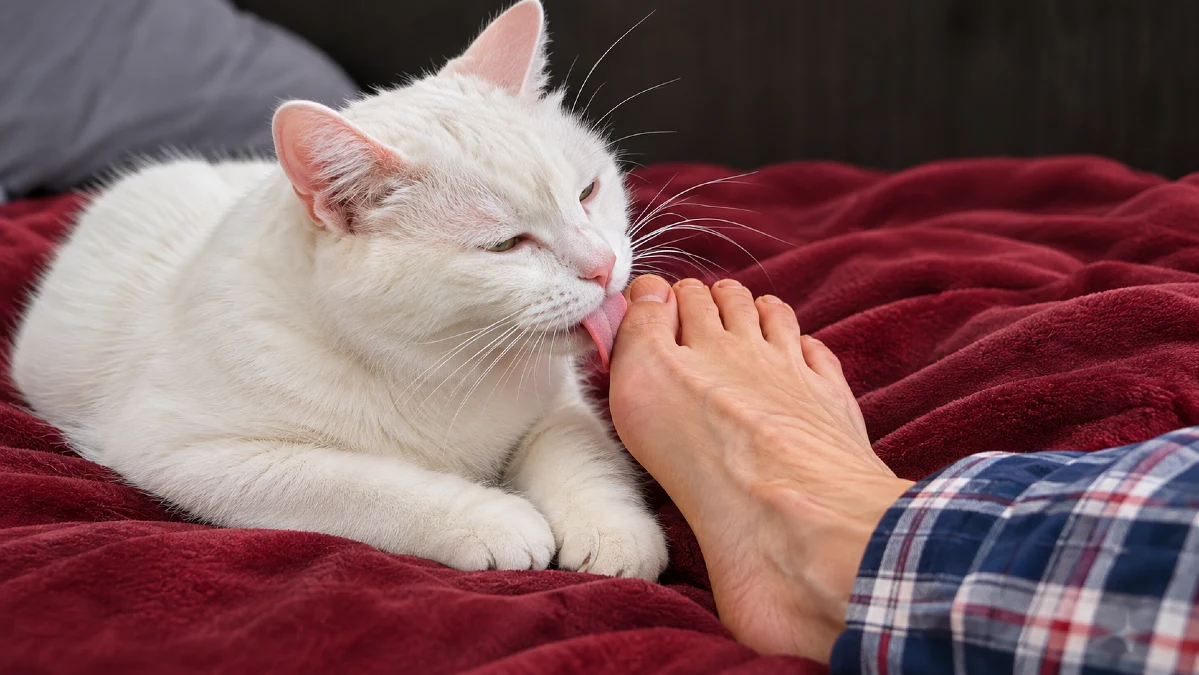
You are relaxing on the couch when your cat begins licking your hand, arm, or even your hair. Their rough tongue might feel strange, but this behavior can be connected to the way cats build social relationships.
Mother cats groom their kittens to keep them clean, and cats that share a friendly bond sometimes groom each other. This behavior is called allogrooming, and it can help support social connections.
PetMD’s 2026 veterinary review explains that cats may lick their owners as a form of affection or social bonding. Your cat might be treating you as a familiar member of their social group rather than simply a person who provides food.
However, grooming does not always mean affection. Some cats lick because they enjoy the taste of skin, want attention, or feel stressed.
Watch how your cat behaves before and after licking you. If they seem relaxed and settle beside you afterward, the interaction may be friendly. If licking suddenly becomes excessive or comes with other behavior changes, ask your veterinarian for advice.
Why Your Cat Sits Close Without Asking to Be Touched
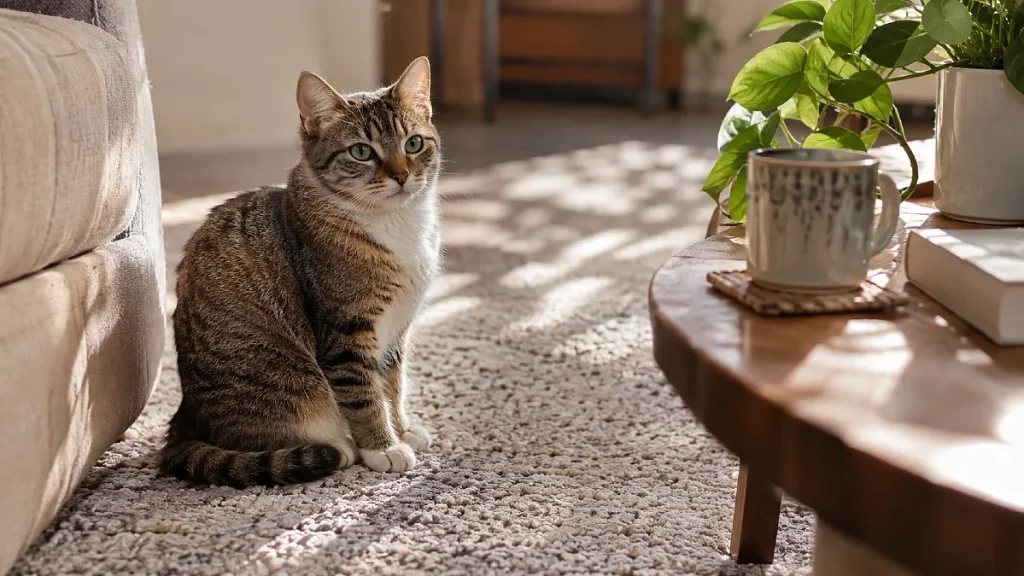
Your cat does not always need to sit on your lap to enjoy your company. Sometimes they choose a nearby chair, the other end of the couch, or a comfortable spot on the floor.
You might assume they are ignoring you because they are not asking for attention. But choosing to stay nearby can be a sign of social comfort, especially when your cat has other places to rest.
The AAFP and ISFM Feline Environmental Needs Guidelines explain that many cats prefer frequent but gentle interactions. They often feel more comfortable when they can decide how close to get and when contact should end.
This means your independent cat may still enjoy being around you. They simply prefer companionship without constant touching.
Try sitting quietly and offering your hand without reaching directly for them. If your cat approaches, let them decide whether they want a gentle stroke. Giving them that freedom can make spending time together more pleasant.
Does Sleeping Near You Mean Your Cat Sees You as Their Mother?
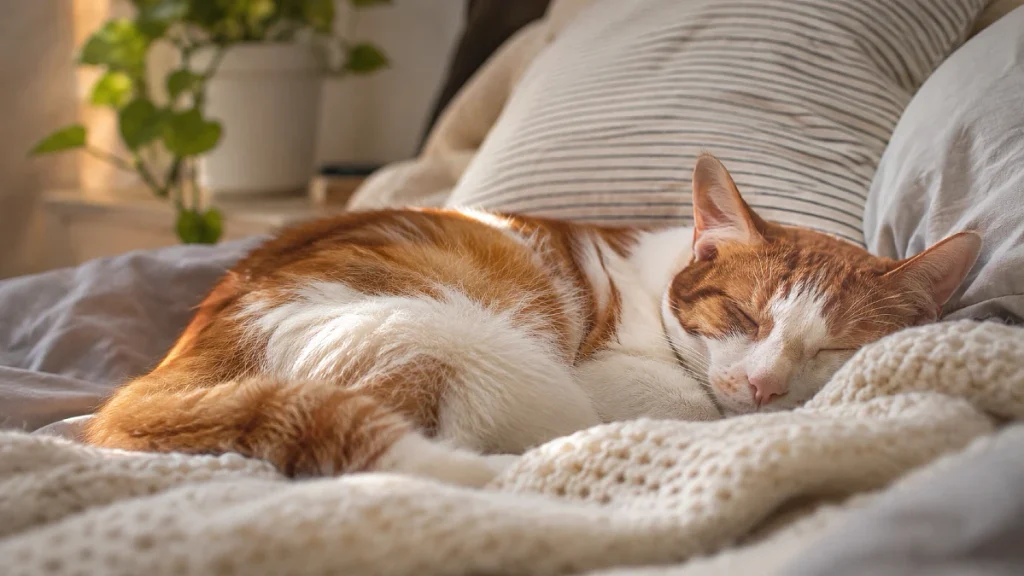
Your cat has several comfortable places to sleep, yet they keep choosing the space beside your pillow or against your legs. Sometimes they settle on your chest and begin purring before falling asleep.
Sleeping close to a person can be a positive sign because cats usually prefer resting places where they feel comfortable. They may enjoy your warmth, familiar scent, and the soft surface of your bed.
Cats Protection identifies warmth, comfort, and bonding as common reasons cats sleep on their owners. Cats that are friendly with one another may also sleep touching each other, so physical closeness can be part of a social relationship.
A cat that regularly chooses to rest beside you may feel safe in your presence. That is similar to the comfort a young kitten receives from a trusted caregiver, although it does not prove your cat believes you are its mother.
Do not worry if your cat prefers sleeping alone. Some cats need more personal space, especially when the room is warm or they want to rest without being disturbed.
What matters is whether your cat seems relaxed around you and willingly spends time nearby. A peaceful cat sleeping a few feet away may feel just as secure as one curled up on your chest.
Why Your Cat Chooses Your Clothes When You Are Away
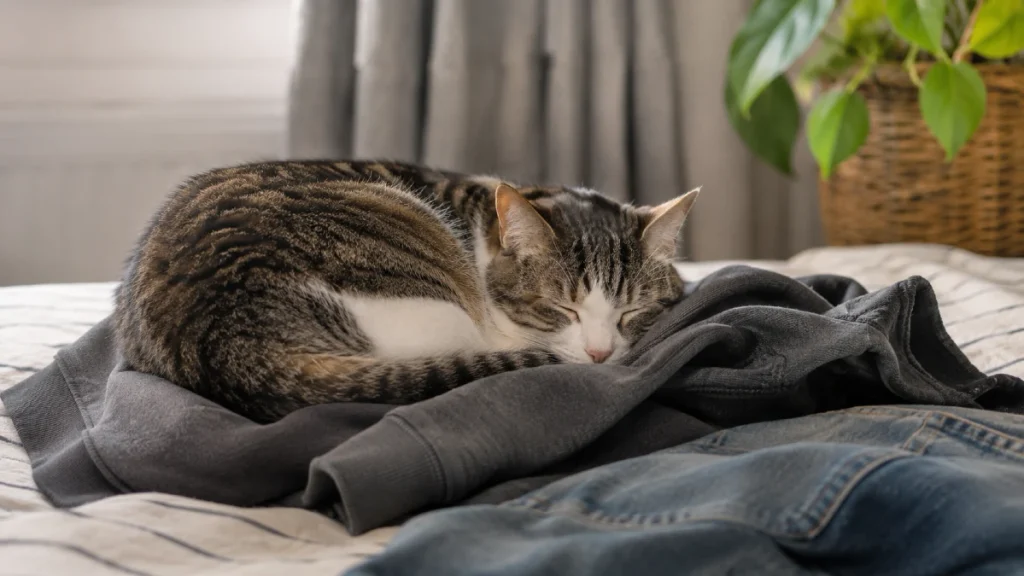
You leave a sweater on the bed and return to find your cat sleeping directly on top of it. There is an empty cat bed nearby, but your clothing seems much more appealing.
Cats rely heavily on their sense of smell to recognize people and explore familiar surroundings. A 2025 study published in PLOS One found that cats could distinguish familiar human odors from unfamiliar ones.
Your clothes carry scents from your body and daily activities, which may make them interesting to your cat. The fabric might also be soft, warm, or located in a favorite sleeping spot.
It is tempting to assume that sleeping on your clothes always means your cat misses you. However, research does not fully support that conclusion.
A 2021 study discussed by the American Veterinary Society of Animal Behavior found that an owner’s scent alone did not provide the same comfort as the owner’s actual presence in a brief stressful situation.
If your cat enjoys resting on your clothing, there is usually no reason to discourage it. You can offer a soft blanket in their favorite sleeping area, but remember that your presence and daily care matter more than any single scented object.
What Your Cat’s Special Greeting Says About Your Bond
You walk through the front door, and your cat appears almost immediately. Their tail rises, they make a small chirping sound, and they begin rubbing against your legs before you can put your bag down.
This kind of greeting can be a lovely sign that your cat is pleased to see you. Cats use body language, sound, and physical contact to communicate with familiar people.
PDSA and Blue Cross explain that an upright tail often signals friendly intentions. A little movement at the tip can also appear when a cat is excited.
Some cats greet their favorite people with gentle head bumps or by weaving between their legs. Others prefer a quiet approach, especially if they have a naturally reserved personality.
Reading Your Cat’s Greeting Signals
Some greetings are friendly invitations, while others show that your cat needs space. The table below can help you respond appropriately.
| Signal | What to Check | Your Response |
|---|---|---|
| Tail held high | Loose, relaxed body | Offer attention |
| Soft trill | Calm approach | Speak gently |
| Head rubbing | Cat moves closer | Allow contact |
| Tail puffed up | Stiff body or fear | Give space |
These signals are especially useful when considered together. One friendly greeting does not prove that you are your cat’s favorite person, but repeated comfortable interactions can show a positive relationship.
Why Your Cat Sits on Your Laptop, Papers, or Books
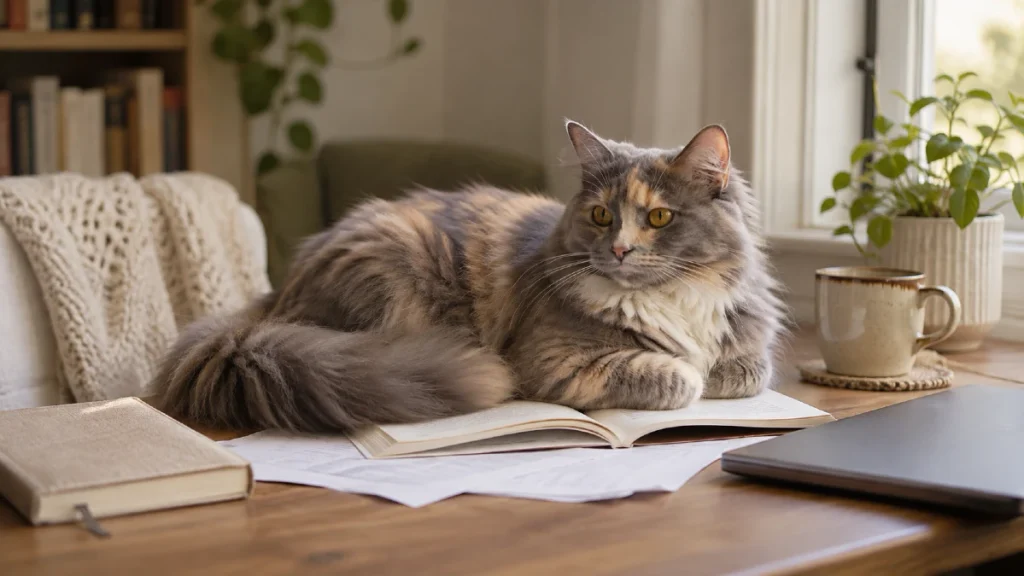
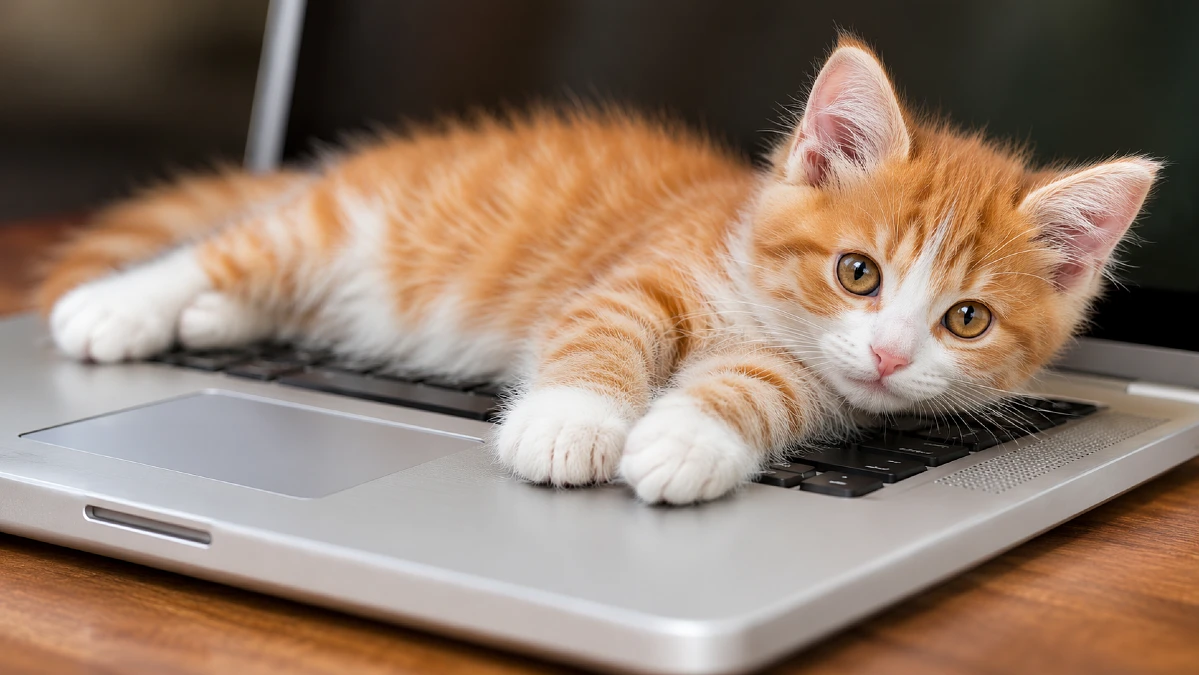
You open your laptop to finish some work, and your cat immediately settles across the keyboard. If you move them, they may return a few minutes later and place themselves directly in front of the screen.
It can feel like your cat is demanding your complete attention. That is one possible explanation, but it is not the only one.
VCA Animal Hospitals notes that cats may be attracted to keyboards because of familiar scents, attention, or the activity around the desk. A laptop can also provide warmth, while books and papers offer convenient surfaces for resting.
Your cat may have learned that sitting on your work brings an immediate reaction. Even when you gently move them, they still receive your attention.
Rather than repeatedly pushing your cat away, give them a better place to settle nearby. A soft cat bed or sturdy perch beside your desk allows them to stay close without interrupting your work.
Try offering a short play session before you begin a long task. This gives your cat a chance to interact with you and may help them settle while you concentrate.
Why Your Cat Follows You From Room to Room
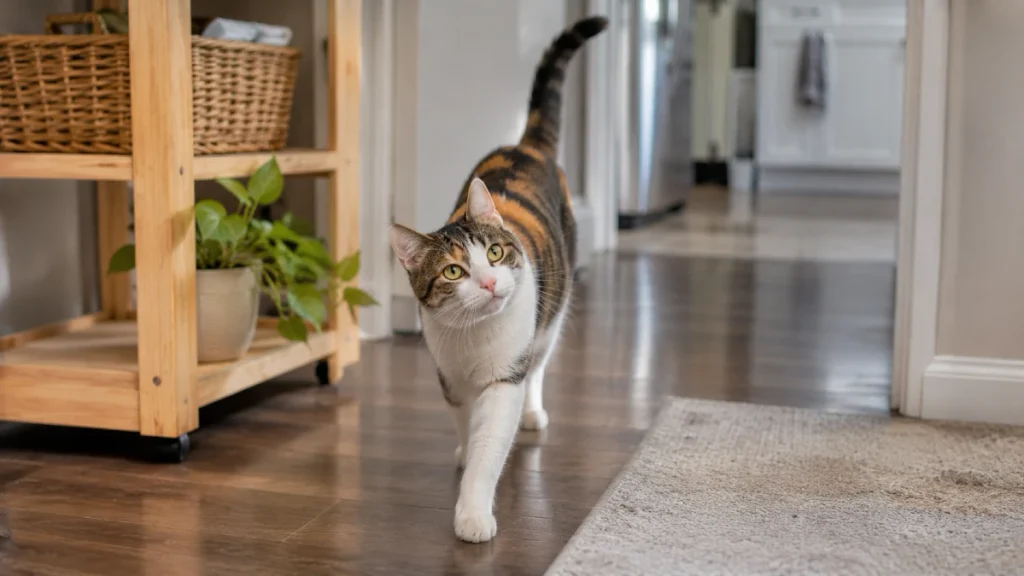
You leave the living room, and your cat gets up too. You enter the kitchen, and they appear behind you. When you close the bathroom door, they may wait outside until you return.
It is easy to assume that your cat must be deeply attached because they want to follow your every movement. In many cases, following can be related to companionship, curiosity, or the hope of food and play.
There is real evidence that cats form attachment bonds with humans. A 2019 Oregon State University study, published in Current Biology, found that 64.3% of the 70 classifiable kittens showed secure attachment patterns during a caregiver attachment test.
Cats showing secure attachment were generally able to settle after their caregiver returned and continue exploring their surroundings. This suggests that a familiar person can help some cats feel comfortable.
When Following Is Normal and When It Needs Attention
Following is usually harmless when your cat appears calm and can spend time alone without becoming distressed. However, sudden changes deserve closer attention.
| Behavior | Possible Explanation | What to Do |
|---|---|---|
| Calmly follows you | Interest or companionship | Enjoy the company |
| Waits near feeding area | Expecting food | Keep meals consistent |
| Cries or scratches when left alone | Possible distress | Ask a veterinarian |
| Suddenly becomes very clingy | Stress or health change | Check for other symptoms |
A cat that follows you everywhere is not automatically anxious. Look for changes in appetite, grooming, sleep, or activity before deciding that something is wrong.
What It Means When Your Cat Rests a Paw on You
You are sitting quietly when your cat settles beside you and leaves one paw resting against your hand or arm. The contact is gentle, and they may continue sleeping without moving it.
That small gesture can feel especially affectionate because your cat has chosen to remain physically close. It may be another sign that they are comfortable sharing space with you.
Some cats naturally stretch their paws while resting, and others enjoy maintaining light physical contact. The important clue is whether your cat looks relaxed and willingly stays nearby.
There is no strong scientific evidence that resting a paw on you means your cat is checking that you are still there. It also does not prove that they are trying to protect you.
You can simply enjoy the moment without disturbing them. If your cat pulls away or changes position, allow them to move freely.
These small, peaceful interactions are often the easiest ways to enjoy the bond you have built. They may seem less dramatic than a loud greeting, but they can still be meaningful.
Why Your Cat Gives You Slow Blinks Instead of Staring
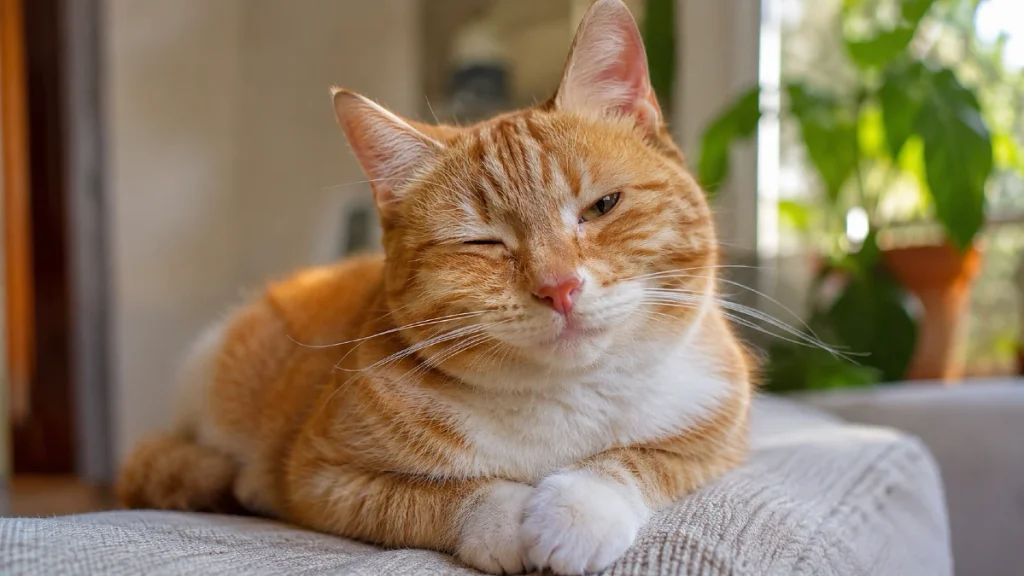
Your cat looks directly at you, slowly closes their eyes, and opens them again. You may have seen this hundreds of times without realizing it is part of feline communication.
Slow blinking is associated with positive social interactions between cats and people. It is one of the better studied examples of how cats use their eyes to communicate.
A 2020 study published in Scientific Reports found that cats showed more eye narrowing behavior when owners slowly blinked at them. In another experiment, cats were more likely to approach an unfamiliar person after that person used a slow blink.
The researchers suggested that slow blinking may help cats and humans communicate in a friendly way. It does not necessarily mean every blink is a declaration of love, but it is often a positive sign.
You can try this yourself when your cat is resting calmly. Look in their direction with a soft expression, slowly close your eyes, and gently open them again.
Avoid staring intensely or moving closer if your cat seems uncomfortable. Some cats will blink back, while others may simply remain relaxed.
A successful slow blink is about creating a comfortable interaction, not forcing a response. If your cat seems happy to continue resting nearby, that is already a positive outcome.
How Your Cat Uses Different Meows to Communicate With You
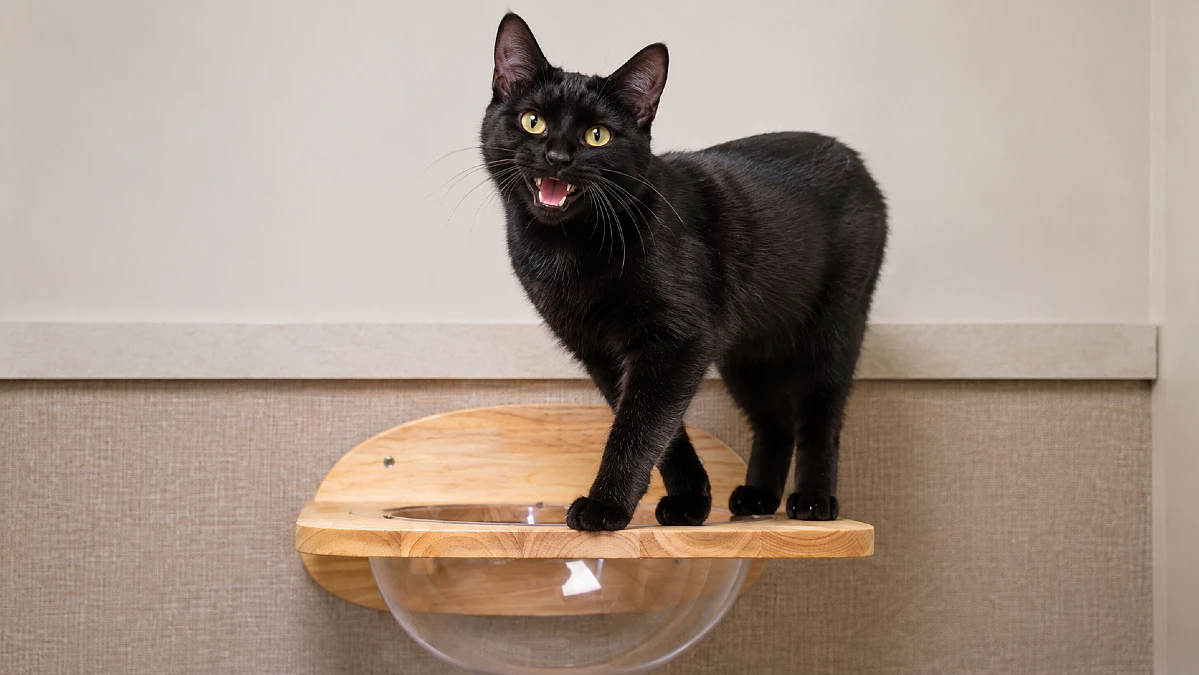
Your cat might make a short sound when you enter the room, a louder meow before dinner, and a soft trill while walking beside you. After living together for a while, you may begin recognizing what certain sounds usually mean.
Adult cats often use meowing to communicate with humans. Cats Protection explains that cats generally rely more on body language and scent when interacting with other adult cats, although vocal communication can still occur.
VCA Animal Hospitals also notes that cats may learn which sounds get particular responses from their caregivers. If you regularly answer a meow by opening a door or offering attention, your cat may repeat that behavior.
This does not mean every sound has a fixed meaning. A meow that usually appears around dinner might also occur when your cat wants company or notices something interesting.
Pay attention to the situation, their body posture, and what happens next. Over time, you may become better at recognizing the sounds your cat uses during everyday interactions.
If your normally quiet cat suddenly becomes very vocal, do not assume it is simply a new sign of affection. Changes in vocal behavior can sometimes be linked to stress, discomfort, or illness.
Why Your Cat Chooses You When Other People Are Around
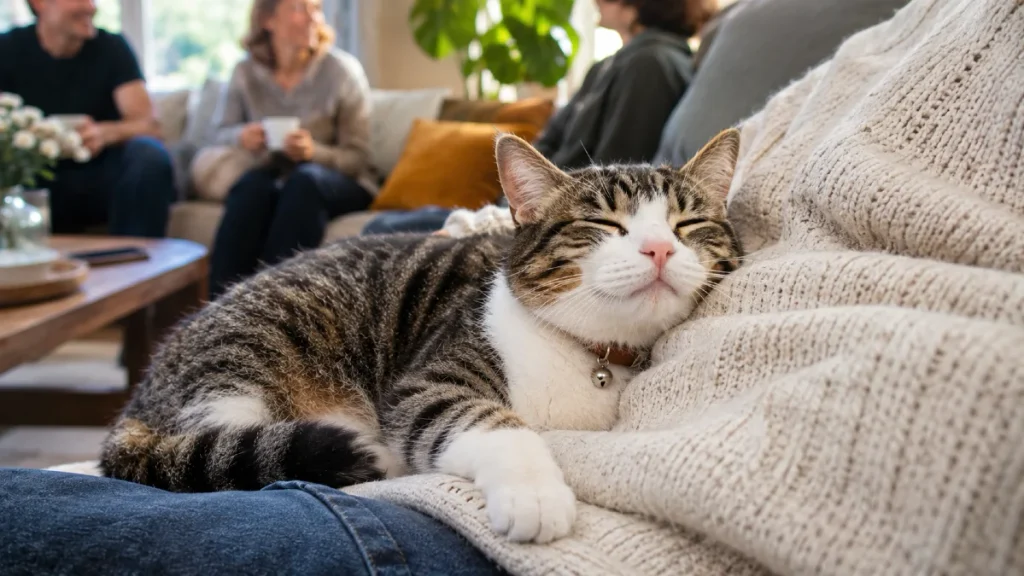
You have friends visiting, and several people try to encourage your cat to come closer. Despite all the attention, your cat walks past everyone and settles beside you.
That choice can feel meaningful, especially if your cat behaves differently when you are alone together. Cats can develop social preferences based on familiar experiences, comfortable handling, and predictable routines.
The AAFP and ISFM Feline Environmental Needs Guidelines explain that cats vary widely in their preferences for human interaction. Early experiences, personality, and past handling all influence how they respond to people.
Your cat may choose you because they know how you behave and feel comfortable in your presence. Familiarity can make social interactions easier, particularly when unfamiliar guests are nearby.
However, avoiding strangers does not automatically prove that your cat loves you more than everyone else. Some cats are naturally cautious around visitors and prefer staying close to someone familiar.
Never force your cat to greet guests or allow unwanted handling. Give them a quiet place to retreat and let them decide whether to approach.
When your cat repeatedly seeks you out during busy moments, appreciate the trust behind that choice. Your calm behavior may be helping them feel more comfortable.