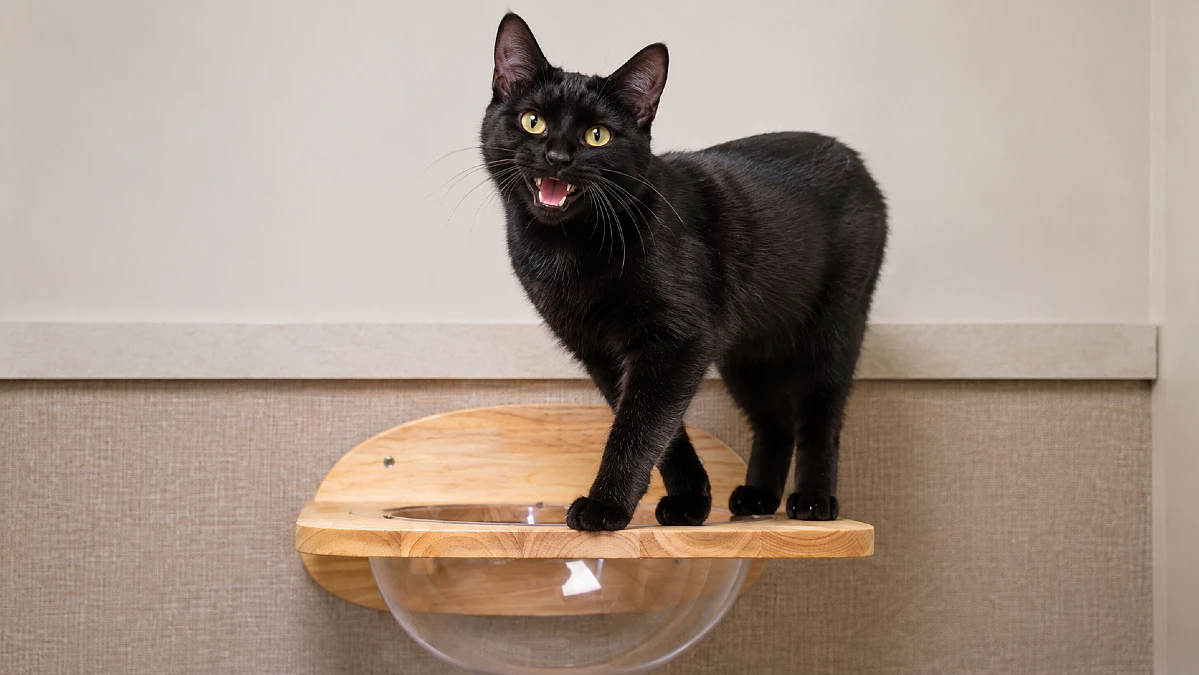
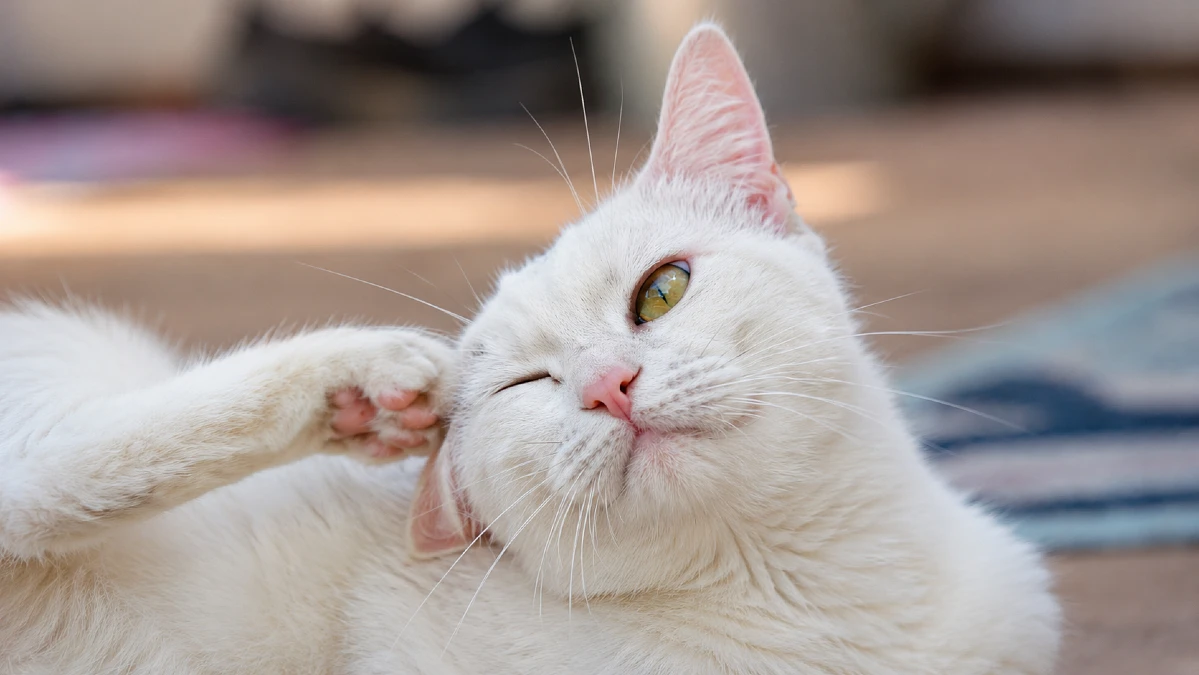
Your cat was enjoying a gentle cuddle just a moment ago. Then, without warning, they turned away, flicked their tail, or tried to bite your hand. You might wonder what went wrong when all you wanted was to show affection.
The truth is that cats communicate differently from people. They use their eyes, tails, ears, and daily habits to express comfort, fear, and personal preferences. Many owners miss these small signals because they expect cats to enjoy attention in the same way humans do.
The unspoken rules cats expect you to follow are really about respecting their boundaries and helping them feel safe. Something as simple as staring too long, changing a favorite sleeping spot, or interrupting an uncomfortable cat can affect how they respond to you.
Why Your Cat Prefers Slow Blinks Over Direct Staring
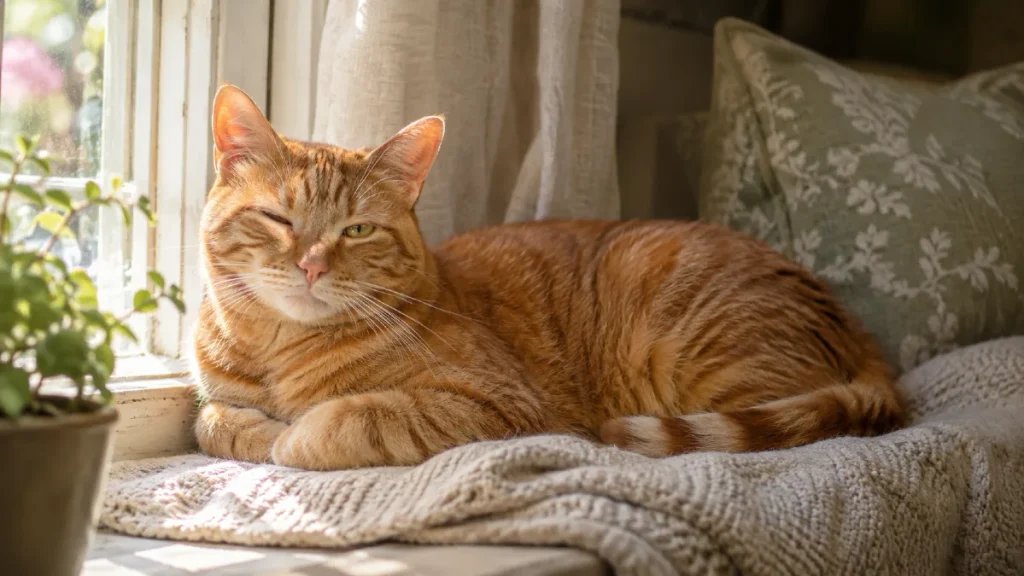
Have you ever looked directly into your cat’s eyes, only to watch them turn their head away? You might think they are ignoring you, but your attention may feel too intense. Cats use eye contact differently from humans, especially when they feel unsure about a situation.
Prolonged staring can be threatening to some cats, particularly when it comes from someone unfamiliar. Cats Protection advises owners to avoid staring and instead use relaxed facial expressions. This gives a cat more freedom to approach without feeling watched too closely.
The Simple Eye Movement That Can Help Your Cat Relax
One of the easiest ways to communicate gently with your cat is through slow blinking. Research published in Scientific Reports in 2020 found that cats responded positively to slow blinking during interactions with people.
The researchers observed that cats were more likely to narrow their eyes in response to a person’s slow blink. They also found that cats were more willing to approach an unfamiliar person following a slow blink interaction than after a neutral expression.
You can try this simple approach at home:
- Sit comfortably near your cat without leaning over them.
- Look in their direction with relaxed eyes.
- Slowly close your eyes and open them again.
- Turn your gaze slightly away and allow your cat to respond.
Your cat might blink back, move closer, or simply remain relaxed. These can be encouraging responses, but every cat communicates differently.
Why Looking Away Is Sometimes the Better Choice
People often view eye contact as a sign of affection. For cats, having the freedom to look away can be just as important as sharing a quiet glance.
If your cat turns their head, avoid following their gaze or trying to regain their attention. Let them decide whether they want to continue the interaction.
The important rule is to make your attention feel gentle rather than demanding. Your cat does not need constant eye contact to recognize that you care about them.
How to Know When Your Cat Wants You to Stop Petting
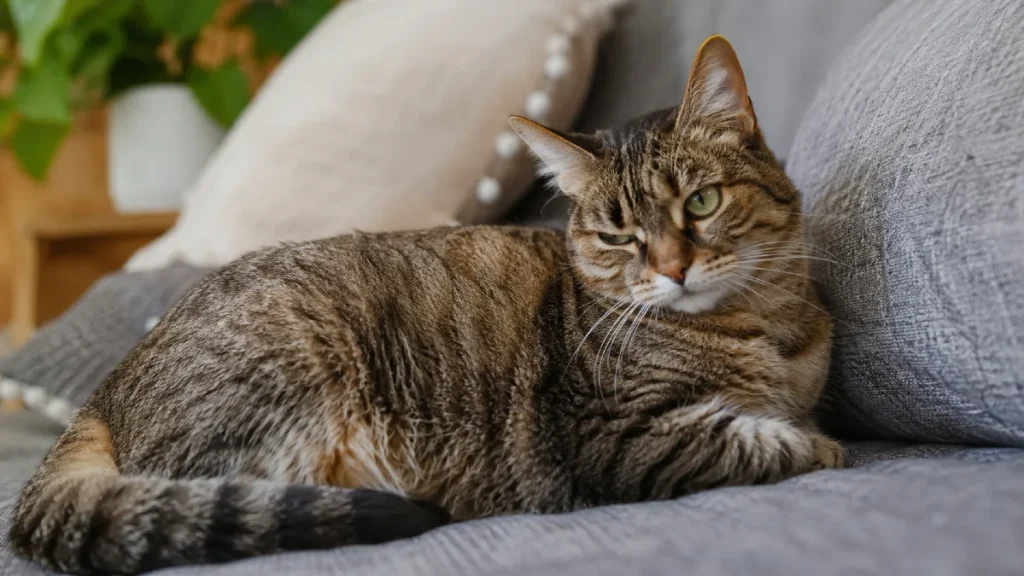
Your cat climbs onto your lap, begins purring, and settles down comfortably. You start stroking their back, believing they are enjoying every moment. Then their tail starts moving, their ears turn backward, and suddenly they swat at your hand.
This reaction can feel confusing, especially when your cat approached you first. However, wanting attention does not always mean wanting to be touched for a long time.
Some cats become uncomfortable when petting continues beyond their preferred limit. Others dislike certain areas being touched, even when they enjoy affection around their head.
Watch for These Small Changes Before Your Cat Reacts
Cats often communicate discomfort through body language before they try to leave or defend themselves. Learning these signals can help you stop before an interaction becomes unpleasant.
The table below shows common reactions you might notice while petting your cat. Look at the whole body rather than judging one movement alone.
| Body Signal | Possible Meaning | What You Should Do |
|---|---|---|
| Rubbing against your hand | Inviting contact | Offer gentle strokes |
| Turning their head away | Losing interest | Pause touching |
| Tail swishing sharply | Growing discomfort | Stop petting |
| Ears flattening | Fear or irritation | Give them space |
| Walking away | Ending the interaction | Let them leave |
These signals are useful clues rather than fixed rules. A cat that seems relaxed may welcome more affection, while one that becomes tense needs a break.
Let Your Cat Decide When Enough Is Enough
RSPCA New South Wales emphasized the importance of giving cats control over physical contact in its August 2026 guidance. Cats are individuals, and their preferred types of touch can differ.
For many cats, gentle strokes around the cheeks, chin, and base of the ears are more welcome than belly rubs. Touching the lower back, tail, or stomach may feel uncomfortable for some cats.
Try petting your cat briefly, then stop and watch what happens. If they push their head against your hand or move closer, they may be asking for more.
If they remain still, turn away, or move off your lap, allow the interaction to end. You do not need to follow them or encourage another cuddle.
Respecting your cat’s decision to stop is one of the simplest ways to make affection feel safe. Over time, this approach can help create more pleasant interactions for both of you.
Why Your Cat Needs Familiar Places to Feel Safe
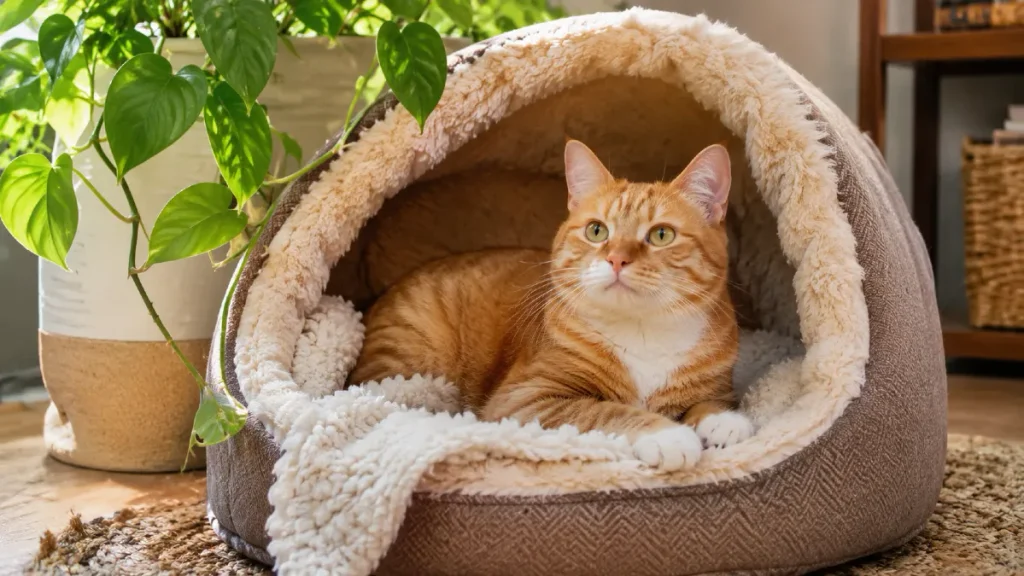
Your cat may have a favorite cardboard box, an old blanket, or a particular corner of the couch. To you, these might seem like ordinary household items. To your cat, they can be familiar places where they feel comfortable resting.
Cats rely heavily on scent to recognize their surroundings. They leave scent signals when rubbing their faces against furniture and other objects, helping make those places familiar.
This is one reason some cats react to changes around the home. Moving a favorite bed, replacing furniture, or removing familiar bedding may leave them less comfortable until they adjust.
Why Changing a Favorite Sleeping Spot Can Cause Stress
Cats Protection explains that familiar scents and surroundings help cats feel more settled. Its 2026 advice about moving homes recommends keeping familiar belongings available during major environmental changes.
You do not need to avoid rearranging furniture forever. However, it helps to consider which places your cat uses for resting, hiding, and feeling secure.
For example, suppose your cat spends every afternoon sleeping on a particular blanket beside the window. If you replace that blanket and move the bed at the same time, your cat may need time to accept the new arrangement.
Keeping the original blanket nearby gives them a familiar option. You can introduce the new bed alongside it instead of immediately removing what they already enjoy.
Give Your Cat More Than One Comfortable Place
Veterinary environmental guidelines recommend giving cats access to several safe resting areas. These locations allow them to choose between privacy, warmth, height, and social contact.
You can make your home more comfortable with a few simple changes:
- Keep a familiar blanket in a favorite resting place.
- Provide a cardboard box or covered bed for hiding.
- Add a stable perch where your cat can rest above floor level.
- Leave a quiet area where people will not disturb them.
- Introduce major household changes gradually when possible.
Some owners also use a FELIWAY Classic diffuser during stressful household changes. Such products may be useful for some cats, but they cannot replace suitable hiding places and a comfortable environment.
The goal is not to keep every object in the same position. It is to give your cat familiar choices and safe places to retreat when something changes.
How to Give Your Cat a More Comfortable Mealtime
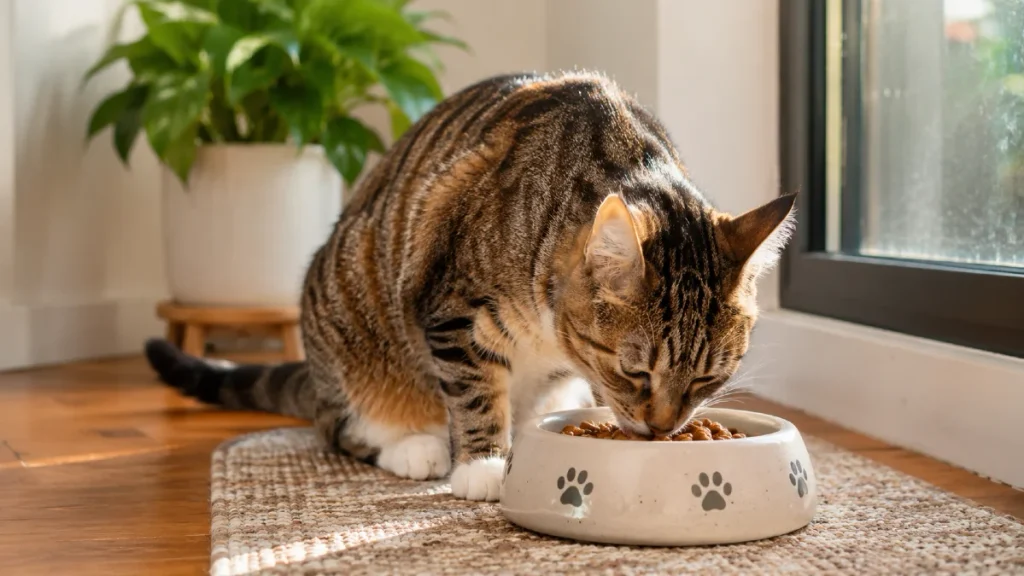
You place fresh food in your cat’s bowl and watch them eat. Sometimes you talk to them, reach down for a quick stroke, or stand nearby while they finish. These actions may seem harmless, and many cats are perfectly comfortable with gentle company.
However, some cats prefer to eat without people leaning over them or other pets approaching their bowls. A crowded feeding area can make meals less comfortable, particularly when cats must compete for access to food.
The AAFP/ISFM Feline Environmental Needs Guidelines recommend separate feeding resources to reduce tension. This becomes especially important in homes with more than one cat.
Choose a Feeding Place Where Your Cat Can Relax
A comfortable feeding location should be easy to access and free from frequent interruptions. It should also allow your cat to move away without feeling trapped.
The following table can help you choose a better arrangement based on your household.
| Feeding Situation | Possible Problem | Better Choice |
|---|---|---|
| Bowl beside a busy doorway | Frequent interruptions | Quieter corner |
| Several cats using one bowl | Competition | Individual food stations |
| Bowls crowded together | Limited personal space | Separate feeding areas |
| Bowl beside the litter box | Poor resource placement | Different location |
| Cat needs food enrichment | Limited feeding activity | Suitable puzzle feeder |
A separate feeding area can make it easier to see how much each cat eats. It also gives cats more freedom to eat without another animal standing beside them.
Avoid Interruptions That Make Your Cat Uncomfortable
There is no universal rule that you must remain completely silent while your cat eats. Some cats are happy when their owners speak softly or sit nearby.
The important thing is to watch your cat’s reaction. If they stop eating, look around repeatedly, or move away when you approach, try giving them more room.
You can also make feeding more engaging through appropriate food puzzles. The Catit Senses Food Tree, for example, allows cats to use their paws to retrieve portions of dry food or treats.
Not every cat enjoys puzzle feeders, especially when they are new to them. Begin with an easy activity and ensure your cat can still eat enough food without frustration.
If your cat suddenly refuses meals or changes their eating habits, contact your veterinarian rather than assuming the problem is stress. A calm feeding routine supports comfort, but appetite changes can also signal illness.
Why Greeting Your Cat When You Come Home Can Strengthen Your Bond
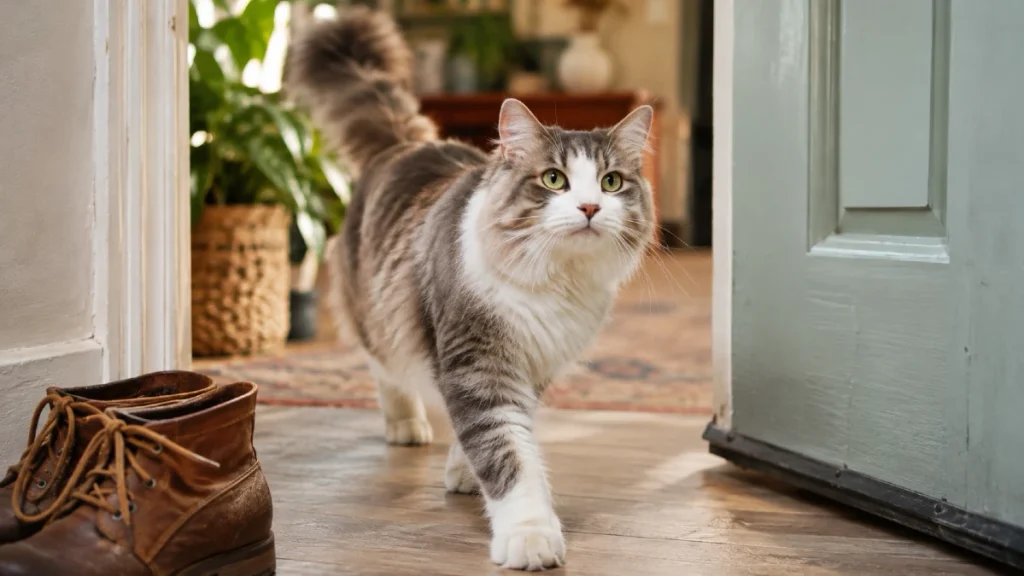
You arrive home, put down your keys, and begin taking off your shoes. Your cat appears near the doorway with their tail raised and walks toward you. You might assume they are simply checking whether you brought food.
But cats can also approach people as a form of social greeting. Their body language often gives useful clues about whether they are comfortable and interested in interacting.
According to PDSA, cats commonly approach familiar people with an upright tail when greeting them. Some may rub against your legs, make a soft trill, or look up with relaxed eyes.
How to Respond When Your Cat Comes to Greet You
You do not need to make a big fuss whenever your cat approaches. In fact, a calm response may be more comfortable for a cat that dislikes sudden movement or loud voices.
Try saying your cat’s name softly and allowing them to come closer. If they rub against your hand or legs, you can offer gentle affection.
Some cats prefer to sniff your belongings before accepting attention. Others may walk beside you into another room or simply sit nearby and watch.
These are different ways cats can interact with familiar people. Your cat does not have to jump into your arms to show that they are comfortable around you.
What If Your Cat Never Waits at the Door?
Not all cats have the same greeting habits. A confident cat may run to meet you, while a quieter cat might continue resting until you approach their favorite room.
That difference does not automatically indicate a weaker bond. Age, personality, household routines, and past experiences can influence how cats respond to people.
Rather than expecting a particular greeting, pay attention to what your cat normally does. A relaxed expression, gentle rubbing, or choosing to spend time nearby may be positive signs.
The rule worth following is simple: acknowledge friendly contact without forcing it. Your cat should be able to decide how much attention they want.
What Your Cat’s Sleeping Position Really Says About Trust
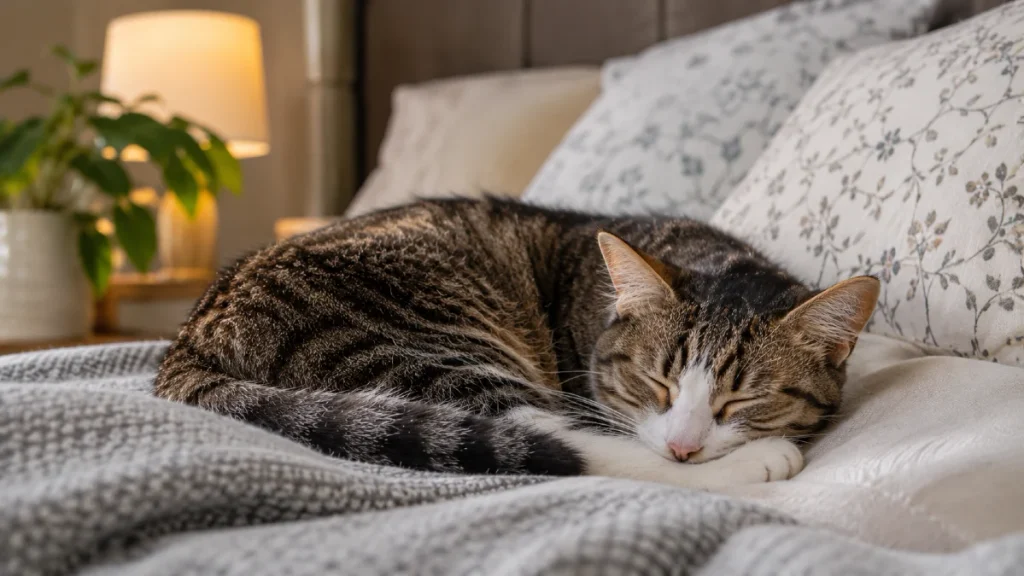
Have you ever wondered why your cat sometimes sleeps beside your pillow but chooses another room on other nights? You might feel special when they curl up against you and slightly disappointed when they sleep somewhere else.
Cats do sometimes choose to rest near people they feel comfortable around. However, their sleeping location depends on more than affection alone.
Temperature, noise, bedding, household activity, and access to safe spaces can all influence where a cat settles. Cats also change sleeping places as their needs and the environment change.
Why Your Cat Sometimes Sleeps Beside You
When your cat sleeps near you, it may suggest they feel comfortable with your presence. Your bed might also provide warmth, soft bedding, and a peaceful place to rest.
Some cats curl up close to their owner’s chest or legs. Others choose the foot of the bed, where they may have more room to stretch or move around.
Neither position offers a precise measure of affection. A cat that rests against your shoulder is not necessarily more attached than one sleeping near your feet.
Cats Protection explains that cats often choose warm, comfortable, and secure places for sleep. The organization also notes that cats may rotate between preferred resting locations.
What Different Cat Sleeping Spots May Mean
You can learn useful things by observing where your cat prefers to rest. However, sleeping location should always be considered alongside their normal behavior.
This table explains several common sleeping choices and how you can support your cat’s comfort.
| Sleeping Spot | Possible Reason | Best Response |
|---|---|---|
| Beside your pillow | Warmth and company | Avoid disturbing sleep |
| Foot of your bed | Comfort and space | Allow free movement |
| Elevated perch | Quiet and a good view | Keep perch stable |
| Separate room | Privacy or temperature | Respect their choice |
| Covered cat bed | Shelter and comfort | Keep access open |
A cat sleeping alone is not proof that they distrust you. What matters more is whether they seem relaxed, eat normally, interact willingly, and behave as they usually do.
Why You Should Let Sleeping Cats Rest
Cats Protection reports that domestic cats generally sleep around 12 to 18 hours each day. Their sleep is spread across different periods rather than always happening in one long stretch.
Because sleep is an important part of their daily routine, cats benefit from places where they will not be disturbed. Repeatedly waking a cat for cuddles can interrupt their rest and may lead to defensive reactions.
If your cat chooses your lap as a sleeping spot, enjoy the moment without constantly stroking them. Allow them to remain comfortable or move away whenever they wish.
You should also watch for sudden changes in sleeping habits. Unusual hiding, difficulty moving, reduced appetite, or a sharp change in activity can indicate a medical problem that deserves veterinary attention.
Where your cat sleeps is one small clue about their comfort, not a final test of how much they trust you. Their behavior across the whole day tells you far more.