Your cat might ignore everyone else in the house but follow you from room to room. Maybe they sleep beside you every night, lick your hand, or sit with their back turned to you. Does this mean you’re your cat’s chosen human, or are these just ordinary cat habits?
Many cat owners wonder about this, especially when their pets show affection in strange ways. Cats rarely express love the way people expect. Some prefer quiet company over cuddles, while others show affection through gentle touches and familiar routines.
The good news is that cats can form strong bonds with people. Research published in Current Biology by Kristyn Vitale and her colleagues found evidence that cats develop attachment relationships with their human caregivers.
1. Why Turning Their Back Can Be a Sign Your Cat Trusts You
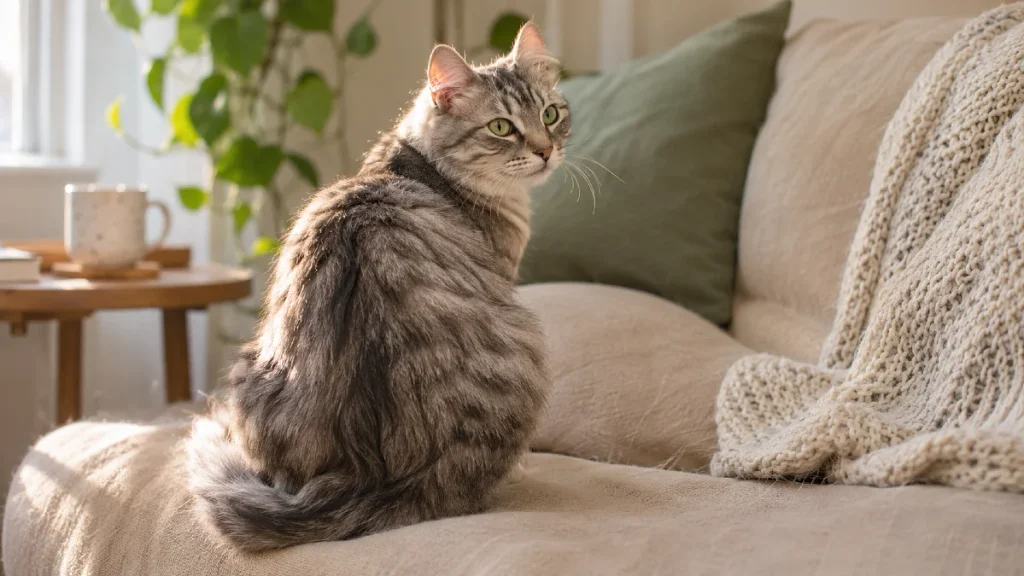
Your cat walks into the living room, jumps onto the couch, and settles beside you. Instead of looking at your face, they turn around and sit with their back facing you. It almost looks like they’re ignoring you.
But this behavior can mean something quite different when your cat is relaxed.
Cats naturally pay attention to their surroundings because they are both hunters and potential prey for larger animals. They use their eyes, ears, and body position to watch for anything unusual. A nervous cat may remain alert and ready to move away.
When your cat chooses to sit beside you with their back turned and their body relaxed, it may suggest they feel comfortable in your presence. They aren’t showing obvious signs of fear or trying to keep their distance. They’re simply happy to rest nearby.
The important clue is not the direction your cat faces. It’s how comfortable they seem while sitting beside you.
How to Tell If Your Cat Is Relaxed Around You
Cats Protection explains that a cat’s body position, ears, eyes, and tail should be considered together. One small movement rarely tells the whole story. The following clues can help you decide how your cat is feeling.
| Behavior | Possible Meaning | Best Response |
|---|---|---|
| Loose body, calm ears | Comfortable and relaxed | Let them rest |
| Soft eyes, slow blinking | Calm and friendly | Blink slowly back |
| Pinned ears, tense body | Fear or discomfort | Give them space |
| Strong tail swishing | Possible irritation | Stop touching them |
A cat resting with their back turned can be perfectly content, but that position alone does not prove deep trust. Look for a loose body, normal breathing, and a willingness to stay nearby.
If your cat comes to sit beside you, resist the urge to pick them up immediately. Letting them choose how close they want to be helps keep your company pleasant.
Over time, your cat may begin seeking you out more often because they know you respect their space.
2. Why Your Cat Sleeps on You or Right Beside You
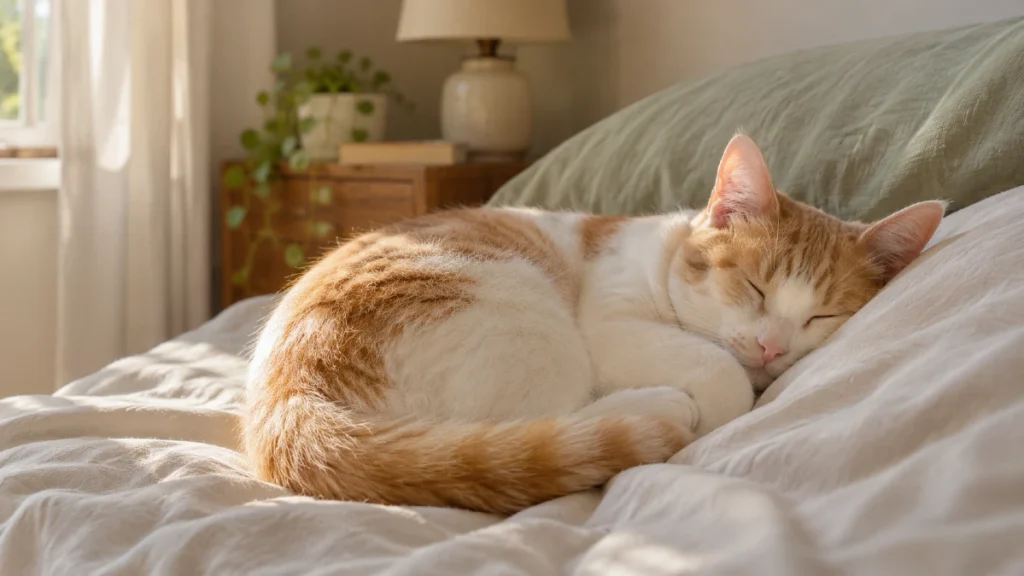
Have you ever woken up to find your cat curled against your legs? Perhaps they sleep on your chest while you watch television or settle beside your pillow every night. These moments can feel especially sweet.
Cats spend a large part of their lives resting. Cats Protection reports that cats often sleep for 12 to 18 hours a day, although individual habits vary. They also tend to change sleeping places throughout the day.
So why would your cat choose you instead of an empty bed or a quiet corner?
One reason is warmth. Your body provides a comfortable source of heat, especially during cooler weather. A soft blanket or warm lap can make an inviting sleeping spot.
But warmth is not the only possible reason.
Cats Protection also explains that cats who are comfortable sleeping close to a person may view that person as a trusted companion. Cats that share a friendly bond sometimes sleep close together, and similar behavior can happen with humans.
What Your Cat’s Favorite Sleeping Spot May Tell You
A cat sleeping on your chest may enjoy your warmth, closeness, and attention. Another cat might prefer lying against your legs because that spot feels comfortable without being too crowded. Some cats choose a nearby chair so they can rest in the same room without being touched.
These different sleeping styles don’t measure how much a cat loves you. They show how each cat prefers to feel comfortable. A cat that sleeps beside your bed may have just as strong a bond with you as one that sleeps on your pillow.
If your cat regularly chooses to sleep near you when other comfortable spots are available, it can be a good sign of familiarity and trust.
The best response is to let your cat choose their sleeping place. Avoid holding them in position if they want to leave. You can also place a soft, washable cat bed near your usual resting spot.
And remember, a cat that suddenly stops sleeping beside you is not necessarily rejecting you. Changes in temperature, household routines, age, or health can affect sleeping habits.
If the change is sudden and comes with poor appetite, hiding, or unusual tiredness, speak with your veterinarian.
3. Why Your Cat Licks You Like a Trusted Friend
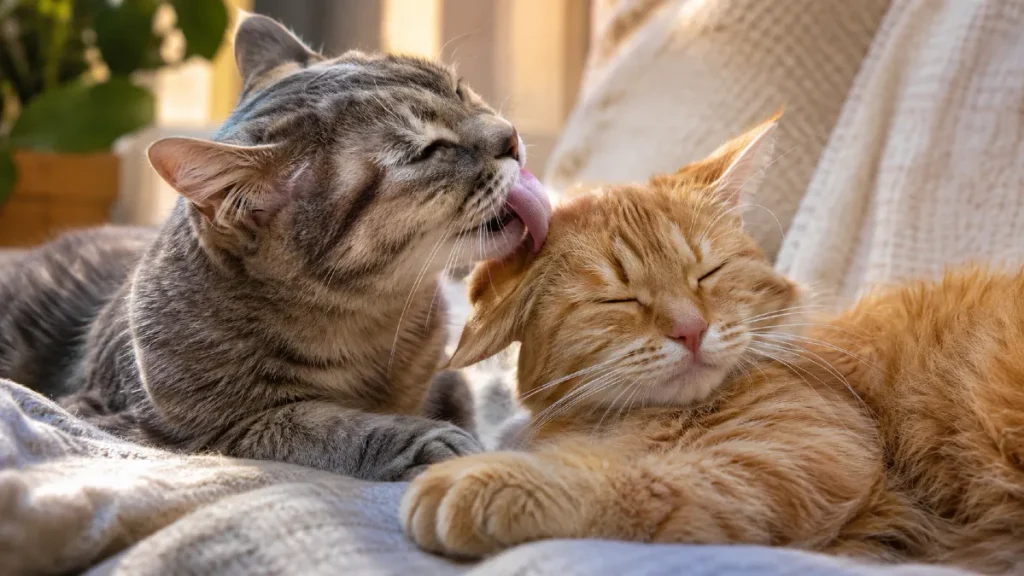
You’re sitting quietly when your cat starts licking your hand. Maybe they gently groom your fingers, lick your arm, or try to clean your hair. Their rough tongue might feel strange, but the behavior can be a friendly social gesture.
Cats regularly groom themselves to care for their fur. They may also groom other cats with whom they have friendly relationships. This social behavior is called allogrooming.
You might notice bonded cats licking each other’s heads, ears, or necks. Grooming can be part of their social interactions and may help maintain close relationships.
Cats Protection explains that cats sometimes extend similar grooming behavior to their human companions. When your cat gently licks you while resting comfortably, they may be expressing affection or familiarity.
However, licking does not always mean the same thing.
When Licking Means Affection and When It Doesn’t
VCA Animal Hospitals identifies several possible reasons cats lick people. They may be seeking attention, responding to an interesting taste, showing affection, or reacting to stress.
A 2026 study published in Applied Animal Behaviour Science also examined social grooming between cats. The researchers found that grooming can occur in different social situations, including friendly contact and moments of tension. The study examined interactions between cats, not why they lick humans.
This is why the situation matters more than the lick itself.
| Licking Pattern | Possible Reason | What You Can Do |
|---|---|---|
| Gentle licks during cuddles | Friendly social contact | Allow it if comfortable |
| Licking after food preparation | Interesting scent or taste | Wash your hands |
| Licking during unwanted handling | Possible discomfort | Stop handling |
| Sudden excessive licking | Stress or health concern | Contact your vet |
If your cat licks you gently while appearing calm, you can enjoy the moment without needing to do anything special. Some cats also enjoy being brushed with a soft grooming brush as part of their regular routine.
Avoid allowing your cat to lick open cuts or your face. It’s also wise to wash off creams or other products before allowing your cat to lick your skin, since some ingredients may be harmful if swallowed.
If licking becomes intense, repetitive, or very different from your cat’s normal behavior, don’t dismiss it as extra affection. A veterinarian can help rule out discomfort or other medical causes.
The sweet part is that your cat may be including you in a familiar social activity. They may see you as a trusted companion, even if they don’t express affection through constant cuddling.
4. Why Your Cat Rubs Their Face on Their Favorite Person
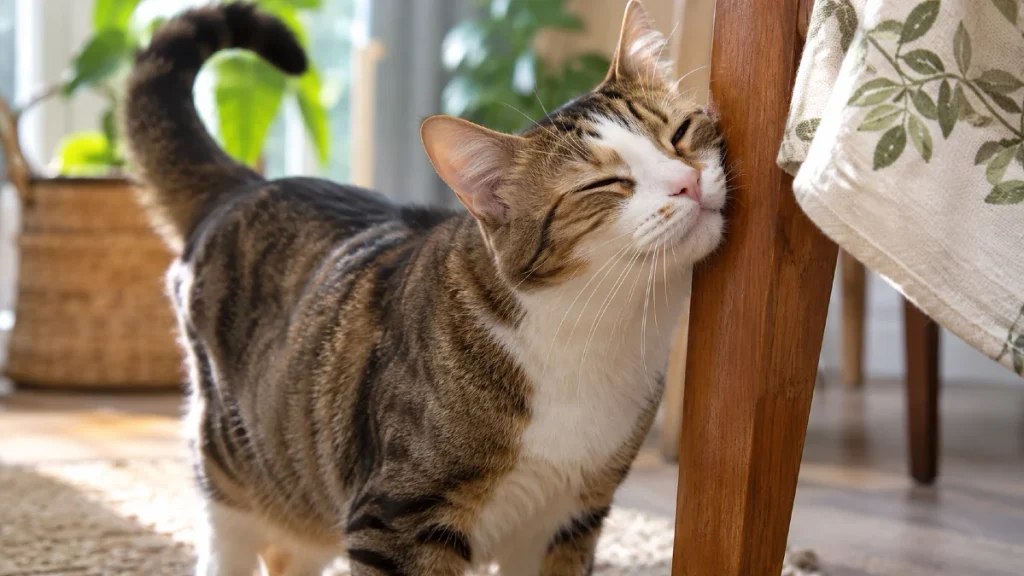
You walk through the front door, and your cat comes over with their tail raised. They push their forehead against your hand, rub their cheeks along your legs, and circle around your feet. It feels like a warm welcome home.
This behavior has a special role in how cats communicate.
Cats have scent glands around their cheeks, mouth, chin, and other areas of their body. When they rub these parts against people or objects, they leave behind scent signals that other cats can detect.
A gentle forehead push is commonly called head bunting. It’s a normal behavior that cats may use during friendly interactions with people and other cats.
According to VCA Animal Hospitals, facial rubbing can help cats create familiar scent associations. Similar rubbing occurs between cats that share social relationships.
When your cat rubs against you, they may be greeting you, seeking interaction, or making you part of their familiar surroundings.
Why Your Cat Keeps Rubbing Against You
Cats rely heavily on scent to recognize places, objects, and individuals. A familiar scent can help make their surroundings feel predictable. Rubbing is one of the ways they interact with that environment.
You may notice this behavior more often after returning from work, changing clothes, or spending time outside. Your cat might greet you by brushing against your hand or moving between your legs.
But remember, rubbing can also be a request for attention or food. A cat that rubs against you near feeding time may have learned that this behavior gets a response.
The Merck Veterinary Manual describes rubbing as one of several friendly social behaviors cats use. Combined with relaxed body language, it can be a positive sign of your relationship.
How should you respond?
Start by offering your hand at a comfortable distance and allowing your cat to approach. If they rub against your fingers, you can gently scratch their cheeks or chin if they enjoy it.
Watch for changes in their posture, and stop when they move away. Some cats prefer a short greeting rather than a long petting session.
When your cat comes to greet you without being called, enjoy the interaction. Their choice to approach you is often more meaningful than how long they allow you to pet them.
5. Why Your Cat Brings You Toys or Prey
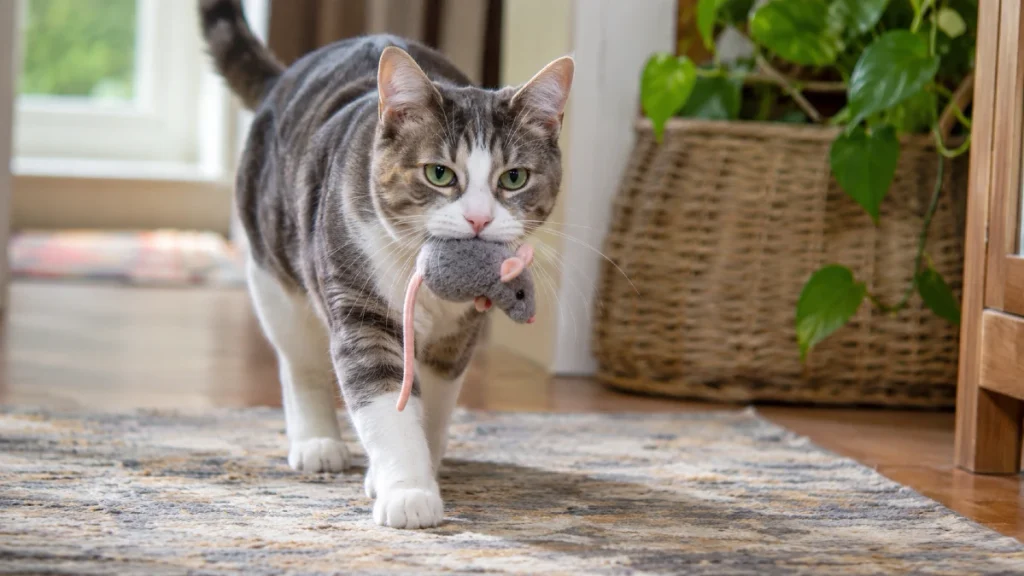
You wake up and discover a toy mouse beside your pillow. Maybe your cat carries a favorite stuffed animal into the living room and drops it near your feet. If your cat goes outdoors, you might even find an unwelcome surprise near the door.
Many cat owners call these objects gifts. The idea is touching, especially when your cat seems eager to show you what they’ve carried.
But there’s more to this behavior than the popular belief that cats bring presents to people they love.
Cats are natural hunters. Even well fed cats may stalk, chase, catch, and carry objects because these behaviors are part of their normal instincts. Indoor cats often practice similar actions with toys.
Mother cats may also carry prey to their kittens during the period when young cats are learning to hunt. However, this does not prove that a pet cat bringing prey home is trying to teach its human how to hunt.
Cats Protection explains that cats commonly bring prey into the house because it is a familiar place where they feel safe. They may want to eat or store their catch in a secure area.
So your cat may not be thinking of the object as a gift for you. Still, choosing to bring it into a shared living space can reflect familiarity with that environment.
What to Do When Your Cat Brings You Something
Your response should depend on what your cat has carried. A favorite toy is very different from a wild animal, especially when safety is involved.
| What They Bring | Possible Reason | Safe Response |
|---|---|---|
| Stuffed mouse or soft toy | Hunting play | Offer a play session |
| Socks or household objects | Interest in the object | Remove unsafe items |
| Dead prey | Returning to a safe place | Use gloves and clean up |
| Live prey | Natural hunting behavior | Separate pets and seek safe removal |
A toy carried into your room may provide an opportunity to play with your cat. But finding prey indoors calls for a calm, practical response rather than praise or punishment.
If your cat brings home a dead animal, avoid handling it with bare hands. Follow appropriate local disposal guidance and wash your hands afterward. If the animal is alive or injured, keep your cat away and contact a local wildlife rescue service when needed.
How to Encourage Safe Hunting Play
For indoor cats, interactive play is a useful way to provide an outlet for hunting behavior. Many experts recommend toys that let cats stalk, chase, grab, and kick.
The Cat Dancer Original interactive toy is one example for supervised chasing games. A KONG Kickeroo gives cats a soft object they can grab and kick with their back legs.
Try moving an interactive toy along the floor, letting your cat stalk it, and allowing them to catch it during play. Keep toys with loose strings or small parts out of reach when playtime ends.
And if your cat stops bringing toys or objects as they get older, don’t assume their affection has disappeared. Activity levels and interests can change with age, and some cats simply prefer quieter forms of interaction.
A sudden change in behavior, especially alongside reduced appetite or movement, deserves a veterinary check.