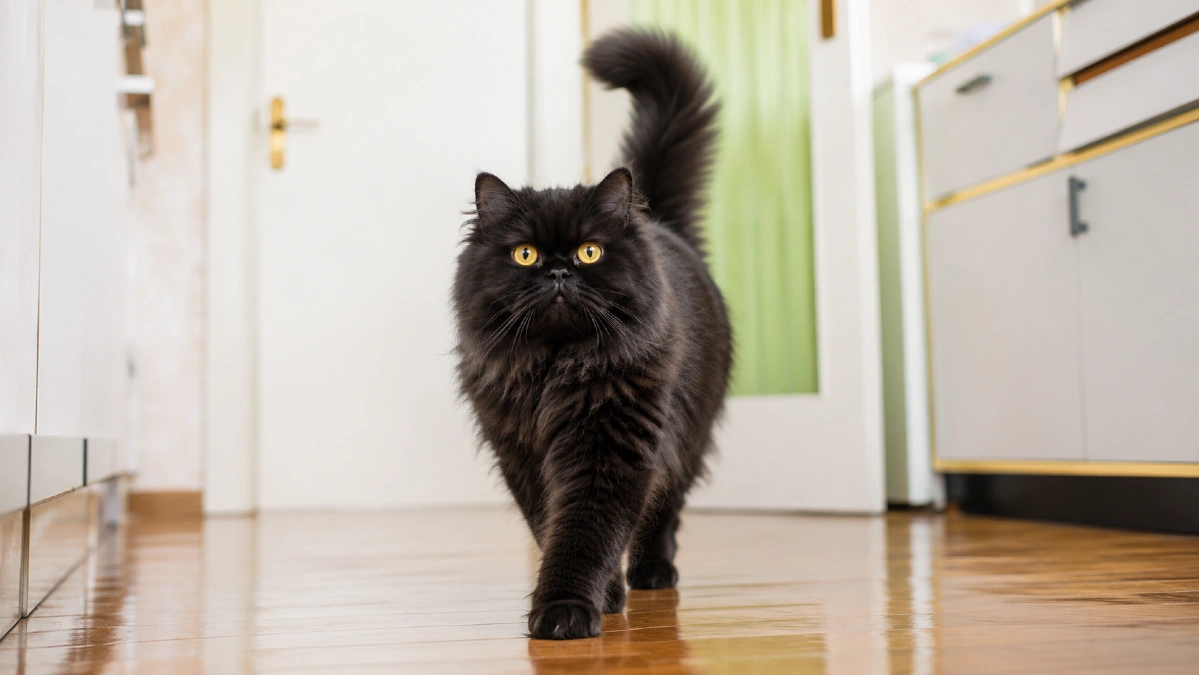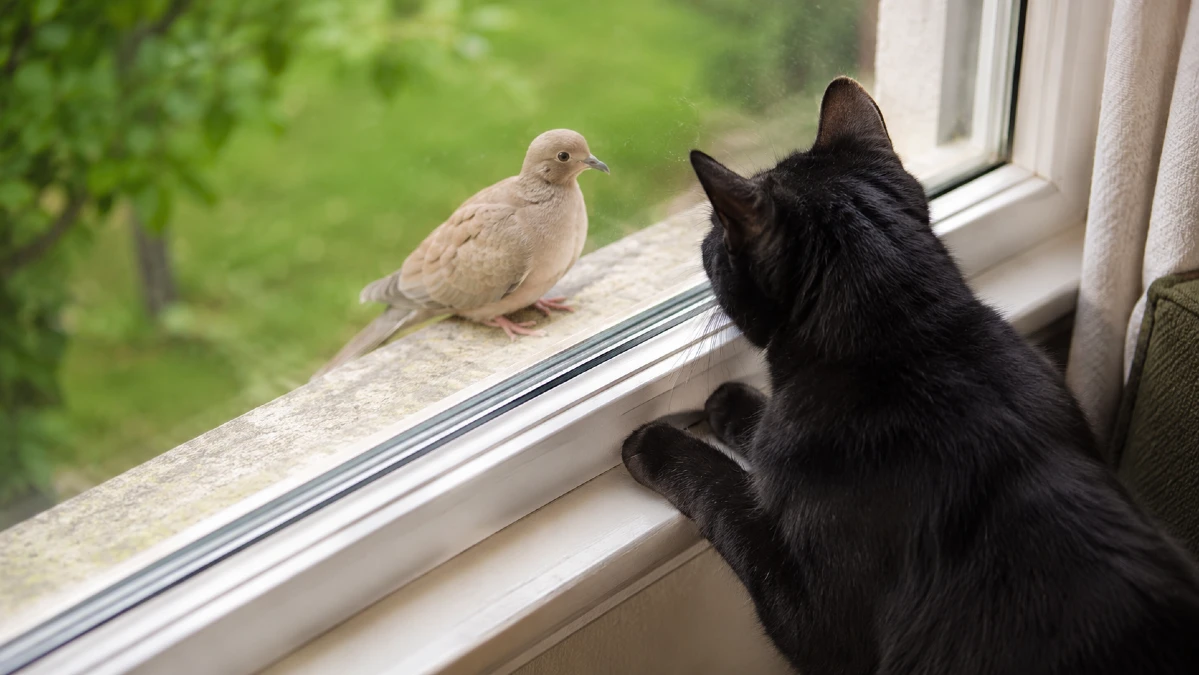
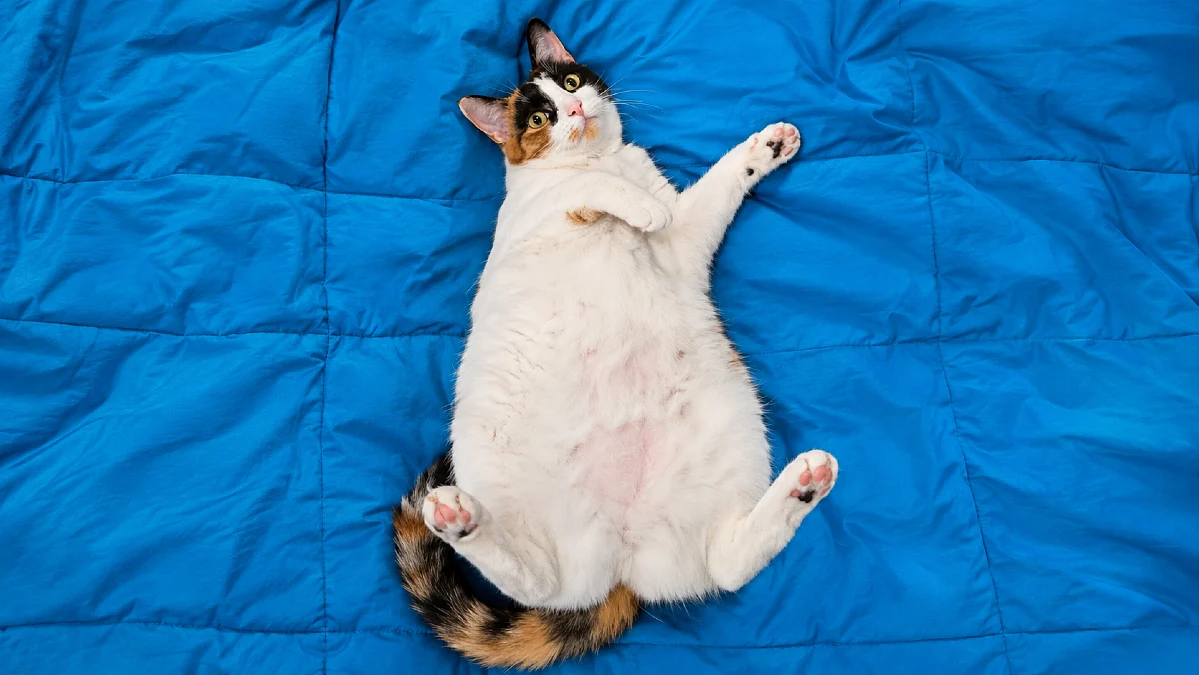
Your cat suddenly rolls onto its back, stretches out its paws, and shows you that soft, fluffy belly. It looks like an invitation for a good belly rub. But the moment your hand gets close, your sweet cat grabs your fingers, kicks with its back legs, or gives you a sharp bite.
So what happened? Your cat looked completely relaxed a second ago. Now you’re wondering why something that seemed so friendly turned into a painful surprise.
When your cat shows you their belly, it often means they feel comfortable and safe around you. But that doesn’t mean they want you to touch it. In fact, many cats dislike belly rubs because their stomach is one of the most sensitive and vulnerable parts of their body.
What Does It Mean When Your Cat Shows You Their Belly?
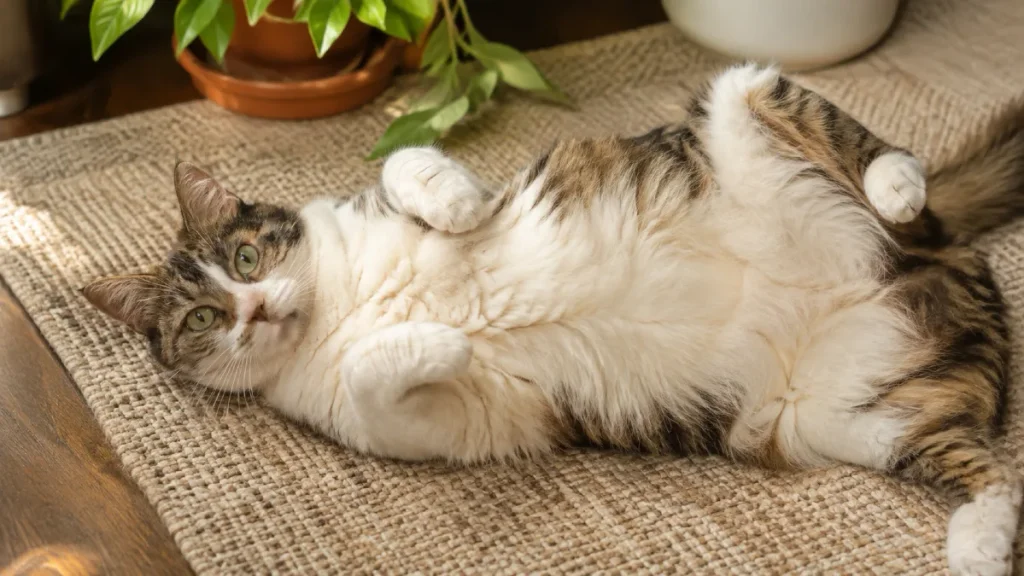
When your cat rolls onto its back and exposes its stomach, it can be a wonderful sign of trust. Cats naturally protect their belly because it contains important organs. Allowing that area to remain exposed can mean they feel safe enough to relax without constantly watching for danger.
You might notice your cat doing this when you walk into the room. They may stretch across the carpet, roll onto their side, or lie on their back while looking at you with soft eyes. These behaviors can be signs of comfort, especially when the rest of their body looks relaxed.
Cats Protection explains that showing the belly often means a cat trusts the person nearby. However, showing trust and asking to be touched are two different things.
Think about what your cat is doing before you approach. If they’re resting peacefully in a sunny spot, they may simply be enjoying a comfortable position. Reaching down to rub their stomach could interrupt that peaceful moment.
Some cats also roll onto their backs during play or when reacting to something threatening. That is why you should always look at the entire body rather than treating an exposed belly as one clear message.
Why Most Cats Don’t Want Their Belly Touched
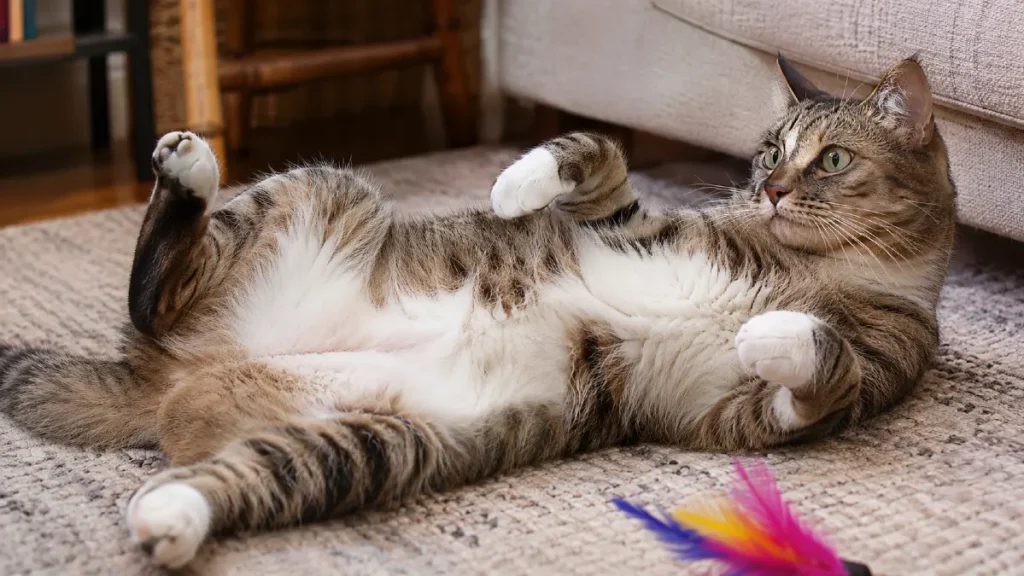
Your cat’s belly may look soft and inviting, but it protects some of their most important organs. Unlike the back or head, the stomach is an area cats often guard closely. An unexpected hand reaching toward it can make them feel exposed or uncomfortable.
This protective response is not something your cat does to upset you. It is part of their natural behavior, and even friendly cats may react strongly when they feel their belly is being threatened.
RSPCA New South Wales explains that many cats prefer being touched around the head and face instead of the stomach, paws, or tail. A cat might enjoy sitting beside you for hours but still dislike having its belly touched.
The biggest mistake is assuming that affection means your cat should enjoy every kind of physical contact. A cat can love being near you without wanting a belly rub.
For example, your cat might greet you at the door, follow you into the bedroom, and sleep beside your pillow. Those behaviors can show a strong bond even if touching their stomach always leads to a quick warning.
Respecting that preference helps your cat feel more comfortable during future interactions. You do not have to touch every part of your cat to show affection.
How to Tell If Your Cat Is Relaxed or Ready to Defend Itself
A cat lying on its back is not always asking for attention. Sometimes the position means relaxation, while other times it appears during play or defensive behavior.
The difference becomes clearer when you watch the eyes, ears, paws, and tail together. A calm cat usually has loose muscles and a comfortable posture, while an uncomfortable cat may become stiff or alert.
The ASPCA explains that cats can roll onto their backs during defensive behavior because this position allows them to use their teeth and claws. This is very different from a sleepy cat stretching out on a warm rug.
Reading Your Cat’s Belly Display
| Body Language | Possible Meaning | Best Response |
|---|---|---|
| Loose body and soft eyes | Relaxed and comfortable | Let them rest |
| Rolling with playful paw movements | Interested in play | Offer a toy |
| Stiff body and wide eyes | Alert or uncomfortable | Give them space |
| Flattened ears with exposed claws | May be defensive | Avoid touching |
| Slow blinking and relaxed paws | Feeling calm | Stay nearby quietly |
These clues can help you decide whether to approach or leave your cat alone. One movement does not tell the whole story, so pay attention to how several signals appear together.
Also consider what happened just before your cat rolled over. A cat resting after a nap may feel very different from one that has been startled by a loud noise.
If your cat looks peaceful, you can acknowledge them with a soft voice or slow blink. You do not need to reach for their stomach to respond to their trust.
Why Your Cat Grabs, Kicks, or Bites Your Hand
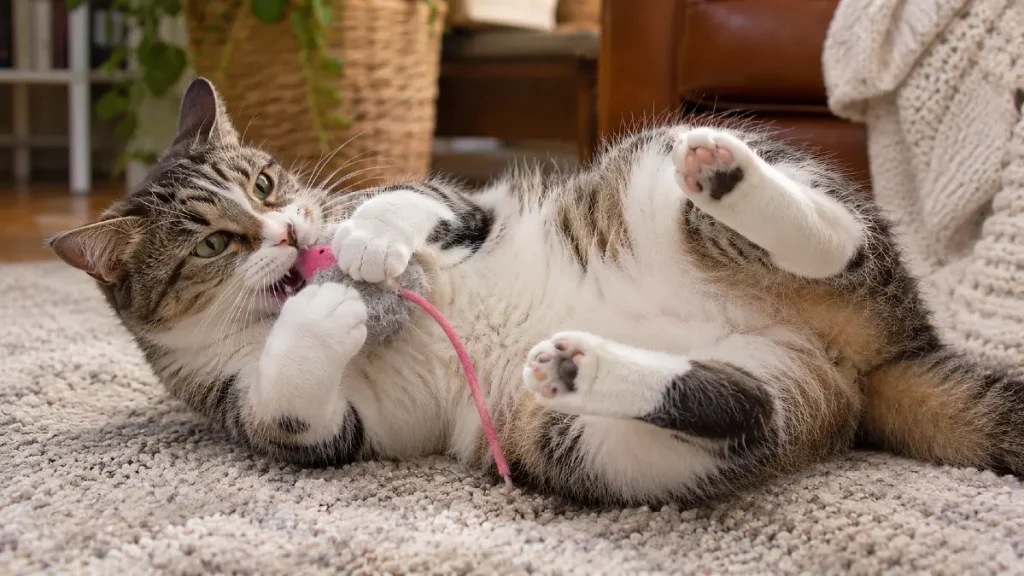
Have you tried rubbing your cat’s belly only to have all four paws suddenly grab your hand? Your cat might hold your fingers with its front legs, kick with its back paws, and attempt to bite.
This reaction can happen because touching the belly feels threatening or overwhelming. Your cat may be trying to stop the contact rather than asking you to continue playing.
Those fast kicks are sometimes called bunny kicks. Cats use their powerful back legs during play and defensive behavior, so the movement itself does not always mean your cat is angry.
Cornell University College of Veterinary Medicine explains that some cats also experience aggression during petting. Possible causes include too much physical stimulation, discomfort, or an attempt to end the interaction.
You might notice that your cat enjoys being stroked for a short period before suddenly turning toward your hand. That change can happen when the cat has reached its limit for physical contact.
The safest response is to stop interacting and give your cat space. Avoid pulling against a firm grip or trying to keep petting, since struggling can make the situation worse.
Never punish your cat for reacting this way. Shouting, hitting, or forcing contact can increase fear and make future handling more difficult. The better approach is to recognize the warning signs before a bite happens.
Which Warning Signs Mean You Should Stop Petting?
Your cat may show small signs of discomfort before biting or scratching. These signals are easy to miss, especially when your cat was enjoying attention just moments earlier.
VCA Animal Hospitals advises watching for changes such as a tense body, backward ears, or a flicking tail. These movements can mean your cat is becoming uncomfortable with the interaction.
Cat Warning Signs and What to Do
| Warning Sign | Possible Message | What to Do |
|---|---|---|
| Tail flicking quickly | Growing irritation | Pause petting |
| Ears turning backward | Feeling uncomfortable | Move your hand away |
| Skin rippling along the back | May be overstimulated | Stop touching |
| Head turning sharply toward your hand | Watching unwanted contact | Give them space |
| Hissing or growling | Strong warning | End the interaction |
| Walking away | Wants contact to end | Let them leave |
The most useful thing you can do is respond to these early signals. You do not need to wait for your cat to scratch, bite, or hiss before deciding that petting should stop.
Keep in mind that a single tail movement or ear flick does not always mean aggression. Look for several changes together and consider what your cat is doing.
What If Your Cat Suddenly Stops Purring?
Some cats purr when relaxed, but purring can also happen during stress or discomfort. It should never be your only way of deciding whether your cat enjoys being touched.
If your cat stops leaning into your hand, becomes stiff, or tries to move away, pause the interaction. Give them the choice to approach again rather than following them with your hand.
Where Should You Pet Your Cat Instead of Its Belly?
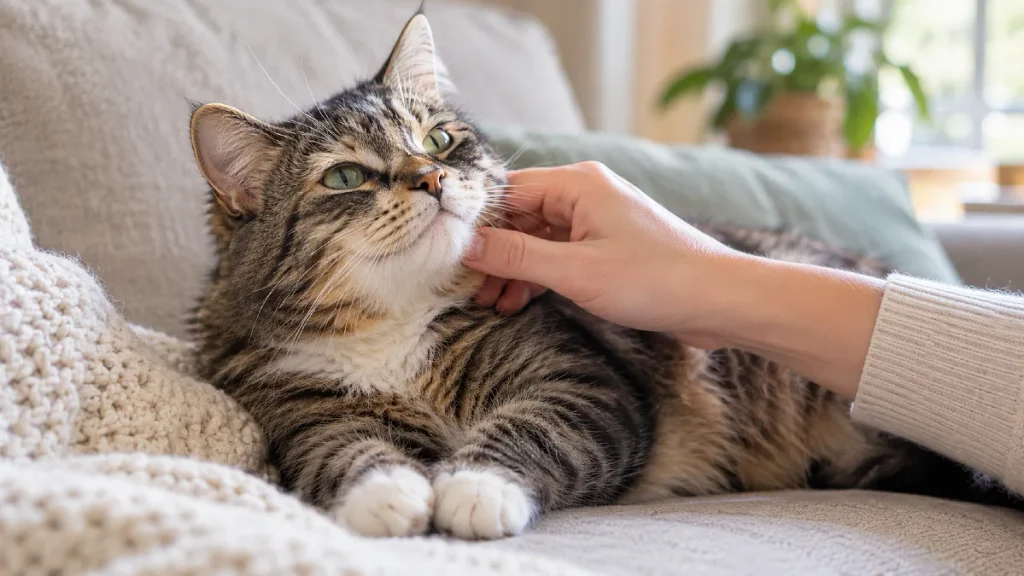
You can still give your cat plenty of affection without touching its stomach. Many cats prefer gentle contact around their cheeks, chin, forehead, and ears.
These areas are often more comfortable because cats naturally rub parts of their face against familiar people and objects. However, every cat has personal preferences, and some prefer very little physical contact.
Cats Protection recommends allowing the cat to approach before attempting gentle face or head strokes. This helps you avoid surprising a cat that simply wants to rest nearby.
Best Places to Pet Your Cat
| Body Area | Typical Preference | How to Pet |
|---|---|---|
| Cheeks | Often enjoyed | Gentle strokes along the side |
| Under the chin | Often enjoyed | Light finger scratches |
| Forehead | Commonly accepted | Soft strokes toward the back |
| Behind the ears | Often enjoyed | Gentle fingertip strokes |
| Belly | Often disliked | Usually leave untouched |
These are general preferences, not rules that apply to every cat. Watch whether your cat leans toward your hand or moves away when you try a particular area.
If your cat pushes its cheek against your fingers, that may be a good sign that it wants more attention. If it turns its head away or becomes tense, stop and let it decide what happens next.
Let Your Cat Choose the Interaction
You can hold your hand nearby and allow your cat to approach. If they rub their face against your fingers, gently stroke an area they normally enjoy.
Keep your movements slow and avoid reaching suddenly over their head. Some cats prefer short scratches, while others enjoy a few gentle strokes before settling down.
You may also discover that your cat prefers sitting beside you rather than being touched. That still counts as spending time together, and it can be just as meaningful.
How the Three Second Petting Test Helps Your Cat Feel Safe
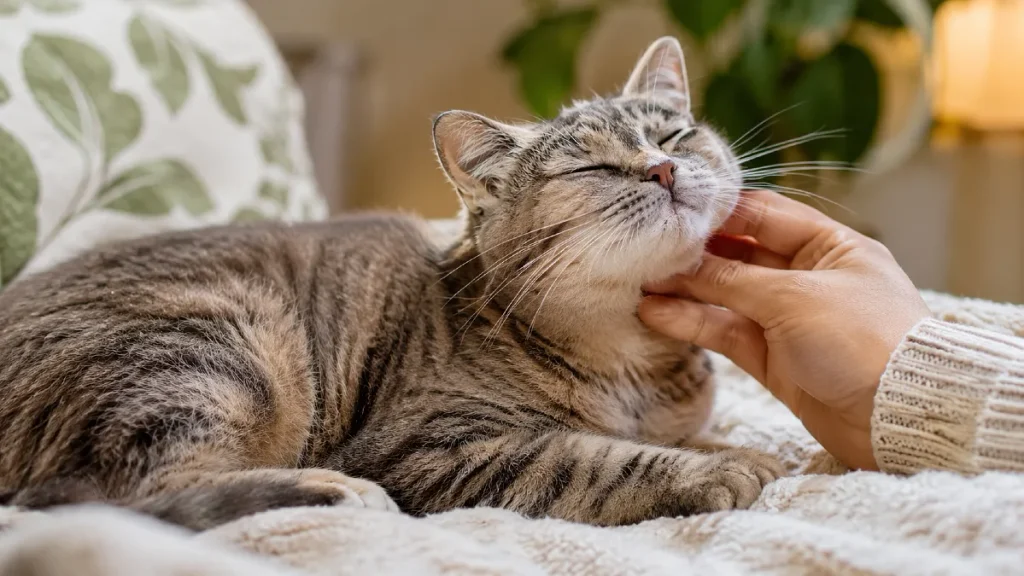
One of the easiest ways to avoid unwanted petting is to give your cat the chance to decide when contact continues. A simple method called the three second petting test can help you do this.
Battersea Dogs & Cats Home recommends briefly stroking a cat and then pausing to see whether it asks for more. This creates a natural break instead of continuing to touch the cat until it becomes uncomfortable.
Here is how to try it.
1. Let your cat approach first. Sit nearby and allow your cat to move toward you. Avoid reaching for them while they are resting or hiding.
2. Offer your hand gently. Keep your hand still and allow your cat to sniff or rub against it. If they move away, do not follow.
3. Pet for about three seconds. Choose a familiar area, such as the cheeks or chin. Use light, gentle strokes.
4. Stop and wait. Move your hand away slightly and watch your cat. If they rub against your hand again, they may want more contact.
5. Respect the response. If your cat stays still without seeking your hand, turns away, or walks off, let the petting session end.
This test works because it gives your cat control over physical contact. You are no longer guessing how long they want to be touched.
Research published in Frontiers in Veterinary Science in 2021 examined guidelines built around giving cats choice, watching their body language, and limiting touch to preferred areas. The study reported more friendly behavior and fewer signs of conflict when people followed those guidelines.
Try this method during a calm moment when your cat is already comfortable. It can help you learn their preferences without testing how much unwanted touching they will tolerate.
Can Some Cats Actually Enjoy Belly Rubs?
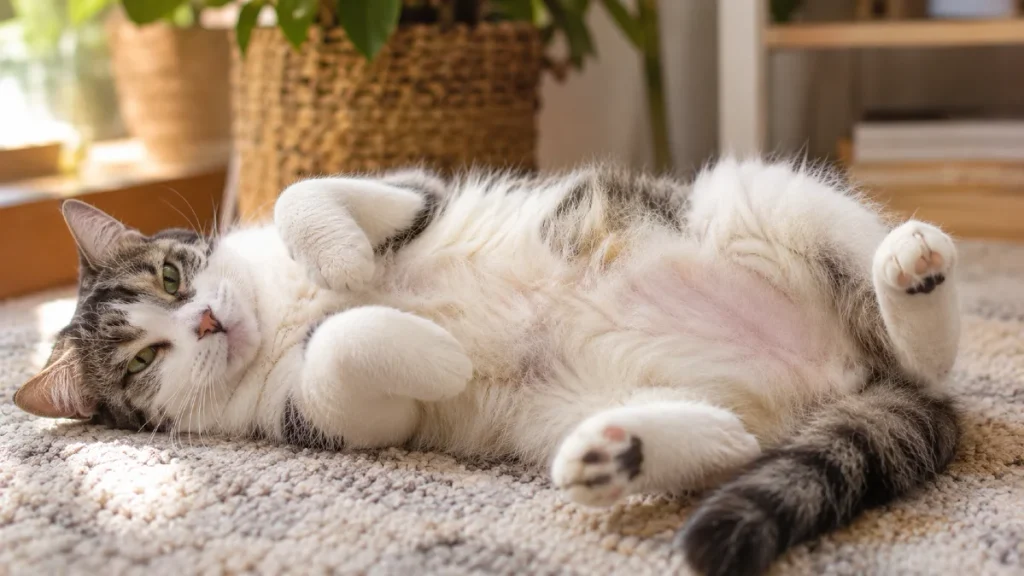
Yes, some cats genuinely enjoy having their bellies rubbed. But that does not mean every cat can be taught to love it.
You may have a cat that stretches out happily when you gently touch its stomach. Another cat might accept the same contact briefly before grabbing your hand and moving away.
Cats Protection explains that some cats are exceptions to the usual preference against belly rubs. Early positive experiences with gentle handling may play a role, although each cat is different.
The important thing is to distinguish enjoyment from simple tolerance. A cat staying still does not always mean it likes what you are doing. Some cats freeze when they feel uncertain or uncomfortable.
Look for relaxed muscles, soft eyes, and a cat that freely chooses to remain close to you. If your cat becomes stiff, flicks its tail, or tries to move away, stop immediately.
Even if your cat normally enjoys belly rubs, its preference can change depending on mood, activity, or physical comfort. A cat that enjoys them during a quiet evening may not want the same contact while playing.
There is no reason to force a cat to become comfortable with belly touching just for affection. If you need to handle the belly for grooming, medical care, or another necessary task, ask a veterinarian about safe handling methods.
When Should You Worry About Your Cat’s Reaction to Touch?
Most cats that dislike belly rubs are simply expressing a normal preference. However, a sudden change in how your cat reacts to touch can sometimes point to a health problem.
For example, a cat that previously enjoyed gentle handling might suddenly hiss when picked up. Another might begin hiding, moving less, or reacting strongly when a particular area is touched.
Cornell Feline Health Center notes that pain and medical conditions can contribute to aggressive behavior. Arthritis, dental problems, and other sources of discomfort can affect how a cat responds to handling.
If your cat suddenly becomes sensitive to touch, arrange a veterinary examination. Pay particular attention to changes in eating, movement, grooming, litter box habits, or normal activity.
A cat with a painful or swollen abdomen, repeated vomiting, marked weakness, or trouble breathing needs prompt veterinary attention. Do not press on the abdomen to test whether it hurts.
How to Show Affection Without Touching the Belly
If your cat does not enjoy belly rubs, focus on activities that help them feel comfortable. Playing, offering a quiet resting place, and spending time nearby can all provide positive interactions.
You can try a feather wand such as Go Cat Da Bird or an interactive toy such as the Catit Senses 2.0 Play Circuit. These allow your cat to chase and play without treating your fingers as toys.
Keep play sessions supervised when using string or feather toys. Put these toys away afterward so your cat cannot chew or swallow loose pieces.
And if your cat bites hard enough to break your skin, wash the wound promptly with soap and running water. Seek medical advice promptly, especially for a puncture wound or a bite to the hand, because cat bites can cause serious infections.