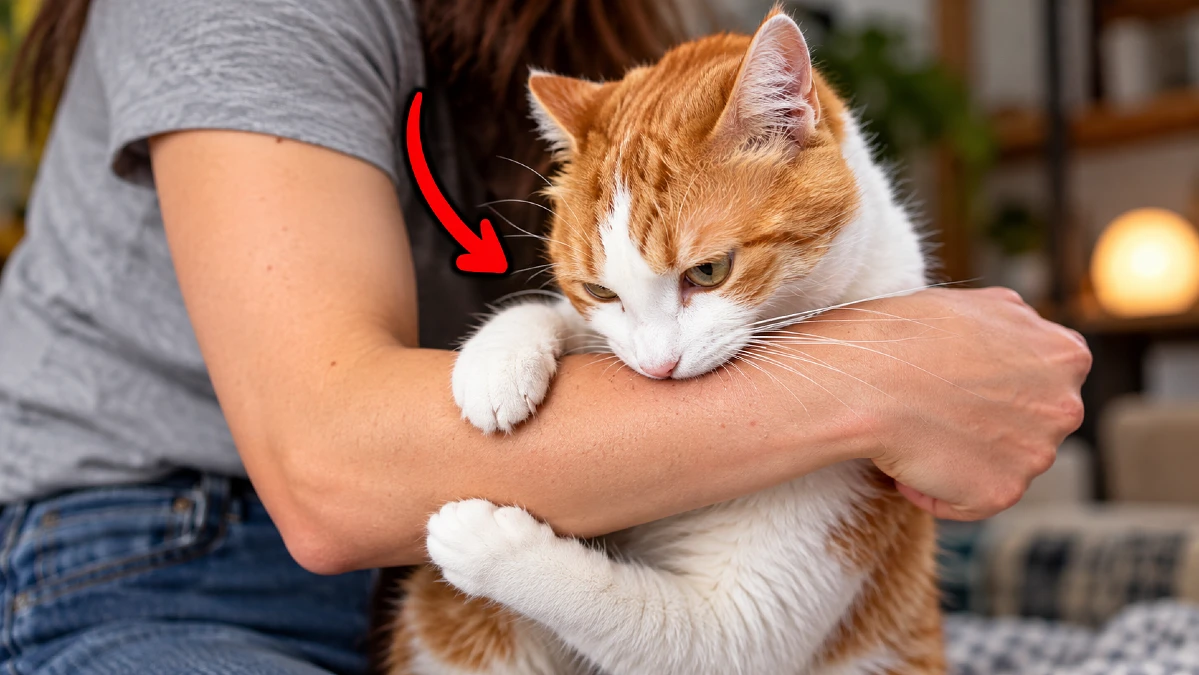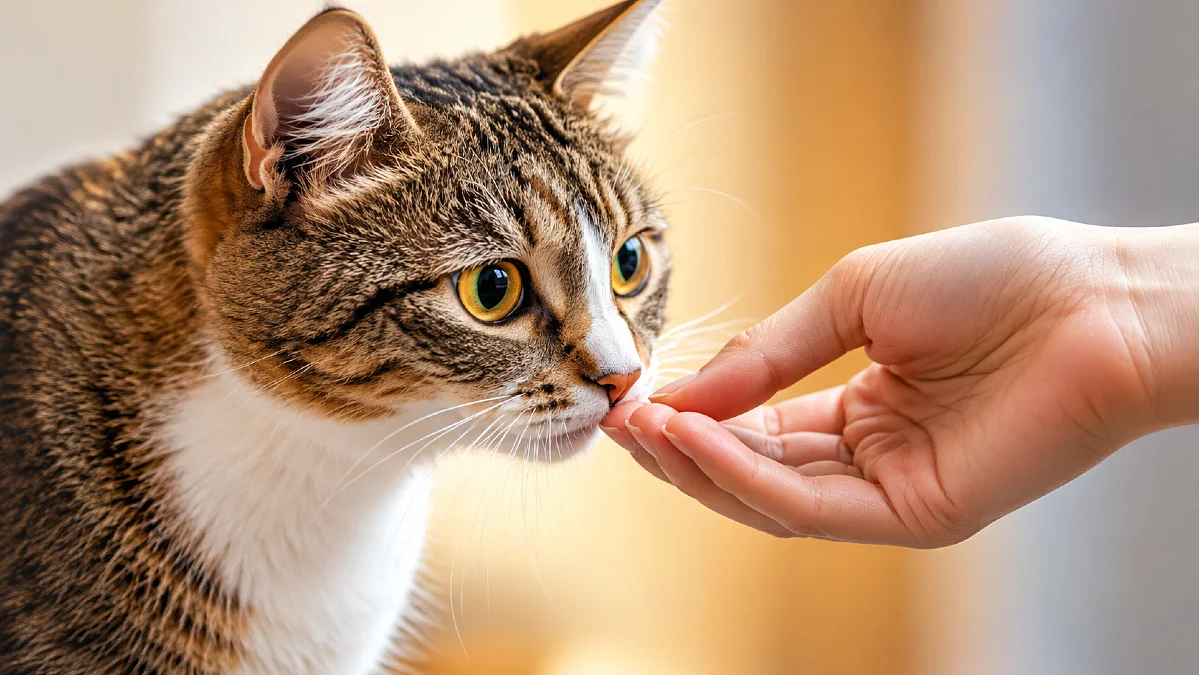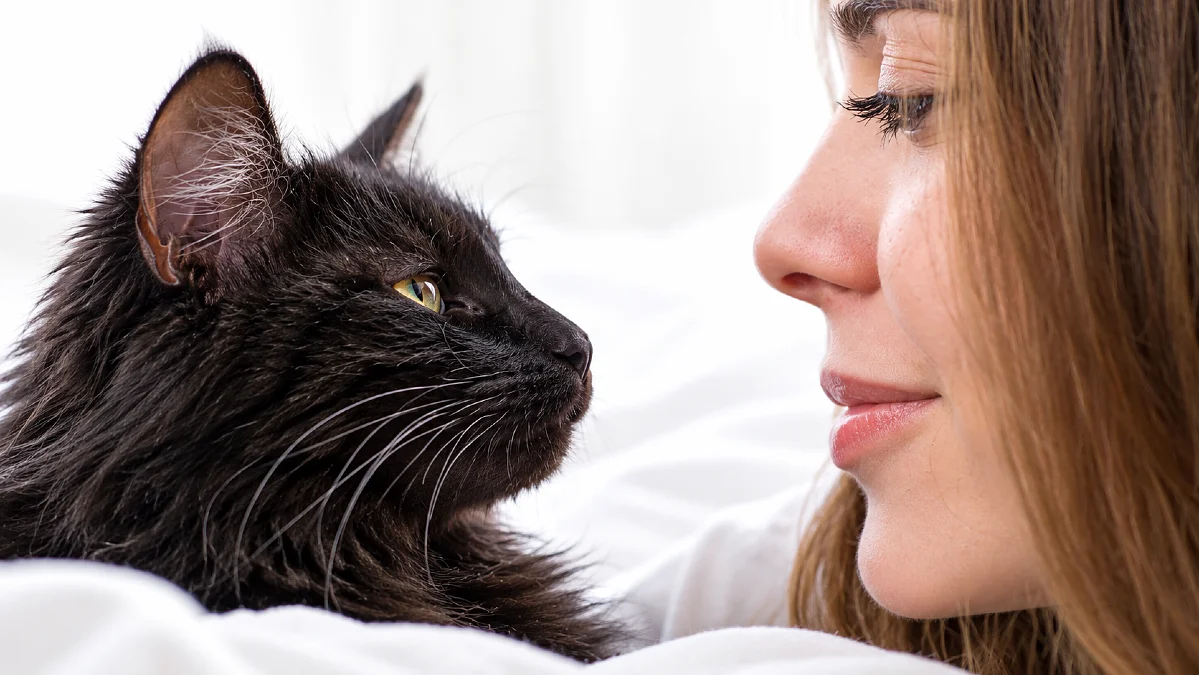
Your cat looks straight at you and lets out a loud meow. You decide to meow back, expecting nothing special, but suddenly your cat answers with another meow. Now you’re both making noises at each other, and you’re wondering whether your cat actually knows what you’re saying.
Some cats seem excited when their owners meow back. Others tilt their heads, stare in confusion, or walk away as if nothing happened. These different reactions raise an interesting question about how cats communicate with people.
Meowing at your cat can get its attention and sometimes start a playful exchange. But the reason your cat responds may be different from what you think. Cats pay attention to familiar voices, body language, and the situations around them.
Why Your Cat Meows at You More Than at Other Cats

Have you noticed that your cat seems to have endless things to say to you but rarely meows during friendly interactions with other cats? There is a reason for this behavior, and it begins when cats are very young.
Kittens use meows to get their mother’s attention, especially when they are hungry, cold, or uncomfortable. As cats grow older, they rely more on body language, scent, and other sounds when communicating with one another.
Adult cats can still meow at other cats, but meowing is especially common in their interactions with people. The ASPCA explains that cats use meows to greet owners, request food, seek attention, and communicate everyday needs.
Your Cat Has Learned That Meowing Works
Think about what happens when your cat walks into the kitchen and starts meowing. You might fill its food bowl, offer a treat, or stop what you’re doing to give it attention.
Over time, your cat can learn that making a certain noise gets a useful response. This helps explain why some cats become especially vocal around the people who feed and care for them.
Research published in Scientific Reports in 2025 also found that domestic cat meows show considerable acoustic variety. Researchers led by Danilo Russo examined hundreds of cat vocalizations and found that meows were more variable than purrs.
This flexibility fits with the idea that cats adjust their vocal behavior during different interactions. However, it does not mean every meow has a fixed meaning that humans can translate.
Your cat may have developed particular habits for communicating with you. Learning those habits can be much more useful than trying to memorize a list of supposed cat words.
What Happens When You Meow Back at Your Cat?

When you meow at your cat, the first thing that may happen is surprisingly simple. Your cat notices that you have made an unusual sound and decides whether it is worth investigating.
Some cats lift their heads immediately, while others turn their ears without moving their bodies. A particularly vocal cat might answer with another meow, creating what feels like a conversation.
Your cat’s response does not prove that it recognizes your meow as a real feline message. It may simply recognize that you are paying attention and making a sound directed at it.
A study by Charlotte de Mouzon and colleagues, published online in 2022 in Animal Cognition, tested 16 companion cats. Researchers found that cats could distinguish speech directed at them from ordinary adult speech when it came from their owners.
That study examined human speech rather than people pretending to meow. Still, it shows that cats can respond differently to familiar ways of being addressed.
What Different Reactions Might Tell You
Not every cat responds to a human meow the same way. These common reactions can help you decide whether to continue or give your cat some space.
| Your Cat’s Reaction | Possible Meaning | What You Should Do |
|---|---|---|
| Meows back | Interested in the interaction | Answer softly, then pause |
| Walks closer | Curious or seeking attention | Let the cat approach |
| Tilts its head | Noticing an unusual sound | Watch its body language |
| Moves its ears | Hearing you without engaging | Avoid repeating too much |
| Walks away | Not interested right now | Leave it alone |
| Hides or flattens its ears | May feel worried | Stop making the sound |
The most useful clues come from your cat’s whole body rather than its voice alone. A relaxed cat that approaches willingly is giving you a very different response from one that retreats.
If your cat seems comfortable, a short exchange can become part of your usual interaction. If it appears uneasy, there is no reason to continue.
Does Your Cat Know What Your Meow Means?

You might make a convincing meow and feel certain that your cat has recognized it. Unfortunately, there is no strong evidence that a human meow carries a clear message your cat can decode.
Cats communicate through sounds, body movements, scent, and the situation around them. A meow that happens beside an empty food bowl may serve a different purpose from a similar sound made during a greeting.
In a 2024 study published in Applied Animal Behaviour Science, researchers Susanne Schötz and colleagues found that cat meows varied in pitch, length, and intonation across different contexts. This supports the idea that the way a cat meows can change with the situation.
However, these vocal patterns do not create a simple dictionary. You cannot assume that one short meow always means hello or that two meows always mean a request for food.
Your Cat Can Recognize More Than You Think
Research does show that cats can learn to recognize certain human sounds. A 2019 study by Atsuko Saito and colleagues found that domestic cats could distinguish their own names from other spoken words.
This does not mean cats process human language like people do. It shows that they can identify familiar sound patterns and respond to them.
Your cat may also associate your usual greeting with affection, play, or food. When you suddenly replace that greeting with a meow, the unusual sound may attract its attention.
So, when your cat meows back, think of it as a possible social response rather than a translated conversation. You are interacting with your cat, even if you are not exchanging specific words.
How to Meow Back Without Upsetting Your Cat
If you want to try meowing at your cat, the safest approach is simple. Keep the sound gentle, choose a calm moment, and allow your cat to decide whether it wants to participate.
Start when your cat is already relaxed, perhaps sitting nearby or resting comfortably. Avoid trying this when it is eating, hiding, sleeping deeply, or showing signs of fear.
You can try this simple approach:
- Get comfortable nearby. Sit where your cat can see you without feeling trapped.
- Make one gentle meow. Keep your voice soft and use a natural tone.
- Pause and watch. Give your cat time to look, approach, answer, or ignore you.
- Respond to its behavior. If it seems relaxed, you can try another quiet sound.
- Stop when it loses interest. Never follow or corner your cat to keep the exchange going.
The goal is not to make your cat respond every time. It is to offer a harmless interaction that your cat can choose to join.
Try a Slow Blink Instead
There is another way to communicate with cats that has more direct scientific support. You can slowly narrow your eyes, close them briefly, and gently open them again.
A 2020 study in Scientific Reports by Tasmin Humphrey and colleagues found that cats responded to slow blinking from humans. In one experiment, cats were also more willing to approach a researcher after a slow blink interaction than after a neutral expression.
Cats Protection recommends looking at your cat’s body language before trying this. A relaxed cat may respond positively, while a frightened cat needs space instead of additional attention.
You can combine a gentle voice with relaxed body language and a slow blink. Your cat does not need to meow back for the interaction to be pleasant.
Which Other Sounds Can Help You Get Your Cat’s Attention?

Meowing is far from the only sound people make when communicating with cats. Many owners use gentle calls, soft voices, clicking noises, or familiar phrases to attract their pets.
You may have noticed that your cat comes running when you speak in a cheerful voice but ignores the same words spoken normally. Research suggests that the way people speak to cats can matter.
In the study by Charlotte de Mouzon and colleagues, cats distinguished speech directed at them from ordinary adult speech when their owners spoke. Another study on cat directed speech found that people often raise their pitch when speaking to cats.
That does not prove that a very high voice is always best. Familiarity, volume, and your cat’s individual preferences all matter.
Which Sounds Are Worth Trying?
Different sounds can have different effects, especially when your cat is sensitive to sudden noise. This comparison can help you choose a gentle way to get its attention.
| Sound | Possible Response | Best Approach |
|---|---|---|
| Gentle meow | Curiosity or vocal reply | Keep it short and soft |
| Calm familiar voice | Recognition or attention | Use your normal greeting |
| Soft trill | Interest in the unusual sound | Try quietly |
| Cat’s name | Recognition of a familiar cue | Pair with positive experiences |
| Repeated sharp “pss” | Attention or discomfort | Avoid if the cat seems uneasy |
| Loud hisslike sound | Fear or defensive reaction | Do not imitate it |
Cats Protection warns that strong hissing sounds can seem unfriendly to cats. If a particular noise makes yours freeze, back away, or flatten its ears, stop using it.
Recorded cat meows from a phone or television may also interest some cats, while others ignore them. Avoid repeatedly playing recordings if your cat becomes agitated or starts searching anxiously for another animal.
How to Tell What Different Cat Meows Really Mean

Once you start paying attention to your cat’s voice, you may notice that its meows sound different throughout the day. Some are short and soft, while others are louder, longer, or repeated several times.
These differences can offer clues, but the sound alone rarely tells the whole story. You need to consider where your cat is, what happened beforehand, and how its body looks.
Short Meows Often Happen During Greetings
A quick meow when you enter a room may be a greeting or a request for attention. If your cat approaches with a relaxed body and upright tail, it is likely comfortable with the interaction.
The ASPCA identifies greeting and attention seeking as common reasons cats meow at their owners. Some cats may even vocalize when you speak to them.
Repeated Meows May Be Requests
A cat that keeps meowing beside its food bowl may be asking for food. The same cat might make similar sounds near a closed door when it wants access to another room.
Rather than judging the sound alone, look at the situation. Check whether your cat needs water, food, a clean litter box, or an opportunity to play.
Long Yowls Can Mean Something Different
Yowling is generally longer and more drawn out than an ordinary meow. Cats may yowl during mating behavior, territorial conflicts, fear, or physical discomfort.
Unspayed females may produce loud calls when they are in heat, while unneutered males may vocalize in response. A cat that suddenly begins yowling for no clear reason should be checked for signs of distress.
Purring also needs context. Cats Protection notes that cats can purr when relaxed, but they may also purr during stressful situations or when they are in pain.
The best clue is the combination of sound, situation, and body language. Looking at all three gives you a better idea of what your cat may need.
Why Some Cats Meow Back While Others Stay Silent
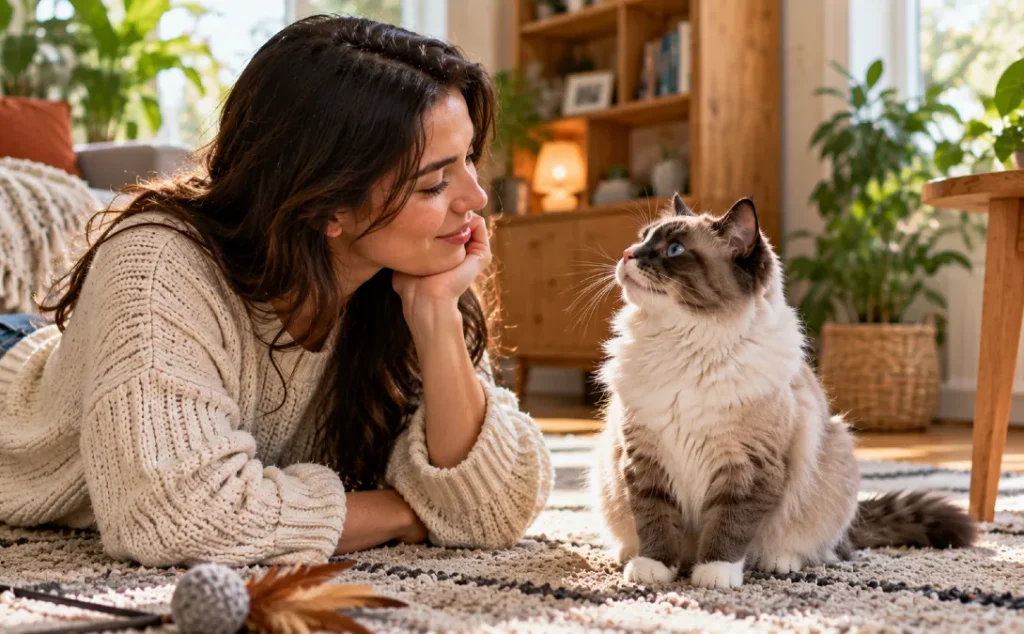
If your cat never answers when you meow, there is no reason to feel rejected. Cats have different personalities, and some are much more vocal than others.
The ASPCA identifies Siamese cats as a breed known for frequent vocalization. However, breed is just one factor, and even cats from the same litter may develop very different habits.
Some cats have learned that meowing brings attention, while others rely more on rubbing, following, or sitting beside their owners. A quiet cat may still enjoy spending time with you without making much noise.
Look for the Small Responses
Your cat might recognize your voice without giving an obvious answer. A small ear movement, brief glance, or change in posture may show that it has noticed you.
Researchers studying cats’ reactions to human sounds often examine these smaller behaviors. A cat does not have to walk across the room or meow loudly to show that it heard something.
Also, a cat’s response can change from one moment to another. It may be interested when awake and playful but completely uninterested while resting.
If your cat prefers quiet contact, respect that preference. Sitting nearby, offering a gentle slow blink, or allowing it to approach can be more enjoyable than repeated vocal exchanges.
Your cat’s willingness to remain comfortably near you can be meaningful even when it stays completely silent.
Could Meowing Back Make Nighttime Crying Worse?
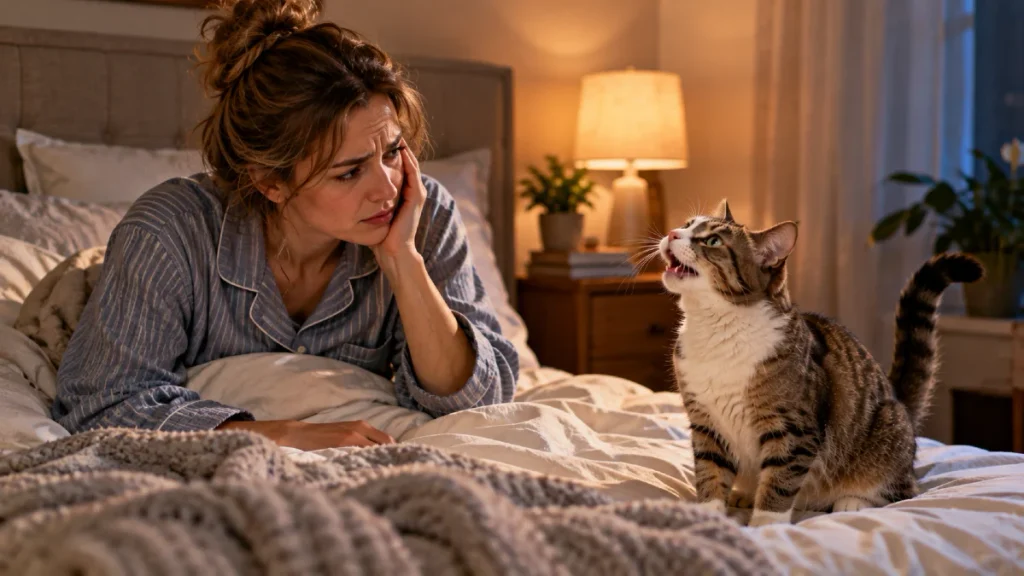
Meowing back can be fun during the day, but it may become less helpful when your cat starts calling for attention during the night. Some cats learn that making noise brings their owners out of bed.
For example, your cat might begin meowing at dawn because breakfast usually follows soon afterward. If you repeatedly answer, get up, or offer food, you may unintentionally teach it that calling works.
The ASPCA recommends first finding out why a cat is vocalizing excessively. Only after its basic needs and health have been checked should owners work on reducing attention seeking calls.
Change the Routine Instead of Arguing With Your Cat
A regular evening routine may help if your cat meows because it is bored or expects food. Try a suitable play session before bedtime and maintain consistent feeding times.
A wand toy can provide supervised interactive play. Food puzzles, such as the Catit Senses Food Tree, can offer another activity for cats that enjoy working for their food.
If your cat wakes you early for breakfast, a scheduled feeder may help separate feeding time from your response. The PetSafe Healthy Pet Simply Feed is one example of a product designed to deliver meals on a schedule.
However, these tools are not a cure for every noisy cat. A pet that is hungry, sick, frightened, or in pain needs its problem addressed rather than being ignored.
The goal is to make nighttime more predictable. Save your playful meowing exchanges for moments when your cat is relaxed and you are happy to give it attention.
When Strange Meowing Means Your Cat Needs Help
Most everyday meowing is normal, but a sudden change in your cat’s voice or behavior deserves attention. A cat that becomes unusually loud, starts crying at night, or makes unfamiliar sounds may be trying to signal a problem.
VCA Animal Hospitals advises owners to pay attention to changes in vocal behavior, especially when they occur alongside other symptoms. These can include changes in appetite, weight, grooming, or litter box habits.
Older cats may develop health problems that lead to increased vocalization. Cornell Feline Health Center explains that hyperthyroidism can cause changes such as weight loss, increased appetite, thirst, and unusual activity.
Kidney disease, pain, hearing changes, and age related confusion can also affect vocal behavior. These problems cannot be diagnosed by listening to a meow, so a veterinary examination may be needed.
When Should You Call the Vet?
If your cat’s meowing suddenly changes, look for other symptoms before assuming it wants attention. This guide can help you judge how quickly to seek professional care.
| Vocal Change | Other Clues | Recommended Action |
|---|---|---|
| Sudden excessive meowing | Hiding or restlessness | Contact your vet promptly |
| New nighttime crying | Confusion or pacing | Book a veterinary examination |
| Loud yowling | Pain or trouble moving | Seek prompt veterinary care |
| Crying in the litter box | Straining or little urine | Seek emergency care |
| Unusual meow with breathing trouble | Open mouth breathing | Seek emergency care |
| More meowing in an older cat | Weight loss or increased thirst | Arrange a veterinary check |
A cat that is trying to urinate but cannot pass urine needs emergency care. Breathing difficulty is also an emergency, regardless of whether the cat is meowing.
For less urgent changes, keeping a short record of your cat’s behavior can help your veterinarian. Note when the sounds happen, how long they last, and whether eating, drinking, or other habits have changed.
A brief video or voice recording may also help show the difference between your cat’s usual sounds and the new behavior.
Never assume a strange or persistent cry is simply your cat asking for a conversation. Check for discomfort first, especially when the change is sudden.