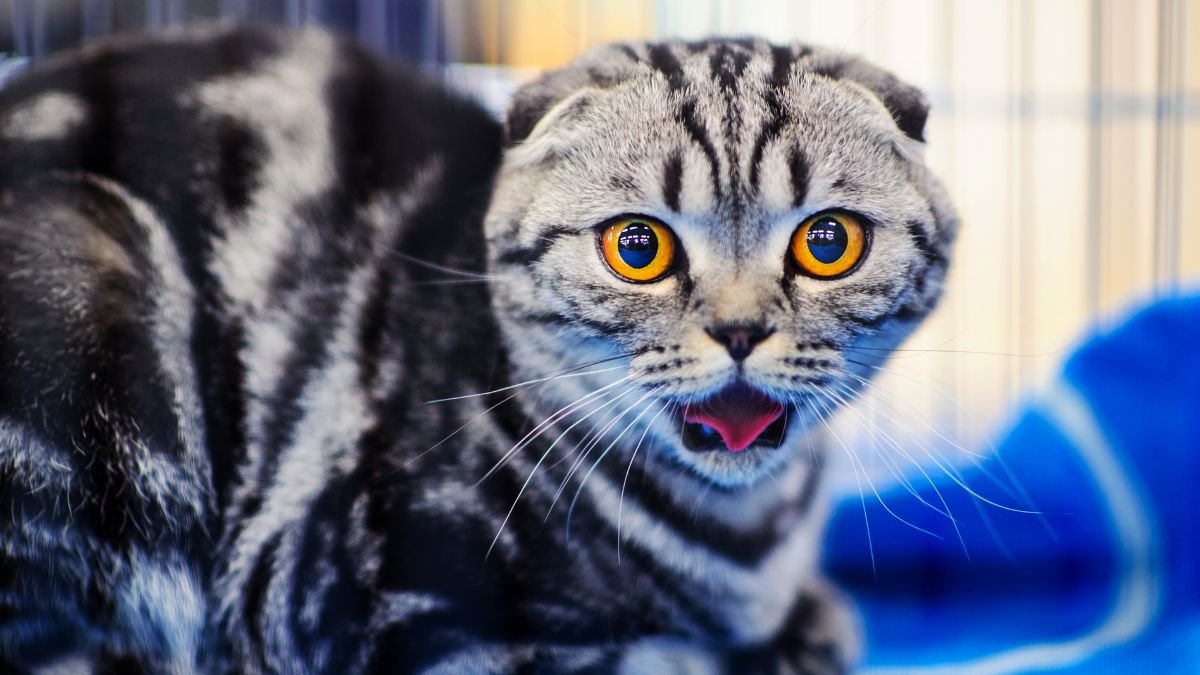
You’re walking through your living room when your cat suddenly leaps onto you. One moment, everything is peaceful. The next, tiny claws are gripping your clothes, and your furry friend is climbing your body like a tree.
Sometimes your cat jumps onto your lap while you’re relaxing. Other times, it climbs onto your shoulders, presses against your chest, or launches itself at your legs from behind the sofa. You might wonder whether your cat wants affection, attention, or something completely different.
The surprising truth is that cats don’t always climb on you because they want cuddles. Sometimes, your movement activates their natural hunting instincts. Your cat may be practicing the same stalking and pouncing skills its ancestors used to catch prey.
But that’s only part of the story. Sudden climbing can also reveal trust, excitement, boredom, fear, or a desire for warmth.
Learning why cats suddenly climb on you can help you respond in a way that keeps both of you comfortable. And the clues your cat gives just before jumping may tell you far more than the jump itself.
Why Cats Suddenly Climb on You When You Least Expect It
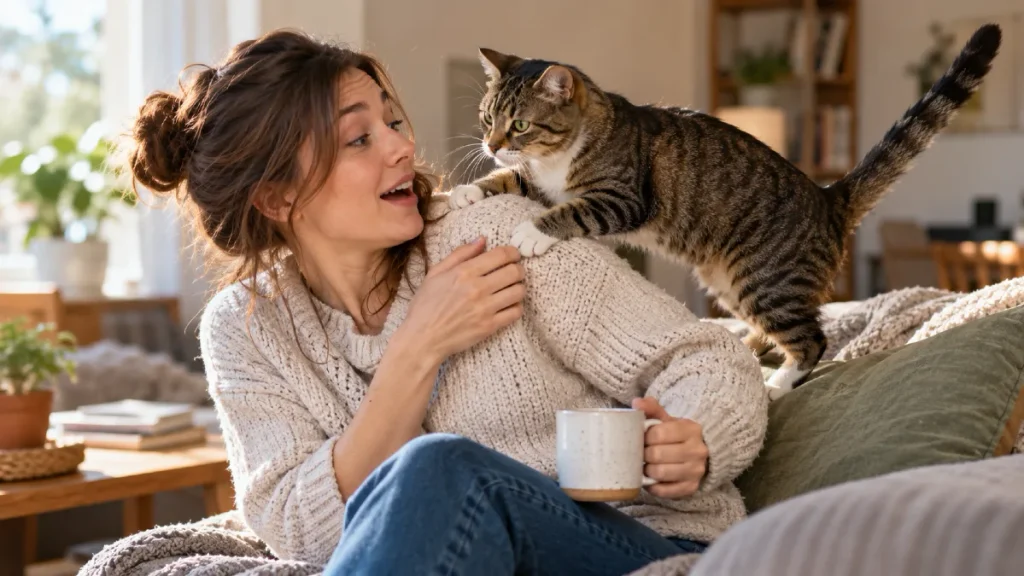
Your cat doesn’t need a special reason to climb onto the person sitting nearby. Sometimes, you’re simply the most interesting, comfortable, or familiar thing in the room. But the way your cat approaches you can offer useful clues.
A cat that gently steps onto your lap is behaving differently from one that rushes out from behind a chair and grabs your ankles. The first may want closeness or a warm place to rest. The second may be acting on its natural urge to chase moving objects.
Cats are predators by nature, even when they spend their entire lives indoors. Their brains are prepared to notice movement, stalk interesting objects, and practice catching them.
This is why a dangling sleeve, moving foot, or swinging blanket can suddenly become exciting. Your cat isn’t necessarily angry with you. It may simply be responding to movement in a way that feels natural.
VCA Animal Hospitals explains that stalking, chasing, and pouncing are normal parts of feline play. Problems arise when cats direct these actions at people instead of suitable toys.
The key is to notice what happens immediately before your cat jumps. Was your cat watching your feet? Did it approach slowly while purring, or did it hide and suddenly leap forward?
Those small details can help you tell the difference between a friendly visit and an energetic hunting game.
When Your Cat Climbs on You Because You Feel Safe
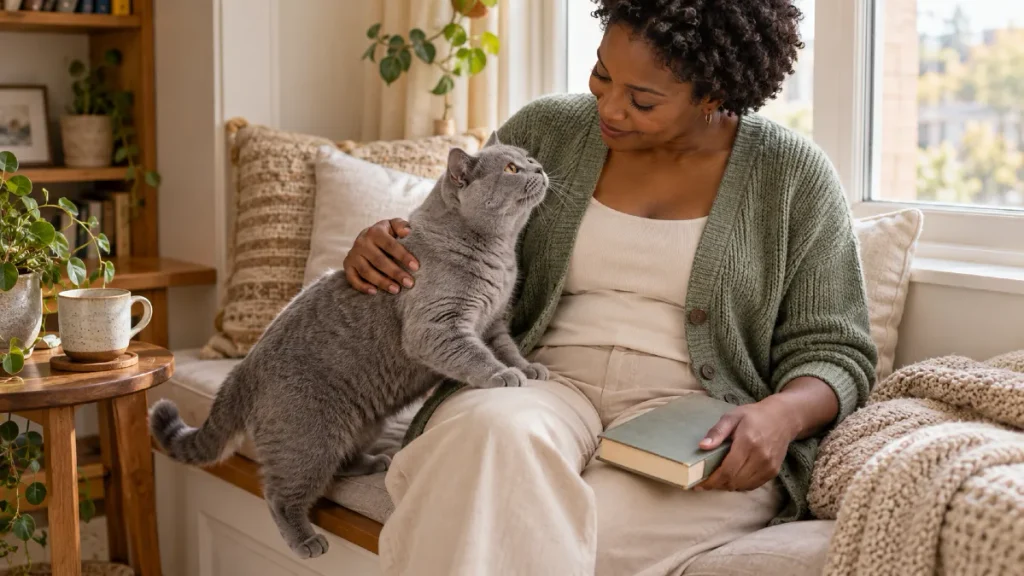
A cat that climbs onto your lap and settles down may be showing that it feels comfortable around you. Cats often choose resting places where they can relax without feeling threatened.
Your body offers familiar smells, warmth, and the comfort of someone your cat knows. If your cat willingly rests against you, it may see you as a safe companion.
Cats Protection explains that cats can associate familiar human scents with safety. This helps explain why some cats enjoy sleeping on their owners or resting on clothing that smells like them.
You may also notice your cat rubbing its face against your arm before climbing onto your lap. Cats have scent glands around their faces, and rubbing helps spread familiar scent.
Why Kneading Often Happens After Climbing
Some cats begin pushing their front paws against your legs or stomach once they settle down. This behavior is called kneading, and it starts when kittens press against their mothers while nursing.
Adult cats may continue kneading during comfortable or relaxed moments. Some purr, close their eyes, or gently press their paws into a blanket.
Kneading can be a sign of comfort, but it doesn’t mean your cat literally believes you’re its mother. It’s a familiar behavior that may continue throughout adulthood.
What Different Types of Climbing May Mean
The position your cat chooses and what happens afterward can help you make sense of its behavior. These are possible explanations rather than certain translations.
| Climbing Behavior | Possible Reason | Best Response |
|---|---|---|
| Settles on your lap | Comfort and warmth | Let it rest |
| Kneads your stomach | Relaxation | Offer a blanket |
| Rests against your chest | Closeness and comfort | Stay gentle |
| Climbs up when startled | Seeking safety | Reduce the stress |
| Leaps at your moving legs | Play and chasing | Offer a wand toy |
Watch what your cat does after reaching you. A cat that quickly relaxes is showing a different pattern from one that grabs your clothes and immediately runs away.
If your cat becomes more affectionate over time, that can be a welcome sign of growing comfort. However, a sudden major change in behavior deserves a closer look.
Why Warmth, Attention, and Daily Habits Bring Your Cat Closer
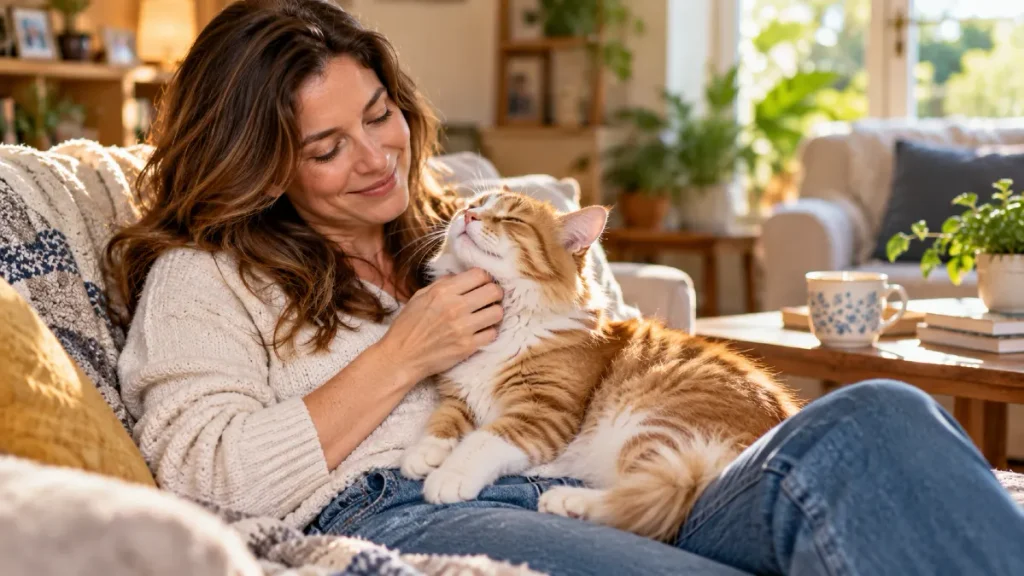
Sometimes, the reason your cat climbs onto you is surprisingly simple. You’re warm, comfortable, and likely to respond when your cat arrives.
Cats enjoy resting in cozy places, especially when the room feels cool. Your lap can provide a soft, warm surface without requiring your cat to search for another sleeping spot.
Cats Protection identifies warmth and comfort as common reasons cats choose to sit on people. Your cat may enjoy the same qualities in a sunny windowsill, soft blanket, or favorite chair.
But warmth isn’t the only attraction. Your cat may also have learned that climbing onto you leads to something enjoyable.
Your Reaction May Have Created a Habit
Think about what you usually do when your cat jumps onto your lap. Perhaps you immediately stroke its head, speak gently, or stop working to give it attention.
Over time, your cat may learn that this approach gets a response. The behavior becomes more likely when the cat wants your company.
The same pattern can happen around mealtimes. If climbing onto your legs often leads to food, your cat may repeat the behavior when it expects dinner.
This doesn’t mean your cat is trying to control you. It simply means your response has helped shape a habit.
What If Your Cat Climbs on You While You’re Working?
You sit down with your laptop, and suddenly your cat decides your keyboard or lap is the perfect place to rest. This may be a mix of curiosity, warmth, familiarity, and attention seeking.
Try placing a comfortable cat bed beside your workspace. You can reward your cat for choosing that spot with gentle attention or an occasional treat.
This gives your cat a way to stay close without repeatedly interrupting your work. You don’t have to reject its company to create a more comfortable routine.
Why Your Cat Suddenly Pounces on You From Hiding
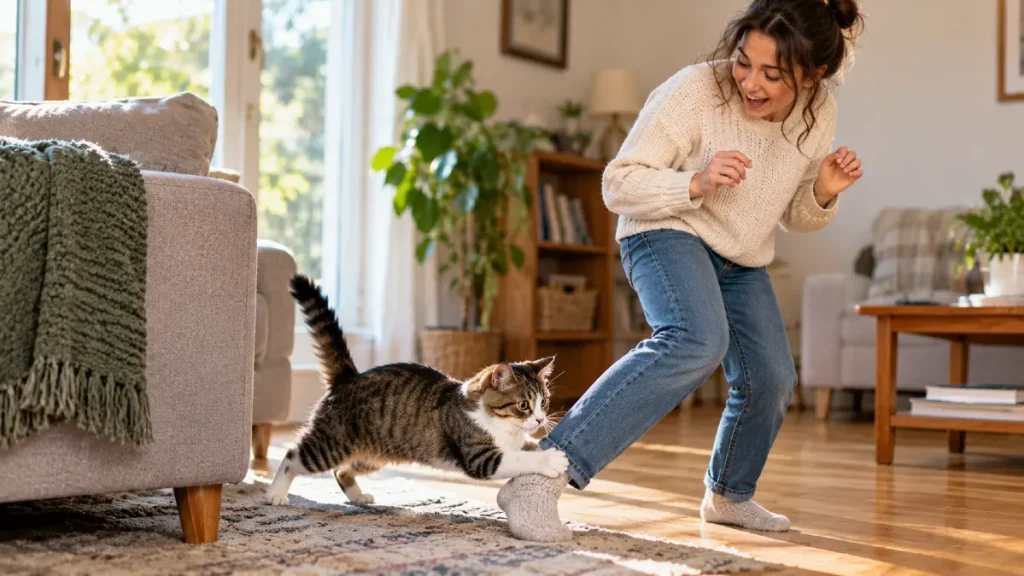
This is one of the most surprising reasons cats suddenly climb or jump onto people. Your cat may be treating the moment as an opportunity to practice hunting behavior.
Picture yourself walking past the sofa. Suddenly, your cat bursts out, grabs your ankle, and races away before you can react.
It can feel like a sneak attack. But in many cases, it’s a form of play.
Cats naturally practice stalking, chasing, catching, and wrestling. Young cats are especially likely to turn moving objects into targets for these games.
The Ontario SPCA explains that playful aggression can involve pouncing on hands, feet, and ankles. This behavior becomes a problem when scratching or biting causes pain.
Why Moving Legs Can Trigger a Sudden Jump
A cat hiding near a doorway may focus closely on your feet as you walk past. The movement provides an appealing target for a chase.
Your cat may crouch, wiggle its body slightly, and then spring forward. These movements resemble parts of the hunting sequence cats use during play.
This doesn’t mean your cat believes you’re a mouse or wants to hurt you. It means your moving body has become the target of a behavior normally directed at prey or toys.
Wisconsin Humane Society explains that cats can direct normal predatory play toward people when suitable play opportunities are limited.
Common Ambush Triggers and Better Responses
Not every sudden jump begins the same way. These common situations can help you decide what to change.
| Trigger | What It May Mean | Better Response |
|---|---|---|
| Walking past the sofa | Playful ambush | Use a wand toy |
| Feet moving under blankets | Chase response | Offer a separate toy |
| Passing through a doorway | Stalking opportunity | Redirect before passing |
| Hands moving quickly | Rough play invitation | Keep hands out of games |
| Bored indoor afternoons | Need for activity | Add short play sessions |
The goal is to give your cat an appropriate target before the behavior becomes painful. A moving toy allows it to chase and catch something without grabbing your skin.
Do not encourage kittens to wrestle with your hands or feet. Habits that seem harmless in a small kitten can become painful when the cat grows.
Why Your Cat Climbs Onto Your Chest, Back, or Shoulders
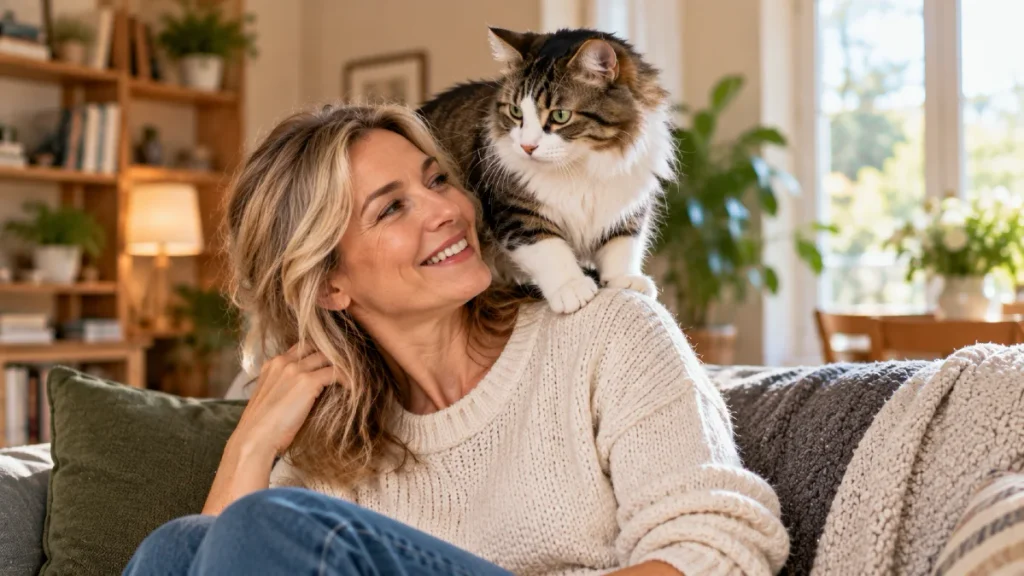
Some cats are perfectly happy resting on your lap. Others seem determined to climb as high as possible, even if that means balancing on your shoulders.
This behavior may reflect a cat’s natural interest in elevated places. Higher spots allow cats to look around and observe activity from a different position.
VCA Animal Hospitals explains that many cats seek elevated resting places where they can relax while keeping an eye on their surroundings.
Your shoulders may provide a useful viewing point, especially if you’re standing near a window. A curious cat might climb onto you simply because you’re the easiest route to a better view.
However, shoulder climbing can be risky. A surprised person might move suddenly, causing the cat to lose its balance or dig in its claws.
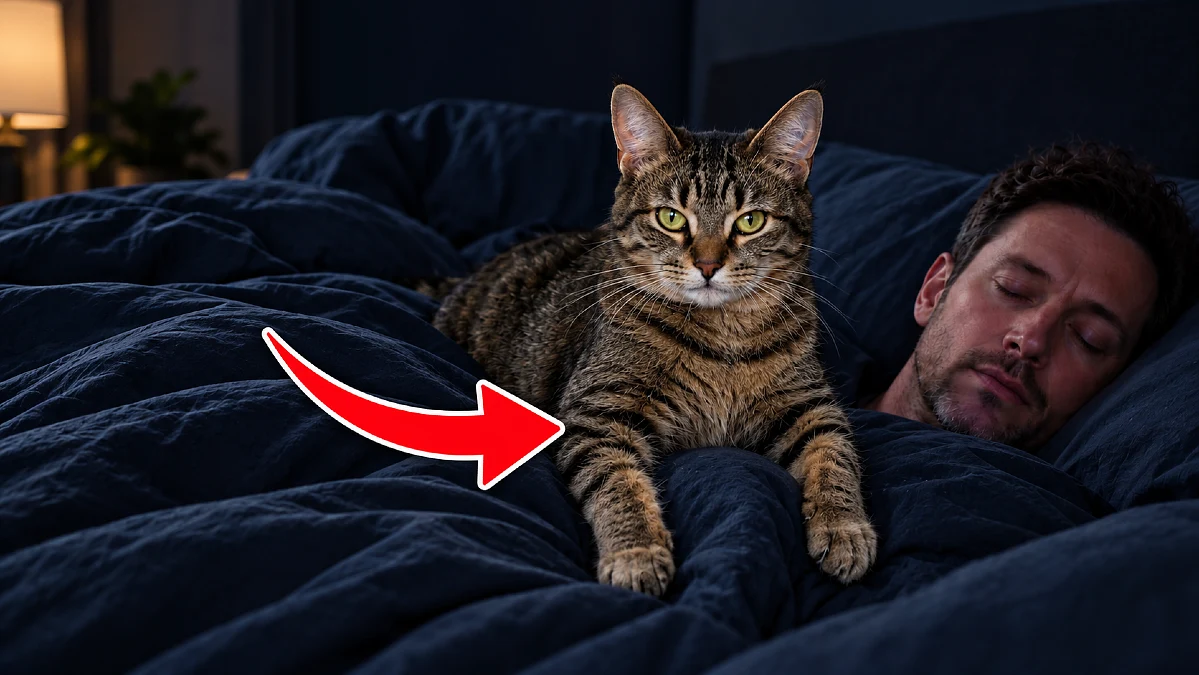
Why Your Cat Climbs on Your Chest While You Sleep
Your chest can provide warmth, a soft resting surface, and a chance to remain close to you. Some cats enjoy this position when you’re lying quietly in bed.
Your cat may also return because the location has become part of its sleeping routine. If it has rested there comfortably before, it may choose the same spot again.
Cats Protection notes that cats may sleep on their owners for warmth, comfort, and social contact. The exact position depends on the individual cat.
If chest sleeping disturbs you, offer a soft bed beside your pillow or near your usual sleeping area. Reward your cat when it chooses the alternative.
For cats that climb onto shoulders, a secure climbing tree may offer a safer high place. Choose one that is stable and positioned where your cat can still watch family activity.
How to Read Your Cat’s Body Language Before the Next Jump
Your cat may give you several clues before it climbs onto you. Learning these signals can help you respond before an uncomfortable encounter.
Start by looking at the whole body rather than focusing on one action. Tail position, ear movement, posture, and the situation all matter.
A relaxed cat may approach with its tail raised, rub against your legs, and settle down comfortably. Its body usually appears loose rather than stiff.
A cat preparing to pounce may lower its body, focus closely on a moving object, and prepare its back legs for a sudden jump. This can happen during ordinary play.
Fear looks different. A frightened cat may flatten its ears, crouch tightly, hiss, or try to escape.
Can Purring Tell You Why Your Cat Climbed on You?
Purring often happens during pleasant contact, but it doesn’t guarantee that a cat is happy. Cats can also purr in situations involving stress or discomfort.
If your cat purrs while resting loosely against you, the full picture suggests a comfortable interaction. If it purrs while remaining tense or showing other signs of illness, don’t rely on the sound alone.
International Cat Care encourages owners to pay attention to a cat’s body position and other behavior when judging its emotional state.
Cat Body Language and What to Do Next
Use this guide to check whether your cat seems relaxed, playful, or uncomfortable. No single signal is enough to judge every situation.
| Body Signal | Possible Meaning | What to Do |
|---|---|---|
| Tail upright, relaxed body | Friendly approach | Offer gentle attention |
| Soft eyes, loose posture | Comfortable | Let it settle |
| Low crouch, focused stare | Preparing to pounce | Redirect to a toy |
| Tail swishing sharply | Rising excitement or irritation | Pause interaction |
| Flattened ears, tense body | Fear or discomfort | Give space |
| Hissing or growling | Wants distance | Stop contact |
One useful habit is to pause petting briefly and see what your cat does. If it leans closer or rubs against your hand, it may want more attention.
If it turns away or becomes tense, allow it to leave. Giving cats a choice helps keep contact comfortable for both of you.
How to Stop Painful Climbing Without Scaring Your Cat
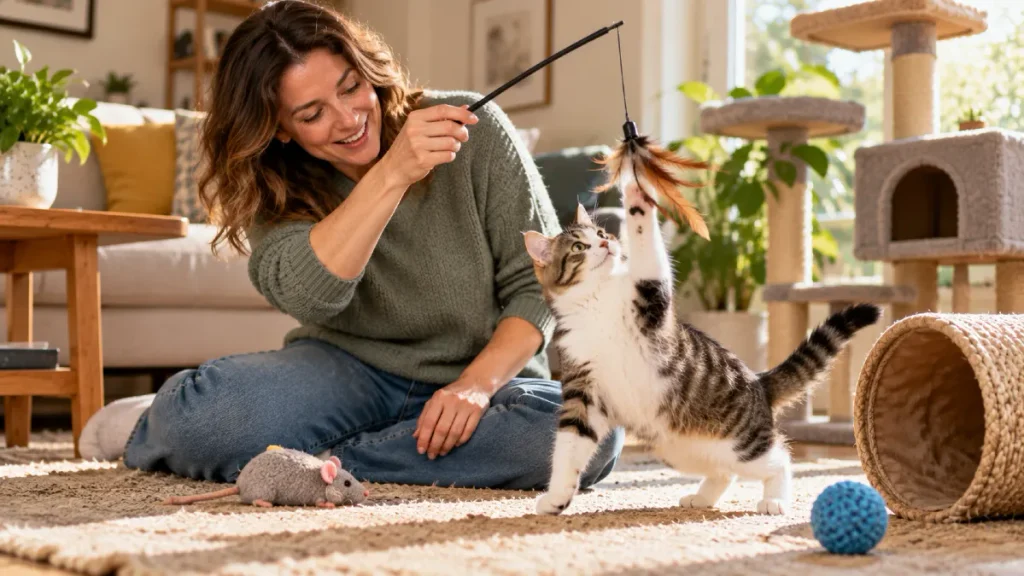
You can teach your cat better ways to approach you without shouting or frightening it. The goal is to meet its need for movement, contact, or comfort while keeping your skin safe.
Start by identifying what usually happens before the unwanted behavior. A cat that pounces every evening may need more active play, while one that climbs your clothes for attention may need a different way to ask.
Cats Protection advises against punishing cats for normal behavior problems. Punishment can create fear without teaching the cat what to do instead.
Give Your Cat a Better Hunting Target
Interactive wand toys are useful because they allow your cat to chase something away from your hands and legs. Move the toy across the floor, around furniture, or behind an object so your cat can stalk it.
Allow your cat to catch the toy during the game. This gives the activity a clear purpose and allows it to complete the chase.
You can also offer a kicker toy for wrestling. Products such as the KONG Kickeroo Cactus are designed for cats to grab and kick with their back legs.
Keep play sessions short enough that your cat remains interested without becoming overly excited. Several brief sessions spread throughout the day can be more useful than waiting until your cat is already grabbing your ankles.
Create Places Where Your Cat Can Climb Safely
If your cat frequently climbs your clothes to reach a higher position, it may benefit from better climbing options.
A secure cat tree, sturdy window perch, or properly installed cat shelf gives your cat a place to climb without using your body.
Place these options in rooms where people spend time. A cat that enjoys being near you may ignore an expensive climbing tree if it’s hidden in an empty room.
Food puzzles can also provide mental activity. The Catit Senses Digger, for example, encourages cats to use their paws to retrieve food from small compartments.
Reward the Behavior You Want to See
When your cat approaches calmly, give it gentle attention if it wants contact. You can also reward it for sitting beside you rather than climbing up your clothing.
If your cat starts stalking your legs, redirect its attention to a toy before it jumps. Try to avoid making your feet part of the game.
Be consistent. If grabbing your legs sometimes leads to an exciting wrestling match, your cat may continue trying the same thing.
Protect Yourself From Painful Claws
Keep your cat’s nails trimmed as appropriate, using a safe technique recommended by your veterinarian. A blanket over your lap can also make kneading more comfortable.
If your cat jumps onto your body and grips with its claws, stay as calm and still as you safely can. Support the cat if necessary and gently guide it to a stable surface rather than pulling it away sharply.
If climbing regularly causes bites or scratches, seek help from your veterinarian or a qualified feline behavior specialist. Persistent rough behavior may require a more specific training plan.
When Sudden Climbing Could Mean Your Cat Needs Help
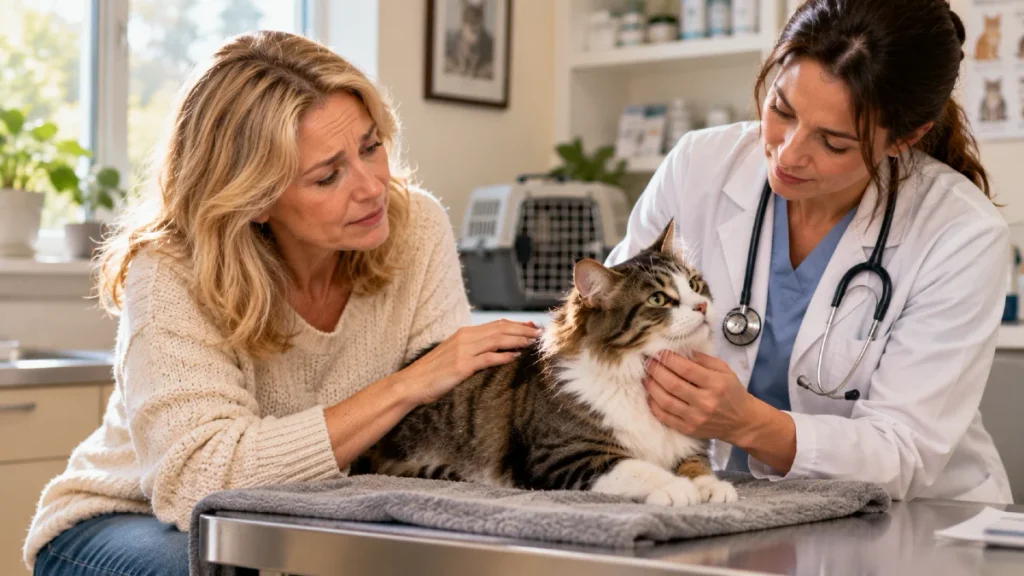
Most cats occasionally jump onto their owners for ordinary reasons. But a sudden major change in climbing or attention seeking can sometimes signal a problem.
For example, a cat that has always been independent may suddenly refuse to leave your side. Another cat may become unusually restless, constantly seeking contact, or acting frightened.
This doesn’t prove that something is wrong. However, the change becomes more important when it appears alongside other unusual behavior.
VCA Animal Hospitals notes that some sick cats become more clingy or demand more attention. Others may hide, become irritable, or lose interest in normal activities.
Watch for Changes Beyond Climbing
Pay attention to whether your cat is eating, drinking, grooming, and using the litter box normally. Notice whether it still enjoys play and moves comfortably.
An older cat that suddenly changes its social habits may need a health check. Pain, illness, or changes in its ability to cope with daily life can affect behavior.
Stress can also change how cats interact with people. A recent move, unfamiliar visitor, new pet, or loud noise may make your cat seek familiar company.
Give your cat access to quiet spaces where it can rest without interruption. If the behavior remains unusual, contact your veterinarian.
Normal Climbing Versus Warning Signs
The most useful question is whether the behavior fits your cat’s normal pattern. These examples can help you decide what to do next.
| What You Notice | What It May Suggest | Next Step |
|---|---|---|
| Relaxed lap climbing | Normal social contact | Observe and enjoy |
| Climbing after loud noises | Possible stress | Provide a quiet space |
| Sudden clinginess with appetite loss | Possible illness | Contact a vet promptly |
| Climbing with signs of pain | Physical discomfort | Arrange a vet check |
| Restlessness with litter box changes | Possible health issue | Seek veterinary advice |
| Open mouth breathing or breathing distress | Medical emergency | Get urgent veterinary care |
A sudden behavior change should not be dismissed simply because your cat still wants affection. Cats can seek contact even when they are uncomfortable.
If your cat appears weak, has trouble breathing, or cannot urinate, seek emergency veterinary care. These problems need more attention than a change in climbing habits alone.