Your cat watches you from across the room, follows you into the kitchen, and sometimes falls asleep beside you. But when you reach out to pet it, the same cat might pull away as if you are a complete stranger.
Does your cat actually trust you, or does it simply enjoy the food and comfort you provide? The answer is often hidden in small behaviors that cat owners overlook every day.
Some cats show affection through gentle head bumps. Others prefer sitting nearby without being touched. And a few seem especially interested in their owners during stressful moments.
These behaviors can help you recognize signs your cat trusts you, but they need to be read in context. A quiet cat can feel just as secure as one that constantly seeks attention.
Level 1: Your Cat Avoids You Because It Does Not Feel Safe Yet
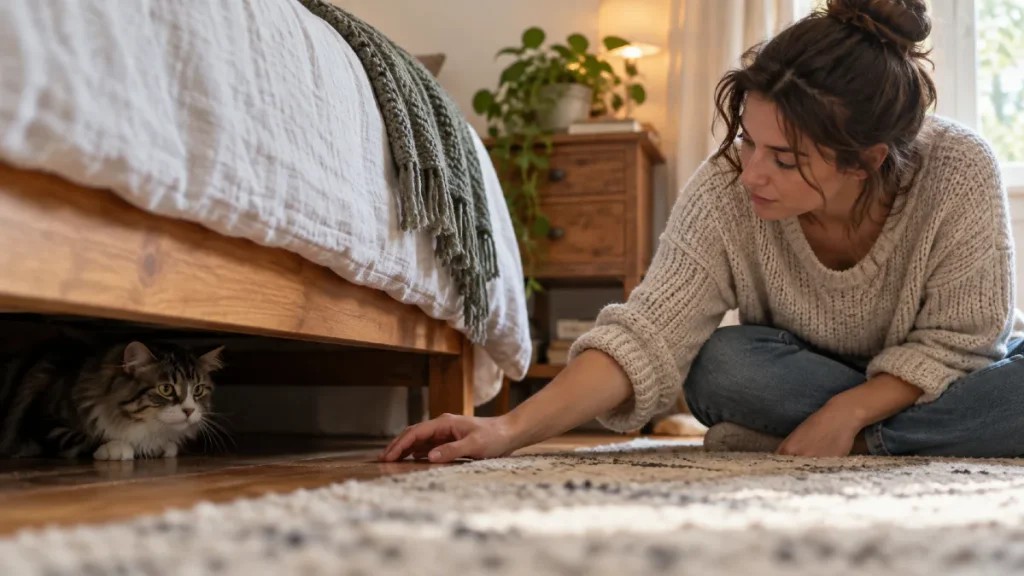
Some cats disappear beneath the bed whenever their owners enter the room. Others watch from behind furniture, ready to escape if someone takes another step.
If this sounds familiar, your cat may still be learning whether it can feel safe around you. This behavior is especially common when cats enter unfamiliar homes or meet new people.
Why Your Cat Keeps Its Distance
Cats depend on familiar surroundings and predictable experiences to feel secure. An unfamiliar person can bring new sounds, smells, and movements that make a cautious cat uncomfortable.
You may notice your cat leaving when you approach or refusing to come out while you are nearby. Some cats crouch low, hold their ears back, or keep their bodies tense.
Avoidance does not automatically mean your cat dislikes you. It often means the situation feels too uncertain for comfortable interaction.
Cats Protection explains that hiding can be a normal response to stress or unfamiliar surroundings. A cat that needs space should be allowed to retreat without being chased or pulled from its hiding place.
The Mistake That Can Make Your Cat More Afraid
Many owners respond to a frightened cat by trying harder to show affection. They reach beneath furniture, pick up the cat, or repeatedly offer physical attention.
Although the intention is kind, forced contact can make the experience more frightening. Your cat may begin to associate your approach with losing control over its personal space.
Instead, focus on becoming a calm and predictable presence. Allow your cat to decide when it feels ready to come closer.
How to Tell Whether Your Cat Is Starting to Relax
Look at your cat’s whole body rather than one movement. The following signals can help you decide whether to offer interaction or give more space.
| Body language | Possible meaning | Best response |
|---|---|---|
| Crouched body, ears flattened | Fear or distress | Give space |
| Hiding behind furniture | Seeking safety | Leave hiding place available |
| Wide eyes, tense muscles | High alert | Reduce noise |
| Relaxed ears and loose body | Greater comfort | Remain calm |
| Exploring with a raised tail | Friendly confidence | Allow approach |
These signs are clues rather than exact measurements of trust. A cat may also hide because it is ill, uncomfortable, or reacting to another animal.
What Helps a Frightened Cat Trust You
Give your cat a quiet place with easy access to food, water, a litter box, and a comfortable resting area. A covered bed, cardboard box, or raised perch can provide a useful retreat.
Spend quiet time nearby without expecting interaction. Reading a book or sitting calmly allows your cat to observe you without feeling pressured.
If your cat begins exploring while you are present, that is encouraging. Do not rush to touch it simply because it has come out of hiding.
There is no fixed number of days required to build trust. Some cats settle quickly, while others need much more time because of their temperament and previous experiences.
Important: If a cat that normally enjoys your company suddenly begins hiding or avoiding contact, arrange a veterinary check. Pain and illness can cause changes that look like fear.
Level 2: Your Cat Watches You but Still Keeps Its Distance

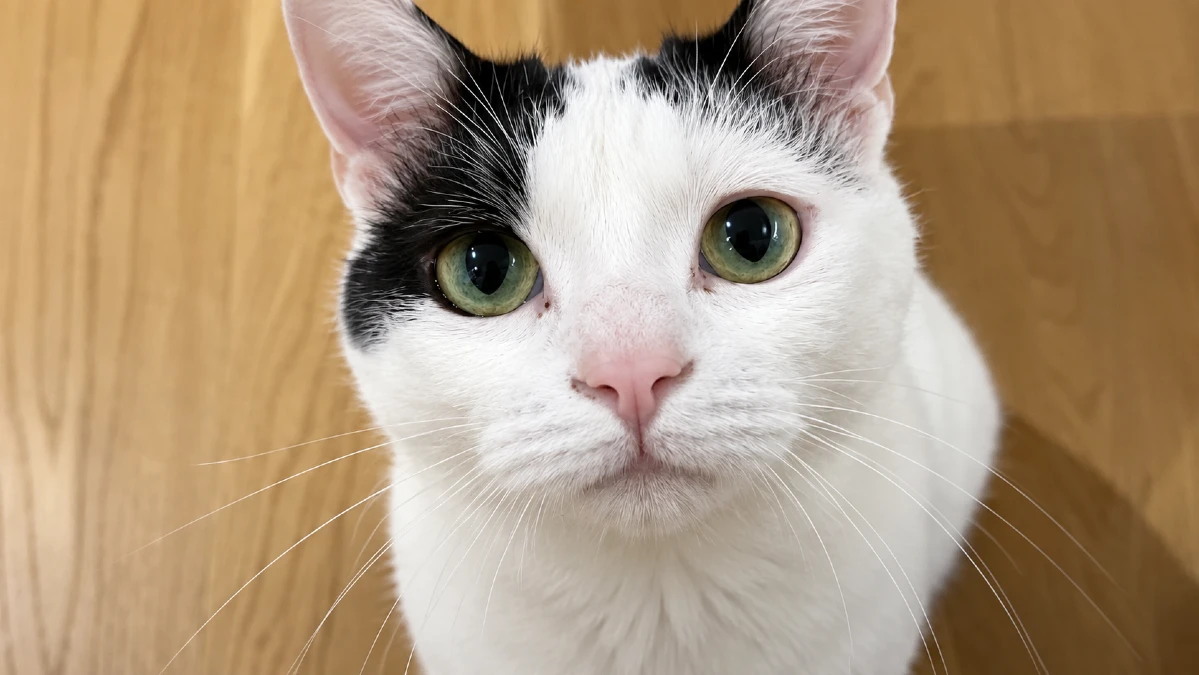
You walk into the kitchen, and your cat suddenly appears in the doorway. It watches while you prepare dinner, but when you move closer, it steps away.
Your cat has started paying attention to your daily habits. That can be an encouraging sign, even if physical affection is still missing.
Why Your Cat Studies Your Routine
Cats learn from repeated experiences. They can associate familiar household sounds, people, and activities with things that matter to them.
Your cat may appear when it hears a food container opening or recognize the time you usually sit on the sofa. It might look at you when you speak without actually approaching.
These responses show that your cat recognizes patterns in its environment. They do not prove affection by themselves, but they can be part of becoming comfortable with you.
You may also notice your cat remaining on a shelf while you work nearby. It is interested enough to stay in the area but still prefers the security of distance.
Being a Reliable Person Matters More Than Being Exciting
At this stage, predictable routines can make everyday life easier for a cautious cat. Consistent feeding times, gentle voices, and calm movements reduce unnecessary surprises.
The American Association of Feline Practitioners recommends positive, consistent, and predictable interactions with cats. Its environmental guidance also stresses the value of allowing cats to control social contact.
That means your cat should be able to approach, leave, or decline interaction. Respecting these choices helps prevent ordinary household moments from becoming stressful.
You do not need to entertain your cat constantly to become familiar. Sometimes, simply sitting in the same room is enough to create opportunities for relaxed behavior.
A Simple Way to Encourage More Curiosity
Try sitting quietly while your cat watches from its favorite resting place. Avoid staring directly into its eyes for long periods, and let the cat choose whether to approach.
You can place a small treat within easy reach or offer a wand toy if your cat enjoys playing. Keep enough distance that the activity feels comfortable rather than forced.
Over time, watch whether your cat begins exploring while you are nearby. Does it stay in the room longer or walk past you without becoming tense?
These small changes are worth noticing. A cat that feels free to approach and leave is learning that your presence does not take away its choices.
Avoid comparing your cat with friendly cats you see online. A cautious adult cat may never behave like a playful kitten, even when it feels perfectly safe at home.
Level 3: Your Cat Chooses to Stay Near You Without Being Touched

Your cat sits at the opposite end of the sofa while you watch television. It is close enough to notice everything you do, yet it makes no attempt to climb into your lap.
You might think this means your relationship has stalled. In reality, choosing to share space can be a meaningful sign of comfort.
Why Sitting Nearby Can Be a Sign of Cat Trust
Cats do not have to touch you to enjoy your company. Some prefer being close while keeping enough room to move away whenever they wish.
A relaxed cat may stretch beside your chair, settle on a nearby blanket, or sleep while you work. These behaviors suggest that your presence fits comfortably into its surroundings.
Pay attention to the cat’s posture during these moments. Relaxed muscles, natural ear positions, and calm resting behavior are more useful clues than distance alone.
A cat that remains tense while sitting nearby may still be worried. The surrounding situation matters as much as the behavior itself.
The Biggest Mistake Owners Make at This Stage
When a cat finally sits close, owners often see an opportunity for affection. They immediately reach over, pick up the cat, or begin stroking its back.
But choosing to sit near you is not the same as asking to be touched. Your cat may enjoy your presence while preferring to avoid physical contact.
Repeatedly ignoring that preference can make your cat less willing to settle nearby. It may choose a quieter location where it knows it will not be disturbed.
A better approach is to leave the cat alone unless it clearly seeks interaction. Your cat should learn that sitting near you does not create an obligation to accept petting.
Can Slow Blinking Help Your Cat Feel Comfortable?
One gentle interaction worth trying is the slow blink. This involves softly narrowing your eyes, briefly closing them, and opening them again without staring.
Research published in Scientific Reports in 2020 found that cats responded more often with eye narrowing when their owners slow blinked at them. Cats were also more willing to approach an unfamiliar researcher after a slow blink interaction than after a neutral expression.
You can try this when your cat appears relaxed and comfortable. Give a slow blink, turn your gaze slightly away, and let your cat decide whether to respond.
Do not treat the absence of a slow blink as rejection. Cats Protection notes that some cats rarely use this behavior and may show affection in other ways.
If your cat continues resting peacefully near you, appreciate the moment. That quiet companionship may be exactly how your cat prefers to share affection.
Level 4: Your Cat Accepts Petting and Starts Asking for Affection
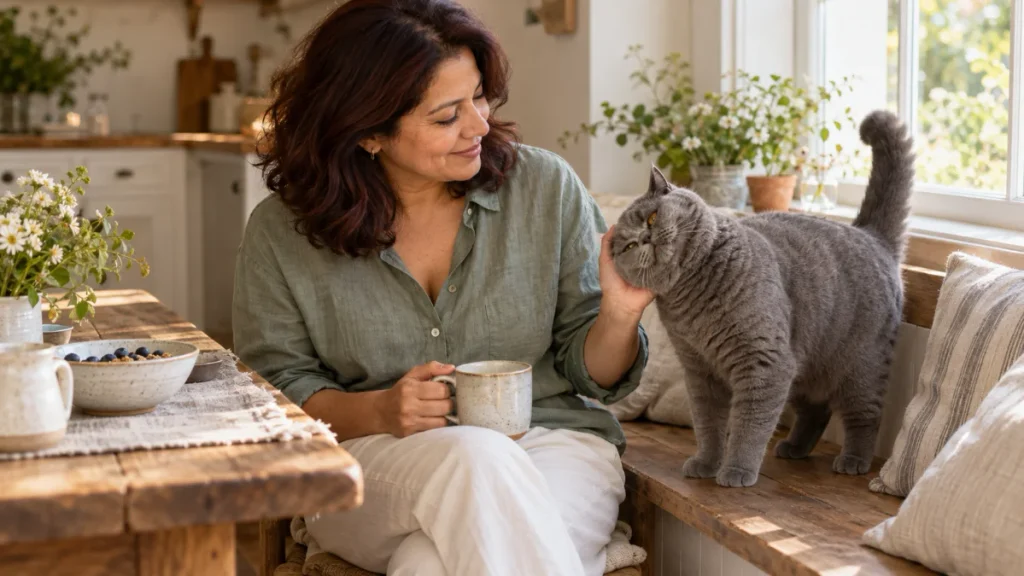
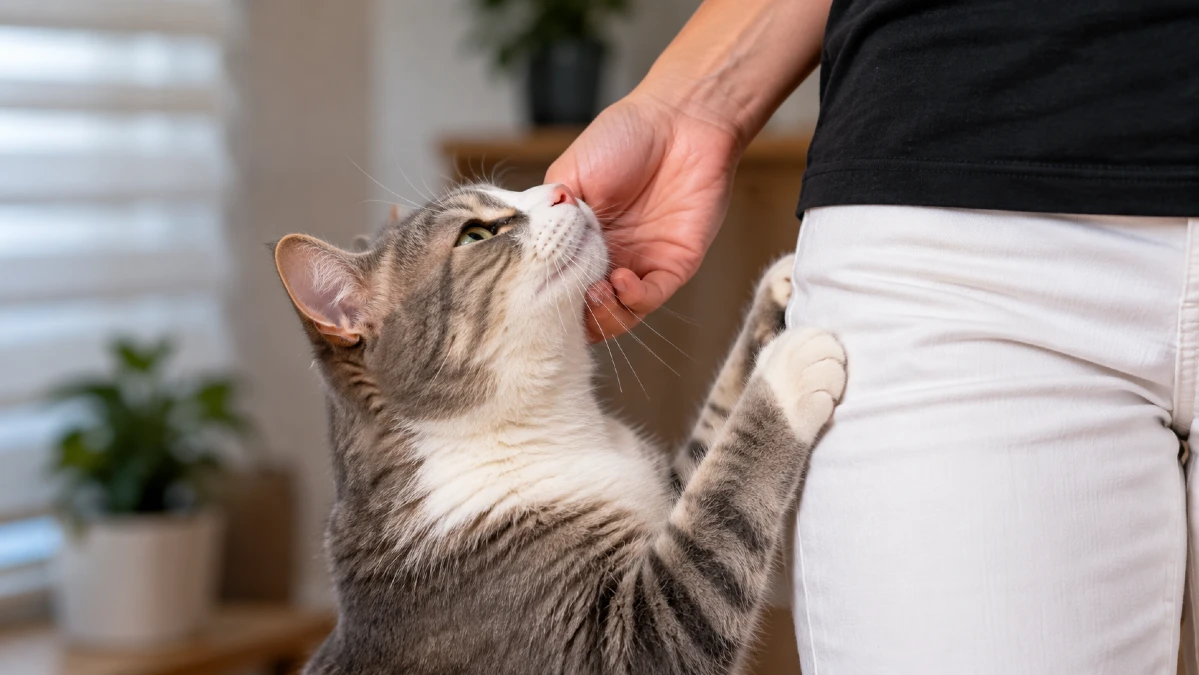
Your cat walks across the room and rubs its face against your hand. When you gently scratch its cheeks, it leans closer instead of pulling away.
This is one of the clearest ways cats can show that they welcome physical contact. But even affectionate cats have limits, and learning those limits matters.
How Cats Ask for Physical Affection
Cats often initiate contact by rubbing their cheeks or forehead against familiar people. Some raise their tails while approaching or gently push their heads into an offered hand.
You might notice your cat leaning into a cheek scratch or returning for more attention. These are useful signs that the interaction is welcome at that moment.
Cats Protection recommends letting cats choose whether to approach and receive petting. Many cats prefer contact around the cheeks, chin, and head rather than sensitive parts of their bodies.
However, preferences differ between individuals. A cat that enjoys cheek scratches may dislike being picked up or having its stomach touched.
Why Your Cat Suddenly Bites During Petting
Have you ever been stroking your cat when it suddenly grabbed your hand? That reaction can feel surprising, especially when the cat appeared happy moments earlier.
Some cats become uncomfortable after repeated touching. Others dislike particular areas being stroked or want the interaction to end before their owners notice.
VCA Animal Hospitals explains that body tension, ears moving backward, and tail flicking can signal that a cat is becoming uncomfortable with petting. Cornell Feline Health Center also describes these signs in cats that react aggressively during physical contact.
The goal is to stop before your cat feels the need to bite or scratch. Watch for small changes and respect them immediately.
When to Keep Petting and When to Stop
The following table can help you make better decisions during physical contact. These signs are most useful when you consider the cat’s entire posture and what is happening around it.
| Behavior | Likely message | Your response |
|---|---|---|
| Leans into your hand | Enjoying contact | Continue gently |
| Rubs cheeks against you | Seeking contact | Offer a cheek scratch |
| Ears turn backward | Possible discomfort | Pause petting |
| Tail starts lashing | Rising irritation | Stop touching |
| Moves away | Contact is finished | Let the cat leave |
A useful habit is to pause briefly after a few gentle strokes. If your cat returns or leans into your hand, it may welcome more attention.
This simple pause gives your cat more control over the interaction. It can also help you recognize what type of contact your cat actually enjoys.
Why Purring Does Not Always Mean Happiness
Purring often happens during pleasant contact, but it is not a perfect measure of comfort. Cats can also purr when they are stressed, uncomfortable, or unwell.
Look for relaxed muscles, normal breathing, and behavior that matches the situation. A tense cat that is purring should not automatically be treated as happy.
The strongest sign of welcome affection is usually voluntary participation. When your cat repeatedly seeks contact and remains relaxed, you have good reason to believe it enjoys that interaction.
Physical affection can be wonderful, but it is not required for every close relationship. Some cats develop strong bonds while keeping petting brief or infrequent.
Level 5: Your Cat Treats You Like a Trusted Social Companion
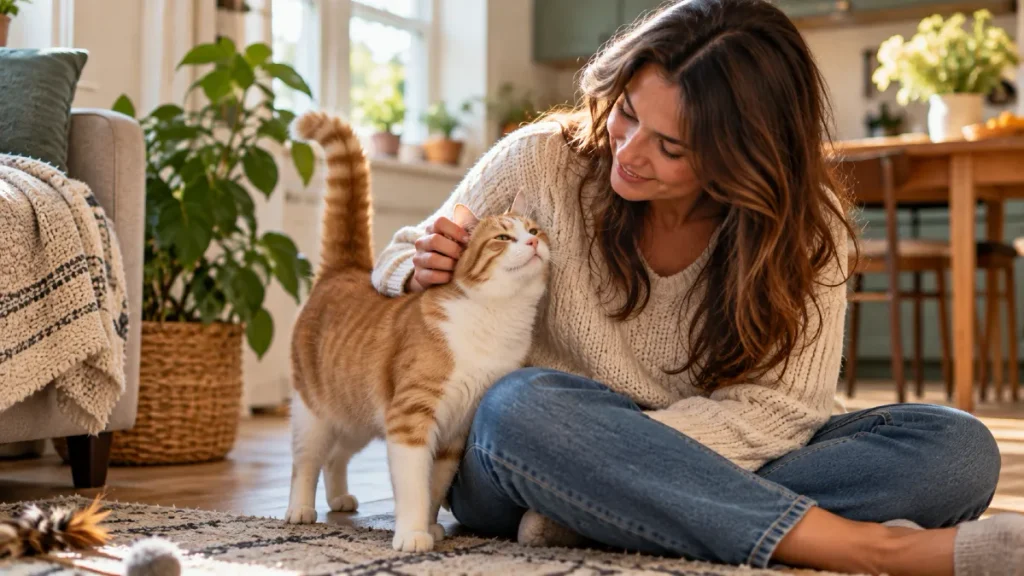
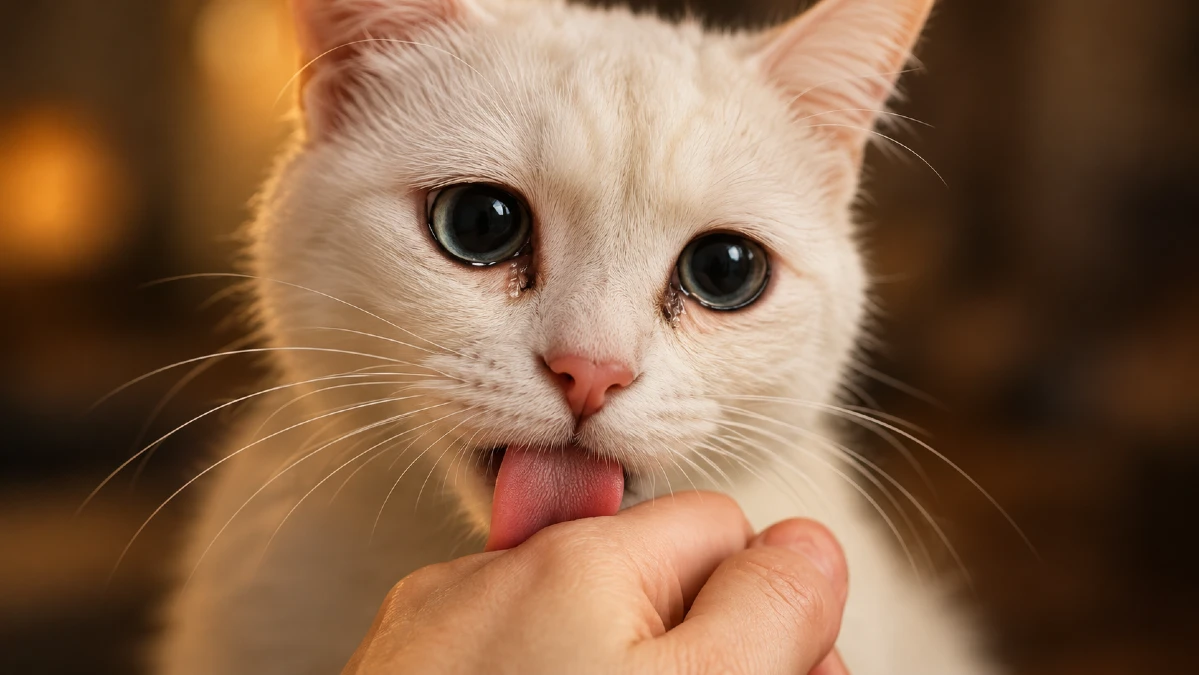
Your cat follows you into the bedroom, settles nearby when you sit down, and sometimes gives your hand a few gentle licks. It seems interested in spending time with you even when food is nowhere in sight.
These behaviors can suggest a close social bond. Instead of simply reacting to your presence, your cat may be choosing to include you in its daily activities.
Why Your Cat Starts Following You Everywhere
Cats have different reasons for following people. Some expect food or play, while others appear to enjoy staying close to familiar companions.
Your cat might follow you upstairs and settle on the bed while you fold laundry. It could join you on the sofa without seeking petting or wait nearby while you work.
These actions become more meaningful when they happen in relaxed situations without an obvious reward. Your cat is choosing your company when it could comfortably spend time somewhere else.
However, following you does not always prove a strong attachment. Some cats are naturally curious about household activity, while others are especially interested in routines.
The Meaning Behind Face Rubbing and Gentle Licking
Cats have scent glands around their faces, and rubbing their cheeks against objects or people is part of normal scent communication. This behavior can occur during friendly social interactions.
When your cat rubs its face against your leg or hand, it may be showing a familiar, comfortable form of contact. You might see the same behavior when it greets another cat it gets along with.
Some cats also lick their owners. Cats Protection explains that licking can be related to bonding, although there are several possible reasons for the behavior.
Cats sometimes groom other cats with which they share a friendly relationship. This social grooming behavior is one reason gentle licking may be associated with affection.
But licking is not a required sign of trust. A cat that never licks you may still feel very comfortable in your company.
How to Strengthen This Type of Bond
Focus on shared activities your cat genuinely enjoys. Short play sessions, gentle grooming when welcome, and quiet companionship can all create positive experiences.
A wand toy is especially useful for cats that enjoy chasing moving objects. Move it across the floor like prey and allow your cat to catch it during play.
The American Association of Feline Practitioners recommends giving cats opportunities for natural hunting and play behavior. It also suggests rotating toys and using food puzzles to provide enrichment.
Try making play a familiar part of your daily routine. A cat that knows it can enjoy safe, pleasant activities with you may become more willing to seek your company.
Remember that affection has different forms. One cat may want to sleep beside your pillow, while another prefers following you around without being touched.
Both relationships can be meaningful. Your cat’s individual preferences matter more than how closely its behavior matches another cat’s.
Level 6: Your Cat Feels Safe Enough to Show Its Vulnerable Side
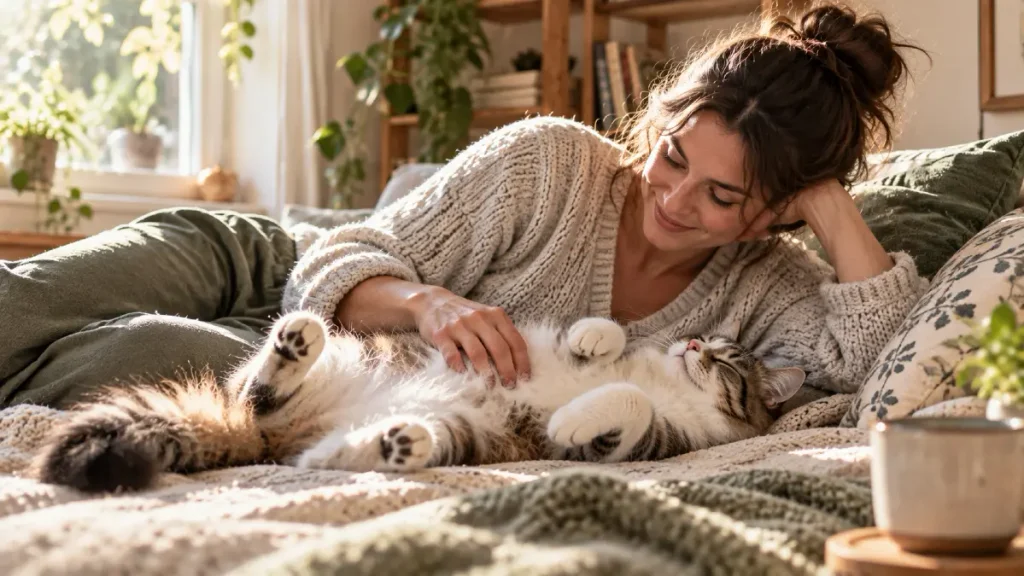
Your cat stretches across the sofa, rolls onto its back, and leaves its belly completely exposed. Its paws look loose, its body appears relaxed, and it seems perfectly comfortable with you sitting nearby.
For many owners, this feels like a special moment. And relaxed belly exposure can be a sign that your cat feels safe in its surroundings.
What It Really Means When Your Cat Shows Its Belly
A cat’s belly is a sensitive area that it may protect during unwanted contact. When a cat lies comfortably on its back, it may be showing that it feels relaxed enough to rest in that position.
Cats Protection identifies relaxed rolling and belly exposure as possible signs of comfort. However, the organization also warns that showing the belly usually does not mean the cat wants it touched.
This distinction matters because owners sometimes mistake a resting posture for an invitation. They reach toward the stomach and are surprised when the cat grabs their hand.
Your cat may be perfectly comfortable showing you its belly while still wanting you to keep your hands away. Respecting that difference can prevent unnecessary stress.
Why Belly Exposure Does Not Always Mean the Same Thing
A relaxed cat lying on its back looks different from one preparing to defend itself. Body tension, ear position, and the surrounding situation help explain what you are seeing.
Use the following clues before deciding whether your cat is comfortable. Never rely on the belly position alone to judge its feelings.
| Body position | Possible meaning | Best response |
|---|---|---|
| Loose body, relaxed paws | Comfortable resting | Let it relax |
| Belly up while playing | Playful or excited | Offer a toy |
| Tense body, ears flattened | Defensive or frightened | Give space |
| Grabs or kicks your hand | Unwanted contact or play | Stop touching |
The safest response to an exposed belly is usually to admire it without reaching for it. Some individual cats enjoy gentle belly rubs, but they are exceptions rather than the rule.
If your cat clearly enjoys this contact, keep watching its body language. Stop immediately if it becomes tense or tries to move away.
Sleeping Near You Can Be Another Meaningful Sign
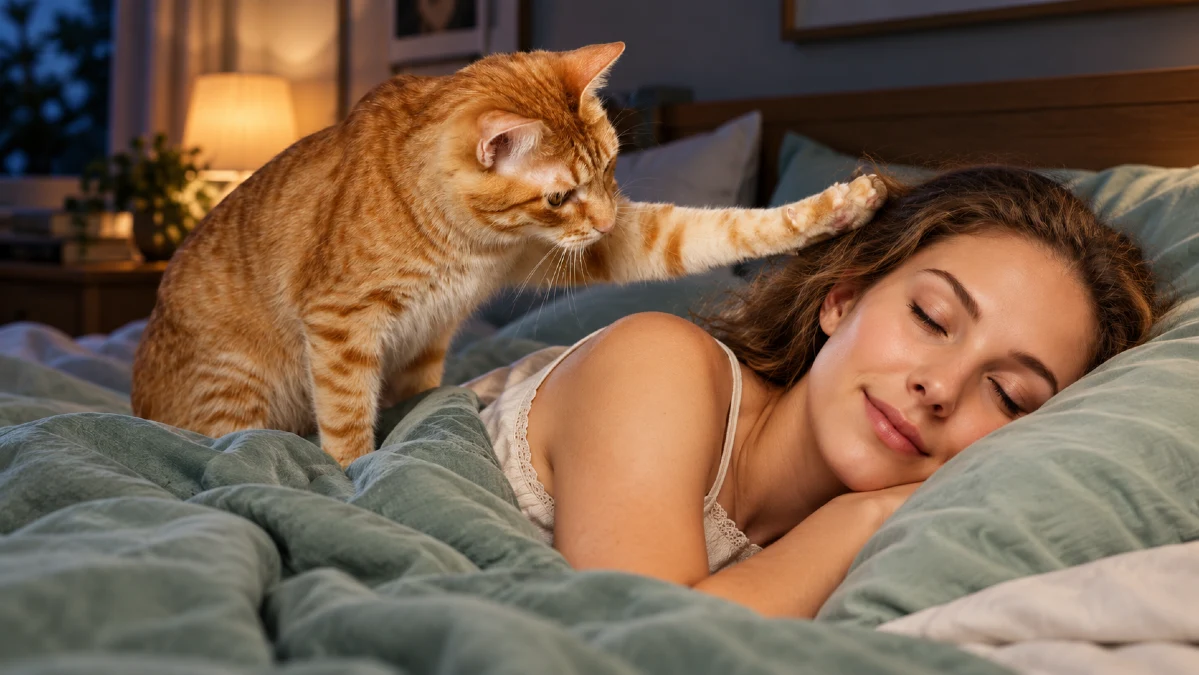
Cats need comfortable places where they can rest without feeling disturbed. Choosing to sleep near a familiar person can suggest that the cat feels secure in that setting.
Your cat might curl up beside your legs, rest on a nearby chair, or fall asleep while you read. These quiet moments can be meaningful even without touching.
Some cats sleep with their sides exposed or stretch into relaxed positions. Others prefer curling into a tight ball because it feels comfortable or helps them stay warm.
Neither position provides an exact measurement of trust. Room temperature, comfort, health, and personal sleeping habits can all affect how a cat rests.
Does Your Cat Trust You More If It Sleeps on Your Bed?
Sleeping on your bed may reflect comfort with your scent, warmth, or familiar surroundings. Your cat may also prefer the mattress simply because it is a pleasant place to rest.
A cat that sleeps elsewhere is not necessarily less attached. Some prefer elevated shelves, quiet rooms, or places where they will not be disturbed.
What matters more is whether your cat appears relaxed and can rest without constant worry. A comfortable cat should have several safe sleeping choices around the home.
If your cat suddenly stops using favorite resting places or becomes unusually sensitive to touch, consider a veterinary visit. These changes can sometimes be linked to pain or illness rather than a change in affection.
Level 7: Your Cat Seeks You Out During Stress and Seems to Watch Over You
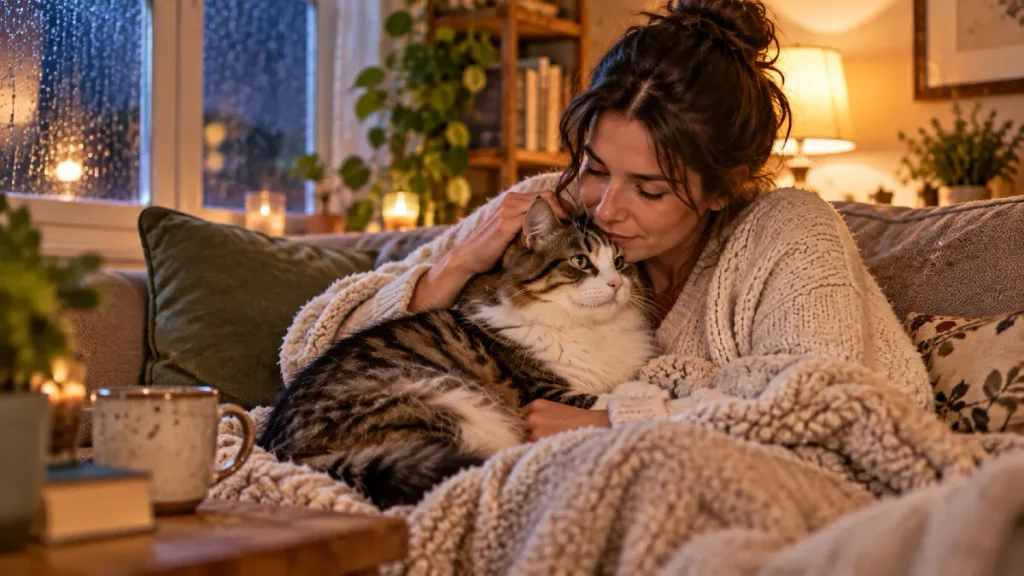
You are having a difficult evening, and your cat comes to sit beside you. It stays nearby, gently rubs against your arm, or settles quietly on the sofa.
Another time, an unfamiliar noise causes your cat to look toward the door before returning to its usual resting place. It can feel as though your cat is watching over you.
These moments are easy to describe as protective love. But cat behavior is more complicated than that, and the evidence does not establish a special guardian level of trust.
Why Your Cat Might Stay Close When You Feel Upset
Cats can respond to changes in human behavior. They may notice differences in your voice, movements, posture, or daily routine.
Research suggests that cats can respond to certain human emotional signals. However, this does not prove that they recognize sadness exactly as people do or deliberately attempt to comfort their owners.
Your cat might approach when you are sitting quietly because you are easier to interact with. It may also seek familiar contact or respond to changes in your behavior.
Regardless of its exact reason, relaxed companionship can still be comforting. You do not need to prove that your cat is acting as a caregiver to appreciate the connection.
What Science Says About Cats Seeking Security From People
Research from Oregon State University provides stronger evidence for another part of cat human relationships. Cats can form attachment bonds with their caregivers and may use familiar people as sources of security.
In a 2019 study led by Kristyn Vitale, researchers observed cats during brief separations and reunions with their caregivers. They found patterns of secure and insecure attachment similar to those studied in other animals and young children.
Among the classifiable kittens in that study, 64.3% showed secure attachment. A smaller group of adult cats produced a similar result, with 65.8% categorized as securely attached.
These figures do not measure the seven levels described in this article. Instead, they show that meaningful attachment between cats and people can be studied through observable behavior.
One useful question is whether your cat appears more comfortable exploring an unfamiliar situation when you are present. Even then, a casual observation at home is not the same as a structured attachment test.
Does Your Cat Guard You While You Sleep?
Some owners notice their cats resting near bedroom doors or watching windows at night. It is tempting to assume the cat has taken responsibility for protecting the household.
Cats are naturally attentive to sounds, movement, and changes in their surroundings. A doorway or window may also be an interesting resting place with a useful view.
There is no established evidence that choosing these locations proves a cat is protecting its owner. Its behavior may have more to do with curiosity, alertness, or where it feels comfortable.
Aggression toward visitors should not be celebrated as the highest form of trust. Hissing, swatting, or attacking can reflect fear, territorial stress, or other concerns that deserve attention.
Which of the 7 Cat Trust Levels Best Fits Your Cat?
Now that you have seen the different behaviors, think about what your cat does most often. Use the table as a simple reflection guide rather than a scientific test.
A cat may show behaviors from several levels during the same day. The next step is to respond to what it needs in that particular moment.
| Level | Main clue | Helpful next step |
|---|---|---|
| 1. Avoidance | Hides or retreats | Offer safe spaces |
| 2. Observation | Watches from afar | Keep routines steady |
| 3. Proximity | Rests nearby | Respect personal space |
| 4. Physical contact | Welcomes petting | Follow touch signals |
| 5. Social bonding | Seeks your company | Enjoy shared activities |
| 6. Relaxed vulnerability | Rests belly up | Allow peaceful rest |
| 7. Security seeking | Approaches during stress | Offer calm support |
The table is designed to help you recognize different expressions of comfort and attachment. A cat does not have to display every behavior or progress through every level to have a strong relationship with you.
A naturally independent cat may rarely seek physical contact while still showing secure attachment. Another cat may be highly affectionate but become frightened during unfamiliar situations.
Three Questions to Ask Yourself This Week
If you want a clearer picture of your cat’s trust, pay attention to everyday interactions rather than trying to create special tests. You may learn more by watching quietly than by asking your cat to perform.
Consider these three questions over the next seven days:
- Does my cat choose to spend time near me? Notice whether it enters your room, rests nearby, or approaches during calm moments.
- Does my cat remain relaxed during our interactions? Watch for comfortable body positions, normal ear movements, and the freedom to leave.
- Does my cat seek familiar contact when something changes? Notice whether it approaches you during mild uncertainty or prefers using another safe place.
Write down a few observations in a simple notebook. Include what happened before each behavior, how your cat responded, and whether it appeared relaxed or tense.