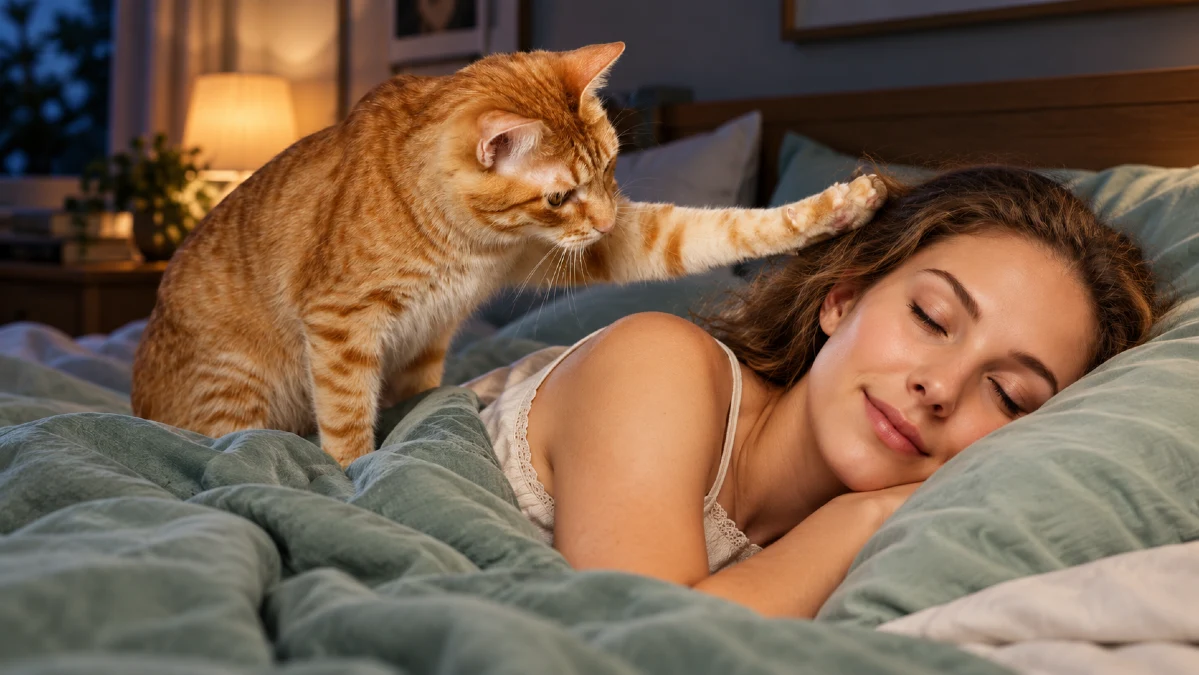
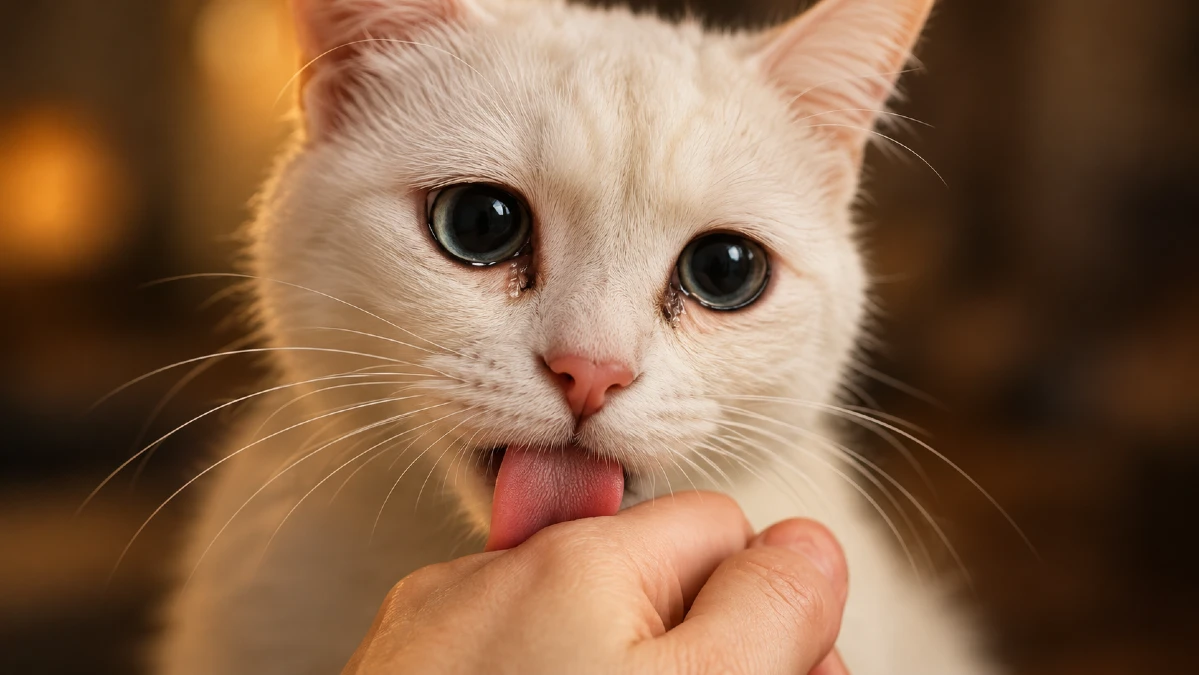
Your cat climbs onto your lap, settles beside you, and starts licking your hand. It feels sweet, almost like a little kiss. But then your cat suddenly bites your finger, walks away, or starts licking you even harder. Now you’re wondering what that strange behavior actually means.
Why does my cat lick me? Is it affection, a request for attention, or something more serious? Most cat owners assume licking always means love, but cats use this behavior for several different reasons.
Sometimes your cat is grooming you because you feel like part of their family. Other times, they might be interested in the taste of your skin, asking for attention, or trying to calm themselves when something feels wrong.
Why Your Cat Licks You When They Feel Safe With You
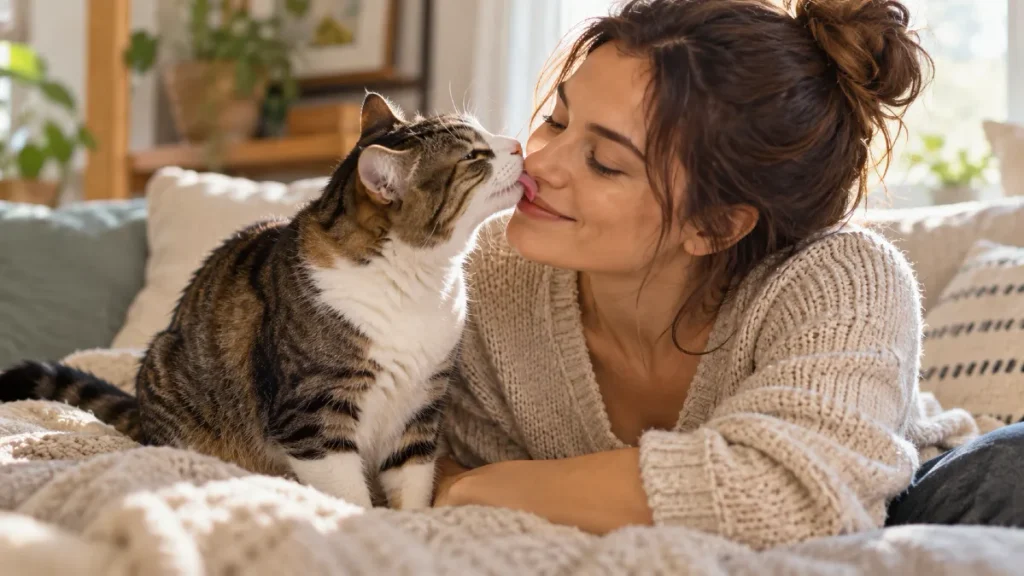
One of the sweetest reasons your cat licks you is that they may feel safe around you. Cats use grooming as part of their social behavior, especially with other cats they know and trust.
When kittens are born, their mothers lick them to keep them clean and care for them. As cats grow older, some continue grooming animals they share close social relationships with.
This behavior is called allogrooming, which simply means one animal grooming another. Cats Protection explains that friendly cats sometimes groom each other to help maintain their social bonds.
Your cat may treat you in a similar way. When they settle beside you and gently lick your arm or hand, they could be including you in a familiar grooming routine.
How to Tell Whether the Licking Is Affectionate
Look at how your cat behaves during the interaction. A relaxed body, comfortable posture, and calm movements make friendly grooming more likely.
Your cat might also rub their head against you, curl up beside you, or close their eyes while resting nearby. These behaviors can suggest that your cat feels comfortable in your presence.
But remember that licking is not a perfect test of love. Some affectionate cats rarely lick their owners, while others groom people often.
If your cat prefers sleeping next to you, following you around, or greeting you at the door, those behaviors can also reflect a positive relationship. You do not need to receive constant cat kisses to know that your pet enjoys your company.
Why Your Cat Licks You to Share a Familiar Scent
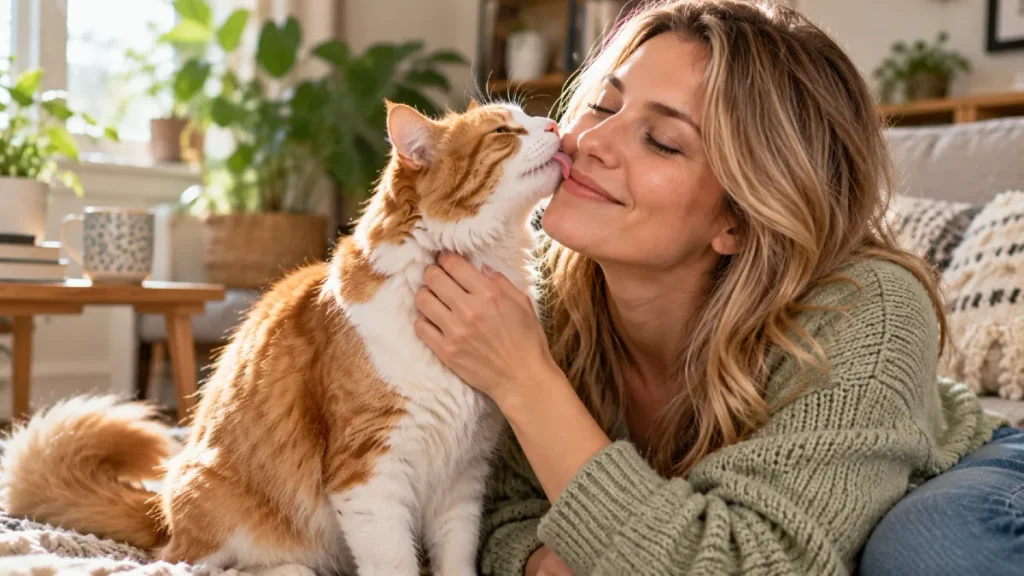
Cats experience their surroundings through smell far more than people do. Familiar scents help them recognize places, objects, and other animals in their social group.
When friendly cats groom each other, they can exchange odors that help maintain a familiar social scent. Your cat may also lick you as part of this bonding behavior.
VCA Animal Hospitals explains that cats sometimes lick their owners as part of social scent sharing. However, that does not mean every lick is an attempt to claim ownership of you.
You may notice this behavior when your cat returns to you after you have been away. They might sniff your clothes, rub their cheeks against your legs, and eventually begin licking your hands.
Cats also have scent glands around their faces. When your cat rubs their cheeks or forehead against you, they can leave familiar scent signals behind.
Licking and face rubbing may happen during the same friendly interaction, even though they are different behaviors.
The useful thing to watch is whether your cat appears relaxed. A cat that approaches willingly, rubs against you, and settles nearby is usually showing signs of comfort rather than distress.
Why Cats Lick Your Hands, Hair, and Face
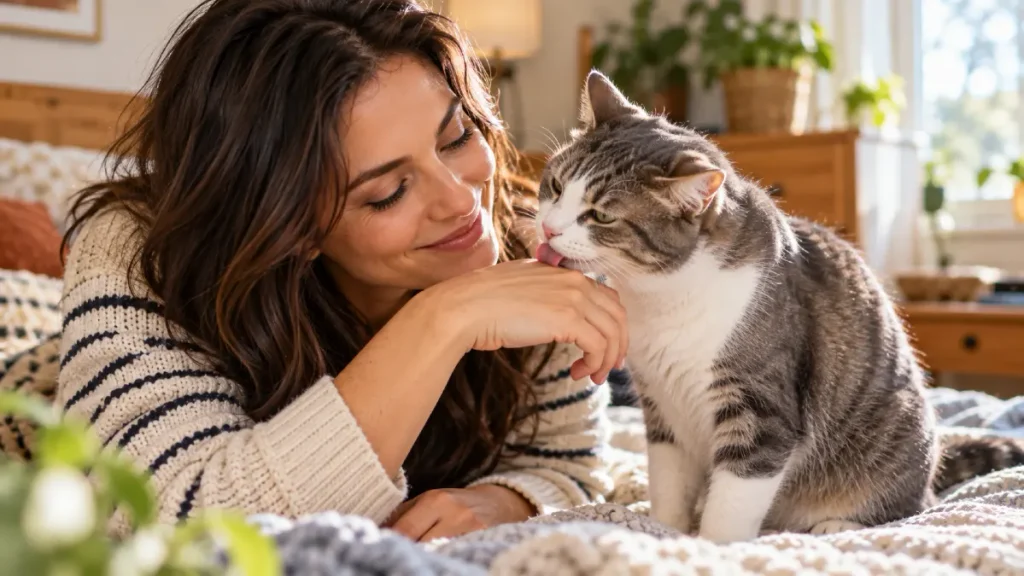
Have you noticed that your cat seems interested in licking certain parts of your body more than others? There may be a simple reason behind that preference.
Your hands carry smells from food, household items, and everything you touch during the day. Meanwhile, your skin naturally produces sweat that contains salt.
PetMD explains that some cats appear interested in the taste or smell of human skin. Others may lick a person’s hair or face as part of grooming and social behavior.
Your cat could be exploring an interesting smell rather than trying to send an emotional message. That is why the location of the licking can offer useful clues.
What Different Licking Locations May Mean
The table below shows possible explanations for common licking habits. These are clues rather than fixed rules, so pay attention to the situation and your cat’s body language.
| Where your cat licks | Possible reason | What to check |
|---|---|---|
| Your hands | Food smells or attention | Have you handled food? |
| Your fingers | Salt, scent, or grooming | Is your cat relaxed? |
| Your arms | Social grooming | Does it happen during cuddles? |
| Your hair | Grooming or interesting smells | Are hair products present? |
| Your face | Social contact or attention | Is the interaction calm? |
A cat that briefly licks your hands after dinner may simply be interested in a leftover smell. One that gently grooms your arm while resting beside you may be showing friendly social behavior.
Be careful with lotions, medicines, and hair products. Some ingredients that are safe for people can be harmful to cats if swallowed.
For example, minoxidil, found in some human hair growth treatments such as Rogaine, is highly toxic to cats. Do not allow your cat to lick treated hair, skin, pillows, or other surfaces that may carry the product.
When Your Cat Licks You to Ask for Attention

Sometimes your cat licks you because they have learned that it works. A few quick licks can make you look up from your phone, start petting them, or talk to them.
Cats can learn from repeated experiences. If licking your hand regularly gets your attention, your cat may begin using the behavior whenever they want interaction.
Picture yourself sitting at your desk while your cat waits beside your chair. They rub against your arm, give your wrist a few licks, and suddenly you stop working to pet them.
From your cat’s point of view, that action produced a useful result. They may try it again the next time they want your attention.
Watch What Happens Before the Licking
If your cat often licks you near feeding time, they may be trying to get you to notice them. Some cats combine licking with meowing, walking near their food bowl, or following their owners around the kitchen.
Other cats lick when they want play or company. A bored cat may discover that licking gets a faster response than sitting quietly nearby.
Instead of assuming your cat is hungry every time they lick you, look at what happened just before the behavior. Notice whether they have already eaten, played, or received attention.
You can also encourage calmer ways of asking for interaction. Reward your cat when they sit beside you quietly or approach without licking.
This helps your cat learn that gentle contact and relaxed behavior can also lead to attention.
What Licking With Kneading or Purring Can Tell You
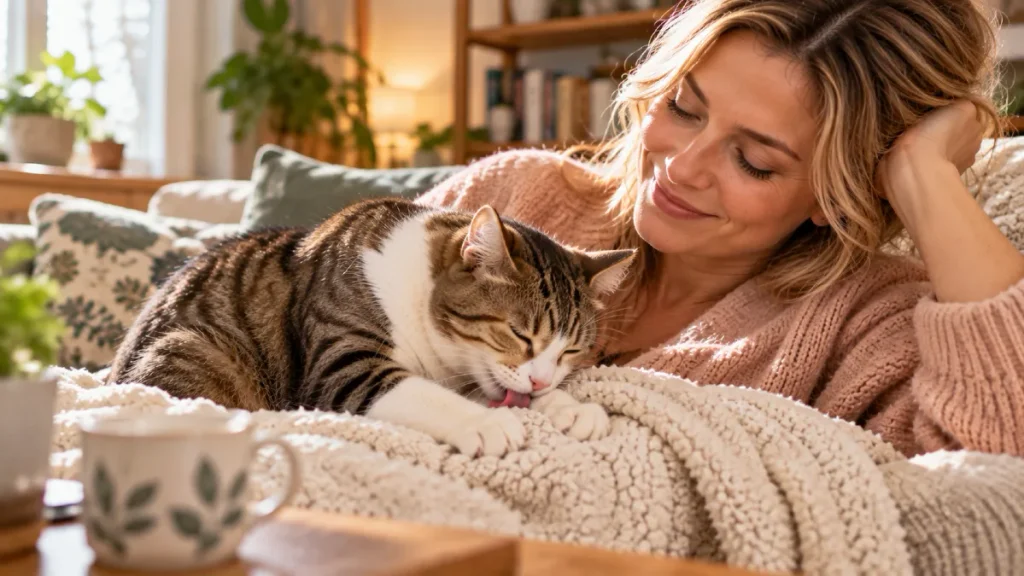
Few cat behaviors feel as comforting as having your pet curl up beside you, purr, and gently press their paws into your blanket. If licking follows, the whole routine may be connected to feelings of comfort.
Kneading begins early in a cat’s life. Kittens press their paws against their mother’s belly while nursing, and many cats continue kneading soft surfaces as adults.
When your cat kneads your lap and starts licking your clothes or hands, they may be repeating behaviors linked with comfort and rest.
Some cats also suckle blankets or soft fabric while kneading. These habits can appear together, especially when a cat is sleepy or settling into a familiar resting place.
But purring and kneading do not prove that your cat is happy in every situation. Cats can sometimes purr when stressed or uncomfortable, so their full body language still matters.
A cat resting loosely against your legs with soft eyes probably feels different from one that appears tense, hides frequently, or seems unable to settle.
If the behavior is calm, familiar, and does not interfere with daily life, there is usually no reason to interrupt it. You can simply let your cat enjoy their preferred resting routine.
Why Your Cat Licks You and Then Suddenly Bites
You are enjoying a quiet moment with your cat when something confusing happens. They lick your hand several times, then suddenly bite your finger.
Many people call these little nips love bites. However, the term can be misleading because biting does not always mean affection.
Your cat might be playing, reacting to too much physical contact, or trying to end the interaction. In some cases, discomfort or pain may also make a cat more likely to bite.
ASPCA explains that some cats become irritated during petting even when they seemed comfortable at first. Repeated touching can become unpleasant, and biting may be the cat’s way of stopping it.
What Your Cat’s Body Language Says
The licking itself is only part of the message. What happens to your cat’s ears, tail, and body can help you decide whether to continue touching them.
| Body language | Possible meaning | Best response |
|---|---|---|
| Loose body, calm eyes | Comfortable interaction | Let the cat choose contact |
| Gentle licking with relaxed paws | Friendly grooming | Continue calmly |
| Tail twitching or flicking | Growing irritation | Pause petting |
| Ears flattened, body tense | Stress or discomfort | Give the cat space |
| Sudden bite or swat | Interaction needs to stop | End contact calmly |
These signals are most useful when considered together. One tail movement does not tell the whole story, but several signs of tension are a good reason to stop touching your cat.
If your cat regularly bites after a certain amount of petting, try making those sessions shorter. Allow them to approach again when they want more attention.
Why You Should Never Punish a Cat for Biting
Yelling, hitting, or forcing your cat away can make an uncomfortable situation worse. Punishment can increase fear and make your cat less willing to approach you.
Instead, stop petting immediately and give your cat room to move away. Do not use your hands as toys, especially if your cat already likes grabbing fingers during play.
If the biting is new, severe, or happens when you touch a particular body part, arrange a veterinary examination. Pain from arthritis, dental disease, or another problem can change how a cat responds to touch.
A cat bite that breaks your skin also needs prompt attention. Wash the wound and seek medical advice because cat bites can cause serious infections.
When Excessive Cat Licking Could Signal Stress or Pain
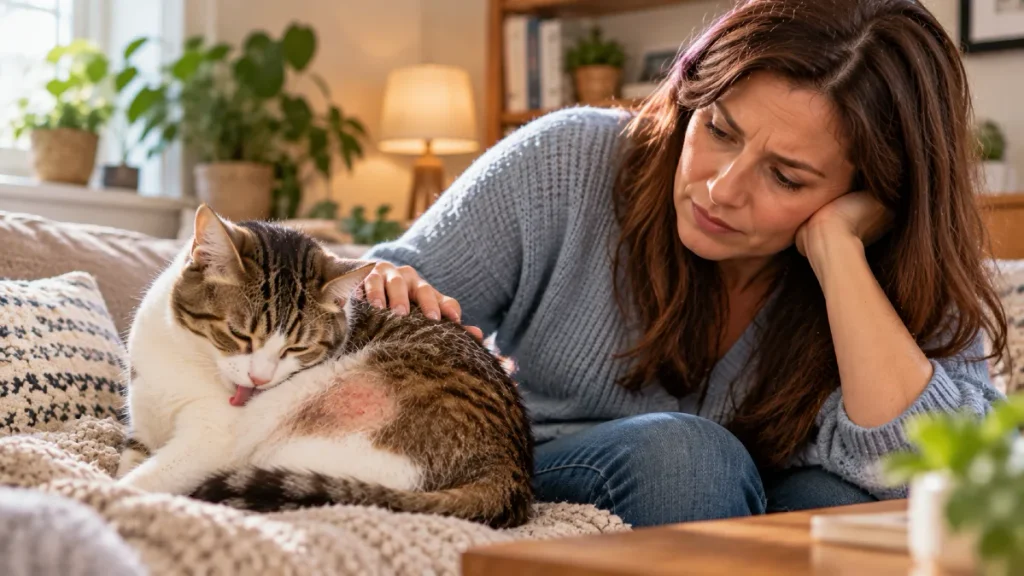
Here is the part many cat owners overlook. While occasional licking is normal, a sudden change in licking habits can sometimes suggest stress, discomfort, or a medical problem.
A cat that has always groomed your hand for a few moments before falling asleep is different from one that suddenly spends long periods licking you, household objects, or themselves.
Cornell Feline Health Center explains that excessive grooming can be linked to skin irritation, parasites, pain, or emotional stress. Cats may continue licking because the action has become a repeated comfort behavior.
However, stress should not be your first assumption when a cat starts grooming excessively. Physical causes need to be considered, especially when the cat is losing fur or damaging its skin.
How to Recognize Stress Related Licking
Think about what has changed in your cat’s daily life. A new pet, house move, visitors, loud building work, or changes in routine can be stressful for some cats.
You might notice your cat licking more often while also hiding, avoiding social contact, or becoming unusually vocal. These changes deserve attention, especially if they appear suddenly.
Some cats may spend longer grooming themselves rather than licking their owners. If you notice bald spots, red skin, or areas where the fur looks unusually short, speak with your veterinarian.
The cause could be allergies, fleas, infection, pain, or stress. A veterinary examination is the safest way to begin finding out what is happening.
When Cat Licking Needs Attention
Use this table to decide how quickly you should respond. The warning signs matter more than the total number of times your cat licks you.
| What you notice | Possible concern | What to do |
|---|---|---|
| Occasional gentle licking | Normal social behavior | Observe and enjoy |
| Sudden major increase | Stress or illness | Arrange a vet check |
| Bald patches or red skin | Excessive grooming | Contact your vet promptly |
| Licking with poor appetite or hiding | Possible illness or pain | Seek prompt veterinary advice |
| Suspected toxic product exposure | Poisoning risk | Get urgent veterinary help |
| Trouble breathing or collapse | Medical emergency | Seek emergency veterinary care |
The main warning sign is a behavior that changes sharply from your cat’s normal routine. A sudden increase in licking becomes more concerning when it happens alongside changes in eating, movement, grooming, or litter box habits.
Never wait for visible skin damage before asking for advice if your cat seems unwell. Early veterinary care can help identify problems that are difficult to recognize at home.
Why Repeated Self Grooming Matters
Cats naturally spend plenty of time keeping their coats clean. Their tongues help remove loose fur and dirt, making grooming an important part of everyday care.
But Cornell warns that repeated licking can sometimes become harmful. A cat may lick enough to remove fur, irritate the skin, or create sores that can become infected.
Watch for a cat that repeatedly returns to the same area of their body. This may suggest a local source of itching or pain rather than a simple grooming habit.
For example, a cat with itchy skin may lick its belly or back, while another with pain may focus on a particular area. The location provides a clue, but it does not confirm a diagnosis.
If the behavior has become excessive, schedule a veterinary examination before trying to treat it as anxiety alone.
How to Stop Your Cat From Licking You Without Punishment
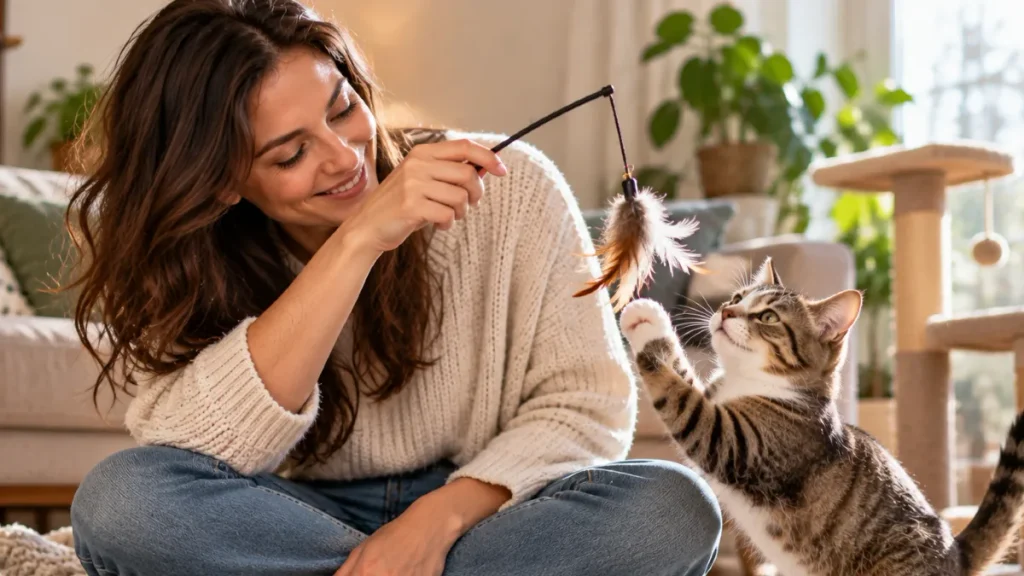
You can love your cat without enjoying the feeling of a rough tongue against your skin. Some cats lick so often that it interrupts sleep, work, or quiet time.
The good news is that you can discourage unwanted licking while maintaining a positive relationship. The key is to offer your cat another activity rather than making the interaction frightening.
Cats Protection recommends using gentle distractions, such as grooming with a brush or playing with a favorite toy. These options give your cat a different way to spend time with you.
Redirect Licking Into Playtime
When your cat starts licking repeatedly, calmly move your hand away and offer an appropriate toy. A fishing wand, soft toy, or puzzle feeder can give them something else to focus on.
The Catit Senses Food Tree and PetSafe SlimCat Interactive Feeder are examples of products that turn part of feeding time into an activity. Both encourage cats to work for dry food or treats.
You do not need expensive equipment, though. A simple cardboard box, scratching post, or favorite wand toy may provide enough interest for your cat.
Choose activities that match your cat’s age and ability. An older cat with joint pain may prefer slower games instead of jumping and chasing.
Give Your Cat a Predictable Routine
Cats often feel more comfortable when their basic needs are met in familiar ways. Regular feeding, clean litter boxes, safe resting places, and chances to play can help support their wellbeing.
The Feline Veterinary Medical Association’s 2026 guidance encourages safe hiding spaces, suitable play opportunities, and positive interactions that cats can control.
Let your cat approach you when they want attention. If they stop enjoying contact, allow them to walk away without being followed or picked up again.
If licking seems linked to a stressful change, a veterinarian may also discuss environmental changes or products such as FELIWAY Classic. A pheromone diffuser may help some cats in certain situations, but it cannot replace medical care or solve every behavior problem.
Most importantly, reward the behavior you want to see. When your cat settles beside you without licking, offer gentle praise, attention, or play if they welcome it.
Over time, your cat can learn that quiet companionship brings positive attention, too.
Is It Safe to Let Your Cat Lick Your Skin?
For most healthy adults, an occasional lick on intact skin is unlikely to cause a problem. However, cat saliva contains bacteria, so basic hygiene matters.
PetMD advises against allowing cats to lick open wounds or the face. Extra caution is sensible for people who have weakened immune systems or other health concerns.
If your cat licks your hands, wash them before preparing food or eating. Avoid letting your cat lick your mouth, eyes, or broken skin.
Watch Out for Skin Creams and Medicines
One of the biggest dangers may involve something already on your skin. Cats can be curious about scented creams, shampoos, hair treatments, and medicinal ointments.
Some of these products contain ingredients that are harmful when swallowed. Your cat may be attracted to a smell without knowing the substance is dangerous.
Minoxidil is a particularly serious example. Pet Poison Helpline warns that even small exposures can cause severe poisoning in cats.
If your cat may have licked minoxidil or another potentially toxic product, contact a veterinarian or animal poison service immediately. Do not wait for symptoms or try home treatments without professional advice.
It is also wise to keep medicated skin, treated hair, and contaminated bedding away from your cat. Follow all product safety instructions carefully.
You Can Show Affection Without Letting Your Cat Lick You
Some owners enjoy gentle cat kisses, while others would rather avoid them. Both choices are fine as long as you respond in a way that respects your pet’s needs.
You can offer a slow blink, gentle chin scratch, short play session, or comfortable place to rest beside you. Your cat may appreciate these forms of attention just as much as licking your hand.
Pay attention to what your individual cat enjoys. Some love being brushed, while others prefer sitting nearby without being touched.
A good relationship with your cat depends on trust, predictable care, and respecting their choices, not how often they lick you.