For many feline owners, transitioning to homemade cat food feels like navigating a nutritional minefield. But when a senior tabby named Oliver started losing weight and turning his nose up at premium commercial diets, his owner’s veterinarian suggested a highly controlled, gently cooked diet of turkey and plain pumpkin.
The improvement in Oliver’s energy levels and digestion was so immediate that it sent his owner down a comprehensive path of homemade feline nutrition research. The goal was to ensure Oliver received a wider range of essential amino acids and nutrients, leading to the development of several easy, balanced, and vet-approved recipes.
Now, owners can save time on meal preparation while ensuring their cats enjoy a varied, highly digestible, and species-appropriate diet that supports optimal long-term health.
1. Feline Favorite Chicken & Quinoa
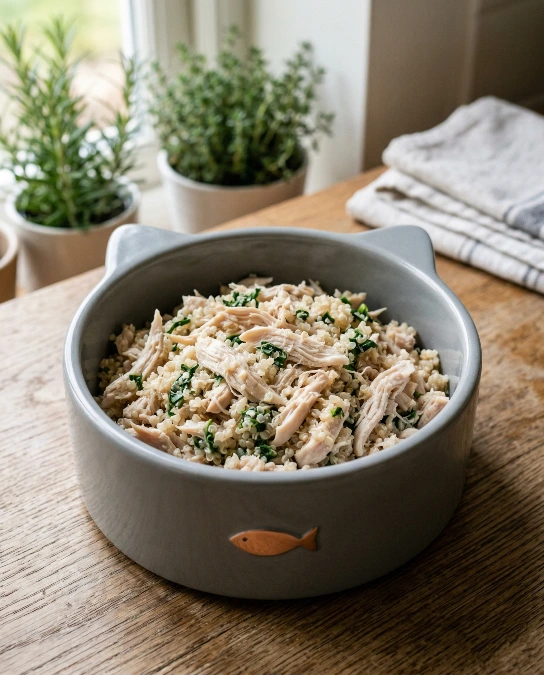
Chicken thighs provide a fantastic source of dark meat protein and essential fats, making this recipe highly palatable for picky eaters while supplying the sustained energy active cats need.
Ingredients:
- 2 lbs boneless, skinless chicken thighs
- 1/2 cup cooked quinoa
- 1/2 cup finely chopped, steamed spinach
- 1 tbsp salmon oil (for Omega-3s)
- Vet-recommended feline mineral/vitamin premix (added after cooling)
Instructions:
- Boil or gently bake the chicken thighs until fully cooked (internal temperature of 165°F).
- Allow the chicken to cool, then shred or pulse in a food processor until finely chopped.
- In a large bowl, combine the chopped chicken, cooked quinoa, steamed spinach, and salmon oil.
- Mix thoroughly until all ingredients are evenly distributed.
- Once the mixture is completely cool, stir in the vet-approved mineral premix according to the package directions.
Estimated Calorie & Nutrition Breakdown:
| Ingredient | Estimated Calories (Full Batch) |
| Chicken Thighs (2 lbs) | ~1080 kcal |
| Cooked Quinoa (1/2 cup) | ~111 kcal |
| Steamed Spinach (1/2 cup) | ~20 kcal |
| Salmon Oil (1 tbsp) | ~120 kcal |
| TOTAL (Full Batch) | ~1331 kcal |
This recipe makes ~8 half-cup servings.
| Nutrient | Amount (per 1/2 cup) | Notes |
| Calories | ~166 kcal | Estimated value based on an 8-serving batch. |
| Protein | ~23 g | Excellent source of amino acids. |
| Fat | ~7 g | Rich in Omega-3 fatty acids. |
| Fiber | ~1 g | Gentle fiber from quinoa and spinach. |
Recipe-Specific Pro-Tip: Never add the vitamin/mineral premix while the food is hot, as high temperatures can degrade heat-sensitive nutrients like taurine and B vitamins.
2. The “Sensitive Stomach” Turkey & Pumpkin
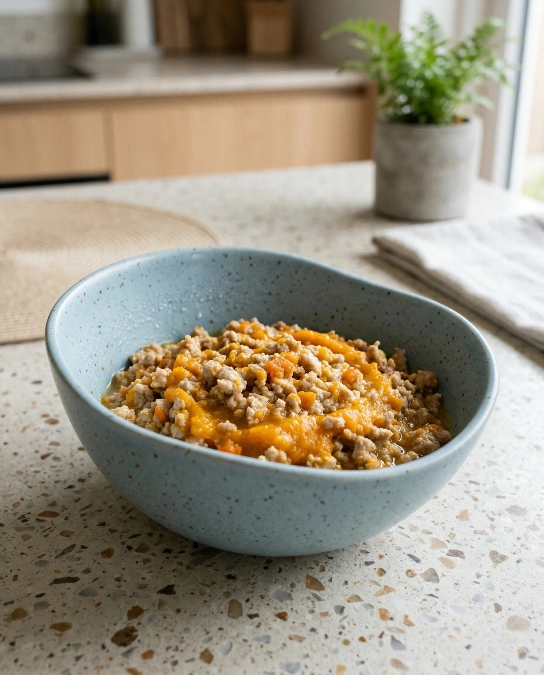
Formulated for felines with sensitive digestion, this recipe relies on highly digestible lean turkey breast and plain pumpkin puree to soothe the gastrointestinal tract and firm up stools.
Ingredients:
- 2 lbs lean ground turkey
- 1/2 cup plain canned pumpkin puree (NOT pie filling)
- 1/4 cup steamed, mashed carrots
- 1 tbsp olive oil
- Vet-recommended feline mineral/vitamin premix
Instructions:
- Cook the ground turkey in a non-stick skillet over medium heat until completely browned and cooked through. Drain excess grease if necessary.
- Transfer the cooked turkey to a mixing bowl and let it cool.
- Fold in the plain pumpkin puree, mashed carrots, and olive oil.
- Mix until the vegetables are thoroughly incorporated into the meat.
- Add the nutritional premix once the food has reached room temperature.
Estimated Calorie & Nutrition Breakdown:
| Ingredient | Estimated Calories (Full Batch) |
| Lean Ground Turkey (2 lbs) | ~1350 kcal |
| Plain Pumpkin Puree (1/2 cup) | ~40 kcal |
| Mashed Carrots (1/4 cup) | ~15 kcal |
| Olive Oil (1 tbsp) | ~119 kcal |
| TOTAL (Full Batch) | ~1524 kcal |
This recipe makes ~8 half-cup servings.
| Nutrient | Amount (per 1/2 cup) | Notes |
| Calories | ~190 kcal | Estimated value based on an 8-serving batch. |
| Protein | ~22 g | Highly digestible lean protein. |
| Fat | ~10 g | |
| Fiber | ~1.5 g | Pumpkin provides excellent soluble fiber for gut health. |
Recipe-Specific Pro-Tip: If your cat prefers a pâté texture, run the final cooled mixture through a food processor with a splash of unsalted, onion/garlic-free bone broth until smooth.
3. Beef & Butternut Squash Feast
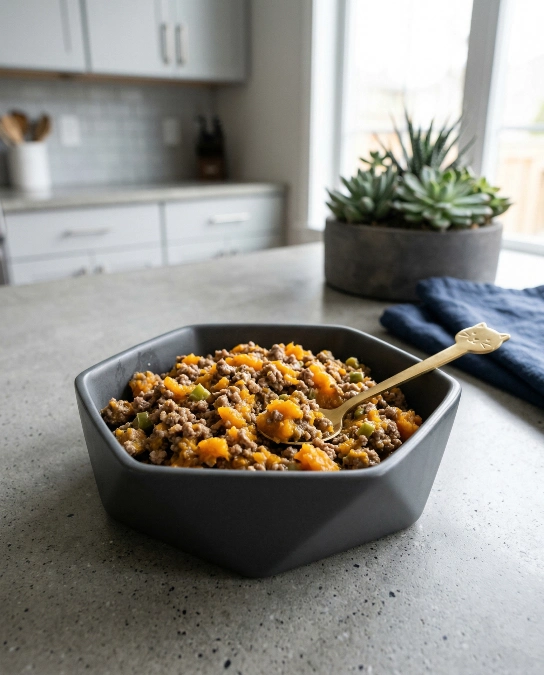
Beef provides a robust flavor profile that appeals to many cats and serves as a natural source of iron and essential B vitamins. The butternut squash adds antioxidants and gentle carbohydrates.
Ingredients:
- 2 lbs lean ground beef (90/10)
- 1/2 cup roasted, mashed butternut squash
- 1/4 cup finely chopped green beans (steamed)
- 1 tbsp fish oil
- Vet-recommended feline mineral/vitamin premix
Instructions:
- Cook the ground beef thoroughly in a skillet, breaking it into the smallest pieces possible.
- Steam or roast the butternut squash until very soft, then mash it completely.
- Steam the green beans until tender, then chop them very finely to prevent sorting by picky eaters.
- Combine the cooled beef, squash, green beans, and fish oil in a large bowl.
- Stir in the necessary feline nutritional supplement once fully cooled.
Estimated Calorie & Nutrition Breakdown:
| Ingredient | Estimated Calories (Full Batch) |
| Lean Ground Beef (2 lbs) | ~1600 kcal |
| Butternut Squash (1/2 cup) | ~41 kcal |
| Green Beans (1/4 cup) | ~10 kcal |
| Fish Oil (1 tbsp) | ~120 kcal |
| TOTAL (Full Batch) | ~1771 kcal |
This recipe makes ~8 half-cup servings.
| Nutrient | Amount (per 1/2 cup) | Notes |
| Calories | ~221 kcal | Estimated value based on an 8-serving batch. |
| Protein | ~23 g | Strong iron and protein source. |
| Fat | ~12 g | |
| Fiber | ~1 g | From squash and green beans. |
Recipe-Specific Pro-Tip: Wash ground beef thoroughly with warm water after cooking if your cat struggles with high-fat diets, though healthy cats generally utilize animal fats well.
4. Omega-Rich Salmon & Sweet Potato
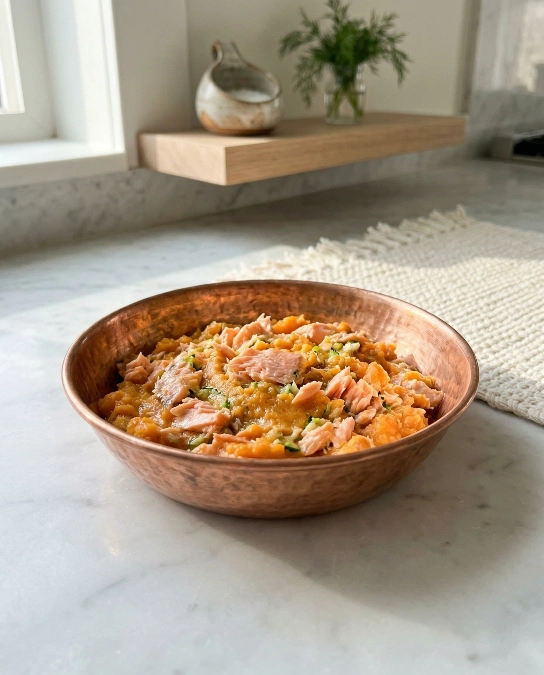
Ideal for promoting a glossy coat and reducing joint inflammation, this fish-based recipe is rich in natural Omega-3 fatty acids and highly palatable for seafood-loving cats.
Ingredients:
- 1.5 lbs fresh, boneless, skinless salmon fillets
- 1/2 cup baked, mashed sweet potato
- 1/4 cup finely chopped zucchini (steamed)
- 1/2 tbsp coconut oil
- Vet-recommended feline mineral/vitamin premix
Instructions:
- Bake the salmon fillets at 350°F until flaky and fully cooked (about 15-20 minutes). Carefully double-check for any pin bones.
- Flake the cooled salmon into small pieces.
- In a mixing bowl, combine the flaked salmon, mashed sweet potato, steamed zucchini, and melted coconut oil.
- Mix gently but thoroughly.
- Add the essential vitamin/mineral premix once the meal is completely cool.
Estimated Calorie & Nutrition Breakdown:
| Ingredient | Estimated Calories (Full Batch) |
| Salmon Fillets (1.5 lbs) | ~1400 kcal |
| Sweet Potato (1/2 cup) | ~57 kcal |
| Zucchini (1/4 cup) | ~5 kcal |
| Coconut Oil (1/2 tbsp) | ~58 kcal |
| TOTAL (Full Batch) | ~1520 kcal |
This recipe makes ~7 half-cup servings.
| Nutrient | Amount (per 1/2 cup) | Notes |
| Calories | ~217 kcal | Estimated value based on a 7-serving batch. |
| Protein | ~20 g | High-quality marine protein. |
| Fat | ~13 g | Excellent for skin and coat health. |
| Fiber | ~1 g | From sweet potato. |
Recipe-Specific Pro-Tip: Fish should be fed in rotation with poultry or mammalian proteins, as an exclusively fish-based diet can sometimes lead to thiamine deficiencies or heavy metal accumulation over years.
5. Lean Pork & Apple Medley
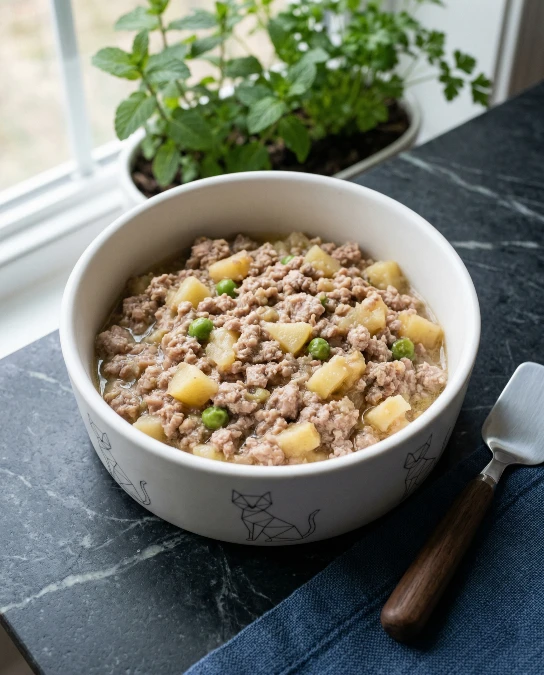
Pork is a highly digestible and often overlooked novel protein for cats. Combined with a tiny amount of apple, this recipe offers a unique flavor profile for cats bored with standard poultry.
Ingredients:
- 2 lbs lean pork loin (fat trimmed)
- 1/4 cup peeled, cored, and unsweetened applesauce (ensure no seeds or xylitol)
- 1/4 cup steamed peas (mashed)
- 1 tbsp canola oil
- Vet-recommended feline mineral/vitamin premix
Instructions:
- Dice the pork loin into very small cubes or pulse in a food processor. Cook thoroughly in a skillet until no pink remains.
- Let the cooked pork cool completely.
- Mix the pork with the unsweetened applesauce, mashed peas, and canola oil.
- Stir until the mixture is uniform.
- Incorporate the feline nutritional premix into the cooled batch.
Estimated Calorie & Nutrition Breakdown:
| Ingredient | Estimated Calories (Full Batch) |
| Lean Pork Loin (2 lbs) | ~1300 kcal |
| Unsweetened Applesauce (1/4 cup) | ~25 kcal |
| Steamed Peas (1/4 cup) | ~30 kcal |
| Canola Oil (1 tbsp) | ~120 kcal |
| TOTAL (Full Batch) | ~1475 kcal |
This recipe makes ~8 half-cup servings.
| Nutrient | Amount (per 1/2 cup) | Notes |
| Calories | ~184 kcal | Estimated value based on an 8-serving batch. |
| Protein | ~24 g | Great alternative protein source. |
| Fat | ~8 g | |
| Fiber | ~1 g |
Recipe-Specific Pro-Tip: Never feed raw pork to cats due to the risk of parasites. Always cook pork to an internal temperature of at least 145°F, though ground pork should reach 160°F.
6. Duck & Green Pea Delight
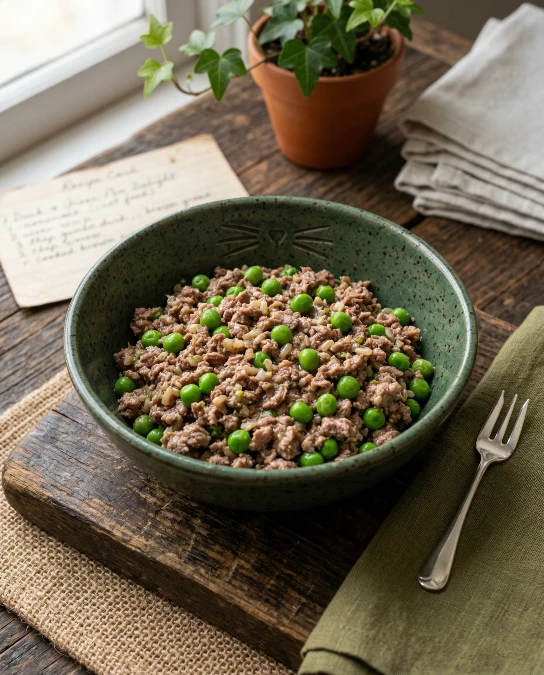
Duck is a slightly fattier, nutrient-dense novel protein ideal for cats with suspected food allergies to common proteins like chicken or beef.
Ingredients:
- 2 lbs boneless duck breast (skin removed to control fat)
- 1/2 cup steamed, mashed green peas
- 1/4 cup cooked brown rice
- 1 tbsp salmon oil
- Vet-recommended feline mineral/vitamin premix
Instructions:
- Bake or gently simmer the duck breast until fully cooked.
- Allow to cool, then chop finely or pulse in a food processor to create a minced texture.
- Mix the minced duck with the mashed green peas, cooked brown rice, and salmon oil.
- Ensure the rice and peas are evenly distributed throughout the meat.
- Blend in the feline nutritional supplement once the food is at room temperature.
Estimated Calorie & Nutrition Breakdown:
| Ingredient | Estimated Calories (Full Batch) |
| Skinless Duck Breast (2 lbs) | ~1200 kcal |
| Green Peas (1/2 cup) | ~60 kcal |
| Brown Rice (1/4 cup) | ~55 kcal |
| Salmon Oil (1 tbsp) | ~120 kcal |
| TOTAL (Full Batch) | ~1435 kcal |
This recipe makes ~8 half-cup servings.
| Nutrient | Amount (per 1/2 cup) | Notes |
| Calories | ~179 kcal | Estimated value based on an 8-serving batch. |
| Protein | ~22 g | Novel protein for allergy management. |
| Fat | ~8 g | |
| Fiber | ~1 g |
Recipe-Specific Pro-Tip: Cats are notorious for picking out whole peas. Thoroughly mashing the peas into the meat ensures they consume the fiber and vitamins without sorting their food.
7. Venison & Carrot Stew
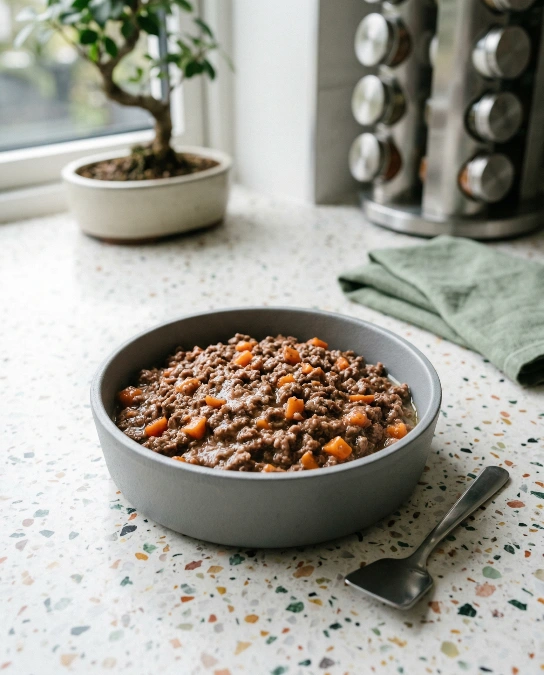
Venison is a premium, ultra-lean meat that mimics a cat’s natural ancestral diet. It is an exceptional choice for weight management and allergy-prone felines.
Ingredients:
- 2 lbs ground venison
- 1/2 cup finely grated, steamed carrots
- 1/4 cup cooked oatmeal (plain, unflavored)
- 2 tbsp olive oil (venison is very lean and needs added fat)
- Vet-recommended feline mineral/vitamin premix
Instructions:
- Cook the ground venison in a skillet over medium heat until completely browned.
- Once cooled, transfer the meat to a large mixing bowl.
- Add the steamed grated carrots, cooked oatmeal, and olive oil.
- Mix thoroughly to ensure the fat and carbohydrates are integrated with the lean meat.
- Stir in the vet-approved mineral premix once the batch is cool.
Estimated Calorie & Nutrition Breakdown:
| Ingredient | Estimated Calories (Full Batch) |
| Ground Venison (2 lbs) | ~1350 kcal |
| Steamed Carrots (1/2 cup) | ~25 kcal |
| Cooked Oatmeal (1/4 cup) | ~40 kcal |
| Olive Oil (2 tbsp) | ~238 kcal |
| TOTAL (Full Batch) | ~1653 kcal |
This recipe makes ~8 half-cup servings.
| Nutrient | Amount (per 1/2 cup) | Notes |
| Calories | ~206 kcal | Estimated value based on an 8-serving batch. |
| Protein | ~24 g | Extremely lean, high-quality amino acids. |
| Fat | ~10 g | |
| Fiber | ~1 g |
Recipe-Specific Pro-Tip: Venison contains very little natural fat. Do not skip the added olive oil or fish oil, as cats require dietary fat for energy and to absorb fat-soluble vitamins.
8. Gentle Lamb & Brown Rice Bowl
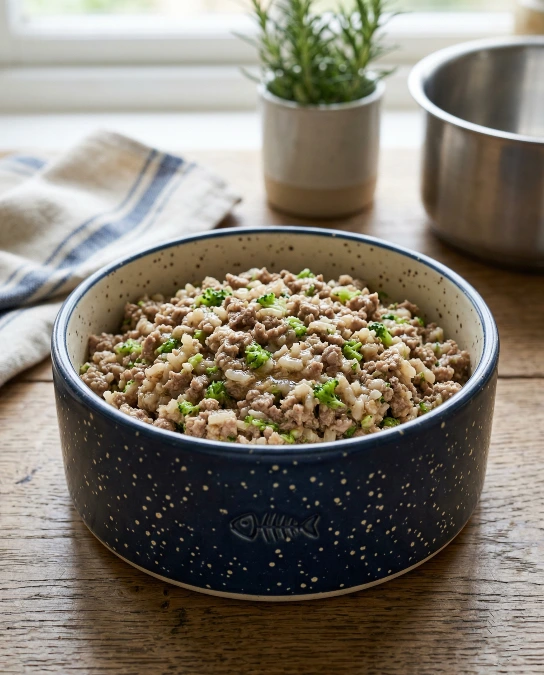
Lamb provides a dense source of calories and essential minerals like zinc, making it an excellent option for highly active cats or those needing to maintain a healthy weight.
Ingredients:
- 2 lbs ground lamb
- 1/2 cup cooked brown rice
- 1/4 cup finely chopped, steamed broccoli florets
- 1 tbsp fish oil
- Vet-recommended feline mineral/vitamin premix
Instructions:
- Brown the ground lamb in a skillet. Since lamb can be fatty, you may choose to drain half of the excess grease to prevent gastrointestinal upset.
- Let the meat cool down completely.
- Mix in the cooked brown rice, steamed broccoli, and fish oil.
- Toss until the ingredients form a cohesive mixture.
- Add the essential vitamin and mineral premix prior to serving or storing.
Estimated Calorie & Nutrition Breakdown:
| Ingredient | Estimated Calories (Full Batch) |
| Ground Lamb (2 lbs) | ~1800 kcal (assumes slight draining) |
| Cooked Brown Rice (1/2 cup) | ~110 kcal |
| Steamed Broccoli (1/4 cup) | ~15 kcal |
| Fish Oil (1 tbsp) | ~120 kcal |
| TOTAL (Full Batch) | ~2045 kcal |
This recipe makes ~8 half-cup servings.
| Nutrient | Amount (per 1/2 cup) | Notes |
| Calories | ~255 kcal | Estimated value based on an 8-serving batch. |
| Protein | ~21 g | Rich in natural zinc and iron. |
| Fat | ~15 g | Higher calorie density for active cats. |
| Fiber | ~1.5 g |
Recipe-Specific Pro-Tip: Only use the florets of the broccoli and steam them until very soft. Raw or tough broccoli stems can be difficult for a cat’s short digestive tract to process.
General Feeding Guidelines (A Starting Point)
As a general starting point, the average indoor adult cat requires between 20 to 25 calories per pound of body weight per day to maintain their current weight.
A healthy 10-pound cat would require roughly 200 to 250 calories daily, which translates to approximately 1/2 to 3/4 cup of the above homemade recipes, divided into two or three meals per day. This is strictly a baseline.
Highly active breeds (like Bengals), growing kittens, and senior cats have drastically different metabolic needs. Always consult your vet to determine the exact portion size required for your specific feline.
Bulk Storage & Freezing Guide (The Method)
All these recipes are perfect for bulk prep, allowing owners to cook once a month.
- To Refrigerate: Store the mixed food in airtight glass or BPA-free plastic containers for no more than 3 to 4 days.
- To Freeze: Let the food cool completely. Portion the batches into single-serving (e.g., 1/4 or 1/2 cup) silicone molds or freezer-safe bags. Press bags flat to save space, label them with the date and recipe protein, and freeze.
- To Serve: Defrost the required portions in the refrigerator overnight. Cats prefer their food at “mouse body temperature,” so lightly warm the food by adding a tablespoon of hot water or microwaving for 5-10 seconds before serving. Ensure it is not too hot to touch.