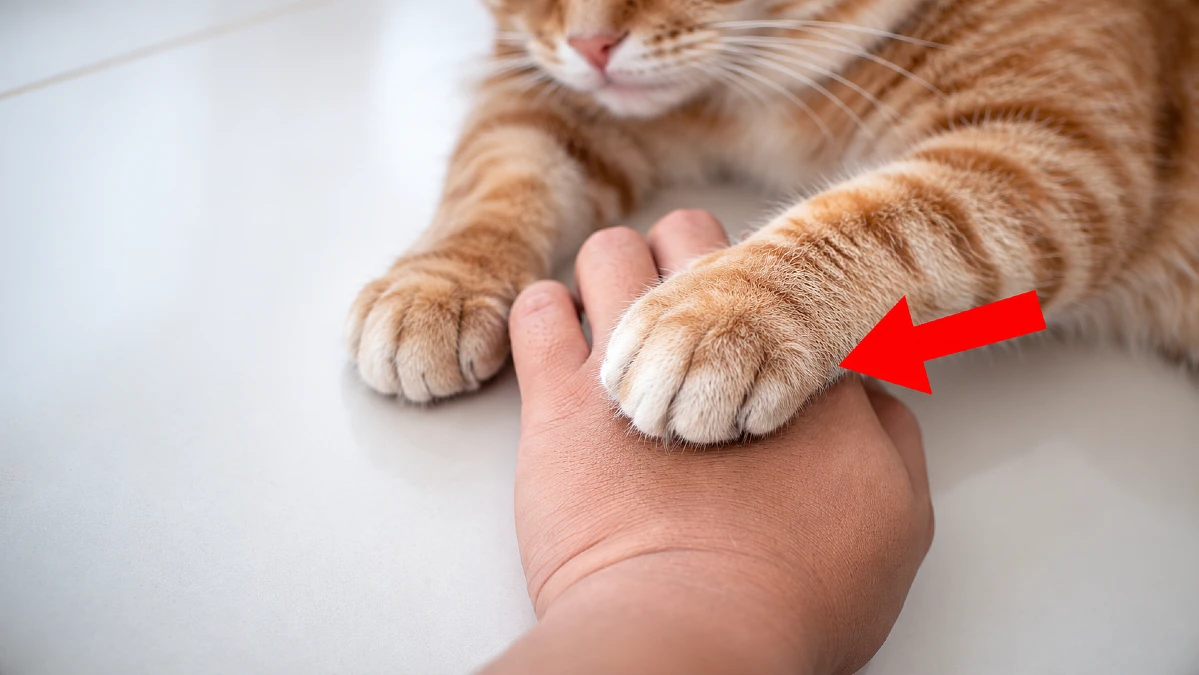
You’re sitting on the couch, trying to finish something, when your cat suddenly reaches over and places one soft paw on your arm. You look down and wonder whether they want food, affection, or simply your attention.
Maybe it happens while you’re watching television. Perhaps your cat touches your face while you’re sleeping or gently rests a paw on your hand whenever you stop petting them.
It’s a small gesture, but it can feel surprisingly personal. And sometimes, what happens before and after that touch matters more than the touch itself.
When your cat puts their paw on you, they could be asking for something, repeating a comforting habit, or showing that they feel safe beside you.
But a cat’s paw touch doesn’t have one fixed meaning. Their body language, daily routine, and past experiences all help explain what they’re trying to communicate.
Here are six possible reasons behind this behavior, including one that may tell you something about the bond you share with your cat.
1. Your Cat May Be Asking for Something Without Making a Sound
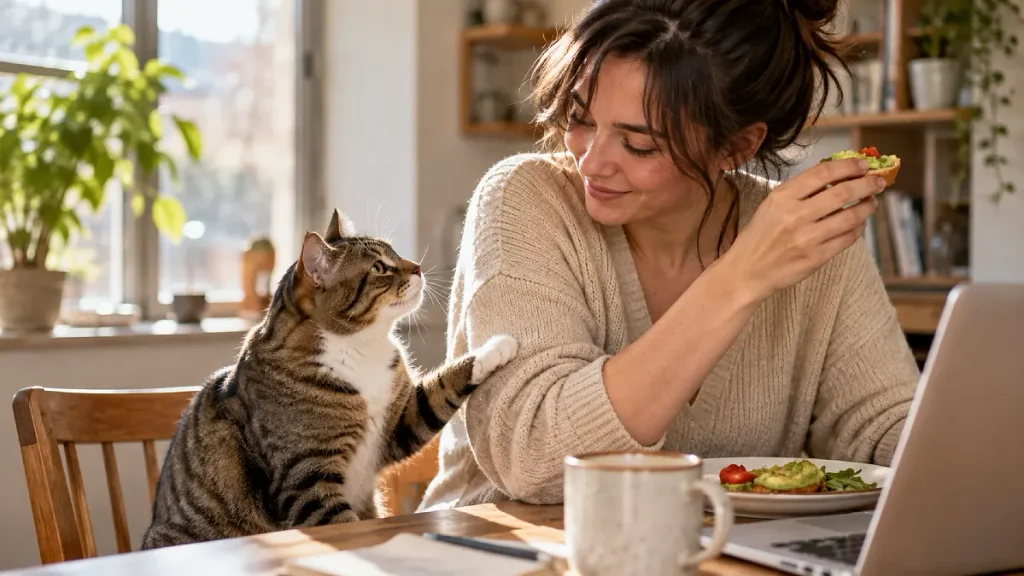
Have you ever been eating dinner or working on your computer when your cat gently places a paw on your arm? They might look directly at you and wait for a reaction.
This is often a simple request for attention. Your cat may want food, a little affection, or help getting something they enjoy.
Cats learn which actions get a response from the people around them. If touching your arm makes you look at them, speak to them, or offer a treat, they may repeat that action.
For example, suppose your cat touches your hand whenever you stop scratching their chin. When you start petting again, they learn that placing a paw on you can make the pleasant activity continue.
The same thing can happen around feeding time. Your cat might tap your leg because they’ve learned that you respond by walking into the kitchen.
How to Know What Your Cat Wants
| When your cat touches you | Possible meaning | What you can do |
|---|---|---|
| Near their usual feeding time | They may expect food | Check their normal feeding schedule |
| When you stop petting | They may want more affection | Offer your hand and see if they lean in |
| While you’re working | They may want attention | Try a short play session |
| Beside a favorite toy | They may want to play | Use a wand toy |
| Near a closed door | They may want access to another room | Check what has caught their interest |
The important thing is to look at what your cat does next. A cat that walks toward its food bowl is giving you a different clue from one that rubs its face against your hand.
A gentle paw tap can be a learned way of getting your attention. It doesn’t mean your cat is demanding something or deliberately being polite.
2. Your Cat Could Be Leaving Their Familiar Scent on You
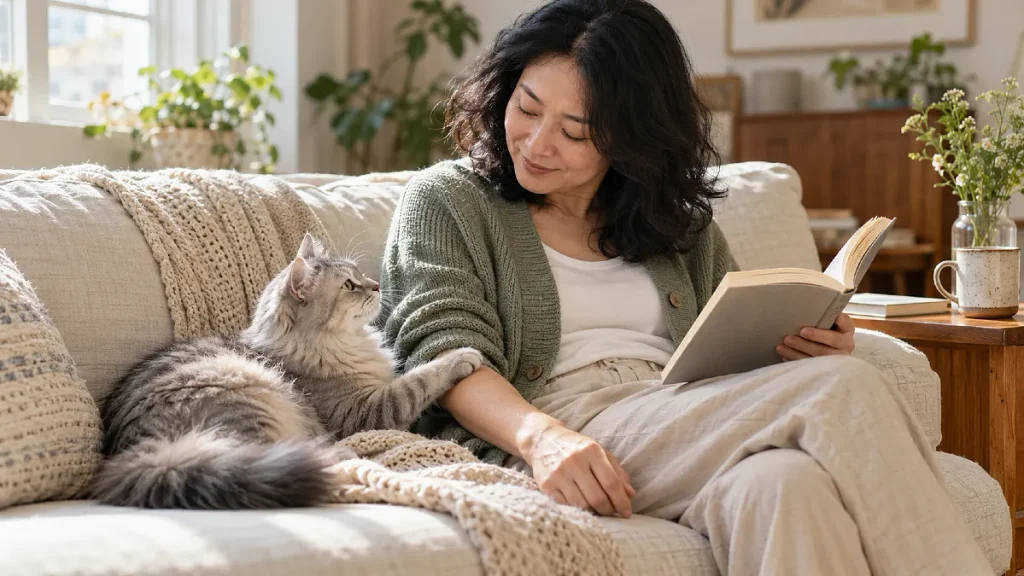
When your cat places a paw against your skin, you might assume they’re simply making physical contact. But cats also use scent to communicate with their surroundings.
According to VCA Animal Hospitals, cats have scent glands associated with their paws. These glands can leave chemical signals when cats scratch surfaces or knead with their feet.
Scent communication helps cats maintain familiarity with places and objects around them. That’s one reason scratching furniture and rubbing against familiar surfaces are normal feline behaviors.
But there’s an important difference between scent marking and an ordinary paw touch.
A cat repeatedly kneading your blanket may be depositing scent as part of that behavior. A cat briefly touching your wrist, however, isn’t necessarily marking you.
There isn’t enough evidence to say that every gentle paw touch means your cat is claiming you as their property.
Why Your Cat May Touch Familiar People
Cats often seek contact with people they know, especially when previous interactions have been pleasant.
Your cat might place a paw on you while resting because your presence feels familiar. Your warmth, smell, and usual way of responding may all be part of that comfortable setting.
You may also notice your cat rubbing their cheeks against your arm or leaning against your body. Those behaviors provide additional clues about friendly social contact.
The sweetest part isn’t that your cat owns you. It’s that they may feel comfortable choosing to spend time close to you.
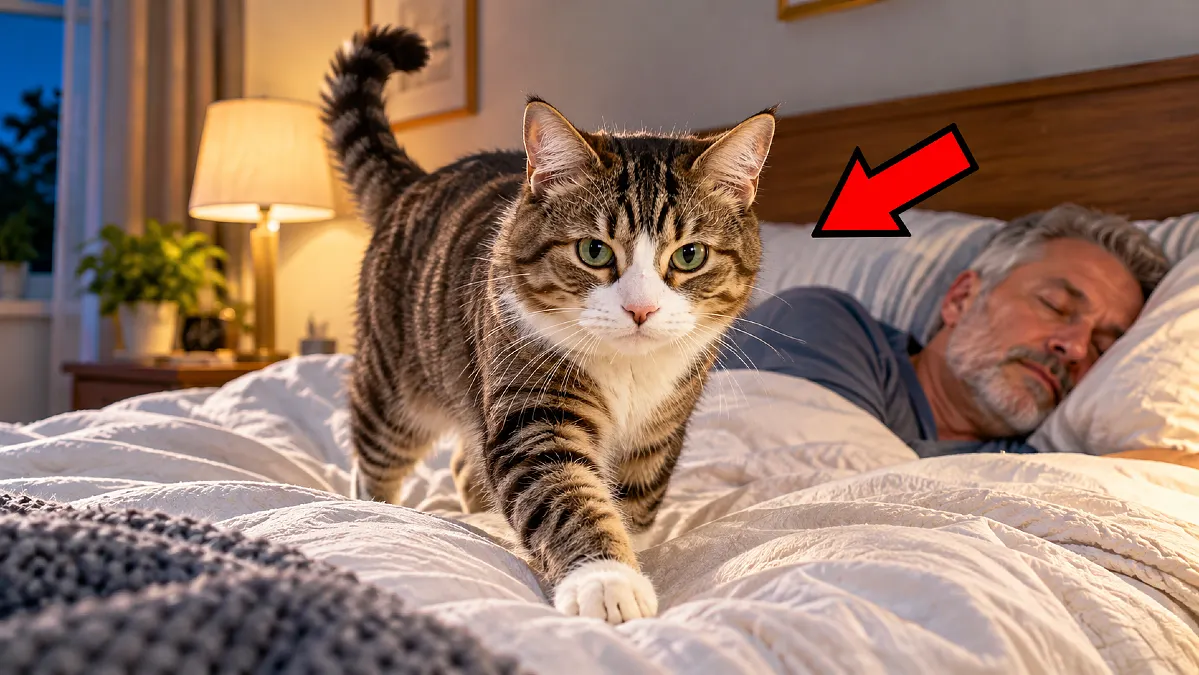
3. A Paw on Your Face While You Sleep May Be a Request for Attention
You’re enjoying a peaceful night’s sleep when something soft suddenly presses against your cheek. You open your eyes and find your cat staring directly at you.
It can feel as though your cat is checking to make sure you’re still alive. That’s an appealing idea, but there’s no established scientific evidence that cats routinely touch sleeping owners to check their breathing.
A more likely explanation is that your cat wants a response.
Cats can notice movement and react to changes in their surroundings. They may also learn that certain actions wake their owners.
If your cat regularly gets breakfast shortly after you wake up, they may connect waking you with the beginning of their morning routine.
A paw on your face can become a very effective way to get your attention. And once your cat learns that it works, the behavior may continue.
What Your Cat’s Nighttime Pawing Could Mean
| Behavior | Possible explanation | Best response |
|---|---|---|
| Touching your face before breakfast | Learned feeding routine | Keep meals on a consistent schedule |
| Pawing while you move under the blanket | Interest in movement | Avoid turning your hands or feet into toys |
| Kneading beside you before sleeping | Comfort or settling behavior | Offer a soft blanket |
| Touching you and then rubbing against you | Seeking friendly contact | Offer calm attention if you’re awake |
| Repeatedly waking you with unusual distress | A possible unmet need or health concern | Check the environment and watch for other changes |
If your cat regularly wakes you for food, consider whether the feeding schedule is contributing to the behavior. An automatic feeder may help some households separate breakfast from the owner’s wakeup time.
Try not to reward unwanted nighttime pawing with an exciting play session. Instead, provide active play during suitable waking hours and keep your nighttime response quiet.
Your cat probably isn’t conducting a medical examination while you sleep. But they have learned that you are someone they can approach when they want something.
4. Your Cat May Be Repeating a Comforting Habit From Kittenhood
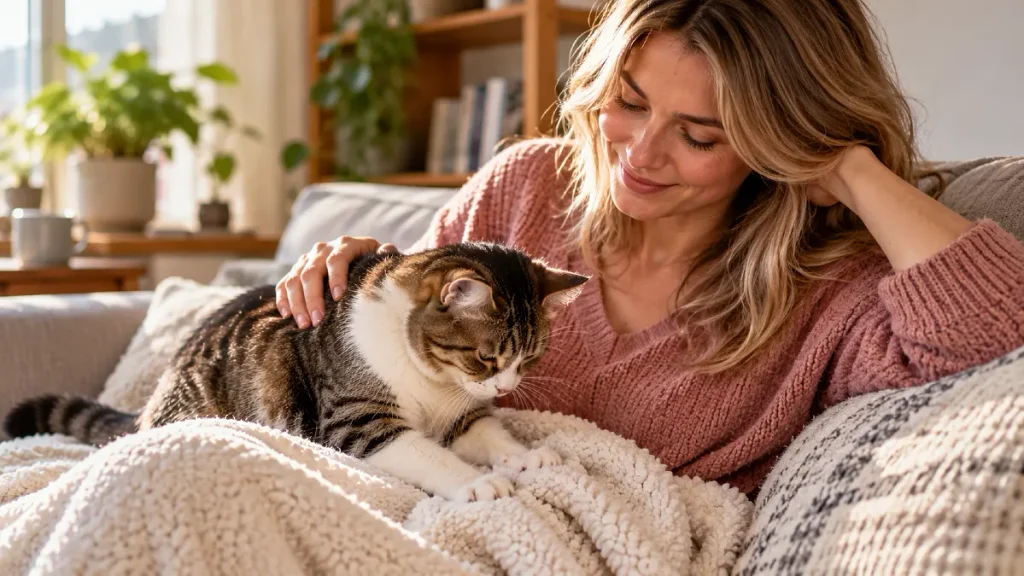
Have you ever noticed your cat pressing their paws against your lap in a slow, repeated motion? Sometimes they alternate their front paws while purring or settling into a comfortable position.
This behavior is called kneading, and it begins very early in a cat’s life.
Kittens knead against their mother’s body while nursing. The movement helps stimulate milk flow and is part of a normal feeding behavior.
Cats Protection explains that some cats continue kneading into adulthood. The reason is not fully known, although the behavior is often associated with comfortable resting situations.
This may help explain why your adult cat kneads your lap, a soft blanket, or a favorite cushion.
Why Kneading Can Feel So Personal
When your cat kneads while lying beside you, look at their entire body. Relaxed ears, soft eyes, and a loose posture can suggest that they’re comfortable.
Some cats knead for a few moments before falling asleep. Others repeat the movement while settling into a warm spot.
However, kneading and placing one paw on you are different behaviors. You shouldn’t assume that every single paw touch comes from a memory of nursing.
Kneading can also occur when a cat is trying to soothe itself. VCA Animal Hospitals notes that changes in kneading habits should be considered alongside other changes in behavior.
If your cat suddenly kneads much more than usual while hiding, eating less, or acting unusually, it may be worth speaking with your veterinarian.
What to Do When Your Cat Kneads With Their Claws
Some cats extend their claws while kneading, which can make an otherwise pleasant moment uncomfortable.
Place a thick, soft blanket between your skin and your cat’s paws. You can also redirect them toward a comfortable resting spot without pushing or frightening them.
Keep their claws at a healthy length with appropriate trimming. Never punish your cat for a natural behavior that may help them settle down.
5. Your Cat Might Want You to Stay a Little Longer

Picture yourself relaxing on the couch with your cat resting beside you. The moment you shift forward to stand up, they stretch out a paw and place it on your leg.
It almost seems as if they’re asking you to stay.
Cats learn from everyday routines. Your cat may notice that certain movements usually happen before you get up, leave the room, or stop petting them.
They don’t need to predict the future to notice familiar patterns.
If getting up usually means the end of a pleasant cuddle, your cat may reach toward you because they want the interaction to continue.
You might notice similar behavior when you begin moving your hand away after petting them. Some cats touch the hand again, rub against it, or move closer.
Watch What Happens After the Touch
A cat that reaches toward you and immediately settles against your side may be seeking more contact.
But a cat that touches you and then turns away might simply be adjusting its position. The movement alone doesn’t tell you exactly what the cat wants.
The feline environmental guidelines from the American Association of Feline Practitioners and the International Society of Feline Medicine emphasize the value of predictable, positive contact between cats and people.
They also recommend allowing cats to choose when to begin and end interactions.
If your cat wants you to stay, enjoy the moment when you can. But don’t feel guilty about getting up, and don’t force another cuddle when your cat decides to leave.
A healthy relationship allows both of you to have your own space.
6. A Relaxed Paw Resting on You Can Be a Sign of Trust
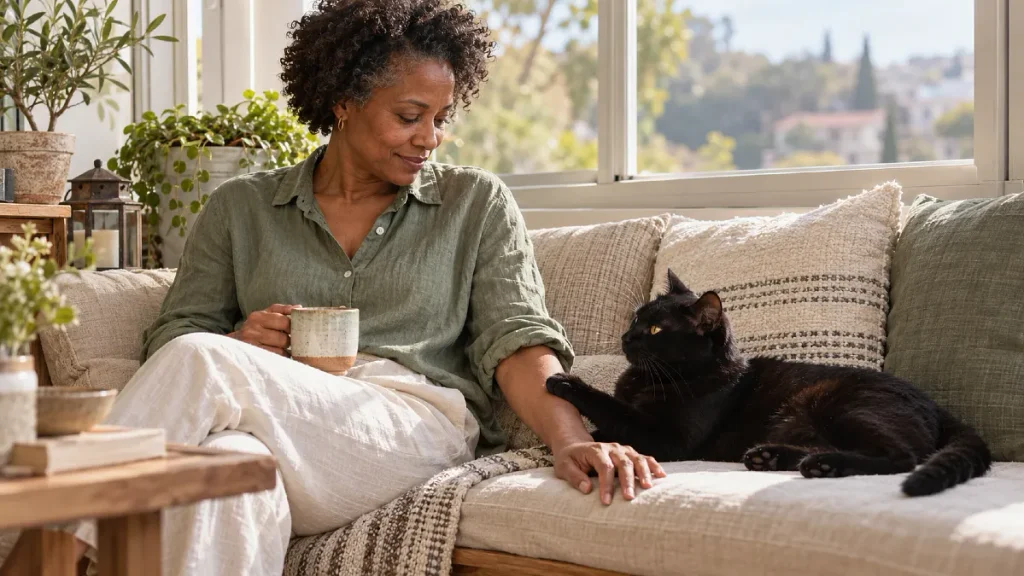
This may be the most meaningful explanation, although it needs to be read with care.
Sometimes your cat places one paw on your arm and leaves it there. They aren’t tapping repeatedly, reaching toward food, or asking you to open something.
Instead, they appear completely relaxed.
Their eyes may be partly closed, their ears may sit comfortably upright, and the rest of their body may feel loose. They might even settle down for a nap while keeping their paw against you.
In that situation, the touch can be part of a comfortable social interaction.
Why Feeling Safe Around You Matters
Cats are capable of forming meaningful attachments to their caregivers.
In a 2019 study reported by Oregon State University, researchers observed attachment patterns between cats and people. Among 70 kittens whose attachment styles could be classified, 64.3% showed secure attachment in the test.
The researchers found that many cats use their caregivers as a source of security.
That doesn’t prove a cat is securely attached simply because it rests a paw on someone. But it does challenge the idea that cats are unable to develop close bonds with people.
PetMD’s February 2026 veterinary review also describes slow blinking, friendly head rubbing, and voluntary closeness as behaviors that may be associated with feline affection.
A relaxed paw touch can fit into that larger picture.
Why You Shouldn’t Read Too Much Into One Paw
You may have heard that a cat resting one paw on you is risking its life because it no longer has all four paws available for escape.
There is no sound evidence that this ordinary action represents a deliberate sacrifice. Cats lift and move their paws during many everyday activities without putting themselves in serious danger.
What matters more is whether your cat chooses to remain near you while showing signs of comfort.
If your cat approaches voluntarily, settles beside you, and rests without appearing tense, those are encouraging signs.
Trust is easier to recognize through repeated, relaxed interactions than through one dramatic interpretation of a single gesture.
And if your cat keeps returning to spend quiet time beside you, that may say more about your relationship than any one paw touch ever could.
How to Tell What Your Cat’s Paw Touch Really Means
Now that you know several possible explanations, how can you tell which one applies to your cat?
Start by looking beyond the paw itself.
Cats communicate through their ears, eyes, tails, body position, movements, and sounds. Reading these signals together gives you a clearer picture than focusing on one action.
Cats Protection recommends looking at the cat’s overall body language rather than assuming one signal always means the same thing.
Cat Body Language You Should Watch
| Body language | What it may suggest | How to respond |
|---|---|---|
| Soft eyes and relaxed ears | Comfort or calm interest | Offer gentle contact if welcomed |
| Slow blinking and a loose body | Relaxation during social contact | Stay calm and allow your cat to choose |
| Ears turned back with a tense body | Worry or discomfort | Pause contact and give space |
| Fast tail movements with growing tension | Possible frustration or strong excitement | Stop petting and observe |
| Repeated paw taps followed by walking away | A request for you to follow or notice something | Check where your cat goes |
| Hissing, growling, or swatting | Fear, discomfort, or a request for distance | Avoid further contact |
Keep in mind that the same movement may have different meanings in different situations.
For example, a moving tail can appear during play, hunting, or irritation. You need to check the cat’s posture and the surrounding situation.
Three Questions to Ask Yourself
What happened right before the touch?
Were you preparing food, moving away, stopping a cuddle, or getting ready for bed? The event just before the touch may provide an important clue.
What does your cat do immediately afterward?
A cat that moves toward the kitchen may want food, while one that settles into your lap may prefer company.
Does your cat look comfortable?
Relaxed body language is encouraging. Stiff movements, flattened ears, or attempts to escape suggest that you should give your cat more space.
Once you begin noticing these small details, the meaning behind each touch may become easier to work out.
4 Simple Ways to Respond When Your Cat Puts Their Paw on You
A gentle paw touch can mean different things. Here’s how to respond in a way that helps your cat feel safe and respected.
Pause & Read Their Body Language
Look at your cat’s ears, eyes, and posture. A relaxed body may mean they’re comfortable. A tense body can mean they need space.
Let Your Cat Choose the Affection
Offer a few gentle strokes, then pause. If your cat leans closer, they may want more. If they move away, respect their choice.
Check What They Actually Need
Your cat may need fresh water, food at their usual time, or access to a favorite toy or resting place.
Offer Play Instead of Using Your Hands
If your cat seems restless, try a wand toy or another safe activity. Let them chase, catch, and enjoy the game.
When Your Cat’s Pawing Could Be a Sign Something Is Wrong
Most gentle paw touches are normal and aren’t a reason to worry.
However, a sudden change in how your cat uses their paws may deserve attention, especially if other behaviors change at the same time.
Cats sometimes show pain through small changes in movement or behavior. Cornell Feline Health Center explains that cats with painful conditions may become less active or react differently to physical contact.
Warning Signs You Shouldn’t Ignore
| What you notice | Possible concern | What to do |
|---|---|---|
| Sudden repeated pawing with unusual vocal sounds | Discomfort, stress, or an unmet need | Check for other symptoms and contact your veterinarian if it continues |
| Limping or avoiding weight on one paw | Injury or pain | Arrange a veterinary examination promptly |
| Swollen paw or visible wound | Injury, irritation, or infection | Contact your veterinarian |
| Pawing along with hiding or reduced appetite | Possible illness or discomfort | Contact your veterinarian promptly |
| Sudden aggression when a paw is touched | Pain or fear | Stop handling the area and seek veterinary advice |
| Pawing with severe breathing difficulty or collapse | Possible medical emergency | Seek emergency veterinary care immediately |