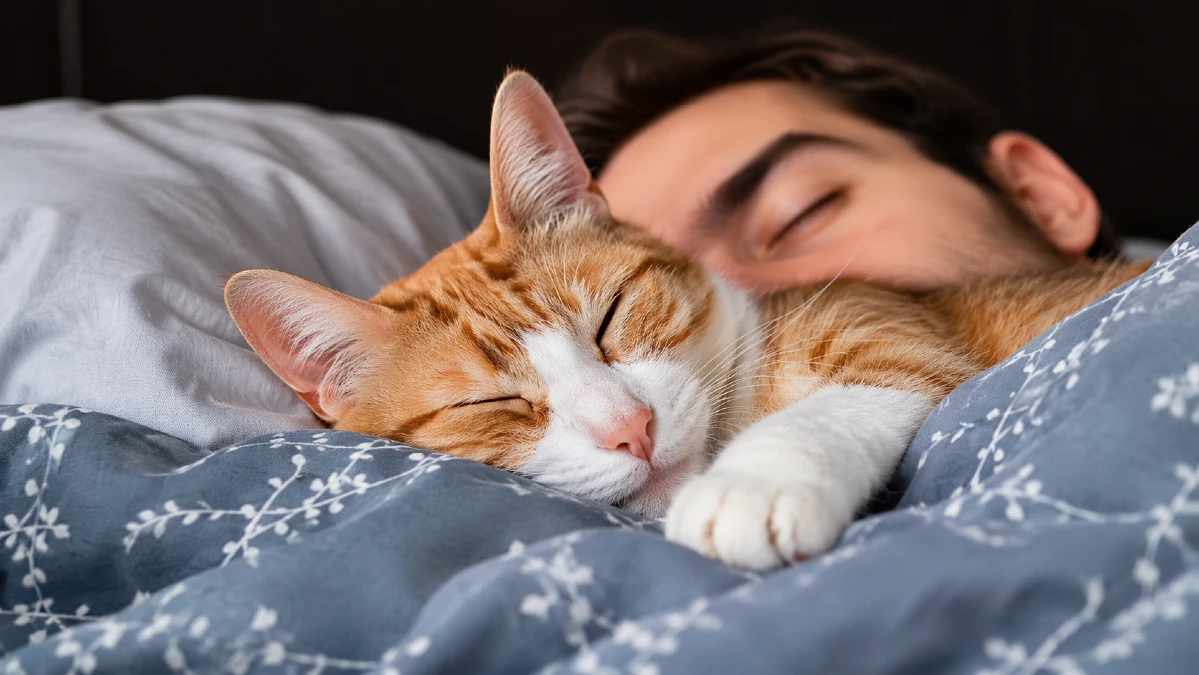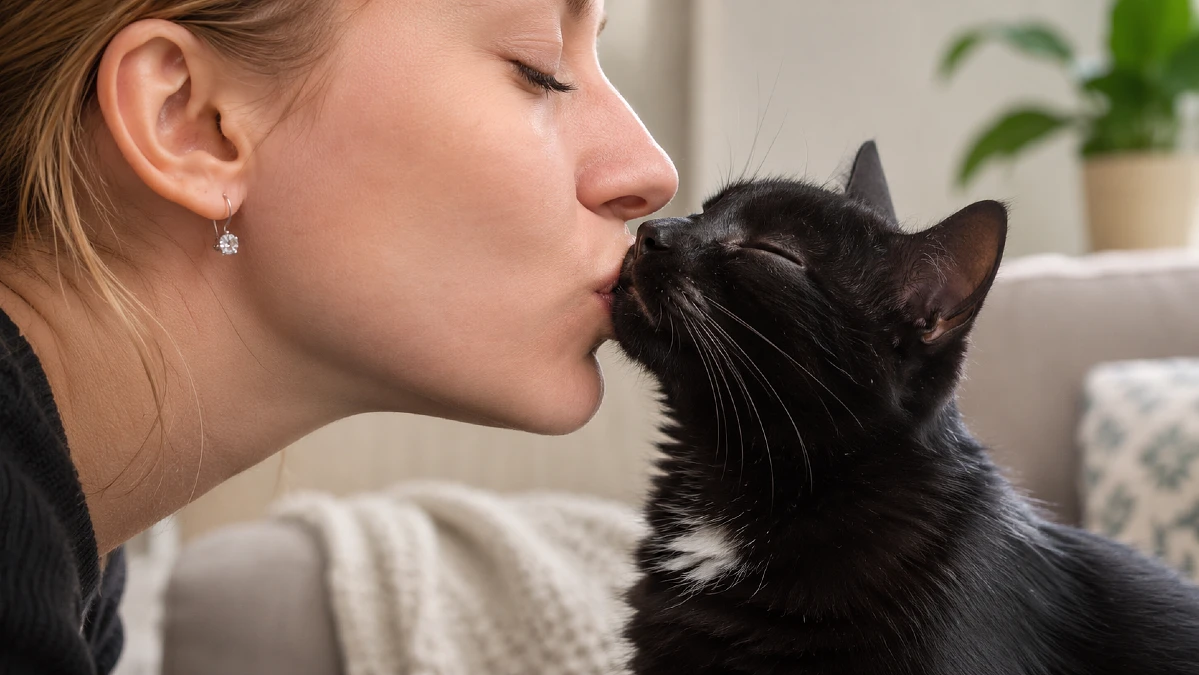
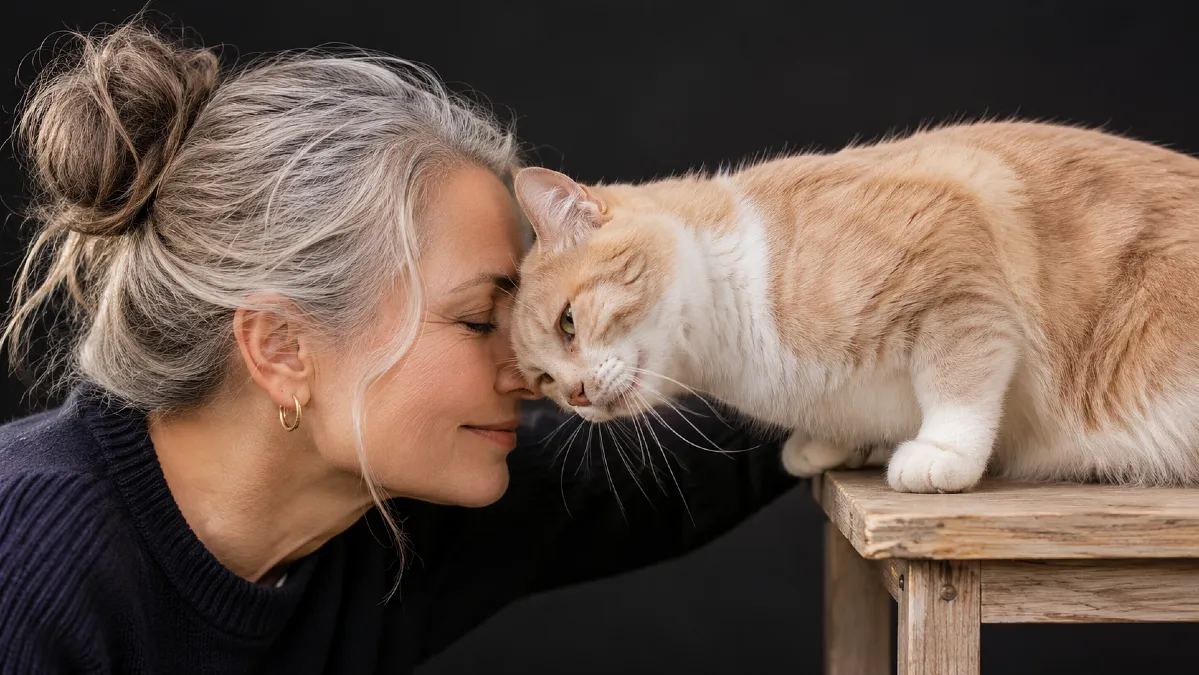
Your cat climbs onto your lap, settles beside you, and suddenly starts licking your hand. At first, you find it sweet, but after a few minutes of feeling that rough little tongue against your skin, you begin to wonder what your cat is actually doing.
Are they trying to clean you? Do they like the taste of your skin, or are they expressing something deeper about the relationship you share?
Cats have their own ways of showing affection, and grooming is one of them. When your cat voluntarily grooms you during a peaceful moment, it may be using the same type of social behavior that helps cats maintain close relationships with one another.
But not every lick carries the same message. Some cats lick people to get attention, explore a smell, or cope with stress.
Your Cat May Be Treating You Like Family
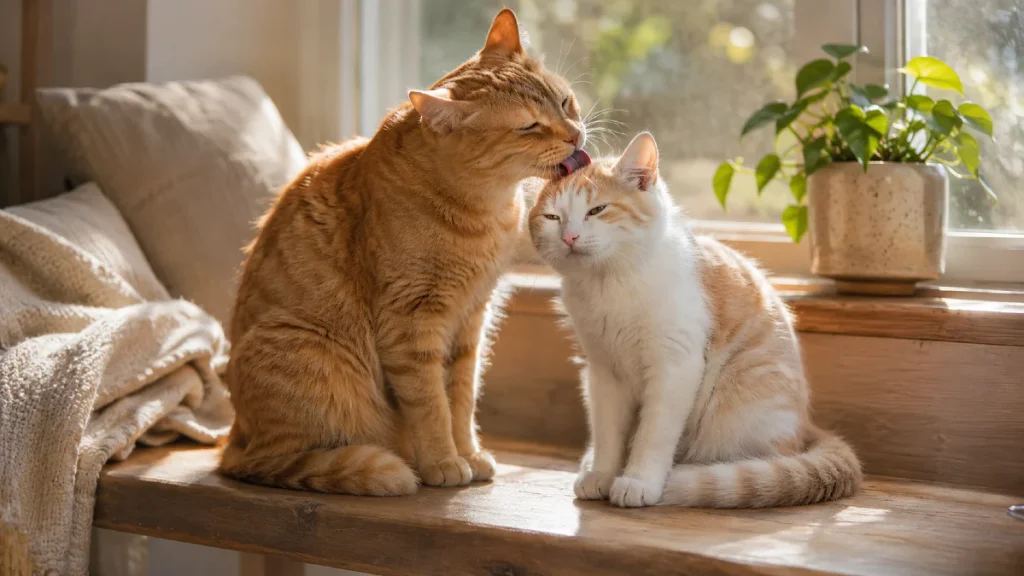
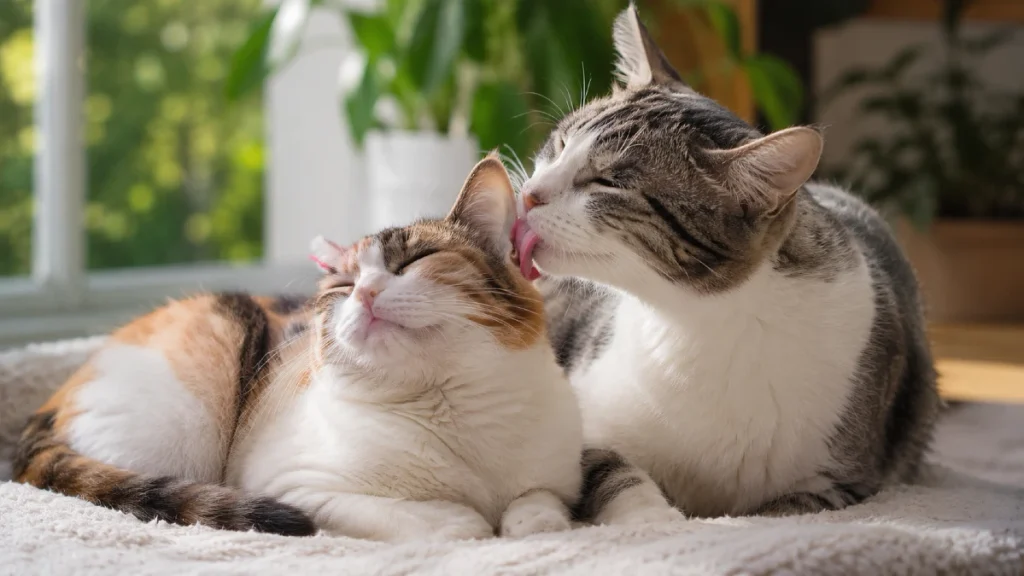
Cats do not reserve grooming entirely for themselves. They sometimes groom other cats with whom they share a social relationship, particularly around the head, ears, and neck.
This behavior is called allogrooming, which simply means grooming another individual. It can serve several purposes, including maintaining social bonds between cats.
An August 2026 study published in Applied Animal Behaviour Science examined grooming interactions between domestic cats. Researchers found that social grooming occurred during both friendly interactions and moments of social tension.
When cats rested close together and appeared comfortable during grooming, the behavior could reflect a friendly relationship. This helps explain why the circumstances surrounding grooming matter just as much as the licking itself.
PetMD explains that cats may extend similar grooming behavior to their human companions. Your cat may lick your hand, arm, or hair as part of maintaining its relationship with you.
Think about what happens when your cat has the entire house available but chooses to settle beside you. If they begin grooming you while resting comfortably, that voluntary closeness may be an encouraging sign of trust.
There is no scientific test that confirms a cat has officially accepted someone into its family. However, affectionate grooming can suggest that you have become an important part of your cat’s social life.
Why Your Cat Uses Grooming to Build a Bond
Your cat’s relationship with grooming begins long before it arrives in your home. Mother cats lick their newborn kittens to clean them, provide care, and help stimulate essential bodily functions during their earliest weeks.
These early experiences make grooming a familiar part of close physical contact. As kittens grow, they may begin grooming themselves and interacting socially with their littermates.
VCA Animal Hospitals explains that some cats continue social licking into adulthood. When directed at their owners, it may serve as a way to express affection and maintain a relationship.
This could explain why your cat suddenly starts licking your fingers while you are watching television or relaxing in bed. The behavior may occur naturally when your cat is already comfortable being near you.
Grooming May Be Part of Your Cat’s Comfort Routine
Some cats develop routines around their favorite resting spots and familiar people. Your cat might climb onto your lap every evening, groom its own paws, and then give your hand a few licks before falling asleep.
The repeated pattern does not necessarily mean your cat is asking for anything. It may simply be part of a familiar interaction that your cat enjoys.
Your cat also does not need to groom you constantly for the behavior to be meaningful. A few gentle licks during an otherwise peaceful moment may be just as relevant as a longer grooming session.
What Your Cat Is Telling You When It Grooms You
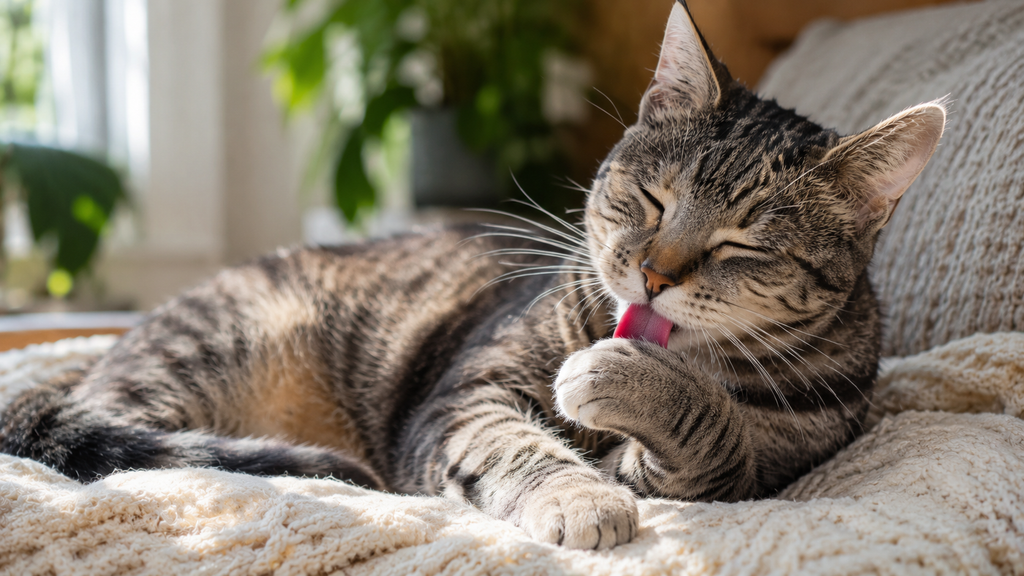
The best way to interpret your cat’s grooming is to observe everything happening around it. Your cat’s posture, facial expression, tail movements, and choice to remain beside you can provide useful clues.
A cat that approaches you voluntarily, settles comfortably, and licks your hand may be expressing friendly social behavior. A cat that appears tense or cannot settle may be licking for a different reason.
VCA Animal Hospitals also notes that cats can learn to lick people because the behavior gets a response. If you always pet or talk to your cat after a lick, they may repeat it whenever they want your attention.
What Different Grooming Behaviors Mean
Pay attention to what happens immediately before and after your cat licks you. These small details can help you decide whether to continue the interaction or give your cat some space.
| Grooming behavior | Possible meaning | What to do |
|---|---|---|
| Gentle licking while resting | Social affection | Enjoy the quiet moment |
| Licking when you stop petting | Request for attention | Offer gentle contact if welcomed |
| Licking after exercise | Interest in salty sweat | Wash your skin |
| Sniffing before licking | Curiosity about a smell | Check for skin products |
| Persistent, restless licking | Possible stress | Observe other behavior changes |
| Licking followed by biting | Rising excitement or discomfort | Stop petting and give space |
Treat these behaviors as clues rather than definite answers. The same action can have different meanings depending on your cat’s personality and the situation.
A particularly useful sign is whether your cat chooses to remain beside you when you stop interacting. Voluntary closeness can tell you something that licking alone cannot.
If your cat stays relaxed without receiving food, toys, or constant attention, they may simply enjoy sharing your company.
Why Your Cat Grooms Your Hair, Hands, and Face
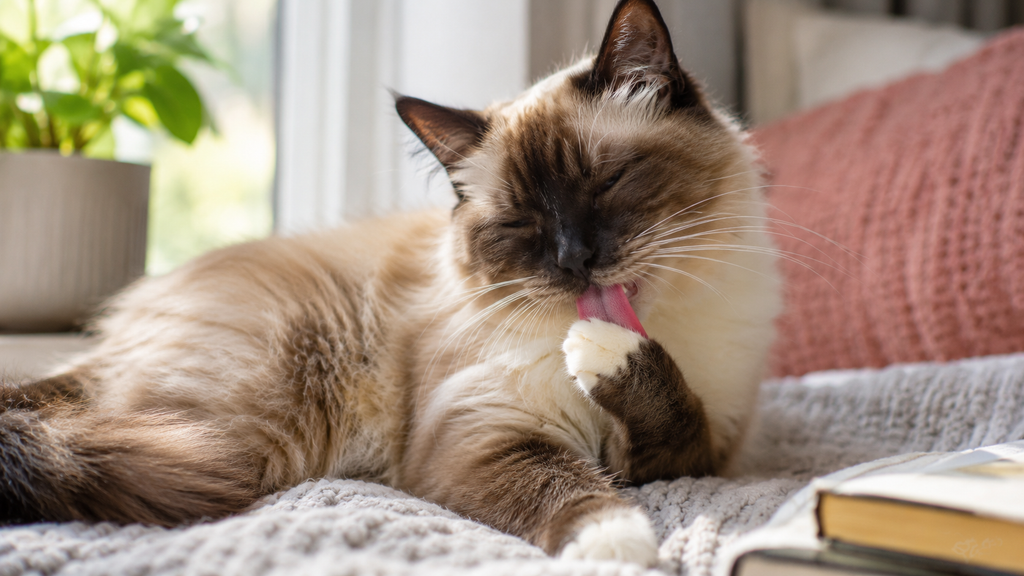
You might notice that your cat prefers grooming particular parts of your body. Some cats focus on their owner’s hair, while others seem especially interested in fingers, wrists, or cheeks.
These preferences can have different explanations.
Your Hair Resembles Something Familiar to Groom
Human hair offers a texture that may encourage some cats to lick it. Grooming another cat often involves the head and neck, so your hair may provide a familiar type of grooming surface.
Your cat might start licking your hair while sitting behind you on the sofa or resting near your pillow. If the surrounding interaction is calm, social grooming may be one possible explanation.
However, the smell of shampoo or another hair product could also attract your cat. This is why you should not automatically assume every hair grooming session is affectionate.
Your Hands Carry Interesting Smells
Your hands come into contact with food, household surfaces, and many other objects throughout the day. These smells can make them interesting to a curious cat.
VCA Animal Hospitals explains that substances left on your skin through sweat can also attract licking. Your cat may be particularly interested in your hands or arms after exercise.
If your cat sniffs your fingers carefully before licking them, they may be investigating something rather than trying to strengthen your bond.
Your Face Is Often Close During Quiet Moments
Cats that rest near their owners’ pillows or shoulders have easy access to their faces. Your cat may approach your cheek during these moments because it is nearby and familiar.
Although the interaction can feel affectionate, it is better to redirect face licking for hygiene reasons. You can still enjoy being close without allowing your cat to lick your eyes, nose, or mouth.
When Your Cat’s Grooming May Be a Sign of Stress
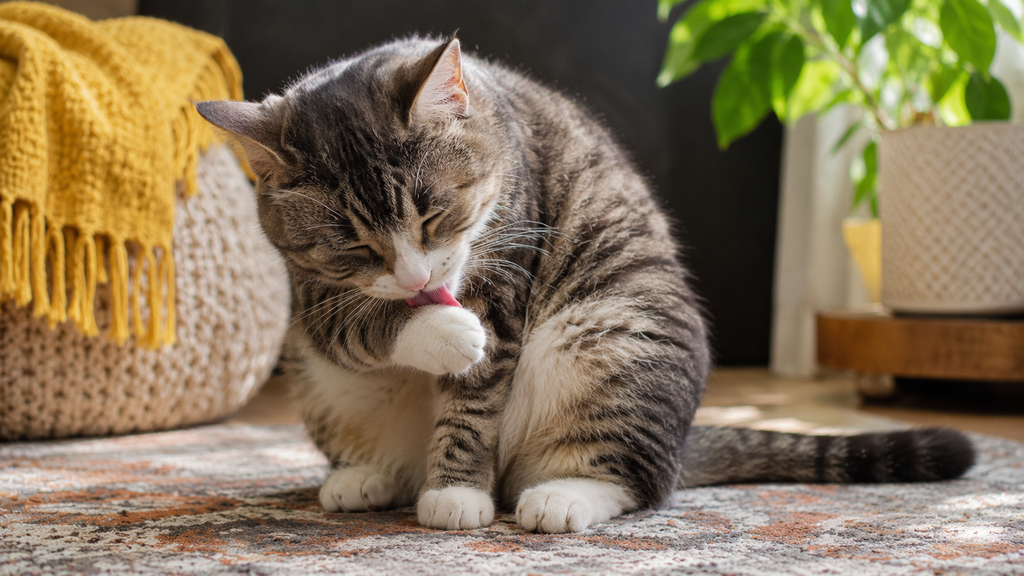
Affectionate grooming generally occurs alongside other comfortable behaviors. When licking suddenly becomes unusually frequent, difficult to interrupt, or accompanied by changes in your cat’s routine, it deserves closer attention.
The Cornell Feline Health Center explains that excessive self grooming can be associated with stress, discomfort, itching, and underlying medical conditions. VCA Animal Hospitals also notes that some cats may direct stress related licking at their human companions.
A move to a new house, a change in your work schedule, or the arrival of another pet could affect your cat’s sense of security. Some cats respond to these changes by hiding more often, while others become unusually clingy or repetitive in their behavior.
Normal Grooming vs. Warning Signs
Look for changes from your cat’s usual habits instead of comparing their behavior with another cat. What matters is whether grooming has become unusually intense or occurs alongside other concerning symptoms.
| Behavior | Level of concern | Recommended action |
|---|---|---|
| Brief, relaxed grooming | Generally low | Continue observing |
| Increased licking after a move | Possible stress | Restore familiar routines |
| Frequent licking that is hard to redirect | Worth investigating | Contact your vet if persistent |
| Self grooming with bald patches | Medical concern | Arrange a veterinary exam |
| Licking accompanied by skin sores | Medical concern | Seek veterinary care |
| Sudden licking with appetite changes | Medical concern | Contact your veterinarian promptly |
Keep a simple record of when the behavior occurs and what happened beforehand. This information can help your veterinarian identify possible patterns and determine whether further examination is needed.
Avoid assuming excessive grooming is purely emotional. Cats with physical discomfort may also change their grooming habits, and medical causes should be considered before treating the problem as anxiety.
Small Changes That May Help a Stressed Cat
A predictable home environment can help your cat feel more secure. The Merck Veterinary Manual recommends consistent, positive interactions as part of supporting feline behavioral health.
You can make your home more comfortable by providing:
- Quiet resting areas away from household noise.
- Regular feeding and play routines.
- Accessible hiding places.
- Comfortable elevated resting spots.
- Separate resources for cats that experience conflict.
- Opportunities to approach you without being picked up.
These adjustments may support a calmer environment, but they cannot replace medical care when your cat shows signs of illness. Your veterinarian can help determine whether additional treatment or behavioral support is necessary.
Is It Safe to Let Your Cat Groom You?
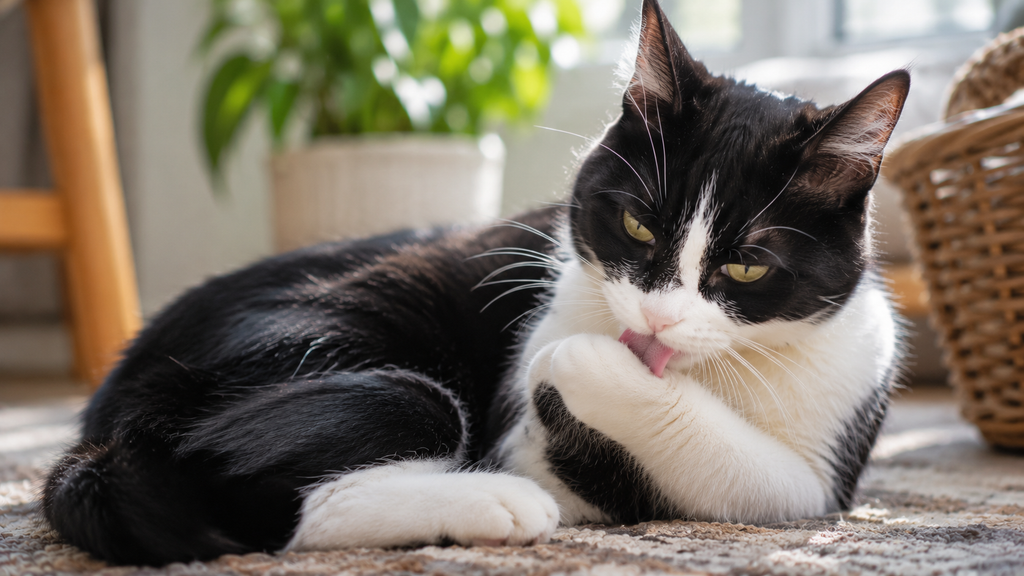
A few licks on healthy, unbroken skin are generally less concerning than licking an open wound or sensitive area. However, cat saliva can contain germs, even when your cat looks perfectly healthy.
The CDC recommends washing your hands after contact with cat saliva. The Cornell Feline Health Center also advises owners to prevent cats from licking open wounds and faces.
There are risks for your cat as well. Products applied to your skin or hair may contain ingredients that should never be swallowed by animals.
When to Allow or Stop Cat Licking
You do not have to discourage every affectionate interaction with your cat. Instead, set sensible boundaries based on where your cat is licking and what substances may be present.
| Area or situation | Safety advice | What to do |
|---|---|---|
| Healthy, clean skin | Lower risk | Wash afterward |
| Eyes, nose, or mouth | Avoid saliva contact | Gently redirect your cat |
| Open cuts or wounds | Avoid licking | Clean the area and cover it |
| Skin treated with medication | Possible poisoning risk | Prevent contact |
| Hair with styling products | Ingredients may be unsafe | Discourage licking |
| Suspected medication exposure | Potential emergency | Contact a veterinarian immediately |
People with weakened immune systems should take particular care with animal saliva exposure. Your healthcare provider can offer guidance based on your individual circumstances.
Keeping your cat healthy through regular veterinary care also supports safer interactions at home. Routine hygiene remains important even when your pet lives entirely indoors.
Be Especially Careful With Hair Loss Treatments
In February 2026, the ASPCA published a warning about minoxidil, an ingredient used in common hair loss treatments. Cats can become seriously ill after exposure to this medication.
Exposure may occur when a cat licks treated hair or skin, comes into contact with contaminated bedding, or encounters spilled medication. Cats Protection issued a similar warning in May 2026.
If you use minoxidil, prevent your cat from contacting treated areas and items carrying medication residue. Even suspected exposure requires immediate veterinary advice, regardless of whether your cat appears sick.
How to Respond When Your Cat Grooms You
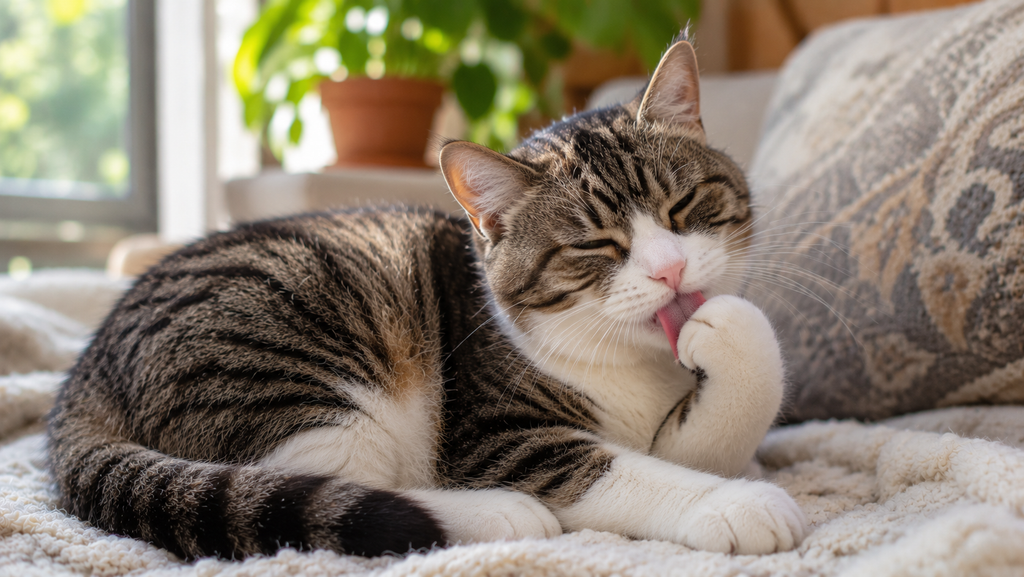
You do not need to copy your cat’s licking behavior to return their affection. Instead, respond in ways that your cat already finds comfortable.
When your cat starts grooming you, keep your movements gentle. If they enjoy being touched, try a few light strokes around their cheeks or the top of their head.
Pause afterward and observe their reaction. If your cat leans closer or remains comfortable, they may welcome further contact.
Give Your Cat a Slow Blink
Try looking gently at your cat and slowly closing and opening your eyes. Avoid staring directly at them for long periods.
Research published in Scientific Reports found that slow blinking can support positive communication between cats and humans. Cats in the study were also more likely to approach a person following a slow blink interaction than after a neutral interaction.
Your cat may return the gesture, continue resting, or simply look away. Any of these responses is fine, and there is no need to force an interaction.
Redirect Licking When You Have Had Enough
A cat’s tongue can become uncomfortable against human skin, particularly during a long grooming session. You are allowed to end the interaction without making it unpleasant for your cat.
Slowly move your hand away and offer an alternative activity. A favorite toy, a comfortable blanket, or a gentle brushing session may redirect their attention.
Avoid shouting, pushing your cat roughly, or punishing them for licking. Calmly ending the interaction protects your boundaries without introducing unnecessary fear.
Your Cat Can Love You Without Grooming You
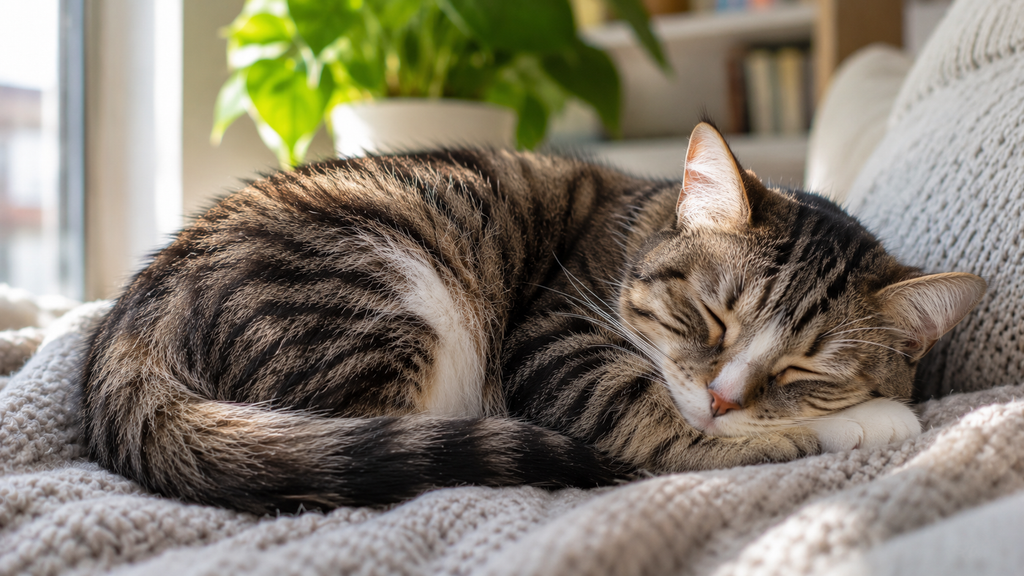
Some cats rarely lick their human companions, even when they share a close relationship. Grooming preferences vary between individual cats, and a lack of licking does not mean your cat has rejected you.
Your cat may prefer sleeping beside you, following you between rooms, or resting near your feet. These behaviors can also reflect comfort and an interest in sharing your space.
PetMD describes several ways cats may express friendly feelings and social attachment. Grooming is just one part of a much larger collection of behaviors.
Other Signs Your Cat Feels Safe With You
Look for patterns that occur naturally when your cat spends time around you. These are especially meaningful when your cat chooses the interaction without being encouraged by food or treats.
Common signs of comfort and friendly behavior include:
- Approaching you with a relaxed body.
- Rubbing their cheeks against your legs.
- Sleeping peacefully beside you.
- Giving you slow blinks.
- Gently pressing their head against your hand.
- Choosing to sit near you during everyday activities.
- Kneading a blanket or your lap while relaxed.
- Initiating play or physical contact.
No single behavior proves exactly how your cat feels. However, repeated signs of comfort, voluntary interaction, and relaxed body language can help you recognize the relationship you have built.
Some cats express affection through physical contact, while others prefer simply sharing the same room. Respecting those differences can help you maintain a stronger relationship than trying to make every cat behave the same way.