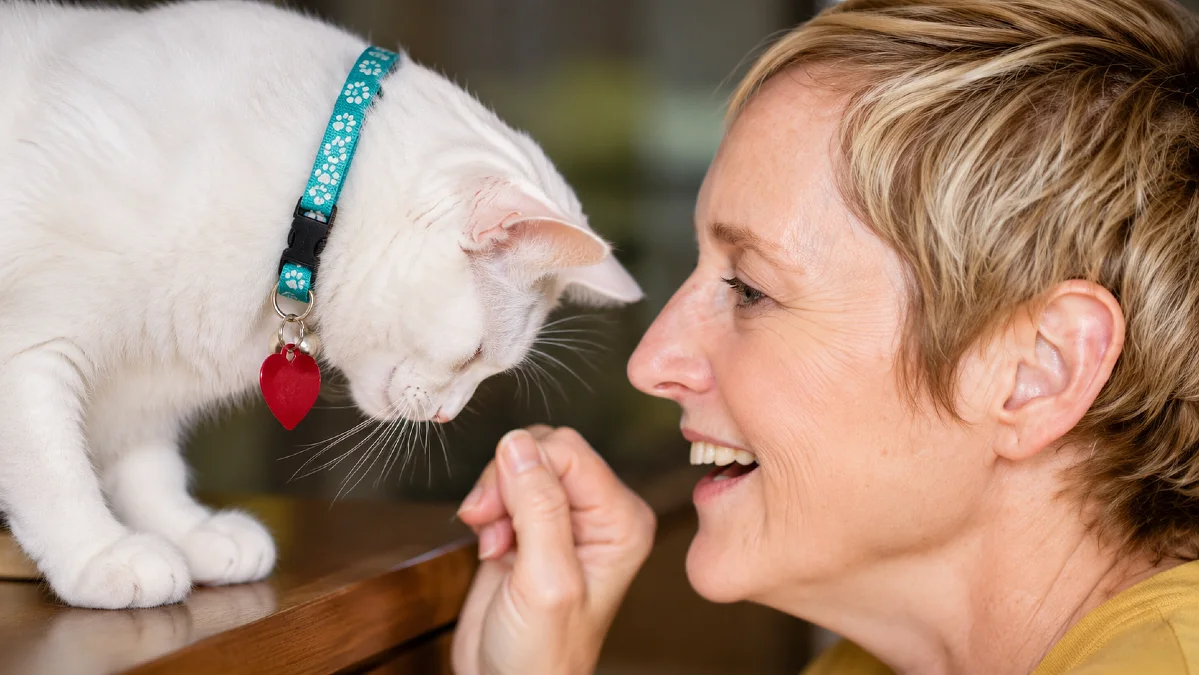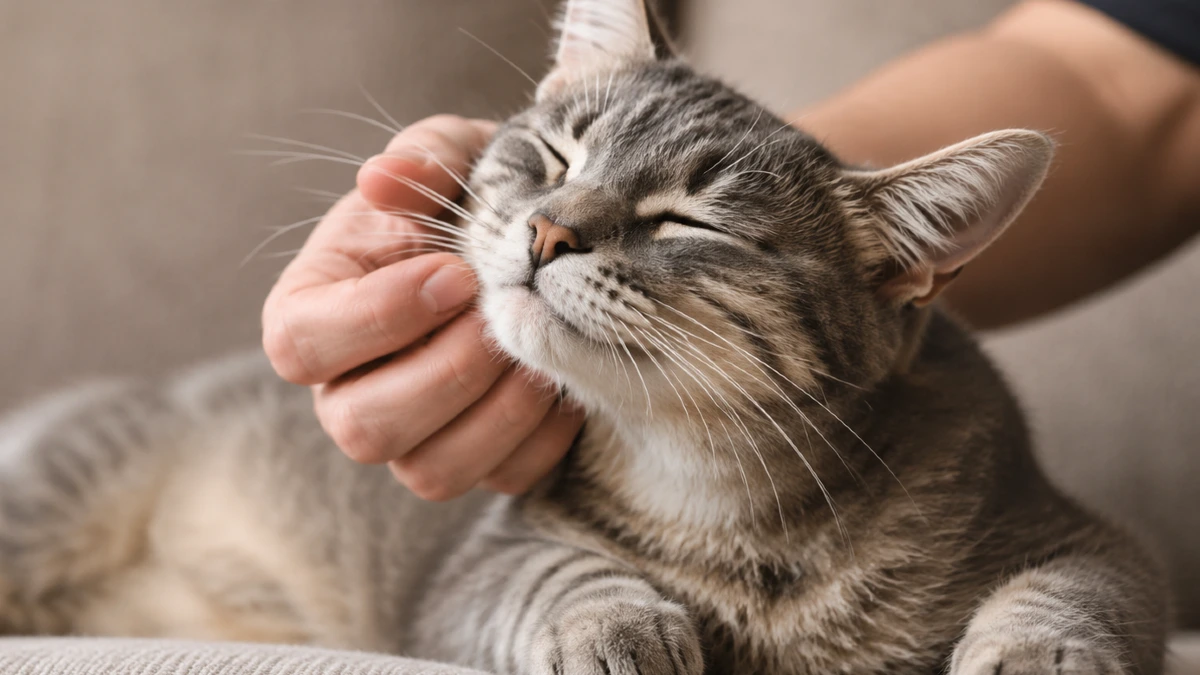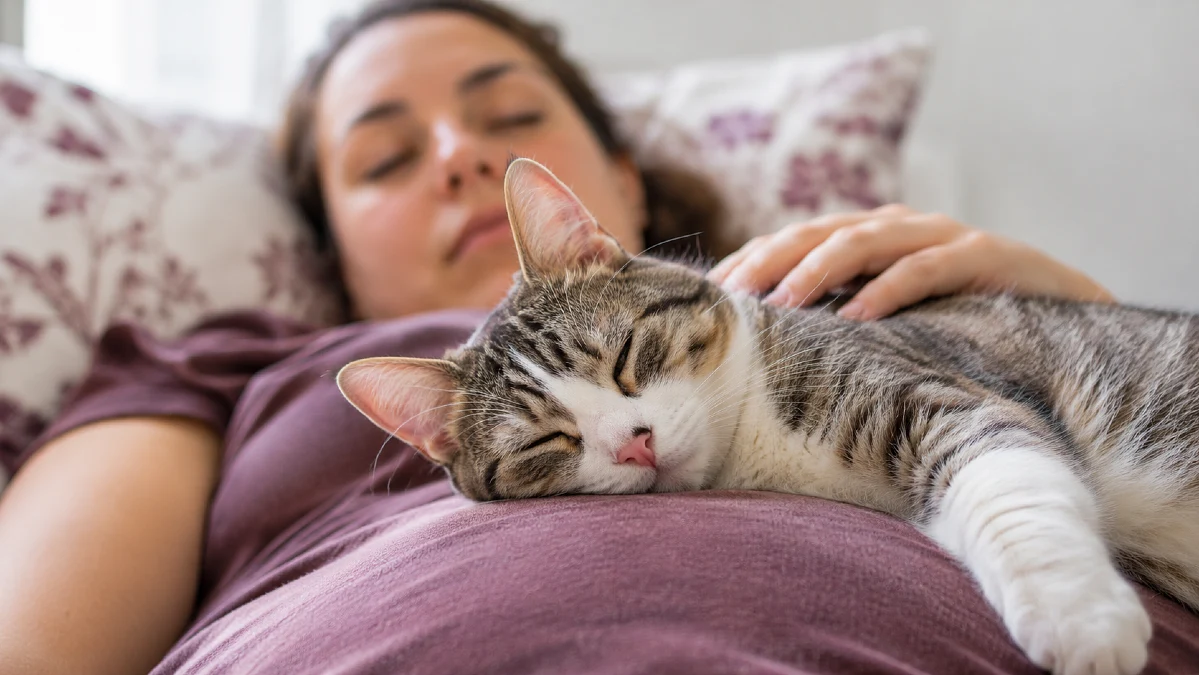
You are sitting on the sofa with a cup of tea when your cat jumps up beside you. Your cat looks at you, slowly closes its eyes, and then turns its back on you. Suddenly, you start wondering whether your cat really loves you or simply enjoys having a comfortable place to sit.
If you have ever questioned your cat’s feelings, you are certainly not alone. Cats can be affectionate one moment and distant the next, leaving you confused about what their behavior actually means. Some cats love cuddling, while others prefer to stay nearby without being touched.
The good news is that there are several signs your cat loves you, even when those signs are easy to miss. Cats communicate through their eyes, body movements, sounds, and everyday habits. Once you know what to watch for, many of their strange little actions start making more sense.
1. Your Cat Slow Blinks at You When They Feel Safe
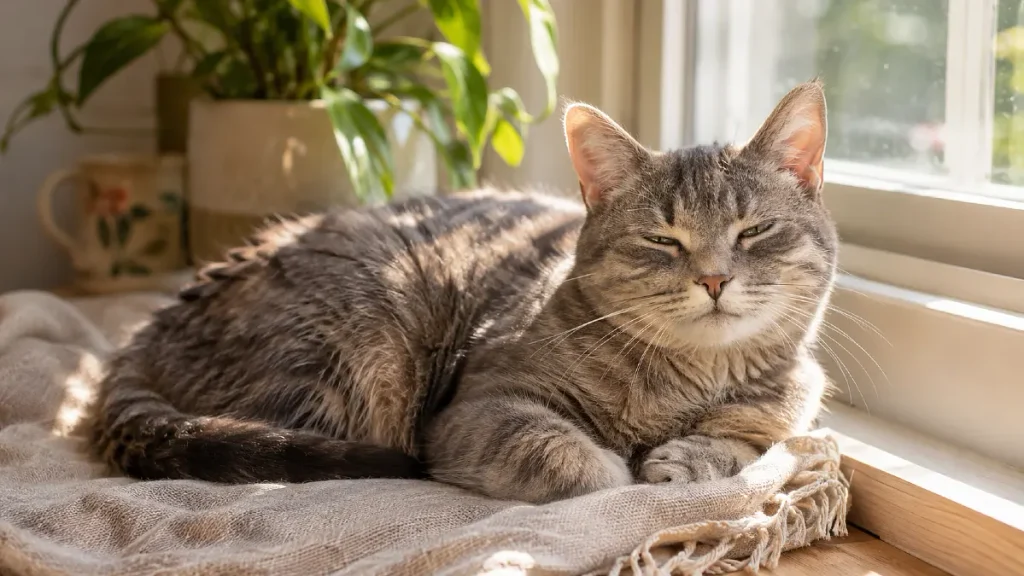
Have you ever noticed your cat looking directly at you before slowly closing its eyes? It might hold its eyes partly closed for a moment before gently opening them again. This quiet behavior is often called a slow blink, and it can be a lovely sign of trust.
Cats usually keep a close watch on their surroundings when they feel unsure. When your cat looks at you with relaxed eyes and slowly blinks, it may be showing that it feels comfortable in your presence.
A 2020 study published in Scientific Reports found that slow blinking plays a role in positive communication between cats and humans. The researchers also found that cats were more likely to approach a person after that person used a slow blink compared with a neutral expression.
You can try this simple way of communicating with your own cat. When your cat is relaxed, soften your gaze, slowly close your eyes, and open them again without staring.
Your cat might return the slow blink, look away peacefully, or simply continue resting. All of these can be normal responses, so there is no need to force the interaction.
The important clue is the relaxed expression around the eyes. If your cat also has loose body muscles and comfortable ears, the slow blink becomes an even stronger sign that it feels safe around you.
2. Your Cat Purrs Near You With a Relaxed Body
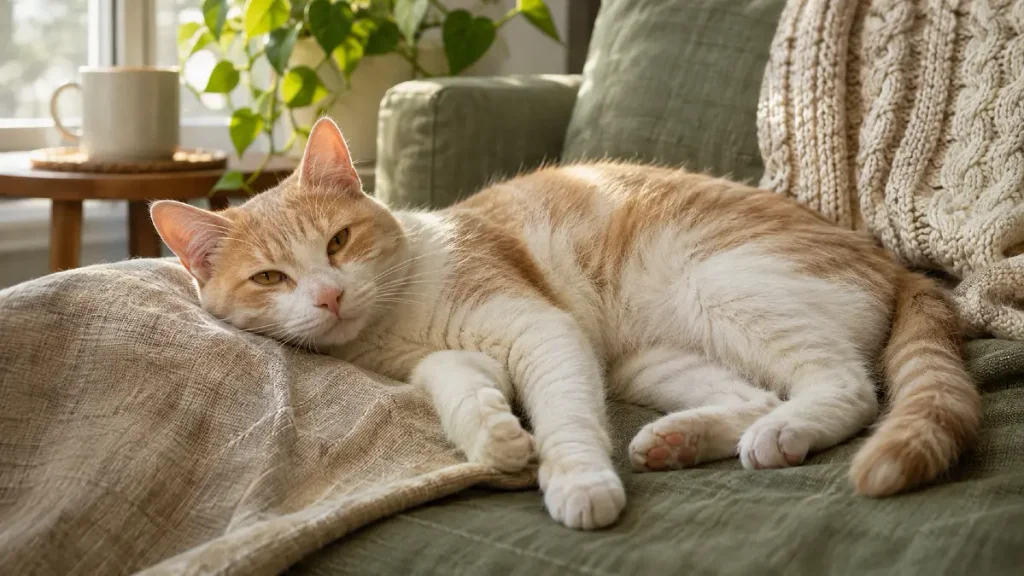
Your cat climbs onto the sofa, settles beside your leg, and begins purring softly. You have not offered food or picked up a toy, yet your cat seems perfectly happy to stay there. This can be one of the sweetest ways your cat shows comfort around you.
Purring often happens when cats feel relaxed and content. If your cat chooses to rest beside you while purring, your presence may be part of what makes that moment pleasant.
However, purring does not always mean a cat is happy. Cats can also purr when they feel nervous, stressed, or unwell.
Cats Protection explains that you need to consider the rest of your cat’s body language before deciding what purring means. A relaxed cat usually looks different from one that is tense or uncomfortable.
What Your Cat’s Purr May Mean
The sound alone cannot tell you everything. Look at your cat’s posture, behavior, and surroundings to decide how to respond.
| Body language | Possible meaning | What to do |
|---|---|---|
| Loose body, soft eyes | Feeling content | Stay calm |
| Rubbing and seeking attention | Wants interaction | Offer gentle petting |
| Crouching with tense ears | Feeling stressed | Give space |
| Hiding and eating less | Possible illness or pain | Contact your vet |
A happy cat may purr while enjoying your company, but it should still have the choice to leave. If your cat leans into a gentle cheek stroke, you can continue briefly and stop when it moves away.
Pay attention to any sudden changes in purring or behavior. A cat that begins hiding, refuses food, or seems unusually uncomfortable needs more than affection and may require veterinary care.
3. Your Cat Follows You From Room to Room
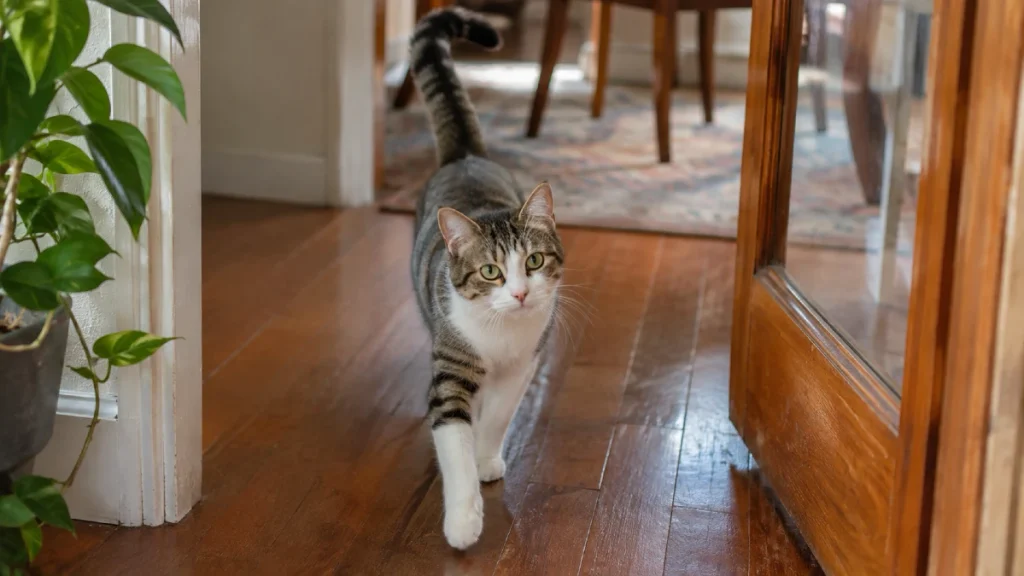
You walk into the kitchen, and your cat appears a few seconds later. Then you head to the bedroom, and your cat follows you again. Even a closed bathroom door might bring a chorus of meows from the other side.
If this sounds familiar, your cat may enjoy keeping you close. Following a favorite person is one of the common behaviors associated with feline affection and social attachment.
PetMD describes following people around the home as one possible sign that a cat enjoys and trusts its human companion. Some cats simply prefer to know where their favorite person is spending time.
However, cats also follow people because they are curious, hungry, or familiar with daily routines. Your cat might know that walking into the kitchen means dinner is coming.
The difference often appears in what happens next. If your cat follows you into a room, settles comfortably, and stays without asking for anything, it may simply enjoy your company.
You do not need to reward every appearance with treats or attention. Speak gently when your cat approaches, and allow it to decide whether it wants to stay.
A cat that follows you should also feel comfortable spending time alone. Provide cozy resting areas, toys, and safe places to explore when you are busy.
If your cat suddenly becomes unusually clingy, especially with changes in eating, sleeping, or activity, speak with your veterinarian. A sudden change in behavior can sometimes signal stress or illness rather than increased affection.
4. Your Cat Turns Their Back on You Without Worry
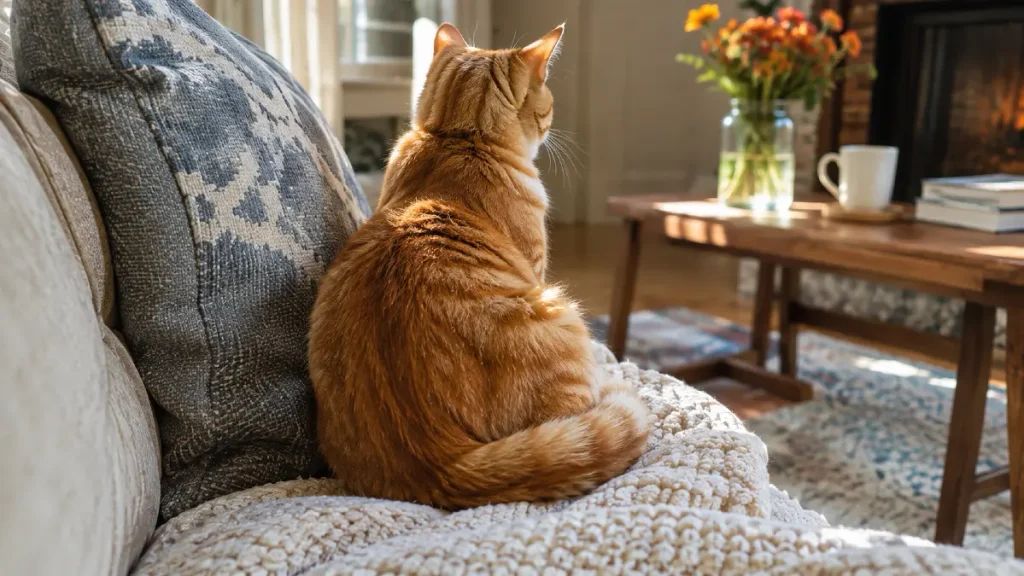
Your cat jumps onto the sofa, sits close to you, and then turns around. Instead of facing you, it settles with its back pointed directly at you. You might wonder whether your cat is ignoring you or asking you to leave.
Surprisingly, turning away is not always a sign of rejection. In many situations, a relaxed cat simply feels comfortable enough to look somewhere else.
Cats communicate differently from humans. While people often use direct eye contact to show attention, prolonged staring can feel threatening to cats.
The Cat Fanciers’ Association explained in a September 2026 article that looking away can be part of calm, friendly feline communication. A cat may choose to sit close to someone it trusts without feeling the need to watch that person constantly.
Watch what your cat does while facing away from you. If its body is loose, its ears are comfortable, and it remains peacefully beside you, there may be no reason to worry.
You might also notice your cat relaxing into a comfortable sitting position or slowly closing its eyes. These additional clues make the situation easier to read.
Some people suggest that a cat turning its back means it expects you to protect it. That is an interesting idea, but the behavior alone does not prove that your cat has assigned you a protective role.
The best response is simple. Let your cat enjoy the space beside you without suddenly grabbing, hugging, or turning it around.
5. Your Cat Brings You Toys or Things They Have Caught
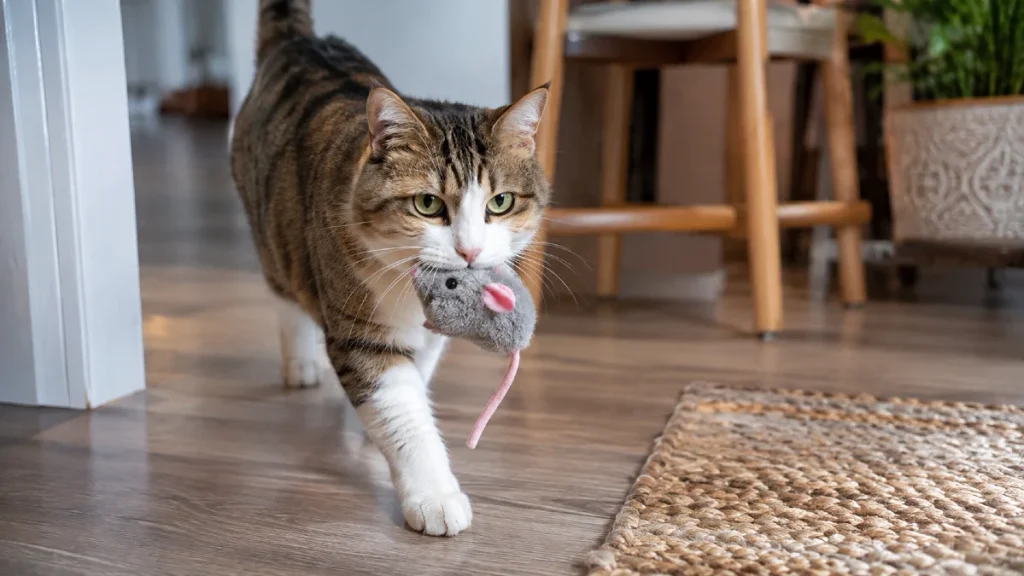
You wake up and discover a toy mouse sitting beside your pillow. Perhaps your cat has dropped a favorite ball near your feet or carried a stuffed toy into the living room. Some cats even bring home real insects, birds, or mice.
It can feel as though your cat has brought you a special present. While that is a popular way to describe the behavior, the real explanation is more complicated.
Cats have natural hunting instincts, even when they are well fed. Chasing, catching, carrying, and moving objects are normal parts of feline behavior.
Banfield Pet Hospital’s 2026 cat behavior guidance connects bringing objects home with hunting instincts and possible social bonding. However, researchers cannot confirm that every cat carrying prey intends to give its owner a present.
How to Respond When Your Cat Brings Something
Your response depends on what your cat has brought into the house. The goal is to keep everyone safe without frightening or punishing your cat.
| What they bring | Possible reason | Best response |
|---|---|---|
| Favorite toy | Play or carrying habit | Offer a game |
| Toy with meowing | Seeking attention | Respond calmly |
| Dead prey | Natural hunting behavior | Remove safely |
| Live prey | Unfinished hunting activity | Keep pets and people safe |
If your cat brings you a toy, try a short game using that toy or a wand toy. Interactive play gives your cat a healthy way to practice its natural hunting skills.
If your cat brings home real prey, avoid handling it with bare hands. Keep your cat away while you manage the situation safely, and seek local wildlife advice if a wild animal is injured or alive.
You never need to punish your cat for displaying normal hunting behavior. Instead, provide regular opportunities for safe indoor play and take steps to reduce its chances of catching wildlife.
6. Your Cat Licks You Like a Trusted Companion
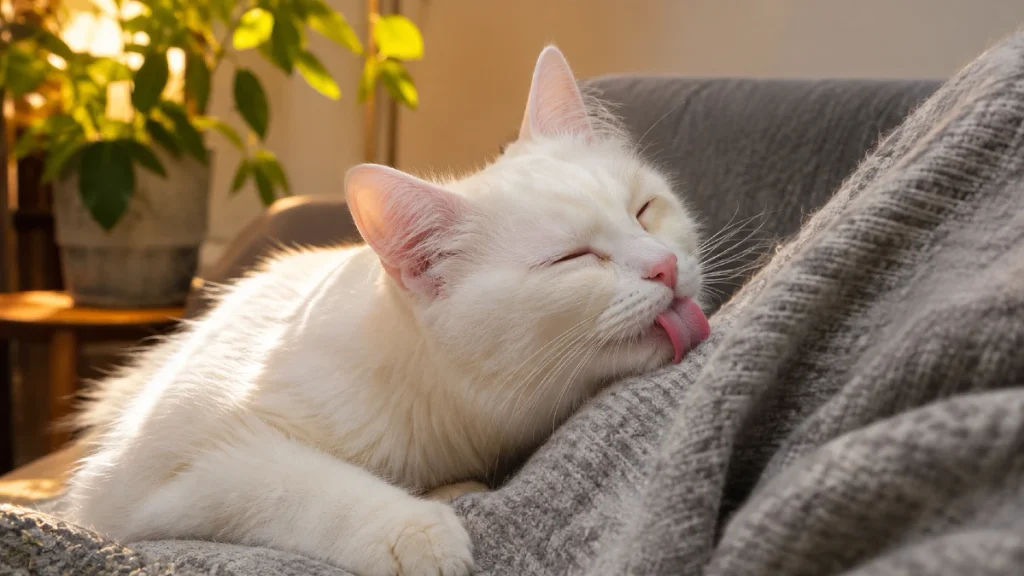
You are relaxing when your cat suddenly starts licking your hand or arm. Its rough tongue might feel strange against your skin, especially if the grooming continues for several minutes. But this little habit can sometimes have a social meaning.
Cats groom themselves to keep their coats clean, but they may also groom other cats they share close relationships with. This social behavior is called allogrooming.
Feline behavior guidelines from AAFP and ISFM describe grooming between cats as one of several behaviors associated with friendly social relationships. Cats often focus this grooming on the head and neck.
When your cat gently licks you during a relaxed interaction, it may be showing a similar form of social comfort. Your cat might have learned that grooming is part of spending time with someone familiar.
However, licking is not always about affection. Cats may also lick human skin because of its taste, including traces of salt.
If you enjoy the licking, you can allow a little of it as long as your cat remains relaxed. You can also offer a short cheek stroke if your cat welcomes touch.
Avoid letting your cat lick skin that has medication, cosmetics, or other potentially harmful products on it. If the licking becomes uncomfortable, calmly move your hand away and offer a toy instead.
The important part is that both you and your cat remain comfortable. Affection should never depend on forcing either of you into unwanted contact.
7. Your Cat Chooses to Sleep Near You
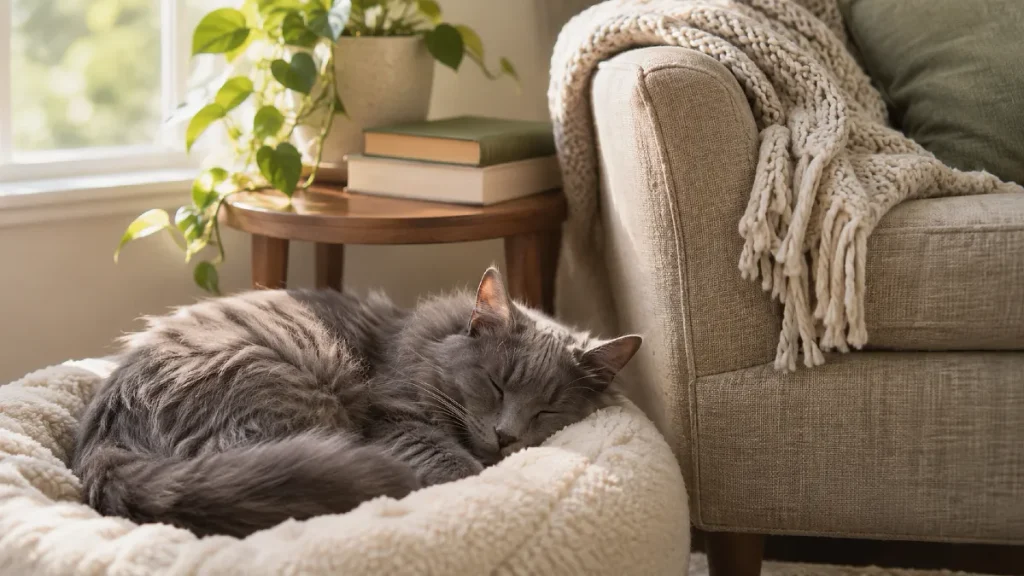
Your cat has several comfortable places to sleep, yet it keeps returning to the chair beside you. Sometimes it curls up near your feet, while other nights it sleeps on a nearby blanket. You might wonder why it prefers these places when the rest of the house is available.
Cats need safe, comfortable resting spots. When your cat regularly chooses to sleep near you, it may be showing that your presence is familiar and reassuring.
PetMD identifies sleeping near a trusted person as one possible sign of feline affection. Being close to someone a cat feels comfortable with can be part of its normal social behavior.
But here is something important that many cat owners miss. Your cat does not need to sleep directly on your body to feel close to you.
Some cats love sleeping against their owner’s legs, while others prefer a little space. Your cat might choose the opposite end of the bed because it is cooler, quieter, or simply more comfortable.
You can support this behavior by placing a soft cat blanket or bed near your usual resting place. Give your cat the freedom to choose where it wants to settle.
Avoid waking your cat just to cuddle or pet it. Rest is important, and respecting your cat’s sleeping space can help maintain a peaceful relationship.
If your cat normally sleeps beside you but suddenly begins hiding or avoiding familiar places, pay attention to other changes. A sudden shift in sleeping habits combined with signs of illness deserves a veterinary check.
8. Your Cat Quietly Stays in the Same Room as You

Here is the surprising sign that many cat owners overlook. Your cat might rarely climb onto your lap, follow you closely, or ask for petting, yet it still chooses to spend much of its day in the same room as you.
You might be working at your desk while your cat rests on a nearby chair. Later, you sit down to read, and your cat quietly settles on the cat tree across the room. It does not ask for anything, but it keeps choosing places where you are nearby.
Some owners describe this quiet behavior as having a sentinel cat. It is a useful nickname for a cat that likes to remain nearby and observe its surroundings, not a formal scientific category.
The Cat Fanciers’ Association discussed this kind of quiet companionship in its 2026 guidance about cats that appear distant. The article explains that choosing to share space without touching can be meaningful for cats that prefer less physical contact.
For these cats, being in the same room may be more comfortable than sitting on someone’s lap. Your cat can enjoy your company while still keeping control over how much contact it wants.
How to Read Quiet Cat Companionship
You can learn a lot by noticing where your cat chooses to spend its time. The following behaviors can help you decide whether your cat feels comfortable or may need some support.
| What your cat does | Possible meaning | What to check |
|---|---|---|
| Rests nearby | Comfortable sharing space | Relaxed posture |
| Watches from a chair | Curious or socially interested | Soft eyes and ears |
| Sleeps across the room | Comfortable resting nearby | Normal sleep habits |
| Chooses another room | Wants solitude | Normal daily behavior |
| Suddenly hides often | Possible stress or illness | Appetite and activity |
A cat that enjoys your company may choose to be near you without wanting any petting at all. That does not make the relationship less meaningful, especially when the behavior is relaxed and happens by choice.
The next time you are home, pay attention to where your cat settles throughout the day. Notice whether it often chooses the same room as you when other comfortable areas are available.
If your cat is resting peacefully nearby, you can acknowledge it with a gentle voice or a relaxed slow blink. There is no need to call it over or interrupt its quiet time.
Sometimes, one of the clearest ways a cat shows comfort with you is simply choosing to stay nearby. Your cat may be perfectly happy sharing your space without asking for anything else.
And for a quiet, independent cat, that can be a meaningful sign of trust.