Your cat follows you into the bathroom, sits beside you on the couch, and sometimes blocks your path for no clear reason. But when you reach down to pet her, she might walk away. It makes you wonder whether she actually loves you or simply likes having someone around to fill her food bowl.
Cats have their own ways of showing affection, and many of these signs are easy to miss. They may not greet you with the same excitement as a dog, but that doesn’t mean they feel less connected to you.
Research shows that cats can form close social bonds with people. They also learn familiar voices, routines, and the little things that make certain people feel safe to be around.
1. Why Your Cat Turns Her Back on Her Favorite Person
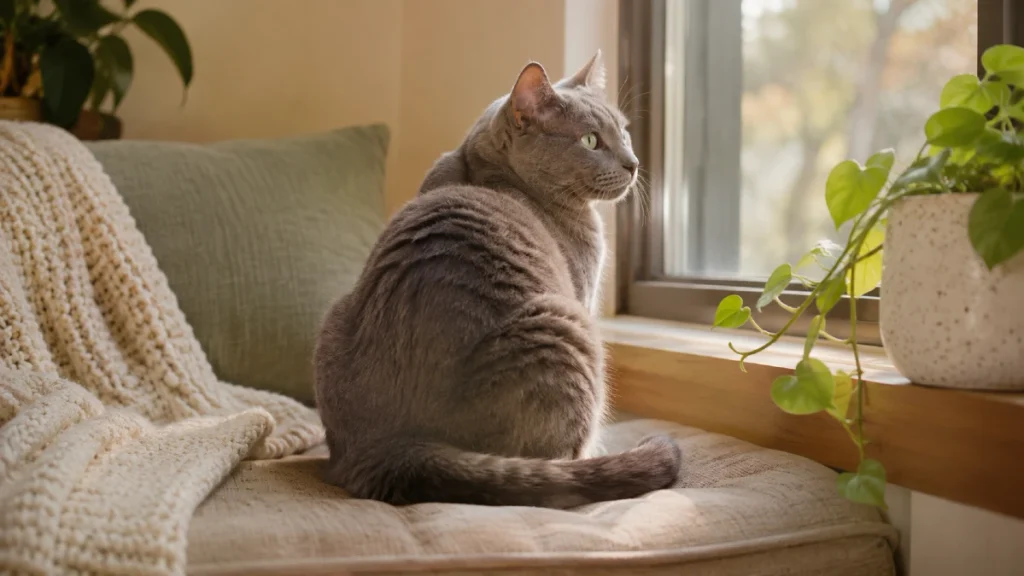
You’re relaxing on the couch when your cat jumps up beside you. She finds a comfortable spot, turns her back toward you, and closes her eyes. You might think she’s ignoring you, especially if you’ve been trying to get her attention.
But a relaxed cat sitting with her back toward you may actually feel very comfortable in your company. She doesn’t need to watch your every movement, and she’s happy to rest while you’re nearby.
Cats naturally pay close attention to their surroundings, especially when something feels unfamiliar. They often become more alert around strange sounds, new people, or animals they don’t know.
When your cat settles beside you, her relaxed posture can suggest that she feels secure in that space. Your familiar presence may be part of what makes the area comfortable.
How to Tell Whether Your Cat Really Feels Safe
The important clue isn’t simply which way your cat is facing. It’s what the rest of her body is telling you at the same time.
Merck Veterinary Manual explains that cats use body posture, distance, and social signals to manage their interactions. A relaxed cat generally looks quite different from one that feels threatened or uncomfortable.
| Body signal | Likely meaning | Best response |
|---|---|---|
| Loose body and relaxed ears | Comfortable | Let her rest |
| Eyes gently closing | Calm or sleepy | Keep things quiet |
| Tail resting loosely | Relaxed | Avoid disturbing her |
| Tail lashing quickly | Possible irritation | Give her space |
| Ears flattened backward | Fear or discomfort | Stop approaching |
Look at several signals together rather than judging one movement. A cat that turns away while resting peacefully is showing something different from a cat that turns away to avoid being touched.
What you should do: Let your cat enjoy sitting beside you without expecting constant affection. Sometimes sharing a quiet space is exactly the kind of contact she prefers.
And if she chooses that spot again tomorrow, it’s worth noticing. Your presence may have become part of her favorite resting routine.
2. Why Your Cat Blocks Your Path to Get Your Attention
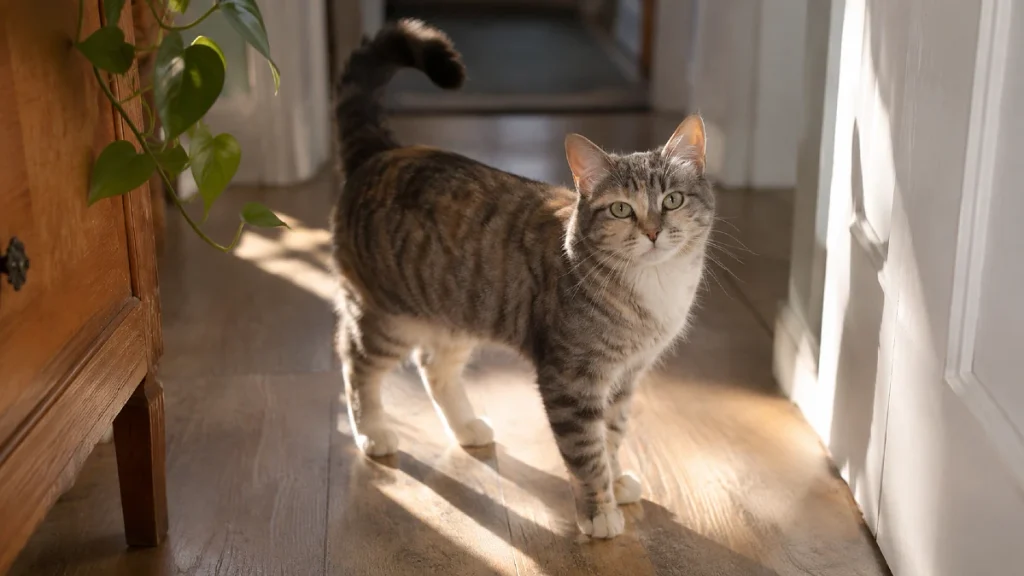
You get up from your chair and walk toward the kitchen. Before you reach the doorway, your cat appears and stretches across the floor. You step around her, but somehow she ends up directly in front of you again.
It’s easy to think she’s doing this just to make your life difficult. Yet standing or lying in your path can be one way your cat starts an interaction.
Cats quickly learn which behaviors get a response from the people around them. If stopping in front of you makes you speak, laugh, offer a treat, or bend down to pet her, she may repeat it.
That doesn’t mean every roadblock is a request for affection. Sometimes your cat expects food, wants to play, or simply finds your movement interesting.
Why Your Attention Matters to Your Cat
A 2017 study published in Behavioural Processes by Kristyn Vitale Shreve and her colleagues explored what cats preferred when given different choices.
The researchers compared human interaction, food, toys, and scent items. Human interaction was the top choice for about half of the cats tested, showing that contact with people can be very rewarding for many cats.
This doesn’t prove that a cat lying in your hallway is asking for love. But it does challenge the idea that cats are interested in people only because people provide food.
Pay attention to what happens after your cat stops you. Does she rub against your legs, lift her tail, or look toward a toy?
Those details may help you figure out what she wants. A cat that leads you toward her food bowl may have a different goal from one that rolls onto her side and waits nearby.
How to Respond Without Encouraging Unsafe Behavior
You don’t need to ignore your cat when she approaches you. But you should avoid teaching her that sitting directly beneath your feet is the best way to get attention.
Try calling her to a nearby safe spot before greeting her. When she moves away from your path, reward her with a few calm words or a little attention if she wants it.
If she seems eager to play, offer a toy rather than stepping around her repeatedly. Regular play sessions can give her another way to ask for your company.
The real sign of affection is the repeated choice to interact with you. Your cat may enjoy the attention she gets when you respond, even when she isn’t asking for anything else.
3. Why Your Cat Scratches Furniture While Looking at You
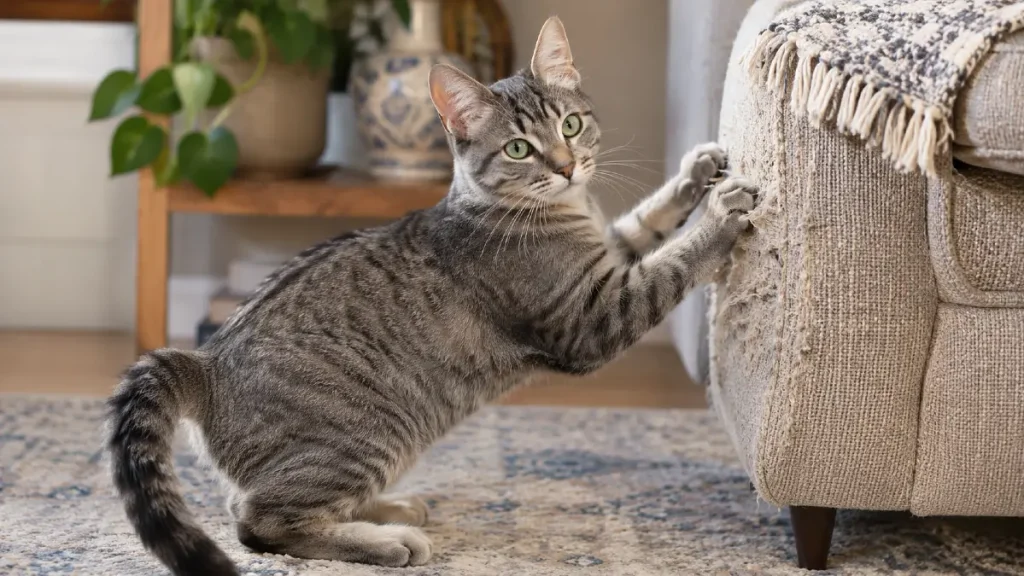
Your cat walks over to the couch, looks directly at you, and begins scratching the side of it. She stretches her front legs, digs in her claws, and takes her time. Meanwhile, you’re watching another piece of furniture take damage.
It almost seems personal, especially when she chooses to do it right in front of you. But scratching is a normal cat behavior, and she isn’t necessarily trying to upset you.
Cats scratch to care for their claws, stretch their bodies, and leave marks in their surroundings. Those marks include visible scratches and scents released from glands in their paws.
The American Association of Feline Practitioners explains that scent marking helps cats interact with their environment. Familiar smells and marked surfaces can be important parts of a cat’s home territory.
So when your cat repeatedly scratches the furniture in the room where you spend most of your time, that area may be important to her. It doesn’t mean she’s deliberately marking you as her favorite person, but it can show how much she uses and values that shared space.
Why She Sometimes Watches You While Scratching
If your cat looks at you while scratching, she may simply be aware of what you’re doing. She might also have learned that scratching the couch gets your attention very quickly.
Neither explanation means she’s being spiteful. Cats don’t need to dislike someone to develop a scratching habit that causes problems for the household.
A more useful question is why she’s choosing that particular spot. Cats often return to surfaces that feel good beneath their claws or already carry familiar scratch marks.
How to Give Her a Better Place to Scratch
The ASPCA and Cornell University recommend offering scratching surfaces that match a cat’s preferences. Some cats enjoy upright posts, while others prefer flat cardboard pads.
| Scratching habit | Suitable surface | Best placement |
|---|---|---|
| Scratches sofa arms | Tall sisal post | Beside the sofa |
| Scratches rugs | Flat cardboard pad | Near favorite rug |
| Scratches after waking | Stable scratching post | Near sleeping area |
| Scratches in several rooms | Multiple scratchers | Regular scratching spots |
Placement matters just as much as the type of scratching surface. A wonderful scratching post hidden in a quiet corner may be less useful than a simple one placed beside the couch.
For a cat that enjoys standing upright, the SmartCat Ultimate Scratching Post is one example of a tall sisal scratching option. Cats that prefer scratching while stretched out may enjoy a cardboard surface such as the PetFusion Ultimate Cat Scratcher Lounge.
Avoid punishing your cat for scratching. Instead, reward her when she uses an appropriate surface and gently redirect her away from furniture.
What this behavior really means: Your cat is carrying out a natural activity in a place that matters to her. Giving her a suitable scratching area lets her keep that familiar routine without damaging your home.
4. Why Your Cat Follows Her Favorite Person Everywhere
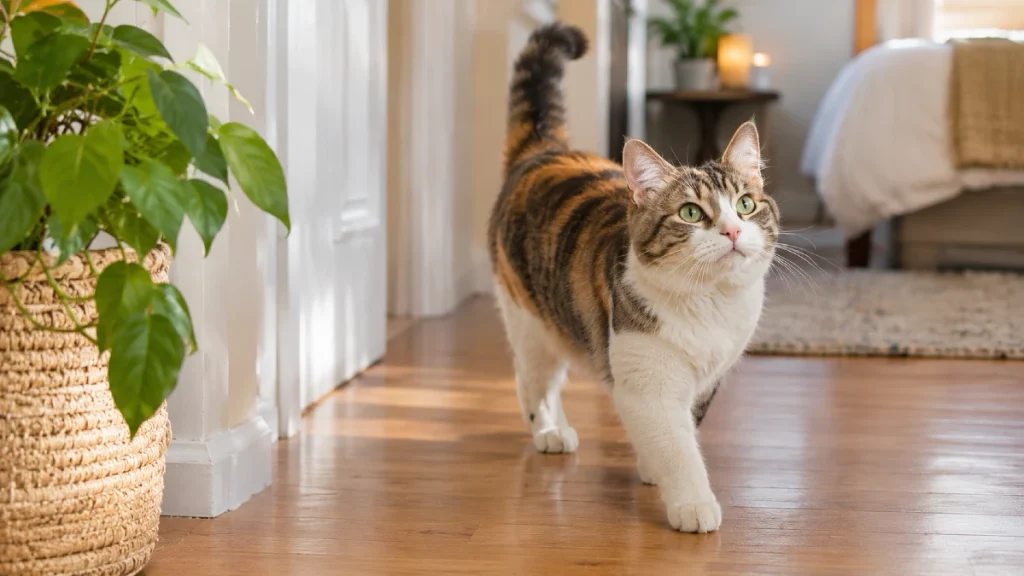
You walk into the kitchen, and your cat follows you. Then you go to the laundry room, and a few seconds later, there she is again. Even when you head to the bathroom, she somehow ends up waiting outside the door.
Food might explain why she follows you into the kitchen. But what about the rooms where there’s nothing to eat and nothing especially interesting to do?
For some cats, the answer is simple companionship. They like being near certain people, even when nobody is playing, feeding, or petting them.
A cat doesn’t have to sit on your lap to enjoy your company. Sometimes she just wants to settle on the other side of the room while you go about your day.
What Research Says About Cats Staying Close
In 2019, researchers at Oregon State University published a study in Current Biology examining attachment patterns between cats and their caregivers.
The researchers found that many cats showed behaviors consistent with secure attachment. In these cases, the caregiver appeared to provide a sense of security during the test.
Scientists continue to study how feline social bonds differ from those of dogs and people. Still, research supports the idea that many cats form meaningful relationships with their human companions.
Your cat may follow you because she feels comfortable in your company. She might also be curious about your activities or simply enjoy being wherever the household action happens.
The key is to notice what happens once she reaches you. Does she settle down, groom herself, and take a nap while you work?
A cat that regularly relaxes near you may value your presence without needing constant attention. She seems happy just sharing the room.
When Following You Could Mean Something Else
Not all following behavior is a sign of affection. A cat may also become more attached to your movements when she’s hungry, bored, worried, or experiencing a change in her environment.
If your normally independent cat suddenly refuses to leave your side, pay attention to other changes. A different appetite, unusual vocal sounds, trouble using the litter box, or changes in activity may justify a veterinary check.
But if your cat has always followed you and seems otherwise happy, there’s usually no reason to worry. You can support her social needs while still giving her places to rest independently.
A comfortable cat bed, window perch, or quiet resting spot can help. She can choose to stay close to you or spend time alone whenever she prefers.
The sweetest part is that she doesn’t always need something from you. Sometimes your cat simply chooses to be in the same room because she enjoys having you around.
5. Why Your Cat Brings You Toys, Socks, or Caught Prey
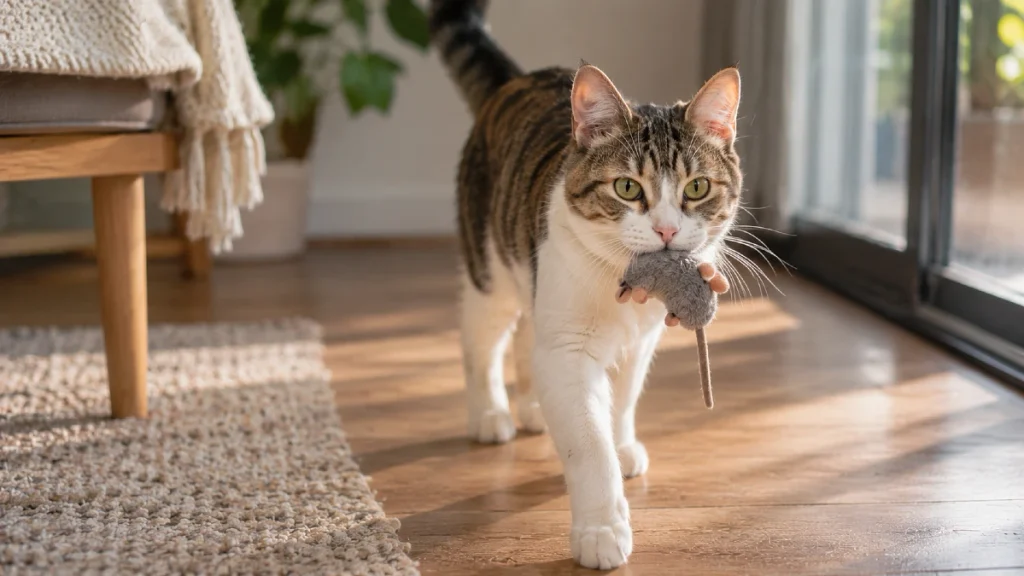
You wake up and find a small toy mouse beside your pillow. On another day, your cat drags a sock across the room and drops it near your feet. Then she looks at you as though something important has just happened.
Some cat owners receive even stranger surprises. An outdoor cat might arrive with a leaf, an insect, or a small animal she’s caught.
These deliveries are often described as gifts from a loving cat. Although that explanation sounds sweet, feline behavior is a little more complicated.
What Your Cat May Be Doing
Cats are natural hunters, even when they eat regular meals and live comfortable lives. Chasing, catching, carrying, and moving objects are all related to behaviors cats may use when hunting.
Cats Protection explains that cats often bring prey home because the house is a familiar, secure place. They may want to keep their catch somewhere they feel safe rather than present it as a gift to a person.
Mother cats do bring prey to their kittens as part of feeding and teaching them. However, there isn’t strong evidence that an adult pet cat brings a mouse to her owner because she thinks the owner cannot hunt.
Carrying toys is slightly different. Some cats learn to bring toys to people because it starts a fun game.
Research on fetching behavior in cats shows that some cats initiate play by bringing objects to their owners. If your cat repeatedly brings you a toy and waits for you to throw it, she may be inviting you to play.
What You Should Do When Your Cat Brings Something
Your response should depend on the item your cat has brought. A soft toy doesn’t need the same treatment as a wild animal.
| Item brought | Possible reason | Safe response |
|---|---|---|
| Toy mouse | Play or hunting activity | Offer a game |
| Sock | Curiosity or play | Check and put it away |
| Leaf | Interesting object | Remove if unsafe |
| Dead prey | Hunting behavior | Wear gloves and dispose safely |
| Live or injured prey | Hunting behavior | Separate cat and contact wildlife help if needed |
The most important rule is to stay calm. Shouting at your cat for natural hunting behavior can frighten her without teaching her what you want instead.
If she brings a toy, you can respond with a short game. If she brings prey, handle the situation safely and prevent further contact between your cat and the animal.
How to Encourage Safer Hunting Games
If your cat regularly catches wildlife, try giving her more chances to express hunting behavior through play. Indoor activities allow her to chase and pounce without harming birds or other animals.
A feather wand such as Go Cat Da Bird can encourage active play when used under supervision. Move the toy like prey, let your cat catch it sometimes, and put it away afterward.
You can also use puzzle feeders or small toys she can carry around the house. These provide other outlets for curiosity and natural cat behavior.
What this behavior really means: Your cat may be bringing an object into a place where she feels secure, or she may be trying to start an activity with you. Either way, calmly responding to her needs can help build a better relationship.
6. Why Your Cat Quietly Comes Close When You Feel Sad
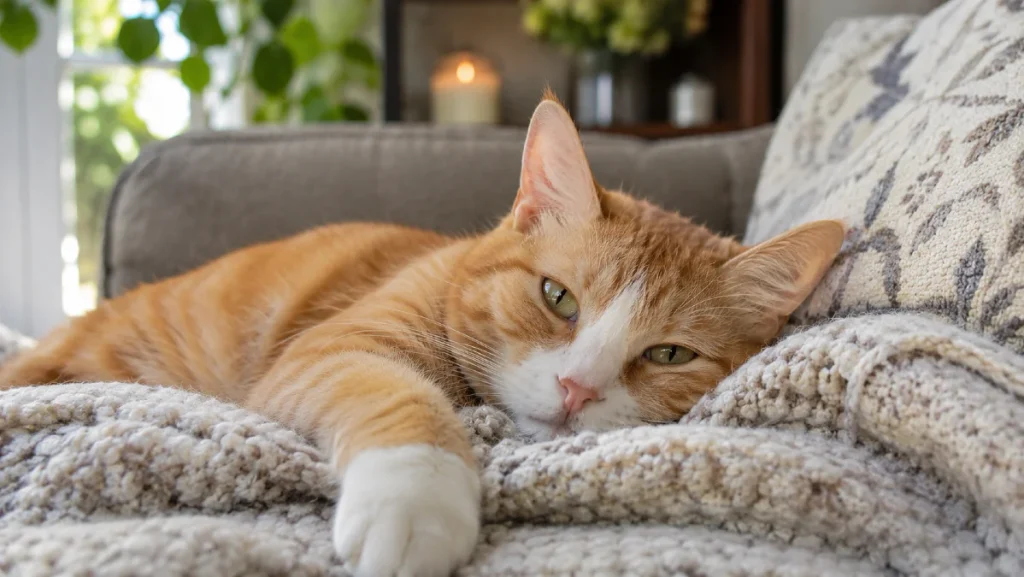
You’ve had a difficult day, and you’re sitting quietly on the couch. Your cat has been sleeping across the room, paying little attention to what you’re doing. Then she gets up, walks over, and settles beside you.
She doesn’t demand food or start playing. She simply stays close, perhaps resting against your leg or curling up beside you.
Moments like this can feel surprisingly comforting. They also raise an interesting question: Can cats tell when you’re feeling sad?
Can Cats Recognize Human Emotions?
Research suggests that cats can notice some changes in human emotional signals. They may respond to differences in voice, facial expression, and behavior.
In 2015, researchers Moriah Galvan and Jennifer Vonk studied how cats responded to human emotional cues. They found that cats showed some sensitivity to emotions, especially signals coming from their owners.
A separate study published in 2020, called Emotion Recognition in Cats, found evidence that cats can match certain human vocal sounds with emotional facial expressions.
That doesn’t mean your cat knows exactly what you’re thinking. It also doesn’t prove that every quiet approach is a deliberate attempt to comfort you.
Your cat may notice changes in your movements, voice, or routine. She may also approach because you’re sitting still in a familiar, comfortable place.
How to Tell Whether She Wants to Comfort or Simply Rest
Whatever brought your cat over, her body language can help you decide whether she wants interaction. Gentle contact is welcome only when she seems comfortable receiving it.
| Behavior | Reassuring clues | Caution signs |
|---|---|---|
| Walks over slowly | Loose body and relaxed ears | Low, tense posture |
| Sits beside you | Settles and rests | Repeatedly tries to leave |
| Rubs against your hand | Returns for more contact | Pulls away or swats |
| Stays quietly nearby | Calm breathing and posture | Restless movement or hiding |
A cat that settles comfortably beside you may be enjoying the same peaceful moment you are. But if she moves away or becomes tense, let her choose a different spot.
Research published in the Journal of Feline Medicine and Surgery in 2026 examined how different kinds of owner interaction affected cats. In a small study of 20 cats, passive interactions were linked with more favorable stress and bonding hormone changes than forced interactions.
This supports a simple rule: Let your cat choose how close she wants to be. You don’t need to pick her up or hold her tightly to appreciate her company.
If she approaches, speak softly and offer your hand for her to investigate. When she rubs against you, a gentle scratch around her cheeks or the base of her ears may be welcome.
Sometimes the most meaningful part of the moment is that she chose to come over. Whether she’s responding to your mood or simply enjoying your company, the connection can still be special.
And when she stays beside you during a difficult evening, you can enjoy that quiet comfort without needing to explain every part of her behavior.