Have you ever wondered why your cat seems to trust some people immediately but keeps its distance from others? Maybe your cat follows you from room to room but walks away when you try to pet it. You feed it, care for it, and give it a comfortable home, yet you still wonder whether it truly likes you.
Cats notice far more about your daily behavior than you might realize. They learn your routines, recognize familiar voices, and respond to how you treat them. Even small things, like how you approach them or react when they want space, can influence how comfortable they feel around you.
But how do cats decide you’re a good person? They cannot judge human character the way we do, but they can learn which people make them feel safe and secure. Their behavior often reveals how much they trust someone.
How Cats Decide You’re Safe by Watching Your Approach
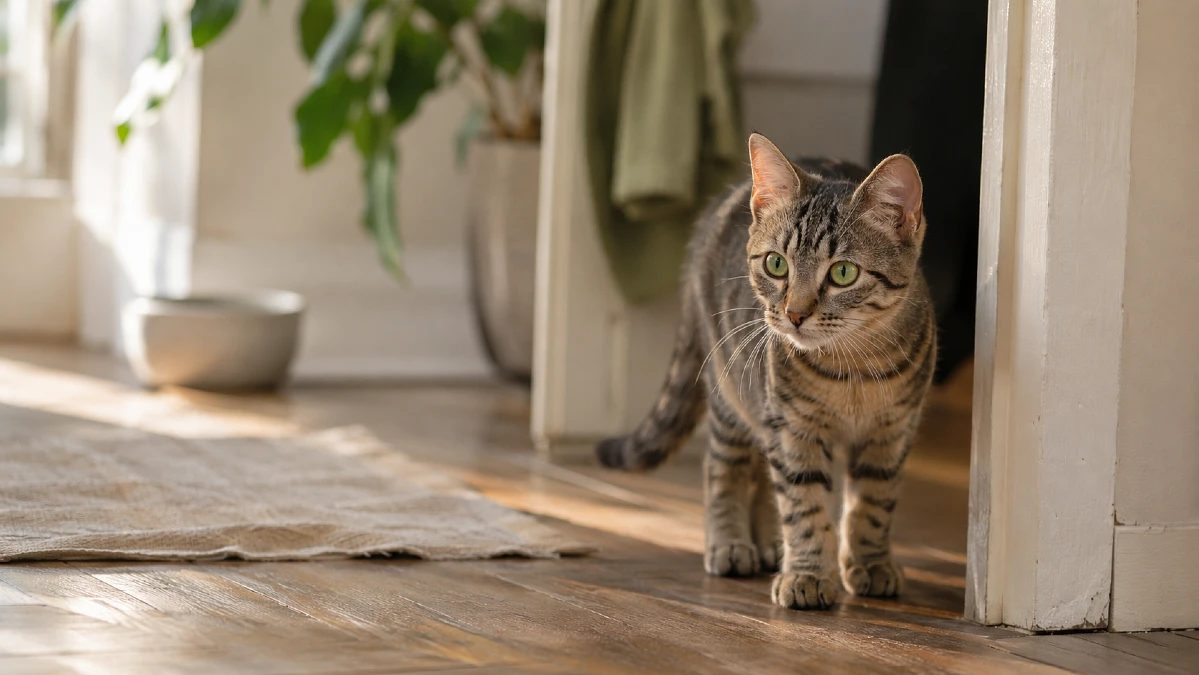
Your cat may notice how you approach long before you reach out to pet it. Quick movements, sudden noises, and unexpected touching can make even a friendly cat feel nervous. What seems like an excited greeting to you might feel overwhelming to your cat.
Cats often feel more comfortable when people move slowly and give them enough space to react. If you rush toward your cat every time you see it, it may start avoiding those interactions. That does not necessarily mean it dislikes you.
Instead, try approaching at a relaxed pace and letting your cat notice you first. Keep your movements gentle, especially when your cat is sleeping, eating, or resting in a quiet corner.
Why Your Body Language Matters
Cats Protection recommends paying attention to a cat’s body language and avoiding direct, intense staring. A relaxed posture and soft eyes can make your presence less threatening.
You can also sit nearby rather than standing directly over your cat. This gives it a chance to observe you and decide whether it wants to come closer.
If you are unsure how your movements might affect your cat, the following comparisons can help. Every cat has different preferences, so watch its reaction rather than expecting one response.
| Your Behavior | Possible Cat Reaction | Better Approach |
|---|---|---|
| Rushing toward it | Moves away or hides | Approach slowly |
| Reaching over its head | Ducks or becomes tense | Offer a hand nearby |
| Staring directly | Becomes watchful | Use soft eyes |
| Sitting quietly | May investigate | Let it approach |
The common lesson is that your cat needs a chance to feel comfortable before contact begins. Giving it a choice is often more helpful than trying to show affection immediately.
Try this today: When your cat enters the room, stay relaxed and allow it to approach you. If it comes close, offer your hand gently and wait to see what happens.
Your cat may sniff you, rub against you, or simply continue walking. Respecting any of those responses can help make future interactions more comfortable.
Why Letting Your Cat Make the First Move Builds Trust
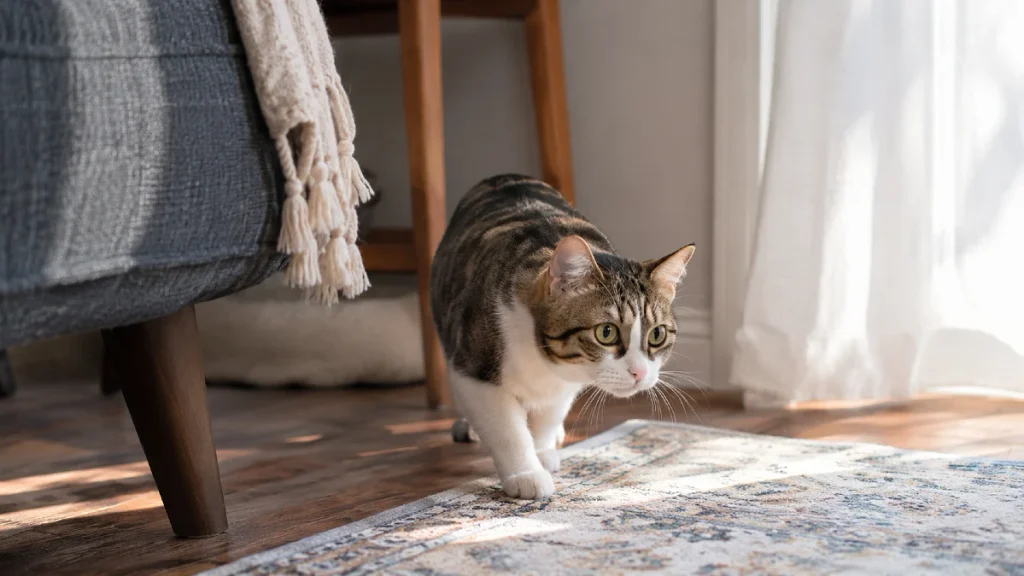
Does your cat sometimes approach you for attention and then leave after a few seconds? That behavior can feel confusing, especially when you want to spend more time together. However, allowing your cat to control the interaction is an important part of building trust.
Cats have individual preferences about how much physical contact they enjoy. Some love being stroked for several minutes, while others prefer brief contact or simply sitting nearby.
One of the most useful ways to earn a cat’s trust is to let it choose when affection happens.
Research published in Frontiers in Veterinary Science in 2021 examined practical guidelines for interacting with cats. The study found benefits when people gave cats more choice, paid attention to their behavior, and limited touching to areas cats generally prefer.
Let Your Cat Decide When Touch Begins
Start by sitting comfortably near your cat without reaching for it. If it approaches, offer a relaxed hand and give it time to investigate.
If your cat rubs its cheek against your hand, it may be welcoming gentle contact. If it only sniffs your hand and walks away, let it leave without following.
This is especially important when handling shy cats or newly adopted cats. They may need more time to become comfortable around people, particularly if they have had limited positive human contact.
Picking up a cat without warning can also remove its sense of control. Some cats enjoy being held, but others become tense or try to escape.
Avoid forcing your cat into your arms just because you want a cuddle. Instead, build positive experiences through activities it enjoys, such as quiet companionship or interactive play.
Over time, your cat can learn that approaching you does not mean it will be grabbed or held against its wishes. That confidence may make it more willing to spend time close to you.
How Your Voice Helps Your Cat Decide Whether to Trust You

Your cat might seem to ignore everything you say, but that does not mean it fails to recognize your voice. Research suggests cats can identify familiar human voices and respond differently depending on how they are addressed.
In a 2013 study published in Animal Cognition, researchers Atsuko Saito and Kazutaka Shinozuka found that cats could distinguish their owners’ voices from unfamiliar human voices. Some cats responded through small movements of their ears or heads rather than approaching.
A separate study led by Charlotte de Mouzon in 2022 found evidence that cats can distinguish speech directed at them from ordinary speech, particularly when it comes from their owners.
These findings do not prove that cats can identify someone’s moral character through their voice. They do suggest that familiar voices are part of how cats recognize and interact with people.
Why a Calm Voice Can Help
Your cat may become more comfortable when your speech and behavior are familiar and predictable. Speaking gently during daily interactions can help avoid unnecessary stress, especially around nervous cats.
You do not need to speak in a special voice or remain cheerful all day. The goal is to avoid frightening your cat with sudden shouting or unpredictable reactions.
For example, consider what happens when your cat jumps onto a table. Yelling may startle it, but it does little to teach a safer alternative.
Instead, calmly guide your cat toward an appropriate place and reward the behavior you want to encourage. A cat perch near a window can provide a suitable alternative to climbing onto furniture.
You can also use a familiar greeting before feeding or playing with your cat. Repeating simple cues can help your cat recognize what is about to happen.
The important lesson is that consistency makes your behavior easier for your cat to predict. Familiar and gentle interactions can support the feeling of security that helps trust grow.
Why Respecting Your Cat’s Favorite Spaces Makes You Trustworthy
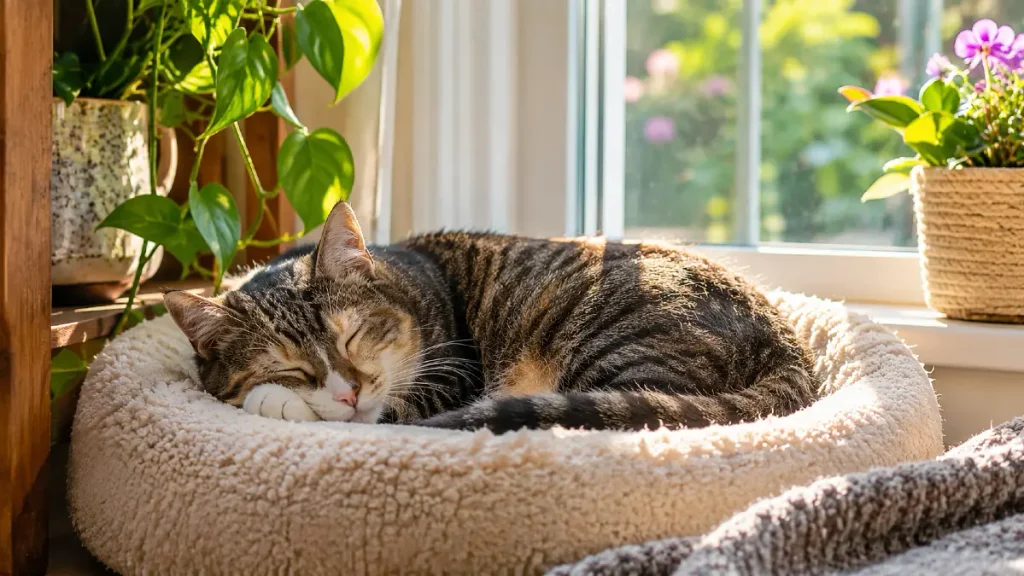
That quiet corner your cat loves might look ordinary to you, but it can be an important part of its daily comfort. Cats often rely on familiar places where they can rest, hide, and observe their surroundings without being disturbed.
A sunny windowsill, a comfortable chair, or a cardboard box can become a favorite resting place. These locations give your cat options when it wants privacy or a break from activity.
The American Association of Feline Practitioners and the International Society of Feline Medicine emphasize the importance of safe places and predictable resources in their Feline Environmental Needs Guidelines.
Their recommendations include providing suitable resting areas, scratching opportunities, and access to important resources such as food, water, and litter boxes.
Small Household Habits That Affect Cat Trust
You do not need an expensive cat tree or elaborate furniture to create a comfortable environment. A sturdy cardboard hiding box or a quiet sleeping area can be valuable when placed somewhere your cat feels safe.
What matters is providing suitable options and avoiding unnecessary disruptions to the spaces your cat relies on.
| Household Situation | Possible Concern | Better Option |
|---|---|---|
| Moving its bed often | Loss of familiarity | Keep a reliable resting spot |
| Changing feeding times | Less predictable routine | Maintain a regular schedule |
| Disturbing a hiding cat | Increased stress | Allow quiet retreat |
| Moving its litter box suddenly | Toileting problems | Keep it accessible and familiar |
| Loud activity near its bed | Interrupted rest | Provide a quieter area |
A stable environment gives your cat places to retreat when it wants to be alone. This is particularly helpful in homes with children, visitors, or other pets.
You should also avoid pulling your cat out of its hiding place unless it is necessary for safety or medical care. Allowing a nervous cat to come out when it feels ready is generally a gentler approach.
If your cat loves sleeping in a certain chair, consider giving it a comfortable blanket there. You can also provide a raised perch where it can watch household activity without being approached constantly.
Respecting your cat’s space does not mean ignoring it. It means recognizing that cats need both companionship and opportunities to spend time alone.
When your cat knows it can rest without being disturbed, your home becomes a more predictable place. That can make it easier for your cat to relax around you.
How to Recognize When Your Cat Is Asking You to Stop
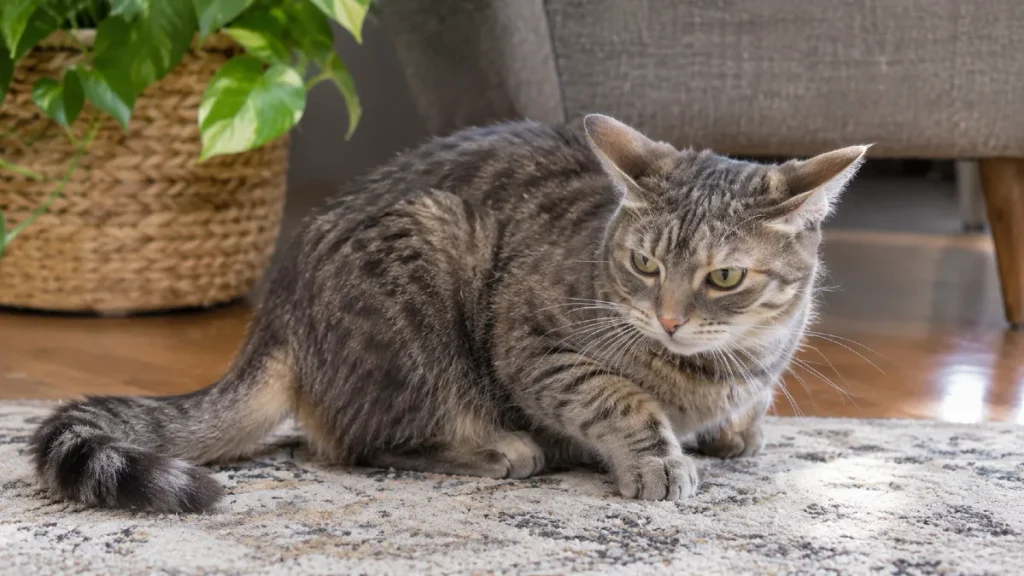
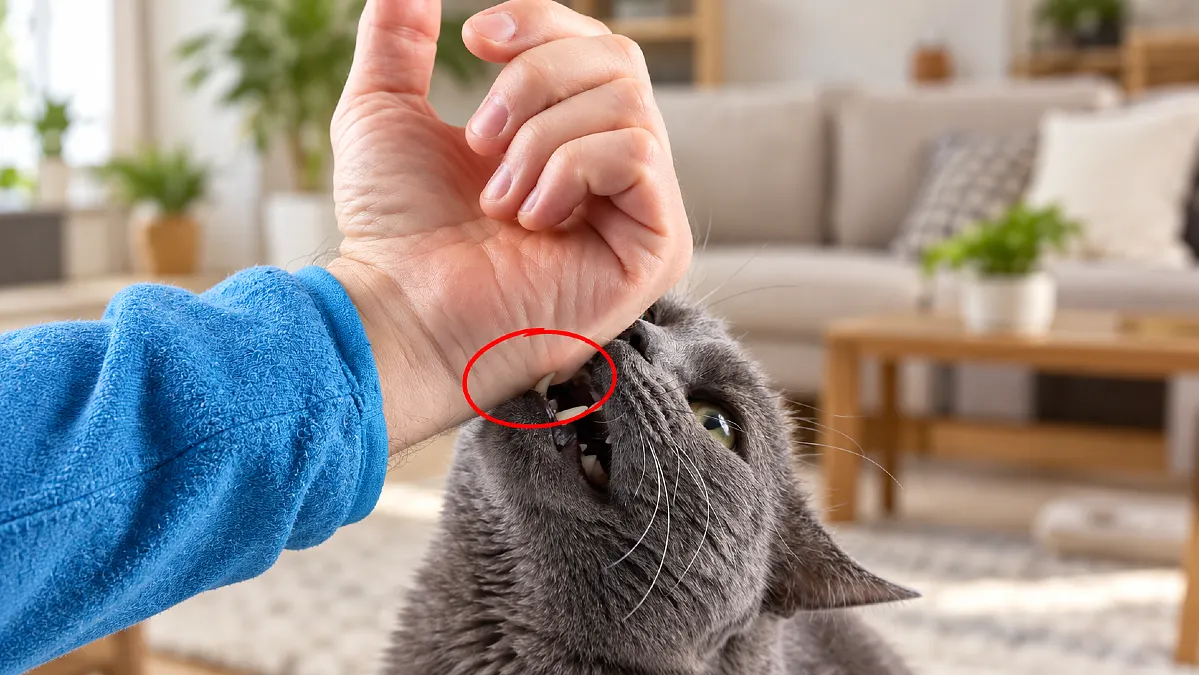
Have you ever been petting your cat when it suddenly turned around and tried to bite your hand? You may have thought the reaction came without warning. However, some cats show smaller signs of discomfort before they hiss, swat, or bite.
These signs can be easy to miss when you are focused on petting your cat. A moving tail, changing ear position, or tense body may indicate that your cat is becoming uncomfortable.
Cats Protection explains that body language should be read as a whole. One movement does not always reveal exactly how a cat feels, so you need to consider what is happening around it.
Your Cat’s Body Language Is Worth Watching
The following guide can help you decide whether to continue an interaction or give your cat more space. These signals are clues rather than fixed rules, and the same behavior can mean different things in different situations.
| Cat’s Signal | Possible Meaning | What You Should Do |
|---|---|---|
| Rapid tail swishing | Irritation or arousal | Pause touching |
| Ears flattened back | Fear or discomfort | Give more space |
| Stiff body | Tension | Stop and observe |
| Turning or walking away | Wants interaction to end | Let it leave |
| Gentle cheek rubbing | Friendly social contact | Offer brief attention |
| Hissing or swatting | Wants distance | Stop immediately |
The most helpful response is usually to notice discomfort before it becomes a stronger reaction. When your cat moves away or stiffens, stop touching it and allow it to settle.
It is also important to remember that purring does not always mean happiness. Cats may purr when relaxed, but they can also purr during stressful situations or when experiencing pain.
Learn Your Cat’s Personal Limits
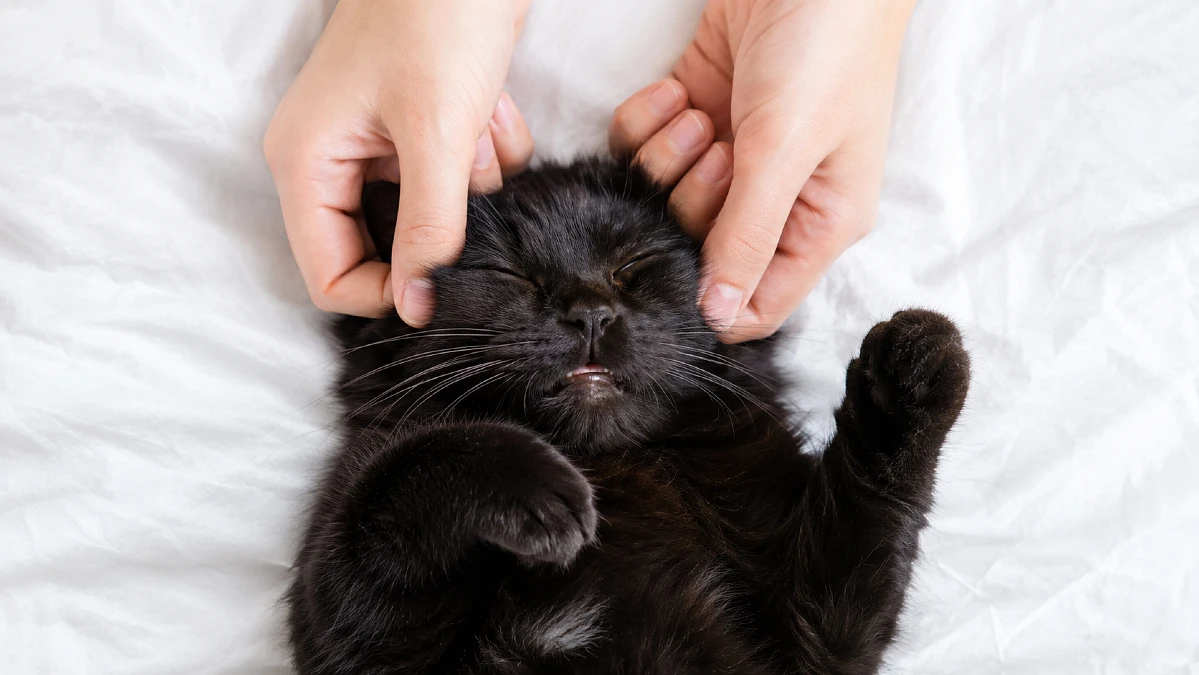
Some cats enjoy attention around their cheeks, forehead, and chin. Others may tolerate touching in additional areas, but many dislike having their belly, paws, or tail handled.
RSPCA New South Wales advises people to pause during petting and let the cat decide whether it wants more. If your cat leans back into your hand, you may continue gently.
If it turns away, stops engaging, or leaves, end the interaction. This can help your cat learn that it has a way to end physical contact without needing to bite or scratch.
Never punish your cat for showing fear or discomfort. Punishment can increase stress and may make future interactions more difficult.
If a normally affectionate cat suddenly becomes defensive, avoids touch, or starts hiding more than usual, contact your veterinarian. Pain and illness can change feline behavior, so do not assume the problem is simply a loss of trust.
Learning when to stop is a meaningful way to improve your relationship. It shows your cat that it can communicate its needs without being forced into unwanted contact.
How Cats Show Trust When You Respond to Their Signals
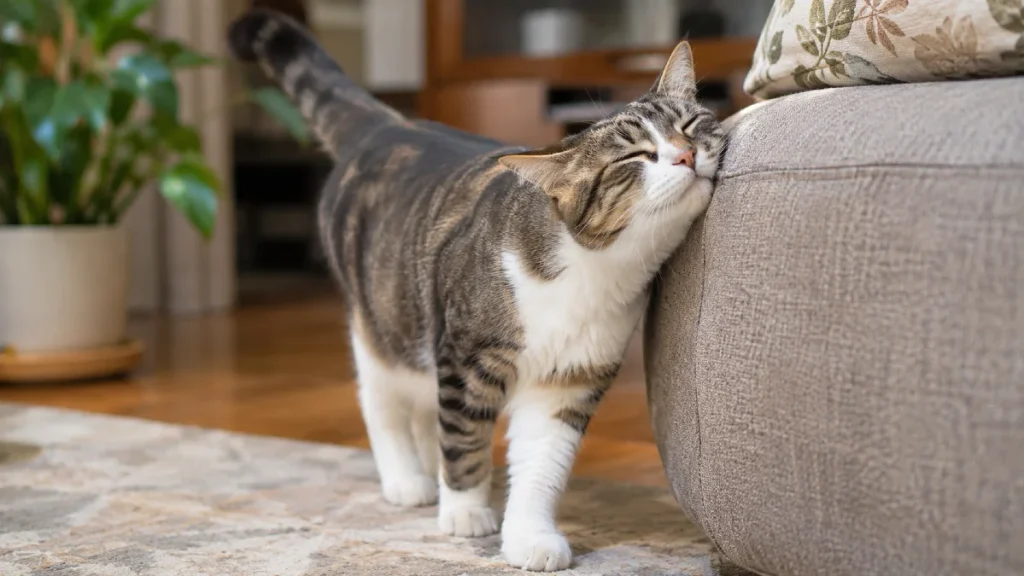
Your cat does not need to climb into your lap to show that it feels comfortable around you. Sometimes the clearest signs of trust appear during ordinary moments, such as sitting beside you or resting nearby.
Some cats rub their cheeks against familiar people, while others greet them with an upright tail. A relaxed cat may also look toward you and slowly close its eyes before opening them again.
These behaviors can be part of friendly feline communication. However, you should always consider your cat’s usual personality and the situation.
What a Slow Blink Can Tell You
Researchers at the University of Sussex studied slow blinking between cats and humans. Their research, published in Scientific Reports in 2020, found that cats were more likely to show slow blinking behavior after humans slowly blinked at them.
In another part of the research, cats were more willing to approach an unfamiliar experimenter following a slow blink interaction. The findings suggest that slow blinking can play a positive role in communication between cats and people.
You can try this with your own cat when it is calm and looking in your direction. Relax your face, slowly narrow your eyes, and gently open them again.
Avoid staring directly at your cat while waiting for a response. Some cats may return the slow blink, while others may simply look away.
A cat that does not slow blink back is not necessarily showing distrust. Some cats communicate affection through other behaviors, and an individual response does not provide a complete picture of your relationship.
Why Small Responses Can Strengthen Your Bond
Responding appropriately to your cat’s behavior can make social interaction more comfortable. The goal is to recognize what your cat is asking for rather than assuming every approach means it wants to be petted.
For example, your cat might sit beside your computer while you work. Instead of immediately picking it up, you can speak softly and let it settle nearby.
If your cat approaches with relaxed body language and rubs against you, try a few gentle strokes around its cheeks. Pause and see whether it asks for more attention.
You can also build positive experiences through play. A wand toy allows your cat to chase and pounce while keeping your hands away from biting and scratching.
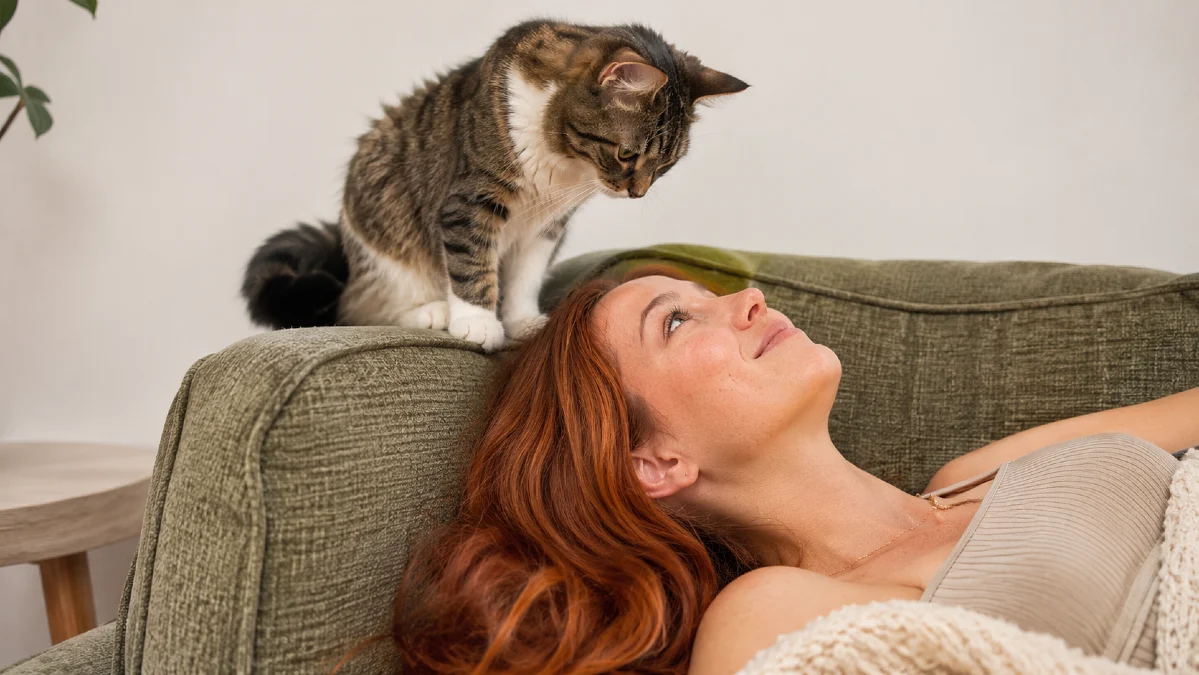
The strongest sign of trust is often voluntary, relaxed behavior. Your cat might choose to sleep near you, greet you regularly, or seek your company when it wants attention.
These behaviors are more useful when considered together than when treated as separate tests. A cat that feels comfortable around you may show its trust quietly, without constant affection.