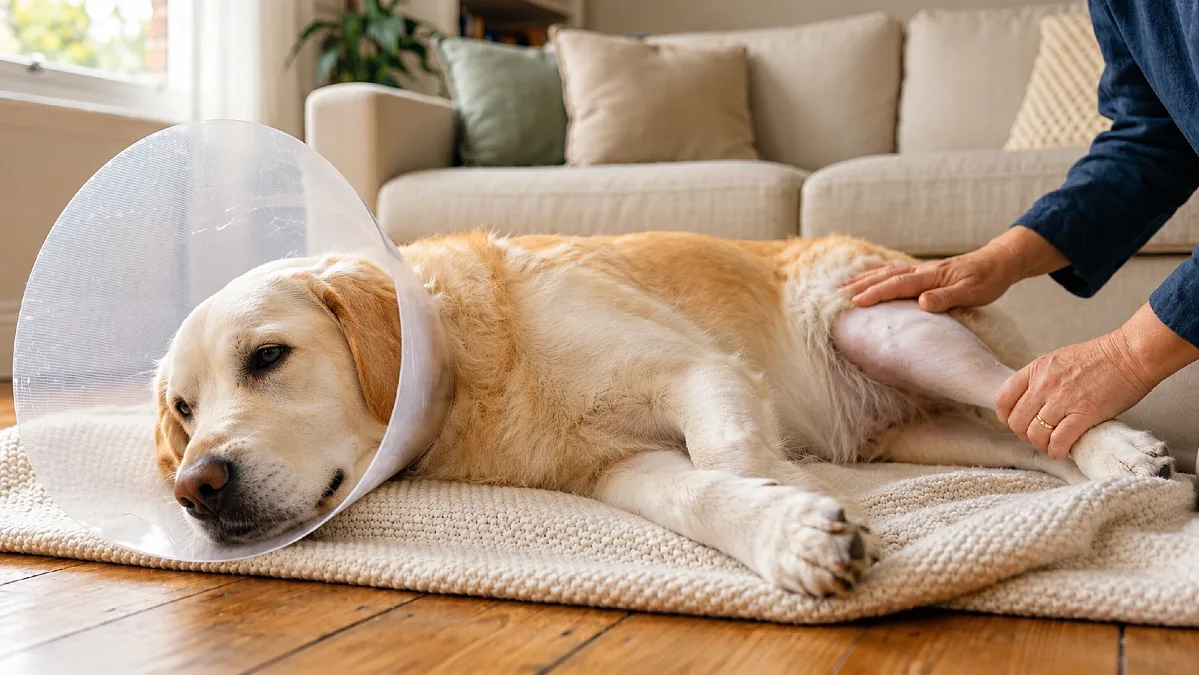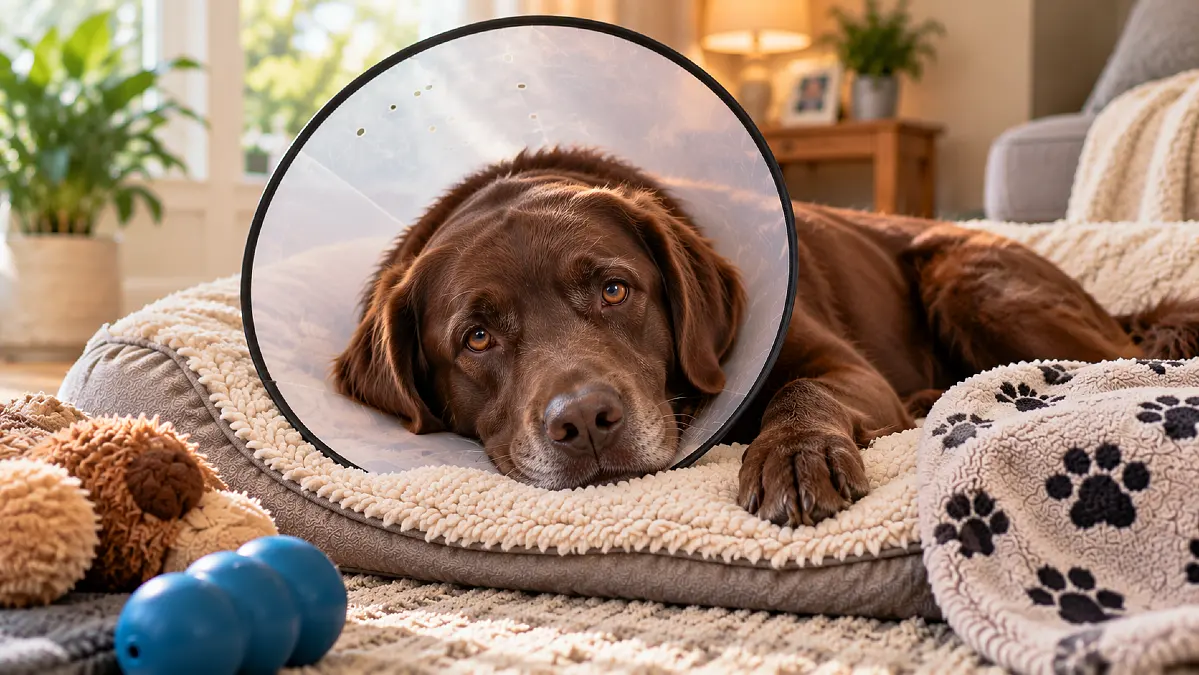
Your dog is coming home from surgery, and suddenly your house feels full of things that could cause trouble. The slippery kitchen floor, the stairs, and even their favorite couch may become risky while they heal. You want your dog to feel comfortable, but you also need to stop them from doing too much.
Getting your home ready before your dog returns can make those first few days much easier. A quiet sleeping area, safe flooring, and a few basic supplies can help protect the surgical site. You’ll also feel more prepared when it’s time to give medicine, help your dog outside, or check their incision.
But caring for a dog after surgery involves more than setting up a comfortable bed. You need to know how much activity is safe, what changes to expect, and when something needs a veterinarian’s attention. The right routine depends on the surgery your dog had.
What Should You Ask Your Vet Before Bringing Your Dog Home?
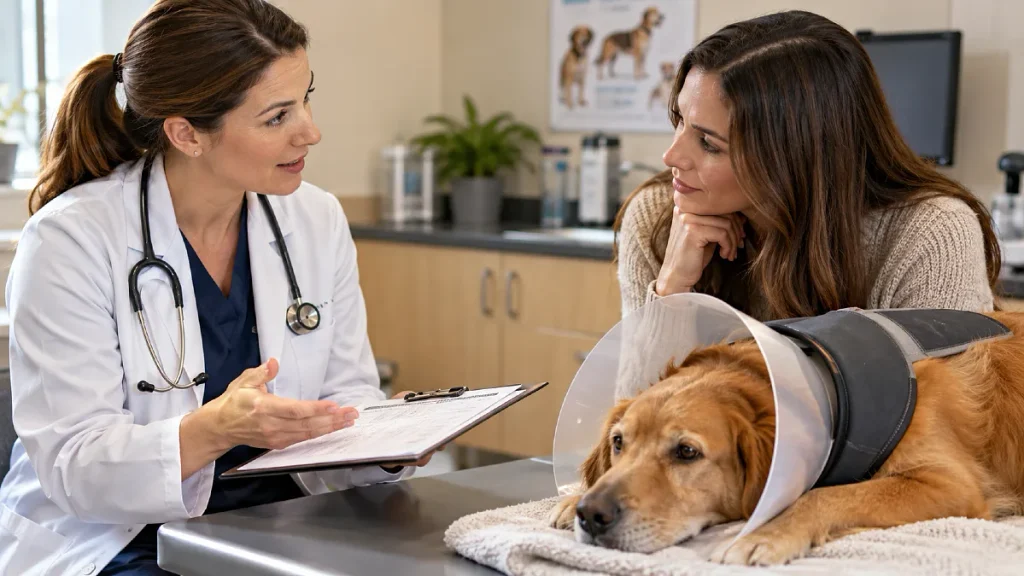
The easiest way to prevent problems at home is to leave the veterinary clinic with clear instructions. Every surgery has different recovery needs, so general advice cannot replace your dog’s discharge plan. Ask your veterinarian to explain anything that seems unclear before you leave.
According to the American College of Veterinary Surgeons, recovery instructions commonly cover activity limits, pain medicine, incision care, and follow up visits. These details help you know what your dog can safely do during healing. Keep a copy somewhere you can check without searching through paperwork.
Questions to ask before leaving the clinic
Use this checklist when your dog is ready to go home.
- How long should my dog stay in a crate or small recovery area?
- When should I give the first dose of each medicine?
- Can my dog climb stairs or jump onto furniture?
- How much walking is allowed for bathroom breaks?
- Does my dog need a cone or recovery suit?
- When can my dog eat and drink normally?
- What should the incision look like during healing?
- When is the next checkup or stitch removal?
- What number should I call if something goes wrong overnight?
- Will my dog need physical rehabilitation?
Important: Ask the veterinarian to demonstrate how to lift or support your dog if they had back, knee, hip, or leg surgery. Moving your dog the wrong way can put pressure on healing tissue. A quick demonstration can make getting your dog into the car and home much safer.
Before leaving, also ask whether your dog received a long acting pain treatment or injection. Some medications given at the clinic affect when the next dose is due. You should never guess the timing or give an extra dose because your dog seems uncomfortable.
Where Should You Set Up a Safe Recovery Space?
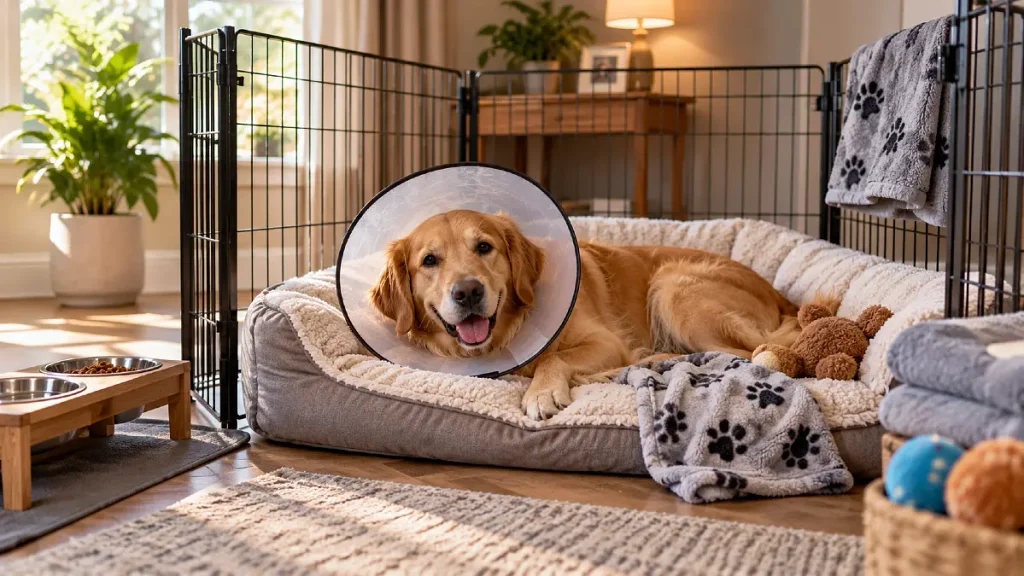
Your dog’s recovery area should make resting easy and unwanted movement difficult. Choose a quiet part of your home where you can check on your dog without constant noise or activity. A ground floor room is often easier because your dog won’t need to use stairs.
Place a clean, supportive bed on a floor that offers good grip. Avoid raised dog beds if your dog might jump down, and keep the area free from toys that encourage active play. Your dog should have enough room to rest comfortably and change position, within the limits set by your veterinarian.
Which recovery space works best?
Different homes need different setups. This comparison can help you choose a safe space before your dog returns.
| Setup | Best For | Watch Out For |
|---|---|---|
| Dog crate | Strict movement limits | Must allow comfortable positioning |
| Exercise pen | Dogs allowed some standing space | May allow jumping or climbing |
| Small room | Calm dogs needing limited activity | Furniture and slippery floors |
| Gated area | Supervised rest when approved | Less secure for active dogs |
A crate may be the best choice when your veterinarian orders strict confinement. An exercise pen can work for some dogs, but it is not suitable if your dog may jump against its sides. Choose the smallest safe setup that still meets your dog’s comfort and care needs.
Make the sleeping area comfortable
A soft bed with firm support can help your dog settle without lying directly on a hard floor. Choose bedding that is easy to wash because accidents or small spills may happen during recovery. Avoid loose blankets that your dog could become tangled in while wearing a cone or moving with weak legs.
Keep the room at a comfortable temperature and away from strong drafts. Your dog may need extra supervision after anesthesia, especially if they seem sleepy or unsteady. Avoid direct heat sources, heated pads, or electric blankets unless your veterinarian specifically recommends them.
Keep the recovery area peaceful
Children and other pets may not realize your dog needs extra space. Set a simple rule that nobody should climb on, chase, or disturb the recovering dog. Even friendly play can cause sudden movement or injury.
Try placing the recovery area somewhere your dog can hear normal household sounds without being surrounded by activity. This can help social dogs feel included while still giving them time to rest. If your dog becomes excited when people walk past, choose a quieter corner.
What Supplies Should Be in Your Dog’s Surgery Recovery Kit?
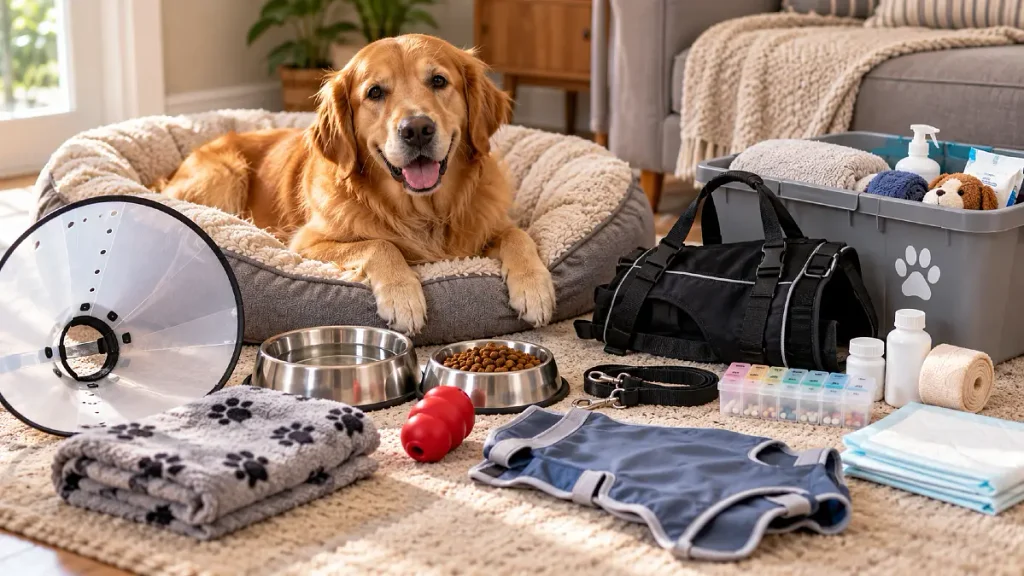
You don’t need to buy every recovery product sold online. A few well chosen supplies are usually more useful than a collection of items your dog may never need. Start with what your veterinarian recommends for the specific operation.
Keep everyday supplies together in a small basket or container near your dog’s recovery area. Store medications securely out of your pet’s reach, rather than leaving them beside the bed. You can then find what you need without leaving your dog unattended for long.
Dog surgery recovery supplies checklist
The following table separates basic items from supplies that may only be needed for certain dogs.
| Supply | Why You Need It | Priority |
|---|---|---|
| Supportive dog bed | Comfortable resting place | Essential |
| Cone or approved suit | Protects the incision | Essential if prescribed |
| Non slip floor mats | Helps prevent slipping | High |
| Short leash and harness | Controlled bathroom trips | High |
| Support sling | Helps dogs with weak legs | If advised |
| Medicine organizer | Helps track doses | High |
| Washable bedding | Makes cleanup easier | High |
Your dog’s needs depend on the surgery and how well they can move. A small dog recovering from a routine procedure may need fewer mobility supplies than a large dog recovering from knee surgery. Ask your veterinary team before using unfamiliar lifting equipment.
Helpful products worth considering
A Suitical Recovery Suit may be an option for some body incisions when your veterinarian approves it. A properly fitted surgical cone may still be needed because a suit does not protect every wound. Your dog must not be able to lick or chew the surgical area.
For dogs recovering from orthopedic surgery, products such as a GingerLead sling or Help ‘Em Up Harness may provide extra support. The correct design depends on where the surgery took place and how much weight your dog can safely carry. Your veterinarian should confirm how to fit and use it without pressing on the surgical site.
Pet Rehab Network has a useful guide to dog lift harnesses and support slings that compares different designs and explains when each type may help. It also covers fitting concerns and common rubbing points.
How Do You Prevent Slips, Jumps, and Painful Bathroom Trips?
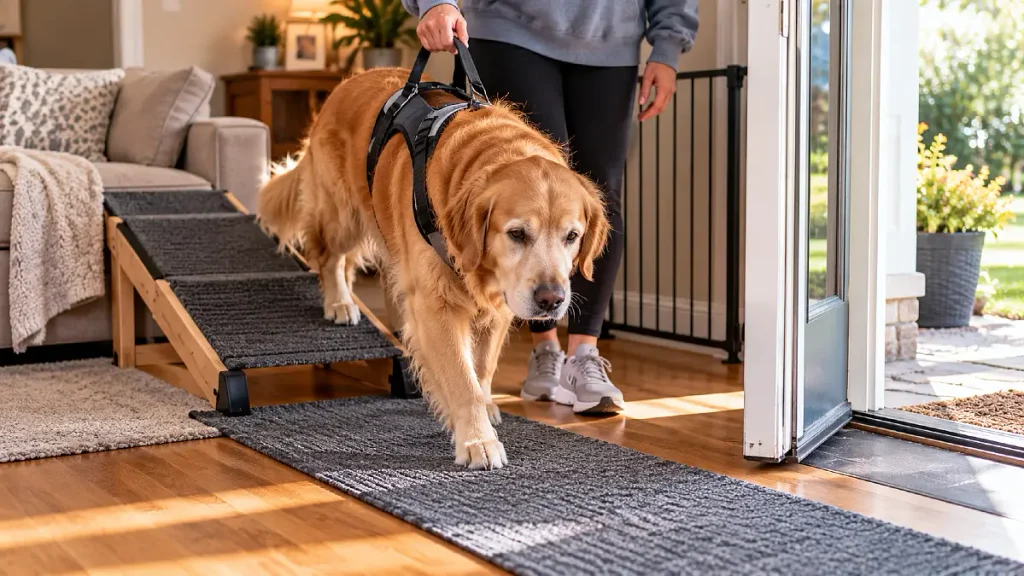
One of the biggest home care challenges is stopping your dog from moving too quickly. Dogs may try to return to normal activity before their tissues have healed. Feeling better does not mean the surgical repair is ready for running or jumping.
VCA Animal Hospitals and the American College of Veterinary Surgeons both stress the importance of following activity restrictions. Running, climbing, and sudden turns can place stress on healing tissue. Some procedures require much longer restrictions than others.
Make slippery floors safer
Tile, polished wood, and smooth laminate floors can be difficult for dogs with sore or weak legs. Place secure rubber backed mats along the route between the recovery area and the door. Make sure the mats cannot slide, curl, or bunch up beneath your dog’s paws.
Pay special attention to corners and places where your dog needs to turn. A slow turn on a secure surface is easier to control than a sudden twist on a slippery floor. Keep your dog’s nails and paw fur managed according to your veterinarian’s advice.
For dogs that struggle with paw grip, Pet Rehab Network explains the differences between dog boots, toe grips, and traction socks. Start with safe flooring changes before adding equipment that might affect how your dog walks.
Block stairs and furniture
Use sturdy baby gates to close off stairs and rooms where your dog might jump onto furniture. Avoid letting your dog climb onto the couch or bed, even if they usually sleep there. A sudden jump down can strain an incision or repaired joint.
If stairs are unavoidable, ask your veterinarian for a safe way to manage them. Some dogs need to be carried, while others may need supervised support. Never assume a ramp is safe just because it replaces stairs.
Adjust your setup for the surgery
Recovery rules can be very different depending on the operation. This table highlights the main home setup concern for several common procedures.
| Surgery Type | Home Setup Priority | Activity Concern |
|---|---|---|
| Spay or abdominal surgery | Protect belly incision | Jumping and stretching |
| TPLO knee surgery | Secure floors and support | Running and twisting |
| IVDD spinal surgery | Strictly controlled space | Unsafe spine movement |
| Hip surgery | Easy access and support | Falls and rough movement |
| Leg amputation | Stable walking surfaces | Balance and fatigue |
These are general concerns rather than a complete rehabilitation plan. Your surgeon’s instructions decide which movements are allowed, how long restrictions last, and whether your dog needs assistance. Do not use another dog’s recovery schedule as a guide for your own pet.
For more specific advice, see Pet Rehab Network’s post TPLO recovery guide or its IVDD recovery timeline for dogs. Both explain why recovery steps differ by procedure.
Create a safe bathroom route
Choose the nearest suitable outdoor area for bathroom breaks. Use a short leash and walk slowly, following the activity limits your veterinarian gave you. Avoid crowded spaces, rough ground, and places where your dog may try to chase another animal.
If your dog needs support, use only the sling or lifting method approved by the surgical team. Do not pull your dog by the collar or force them to move faster. Bring them back inside once the approved bathroom break is finished.
How Should You Manage Food, Water, and Medicine After Surgery?
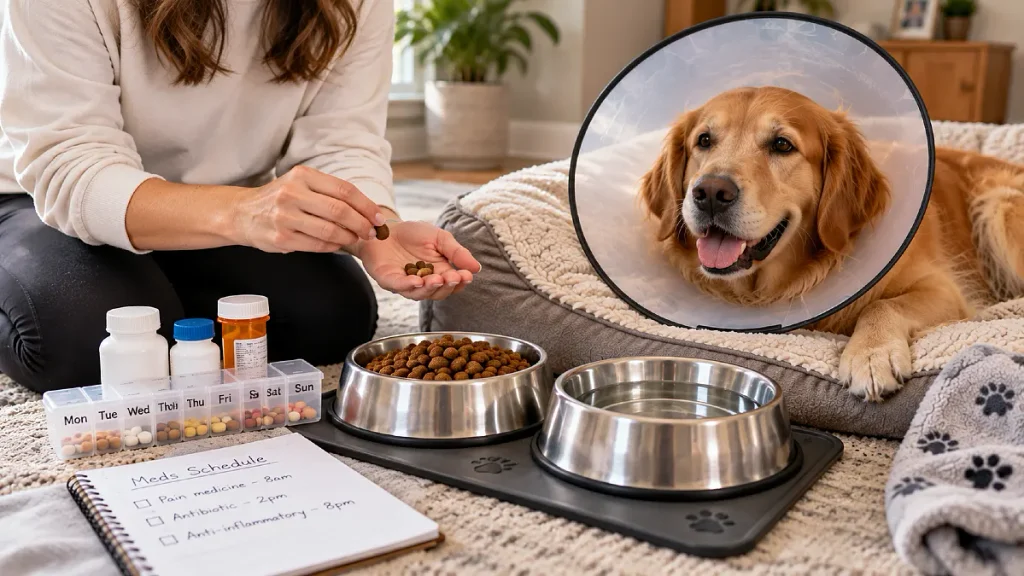
Your dog’s first evening at home may look different from their normal routine. Anesthesia and pain medication can affect energy, coordination, and appetite. Some dogs want to sleep for much of the evening, while others appear restless.
The American College of Veterinary Surgeons notes that reduced appetite, mild confusion, and sleepiness can occur during the early recovery period. These signs should gradually improve rather than become more severe. Contact your veterinarian if your dog’s behavior worries you or does not match the discharge instructions.
Offer food and water as directed
Follow the clinic’s instructions about when your dog can eat and drink. Some dogs are offered a smaller meal after they return home because anesthesia can cause nausea. Dogs with certain surgeries or medical conditions may need a different feeding plan.
Keep fresh water available unless your veterinarian has given specific restrictions. A stable bowl placed at a comfortable height can help prevent spills and awkward movement. Check that your dog’s cone does not stop them from reaching the bowl.
If your dog refuses food, do not force them to eat or give rich treats to encourage appetite. Ask your veterinarian what to do if they miss a meal or cannot keep food down. Repeated vomiting, worsening weakness, or trouble drinking deserves prompt veterinary advice.
Keep medication timing simple
Write down each medicine, its prescribed dose, and the time it needs to be given. A phone reminder can help you avoid missing a dose when you’re tired or busy. If more than one person helps with care, use a shared record so nobody accidentally gives the same medication twice.
Never give human pain medicines such as ibuprofen, naproxen, or acetaminophen unless a veterinarian has specifically directed their use. These medicines can be dangerous to dogs. Do not add another pain reliever or combine medications without checking with the surgical team.
Watch for medication side effects
A dog receiving pain medication may seem quieter than usual, but severe weakness or increasing distress should not be ignored. Vomiting, diarrhea, loss of appetite, or unusual behavior can also need medical attention. Follow the medication instructions and contact your veterinarian about suspected side effects before changing the treatment plan.
The American Animal Hospital Association encourages clear medication instructions and regular communication during pain treatment. If giving medicine becomes difficult, ask the clinic for another method rather than skipping doses or changing them yourself.
How Do You Protect the Incision and Check It Every Day?
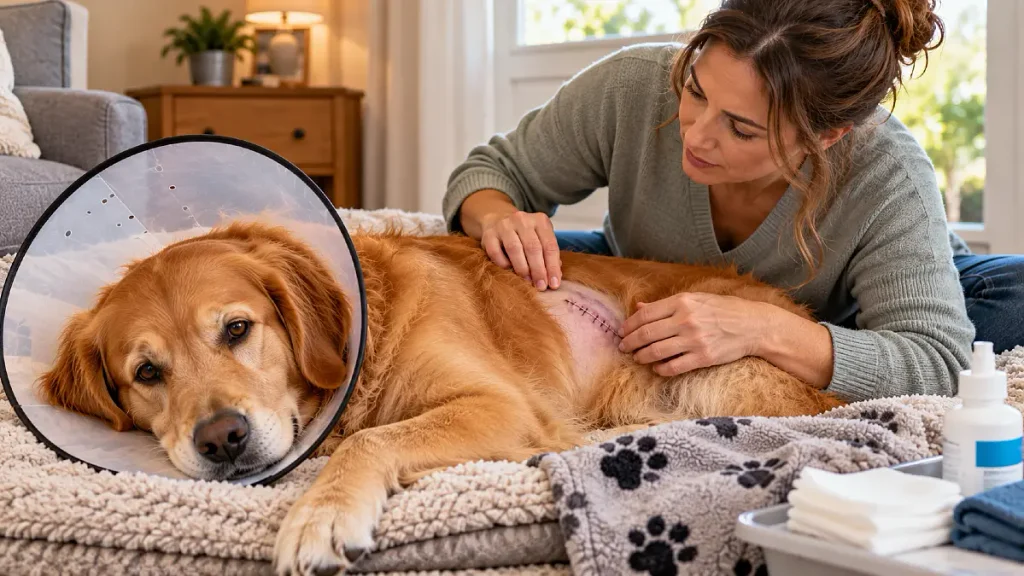
The surgical incision needs protection while the skin and deeper tissues heal. Licking, chewing, scratching, and excessive movement can damage the area or increase the chance of infection. Your job is to keep the wound protected and notice changes early.
Check the incision at least daily, or as often as your veterinary team recommends. Choose a well lit place where you can look at the area without making your dog twist or struggle. Never remove a bandage or dressing just to inspect the wound unless your veterinarian has told you to.
Keep the cone or recovery suit in place
Many dogs dislike their cone at first, but that does not mean it is safe to remove. Even a short period of licking can damage stitches or irritate healing skin. Follow your veterinarian’s instructions about how long the protective device should stay on.
A recovery suit may work for some abdominal incisions, but it may not protect leg, paw, or other wounds. Make sure any suit stays clean, dry, and properly fitted. Check for rubbing or pressure around the neck, legs, and surgical area.
Incision protection tip: A soft collar or inflatable collar is not always a safe replacement for a rigid cone. Some dogs can still reach their surgical site while wearing one. Ask your veterinarian to confirm that the chosen device actually blocks access to the wound.
Know what normal healing looks like
A healing incision usually has closed edges and stays clean and dry. Mild redness, bruising, or swelling can occur early after surgery. These changes should generally improve as recovery progresses.
Increasing redness, growing swelling, an unpleasant smell, or thick discharge may signal a problem. An incision that opens or continues bleeding also needs veterinary attention. If you’re unsure whether the appearance is normal, contact the clinic and ask whether a photograph would help.
Avoid home treatments your vet did not prescribe
Do not apply creams, oils, powders, or disinfectants to the incision without veterinary approval. Hydrogen peroxide and rubbing alcohol can harm healing tissue. Keep the area dry and follow the cleaning instructions given by your surgical team.
Avoid bathing or swimming until your veterinarian confirms it is safe. If your dog has a bandage or cast, keep it dry and check the exposed toes for unusual swelling or color changes. Contact the clinic if the bandage slips, becomes wet, smells bad, or appears too tight.
How Can You Keep Your Dog Comfortable Without Too Much Activity?
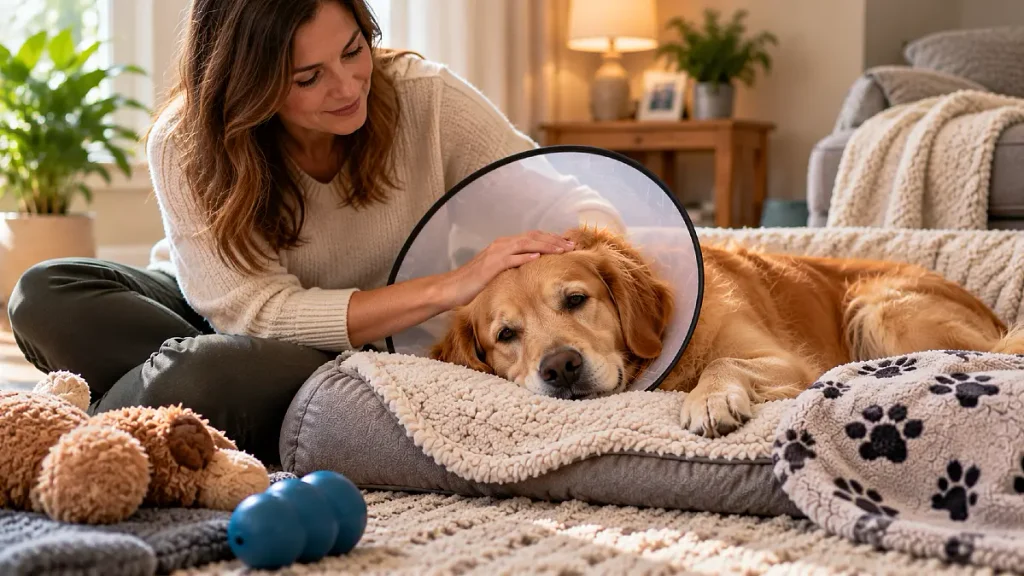
Rest can be frustrating for dogs that are used to walking, playing, and following you around the house. They may whine, pace, or seem bored when their usual routine changes. The goal is to help your dog feel secure while protecting their healing body.
Start with a predictable daily routine that includes approved bathroom breaks, meals, medication, and quiet time. Keep noise low and avoid exciting greetings that make your dog jump or spin. Sit nearby when possible so your dog can enjoy your company without needing to move.
Try gentle mental activities
Some dogs enjoy quiet activities that keep their minds busy without requiring exercise. A KONG Classic filled with a small amount of their approved food may be useful when the veterinarian allows it. Choose a suitable size, supervise its use, and make sure your dog can use it safely while resting.
Other quiet options may include:
- Calm petting away from the surgical area.
- A familiar blanket that smells like home.
- Simple reward based attention games with no sudden movement.
- Small food puzzles that can be used while lying down, if approved.
- Gentle conversation and quiet time beside their bed.
Avoid tug games, fetch, energetic chewing, or activities that cause your dog to stand and turn repeatedly. Some surgeries also restrict head, neck, or jaw movement. Choose enrichment based on the operation and your veterinarian’s advice.
Watch your dog’s body language
Pain is not always obvious. Some dogs become unusually quiet, stop eating, pant while resting, or struggle to find a comfortable position. Others may become restless or react when someone approaches.
The American Animal Hospital Association’s canine pain guidance encourages owners to watch changes in normal behavior, posture, movement, and appetite. You know how your dog usually behaves, so small changes can matter. If your dog seems increasingly uncomfortable despite prescribed medication, call the veterinary clinic.
Never give extra pain medicine simply to make your dog rest. If they are too active for safe recovery, ask your veterinarian whether their comfort or activity plan needs adjusting.
When Should You Call the Vet About Your Dog’s Recovery?
Knowing when to seek help can prevent a small concern from becoming a serious problem. Some changes are expected during early recovery, but others need prompt veterinary attention. You should never feel that you must wait until the next appointment if something seems wrong.
The American College of Veterinary Surgeons recommends watching for changes in pain, appetite, incision appearance, movement, and bathroom habits. The direction of recovery matters too. Your dog should generally become more comfortable over time, even when healing takes several weeks.
Dog surgery recovery signs and warning symptoms
This table can help you decide how quickly to seek advice. It is a general guide, and your veterinarian’s instructions may be more specific.
| What You Notice | What It May Mean | What To Do |
|---|---|---|
| Mild sleepiness just after anesthesia | Expected early effect | Monitor for improvement |
| Eating less on the first day | Possible nausea or medication effect | Follow feeding instructions |
| Increasing incision swelling or discharge | Possible wound complication | Contact vet promptly |
| Worsening pain or new severe limping | Possible complication | Contact surgeon urgently |
| Collapse, pale gums, or trouble breathing | Possible emergency | Emergency vet now |
| Unable to urinate or severe straining | Possible urinary problem | Emergency evaluation |
Mild early changes should improve rather than become worse. Any sudden decline in your dog’s condition deserves veterinary attention. When in doubt, call the clinic rather than guessing whether a symptom is part of normal recovery.
Pay special attention after orthopedic surgery
Dogs recovering from knee, hip, or leg surgery may use the operated limb differently as healing progresses. However, a sudden loss of leg use, increased pain, or new swelling is not something you should simply wait out. It may indicate a problem that needs examination.
Pet Rehab Network’s guide to TPLO warning signs and complications explains what owners should watch for during different recovery stages. It is particularly useful when a dog starts limping more after previously improving.
Keep a simple daily recovery record
A short written record makes it easier to explain changes to your veterinarian. Note when your dog eats, drinks, urinates, takes medicine, and shows signs of pain. Record any changes in walking or the surgical area.
Taking photographs of the incision can also help you compare healing from one day to another. Use similar lighting and camera angles when possible, without moving your dog into an uncomfortable position. Share the images with your veterinarian if you notice a concerning change.
When Can Your Dog Start Walking and Physical Rehabilitation?
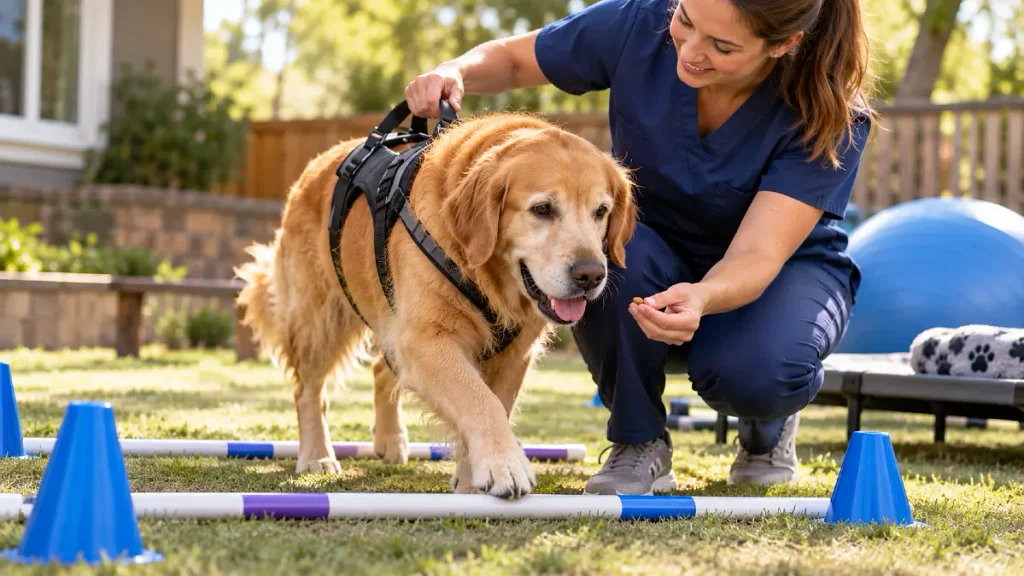
Your dog may be eager to move long before their body is ready. This is especially common with active dogs that begin feeling better while their surgical repair is still healing. Returning to normal exercise too early can put unnecessary stress on the affected area.
The safe starting point depends on the surgery, your dog’s comfort, and what the surgeon sees during follow up appointments. A short leashed bathroom trip is not the same as an exercise session. Do not increase walking time simply because your dog seems energetic.
Follow a recovery plan that fits the operation
A dog recovering from routine abdominal surgery may have a different recovery plan from a dog recovering from TPLO or spinal surgery. Some orthopedic patients begin carefully controlled rehabilitation while healing continues, but the activities and timing must be approved. Other dogs need longer periods of strict movement restriction.
For example, dogs recovering from femoral head ostectomy may follow a different rehabilitation approach from those with repaired knee bones. Pet Rehab Network explains this distinction in its FHO surgery recovery guide. Use it to prepare questions for your veterinary team rather than to set your dog’s exercise schedule yourself.
Ask whether your dog needs professional rehab
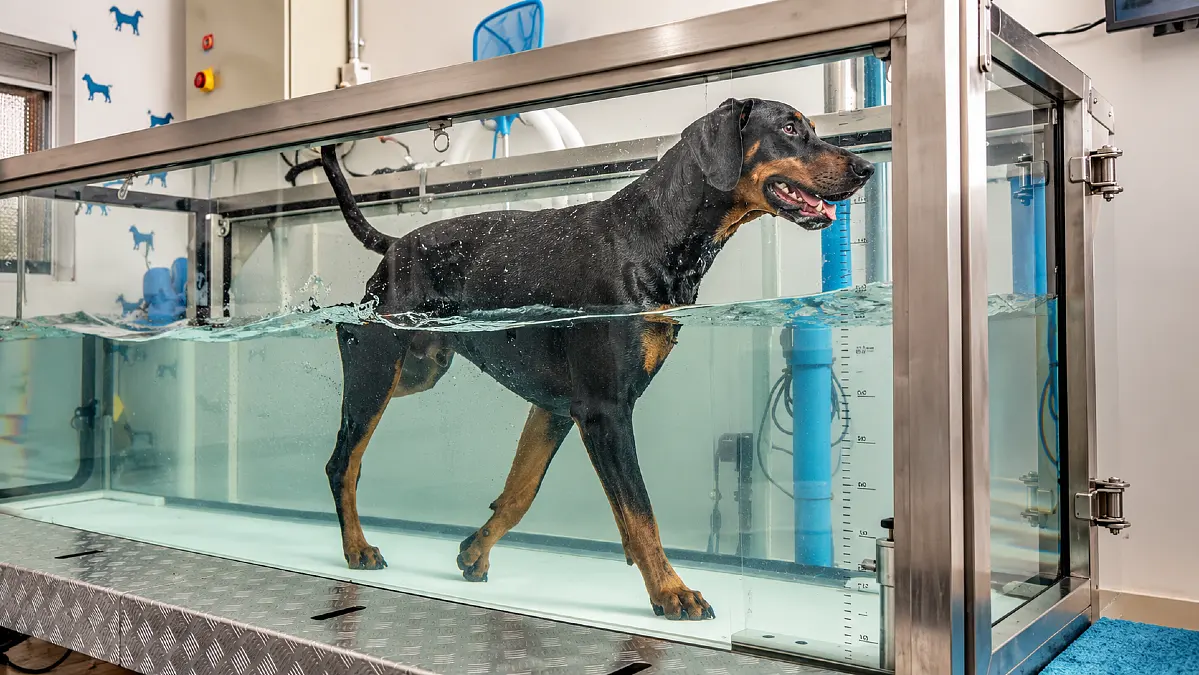
Veterinary physical rehabilitation can help some dogs rebuild mobility, strength, and controlled movement after surgery. A qualified professional may use supported walking, specific exercises, or other treatments based on your dog’s condition. Rehabilitation is not necessary after every procedure.
If your veterinarian recommends it, Pet Rehab Network’s dog physical therapy guide explains common treatment methods and how to find qualified providers. You can also read what happens during a dog’s first rehabilitation appointment to prepare for the visit.
For dogs that have difficulty traveling, an in home dog rehabilitation provider may be worth discussing with the veterinarian. This can help when transport is stressful or mobility is limited, although not every dog or procedure is suitable for home visits.
The most important rule is simple: Do only the exercises your veterinary team has approved. Stop and contact the clinic if an activity causes increased pain, swelling, or limping. Recovery should follow your dog’s healing progress, not a fixed date from a general guide.
Final Home Setup Checklist Before Your Dog Returns
Before pickup, walk through your house and check the areas your dog will use. Look for anything that could cause slipping, jumping, excitement, or difficult movement. A few simple changes can make everyday recovery care much easier.
Use this final checklist to make sure the basics are ready.
- A quiet recovery area is prepared.
- Clean, supportive bedding is in place.
- Slippery floors have secure traction mats.
- Stairs and unsafe furniture are blocked.
- Food and water bowls are easy to reach.
- A properly fitted cone or approved recovery suit is ready.
- The leash and any approved support equipment are nearby.
- Medications and written instructions are organized.
- Veterinary and emergency phone numbers are saved.
- Follow up visits are scheduled.
- Family members know the activity restrictions.
- A simple daily care record is ready.
Your dog may not need every item on this list, and some surgeries call for additional supplies. Let your veterinarian’s instructions decide which parts apply. The goal is to prepare a safe space without making recovery more difficult than it needs to be.