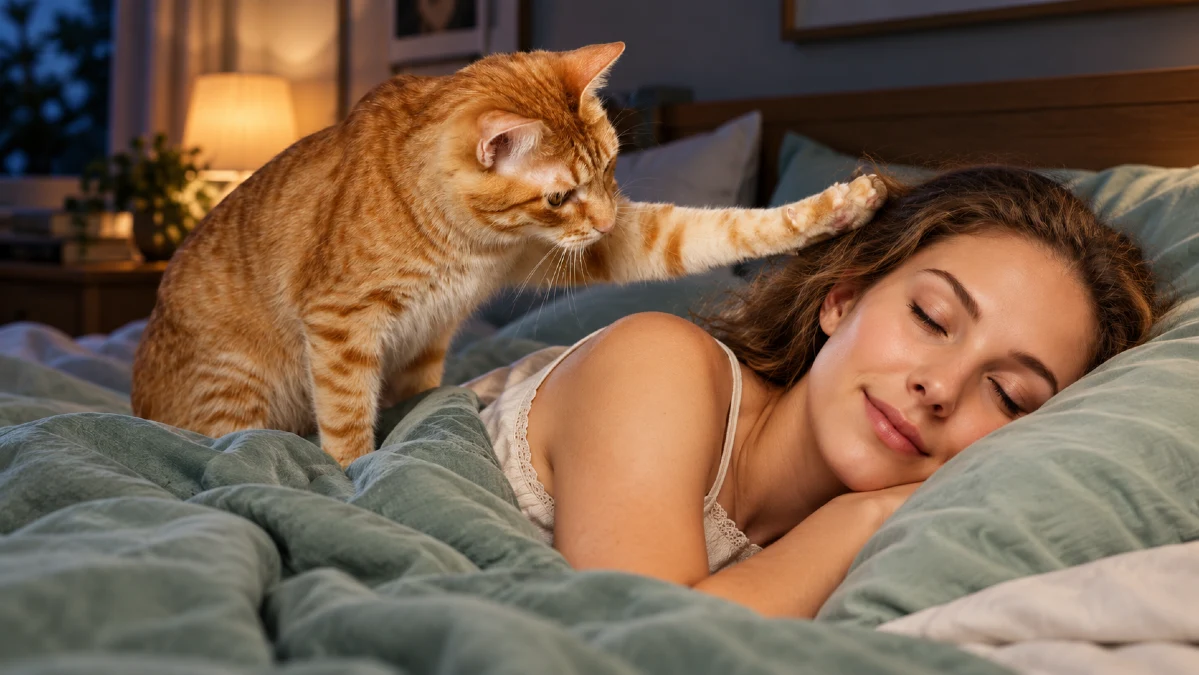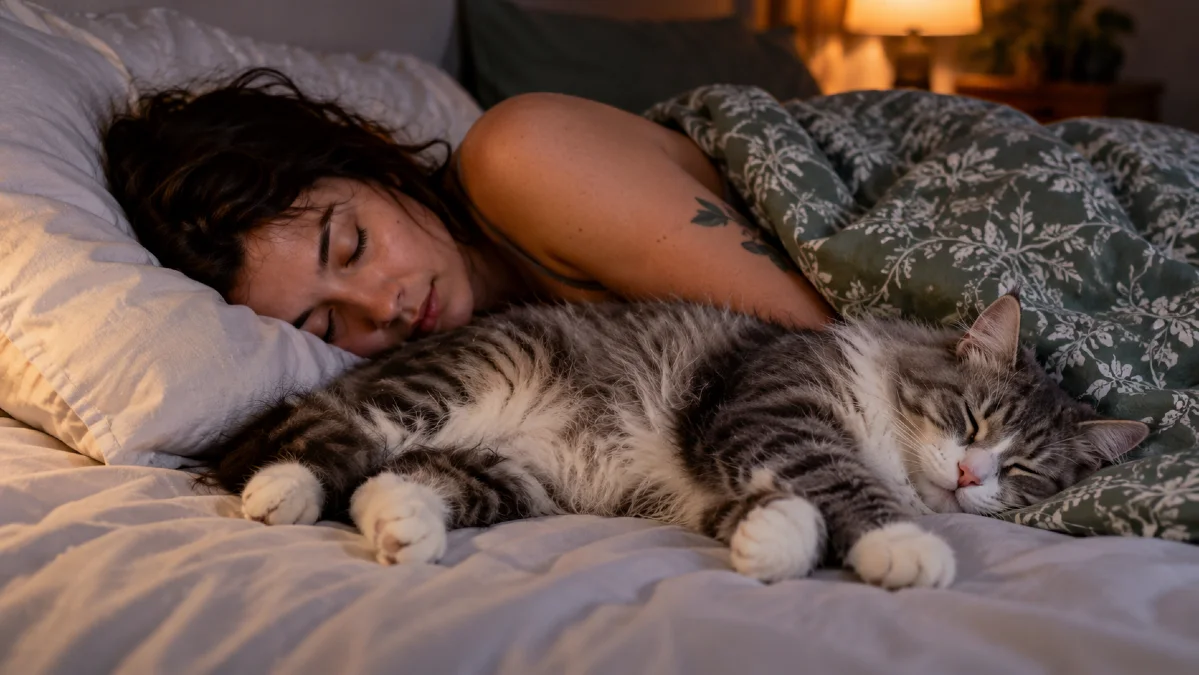
Every night, your male cat climbs onto your bed, finds his favorite spot, and settles beside you as if he belongs there. Sometimes he curls against your legs, rests on your chest, or takes over your pillow without a second thought. But why does he keep choosing you when he has plenty of other places to sleep?
You might think he simply enjoys your warm blankets. Yet there may be more behind this familiar nighttime habit, including comfort, trust, and the close bond he has formed with you.
Why your male cat sleeps with you often comes down to several things happening together. Your scent is familiar, your bed feels safe, and he may have learned that being near you is one of the most comfortable parts of his day.
Why Your Male Cat Sleeps With You in a Place He Feels Safe
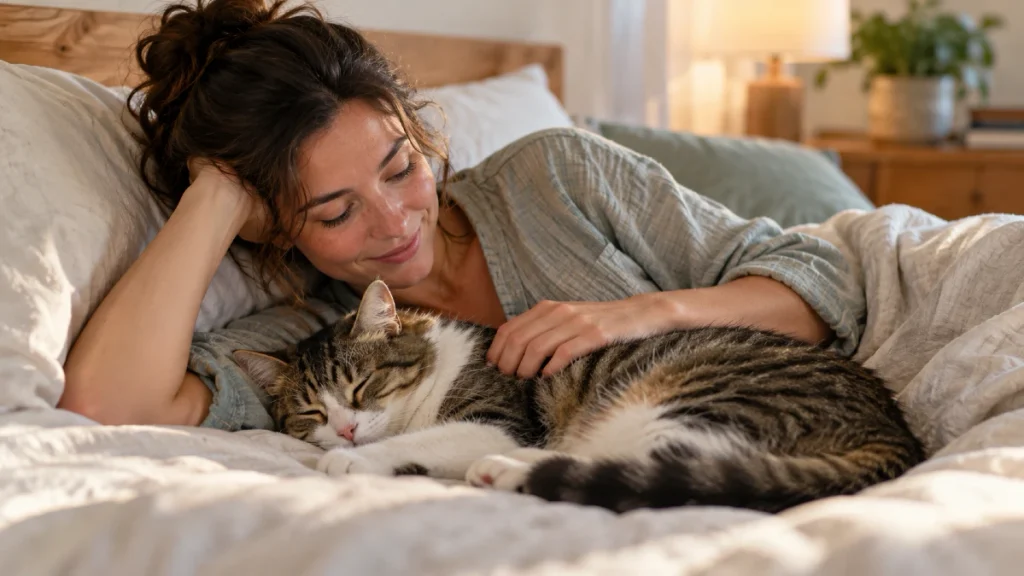
Your male cat has plenty of choices when it comes to finding somewhere to sleep. He could curl up on the couch, hide under furniture, or stretch out beside a sunny window. Yet he often walks straight into your bedroom and settles beside you.
One possible reason is that your presence helps him feel secure. Cats naturally seek resting places where they can relax without worrying about sudden disturbances.
The Feline Veterinary Medical Association explains that cats need safe resting areas and familiar surroundings to support their emotional health. A comfortable sleeping place gives them somewhere to retreat when they want peace.
Your bed may meet several of those needs at once. It is soft, raised above the floor, and filled with familiar smells.
Your Bedroom May Be Part of His Favorite Territory
Cats develop strong connections with familiar spaces. They use scent, repeated visits, and daily routines to recognize areas where they feel comfortable.
If your male cat regularly sleeps in your bedroom, he has probably learned that it is a pleasant place to rest. Having you nearby may add another layer of comfort.
You might notice him entering the room, checking his surroundings, and settling once everything seems familiar. That behavior does not necessarily mean he is protecting you or claiming ownership of the bedroom.
It may simply show that he knows the space well enough to relax.
The biggest clue is his body language. If he stretches out, closes his eyes, and rests comfortably beside you, those are encouraging signs that he feels at ease.
Why Your Warmth and Familiar Scent Make Him Stay Close
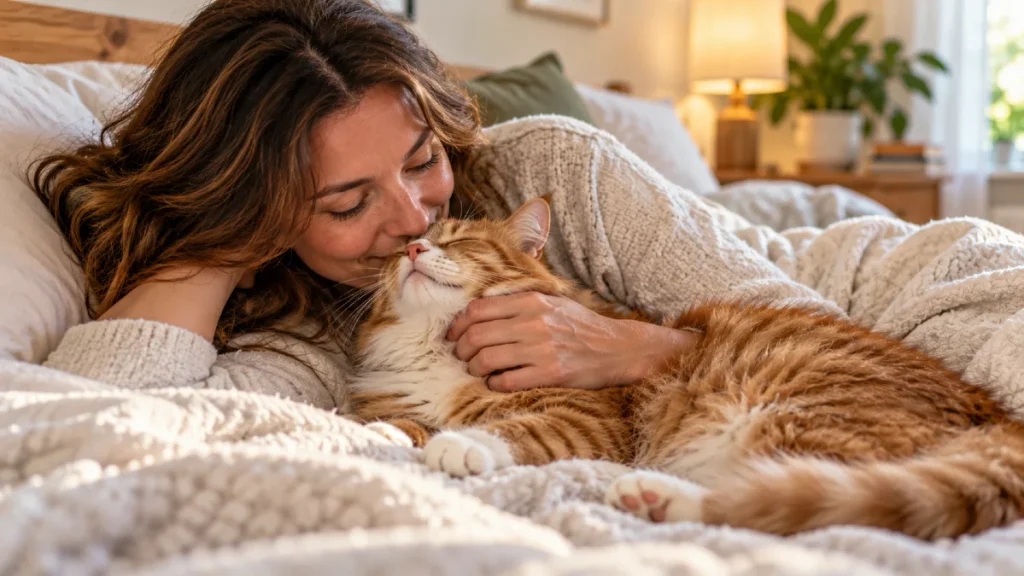
There is a simple reason your male cat may prefer sleeping against you instead of in his expensive cat bed. Your body provides warmth, and cats often seek comfortable places that help them stay cozy.
Cats Protection identifies warmth as a common reason cats sleep on their owners. The same preference explains why cats enjoy sunny windowsills, warm blankets, and soft furniture.
When your cat curls against your stomach or legs, he may be enjoying the heat your body gives off. This can be especially appealing during colder nights.
But warmth is only part of the picture. Your cat also recognizes familiar smells that are linked to his everyday life.
Your Scent Makes Your Bed Familiar
Cats rely heavily on their sense of smell to recognize their surroundings. Your pillow, sheets, and blankets carry scents your cat encounters every day.
These familiar smells may help make your bedroom feel predictable and comfortable. That can be particularly useful for cats that dislike sudden changes in their environment.
You may notice your cat rubbing his cheeks against your pillow before settling down. Cats have scent glands around their faces, and rubbing transfers scent onto nearby objects.
PetMD explains that face rubbing is one way cats communicate and mark familiar places. It can also appear during friendly interactions.
Some people claim that cats sleep against their owners because their heartbeats become synchronized. However, there is not enough reliable evidence to treat this as an established explanation.
Your warmth, familiar scent, and comfortable bedding already give your cat plenty of reasons to stay close.
How Your Male Cat Learns Your Bedtime Routine
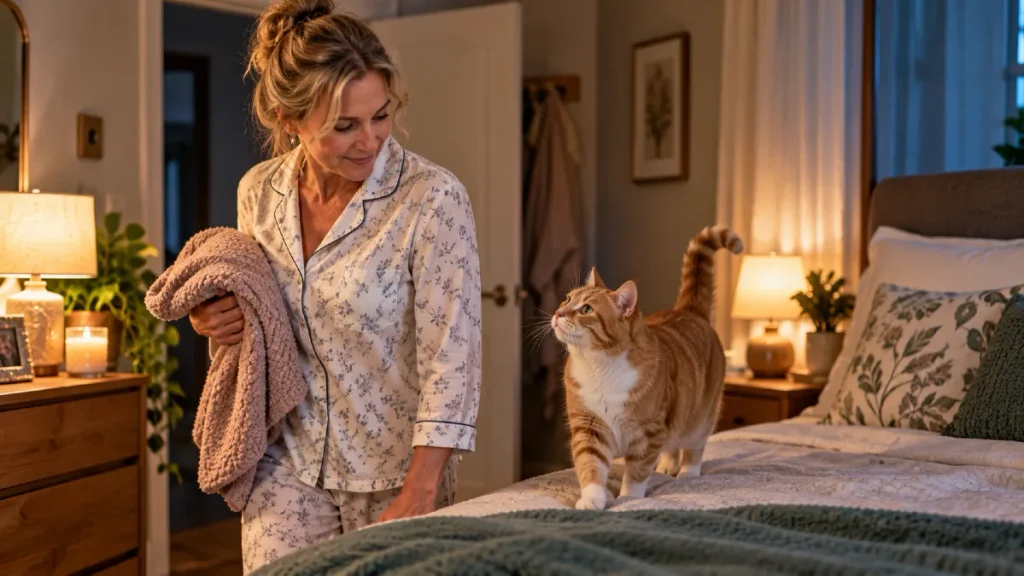
Your male cat may know that bedtime is approaching before you even enter your bedroom. He might follow you down the hallway, sit near your bedroom door, or jump onto the mattress while you are getting ready.
This happens because cats are good at learning repeated patterns. They notice which daily activities are followed by food, attention, play, or rest.
Think about everything you do before going to bed. You might switch off the television, brush your teeth, turn out the lights, and walk into the same room each evening.
Over time, your cat can learn to connect these familiar events with your bedtime.
Why He Sometimes Waits for You
Some male cats start following their owners around the house when evening arrives. Others settle on the bed first and watch until their owners join them.
Your cat may have learned that your bedtime is a chance to receive affection or rest beside you. If you usually stroke him before sleeping, that pleasant experience may help reinforce the habit.
The Feline Veterinary Medical Association recommends predictable and positive interactions with cats. Consistent routines can help them feel more comfortable in their homes.
If your cat meows outside your bedroom or follows you from room to room, look at what normally happens afterward. He might be seeking attention, expecting food, or waiting for a familiar activity.
This does not mean he is deliberately trying to make you sleep. It means he has learned the patterns that shape your evenings.
And if those patterns include relaxing beside you, your bed may become one of his favorite places.
What Your Male Cat’s Sleeping Position Really Tells You
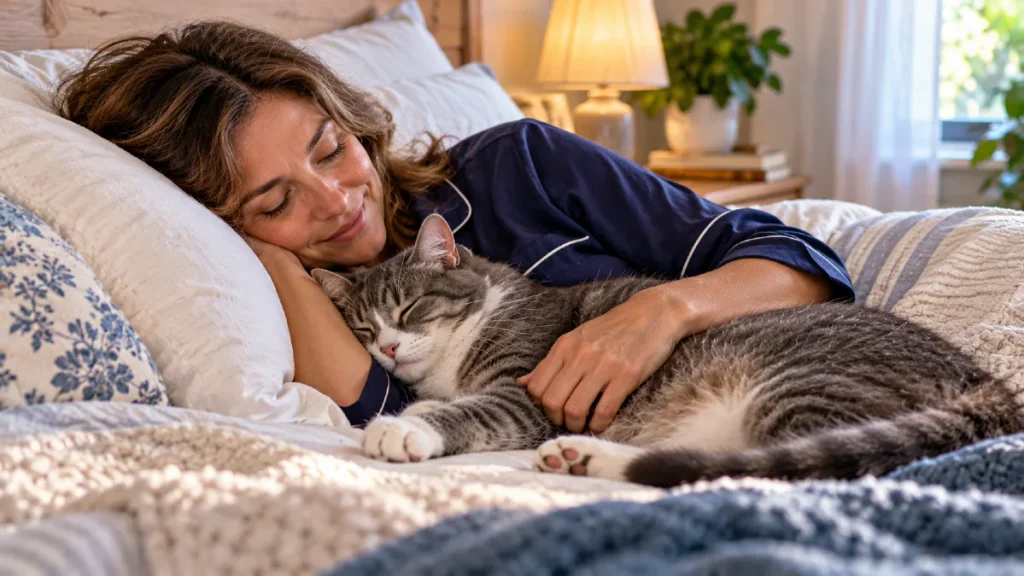
Where your male cat chooses to sleep can offer useful clues about what he finds comfortable. However, there is no proven rule that assigns one exact emotional meaning to every sleeping position.
Cats Protection’s 2026 guidance explains that cats change sleeping positions based on warmth, comfort, health, and their surroundings. The best way to read your cat is to consider his whole body and usual behavior.
For example, a cat resting on your pillow may enjoy its softness and familiar scent. A cat sleeping near your feet might simply prefer an area where he has more room.
What Different Sleeping Spots May Suggest
Your cat’s favorite sleeping location can help you notice his preferences. Use this table as a starting point rather than a fixed guide to his emotions.
| Sleeping spot | Possible reason | What to notice |
|---|---|---|
| On your pillow | Softness and familiar scent | Does he seek pillows elsewhere? |
| On your chest | Warmth and closeness | Is his body relaxed? |
| Against your side | Comfort and contact | Does he settle quickly? |
| Between your legs | Warm, sheltered space | Can he move freely? |
| At your feet | Space and comfort | Does he stretch out? |
| Beside you | Comfortable company | Does he choose to stay? |
The most useful clue is whether your cat looks comfortable wherever he settles. Loose muscles, a calm posture, and the ability to move freely suggest that he is resting peacefully.
Why Some Male Cats Love Sleeping on Your Chest
If your male cat regularly falls asleep on your chest, he may enjoy the combination of warmth, softness, and physical contact. He might also have learned that this position brings gentle petting.
Cats that enjoy close contact often return to places where they have had pleasant experiences. Your chest may simply be a favorite resting spot.
Other cats dislike being held close and prefer sleeping at the edge of the mattress. That does not make their attachment any weaker.
A cat that trusts you can still prefer having his own space.
Why Your Cat Wakes Up While You Are Still Sleeping
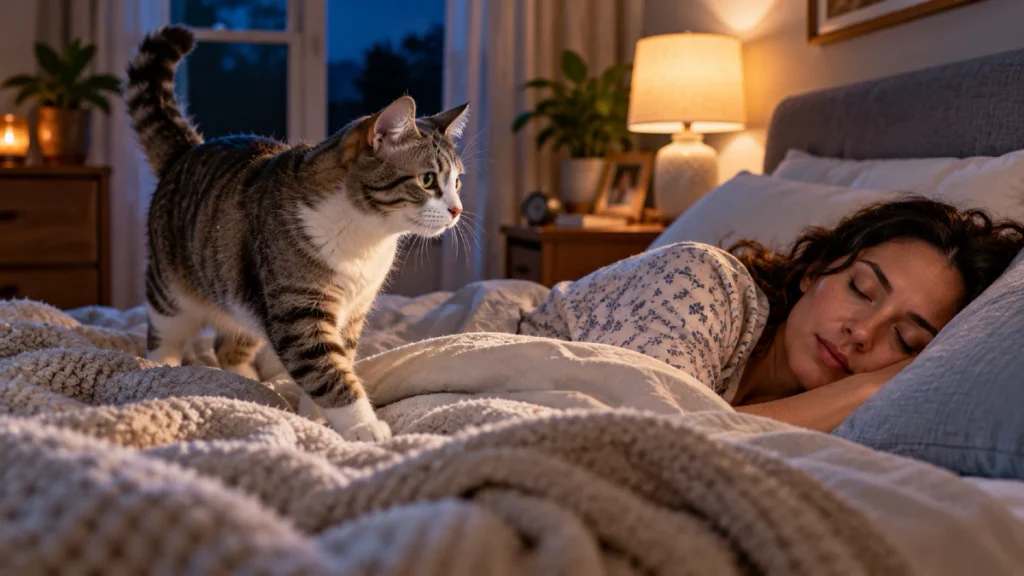
You might fall asleep with your male cat curled beside you, only to wake later and discover he has moved somewhere else. By morning, he may be back on your pillow as if he never left.
This is common because cats have different sleep patterns from humans. They often rest in shorter periods and become active at times when you would rather stay asleep.
According to Cats Protection, cats are naturally more active around dawn and dusk. These periods are linked to the hunting habits of their wild ancestors.
Your male cat may wake to groom himself, stretch, investigate a sound, or walk around the house before resting again.
Why He Suddenly Lifts His Head at Night
Cats have sensitive hearing and can notice sounds that people miss. Even a resting cat may react to a noise by moving his ears or opening his eyes.
This normal awareness sometimes looks like a security patrol. However, there is no good evidence that a cat sleeping near the bedroom door is deliberately guarding his owner.
He may simply prefer that location or be reacting to activity around him.
Common Nighttime Behaviors and Their Possible Causes
Not every nighttime movement means the same thing. This table can help you decide whether your cat needs attention or a change in routine.
| Nighttime behavior | Possible explanation | What you can do |
|---|---|---|
| Wakes and changes spots | Normal rest pattern | Let him settle |
| Walks around the room | Exploration or activity | Provide safe access |
| Meows near the bed | Attention or another need | Check the cause |
| Paws at your face | Learned attention seeking | Avoid rewarding unwanted waking |
| Runs around at dawn | Natural activity period | Offer more daytime play |
| Returns after wandering | Prefers a familiar resting spot | Keep it comfortable |
VCA Animal Hospitals recommends looking at nighttime activity alongside a cat’s normal habits and environment. If your cat seems healthy and relaxed during the day, occasional nighttime movement is usually not a problem.
But sudden restlessness, loud crying, or repeated waking can sometimes be linked to illness. These changes deserve attention, particularly in older cats.
How Sleeping Beside You Can Reflect a Strong Emotional Bond

One of the most meaningful reasons your male cat may sleep beside you is that he enjoys your company. Cats can form genuine social bonds with the people who care for them.
A study published in Current Biology in 2019 examined attachment between cats and human caregivers. Researchers at Oregon State University, including Kristyn Vitale, found evidence that many cats form secure attachments to people.
Among the 70 kittens whose behavior could be classified, 64.3% showed secure attachment patterns. The researchers also found similar patterns in a smaller group of adult cats.
These findings suggest that cats can treat familiar people as a source of security. They do not prove that sharing a bed creates attachment, but they help explain why some cats seek close contact.
Your Cat May Show Affection in Several Small Ways
Your male cat may show friendly feelings through more than sleeping beside you. Watch for patterns of relaxed contact during everyday activities.
Common signs of friendly social behavior include:
- Slow blinking: He looks toward you and gently closes his eyes.
- Head rubbing: He presses his cheeks or forehead against you.
- Gentle contact: He chooses to sit or rest beside you.
- Relaxed tail movements: He approaches with a comfortable posture and upright tail.
- Following you: He often chooses to spend time in the same room.
These behaviors can have different meanings depending on the situation. Looking at several signs together gives you a better picture than relying on one action.
Does Sleeping Together Strengthen Your Bond?
Sharing calm and pleasant experiences may help maintain a friendly relationship with your cat. If your bedroom is quiet and your interactions are gentle, your cat may continue choosing that space.
Some owners also find their cat’s presence comforting. Feeling a warm cat curled beside you can make bedtime more pleasant.
However, claims that sleeping together causes specific changes in testosterone, serotonin, dopamine, or oxytocin have not been established for male cats. It would be misleading to promise those biological effects.
What matters most is that both you and your cat feel comfortable. A strong bond depends on many daily interactions, not just where he sleeps.
Do Male Cats Sleep With Their Owners More Than Female Cats?
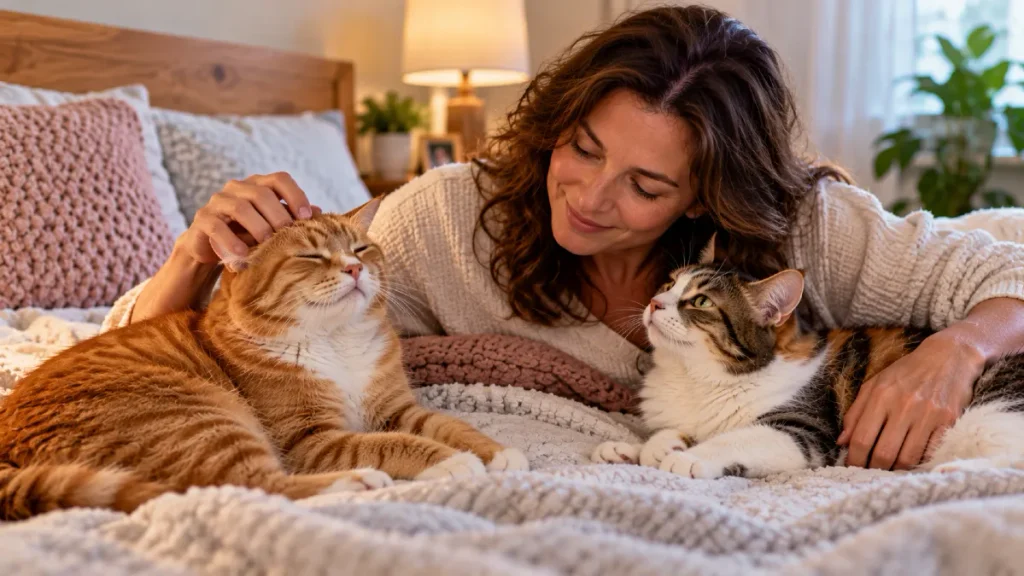
Male cats are sometimes described as more affectionate, playful, or attached to their owners than female cats. You may even hear people claim that male cats are naturally more protective at night.
But there is little evidence that male cats are generally more loving or more likely to share a bed. Cats Protection explains that neutered males and females are often quite similar in their social behavior.
Individual personality matters much more than sex. A friendly female cat may love sleeping on your chest, while a confident male cat may prefer a quiet bed in another room.
Why Neutering and Past Experiences Matter
A cat’s early experiences, daily environment, and health can shape how comfortable he feels around people. Cats that had positive contact with humans when young may be more willing to seek affection later.
Neutering can also affect certain behaviors, particularly roaming, fighting, and spraying in male cats. However, it does not automatically turn a shy cat into a cuddly one.
If your male cat enjoys sleeping beside you, appreciate that as part of his individual personality. There is no need to compare his behavior with another cat.
Likewise, if he prefers sleeping alone, you should not assume that he loves you less. Some cats simply feel more comfortable resting without body contact.
When a Change in Sleeping Habits Could Mean Something Is Wrong
A male cat suddenly becoming more affectionate can seem sweet, especially if he rarely slept beside you before. But an unexpected change in behavior is worth watching.
Cats sometimes change where they rest because of temperature, furniture, household noise, or routine. They may also seek more contact when their environment feels different.
However, illness and discomfort can affect sleeping habits too. VCA Animal Hospitals notes that changes in sociability, activity, appetite, and sleep can be signs that a cat is unwell.
Sleeping Changes That Deserve Attention
Your cat’s usual behavior gives you the best point of comparison. If something changes suddenly, look for other signs rather than judging the sleeping habit alone.
| Change | Other clues to watch | Next step |
|---|---|---|
| Suddenly very clingy | Crying or reduced appetite | Call your vet |
| Stops sleeping nearby | Hiding or withdrawal | Monitor and seek advice |
| Restless every night | Pacing or frequent crying | Arrange a vet check |
| Avoids jumping onto bed | Stiffness or limping | Ask about pain |
| Sleeps much more | Weakness or low energy | Contact your vet |
| Unusual breathing during rest | Open mouth or visible effort | Seek urgent vet care |
A sleeping change does not automatically mean your cat is sick. But changes that continue or appear with other symptoms should be discussed with a veterinarian.
Why Older Male Cats May Change Their Sleeping Spots
As cats grow older, jumping onto a high bed may become more difficult. Conditions such as arthritis can make certain movements or positions uncomfortable.
Your cat may stop climbing onto your mattress even though he still enjoys spending time with you. Providing an easier way to reach his favorite resting place may help, but persistent mobility changes need veterinary assessment.
Some older cats also become restless or vocal during the night. Pain and other medical conditions can contribute to these changes.
Never assume a sudden change in behavior is simply a sign of affection or aging. Paying attention early can help you recognize when your cat needs care.
How to Let Your Cat Sleep Near You Without Losing Sleep
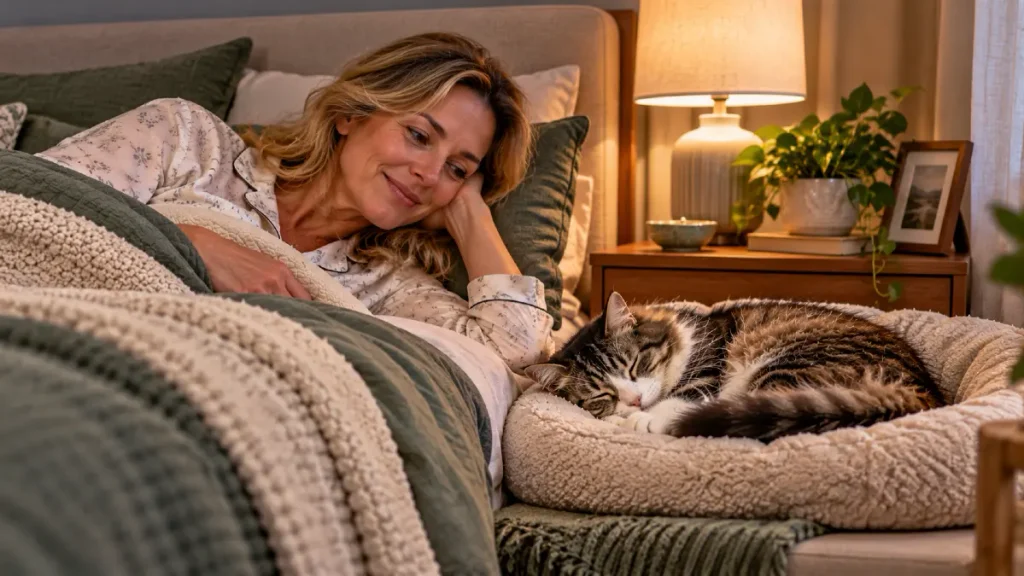
Sharing your bed with a male cat can be comforting, but it should work for both of you. Some people sleep well beside their pets, while others wake repeatedly because of movement, meowing, or allergies.
Cleveland Clinic notes that sharing a bed with a pet can offer comfort but may also disturb sleep. Pet dander and parasites can create additional concerns for some households.
The CDC recommends regular veterinary care, vaccinations, and appropriate parasite prevention for cats. Those steps are especially useful when your pet spends a lot of time on bedding and furniture.
Give Him a Comfortable Choice
Your cat does not need to sleep directly against you to feel secure. A soft bed beside your mattress can provide a familiar resting place without taking up your sleeping space.
Cats Protection recommends giving cats several suitable sleeping locations. Many cats enjoy changing where they rest throughout the day.
Choosing the Best Sleeping Setup
The best arrangement depends on your cat’s preferences, your health, and how well you sleep. Consider these practical options before deciding where he should spend the night.
| Sleeping option | Best for | Practical tip |
|---|---|---|
| Shared human bed | Owners who sleep comfortably with cats | Wash bedding regularly |
| Bedside cat bed | Cats that enjoy staying close | Add a familiar blanket |
| Raised cat perch | Cats that enjoy elevated resting spots | Keep it stable and accessible |
| Quiet sleeping room | People with sleep disruption or allergies | Provide water, litter, and a cozy bed |
Start with an arrangement that allows your cat to choose where he feels comfortable. If you want him to use a separate bed, make that space inviting rather than forcing him into it.
Help Your Male Cat Settle More Peacefully at Night
A steady routine can reduce some unwanted nighttime activity. Keep his daily schedule as consistent as possible and give him healthy ways to use his energy.
Try these simple habits:
- Offer interactive play during the day and early evening.
- Provide a scratching post and places to climb.
- Keep fresh water and a clean litter box available.
- Use puzzle feeders for mental activity.
- Avoid giving treats every time he wakes you during the night.
- Let him choose whether he wants physical contact.
Some cats also benefit from an automatic feeder if early morning hunger is disrupting sleep. This can help separate breakfast from the habit of waking you.
If your cat meows constantly, appears distressed, or shows sudden behavior changes, seek veterinary advice before treating the problem as a training issue.
When Sharing a Bed May Not Be the Best Choice
There are situations where keeping your cat out of your bed is sensible. People with significant cat allergies, asthma triggered by dander, or certain health concerns may need a separate sleeping arrangement.
Cats should also be kept away from an infant’s sleep space for safety. Babies need their own safe sleeping area without pets sharing it.
If your cat brings fleas into the house, treat the problem with veterinarian approved prevention before allowing him back onto your bedding. Regular cleaning and proper pet care help reduce avoidable risks.
The goal is not to make your cat sleep beside you every night. It is to create a peaceful home where he can rest comfortably and you can get the sleep you need.