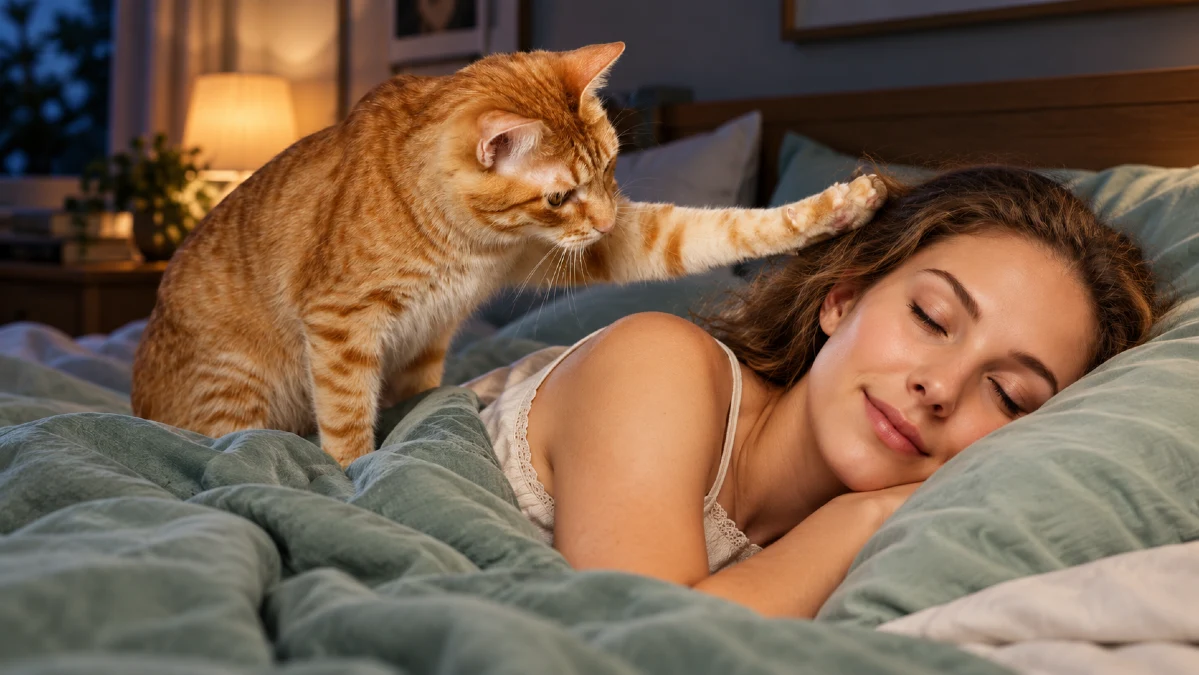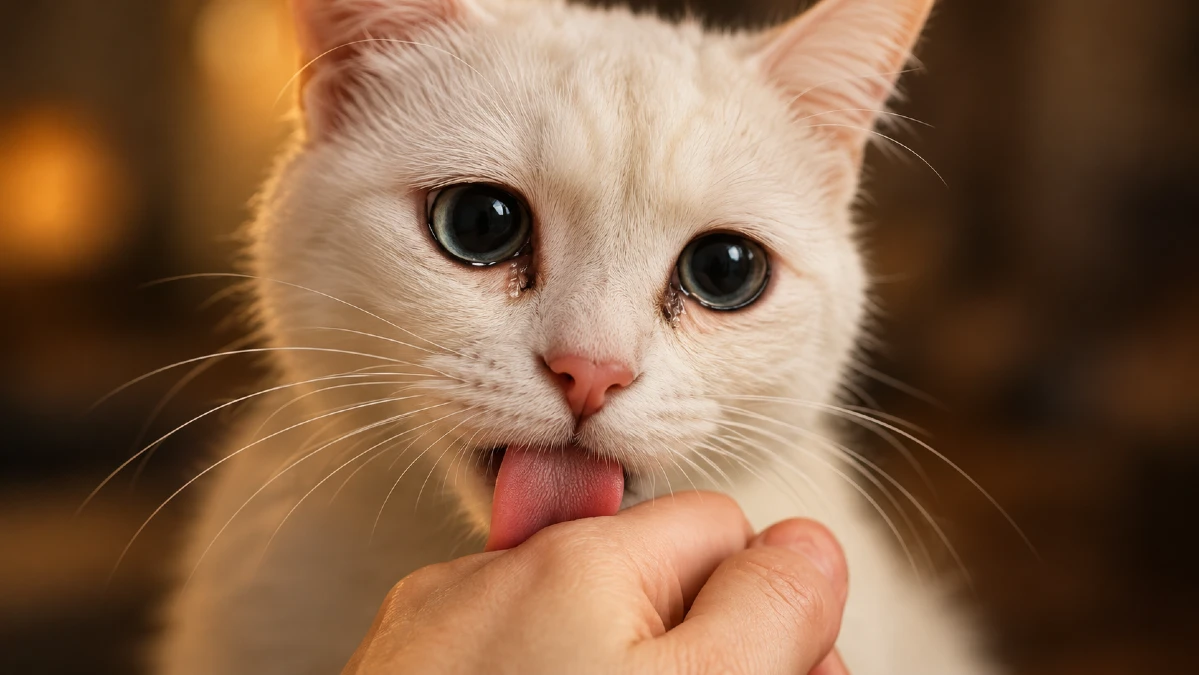
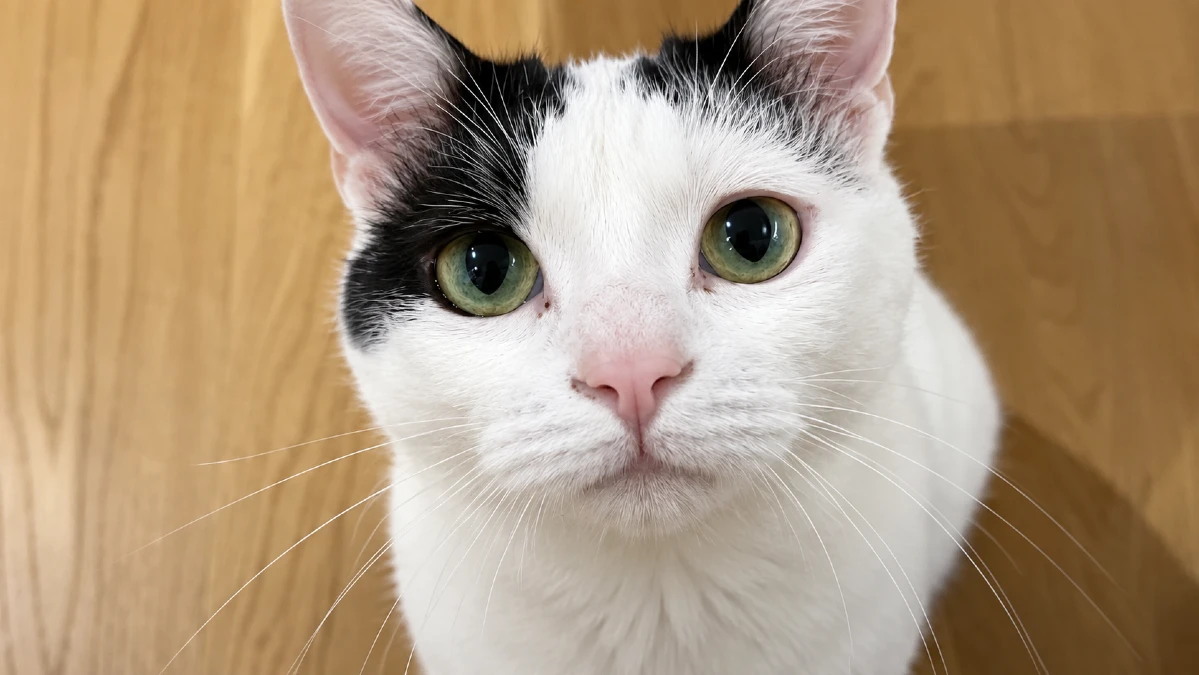
Your cat used to follow you around the house, curl up beside you, and come running whenever you called. But lately, something feels different. They spend more time alone, seem less interested in your attention, or walk away when you try to pet them.
At first, you might think your cat is simply becoming more independent. After all, cats have their own personalities, and even affectionate ones enjoy spending time alone. But when familiar habits suddenly change, there may be something more going on.
Some of the signs your cat is closing off can be easy to miss because they look like ordinary cat behavior. Hiding, excessive grooming, increased meowing, and avoiding affection may all be connected to stress, discomfort, or changes in their surroundings.
1. Your Cat Starts Hiding and Avoiding You More Often

One of the first changes you might notice is that your cat no longer spends as much time around you. A cat that once relaxed on the living room sofa may suddenly prefer hiding beneath the bed or staying in an empty room.
You might also notice them avoiding eye contact, lowering their body when you approach, or quietly walking away whenever you enter their space. These small changes can suggest that something is making your cat uncomfortable.
Why your cat might be pulling away
Cats naturally seek quiet places when they need rest or feel threatened. Hiding gives them some control over their surroundings and helps them avoid situations they find stressful.
However, hiding more than usual can have several possible causes. Your cat may be reacting to loud noises, unfamiliar visitors, a new pet, or changes in your daily routine.
Cats Protection explains that increased hiding can also be connected to illness. That is why a sudden change should never be dismissed as a simple personality shift.
The key is to compare your cat’s current behavior with what has always been normal for them. A shy cat that has always preferred quiet corners is different from an outgoing cat that suddenly refuses to leave the bedroom.
Is your cat resting or withdrawing?
Not every hiding habit is a warning sign. The following table can help you decide what deserves closer attention.
| Behavior | What it may mean | Best response |
|---|---|---|
| Hides during noisy events | Seeking safety | Provide a quiet retreat |
| Sleeps alone but comes out normally | Personal preference | Respect their space |
| Suddenly avoids familiar people | Stress or discomfort | Check for changes and illness |
| Hides most of the day unexpectedly | Possible health problem | Contact your vet |
| Hides and stops eating | Possible illness | Seek prompt veterinary care |
The biggest clue is a change from your cat’s usual behavior, especially when it affects eating, drinking, or daily activity. If hiding is sudden or persistent, arrange a veterinary check rather than trying to solve it through attention alone.
How to help your cat feel comfortable again
Give your cat a peaceful place where nobody will disturb them. A covered bed, cardboard box, or raised perch in a quiet room can provide a sense of security.
Avoid reaching into hiding spaces or pulling your cat out for cuddles. Instead, sit nearby, speak gently, and let them decide when they are ready to approach.
When your cat comes out voluntarily, offer something they enjoy, such as a favorite toy or gentle attention. Repeated positive experiences can help them feel more comfortable around you.
2. Your Cat Starts Meowing More, Especially When You’re Away
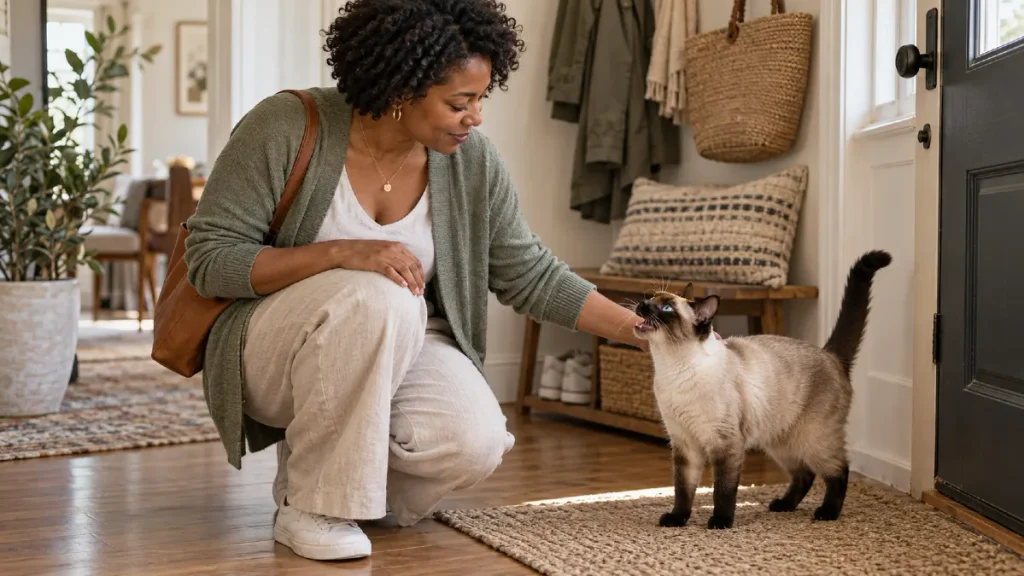
Some cats are naturally talkative. They meow when you enter the kitchen, greet you at the door, or seem to have an opinion about everything happening in the house.
But what happens when a normally quiet cat suddenly starts calling out throughout the night? Or when your cat begins following you around and meowing repeatedly as you prepare to leave?
A noticeable increase in vocal behavior may mean your cat is trying to communicate a need that has changed.
What the extra meowing could mean
Cats use vocal sounds to communicate with people. Depending on the situation, meowing may be connected to hunger, attention, frustration, fear, or discomfort.
The Feline Veterinary Medical Association explains that frequent attention seeking through vocalization can occur when a cat’s need for play or positive social contact is not being met.
For example, suppose your cat usually receives playtime when you return from work. If your schedule changes and that interaction disappears, they may begin following you around and calling for attention.
However, increased meowing can also have medical causes. Pain, an overactive thyroid, hearing loss, and age related changes in brain function can all affect vocal behavior.
This is especially relevant when an older cat suddenly begins crying at night.
Pay attention to when the meowing happens
Instead of focusing only on how loud your cat has become, look for patterns. Notice whether the calling happens before meals, after you leave a room, near a closed door, or during the night.
Keep a simple record of these changes. If the meowing is new, persistent, or accompanied by other symptoms, contact your veterinarian.
If health problems have been ruled out, try giving your cat more predictable interaction.
You can start with a few practical changes:
- Offer interactive play before leaving for work.
- Keep meals on a regular schedule.
- Spend quiet time near your cat after returning home.
- Provide safe toys or puzzle feeders during the day.
- Reward calm behavior with attention your cat enjoys.
The goal is not to respond to every meow with food or treats. It is to make sure your cat’s needs are being met before they become frustrated enough to demand attention.
3. Your Cat Keeps Interrupting You to Get Your Attention
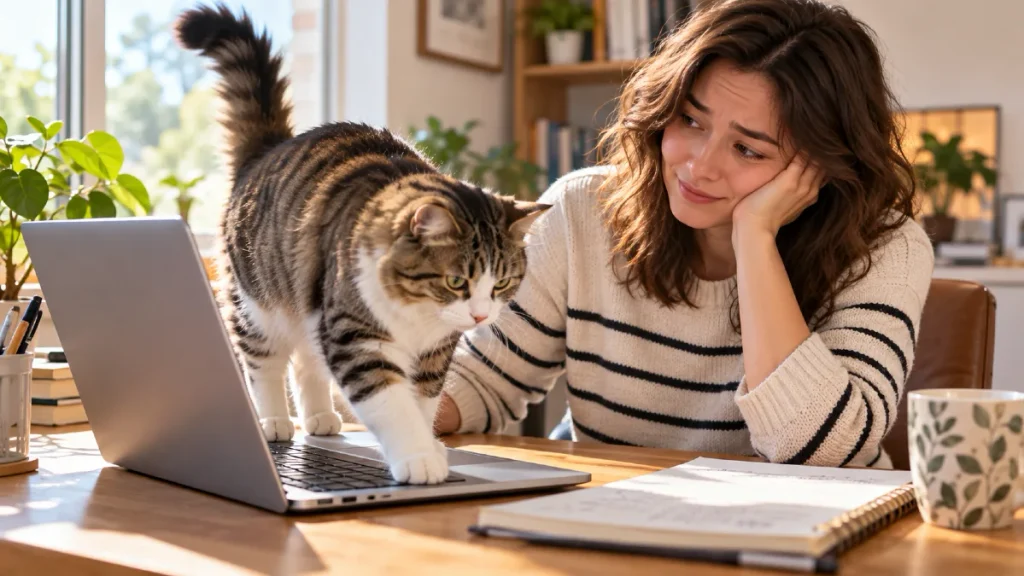
You sit down to work, and your cat immediately walks across your keyboard. You start reading, and they climb onto the book. You turn on the television, and suddenly your cat decides that standing in front of the screen is the perfect place to be.
These moments can be funny, especially when your cat looks completely pleased with themselves. But if attention seeking suddenly becomes much more frequent, it may be worth asking what has changed.
Your cat may have learned how to get a reaction
Cats are good at learning which actions produce results. When walking across your keyboard makes you look up, speak, or reach out, your cat may learn that this behavior brings attention.
The Feline Veterinary Medical Association’s 2026 training resources explain that cats can repeat behaviors that receive rewards, including attention from their owners.
This does not mean every interruption is a cry for affection. Cats may approach your desk because it is warm, interesting, elevated, or close to you.
But a sudden increase in these behaviors can be a reason to review how much positive interaction your cat receives each day.
If you have recently started working longer hours, spending more time on your phone, or changing your usual routine, your cat may be adjusting to those changes.
Give attention before your cat has to demand it
One useful approach is to create small moments of interaction throughout the day. These do not have to involve long play sessions or constant petting.
You might spend a few minutes playing before opening your laptop. Later, you could talk gently to your cat or offer a favorite toy when they approach calmly.
Consider placing a comfortable cat bed or perch near your workspace. This gives your cat somewhere to relax close to you without needing to walk across your keyboard.
Avoid shouting, spraying water, or pushing your cat away roughly. Punishment can increase fear and make your relationship more stressful.
Instead, reward the behavior you want to encourage. When your cat settles on their own perch, offer praise, play, or another reward they enjoy.
Your cat does not need your attention every minute. What helps is knowing that positive interaction remains a dependable part of daily life.
4. Your Cat Grooms So Much That Their Fur Starts Thinning
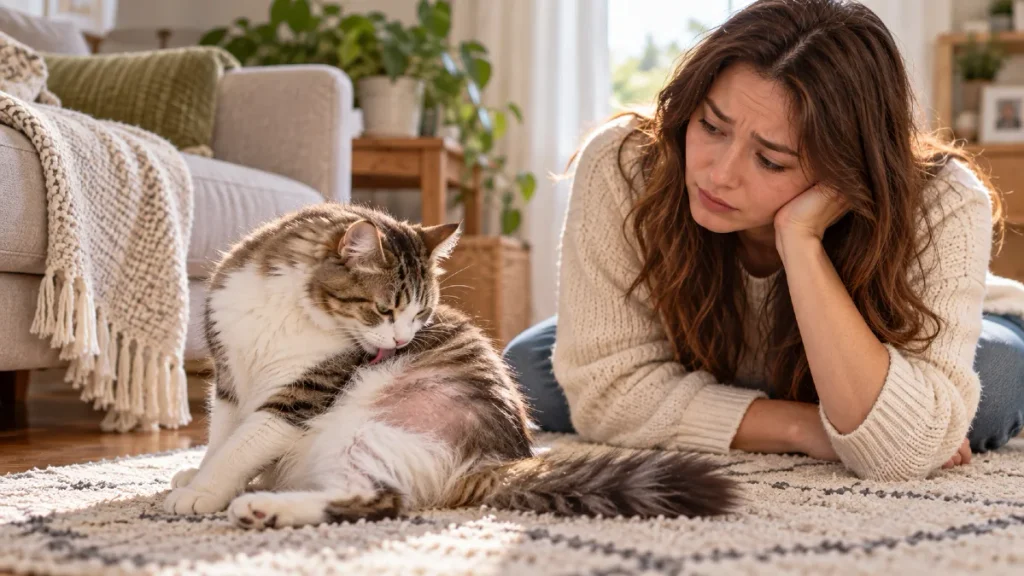
Cats spend plenty of time keeping their coats clean. You may see your cat washing their paws, licking their sides, or grooming after meals, and these activities are usually normal.
However, grooming can become concerning when it starts causing hair loss, irritated skin, or wounds. Some cats may repeatedly lick the same area until the fur becomes noticeably thin.
This can be one of the more serious changes to notice because several medical problems may be involved.
When normal grooming becomes a warning sign
Some cats groom more when they feel anxious or unsettled. The repeated movement may be part of how they respond to emotional discomfort.
For example, a change in household routine, conflict with another pet, or a stressful home environment may contribute to unusual grooming patterns.
But excessive grooming should never be assumed to be purely emotional.
VCA Animal Hospitals explains that fleas, skin allergies, infections, and pain can cause cats to lick or chew their fur excessively. Some cats focus on an area that hurts, while others groom more widely because their skin feels itchy.
That means a cat pulling out fur may need medical treatment rather than simply more affection.
When grooming needs attention
Look closely at your cat’s coat during normal daily interactions. The following differences can help you recognize when grooming needs further investigation.
| What you notice | Possible concern | Next action |
|---|---|---|
| Regular cleaning with healthy skin | Normal grooming | Continue observing |
| Thin fur on the belly or legs | Excessive licking | Arrange a vet check |
| Red skin or small scabs | Allergy or irritation | Seek veterinary advice |
| Repeated licking of one joint | Possible pain | Request an examination |
| Open wounds or bleeding | Skin injury | Get prompt veterinary care |
Even if your cat appears relaxed while grooming, there may still be a medical problem beneath the fur. Getting the cause identified is the safest way to help.
Make the home calmer while addressing the cause
Once your veterinarian has assessed the grooming, consider whether anything in your cat’s surroundings might be adding stress.
Provide quiet resting places, keep daily routines predictable, and make sure your cat can avoid other pets when needed. A scratching post, comfortable perch, and opportunities for gentle play may also help provide healthy activities.
Avoid scolding your cat for licking or repeatedly interrupting them with forced handling. Focus on removing possible causes of stress while following the treatment recommended by your vet.
Remember that fur loss can take time to improve, even after the original problem is addressed. Your cat’s comfort and skin health matter more than how quickly the coat looks normal again.
5. Your Cat Suddenly Loses Interest in Playing With You
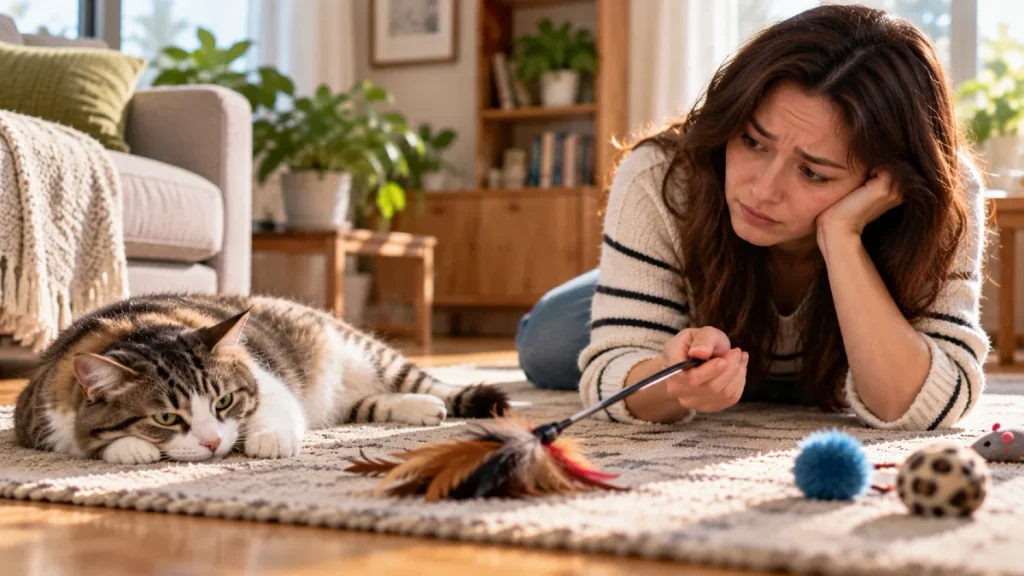
Your cat once came running whenever you picked up their favorite feather wand. They chased toys across the room, pounced on moving objects, and seemed excited whenever playtime began.
Now they barely lift their head when you offer the same toy. They may watch for a moment before turning away or simply continue sleeping.
It can be tempting to assume your cat has become lazy, especially as they grow older. But a clear loss of interest in familiar activities deserves attention.
Why play matters more than you think
For cats, play provides an outlet for natural hunting behavior. Stalking, chasing, pouncing, and catching moving objects are important activities that can keep them physically and mentally engaged.
The Feline Veterinary Medical Association’s 2025 indoor cat welfare guidance identifies opportunities for play and hunting behavior as an essential part of a healthy home environment.
If your cat has little to do throughout the day, they may become less engaged with their surroundings. A lack of variety can also make familiar toys less interesting.
However, sudden inactivity can also be a sign of illness or pain.
A cat with sore joints may stop jumping after a toy. A cat feeling unwell may have little interest in activities they previously enjoyed.
If your cat’s energy has changed noticeably, especially alongside changes in appetite, movement, or hiding, arrange a veterinary examination.
How to make playtime enjoyable again
Once health problems have been considered, try changing how you play rather than simply offering more toys.
Instead of waving a feather wand directly in front of your cat’s face, move it slowly along the floor. Let it disappear behind a chair or rug, then reappear like small prey.
Give your cat opportunities to stalk, chase, and catch the toy. This often makes the activity more engaging than constant fast movement.
A few other options may help:
- Rotate toys so everything is not available at once.
- Try gentle play near your cat’s favorite resting area.
- Use cardboard tunnels or boxes for exploration.
- Offer a simple food puzzle using part of their usual meal.
- Adjust the pace for older cats or cats with limited movement.
Products such as the Catit Senses Food Tree or PetSafe SlimCat feeder ball can provide another way to explore and work for food. Start with an easy activity, and never force an unwilling cat to participate.
You do not need expensive equipment to make play meaningful. A simple wand toy and your undivided attention can provide an enjoyable shared activity.
6. Your Cat Becomes More Sensitive, Irritable, or Aggressive
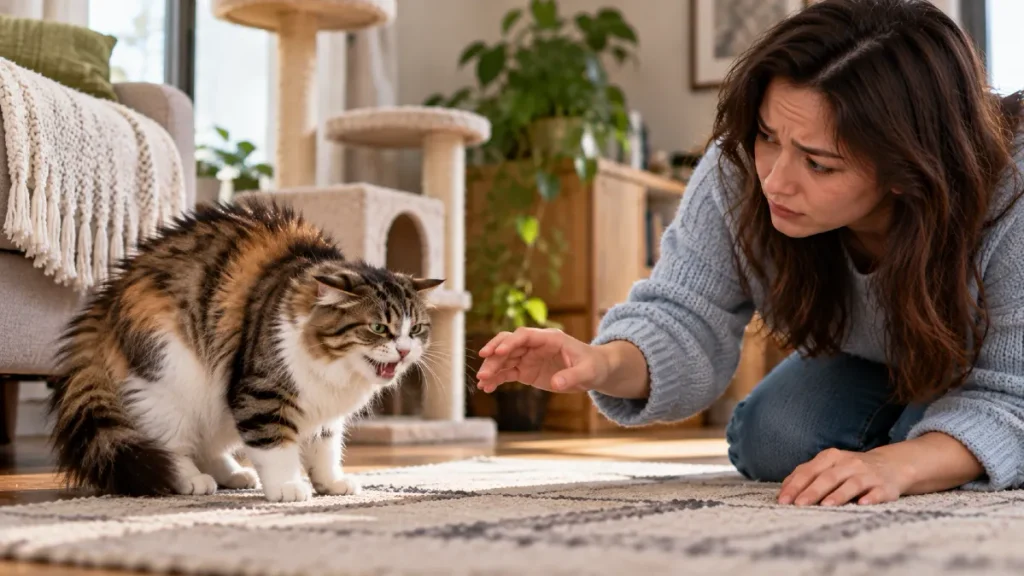
Few things feel more confusing than reaching out to pet a cat that once loved affection, only to have them pull away or hiss.
Perhaps your cat now swats when you touch their back. Maybe they flatten their ears when you approach or suddenly leave whenever you sit beside them.
These reactions can feel like rejection, but cats usually have a practical reason for responding defensively.
Your cat may be asking for more control
Cats differ in how much physical contact they enjoy. Some love long cuddles, while others prefer sitting close without being touched.
Even affectionate cats may dislike being picked up unexpectedly, having their belly rubbed, or being stroked for too long.
Cats Protection explains that unwanted handling can lead to defensive reactions, particularly when a cat feels unable to escape.
Your cat may give several smaller signals before hissing or swatting. These can include a tense body, moving their head away, flattening their ears, or increased tail movement.
If these warnings are missed repeatedly, your cat may begin avoiding contact before it even starts.
Sudden aggression can also be caused by pain. A cat with arthritis, dental disease, or another painful condition may become sensitive to handling.
How to respond to your cat’s body language
Learning when to stop touching your cat can make your interactions more comfortable. Use their body language to decide whether to continue or give them space.
| Body language | Possible message | Your response |
|---|---|---|
| Relaxed body and approaching you | Open to interaction | Offer gentle contact |
| Moves away during petting | Wants to stop | Stop immediately |
| Tail flicking with a tense body | Becoming uncomfortable | Pause and give space |
| Flattened ears or hissing | Feels threatened | Move away calmly |
| Sudden reaction when one area is touched | Possible pain | Arrange a vet check |
No single body signal tells the whole story, so pay attention to the setting and your cat’s normal behavior. If aggression is new or unexplained, a veterinarian should check for physical discomfort.
Let your cat decide when affection happens
Try sitting quietly and allowing your cat to approach you first. Offer your hand near their nose without forcing contact.
If they rub against your hand and appear relaxed, you can try a few gentle strokes around the cheeks or head. Stop after a short moment and see whether they ask for more.
Avoid following your cat when they walk away. Respecting that choice helps keep interactions predictable and less threatening.
If your cat prefers playing beside you instead of cuddling, that can still be a positive way to spend time together.
The aim is to make your presence something your cat can enjoy without pressure.
7. Your Cat Starts Having Accidents Outside the Litter Box
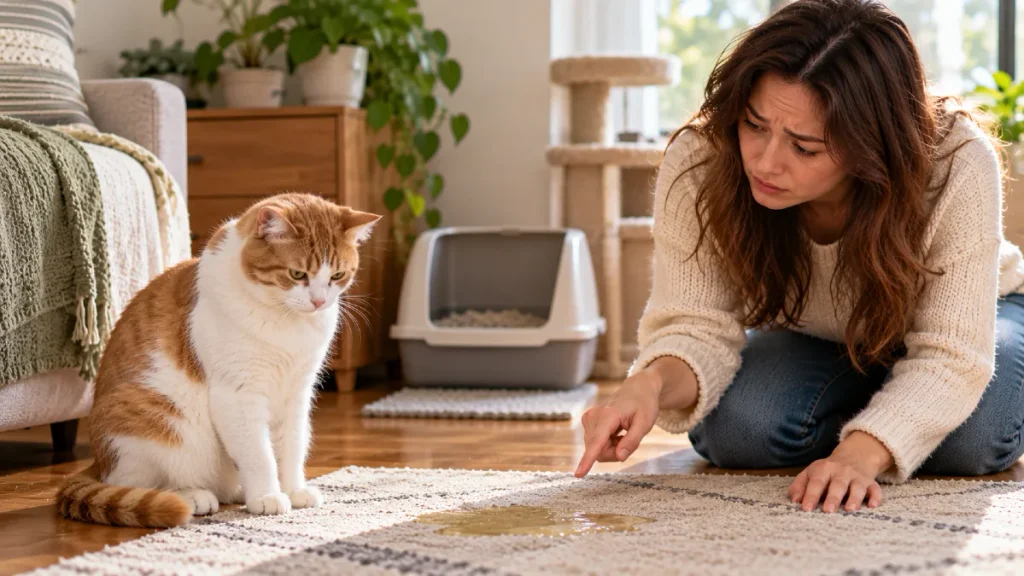
Finding urine on your bed or discovering that your cat has started using the bathroom rug instead of their litter box can be frustrating.
You might wonder whether your cat is upset because you have been spending less time at home. Some owners even think these accidents are a form of revenge.
But cats do not usually soil the house to punish their owners. A sudden change in litter box habits is a sign that something needs attention.
What your cat’s litter box habits might reveal
Cats generally prefer a suitable, clean, and secure place to eliminate waste. If the litter box becomes uncomfortable or difficult to access, they may begin avoiding it.
For example, moving a litter box into a noisy laundry room might make a sensitive cat reluctant to use it. A new type of litter, a dirty tray, or another cat blocking access can create problems too.
Stressful household changes may also affect toileting behavior. Moving homes, introducing another pet, or changing daily routines can make some cats feel less secure.
However, medical causes must be ruled out first.
Cornell Feline Health Center explains that urinary tract inflammation, kidney disease, diabetes, and other conditions can contribute to house soiling.
If urination becomes painful, a cat may begin avoiding the litter box because they associate it with discomfort. This can happen even when the owner has done nothing wrong.
What litter box problems may be telling you
Different patterns can point to different areas that need investigation. Use this table as a starting point, not as a diagnosis.
| What happens | Possible cause | What to do |
|---|---|---|
| Avoids a dirty litter box | Poor box hygiene | Scoop and clean regularly |
| Avoids a recently moved box | Uncomfortable location | Offer a quiet location |
| Stops using a new litter | Texture or scent dislike | Restore a familiar litter |
| Urinates more often or in unusual places | Possible illness | Contact your vet promptly |
| Strains but produces little or no urine | Possible urinary blockage | Seek emergency vet care |
Litter box problems often involve more than one factor. A veterinary examination can help separate health problems from environmental concerns, allowing you to address the actual cause.
Changes that can make the litter box more comfortable
Begin by checking that your cat has easy access to a clean litter box in a quiet area.
Avoid placing it directly beside loud appliances or in a location where another animal can trap your cat. If you have several cats, provide multiple litter boxes in different areas so they do not have to compete for access.
Many cats prefer unscented litter and a box that gives them enough room to turn around comfortably. Older cats or those with painful joints may benefit from a box with a lower entrance.
Clean accident areas with a cleaner made for pet urine, and avoid punishing your cat. Shouting or rubbing their nose in an accident can increase stress without fixing the cause.
Know when a litter box change is an emergency
A cat that repeatedly visits the litter box but passes little or no urine may have a urinary obstruction. This is a medical emergency, particularly in male cats, although urinary problems can affect any cat.
Other warning signs include crying while trying to urinate, visible blood in the urine, vomiting, or severe distress.
If your cat is straining and cannot urinate normally, seek emergency veterinary care immediately. Do not wait to see whether a different litter or cleaner solves the problem.
For less urgent changes, your vet can help assess urinary health, pain, and other medical causes. Once these have been addressed, you can focus on improving the litter box setup and reducing household stress.