I never thought I’d be a person who cooked for their dog. But when my senior rescue, Buster, developed a scary bout of stress-induced colitis and started refusing his kibble, my vet suggested a temporary bland diet of ground turkey and rice. The change was immediate—his energy returned, his coat seemed shinier, and for the first time in months, he was excited for meals again.
This apparent “miracle” sent me down the rabbit hole of homemade dog food research. I was quickly overwhelmed by the complexity, the conflicting information, and the fear of doing it wrong. I wanted to ensure he was getting a complete and nutritious meal, not just a bland one.
These are the 3 easy, foundational crockpot recipes I developed after that research and in consultation with my veterinarian to create a safe, balanced rotation. They save me time on prep, and Buster has never been healthier.
Easy Crockpot Dog Food
Click “Next” to see the recipes!
A Vital Warning From Our Expert: Read This Before You Cook

I am a dedicated canine nutrition writer and pet owner, not a veterinary nutritionist. These recipes are a starting point, not a substitute for professional medical advice.
Many owners (like me) want to cook for their dogs to control ingredients, avoid commercial recalls, and provide a more “natural” food. However, the vast majority of homemade dog food recipes found online, in books, and even from well-meaning veterinarians are nutritionally incomplete and dangerous for long-term feeding.
The data is alarming: A landmark 2013 study by researchers at the UC Davis School of Veterinary Medicine analyzed 200 homemade dog food recipes. They found that 95% were deficient in at least one essential nutrient. Even recipes written by veterinarians were often found to be inadequate.
An improperly balanced diet can lead to severe, irreversible health issues.
The most common and dangerous deficiency is calcium. A lack of proper calcium (or an improper calcium-to-phosphorus ratio) can lead to osteopenia (brittle bones) and pathologic fractures, especially in growing puppies.
Other common deficiencies include zinc, copper, choline, and vitamin D, which can cause skin problems, seizures, and metabolic disease.
These recipes are a base, not a complete meal as-is. To make them safe for long-term feeding, you MUST consult with your veterinarian or, ideally, a Board-Certified Veterinary Nutritionist (a veterinarian with the title DACVIM-Nutrition).
A nutritionist will perform a precise analysis of your dog’s needs and prescribe a specific vitamin and mineral supplement mix or recipe modifications (like adding calcium carbonate or fish oil) to perfectly balance the meal for your dog’s specific age, breed, and health requirements.
The Recipe Collection
Recipe 1: Fido’s Favorite Beef & Sweet Potato Stew
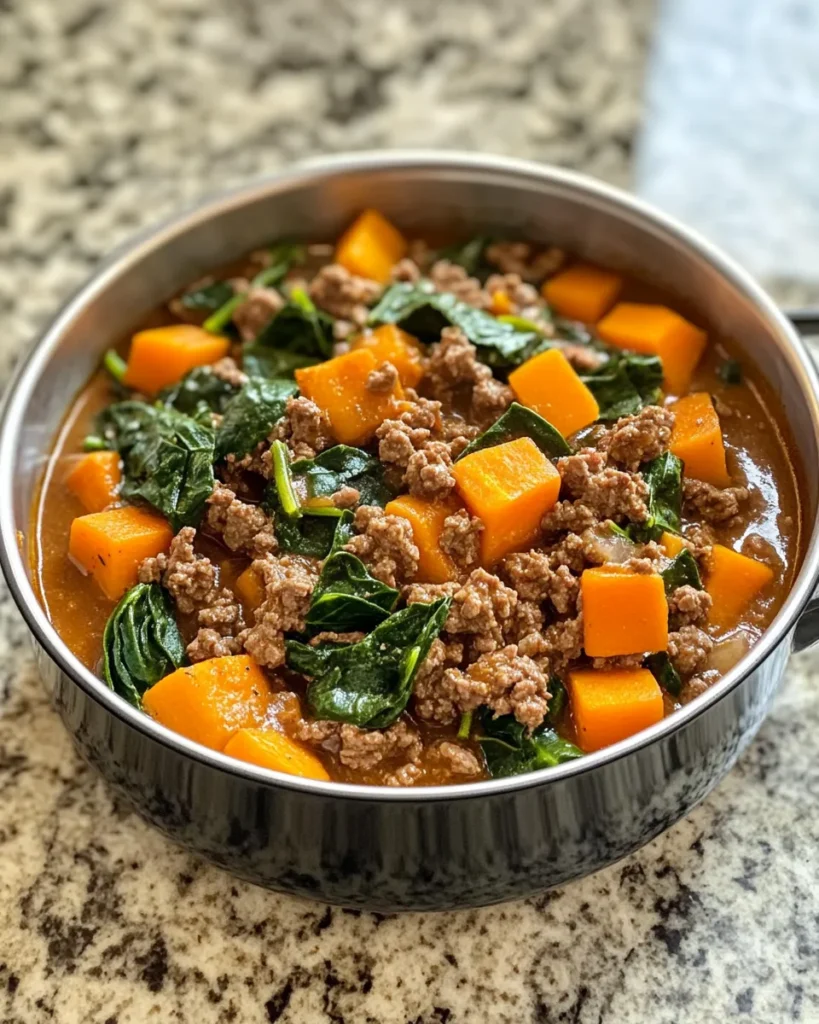
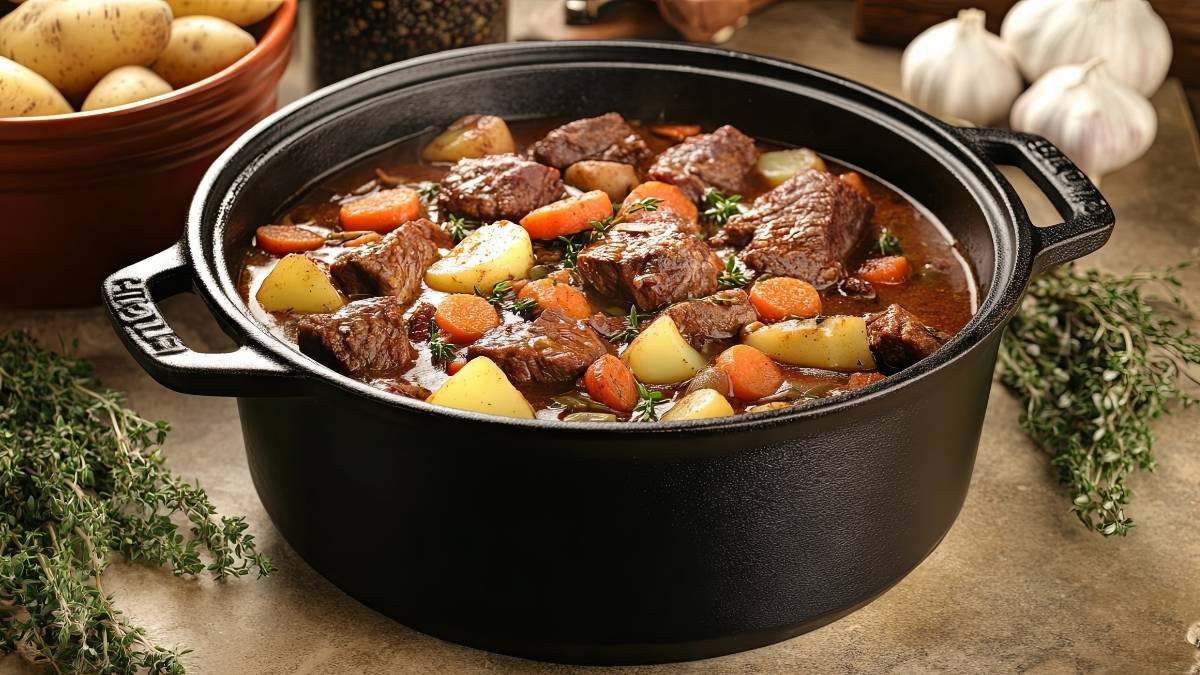
This is a hearty, nutrient-dense recipe that’s a hit with active dogs. We’re using lean ground beef, which is rich in iron and protein, and pairing it with vitamin-packed sweet potato, carrots, and butternut squash. The kidney beans add an excellent boost of fiber.
Ingredients:
- 2.5 lbs lean ground beef (90/10)
- 1.5 cups brown rice, uncooked
- 1 large sweet potato, scrubbed and diced (approx. 1.5 cups)
- 1.5 cups chopped carrots
- 1.5 cups chopped butternut squash, (can use frozen)
- 1 (15-ounce) can kidney beans, drained and rinsed
- 4 cups water or low-sodium beef broth
Instructions:
- Add all ingredients to a 6-quart slow cooker: ground beef, brown rice, kidney beans, diced sweet potato, chopped carrots, and butternut squash.
- Pour the water or broth over the top.
- Stir well to break up the ground beef and combine all ingredients.
- Cover and cook on LOW for 5-6 hours or on HIGH for 2-3 hours, until the rice is tender and the vegetables are soft.
- Stir the mixture thoroughly one last time, ensuring the beef is crumbled.
- Let the food cool completely to room temperature before portioning and serving.
Per-Serving Nutrition
| Nutrient | Amount (per 1 cup) | Notes |
|---|---|---|
| Calories | ~410 kcal | Estimated value based on ingredients. Not a substitute for professional analysis. 23 |
| Protein | ~25g | Excellent source of amino acids from beef and beans. 23 |
| Fat | ~15g | 23 |
| Fiber | ~4g | From brown rice, beans, and vegetables. |
Recipe-Specific Pro-Tip: This recipe is rich in phosphorus from the meat but, like all un-supplemented homemade diets, it is critically deficient in calcium. A common source to add is finely ground eggshells. However, you must consult your vet to determine the exact safe amount, as an improper calcium-to-phosphorus ratio is dangerous.
Recipe 2: The “Sensitive Tummy” Turkey & Rice Mix
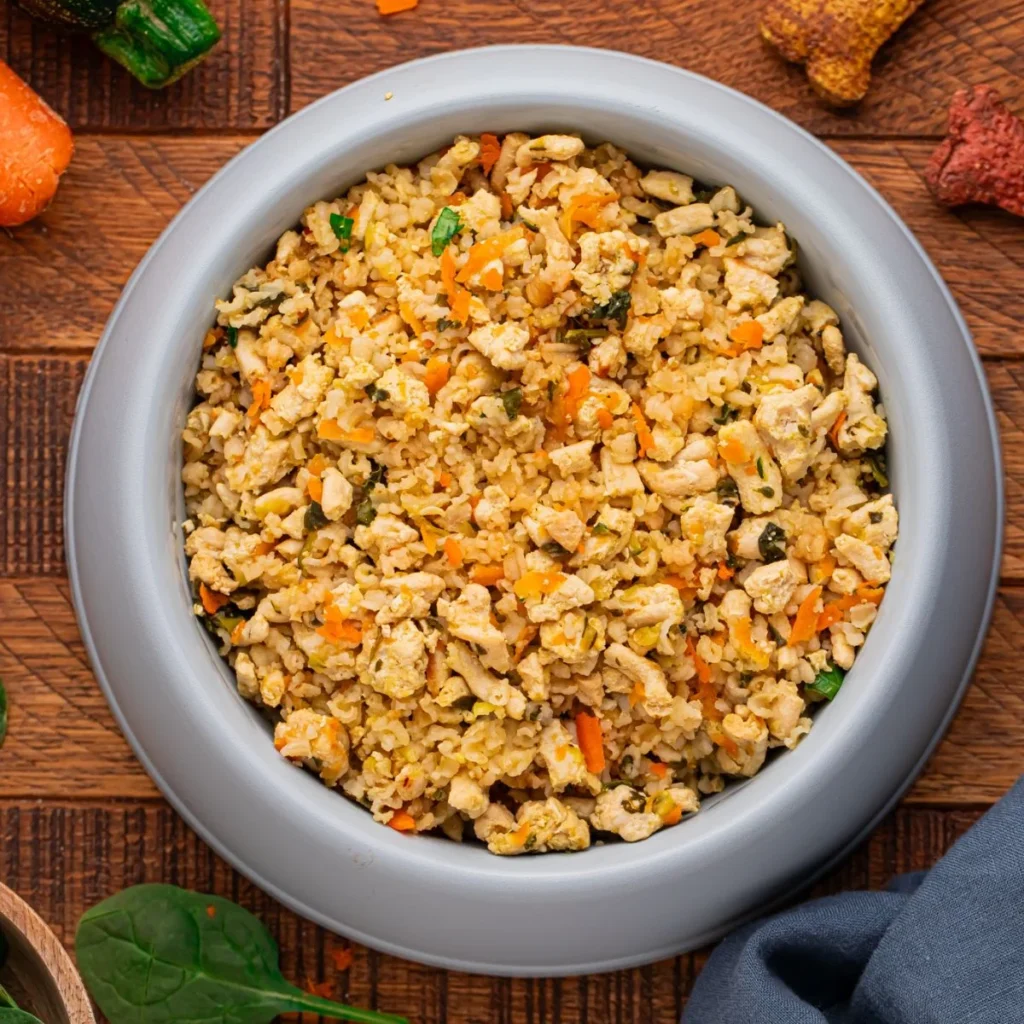
This recipe is a gentle, highly digestible option, ideal for dogs with sensitive stomachs or picky eaters. We use lean ground turkey and simple brown rice, with spinach and sweet potato for a mild, nutritious boost. This is a great ‘starter’ homemade meal.
Ingredients:
- 3 lbs ground turkey (85/15 or 93/7)
- 1.5 cups brown rice, uncooked
- 1.5 cups frozen mixed peas and carrots
- 1.25 cups frozen sweet potatoes (or one 10oz bag)
- 1 cup frozen spinach
- 4 cups water or no-salt-added chicken broth
Instructions:
- Place all ingredients into the slow cooker: ground turkey, uncooked brown rice, frozen sweet potatoes, frozen peas and carrots, and frozen spinach.
- Pour the water or broth over the mixture.
- Use a large spoon or a “mix and chop” tool to break up the ground turkey and stir everything together.
- Cover and cook on LOW for 6 hours or on HIGH for 3-4 hours, stirring once or twice if possible to prevent sticking.
- The meal is done when the meat is cooked, the rice is tender, and all liquid is absorbed.
- Let the food cool completely before serving.
Per-Serving Nutrition
| Nutrient | Amount (per 1 cup) | Notes |
|---|---|---|
| Calories | ~440 kcal | Estimated value based on ingredients. Not a substitute for professional analysis. 27 |
| Protein | ~23g | A lean protein source. 27 |
| Fat | ~10g | Lower in fat than the beef recipe. 27 |
| Fiber | ~5g | From rice and vegetables. |
Recipe-Specific Pro-Tip: For dogs with especially sensitive stomachs, you can make two swaps: first, use white rice instead of brown , as it’s more digestible. Second, purée the spinach, carrots, and peas with some of the water before adding them. This makes the vegetable nutrients easier for your dog to absorb and prevents picky eaters from eating around them.
Recipe 3: Simple Start Chicken & Veggie Blend
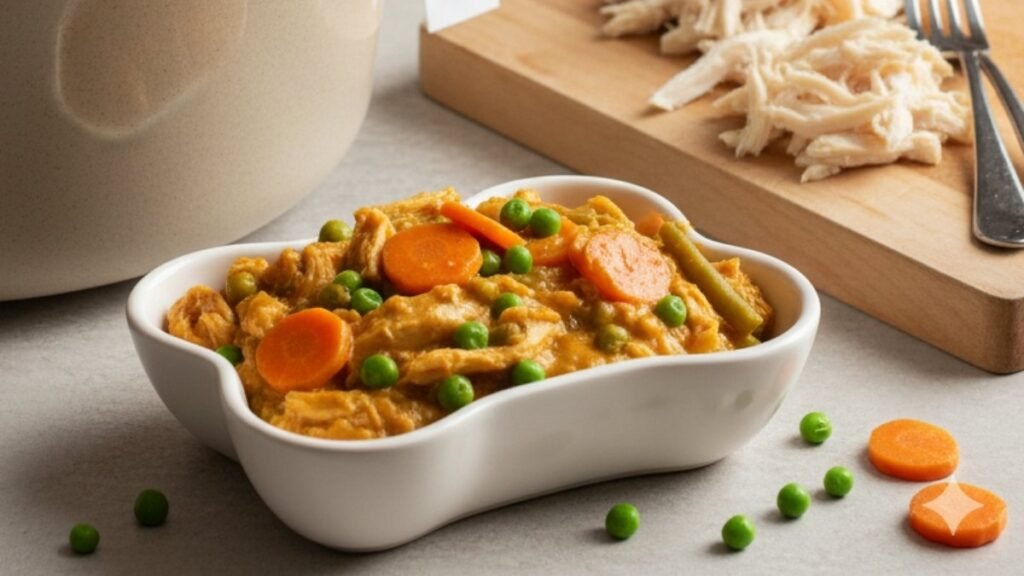
This is a wonderfully simple, clean recipe. We use whole chicken breasts or thighs, which you shred after cooking, combined with classic, dog-safe vegetables like carrots and green beans. This recipe is also rice-free for dogs who may have grain sensitivities.
Ingredients:
- 3 lbs boneless, skinless chicken breasts or thighs
- 1.5 cups chopped carrots
- 1.5 cups green beans, broken into segments
- 1.5 cups frozen peas
- 1 cup butternut squash, diced (can use frozen)
- 4 cups water
Instructions:
- Place the whole chicken breasts/thighs at the bottom of the slow cooker.
- Layer the carrots, green beans, peas, and butternut squash on top of the chicken.
- Pour the water over all the ingredients.
- Cover and cook on LOW for 6-8 hours or on HIGH for 4-5 hours.
- Once cooked, remove the chicken breasts/thighs and place them on a cutting board. Shred the chicken using two forks.
- Return the shredded chicken to the crockpot. Stir vigorously to combine the chicken with the soft vegetables, creating a thick stew.
- Let the food cool completely before serving.
Per-Serving Nutrition
| Nutrient | Amount (per 1 cup) | Notes |
|---|---|---|
| Calories | ~310 kcal | Estimated value based on ingredients. Not a substitute for professional analysis. 20 |
| Protein | ~29g | High in protein from chicken. 20 |
| Fat | ~8g | Very lean, especially if using chicken breast. 20 |
| Fiber | ~3g | From the vegetable blend. |
Recipe-Specific Pro-Tip: This recipe is extremely lean. Healthy fats are essential for your dog’s skin, coat, and brain function. Ask your veterinarian about adding a canine-specific Omega-3 fish oil or salmon oil to the bowl just before serving. Never add the oil before cooking, as this can destroy its beneficial properties.
General Feeding Guidelines (A Starting Point)
One of the most common and difficult questions is, “How much do I feed?” The only correct answer comes from your veterinarian, who will base the amount on your dog’s ideal body condition, age, activity level, and the specific caloric density of your final, supplemented recipe.
A General Starting Point (NOT A RULE): As a very general starting point for an adult dog, you can use the 2-3% rule. This means feeding 2-3% of your dog’s ideal body weight in food per day.
For a food with this moisture content, a good baseline is: Feed approximately 1 cup of food per 20-25 pounds of ideal body weight, split into two meals.
Critical Caveats:
This is NOT for puppies. Puppies have vastly different caloric and nutritional needs and should only eat a homemade diet formulated for growth by a veterinary nutritionist.
Watch the Dog, Not the Bowl: Monitor your dog’s body condition weekly. You should be able to feel their ribs but not see them. If they are gaining or losing weight, adjust the portion and speak to your vet.
Bulk Storage & Freezing Guide (The Method)
These large-batch recipes (12-14 cups) are perfect for bulk prepping. Here is the safest and easiest way to store your food.
Step 1: Cool Completely You must let the food cool completely before storing. Never put hot food in the fridge or freezer. To cool it safely, you can refrigerate the entire ceramic crockpot insert or spread the food on baking sheets.
Step 2: Refrigerate (Short-Term) Store in an airtight container in the refrigerator for 3-4 days.
Step 3: Freeze (Long-Term) This is the best method. Portion the cooled food into single-serving freezer-safe bags. For a 40lb dog, this might be 1-cup portions.
- Press the bags flat, squeezing out all the air, and seal.
- Pro-Tip: Label each bag with the date and recipe type. The flat-pressed bags can be stacked like books in your freezer and will thaw much more quickly and evenly.
- The food will last up to 3 months in the freezer.
Step 4: Safe Defrosting & Serving
- The ONLY Safe Method: Thaw a frozen portion overnight in the refrigerator.
- DANGER: NEVER thaw food on the counter or in hot water. This puts the food in the bacterial “Danger Zone” (40°F – 140°F) and can make your dog sick.
- To Serve: Feed cold from the fridge or add a splash of warm water to take the chill off. Avoid microwaving, as it can create dangerous hot spots and degrade nutrients. If you must, microwave for only 15-30 seconds and stir very well.
Conclusion & Call-to-Action
Making the switch to homemade dog food can feel overwhelming , but seeing your best friend truly excited for mealtime is one of the most rewarding parts of being a pet parent.
The interest in homemade diets is growing , and you are taking a wonderful, proactive step for your dog’s health. By using these recipes as a starting point and—most importantly—partnering with your veterinarian or a veterinary nutritionist , you can be confident you are giving your dog a meal that is both delicious and truly complete and balanced.
Which recipe do you think your pup will try first? Do you have any other crockpot tips or healthy additions your vet has approved? Share your experience in the comments below!