Do you ever tell your cat “I love you” and wonder if they have any idea what you mean? Maybe they blink at you, turn their head, or simply walk away. You might even wonder whether your cat knows how much you care about them.
Here’s something interesting. Your cat may recognize more of your speech than you realize, even though they don’t understand human language the way you do. The sounds you use, your familiar voice, and what happens afterward can all become part of how your cat experiences life with you.
Research published in Animal Cognition found that cats can tell when their owners are speaking specifically to them. Another study in Scientific Reports showed that cats can recognize their own names among other words.
1. Say “Hello” So Your Cat Knows You Are Near
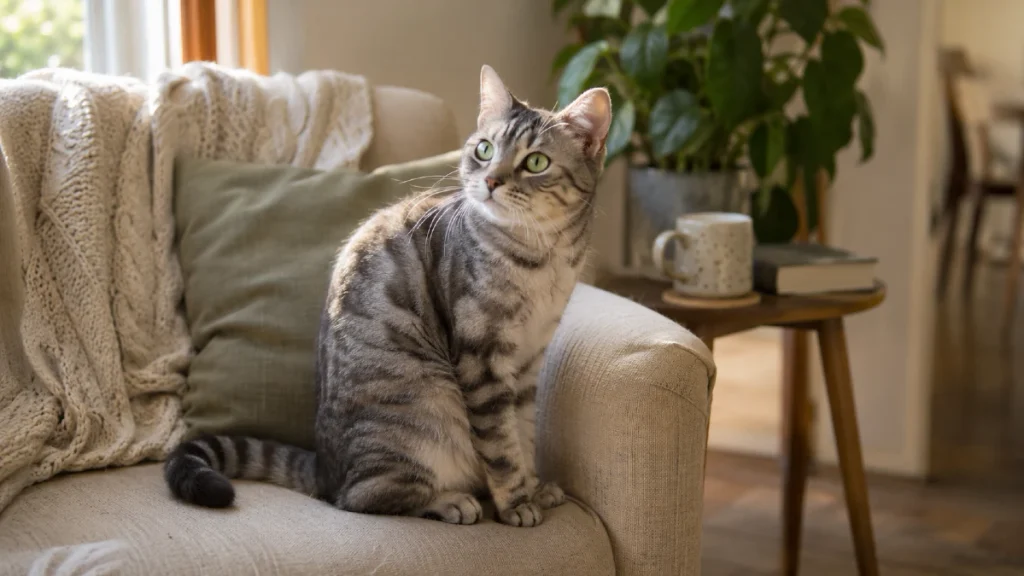
Your cat may already know the sound of your greeting. If you often say “hello” when you come home, your cat might begin connecting that sound with your arrival.
Cats Protection explains that cats can recognize their owner’s voice and notice when someone is talking directly to them. This means your familiar greeting may get their attention even when they cannot see you.
Try saying “hello” in a gentle voice when you enter a room where your cat is resting. You do not need to raise your voice, repeat the word several times, or move closer right away.
Give your cat a moment to respond. They might look toward you, raise their tail, approach you, or continue relaxing where they are.
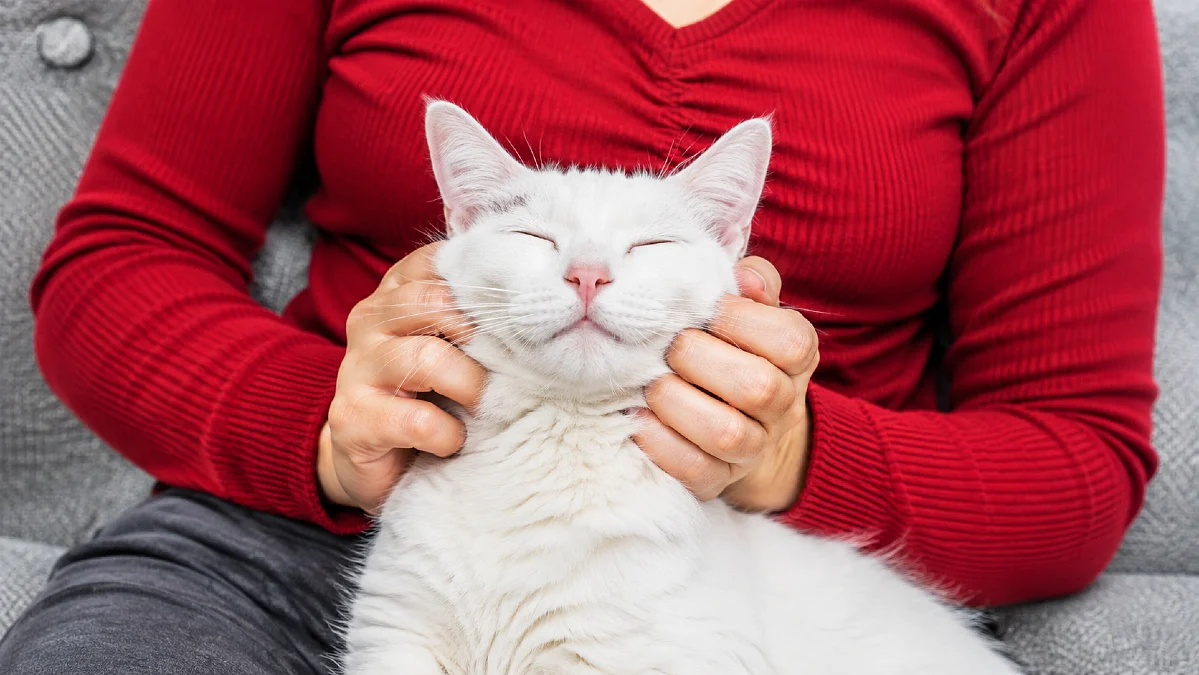
The important part is what happens next. If your cat comes over, offer a gentle greeting or a brief chin scratch if they enjoy being touched.
If they remain on their bed, respect their choice. Your greeting can still become a familiar part of their day without requiring them to interact.
How to Read Your Cat’s Response
A cat’s reaction to your voice can tell you whether they welcome more attention. Look at their whole body rather than relying on one movement.
| Your Cat’s Response | Possible Meaning | What You Should Do |
|---|---|---|
| Tail raised, relaxed body | Friendly greeting | Offer gentle attention |
| Walks toward you | Interested in contact | Let them approach |
| Looks up, stays resting | Aware but content | Give them space |
| Moves away or hides | Wants distance | Do not follow |
These signals are clues, not fixed rules. A cat can recognize your greeting and still prefer to be left alone.
The best greeting is one that gives your cat a choice. Over time, that can help your voice become part of a safe, familiar routine.
2. Use “Good” to Make Praise Clear and Kind
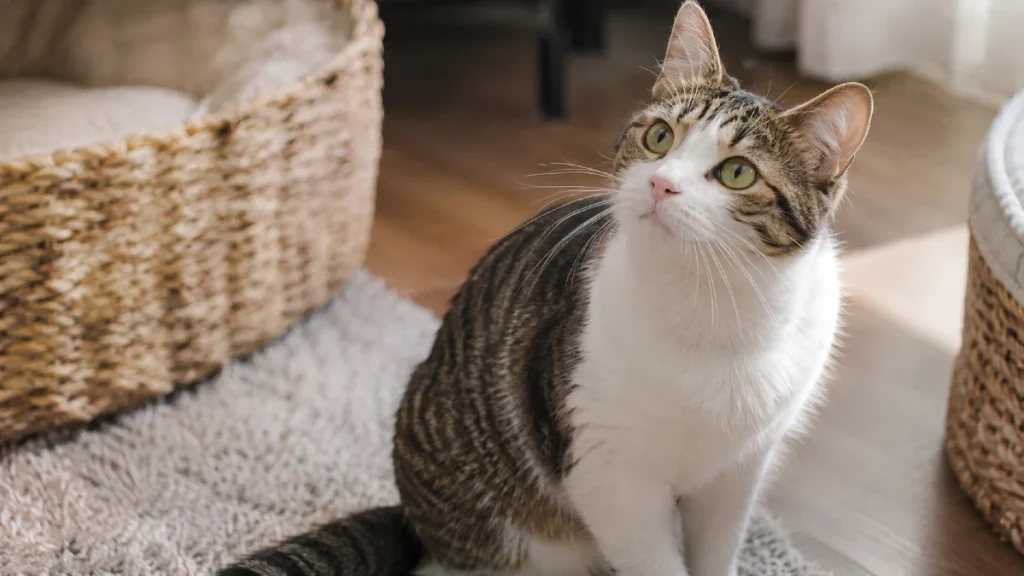
Your cat does something you love, and you want them to know it. Perhaps they use their scratching post, approach you calmly, or settle beside you without climbing onto your keyboard.
This is a good time to use the word “good.”
Cats can learn to connect a sound with something pleasant. If you say “good” just before giving a reward your cat enjoys, the word can become a familiar signal.
VCA Animal Hospitals explains in its 2026 kitten training guidance that reward based learning helps cats repeat behaviors that lead to pleasant results. Rewards can include food, toys, or attention, depending on what your cat enjoys.
For example, suppose your cat uses their scratching post instead of the sofa. You can say “good” in a warm voice and immediately offer a small reward.
Another example is when your shy cat chooses to approach you. You might say “good” softly and let them enjoy a little play or a treat without reaching for them.
The key is timing. Say the word while your cat is doing the behavior you want to encourage, then follow it with something positive.
Avoid using the same cheerful word immediately before something your cat dislikes. That can make the signal less clear.
You should also avoid shouting when your cat makes a mistake. Loud punishment can create fear and damage the sense of safety you are trying to build.
Your cat does not need to know that “good” means praise in English. They need to learn that the sound predicts something pleasant.
And remember, you do not need to reward every loving moment with food. Gentle attention, play, or simply allowing your cat to remain comfortable can also be valuable.
3. Say “Here” to Invite Your Cat Without Forcing Contact
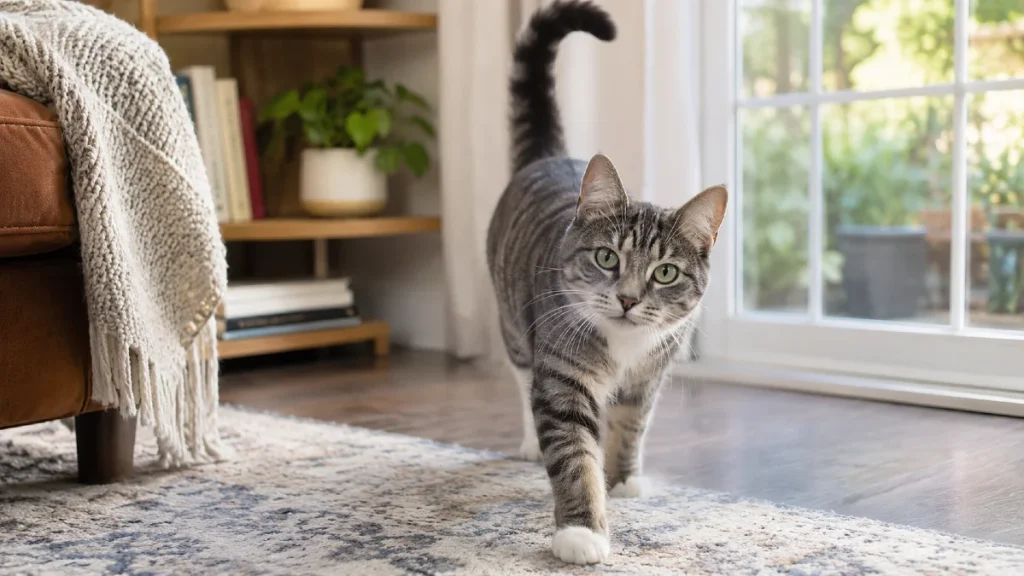
One of the nicest things about living with a cat is when they choose to come to you. That choice matters because cats generally feel more comfortable when they can control how close they get.
The word “here” can become a gentle invitation.
Start when your cat is awake, relaxed, and already showing interest in you. Sit in a comfortable spot, say “here” once, and offer something they like when they approach.
That reward could be a small treat, a favorite toy, or a gentle cheek rub if your cat enjoys it. Keep your voice and the situation similar each time you practice.
At first, your cat might come closer only because they notice the reward. With repeated pleasant experiences, they may begin to connect your spoken cue with the chance to approach you.
VCA Animal Hospitals recommends using consistent cues when training cats. This makes it easier for them to learn which sound predicts a particular activity.
There is one rule worth following: never use “here” as a trick to make your cat come over for something unpleasant.
For example, avoid calling your cat with this word and immediately grabbing them for unwanted handling. That could make them less willing to respond in the future.
If you need to prepare your cat for a carrier or another care task, teach a separate cue through gentle training.
Shy cats may need more time to respond. You can place a reward near them rather than requiring them to walk all the way across the room.
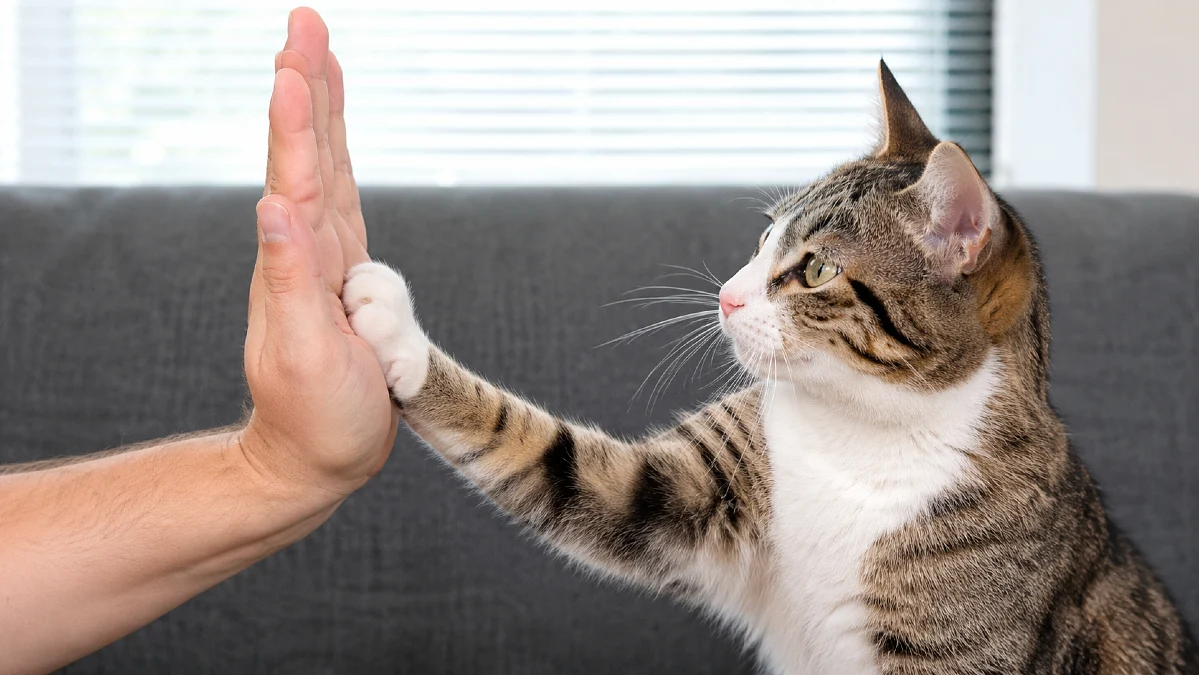
And if your cat looks at you but stays where they are, that’s fine. A cat who chooses not to approach is still communicating with you.
Letting your cat say no can be one of the most useful ways to build trust.
4. Say “Play” Before a Game Your Cat Enjoys
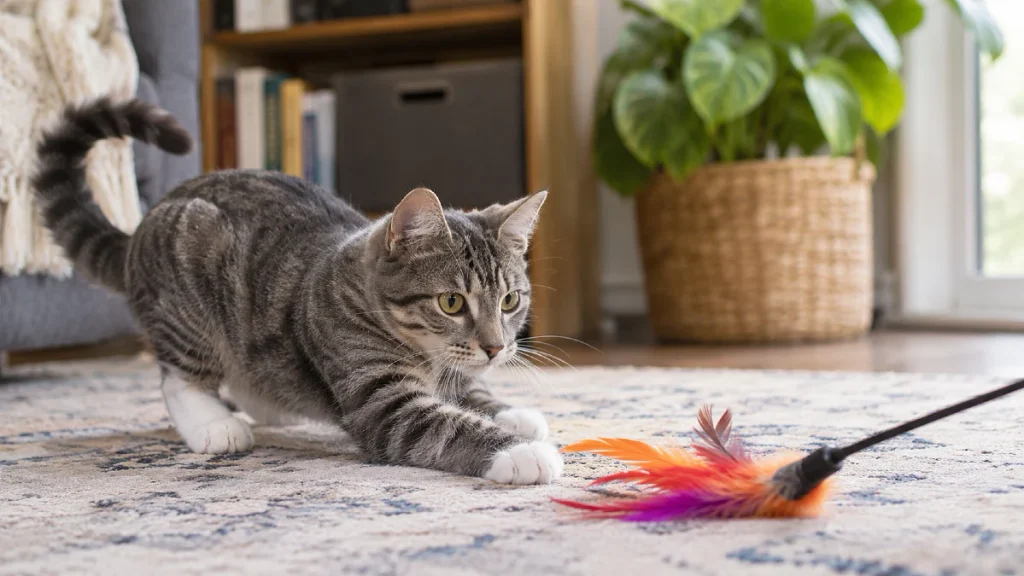
Your cat might not care much about long conversations, but a favorite game can get their attention. If they enjoy chasing a feather wand or stalking a toy mouse, play gives you a natural chance to spend time together.
Try using the word “play” before bringing out their favorite toy.
Say it in your normal friendly voice, then begin the game. Over time, your cat may connect that sound with an activity they enjoy.
The Feline Veterinary Medical Association’s Cat Friendly Homes resource explained in September 2026 that play helps cats express natural hunting behaviors. Chasing, stalking, and catching suitable toys give cats ways to use those instincts indoors.
That makes play more than entertainment. It can be a way to offer your cat a pleasant experience while spending time together.
Start by moving a wand toy across the floor rather than waving it directly in your cat’s face. Give them a chance to watch, follow, and decide whether to chase.
You can make the game more satisfying by allowing your cat to catch the toy during play. This gives them the chance to complete the action they were trying to perform.
Which Type of Play Does Your Cat Enjoy?
Not every cat likes the same activity. The table below can help you choose a game based on what your cat already seems interested in doing.
| Your Cat Enjoys | Try This Activity | How to Begin |
|---|---|---|
| Chasing movement | Feather wand | Move it across the floor |
| Stalking and pouncing | Fabric toy mouse | Move it behind furniture |
| Searching for food | Cat food puzzle | Start with an easy puzzle |
| Watching before acting | Slow moving wand toy | Begin at a comfortable distance |
Use toys designed for cats and put away any toy with loose string or small parts that could be swallowed. Cat Friendly Homes also advises against using your hands or feet as toys.
Your cat may prefer watching a toy to chasing it, especially when they are tired or older. Adjust the activity to their comfort and physical ability.
You do not need to make every game long or exciting. A short session that ends while your cat is comfortable can be a lovely part of your daily routine.
And here’s what makes the word “play” useful. When the sound keeps coming before an enjoyable game, your cat may learn to look forward to hearing it.
5. Use “Easy” to Make Gentle Handling More Predictable
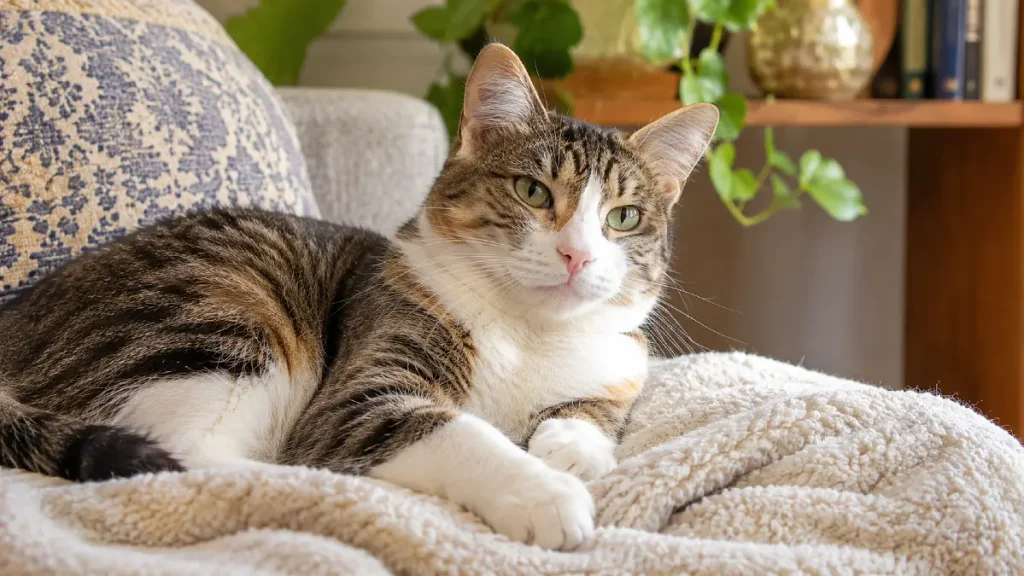
Have you ever reached out to pet your cat and watched them suddenly move away? Sometimes the problem isn’t your affection. Your cat may simply have been surprised or may not have wanted to be touched.
The word “easy” can become a familiar warning that a gentle interaction is about to happen.
Choose a moment when your cat is relaxed and open to contact. Say “easy” softly before offering your hand where they can see it.
Allow your cat to sniff your hand or move closer if they wish. If they seem comfortable, offer a brief stroke in an area they already enjoy.
Cats Protection explains that consistent words can help prepare cats for handling. The organization also stresses that cats should have control over contact whenever possible.
A word cannot remove fear on its own. It becomes useful when the action that follows is predictable and does not push your cat beyond their comfort.
For example, you might use “easy” before a gentle chin scratch while your cat is resting beside you. You would then stop and see whether they want more attention.
Avoid turning this into a signal that always comes before forced restraint, unwanted brushing, or another unpleasant experience. That could teach your cat to avoid the word instead.
Know When Your Cat Wants Touch or Space
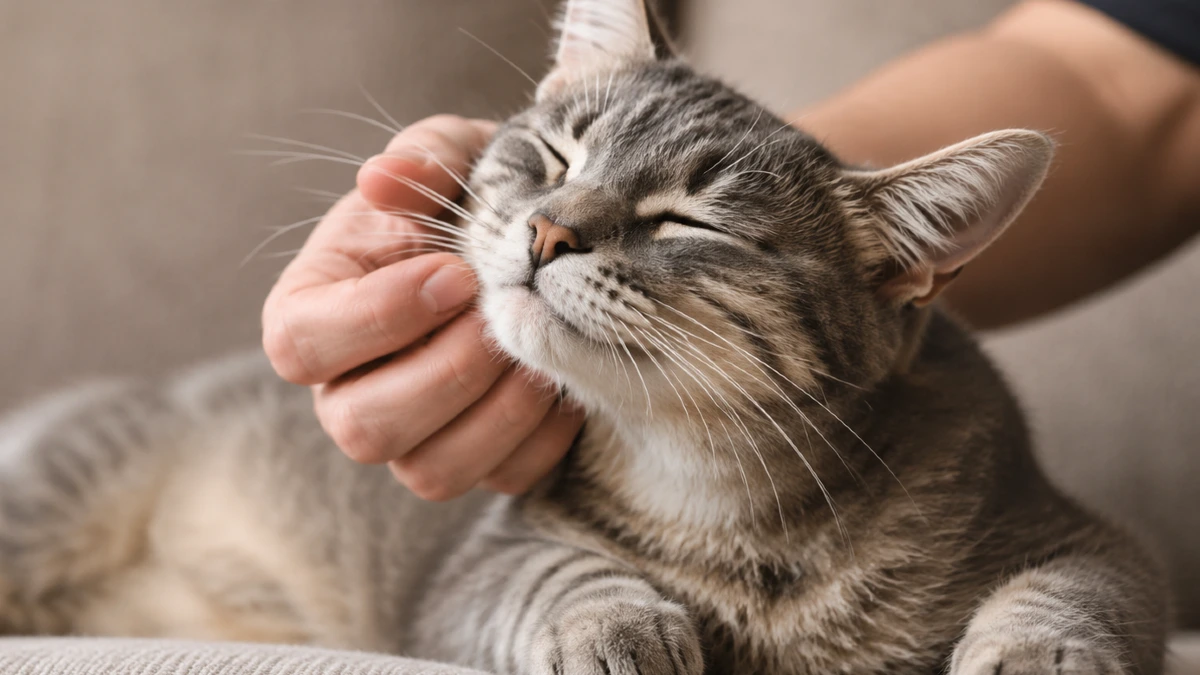
Cat Friendly Homes explains that many cats enjoy being touched around the head and neck, but their preferences vary. Small changes in body language can help you decide whether to continue.
| Body Language | Possible Feeling | Best Response |
|---|---|---|
| Loose, relaxed body | Comfortable | Offer brief petting |
| Leans into your hand | May want more | Continue gently |
| Tail tip starts twitching | May be getting upset | Pause and assess |
| Ears turn back, body stiffens | Uncomfortable | Stop touching |
| Hides, hisses, or growls | Wants distance | Give space |
Pay attention to several signals together. A single movement does not always tell you exactly how your cat feels.
Stopping when your cat wants space is an act of care. It shows that contact with you does not have to continue when they feel uncomfortable.
If your cat suddenly becomes sensitive to touch, cries out, or changes their behavior, speak with your veterinarian. Pain and illness can affect how a cat responds to handling.
6. Say “Love” During a Calm Daily Ritual
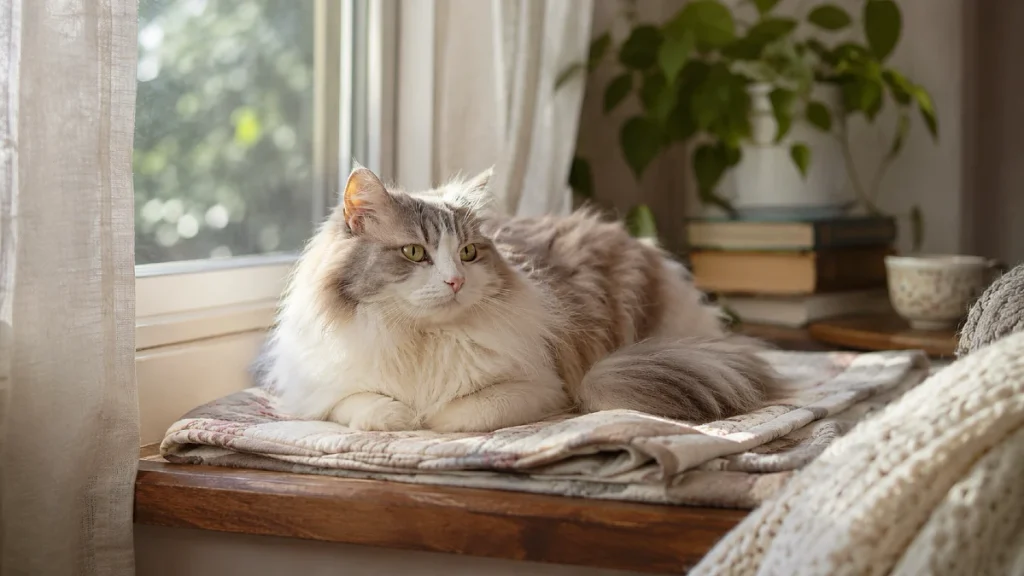
Of all the words you might say to your cat, “love” probably means the most to you. But does your cat know what it means?
There is no good evidence that cats hear the word “love” and recognize its human emotional meaning. Still, your cat may learn to connect that sound with moments they enjoy.
A 2024 study in Scientific Reports, led by Saho Takagi, found that cats could form associations between spoken sounds and pictures during a controlled experiment. The findings support the idea that cats can learn certain sound associations, but they do not show that cats grasp human feelings through words alone.
This is where a simple daily ritual can help.
Choose a quiet moment when your cat is already comfortable. Maybe they are curled up beside you on the sofa, sitting nearby while you read, or resting on their favorite blanket.
Say “love” in a soft, familiar voice while sharing that peaceful moment.
You might follow it with a gentle stroke if your cat welcomes touch. Or you can simply stay nearby and let them relax without expecting anything in return.
The word itself does not have special power. Its possible value comes from being part of a familiar, pleasant routine.
Cat Friendly Homes explained in its July 2026 guidance on affection that cats have individual preferences for contact. Some seek physical affection, while others are more comfortable with personal space.
This matters when you’re trying to show your cat love. You might adore cuddling, but your cat may prefer sitting beside you rather than being held.
Look for signs that your cat enjoys your company. They may choose to rest near you, rub against your leg, approach with a relaxed tail, or settle calmly in the same room.
You do not need to turn every quiet moment into petting or play. Sometimes, allowing your cat to choose how close they want to be is enough.
And if your cat walks away when you say “love,” don’t take it personally. It doesn’t prove that they dislike you or fail to recognize your voice.
They may simply have something else they want to do.
What matters most is that your cat feels comfortable being themselves around you. A loving routine should support that comfort rather than demand a particular response.