Does your cat sit beside you, only to walk away the moment you reach out to pet them? Maybe they follow you around the house but refuse to sit on your lap. You give them good food, toys, and a comfortable home, yet you still wonder if they know how much you love them.
Here’s something that might surprise you. One of the best ways to make your cat feel loved is to let them decide when they want your attention. What feels affectionate to you might feel overwhelming to a cat that wants a little space.
Cats have their own ways of showing comfort, trust, and affection. Some love cuddles, while others prefer sitting quietly nearby without being touched. Learning to respect these differences can help you build a better relationship.
How to Tell When Your Cat Wants Affection or Space
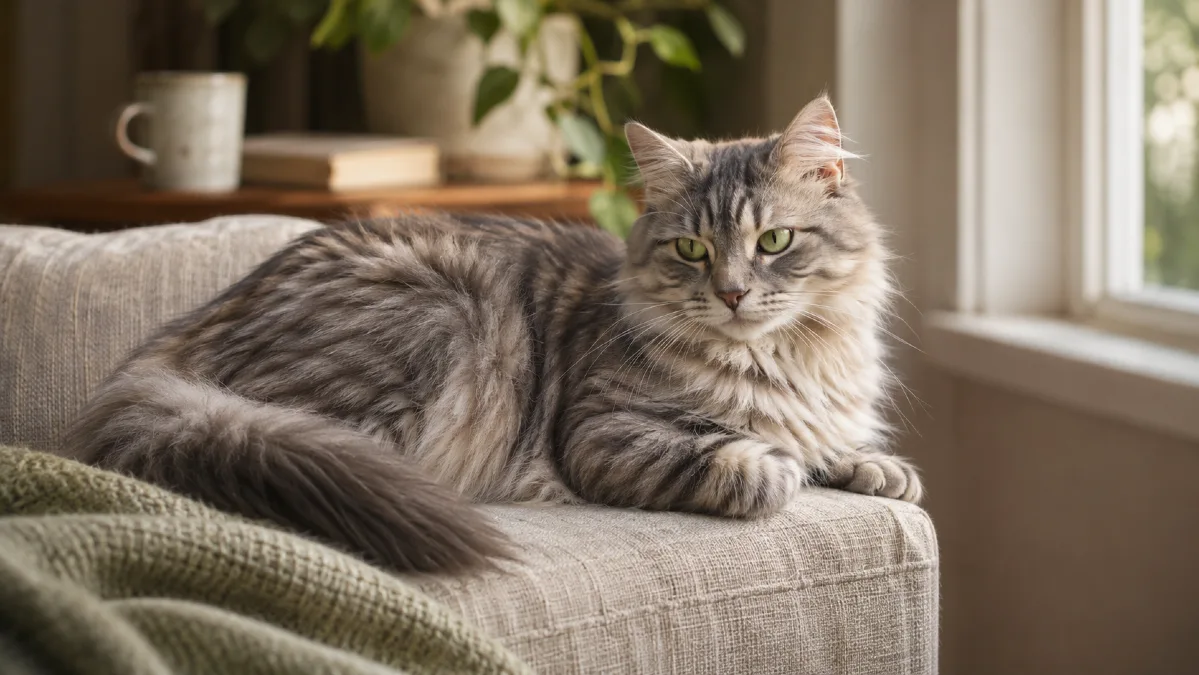
Your cat is relaxing on the couch a few feet away from you. You reach over to stroke their head, but they stand up and leave. It can feel like rejection, especially when you were simply trying to show affection.
But your cat may have been happy sitting near you without physical contact. By reaching for them, you changed an interaction they had already chosen. Giving your cat the freedom to decide when contact happens can make your presence more comfortable.
Research published in Frontiers in Veterinary Science in 2021 offers useful evidence. Lauren Finka and her colleagues studied interactions involving 100 shelter cats and found that teaching people to respect feline choices and body language improved the quality of those interactions.
Cats showed more friendly behavior and fewer signs of conflict when people followed the recommended approach. The findings support a simple rule: Let your cat choose when affection begins and when it ends.
Learn to Recognize Your Cat’s Signals
You don’t need to guess whether your cat wants attention. Their ears, tail, posture, and movements often provide useful clues. Watch their whole body rather than relying on one signal.
The following table can help you decide whether to continue an interaction or give your cat more space. Remember that body language depends on the situation, so these signs are guides rather than fixed rules.
| Cat behavior | Possible meaning | Your response |
|---|---|---|
| Leans into your hand | Enjoying contact | Continue gently |
| Rubs against you | Seeking interaction | Offer brief petting |
| Turns head away | May want a pause | Stop touching |
| Body becomes stiff | Possible discomfort | Give more space |
| Tail swishes sharply | Possible irritation | End the petting |
| Walks away | Interaction has ended | Let them leave |
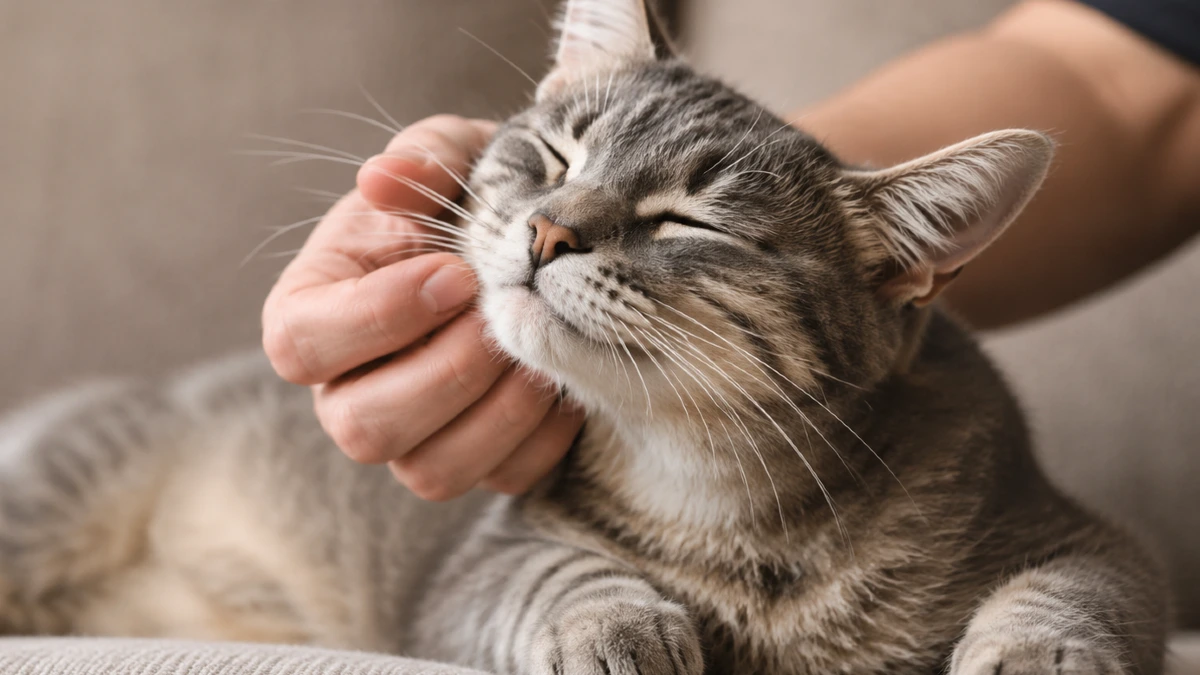
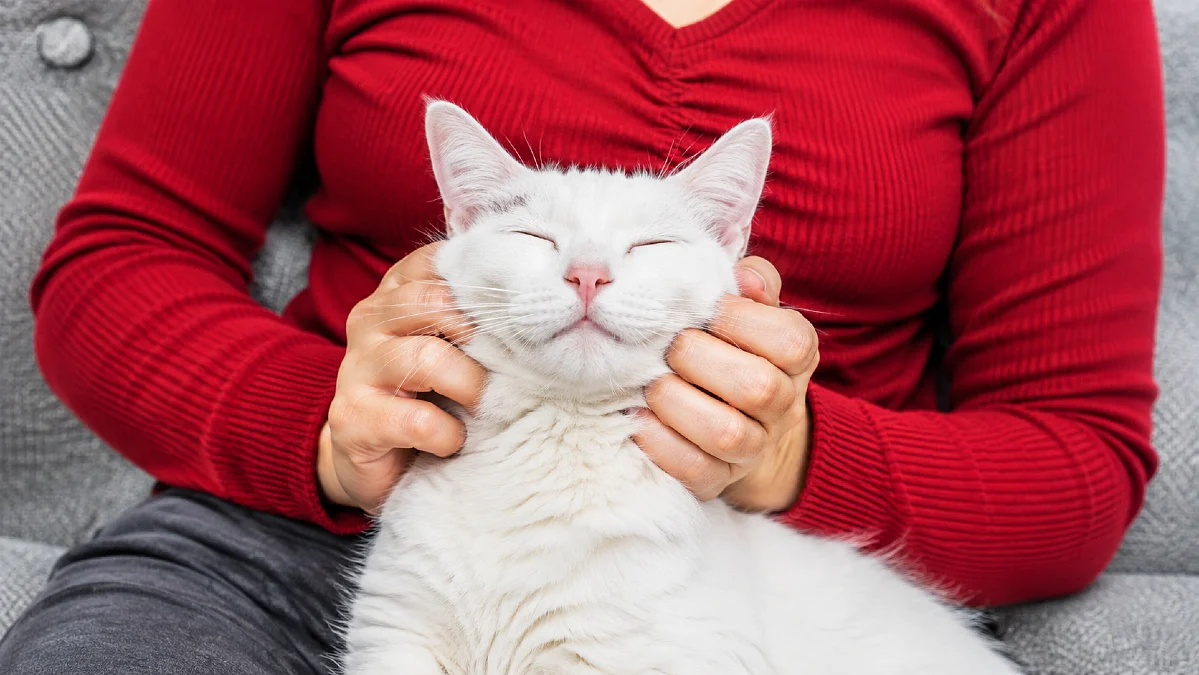
The most useful habit is to pause during petting and see what happens. If your cat leans back toward your hand, you can offer another gentle stroke. If they turn away, respect that choice.
RSPCA NSW’s 2026 guidance also stresses that cats should be free to end physical contact. Respecting that decision can help build trust because your cat learns that their behavior matters.
Why Giving Your Cat a Safe High Place Can Help Them Relax
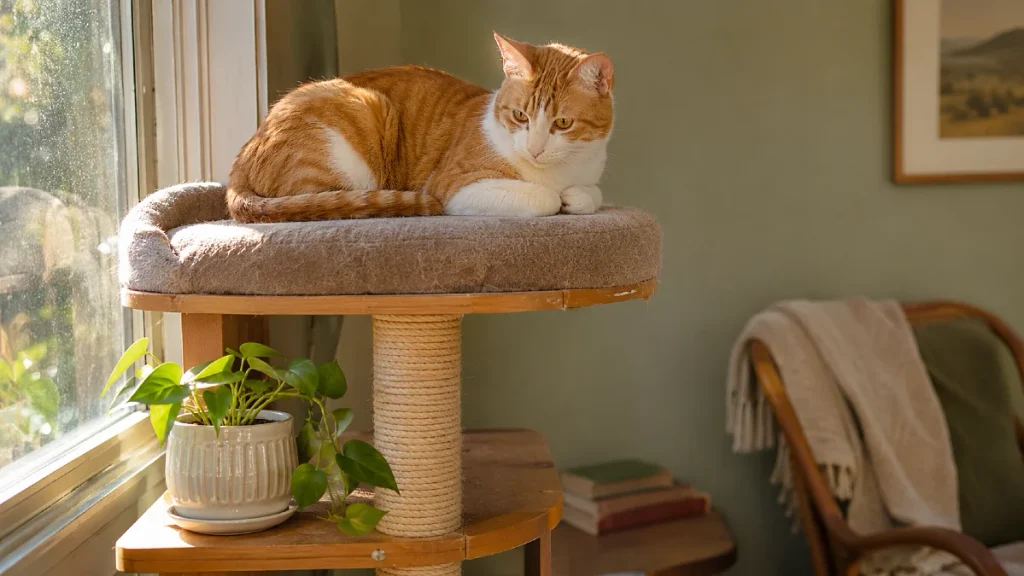
Have you noticed your cat climbing onto a bookshelf, refrigerator, or cabinet? You might wonder why they keep choosing those places when they already have a soft bed on the floor.
Height can offer cats a useful view of their surroundings. From an elevated resting place, they can observe household activity while keeping some distance from people and other pets. This can be especially helpful in busy homes.
The AAFP and ISFM Feline Environmental Needs Guidelines identify elevated resting areas and safe hiding spaces as important parts of a healthy feline environment. These spaces give cats more choices about where to rest, watch, and feel secure.
Give Your Cat a Place They Can Use Without Being Disturbed
You don’t need to turn your living room into a climbing wall. A stable cat tree near a window may be enough for a cat that enjoys watching outdoor activity. Another cat might prefer a secure shelf in a quiet room.
Choose a place away from hot appliances, fragile objects, and other household dangers. Make sure your cat can reach it safely and has a comfortable way back down.
If your cat already enjoys a particular shelf, you might be able to make that space more comfortable. A familiar blanket or secure nonslip mat can create a resting surface without requiring a major change.
Choose a Resting Spot That Suits Your Cat
Different cats have different physical needs and preferences. An active young cat may enjoy climbing, while a senior cat with sore joints may prefer a lower resting place.
| Resting option | Best suited for | Safety consideration |
|---|---|---|
| Stable cat tree | Cats that enjoy climbing | Secure against tipping |
| Wall mounted perch | Confident climbers | Use proper wall supports |
| Window perch | Cats that enjoy watching outdoors | Check mounting and window safety |
| Low padded bed | Senior or less mobile cats | Easy entry and exit |
| Steps or ramp | Cats with limited mobility | Stable, nonslip surface |
You can consider products such as Frisco cat trees or K&H Pet Products window perches, but buying something new isn’t always necessary. A sturdy piece of existing furniture may work when it can be used safely.
Once your cat finds a resting place they enjoy, try to keep it available. Avoid repeatedly lifting them away just because you want them closer, unless they are somewhere unsafe.
Why Sitting Near Your Cat Without Petting Can Build Trust
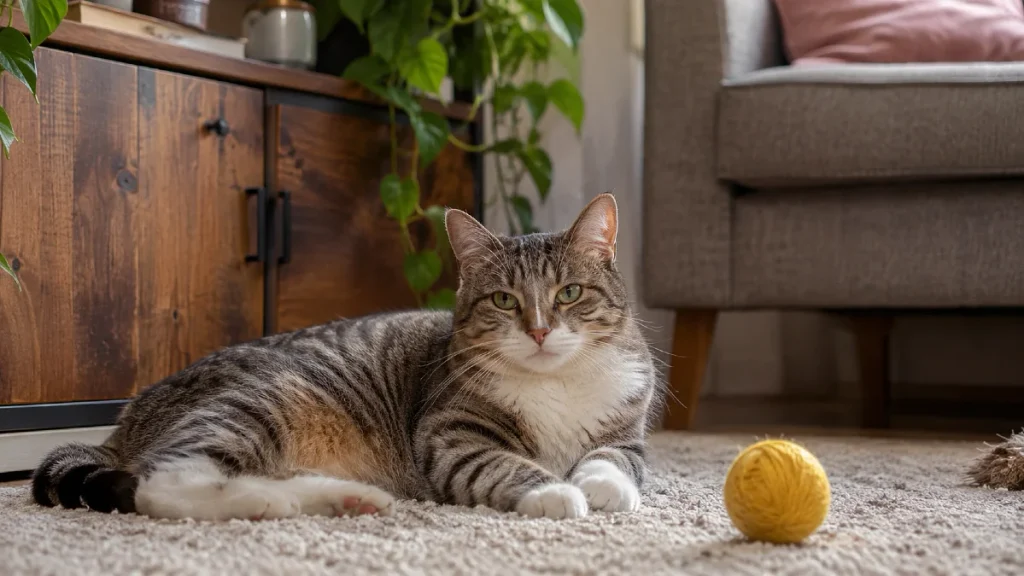
One of the quietest ways to show your cat love is to spend time beside them without asking for anything in return. No touching, no picking them up, and no trying to make them come closer.
This can feel strange if you’re used to showing affection through cuddles. But many cats enjoy being near their people without wanting constant physical contact.
Think about what happens when your cat enters the room while you’re reading. They settle on a nearby chair, close their eyes, and remain there while you continue your book. That may be their preferred way of sharing time with you.
RSPCA NSW explains that cats can choose quiet companionship without seeking touch. Sitting nearby, following a person, or resting in the same room can be part of their social behavior.
Try the Quiet Sitting Exercise
The next time your cat chooses to rest near you, resist the urge to reach out immediately. Continue reading, watching television, or relaxing while giving them space.
Keep your movements gentle and avoid staring directly at them for long periods. If they look toward you, you can soften your gaze and let them return to whatever they were doing.
If your cat moves closer, let them decide what happens next. They may rub against your leg, curl up beside you, or simply choose a different resting position.
The important part is that you aren’t demanding a response. Your cat has room to approach, remain nearby, or leave.
This approach can be useful for independent cats that rarely seek cuddles. It may also help nervous cats become more comfortable with your presence over time.
Don’t measure success by whether your cat eventually climbs into your lap. A cat that chooses to remain relaxed nearby may already be showing that they feel comfortable sharing space with you.
How to Greet Your Cat Without Making Them Uncomfortable
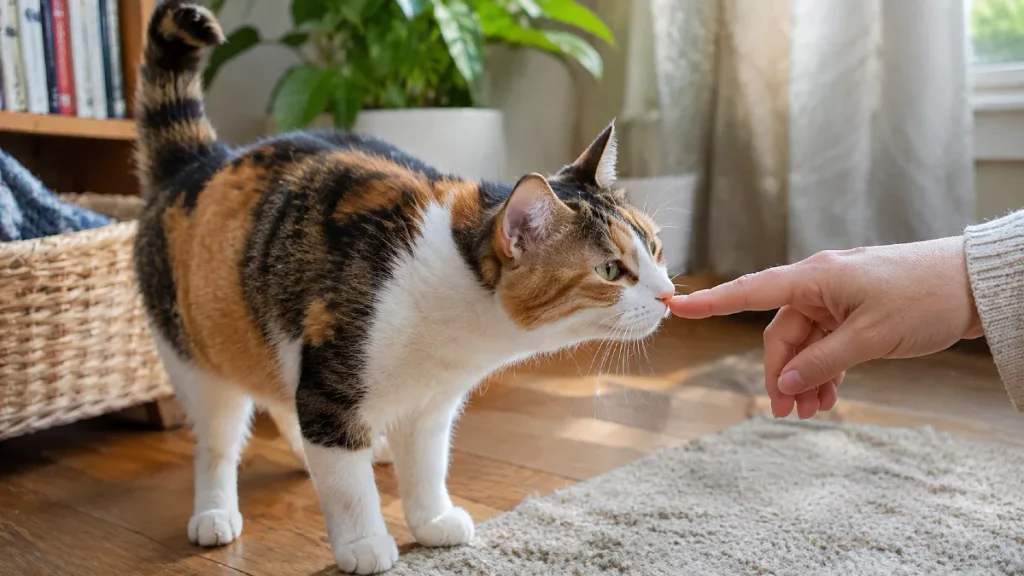
When you see your cat after being away, your first reaction may be to reach down and rub their head. But a gentle greeting that allows your cat to approach can be more comfortable for them.
Cats use scent to gather information about their surroundings, including people and other animals. Giving them the chance to investigate your hand can be a useful way to begin an interaction.
The 2022 AAFP and ISFM Cat Friendly Veterinary Interaction Guidelines recommend inviting a cat to approach rather than immediately picking them up or restraining them.
Try a Gentle Hand Greeting
You can practice this simple greeting whenever your cat appears relaxed and interested in approaching.
- Position yourself near your cat without crowding them. Stay a comfortable distance away.
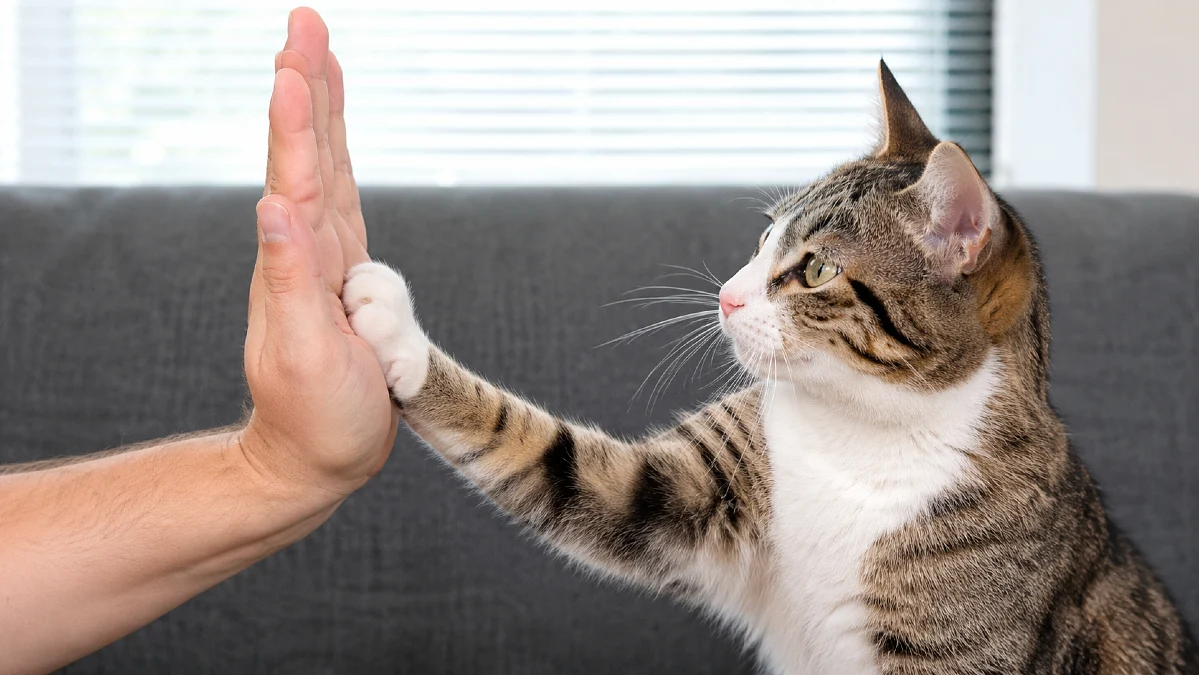
- Hold out a relaxed hand near their head level. Keep it still and let them choose whether to approach.
- Allow your cat to sniff your hand if they want. Don’t move your fingers toward their face.
- Watch what happens next. If they rub their cheek against your hand and remain relaxed, you can offer a gentle stroke.
- If they move away or show no interest, end the greeting. You can try another time.
One important detail is easy to miss. Sniffing your hand is not automatic permission to pet your cat.
RSPCA NSW makes this distinction in its 2026 advice on touching cats. A cat may sniff your hand simply to gather information before walking away.
When your cat does welcome physical contact, start with areas many cats prefer. These often include the cheeks, forehead, behind the ears, and sometimes under the chin.
Be more cautious around the belly, paws, legs, and tail. Even a cat that rolls onto its back may be relaxing rather than asking for a belly rub.
Keep the interaction brief at first. Pause after a few strokes and allow your cat to show whether they want more.
Why Spending Quiet Time at Your Cat’s Level Can Help
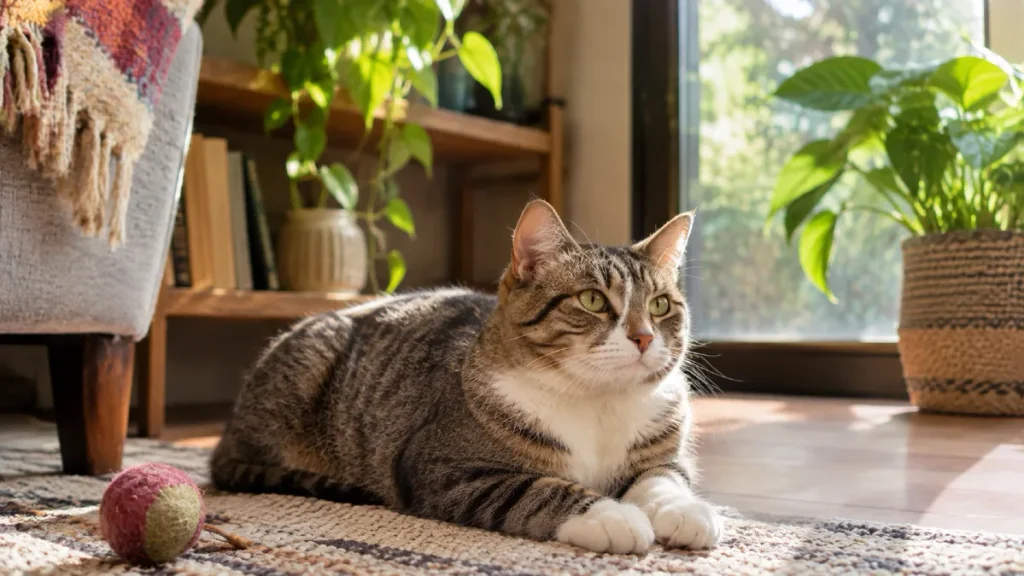
You spend much of your day standing or walking around your home. Your cat experiences much of that activity from a much lower position.
For a nervous cat, a person walking directly toward them can feel intimidating. Sitting quietly nearby may make it easier for the cat to approach without pressure.
Research on human and cat interactions has found that cats often respond more positively when people allow them to initiate contact. The AAFP and ISFM interaction guidelines also recommend getting down to a cat’s level when inviting an approach.
Make Quiet Time Part of Your Routine
Choose a peaceful place where your cat already feels comfortable. Sit on the floor or on a low seat, keeping enough distance so they don’t feel trapped.
You can spend a few minutes reading, listening to something quietly, or simply relaxing. Don’t block your cat’s path to another room or their favorite hiding place.
If your cat comes closer, keep your body relaxed. You can offer a gentle greeting, but there is no need to touch them unless they show interest.
Some cats may approach quickly, while others prefer to watch from a distance. Neither reaction means the exercise has failed.
For a shy rescue cat, even remaining in the room calmly while you sit nearby may be useful progress. They are learning what to expect from you without being forced into contact.
You don’t need to sit on the floor for exactly ten minutes. There is no proven magic number that makes a cat feel loved, and a short pleasant interaction is better than a long stressful one.
Try making these moments predictable instead. Your cat may gradually become more comfortable when they learn that your quiet presence doesn’t come with demands.
How to Respond When Your Cat Meows at You
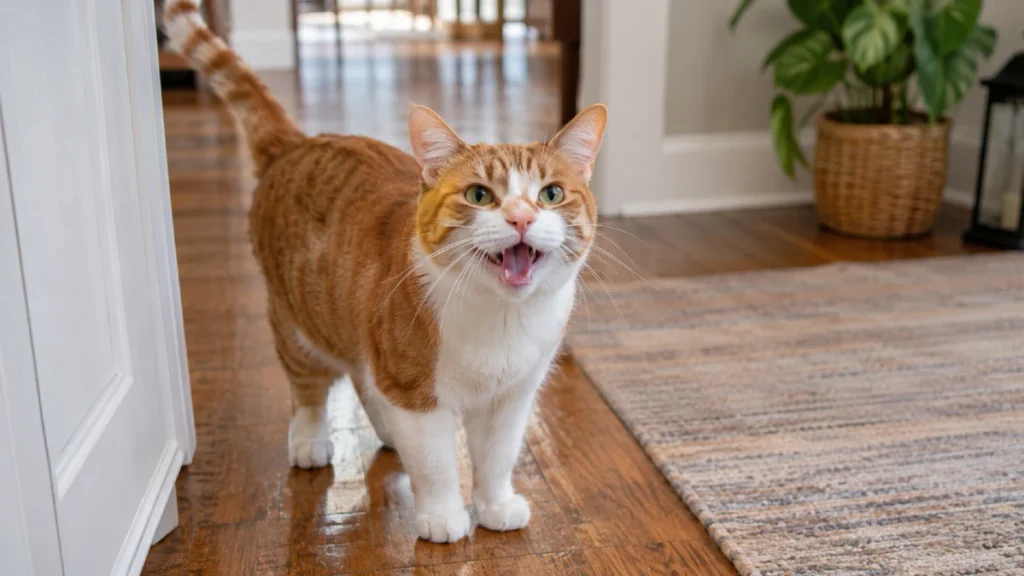
Your cat walks into the kitchen and makes a short meow. You look over, and they meow again as if they’re waiting for an answer.
It is tempting to think that every meow has one clear meaning. But cats vocalize for different reasons, and the same cat may sound different depending on the situation.
Adult domestic cats use meowing frequently during interactions with people. They also use other sounds and body language to communicate, and meowing is not completely absent from interactions between cats.
That means responding to a meow should involve more than making a sound back. You also need to notice what your cat is doing.
Your Cat Can Recognize a Familiar Voice
A study by Atsuko Saito and Kazutaka Shinozuka, published in Animal Cognition in 2013, found that cats could distinguish their owner’s voice from unfamiliar voices.
The cats did not always respond in obvious ways. Some showed subtle reactions, such as moving their ears or head, rather than walking toward the speaker.
This is a useful reminder that your cat may recognize you even when they don’t come running every time you speak.
Talking softly to your cat can be a pleasant part of your daily routine. You can greet them when they enter the room or speak calmly while preparing their food.
There is no strong evidence that replying to every meow directly increases affection. Still, paying attention to your cat’s vocal behavior can help you respond to their needs and preferences.
Pay Attention to What Happens Around the Meow
Before deciding what your cat wants, look at the situation. A familiar greeting at the door is different from a sudden, painful sounding cry.
This table offers practical ways to assess common vocal situations. It isn’t a dictionary of cat sounds, since one sound can occur in several contexts.
| Situation | What to check | How to respond |
|---|---|---|
| Meows when you arrive | Relaxed posture and approach | Offer a calm greeting |
| Meows near food area | Feeding routine and hunger | Check normal meal schedule |
| Meows beside you | Interest in contact or play | Offer a choice of interaction |
| Sudden repeated yowling | Pain, distress, or confusion | Contact your veterinarian |
| Rarely vocalizes | Usual body language | Respect quieter communication |
ASPCA advises that excessive or unusual meowing can sometimes have a medical cause. A sudden change deserves attention, especially if your cat also behaves differently or seems uncomfortable.
If your cat meows for attention, you can answer calmly and check what they need. But avoid assuming every call means they want food or a cuddle.
Don’t Forget Cats That Rarely Meow
Some cats are naturally quiet, and that doesn’t mean they have a weaker bond with their owners. They may communicate mainly through movement, posture, or physical contact.
A cat that approaches with its tail held upright may be offering a friendly greeting. Another might rub its cheek against your leg or choose to rest beside you.
Slow blinking can also appear during relaxed social interactions. Look at the whole situation before deciding what a signal means.
Your goal isn’t to make your cat more vocal. It is to notice the ways your individual cat already communicates and respond appropriately.
How to Help Shy and Senior Cats Feel Loved Without Pressure
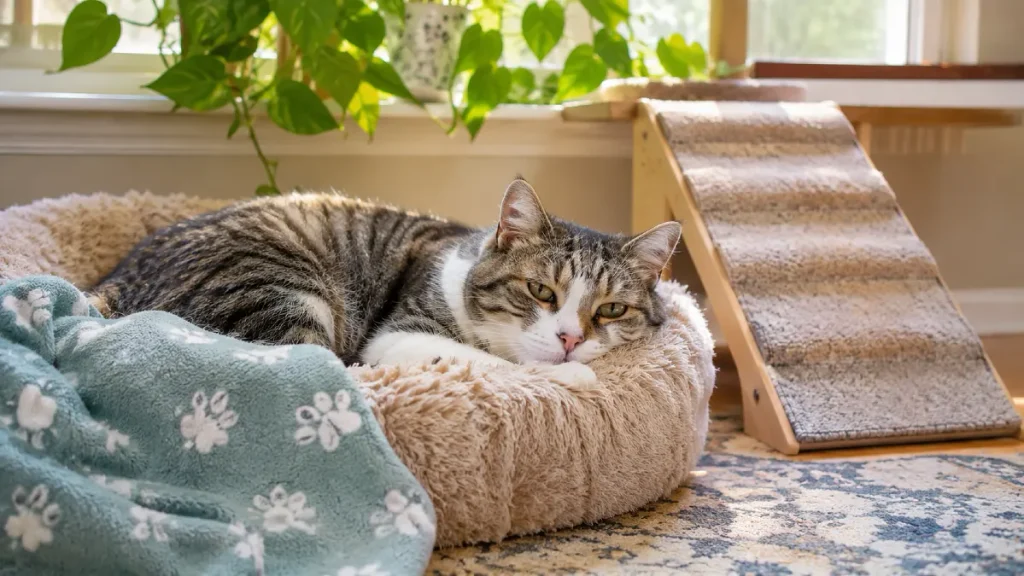
If you’ve adopted a shy cat, you may feel disappointed when they spend most of their time hiding. You offer toys and affection, but they still move away whenever you approach.
For some cats, adjusting to people and a new home takes time. A cat that has experienced frightening interactions may need many calm experiences before choosing closer contact.
Start by providing a predictable routine and quiet hiding places. Let your cat decide when to come out, and avoid pulling them from their hiding spot unless there is a safety or medical reason.
You can sit at a comfortable distance, speak softly, and allow them to observe you. If they choose to leave, give them space instead of following.
Senior Cats May Need a Different Kind of Affection
Older cats often have different physical needs than younger cats. A cat that once enjoyed climbing onto your bed may start spending more time in a low chair.
Cats Protection explains that arthritis and reduced mobility can make jumping and climbing harder for senior cats. Providing easy access to favorite resting places can help them stay comfortable.
You can make small adjustments around the home:
- Place a soft, padded bed in a warm, quiet area.
- Use stable steps or a ramp to reach a favorite resting place.
- Keep food, water, and litter boxes easy to access.
- Use rugs on slippery flooring if your cat struggles with traction.
- Offer gentle affection without lifting them unnecessarily.
These changes can make everyday life easier for an older cat. They also allow your cat to choose where to spend time with you without dealing with difficult movements.
Know When Your Cat Needs Veterinary Care
Sometimes, behavior that looks like a preference for solitude may be linked to discomfort. A cat that suddenly dislikes being touched could be experiencing pain.
If your cat becomes withdrawn, stops jumping, reacts aggressively to familiar touch, or changes its vocal behavior, contact your veterinarian. Don’t assume these changes are simply signs of aging or a change in personality.
Making your cat feel loved also means taking care of their physical needs. Comfortable movement, proper medical care, and a safe home are essential parts of their well being.
What You Can Do Tonight to Make Your Cat Feel More Loved
You don’t need to change everything about your relationship with your cat in one day. Start with a few small habits that allow them to feel more comfortable and in control.
Choose a quiet time this evening when your cat is already relaxed. Then try these simple actions without expecting an immediate response.
- Make one resting place safer. Check whether your cat has a comfortable area where they can relax without being disturbed.
- Give them space when they sit nearby. Enjoy their company without reaching for them automatically.
- Offer a gentle greeting. Let them approach your hand before deciding whether they want to be touched.
- Spend a little time at their level. Sit quietly and let them choose whether to come closer.
- Respond to their usual communication. Notice their meows, movements, and body language before choosing how to respond.
You can start with whichever action seems most suitable for your cat. There is no need to complete every activity in one evening.
Over the next several days, pay attention to how your cat behaves. Notice whether they choose to rest nearby, approach you more often, or appear more relaxed during interactions.
You can even keep a simple notebook to record these observations. Look for patterns rather than expecting one dramatic moment when everything changes.
And remember that some cats will always prefer limited physical affection. A happy relationship doesn’t require every cat to become a lap cat.