Have you ever caught your cat doing something so clever that you stopped and wondered how they figured it out? Maybe they know when you’re coming home, recognize the sound of their favorite treats, or open doors you thought were safely closed.
Cats have a reputation for being independent and mysterious. But behind those curious eyes, your feline friend may be paying much closer attention to the world than you realize.
Some cats learn household routines, remember familiar voices, and solve little problems without anyone teaching them. Others seem to know exactly how to get your attention when they want something.
Researchers have found that cats can recognize familiar sounds, learn associations, and respond to certain human signals. These abilities offer some fascinating clues about how their minds work.
1. Your Cat Knows Your Daily Schedule Almost Perfectly

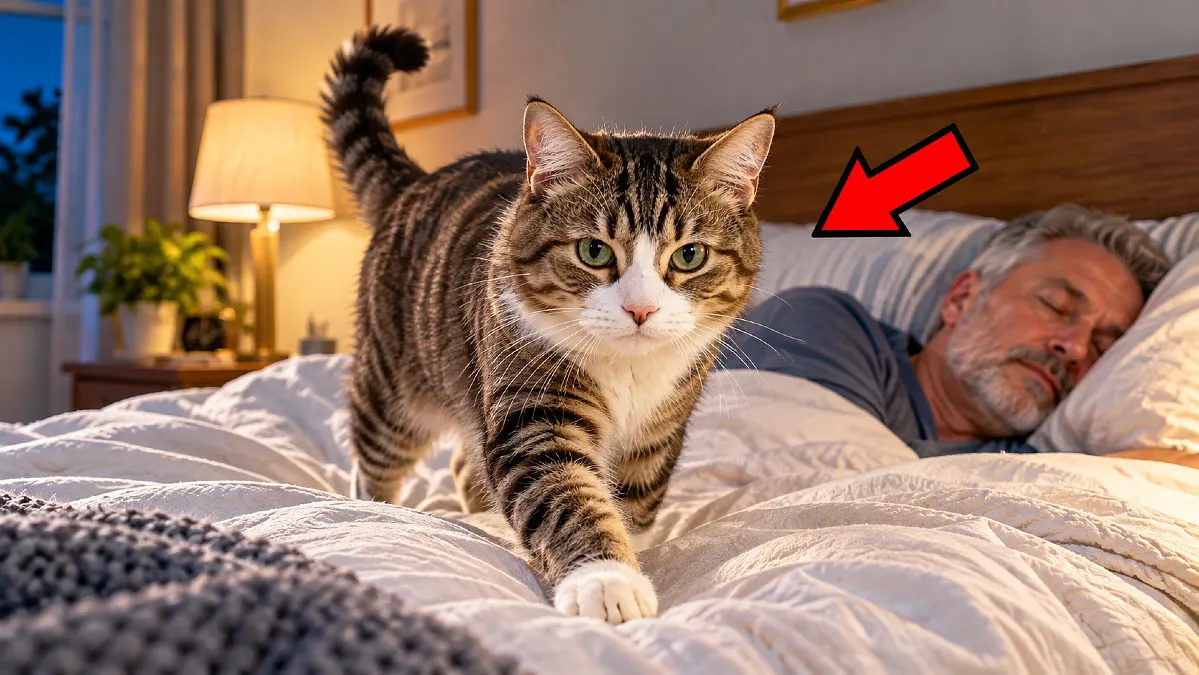
Have you noticed your cat waiting beside their food bowl before you even think about preparing dinner? They may also appear near your bedroom door around your usual waking time.
This behavior suggests your cat has learned the pattern of your daily routine. They connect familiar events, sounds, and activities with what usually happens next.
For example, your cat might recognize the sound of your morning alarm. They may also notice when you switch off the television or begin preparing for bed.
Over time, those repeated signals help your cat predict what comes next. Their ability to anticipate familiar events shows how effectively they can learn from experience.
Some cats even begin waiting beside the entrance before their owners return home. However, they may be responding to regular household sounds, feeding patterns, or other familiar signals rather than knowing the exact time.
What makes this interesting: Your cat is building expectations from repeated experiences. That takes memory, attention, and the ability to connect one event with another.
Try changing a small part of your routine and watching what happens. Your cat may eventually adjust its expectations once the new pattern becomes familiar.
2. Your Cat Figures Out Problems Without Your Help

Some cats see a closed door and simply walk away. Others start investigating the handle, testing the gap underneath, or searching for another way inside.
If your cat tries several approaches to reach something interesting, you’re watching a useful problem solving skill. They are learning what works through direct experience.
You might notice this when your cat encounters a food puzzle. At first, they may paw randomly at the toy without getting anywhere.
After several attempts, they might discover that pushing one section releases a treat. With practice, they may solve the same puzzle more quickly.
This ability is related to learning through rewards and consequences. The cat remembers which action produced the desired result and becomes more likely to repeat it.
However, persistence alone does not prove exceptional intelligence. Some cats are naturally more curious, food motivated, or willing to explore unfamiliar objects.
Try this at home: Place a few pieces of your cat’s usual dry food inside a simple puzzle feeder. Watch whether your cat gradually learns how to move the food toward an opening.
Start with an easy puzzle and allow your cat to investigate at their own pace. The activity should feel rewarding rather than frustrating.
3. Your Cat Has Learned How to Communicate With You

Does your cat make one sound when they’re hungry and another when they want attention? You may have noticed that certain meows appear in specific situations.
Cats use vocal sounds, body movements, and facial expressions to communicate. Many also learn which actions attract a response from the people around them.
For example, your cat might meow beside an empty food bowl. If that gets your attention, they may repeat the behavior whenever they want something.
Researchers have found evidence that cats can distinguish specific human words. A 2019 study published in Scientific Reports showed that domestic cats could recognize their own names among other spoken words.
Another study published in Scientific Reports in 2024 found that cats could form associations between pictures and sounds after brief exposure. This suggests their ability to connect sounds with familiar information may be more flexible than many people expect.
Cats can also use different kinds of purring sounds. Research by Karen McComb and colleagues found that some cats produce a distinctive purr when asking for food.
What to watch for: Notice whether your cat uses particular sounds or actions in repeated situations. Consistent patterns may show that they have learned effective ways to communicate with you.
Still, a cat that rarely meows is not necessarily less intelligent. Some communicate mainly through their eyes, ears, tails, and body movements.
What Your Cat’s Communication May Be Telling You
| Cat behavior | Possible meaning | What you can observe |
|---|---|---|
| Meowing beside the food bowl | Requesting food or attention | Whether it happens around meals |
| Leading you toward a door | Trying to reach another area | Whether the behavior stops when the door opens |
| Looking at you, then an object | Seeking information or attention | Whether your response changes their behavior |
| Responding to their name | Recognizing a familiar sound | Ear movements, head turns, or approaching |
| Slow blinking during calm contact | Friendly social communication | Whether the cat remains relaxed |
These behaviors become more meaningful when you look at the situation around them. A single meow can have several possible causes, but repeated patterns may help you recognize what your cat wants.
4. Your Cat Learns That a Mirror Is Not a Real Animal
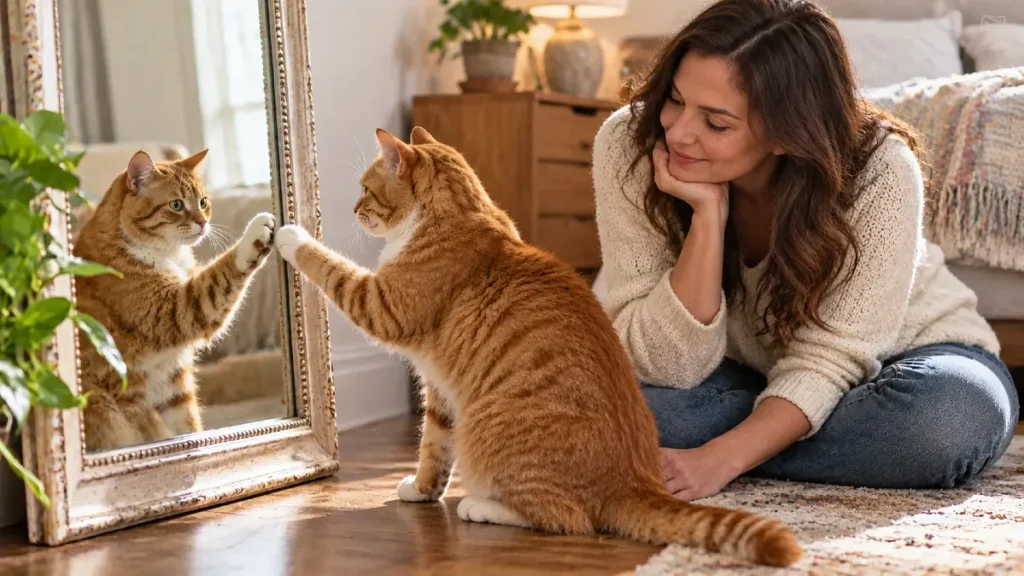
Have you ever watched your cat stare at a mirror as though another cat had entered the room? Some cats become curious, while others hiss or attempt to investigate behind the glass.
The interesting part is what happens after several encounters. Some cats gradually stop reacting because the reflection never behaves like a real animal.
Your cat may eventually walk past the mirror without paying attention. This can show that they have become familiar with a strange object in their environment.
However, ignoring a reflection is not proof that a cat recognizes itself. Scientific evidence has not established that domestic cats consistently identify their own reflections.
Veterinarian Jennifer Coates discussed this distinction in a 2025 PetMD article about cats and mirrors. Mirror reactions can reveal curiosity and learning, but they do not provide a reliable measure of a cat’s intelligence.
Cats also rely heavily on scent and sound when identifying other animals. A reflection has the appearance of a cat but none of the usual smells or sounds.
If your cat seems frightened by a mirror, avoid forcing them to approach it. Allow them to explore naturally or cover the reflection if it causes repeated distress.
5. Your Cat Remembers People, Places, and Important Events
Some cats seem to remember things that happened a long time ago. They may recognize a familiar visitor, return to a favorite hiding place, or remember where food is usually stored.
These behaviors reflect the importance of memory in everyday cat life. Remembering useful information helps cats find resources and respond to familiar situations.
For example, your cat might immediately run toward a particular cupboard when they hear a treat container opening. They have learned to connect the sound with something rewarding.
Cats can also remember information about other animals in their homes. Research published in Scientific Reports in 2022 found evidence that household cats could associate familiar cats’ names with their faces.
A separate 2021 study in PLOS ONE suggested that cats can keep track of their owners’ locations through sound. Cats appeared surprised when a familiar voice suddenly came from an unexpected place.
These findings suggest that feline memory involves more than simply remembering where dinner is served. Cats can learn associations involving familiar individuals, sounds, and locations.
What to watch for: Move a familiar toy to a safe but slightly different location. Observe whether your cat searches where it was previously kept before exploring other places.
Remember that cats do not have proven photographic memories. Their reactions may reflect learned associations, scent cues, and previous experiences working together.
6. Your Cat Adjusts When Something Changes at Home

Cats often appreciate predictable surroundings, but some are especially good at exploring small changes. They may investigate a rearranged room and quickly find new resting places.
This ability can involve curiosity, learning, and familiarity with their home. Your cat gathers information about new objects and decides whether they seem safe.
For example, moving a chair might give your cat a new place to observe the garden. They may notice the opportunity and begin using it as a lookout spot.
A cat may also learn a different feeding schedule after several days. They begin noticing new signals and adjusting their expectations based on what happens repeatedly.
However, confidence during change is not a direct measure of intelligence. A nervous cat may be equally capable of learning but need more time to feel comfortable.
Helpful tip: When changing your cat’s environment, keep familiar beds, scratching areas, and hiding places available. This gives your pet the freedom to investigate without losing important sources of comfort.
Never force a frightened cat to explore an unfamiliar space. Patience and predictable routines make it easier for many cats to settle.
What These Clever Cat Behaviors May Reveal
| Behavior you notice | Skill involved | Important limitation |
|---|---|---|
| Waiting before meals | Routine learning | Cats also respond to familiar cues |
| Finding hidden treats | Search and memory | Scent may help them |
| Working through a puzzle | Learning through rewards | Motivation affects performance |
| Recognizing familiar sounds | Sound recognition | Recognition does not mean human language comprehension |
| Exploring new furniture | Spatial learning | Confidence varies between cats |
| Remembering a favorite location | Memory | Repeated habits can explain the behavior |
The clearest signs of an intelligent cat usually appear through repeated experiences. Rather than judging one unusual moment, pay attention to how your cat learns and behaves over time.
7. Your Cat Watches You and Learns From Your Actions

Have you ever noticed your cat watching closely while you open a cupboard or move an object? Some cats appear fascinated by the everyday things people do.
That attention can help them learn about their environment. They may notice that certain movements create opportunities to reach food, toys, or interesting spaces.
Researchers have also explored whether cats can copy human actions. A study published in Animal Cognition in 2021 documented a trained cat successfully reproducing actions demonstrated by a person.
The study was small and involved one specially trained cat. It provides evidence that imitation may be possible, but it does not show that every cat naturally copies human behavior.
Still, your cat can learn from watching what happens around them. Repeated experiences may help them discover how objects work and which actions lead to rewards.
For example, a cat that regularly watches a sliding door open may begin investigating the same opening. They might eventually discover how to move it using their paws.
What makes this interesting: Your cat is paying attention to actions and outcomes. Observation can provide useful information even when no one is formally teaching them a trick.
Keep cupboards containing cleaners, medications, or dangerous objects securely closed. A curious cat that learns to open doors can also reach things that should remain inaccessible.
8. Your Cat Notices Changes in Your Emotions
Have you ever been upset and noticed your cat sitting unusually close to you? Perhaps they become quieter when you are stressed or approach when you speak softly.
Cats can respond to certain emotional signals from people. They may notice changes in facial expressions, body movements, voice, and everyday routines.
Research published in Animal Cognition by Moriah Galvan and Jennifer Vonk found that cats showed some sensitivity to human emotional expressions. Their responses were generally more noticeable when the signals came from familiar people.
Another study by Isabella Merola and colleagues examined how cats reacted to an unfamiliar object. The researchers found that many cats looked between the object and their owners and sometimes changed their behavior based on the owner’s emotional signals.
This suggests that cats can use human behavior as a source of information. Your response to something unfamiliar may help your cat decide whether to approach or remain cautious.
However, responding to emotions is not the same as proving empathy. Scientists have not established that a cat sitting beside someone who is sad necessarily knows what that person feels.
Your cat may simply notice that you’re behaving differently and choose to stay nearby. Either way, their ability to respond to familiar social signals is worth appreciating.
When your cat approaches during a quiet moment, let them choose whether to stay. Offering gentle contact without forcing interaction can support a comfortable relationship.
9. Your Cat Learns From Mistakes and Changes Its Approach
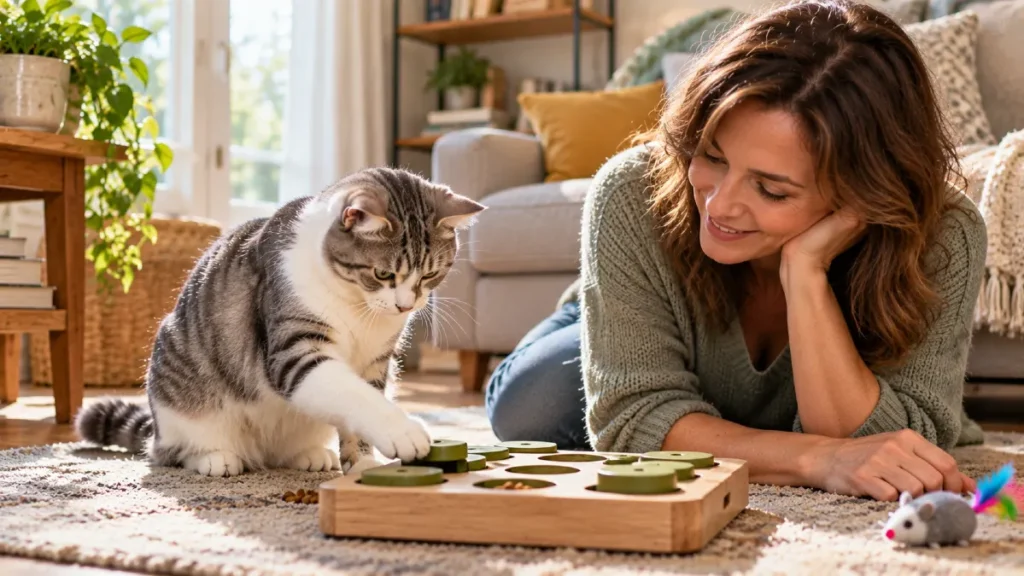
One of the clearest ways to notice learning is to watch what your cat does after something fails. Do they repeat the same action, or do they begin trying something different?
For example, your cat might push a treat ball without getting any food. After several attempts, they may discover that rolling it in another direction produces a reward.
This is an example of learning through experience. Actions that lead to rewarding results can become more common as your cat remembers what happened.
You may also notice this with games. A cat that cannot reach a toy from one side of a box might walk around and try another opening.
Over time, familiar tasks may become easier. Your cat has had more opportunities to learn which movements are useful and which ones do not work.
Still, cats differ greatly in their willingness to keep trying. A cat that walks away from a difficult puzzle may be bored, frustrated, tired, or simply uninterested in the reward.
Try this: Offer a puzzle with an easy opening before introducing a more difficult version. Watch whether your cat becomes better at reaching the food after a few sessions.
Avoid withholding meals or making your cat work through a difficult puzzle when they’re hungry. Learning activities should offer choices and pleasant experiences.
Easy Ways to Encourage Your Cat’s Thinking Skills
| Activity | What your cat practices | Easy way to begin |
|---|---|---|
| Food puzzle | Learning actions and rewards | Start with a simple feeder |
| Hidden toy game | Search and memory | Place a toy partly under a cloth |
| Wand toy play | Tracking and timing | Move the toy like small prey |
| Simple cue training | Learning familiar signals | Reward a voluntary action |
| Cardboard box exploration | Curiosity and spatial learning | Provide a clean, open box |
| Treat search | Using senses and exploring | Hide a few pieces of usual food in safe places |
Start with short sessions and watch your cat’s interest. If they walk away, let them rest and try a different activity another time.
10. Your Cat Predicts Where a Moving Toy Will Go
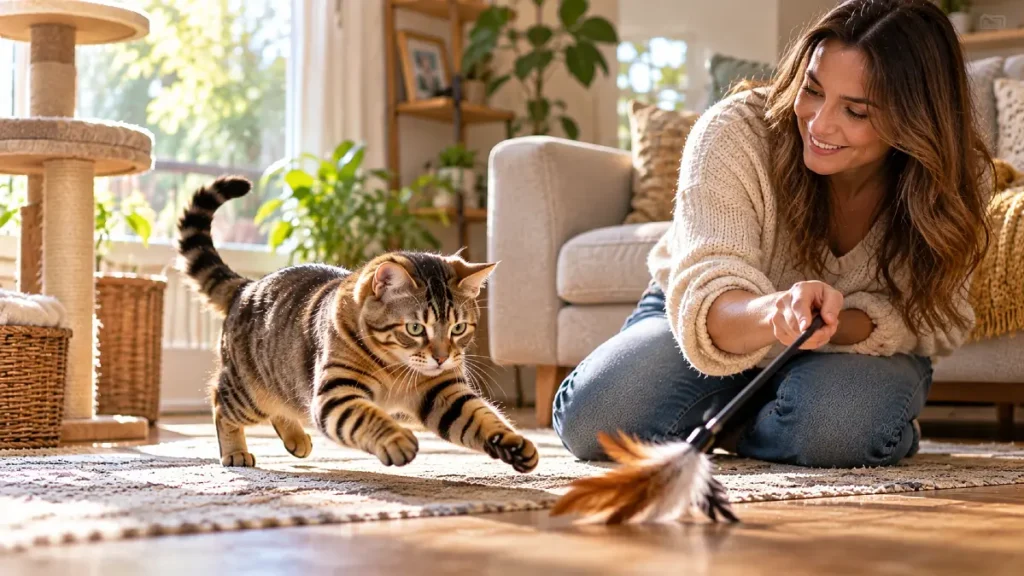
Some cats charge after anything that moves. Others sit perfectly still, watch a toy pass behind furniture, and suddenly pounce where it appears again.
This kind of behavior can look surprisingly calculated. Your cat is using visual attention, timing, and past experience to respond to moving objects.
Cats are natural hunters, and their bodies are adapted for tracking movement. Their eyes, ears, and quick reactions help them locate potential prey.
When your cat watches a feather toy disappear behind a chair, they may continue paying attention to the place where it should reappear. This behavior can involve tracking and expectations about movement.
However, impressive hunting skills are not proof that a cat has exceptional intelligence. Much of this behavior comes from natural instincts shared by domestic cats.
Practice and experience can still improve how efficiently cats perform familiar actions. A pet that plays regularly may become more skilled at timing a jump or catching a moving toy.
Best play idea: Move a wand toy across the floor and occasionally hide it behind furniture. Let your cat follow the movement before giving them a chance to catch it.
Allowing successful catches makes the activity more satisfying. Avoid directing toys into dangerous spaces or using your hands as pretend prey.
11. Your Cat Creates Its Own Games and Entertainment
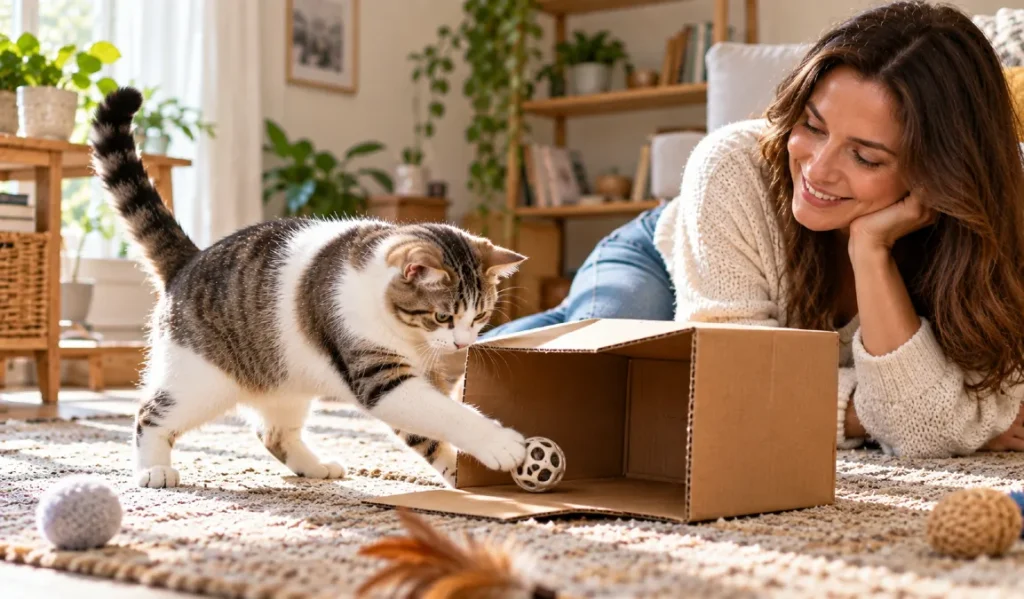
Does your cat ever turn an ordinary cardboard box into their favorite playground? Maybe they spend several minutes batting a small ball across the floor without anyone joining them.
Independent play gives cats opportunities to explore movement, sound, and objects. Some cats appear especially interested in testing what different things do.
For example, your cat may push a toy down a hallway and chase it repeatedly. They could also drop an object from a low surface and watch where it lands.
These activities can offer physical exercise and mental stimulation. They also allow cats to explore their surroundings in ways that match their natural interests.
The American Association of Feline Practitioners and the International Society of Feline Medicine recommend providing opportunities for play and hunting related activities. Their environmental guidelines explain that these activities support feline welfare.
Simple home idea: Set up a small play area using an open cardboard box, a scratching surface, and a few safe toys. Rotate the toys occasionally so your cat has something different to investigate.
Keep strings, ribbons, and toys with small detachable pieces out of reach when you cannot supervise. Even an ordinary household object can become dangerous if your cat chews or swallows it.
Remember that playing independently does not automatically mean a cat is more intelligent. It simply gives you another way to see their curiosity and activity preferences.
12. Your Cat Builds Different Relationships With Different People

Some cats behave differently around each member of the household. They might follow one person into the kitchen, sleep beside another, and choose someone else when they want to play.
These patterns can develop through repeated experiences. Your cat learns which people offer food, gentle contact, playtime, and quiet places to rest.
Research also shows that domestic cats can form meaningful social bonds with humans. A 2019 study published in Current Biology examined attachment between cats and their caregivers.
The researchers found evidence that many cats use familiar people as a source of security. This challenges the idea that cats are always distant or uninterested in human relationships.
Cats may also remember information about other animals living with them. The 2022 Scientific Reports study on familiar cats’ names suggests that some cats learn social information through everyday household experiences.
You might notice your cat greeting one person with vocal sounds while approaching another quietly. This does not necessarily mean they have ranked everyone’s importance.
Instead, your cat may have learned what to expect from different people. Their behavior can reflect familiarity, comfort, previous rewards, and individual relationships.
In homes with several cats, social behavior can be especially interesting. Cats may choose certain resting partners, share some spaces, or prefer keeping their distance from particular companions.
However, staying close to an upset animal does not prove that a cat is deliberately offering comfort. Social behavior is complex, and the reason behind a single action may be difficult to identify.
When Clever Cat Behavior Is Normal and When to Pay Attention
| What you notice | Often normal explanation | When to be concerned |
|---|---|---|
| Cat opens cupboards | Curiosity and learned behavior | They can access dangerous items |
| Cat follows you around | Social interest or routine | Sudden clinginess comes with other changes |
| Cat becomes unusually vocal | Attention seeking or learned habits | A sudden change in vocal behavior |
| Cat hides in new places | Seeking a quiet resting spot | Persistent hiding with poor appetite |
| Cat stops playing | Resting or a change in interest | Sudden loss of interest or activity |
| Cat seems confused by familiar routines | Distraction or environmental change | Repeated confusion or disorientation |
A sudden change in your cat’s usual behavior deserves attention. If your cat stops eating, becomes unusually withdrawn, or seems confused in familiar places, contact your veterinarian rather than assuming they are simply behaving differently.