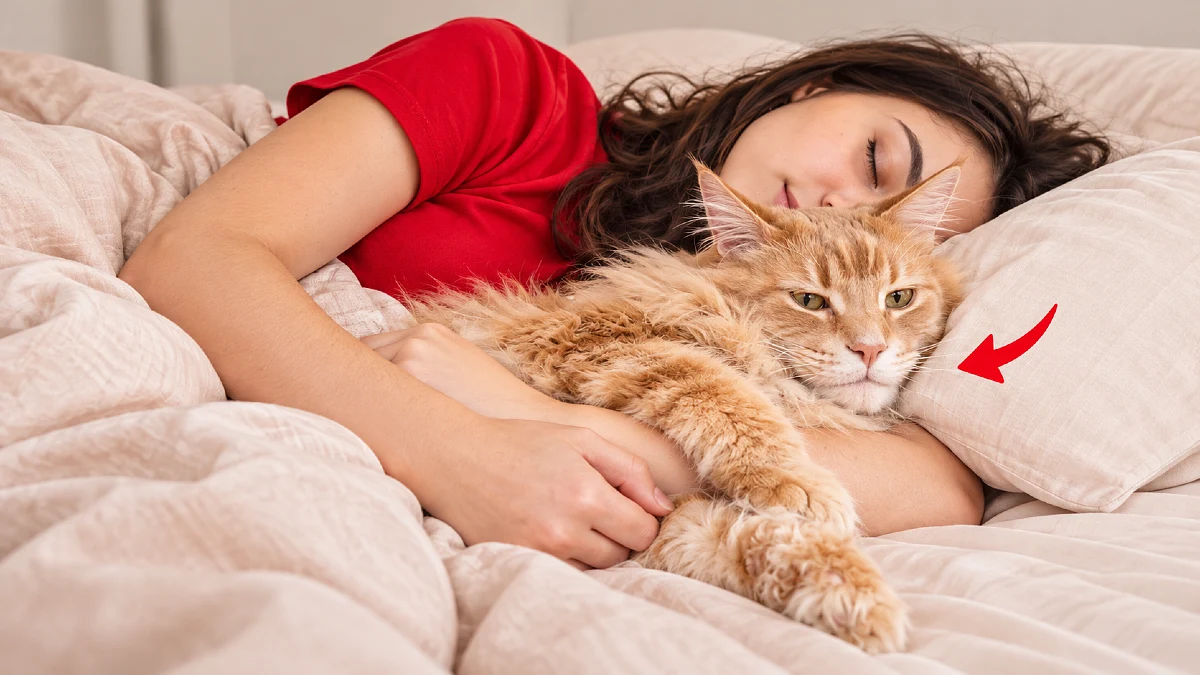
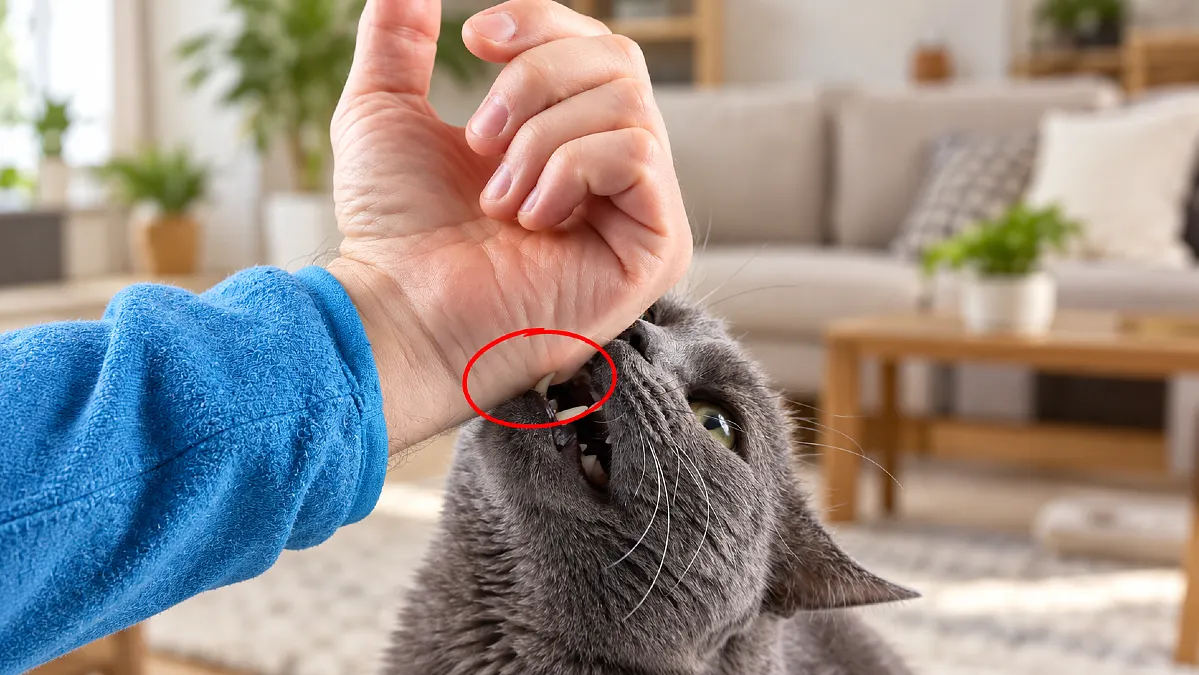
You love your cat, but lately, something feels different. Maybe your cat no longer curls up beside you in bed, walks away when you reach out, or disappears whenever you enter the room.
It’s natural to wonder whether your cat still loves you. After all, you provide food, a comfortable home, and plenty of attention, yet your furry companion sometimes acts as though they want nothing to do with you.
There are several signs your cat doesn’t love you that owners often worry about. But here’s something worth knowing: a cat’s behavior cannot prove whether they feel love, and many worrying behaviors actually point to stress, discomfort, or fear.
1. Your Cat Avoids Eye Contact and Rarely Slow Blinks at You
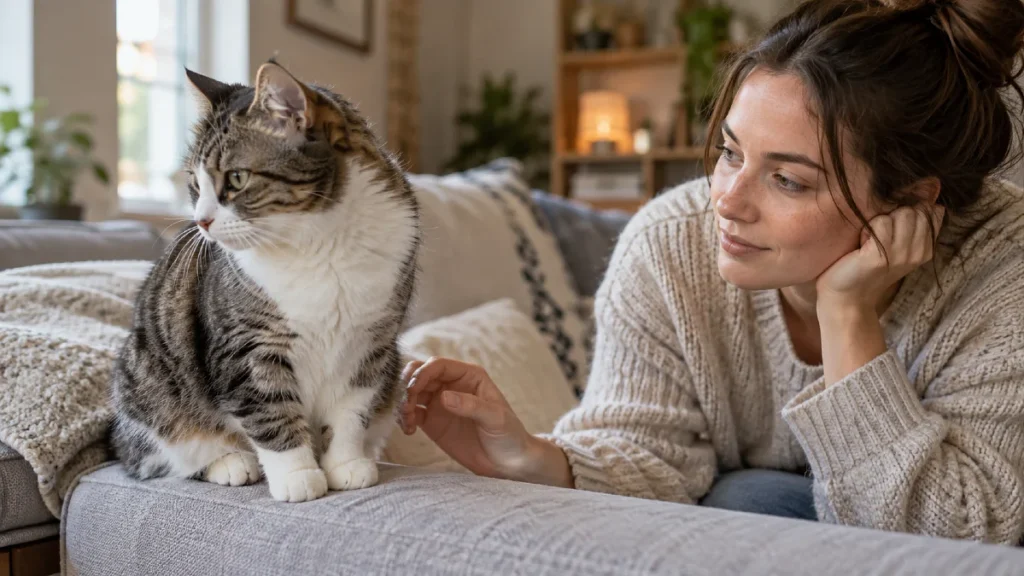
Have you noticed your cat looking away whenever your eyes meet? You might try getting their attention, only to watch them turn their head or walk into another room.
Cats communicate a great deal through their eyes, but their signals are different from ours. A relaxed cat may look at you with soft eyes, while a frightened cat might avoid looking directly at you.
Why Slow Blinking Matters
One friendly behavior is the slow blink, where a cat gently closes and opens its eyes while looking at someone. Research published in Scientific Reports in 2020 found that cats responded positively to slow blinking from humans.
This behavior is often linked with relaxed, friendly communication. However, a cat that never slow blinks is not automatically unhappy or less attached to its owner.
Avoiding direct eye contact can actually be polite cat behavior. Strong, prolonged staring can feel threatening to some cats, especially when they are already nervous.
| Eye behavior | What it may mean |
|---|---|
| Slow blinking | Relaxation and friendly communication |
| Soft, partly closed eyes | Comfort or sleepiness |
| Looking away calmly | Avoiding confrontation or simply losing interest |
| Wide eyes with tense posture | Fear, excitement, or heightened alertness |
| Fixed stare with stiff body | Possible tension or defensive behavior |
What You Can Do
Try sitting a comfortable distance from your cat without reaching toward them. Look gently in their direction, slowly close your eyes, and then look slightly away.
If your cat responds with a slow blink, that’s a friendly interaction. If they don’t, avoid repeating the exercise until they become uncomfortable.
The goal is to make your presence feel safe rather than demand attention. A cat that feels free to look away may eventually become more comfortable staying near you.
2. Your Cat Flicks Its Tail Every Time You Try to Pet Them
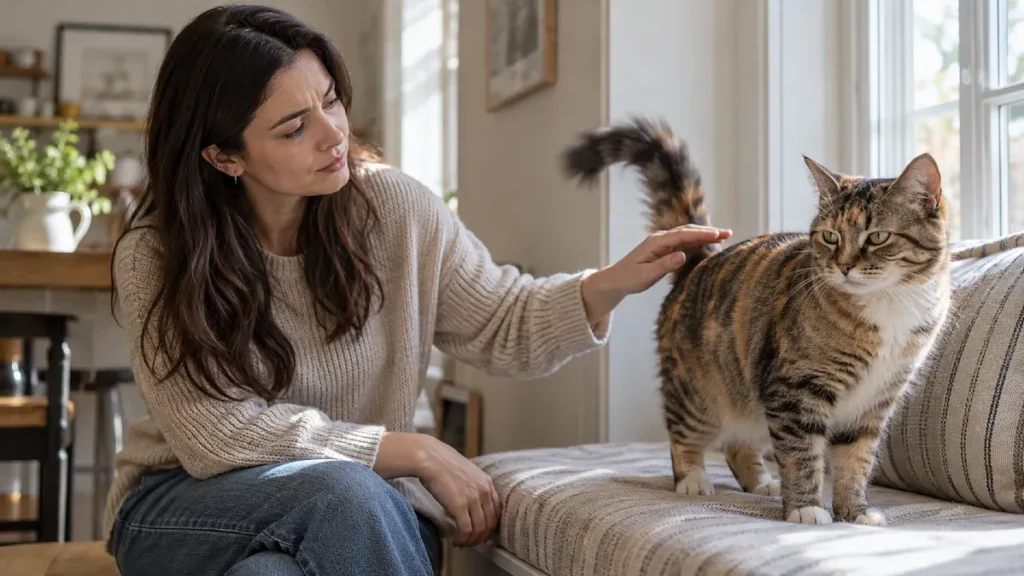
You sit beside your cat and start stroking their back. Everything seems fine until their tail begins flicking sharply from side to side, and suddenly, they move away.
That tail movement may be telling you something important. Unlike dogs, cats do not usually use energetic tail movements as a simple sign of happiness.
A Fast Tail Flick Can Mean They’ve Had Enough
The American Animal Hospital Association explains that tail twitching or swishing can be associated with agitation or distress. However, the meaning depends on what else your cat is doing.
For example, a cat watching a bird may twitch the tip of its tail while concentrating. That is different from a cat whose tail starts whipping while someone repeatedly pets them.
Watch the ears, body position, and facial expression along with the tail. A stiff body, flattened ears, and strong tail movements suggest that your cat may want the interaction to stop.
| Tail movement | Possible message | Best response |
|---|---|---|
| Tail upright with relaxed body | Friendly or confident greeting | Let your cat approach |
| Gentle tail tip twitching | Interest or concentration | Observe the situation |
| Fast side to side whipping | Agitation or overstimulation | Stop petting |
| Tail tucked close to body | Fear or uncertainty | Give the cat space |
| Puffed tail | Fear or strong excitement | Avoid sudden movements |
Stop Petting Before Your Cat Becomes Upset
Many cats enjoy short periods of affection but become uncomfortable when touching continues too long. This is sometimes called petting overstimulation, and it can happen even when your cat initially welcomes attention.
Try gently stroking your cat’s cheeks or head a few times, then stop. If they move closer or rub against your hand, they may welcome more contact.
If they turn away, flick their tail sharply, or leave, respect that choice. Learning when to stop can help your cat feel more in control during future interactions.
3. Your Cat Starts Scratching Furniture Much More Than Usual
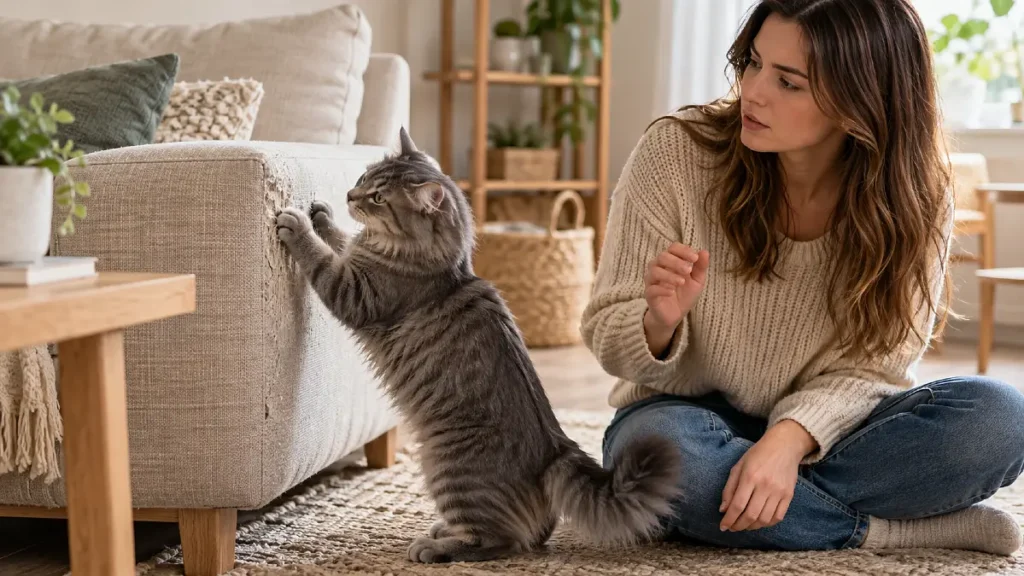
Your cat has always used their scratching post, but suddenly, they’re tearing at the sofa, bedroom carpet, and furniture legs. It might seem like they’re deliberately trying to upset you.
However, cats don’t scratch furniture because they dislike their owners. Scratching is a normal behavior that helps them maintain their claws, stretch their bodies, and leave scent marks.
Sudden Scratching Changes Can Signal Stress
Cats have scent glands in their paws that leave chemical signals when they scratch. These marks help them create a familiar environment and communicate with other cats.
According to veterinary guidance reviewed in Clinician’s Brief in 2026, scratching is an important part of normal feline marking behavior. The problem is often where the scratching happens, rather than the behavior itself.
If your cat suddenly begins scratching more often, look for possible changes around your home. A new pet, frequent visitors, unfamiliar smells, or furniture rearrangement may affect how secure they feel.
A cat may also scratch more because their current scratching surfaces are unsuitable. A short, unstable post might not provide the satisfying stretch they get from your sofa.
| Scratching behavior | Possible reason | Helpful action |
|---|---|---|
| Scratching after waking | Stretching and claw care | Place a post near their bed |
| Scratching beside doors | Scent marking | Provide a sturdy nearby scratcher |
| Increased scratching after a new pet arrives | Possible territorial stress | Offer separate spaces and resources |
| Scratching carpets | Preference for horizontal surfaces | Add a flat scratching pad |
| Scratching while showing other stress signs | Possible anxiety | Identify triggers and seek advice |
Give Your Cat Better Places to Scratch
Place a tall, sturdy scratching post beside the furniture your cat frequently targets. Choose a surface that matches their preference, such as sisal rope or cardboard.
Products such as the PetFusion Ultimate Cat Scratcher Lounge provide a cardboard surface for both scratching and resting. A simple cardboard scratch pad may work just as well for cats that prefer horizontal scratching.
Never shout at your cat or punish them for scratching. Instead, reward them when they use an appropriate surface and help them feel secure in their surroundings.
One important difference: Scratching furniture is not the same as repeatedly scratching their own skin. If your cat is scratching their body excessively, especially with redness or hair loss, ask your veterinarian to check for fleas, allergies, or skin disease.
4. Your Cat Suddenly Stops Using the Litter Box
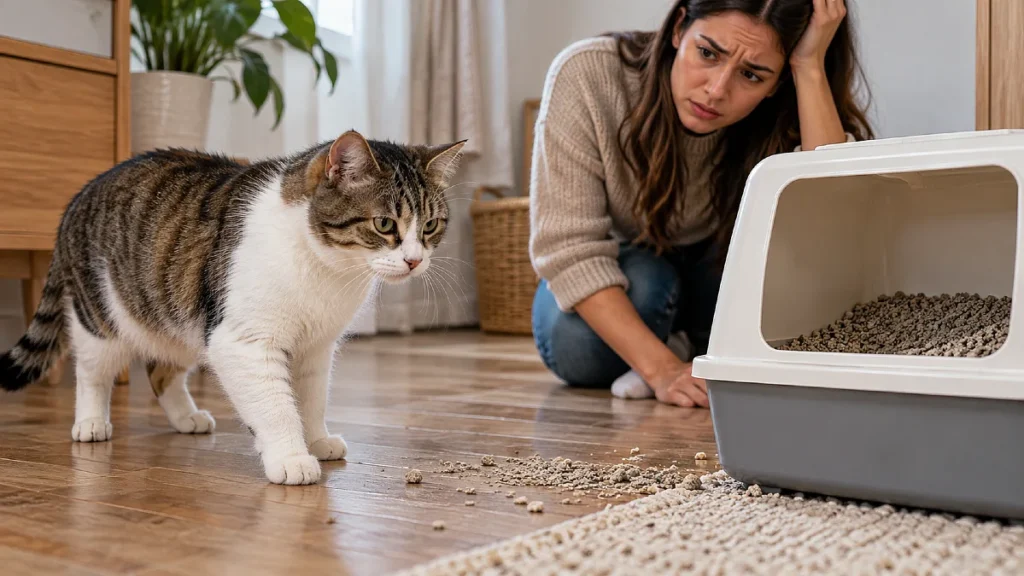
Few things frustrate cat owners more than discovering urine on the bedroom carpet or behind the sofa. When this happens repeatedly, it can feel like your cat is deliberately expressing anger.
But cats do not usually avoid their litter boxes to punish their owners. In many cases, the problem involves discomfort, litter preferences, stress, or an underlying medical condition.
Your Cat May Be Uncomfortable With the Litter Box
Cornell Feline Health Center explains that litter box problems can have several causes, including urinary disease and problems with the box itself. Cats may also develop preferences for different surfaces or locations.
Think about any recent household changes. Have you moved the litter box, switched to strongly scented litter, introduced another pet, or stopped cleaning the box as often?
Even a new washing machine beside the litter box might make a nervous cat less comfortable using that area. Sudden noises and a lack of privacy can make a previously acceptable location unpleasant.
Medical problems must also be considered. Bladder inflammation, constipation, arthritis, and other conditions can make using the litter box uncomfortable.
| Litter box problem | Possible cause | What to check |
|---|---|---|
| Urinating outside the box | Urinary illness or litter aversion | Arrange veterinary assessment |
| Avoiding a new litter | Unfamiliar texture or scent | Consider returning to the previous litter |
| Avoiding a shared box | Competition or lack of privacy | Provide separate boxes |
| Accidents near the box | Pain, mobility issues, or urgency | Check box accessibility and health |
| Frequent attempts with little or no urine | Possible urinary obstruction | Seek emergency veterinary care |
Make the Litter Box Feel Safe Again
Choose a quiet location where your cat can enter and leave without being trapped or disturbed. Clean the box regularly and consider unscented litter.
A commonly recommended starting point is one litter box for each cat, plus an additional box. Place them in separate areas so one cat cannot easily block another’s access.
If your cat suddenly starts having accidents, arrange a veterinary examination rather than assuming the issue is behavioral. Straining to urinate with little or no urine coming out is an emergency, particularly in male cats.
Addressing discomfort early gives you the best chance of restoring normal litter box habits. Your cat needs help with the cause, not punishment for the accident.
5. Your Cat Grooms So Much That Its Fur Starts Falling Out
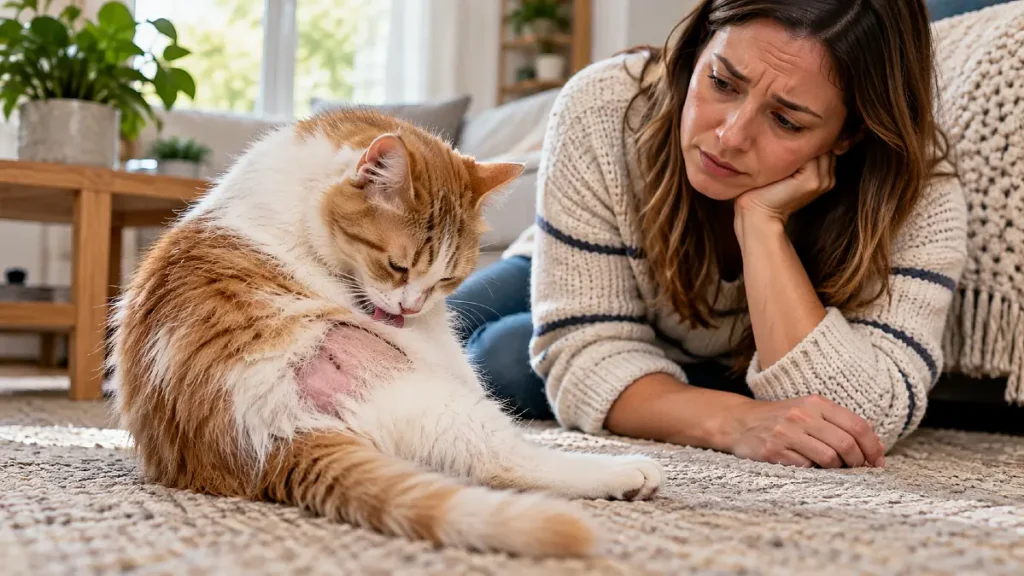
Cats are naturally clean animals, and most spend a great deal of time licking and maintaining their coats. Seeing your cat groom after eating or before sleeping is usually normal.
But what happens when the grooming becomes constant? If your cat repeatedly licks the same area until the fur becomes thin or disappears, something may be wrong.
Excessive Grooming Can Be a Sign of Physical Discomfort
Cornell Feline Health Center explains that overgrooming can result from medical problems or stress. Fleas, allergies, skin conditions, and pain are among the possible physical causes.
Cats sometimes concentrate their licking on one uncomfortable area. Others may groom across larger areas of their bodies, making the underlying cause harder to identify.
Stress can also contribute to repeated grooming in some cats. Licking may provide temporary comfort, especially when their routine or surroundings have changed.
Think about whether your cat has recently experienced a move, a new family member, or conflict with another animal. These events can affect how secure they feel, although they do not prove that stress is causing the grooming.
Watch for Changes in the Skin and Coat
Part the fur gently and look for bald patches, redness, scabs, or damaged skin. You might notice repeated licking around the stomach, legs, or base of the tail.
Do not assume these symptoms mean your cat dislikes you or is emotionally unhappy. A veterinarian should check for medical causes before excessive grooming is treated as an anxiety problem.
Once physical causes have been addressed, you can focus on making your home calmer. Maintain a familiar routine, provide comfortable resting spaces, and give your cat opportunities to play.
A cat that feels physically comfortable and secure may become more interested in normal social contact. However, skin problems sometimes require ongoing veterinary treatment before behavior improves.
6. Your Cat Hides Whenever You Enter the Room
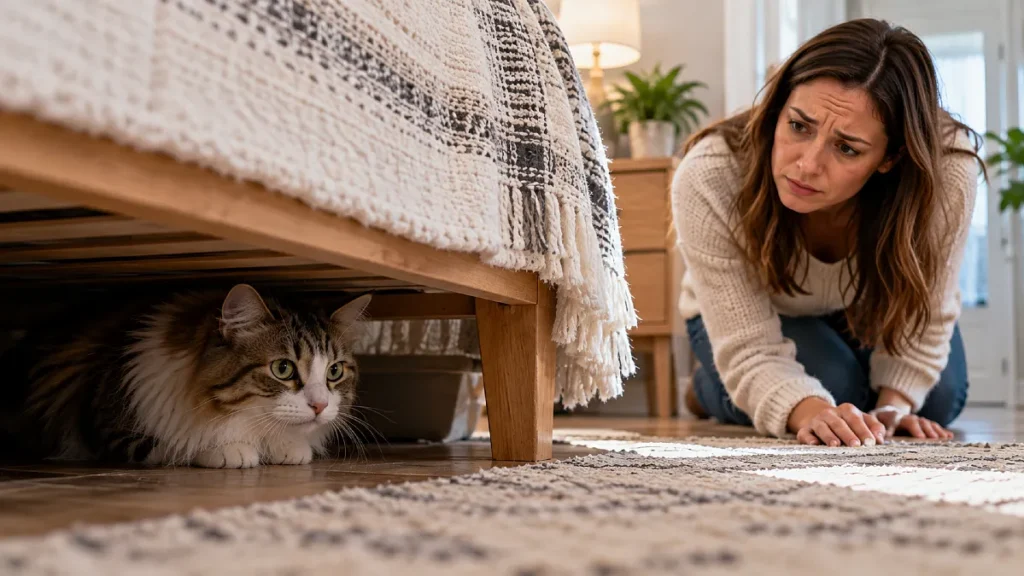
You walk into your living room, and your cat immediately disappears behind the couch. Later, you find them hiding under the bed, even though the house seems perfectly peaceful.
When this becomes a daily pattern, it’s easy to feel rejected. But hiding is often a cat’s way of finding privacy or protecting themselves from something they find stressful.
Frequent Hiding May Mean Your Cat Doesn’t Feel Secure
Cats Protection explains that hiding is a normal feline behavior, especially when cats need a safe place to rest. Some naturally shy cats simply prefer quiet spaces away from household activity.
The bigger concern is a sudden change. If your normally friendly cat starts hiding for hours and avoids activities they previously enjoyed, pay attention.
Hiding can be linked with frightening noises, visitors, new pets, or conflict between animals. It can also happen when a cat is sick or experiencing pain.
This is why you should never judge hiding behavior by itself. A cat that suddenly becomes withdrawn deserves a health check, particularly if their appetite, grooming, or litter box habits have also changed.
Create Safe Places Instead of Pulling Your Cat Out
Provide quiet hiding spots where your cat can rest without being disturbed. A covered cat bed, open cardboard box, or accessible raised perch can give them a sense of security.
Avoid reaching under furniture to drag your cat into the room. Forcing interaction may make them more fearful and less willing to approach you next time.
Instead, sit quietly nearby and allow your cat to decide when to come out. You can place a favorite toy or treat at a comfortable distance, without using it to pressure them.
Pay attention to what happens before your cat hides. If they disappear whenever the vacuum cleaner starts or a visitor arrives, you may have found a possible trigger.
Small changes to the environment can help. Reducing noise, offering separate resting areas, and keeping routines familiar may make your cat more comfortable over time.
7. Your Cat Pulls Away Every Time You Try to Show Affection
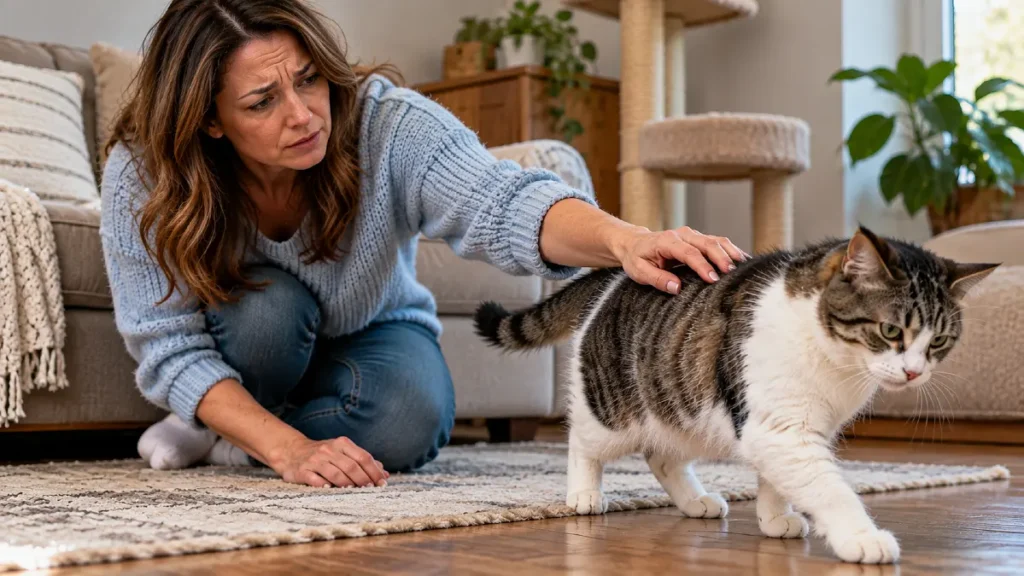
You reach down to pick up your cat, but they immediately twist away. When you try stroking their back, they move to the other end of the sofa.
It can feel disappointing when a pet you adore refuses your affection. However, not every cat enjoys hugging, being carried, or sitting on someone’s lap, even when they feel safe with that person.
7 Signs Your Cat May Be Uncomfortable Around You
These behaviors do not prove your cat doesn’t love you. They may reveal stress, discomfort, or a need for space.
- 1
Avoiding Eye Contact
Your cat looks away when you try to connect. This can be normal, especially in shy cats.
Try this: Offer a gentle slow blink and let your cat approach naturally. - 2
Fast Tail Flicking
Sharp tail movements during petting may mean your cat is irritated or overstimulated.
Try this: Pause petting and allow your cat to decide whether to continue. - 3
More Furniture Scratching
A sudden increase in scratching may reflect stress, marking, or unsuitable scratching surfaces.
Try this: Provide sturdy scratching posts near favorite scratching spots. - 4
Litter Box Problems
Accidents may result from medical issues, litter preferences, or changes around the home.
Try this: Contact your vet for new accidents. Inability to urinate is an emergency. - 5
Excessive Grooming
Constant licking, bald patches, or irritated skin may signal pain, allergies, or stress.
Try this: Arrange a veterinary check before assuming anxiety. - 6
Hiding More Often
Sudden withdrawal can happen because of fear, household changes, or illness.
Try this: Offer quiet hiding spaces. Seek veterinary advice for sudden changes. - 7
Pulling Away From Affection
Your cat may dislike being picked up or touched in certain places. This does not mean rejection.
Try this: Let your cat initiate contact and respect their boundaries.
Sudden behavior changes, pain, loss of appetite, or urinary problems require veterinary attention.
Your Cat May Prefer Affection on Their Own Terms
The AAFP and ISFM Cat Friendly Veterinary Interaction Guidelines emphasize allowing cats choice and control during human interactions. Feeling trapped or restrained can make some cats uncomfortable.
Cats also have different preferences when it comes to physical touch. Many enjoy gentle strokes around their cheeks, chin, or head but dislike having their stomach or lower back touched.
A cat that walks away from your hand is giving you useful information. They may be tired, overstimulated, frightened, or simply uninterested in being touched at that moment.
Watch for warning signals such as flattened ears, tense muscles, a sharp tail flick, or a quick head turn toward your hand. Stopping before your cat becomes upset can prevent an uncomfortable interaction.
Let Your Cat Decide When to Come Closer
Try sitting beside your cat without reaching for them. Keep your movements relaxed and allow them to approach when they feel ready.
If your cat rubs their cheek against your hand, you can offer a few gentle strokes. Pause regularly to see whether they ask for more contact.
Some cats show affection by resting nearby rather than climbing onto your lap. Others follow their owners around the house or quietly sit in the same room.
These smaller interactions deserve attention, too. Your cat does not have to enjoy being held to have a positive bond with you.
How to Rebuild Your Cat’s Trust Without Forcing Affection
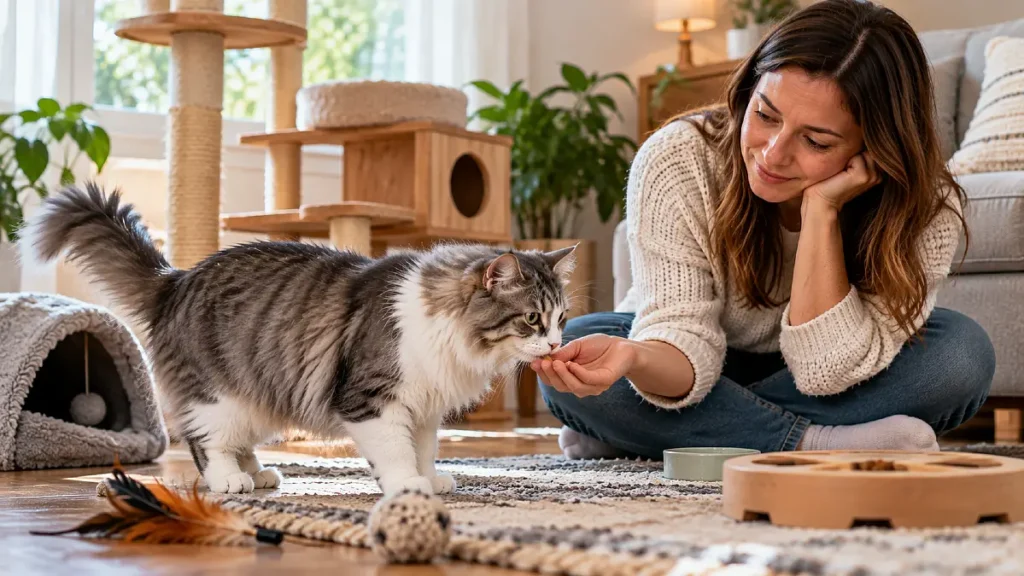
If several of these signs sound familiar, you may feel worried about your relationship with your cat. The encouraging part is that many cats can become more comfortable when their physical and emotional needs are addressed.
Start by considering your cat’s environment rather than trying to make them more affectionate. The AAFP and ISFM Feline Environmental Needs Guidelines highlight safe spaces, suitable resources, play, and positive human interactions.
Give Your Cat More Control Over Daily Interactions
Cats often feel safer when they can choose where to rest, when to approach, and how long to interact. Giving them options reduces the need to escape from unwanted attention.
Create a few comfortable resting spots around your home, including quiet areas where household activity is limited. If you have several cats, make sure each has access to food, water, litter boxes, scratching areas, and hiding places without being blocked.
Try these simple habits:
- Keep feeding times consistent. A predictable routine can help your cat know what to expect.
- Use interactive toys. Wand toys allow cats to chase and pounce while sharing a positive activity with you.
- Offer suitable scratching spaces. Place sturdy posts near favorite resting and scratching areas.
- Reward voluntary contact. Give praise, gentle attention, or a suitable treat when your cat approaches willingly.
- Respect their hiding places. Let your cat rest without being disturbed.
- Avoid punishment. Shouting, spraying water, or forcing contact can increase fear.
Use Playtime to Build Positive Experiences
Playing together can provide a pleasant way to interact without forcing physical affection. Try moving a wand toy along the floor and letting your cat stalk and chase it.
Start with a short session and watch their interest. If your cat enjoys the activity, you can offer regular opportunities to play at times that suit them.
Puzzle feeders can also give your cat something interesting to do. Products such as the Catit Senses Food Tree are designed to encourage cats to use their paws to retrieve food.
Some owners also try feline pheromone products such as FELIWAY Classic during stressful changes. These products may help some cats, but results vary and they should never replace medical care or improvements to the home.
Most importantly, give your cat time. Trust is built through repeated experiences in which your cat feels safe, comfortable, and free to make choices.
When Your Cat’s Behavior Means You Should Call the Vet
Some behaviors that look like rejection may actually be early signs of illness. Cats can hide pain surprisingly well, so changes in their normal habits should not be ignored.
Cats Protection and Cornell Feline Health Center both advise owners to consider medical causes when cats begin behaving differently. This is particularly important when several unusual symptoms appear together.
| Warning sign | Why it matters | What to do |
|---|---|---|
| Sudden hiding with reduced appetite | Possible illness or pain | Contact your vet promptly |
| Repeated straining with little or no urine | Possible urinary blockage | Seek emergency care immediately |
| Bald patches or damaged skin | Possible allergies, parasites, or other illness | Arrange a veterinary examination |
| Sudden litter box accidents | Possible urinary or digestive problem | Contact your vet for assessment |
| Unusual aggression when touched | Possible pain, fear, or discomfort | Avoid forcing contact and consult your vet |
| Withdrawal with major behavior changes | Possible illness or severe stress | Arrange a prompt health check |
A cat that suddenly refuses food, becomes extremely weak, or has trouble breathing also needs urgent veterinary attention. Do not wait for behavioral changes to settle if your cat appears physically unwell.
Once a veterinarian has ruled out medical problems, a qualified feline behavior professional may help identify sources of stress. They can recommend practical changes based on your cat’s individual behavior and household environment.
What Your Cat’s Behavior Really Says About Your Bond
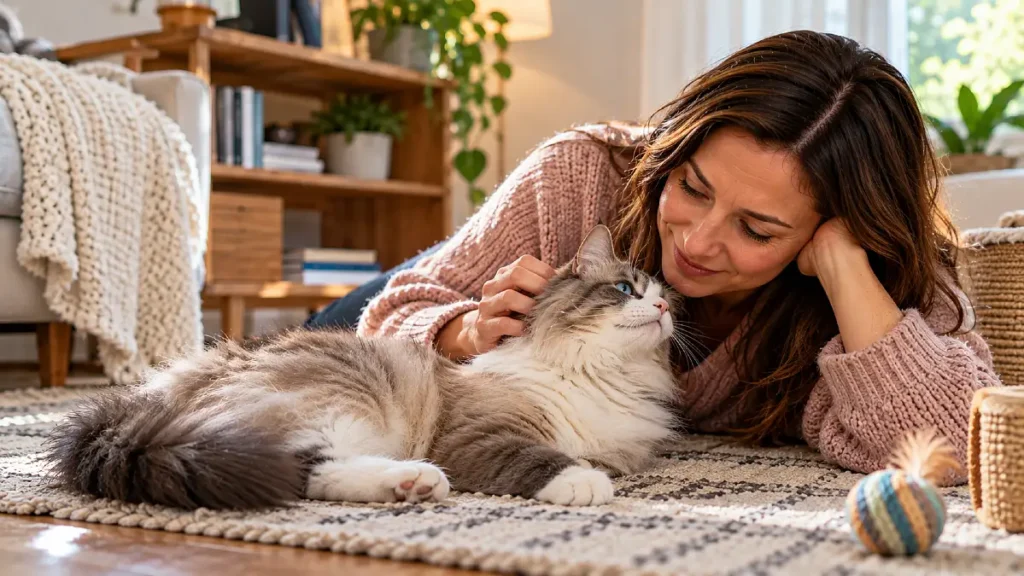
The seven signs your cat doesn’t love you may sound upsetting at first, especially when your cat has become distant or less affectionate. But avoiding eye contact, flicking a tail, hiding, or refusing cuddles does not prove that your cat dislikes you.
What these behaviors can reveal is that your cat may need more space, a calmer environment, medical attention, or a different approach to interaction. Learning to recognize those needs can help you respond in a way that builds trust.
Your cat doesn’t have to cuddle constantly to feel safe and connected to you. Sometimes, choosing to sleep nearby or quietly following you into another room is their preferred way of sharing your company.
Pay attention to changes, respect your cat’s boundaries, and make their comfort a priority. A stronger bond often begins when your cat realizes they can trust you to listen to what their behavior is telling you.