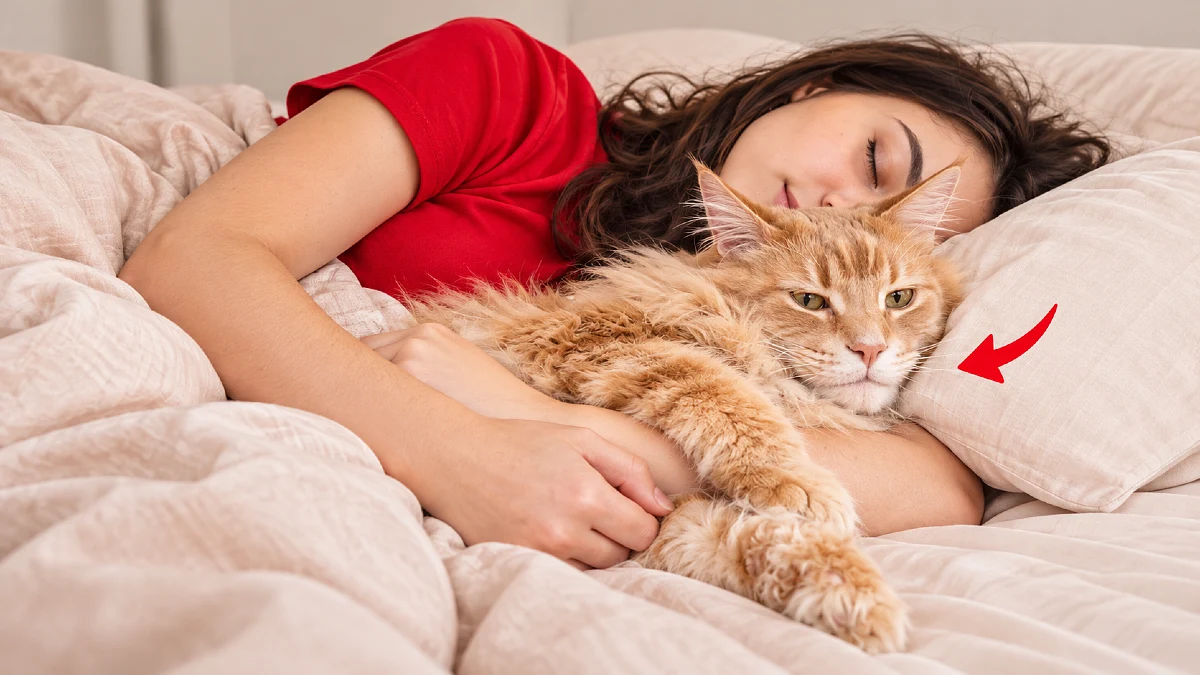
You finally get comfortable in bed, pull up the blanket, and close your eyes. Just as you’re about to fall asleep, your cat jumps onto the mattress, walks across your pillow, and settles right beside you.
They have their own cozy bed, a favorite chair, and plenty of quiet places around the house. Yet every night, they choose to sleep with you. Why?
If your cat sleeps with you, there may be more behind that habit than simply wanting a warm place to rest. Your familiar scent, daily routine, and the comfort of being near someone they trust can all play a part.
Cats cannot explain their feelings with words, but their behavior offers useful clues. The way they settle beside you, where they choose to sleep, and how they react when something changes can reveal a lot about their needs.
Your Cat Feels Safe Enough to Sleep Beside You
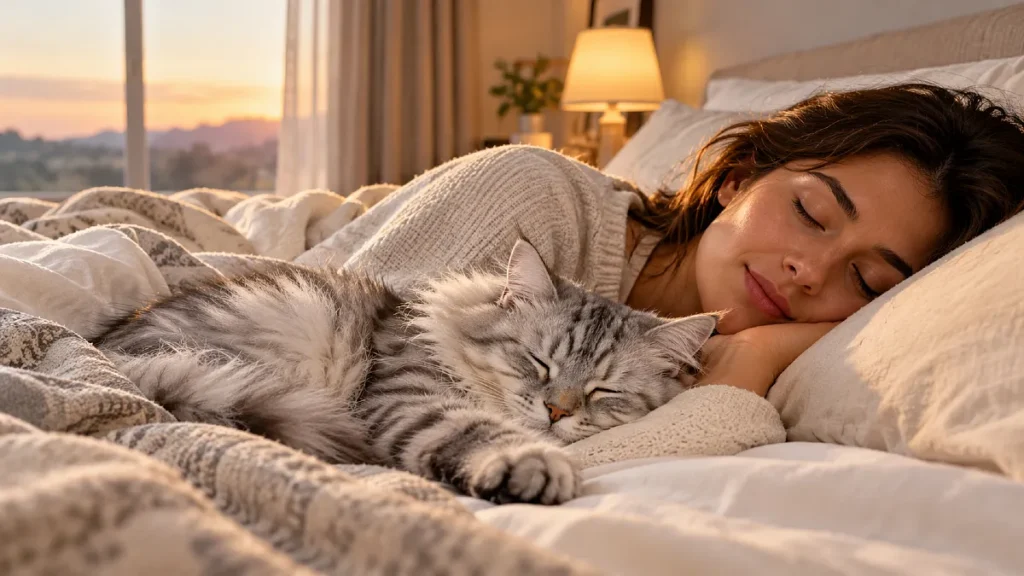
Have you ever wondered why your cat ignores a perfectly good bed and chooses to curl up beside you instead?
Cats naturally look for places where they can rest without being disturbed. Even cats that have spent their entire lives indoors retain instincts that encourage them to seek safe sleeping spots.
According to Cats Protection, domestic cats typically sleep around 12 to 18 hours daily. They often choose places that feel warm, comfortable, and secure.
That makes your cat’s sleeping choice interesting.
When your cat settles beside you, they may feel comfortable enough to relax in your presence. They know your voice, recognize your scent, and have learned what to expect from your behavior.
There is scientific research supporting the idea that cats can form meaningful relationships with people.
In 2019, researchers at Oregon State University published a study in Current Biology examining attachment between cats and their caregivers. The study found evidence that cats can develop distinct attachment patterns with humans, including secure attachment.
This doesn’t mean sleeping in your bed proves your cat has a certain attachment style. However, it does show that relationships between cats and their caregivers can be more involved than people once assumed.
Watch what your cat does before falling asleep.
Do they approach you willingly, stretch out comfortably, or close their eyes while resting beside you? These behaviors can be encouraging signs that they feel relaxed in your company.
The important message: Your cat may see your presence as part of a safe and familiar sleeping environment.
And if they sometimes prefer another room, don’t worry. Cats can feel close to you without needing to sleep beside you every night.
Your Cat Is Sharing Familiar Scents With You
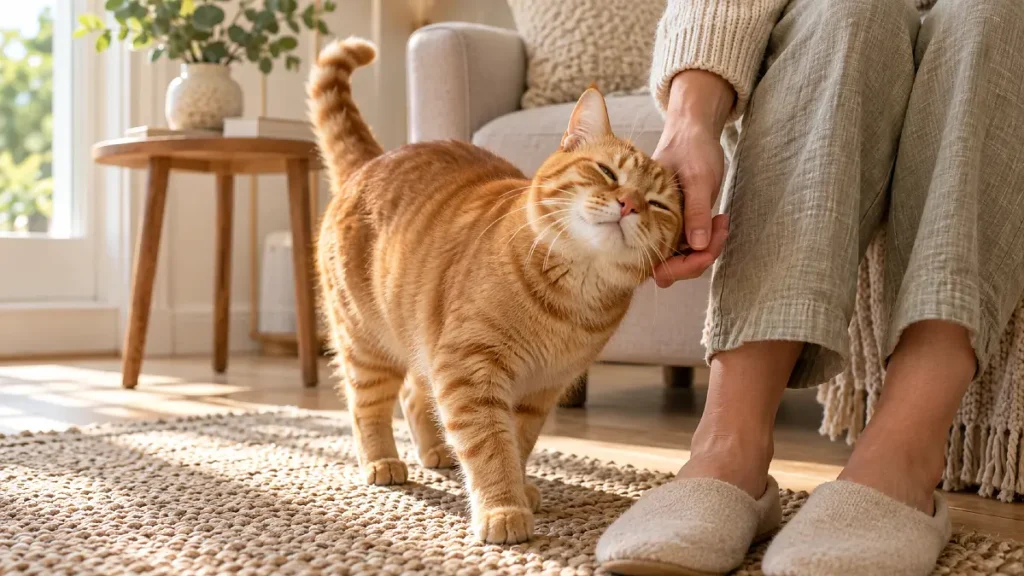
Have you noticed your cat rubbing their forehead against your arm or pressing their cheeks against your pillow before settling down?
That little movement is more meaningful than it might appear.
Cats have scent glands around their faces, including their cheeks, chin, and forehead. When they rub against people or familiar objects, they leave scent signals behind.
Veterinarians call this friendly head rubbing bunting.
According to VCA Animal Hospitals, cats use facial scent as part of their communication. Rubbing against familiar people and objects can help make their surroundings feel recognizable and comfortable.
This is especially interesting when cats share a home with other cats.
Cats that have friendly social relationships may rub against one another, helping maintain a familiar group scent. They can also direct similar rubbing behavior toward the people they live with.
Your cat might rub against your hands before climbing into bed. They may brush their cheeks along your blanket or gently press their head against your arm.
These actions can be signs of familiarity, social contact, or a request for attention.
Your cat isn’t necessarily making a statement that you belong to them. But they may be treating you as an important part of their familiar surroundings.
And here’s something you may have noticed.
After you’ve been away from home, your cat might sniff you carefully before rubbing against your legs. They could be investigating the unfamiliar smells you’ve brought home while greeting you.
What this means for you: When your cat rubs their face against you before sleeping, they may be taking part in a familiar social routine.
If they seem relaxed and enjoy being touched, respond with a gentle cheek or chin scratch. Let them decide when they’ve had enough attention.
Your Cat May Feel More Secure When Sleeping Close to You
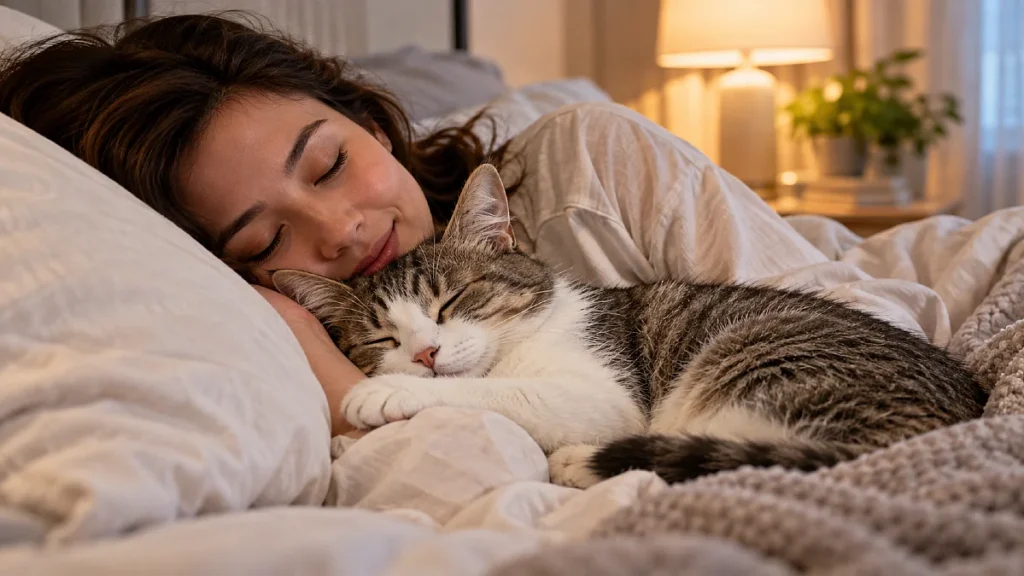
Some cats refuse to sleep anywhere except beside their owner’s head. Others prefer the foot of the bed, while a few insist on pressing themselves against your back.
Does the location actually mean anything?
Sometimes, yes. But the reason may be simpler than you expect.
Cats choose sleeping places based on comfort, warmth, familiarity, and how secure the area feels. They may also prefer spots where people are less likely to disturb them.
In a February 2026 PetMD article, veterinary behavior specialist Dr. Wailani Sung explained that cats may sleep near their owner’s head because the area is warm, familiar, and close to someone they trust.
The head of the bed may also be appealing because it often moves less than your legs.
But what about the idea that your cat is sleeping beside you to protect you?
Cats can be alert to unusual sounds and movement. However, there isn’t reliable evidence that sleeping near your head or facing the bedroom door means your cat has deliberately assigned themselves the job of guarding you.
A cat watching the doorway may simply prefer to keep an eye on the room.
What Your Cat’s Favorite Sleeping Spot Might Mean
| Where your cat sleeps | Possible reason | What you should notice |
|---|---|---|
| Near your head | Warmth, familiar scent, or a comfortable spot | Whether they settle easily and sleep peacefully |
| At your feet | Extra space and fewer disturbances | Whether they move when you change positions |
| Pressed against your back | Warmth and physical closeness | Whether they choose contact willingly |
| On your chest | Body heat, contact, or attention | Whether both of you remain comfortable |
| Beside your pillow | Soft bedding and familiar smells | Whether they appear relaxed |
| Near the bedroom door | A preferred resting place with a view of the room | Whether the cat seems calm or unusually alert |
Remember, these are possible explanations rather than fixed meanings.
One cat may sleep near your head because they enjoy being close. Another may choose the same spot because they love the texture of your pillow.
The useful clue is whether your cat seems relaxed and comfortable, not simply where they choose to sleep.
If your cat changes places throughout the night, that’s normal too. Many cats enjoy moving between different sleeping areas.
Every Sleeping Position Can Offer Clues About How Your Cat Feels
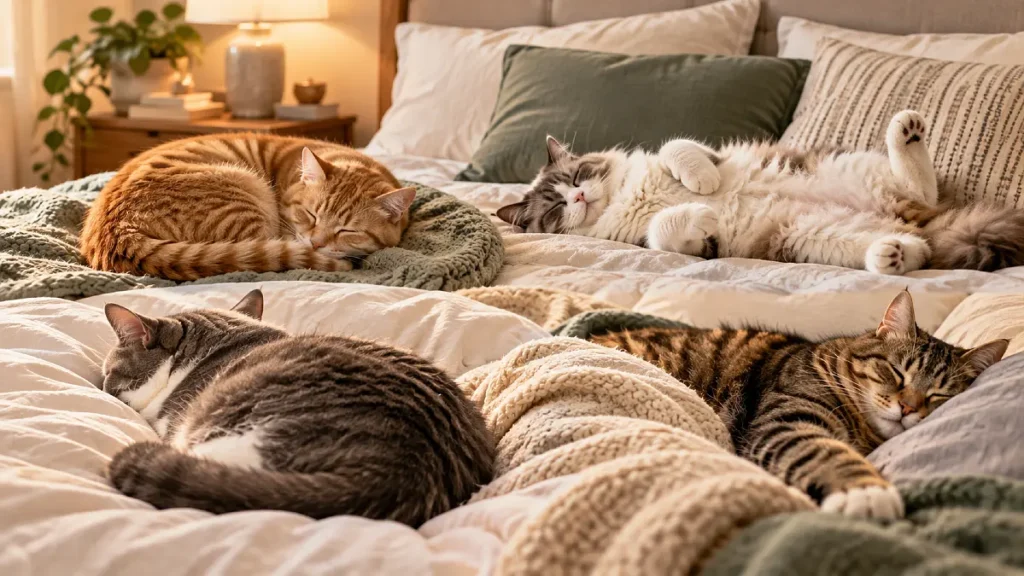
Your cat curls into a tight ball one night and stretches across half the mattress the next.
Sometimes they sleep on their back with their belly exposed. Other times, they turn away from you and tuck their face into the blanket.
It can be tempting to give every position a special emotional meaning.
But cats choose sleeping positions for several reasons, including comfort, temperature, and how relaxed they feel.
Cats Protection explains that sleeping positions can provide clues about a cat’s comfort and behavior. However, no single position can tell you exactly what your cat is thinking.
When Your Cat Curls Into a Tight Ball
A tightly curled cat keeps their paws close to their body and often wraps their tail around themselves.
This position can help conserve body heat. It also keeps sensitive areas of the body less exposed while resting.
Some people assume a curled cat must feel nervous. That’s not always true.
Your cat might simply enjoy that position because it feels comfortable. Even confident, relaxed cats regularly sleep curled into little balls.
When Your Cat Sleeps With Their Belly Exposed
Few things look sweeter than a cat sleeping on their back with their paws stretched into the air.
An exposed belly can suggest that your cat feels relaxed in their surroundings. It may also help them cool down or stretch comfortably.
But here’s something many owners misunderstand.
A cat showing their belly isn’t always inviting you to touch it.
The stomach is a sensitive area, and many cats dislike belly rubs even when they appear happy.
Let your cat rest without disturbing them. If they want attention after waking, they can approach you.
When Your Cat Turns Their Back to You
Does your cat curl up beside you and then turn around so their back faces you?
Don’t take it personally.
Cats don’t assign the same social meaning to facing away that humans sometimes do. They may simply find that position more comfortable.
A cat that sleeps with their back toward you may feel relaxed, but the position alone doesn’t prove complete trust.
Watch their overall body language rather than focusing on the direction they’re facing.
When Your Cat Sleeps Pressed Against You
Some cats seem determined to remove every inch of space between themselves and their favorite person.
They may squeeze into the bend of your arm, settle against your side, or curl beside your legs.
Physical contact can provide warmth and comfort. For cats that enjoy close social contact, sleeping against you may also be part of a friendly bond.
If your cat settles there voluntarily and seems peaceful, it’s reasonable to view the behavior as a positive sign.
What Four Common Cat Sleeping Positions May Tell You
| Sleeping position | Possible meaning | What it does not prove |
|---|---|---|
| Curled into a ball | Staying warm and resting comfortably | That your cat feels afraid |
| Belly exposed | Feeling relaxed or cooling down | That your cat wants belly rubs |
| Back facing you | Choosing a comfortable resting direction | That your cat is ignoring you |
| Pressed against you | Seeking warmth, comfort, or contact | That your cat is emotionally dependent |
| Stretched across the bed | Enjoying space and a relaxed position | That your cat feels completely safe in every situation |
The best way to read your cat’s body language is to look at the whole picture.
Relaxed muscles, normal breathing, comfortable movements, and ordinary daily behavior are often more useful than one sleeping position.
Your Cat May Have Learned Your Bedtime Routine

Have you noticed that your cat seems to know when you’re getting ready for bed?
You brush your teeth, turn off the television, and walk toward the bedroom. Before you even reach the mattress, your cat is already waiting.
That behavior may be connected to something cats are very good at: learning routines.
Cats are generally most active around dawn and dusk. This activity pattern is called crepuscular, and it reflects natural feline behavior.
But domestic cats can also adjust parts of their daily activity around human routines.
A 2013 study published in the Journal of Veterinary Behavior examined activity patterns in domestic cats living under different housing conditions.
The researchers found that human presence and living arrangements influenced the cats’ activity patterns. The study was small, so its findings should not be applied to every cat.
Still, it helps explain something many cat owners notice.
Your cat may learn when you usually wake up, when you offer food, and when the house becomes quiet.
They may also associate your bedtime with a comfortable place to rest and a chance to spend time near you.
That doesn’t mean they’re deliberately changing their biology to match your schedule. Their behavior may reflect a combination of habit, attention, feeding times, and comfort.
Why Your Cat Appears Before Your Alarm
Your cat may become active around your usual waking time because they’ve learned the household routine.
If breakfast normally comes shortly after you get out of bed, your cat may start expecting food around that time.
They may also respond to changes in light or ordinary sounds that happen each morning.
This is one reason some cats become persistent early morning visitors.
If your cat regularly wakes you before you’re ready, try keeping feeding times predictable. A short play session in the evening can also provide exercise and mental activity before bedtime.
What your cat may be telling you: Your bedtime has become part of a familiar daily pattern that they enjoy.
And that routine can be comforting for both of you.
Your Cat May Notice When Something About Your Mood Changes
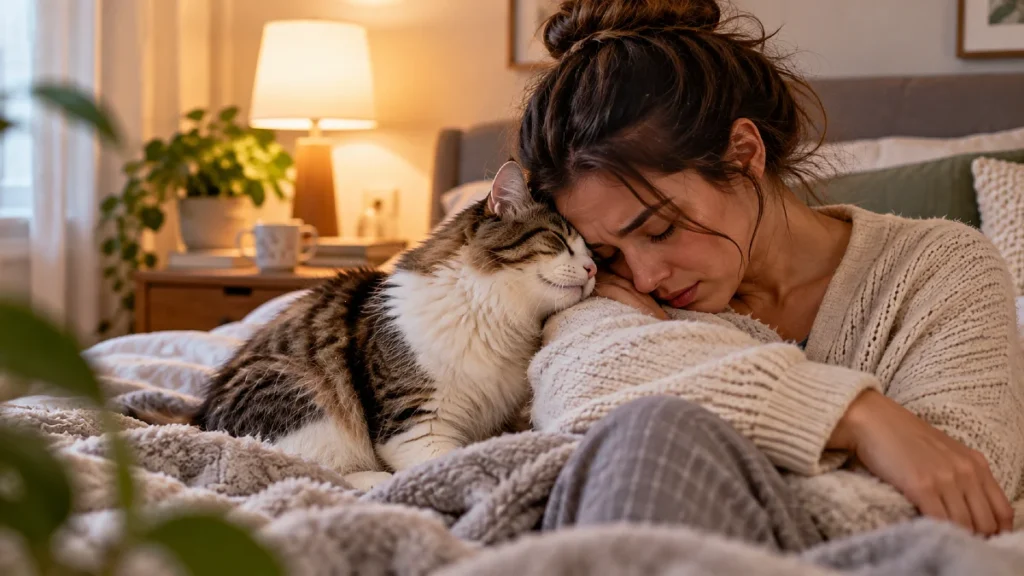
You’ve had an exhausting day. You finally lie down, pull up your blanket, and notice your cat climbing onto the bed.
Instead of wandering around the house, they settle beside you and stay close.
It can feel as though your cat knows exactly what you’re going through.
Cats can respond to changes in human behavior, but the science is more limited than some popular stories suggest.
They may notice differences in your voice, movements, facial expressions, and daily habits.
A 2020 study published in Animals examined how cats responded to emotional signals from humans and other cats.
Researchers found evidence that cats could match certain emotional expressions with related vocal sounds. The results suggested that cats have some ability to recognize emotional signals.
However, the research doesn’t prove that cats can identify specific human illnesses or know exactly when someone feels sad or stressed.
Your cat may simply notice that something about your normal behavior has changed.
Perhaps you’re sitting quietly instead of moving around the house. Maybe your voice sounds different, or you’re spending more time in bed than usual.
Cats that know your routine may respond to these changes.
Some become more affectionate when their owners are resting. Others may avoid extra activity or choose a quiet place of their own.
Both reactions are possible.
Why Some Cats Become Extra Affectionate When You’re Upset
If your cat comes closer when you’re having a difficult day, several explanations are possible.
They may enjoy the chance to rest beside you because you’re sitting still. They might also be responding to a change in your normal behavior.
You may notice more head rubbing, purring, or quiet companionship during these moments.
That doesn’t mean your cat is deliberately providing emotional care. But it can still be a comforting interaction.
And you don’t need to prove what your cat is thinking to enjoy their company.
The practical lesson: Let your cat choose whether to approach you. Speak gently, keep your movements calm, and allow them to leave whenever they want.
A relaxed relationship often depends on respecting the space your cat needs.
If Your Cat Suddenly Stops Sleeping With You, Pay Attention

This is the behavior change every cat owner should know about.
Suppose your cat has slept beside you almost every night for years. Then, without any obvious reason, they stop coming into your bedroom.
They begin sleeping under a table, behind the sofa, or in a quiet room where they rarely spent time before.
Should you be worried?
Not necessarily. Cats sometimes change their preferred sleeping locations for completely ordinary reasons.
But a sudden change from your cat’s normal routine can also be a clue that something deserves attention.
Your Bedroom May No Longer Feel Comfortable
Start by looking at what has changed around your home.
Perhaps you recently bought new bedding, changed the room temperature, or started using a fan at night.
Your cat might simply prefer a cooler or quieter sleeping area.
A new pet, visiting family member, or change in household activity may also influence where your cat chooses to rest.
Cats Protection explains that changes in a cat’s environment can sometimes cause stress. Some cats respond by hiding, avoiding certain areas, or changing their normal behavior.
If your cat seems healthy and relaxed, consider whether a new resting place might simply be more comfortable.
Pain Can Make Your Cat Avoid the Bed
Older cats may stop jumping onto high beds because the movement has become uncomfortable.
Arthritis and other painful conditions can affect how easily cats climb, jump, and settle into resting positions.
VCA Animal Hospitals explains that cats often hide signs of pain. Owners may first notice small changes in activity, grooming, sleeping habits, or social behavior.
A cat that once jumped onto your mattress without hesitation may begin waiting on the floor instead.
They might also sleep downstairs, avoid their favorite chair, or move more slowly after waking up.
These changes deserve veterinary attention, especially in senior cats.
Do not assume that difficulty jumping is simply a normal part of getting older.
Illness Can Change Where Your Cat Sleeps
Cats sometimes withdraw from familiar social activities when they don’t feel well.
Your cat may start hiding more often, sleeping in unusual places, or avoiding contact they previously enjoyed.
A change in sleeping location alone cannot diagnose an illness. However, it becomes more concerning when accompanied by other symptoms.
Five Changes That Help You Decide What to Do
| Change you notice | Possible explanation | Best next step |
|---|---|---|
| Cat sleeps in a different room but acts normally | Temperature, comfort, or a new favorite spot | Observe the routine and check for household changes |
| Cat stops jumping onto the bed | Pain, stiffness, or difficulty moving | Arrange a veterinary examination |
| Cat hides more and eats less | Stress or possible illness | Contact your veterinarian promptly |
| Cat sleeps much more and avoids interaction | Pain or another health concern | Arrange veterinary care |
| Cat strains to urinate but produces little or no urine | Possible urinary blockage | Seek emergency veterinary care immediately |
What You Should Never Do
Don’t force your cat back into bed because you miss sleeping beside them.
If they are avoiding the bedroom due to pain or stress, forcing contact may make the situation worse.
Instead, offer comfortable resting choices and watch how they move around the house.
You can also keep a short record of what you notice.
Write down where your cat sleeps, how much they eat, whether they are using the litter box normally, and whether they have trouble jumping.
These details can help your veterinarian identify a possible problem.
The most important point: When a cat suddenly changes a familiar sleeping habit, look for the cause instead of treating the change as rejection.
Your cat may simply have found a new favorite place. But checking for signs of discomfort is always worthwhile.
3 Ways to Make Your Bedroom More Comfortable for Your Cat
A few simple changes can help your cat feel safe, relaxed, and comfortable without disturbing your sleep.
Offer a Cozy Sleeping Spot
Place a soft cat bed or washable blanket near your mattress. Choose a quiet area away from busy walking spaces.
Make the Bed Easier to Reach
Older cats may find jumping uncomfortable. Stable pet steps or a suitable ramp can make access easier.
Keep the Room Calm
Reduce sudden noise, strong drafts, and frequent disturbances. Let your cat choose when to approach or rest.
Important: If your cat suddenly struggles to jump or changes sleeping habits along with other symptoms, consult your veterinarian.
Four Simple Ways to Create a Comfortable Cat Sleeping Area
| Bedroom feature | Simple improvement | Why it may help |
|---|---|---|
| Sleeping surface | Add a washable cotton blanket or soft cat bed | Offers a familiar and comfortable resting place |
| Bed access | Use stable steps or a suitable ramp if needed | Makes furniture easier to reach |
| Room environment | Keep the room quiet with comfortable temperatures | Reduces unnecessary disturbances |
| Sleeping choices | Provide an open bed and a sheltered resting spot | Lets your cat choose where they feel comfortable |
| Bedding hygiene | Wash bedding regularly and maintain routine parasite prevention | Helps keep the sleeping area clean |
Is Sharing Your Bed With a Cat Always a Good Idea?
Not for everyone.
Cats can sometimes disturb sleep by moving around, grooming, or waking their owners early in the morning.
People with allergies may also find that sharing bedding makes symptoms worse.
The CDC’s 2026 guidance explains that cats can carry germs even when they appear healthy. Good hygiene, regular veterinary care, and proper parasite prevention are important.
Young children, pregnant people, older adults, and those with weakened immune systems may need extra precautions.
If sharing your mattress doesn’t work for your household, give your cat a separate sleeping space nearby.
You can still enjoy their company without having them sleep directly on your pillow.
Common Questions About Cats Sleeping With Their Owners
Does My Cat Love Me if It Sleeps Beside Me?
Sleeping beside you may be one sign that your cat feels comfortable in your presence.
However, affection cannot be measured by sleeping habits alone. Some cats show their social bonds through head rubbing, gentle greetings, relaxed contact, or simply choosing to spend time nearby.
A cat that prefers sleeping alone can still enjoy a close relationship with you.
Why Does My Cat Sleep on My Pillow?
Your pillow may be warm, soft, and full of familiar smells.
Some cats also prefer the head of the bed because it offers a comfortable place with fewer disturbances from moving legs.
PetMD identifies warmth, familiarity, and comfort as possible reasons cats sleep near their owner’s head.
Why Does My Cat Sleep on My Chest?
Your chest offers warmth and close physical contact.
If your cat enjoys resting against you, the position may feel comfortable and familiar.
However, it is not proof that your cat is deliberately monitoring your heartbeat or trying to protect you.
Why Does My Cat Sleep With Someone Else Instead of Me?
Your cat may prefer a person who moves less during sleep, keeps a different room temperature, or follows a more predictable bedtime routine.
They may also have developed a familiar sleeping habit with that person.
This does not automatically mean your cat loves someone else more.
Why Does My Cat Sleep Beside Me but Not Touch Me?
Some cats enjoy companionship while keeping a little personal space.
Your cat may feel comfortable in the same room without wanting constant physical contact.
Letting them decide how close to sleep can help keep the relationship relaxed.
Should I Worry if My Cat Sleeps More Than Usual?
Cats naturally spend many hours sleeping, and their habits can vary with age, weather, and activity.
However, a sudden increase in sleep combined with reduced appetite, hiding, weakness, or other unusual behavior deserves veterinary attention.
Pay more attention to changes from your cat’s normal routine than to one day’s total sleep.
What Your Cat’s Nightly Visits Really Mean
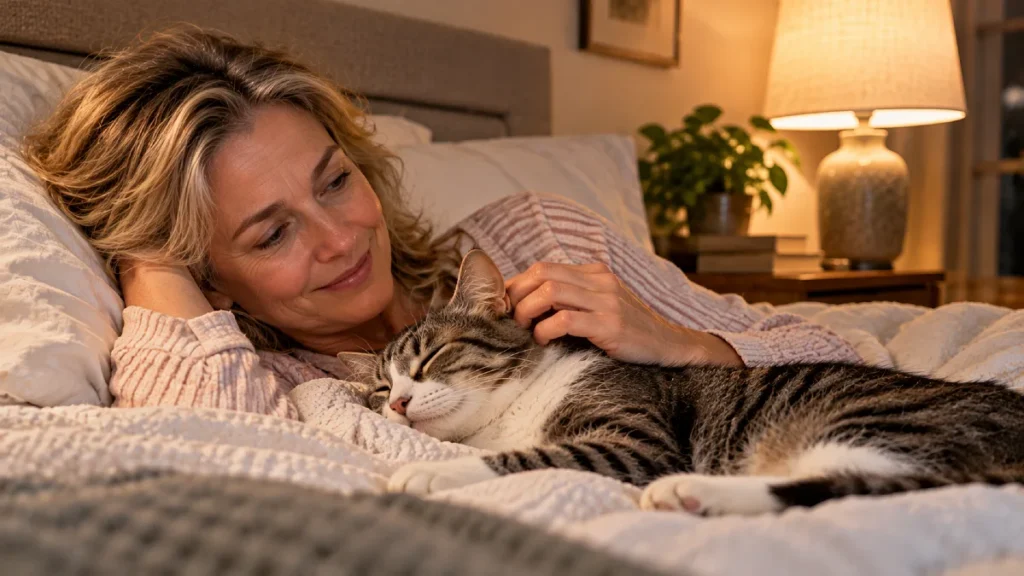
The next time your cat climbs into bed beside you, remember that several things may be behind that simple choice.
Your warmth may make the mattress inviting. Your familiar scent may help the space feel comfortable, and your daily routine may make bedtime something your cat has learned to expect.
A close social bond can also be part of the picture.
But the most useful thing you can do is pay attention to your own cat’s habits.
Notice where they prefer to sleep, how they behave when relaxed, and whether their normal routine suddenly changes.