

You unlock your door to chaos,another cushion destroyed, another shoe in pieces. At that time, other dogs nap peacefully, yours leaves a trail of destruction. It’s easy to feel frustrated, even betrayed. But the truth is your dog is not trying to punish you.
It’s not spite it is stress. Many dogs destroy things because they’re struggling with separation anxiety, boredom, or fear when left alone. They are not “bad dogs.” They’re scared, under-stimulated, or crying out for help in the only way they know.
I’ve lived this. I’ve cleaned up the mess, felt the guilt, and wondered what I was doing wrong. But once I learned to see the destruction not as a behavior problem, but as a language, everything changed.
The Truth About Dog Destruction
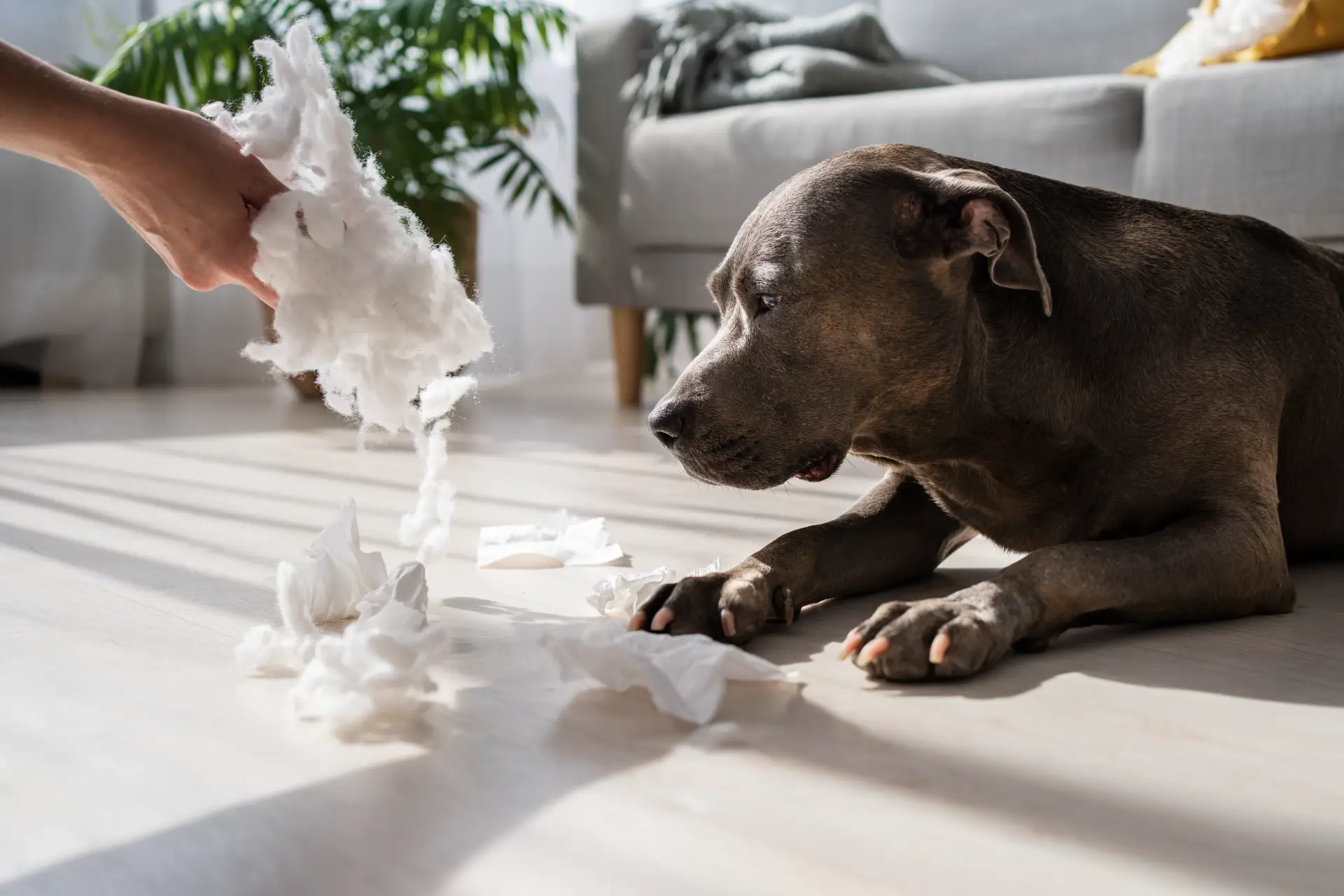
Your dog didn’t chew your favorite shoes to get back at you for leaving. Dogs don’t plot revenge when you’re at work. They don’t think, “I’ll show them who’s boss by destroying the couch.”
This might be hard to accept when you’re staring at a shredded pillow. But here’s the reality dog destructive behavior has nothing to do with spite, anger, or trying to punish you.
Dogs live in the moment. They don’t connect your leaving hours ago with your reaction when you return. When they destroy things, it’s a response to immediate stress, boredom, or anxiety.
Research shows that 8 out of 10 dogs struggle when left alone. That’s not a small problem – it’s affecting most of our furry friends. Even 44% of pet owners worry about their pets experiencing separation anxiety, according to a 2023 survey.
During the pandemic, separation anxiety in dogs spiked dramatically. When everyone stayed home for months, our dogs got used to constant companionship. Then we went back to work, and the numbers jumped. A whopping 22.1% of dogs showed separation anxiety signs during pandemic peaks.
When life returned to normal, those rates came down. Today, about 17.2% of dogs deal with separation anxiety. But that’s still nearly 1 in 5 dogs feeling stressed when alone.
So what are dogs actually thinking when they destroy your stuff?
I’m scared and need to feel better. Chewing releases stress hormones that help dogs calm down.
Something’s wrong and, I need to do something about it. Digging at the carpet feels productive when anxiety hits.
“This helps me cope.” Destruction becomes a coping mechanism, not an attack on you.
5 Real Reasons Your Dog Destroys Your Home

These five reasons explain almost every case of destruction. Once you identify which one fits your dog, you can fix the problem.
1. Anxiety and Stress Relief
This is the big one. Most dog destructive behavior comes from anxiety. Your dog feels overwhelmed, and chewing or digging helps them cope,like stress eating, but for dogs. When humans feel anxious, some bite their nails or bounce their legs. Dogs chew, dig, and scratch. It’s not conscious, it just feels good and releases tension.
Your dog paces before you leave. They pant even when it’s cool. You find destruction near doors or windows where they watch for your return. The mess happens within the first hour you’re gone, not after hours of being alone.
Stress-related destruction gets worse during big changes. Moving homes, new schedules, family changes, or even rearranging furniture can trigger anxiety spikes. Your dog isn’t being difficult, they’re genuinely scared and trying to feel better.
2. Boredom and Excess Energy

Some dogs are just understimulated. They need jobs for their minds and bodies. When they don’t get enough to do, they create their own entertainment.
Bored dogs don’t discriminate. They’ll chew anything interesting – remote controls, books, plants, furniture legs. The destruction is random, not focused on your personal items like anxious dogs do.
High-energy breeds need more than a walk around the block. Working breeds like Border Collies, German Shepherds, and Labs were bred to work all day. Stuck in a house with nothing to do, they’ll find ways to burn energy.
Age matters too. Puppies under two years old have crazy energy levels. Senior dogs might destroy less, but middle-aged dogs (2-7 years) often have the worst cases of boredom-based destruction.
3. Separation Anxiety

This affects 17.2% of dogs, and it’s different from general anxiety. Separation anxiety dogs have intense panic attacks when left alone. They’re not just sad you’re gone – they’re terrified.
These dogs form super strong bonds with their owners. They get upset when you pick up keys or put on shoes. The destruction starts immediately after you leave and focuses on escape routes.
You’ll find scratched doors, chewed window sills, and destroyed blinds. They’re trying to get to you, not just releasing stress. Some dogs hurt themselves trying to escape – bloody paws from clawing at doors or broken teeth from chewing metal crates.
Routine changes trigger separation anxiety episodes. Working from home for weeks, then suddenly going back to the office, can cause major setbacks. Holiday schedules, vacation returns, or family members leaving for college all disrupt their world.
The destruction is intense and focused. When anxious dogs might chew a shoe, separation anxiety dogs will destroy an entire room. They’re in full panic mode, not just stressed. These cases need special treatment. Regular training won’t work because the dog isn’t thinking clearly during panic attacks.
4. Fear and Phobias
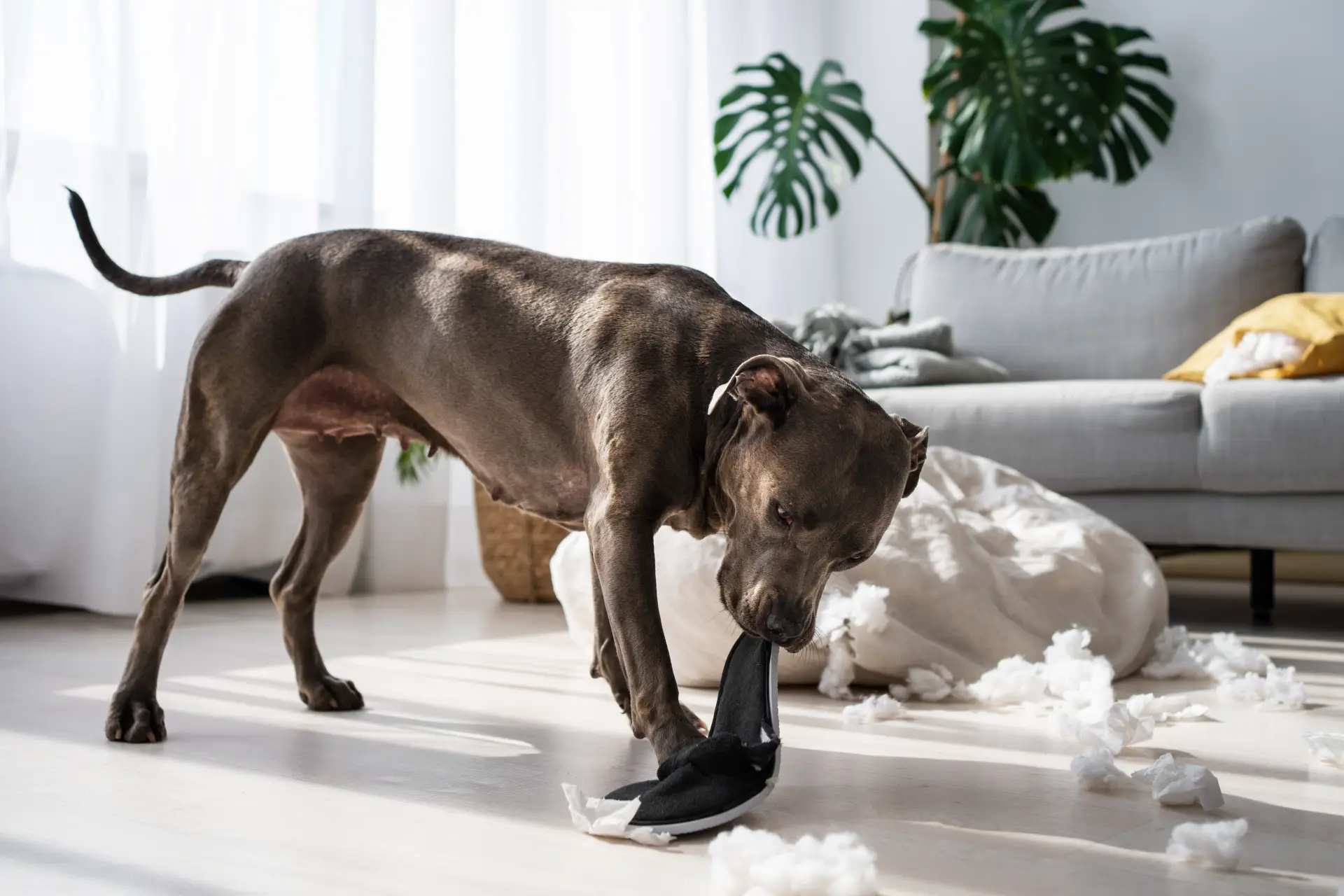
Some destruction happens because dogs are scared of specific things. Noise sensitivity affects 39.2% of dogs. Thunder, fireworks, construction sounds, or even the garbage truck can trigger destructive episodes.
Fearful dogs try to hide or escape. They dig at carpets trying to burrow. They scratch at doors trying to get away from the scary noise. They might destroy their safe space trying to make it feel more secure.
Environmental triggers include new smells, changes in the house, or unfamiliar objects.
The destruction happens during or right after the scary event. If you find mess only on stormy days or when construction is happening nearby, fear is probably the cause.
This is displacement behavior – dogs can’t fight or flee from thunder, so they redirect that energy into destruction.
5. Lack of Proper Training

This is different from anxiety or boredom. Dogs aren’t stressed – they just think everything is a toy.
Puppies explore the world with their mouths. Without training, they don’t learn the difference between their chew toys and your shoes.
Some dogs get accidentally rewarded for destruction. If chewing shoes gets attention (even negative attention), some dogs will keep doing it. Or if they only get new toys after destroying old ones, they learn destruction leads to good things.
Dogs that chewed leather as puppies often prefer leather items as adults. Dogs who like fabric textures will target clothes and furniture.
The fix is simple but requires consistency. Clear rules, proper toys, and training work fast when anxiety isn’t involved.
How to Find Out What’s Really Wrong (Quick 5-Minute Test)
A quick assessment can reveal the root cause and your best next steps. Ask yourself these questions.
Destruction Happens: With You vs. Without You?
This is the most critical question.
1. Only when left alone
This strongly suggests separation anxiety. The destruction is a panic response to your absence, often focused on exit points like doors or windows.
2. When you are present
This typically points to boredom or a lack of appropriate training. Your dog is seeking an outlet for energy or entertainment.

What Gets Destroyed?
The target object offers a major clue.
1. Specific items
If your dog seeks out your personal items (shoes, glasses, remote) or destroys door frames, it’s often linked to anxiety and your scent, which provides comfort.
2. Anything and everything
This is more common with boredom, teething in puppies, or a lack of chew training. The dog isn’t seeking comfort; they’re just chewing what’s available.
Look for These Warning Signs

1 Pacing, or drooling right before you leave.
2. Greeting you with frantic, over-the-top intensity when you return.
3. Following you obsessively from room to room.
Quick 5-Minute Action Plan
1. Track It
Left for 4 hrs.Chewed couch cushion. Drooled at the door first.Patterns will emerge.
2. Try Training First
If the triggers seem boredom-based, increase exercise, provide puzzle toys, and practice crate training.
3. Call the Vet Now
If your notes point to anxiety (destruction only when alone, targeting exit points) or any red flags are present, call your vet before a trainer. Rule out medical causes first, then create a behavioral treatment plan.The trigger is 90% of the solution. This quick test gets you started on the right path to a calmer dog and an intact home.

The 3-Step Method That Actually Works (Based on 2025 Research)
You’ve tried scolding, you’ve bought countless toys, but the shredded couch and gnawed moldings remain. The reason most solutions fail is that they treat the symptom (the chewing) and not the root cause. Based on the latest 2025 research in canine behavior, this three-step method addresses the underlying issue to create lasting change.
Step 1: Fix the Root Cause
Destructive behavior generally stems from three primary causes, each requiring a different approach.
1. Systematic Desensitization
This involves exposing your dog to your pre-departure cues (putting on shoes, picking up your bag) at such a low intensity that it doesn’t trigger anxiety. You might just put a shoe on and then sit on the couch, repeating until your dog remains calm.

2. Counter Conditions
This changes your dog’s emotional response from “Oh no, you’re leaving!” to “Yes! This is when I get my amazing, long-lasting treat. The key is a super-high-value reward that is only given right before you practice a short absence.
For Boredom & Under-stimulation
A dog that chews while you’re home is often simply bored and under-exercised. The solution is mental stimulation.
i. Play toys & Feeders
Make your dog work for their food. Snuffle mats, puzzle balls, and hide-and-seek games tire them out mentally.
ii. Nose Work
Hide treats around a room and let them “seek.” This taps into their natural incredibly exhausting.

Step 2: Management While You Train
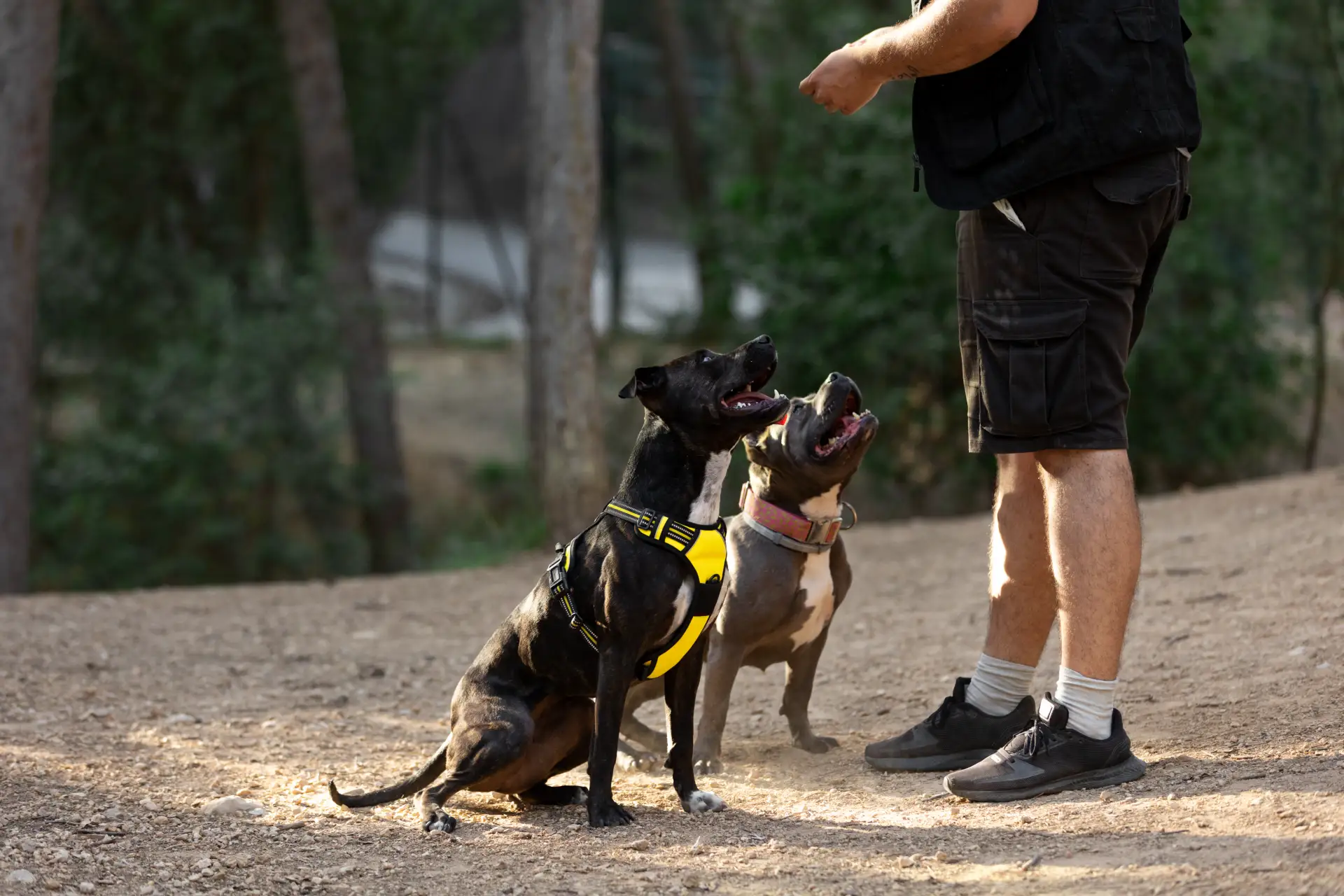
Management prevents rehearsal of the bad behavior when you work on Step 1.
1. Safe Confinement
Create a secure, dog-proofed area. This could be a crate (if your dog is crate-trained and comfortable in it). This space must be free from toxic or chewable hazards and feel like a safe den, not a punishment.
2. Environmental Enrichment
Leave your dog with legal, engaging chew items. Rotate a variety of textures,rubber Kongs, hard antlers, tough nylon bones,to keep them interesting.
3. Exercise Requirements
A tired dog is a good dog. Ensure your dog gets adequate physical exercise before being left alone. A brisk 20-30 minute walk is far more effective than just letting them into the backyard.
Step 3: Positive Reinforcement Training

For any of the root causes, positive reinforcement training is the most effective method (2025 research). This means rewarding the behaviors you want (calmness, chewing on appropriate items) and managing the environment to prevent the ones you don’t.
1. Specific Training Exercises
i. Teaching your dog to go to a mat or a place and settle down promotes calmness. Reward with treats for duration.
ii. Make the crate the best place on earth by feeding meals in it and hiding amazing treats inside.
iii. If you catch them chewing something wrong, calmly say “trade” and offer a high-value toy. When they drop the forbidden item for the toy, reward them heavily. This teaches them that giving up their shoes leads to something better.
2. Timeline for Seeing Results
Most owners see significant improvement within 2-4 weeks of consistent implementation of this three-step method. For severe separation anxiety, the process can take months, but progress is measurable. Remember, punishment never works; it only increases a dog’s anxiety and can worsen the destructive behavior.
7 Things You Can Try Right Now (Emergency Solutions)

Coming home to a destroyed house is incredibly frustrating. During a long-term fix that requires addressing the root cause, these emergency solutions can manage the behavior immediately and provide you with some relief.
1. The Super Kong
Immediately stuff a Kong toy with a mix of wet kibble, peanut butter (xylitol-free), or plain yogurt and freeze it. This creates a long-lasting, engaging challenge that keeps your dog busy and mentally satisfied for up to an hour after you leave.
2. Turbo-Charge Exercise
A tired dog is a chew-less dog. Before you plan to leave, go for a brisk 20-minute walk or engage in a vigorous game of fetch. Don’t just let them into the backyard; ensure they are actively moving.
3. Create a Safe Space
This management strategy instantly prevents them from practicing the bad behavior and keeps them safe from ingesting harmful items.
4. Engage Their Nose
A dog’s sense of smell is their primary way of interacting with the world. Snuffle mats force them to work for their food, providing excellent mental stimulation that tires them out quickly.
5. Practice Mini-Absences
If your dog struggles when you leave, practice getting ready and then just sitting back down. Step out the door for one second, then come right back in before they get anxious. This desensitizes them to your departures.
6. Provide Legal Chews
Ensure there’s always an array of approved chew toys available that are more appealing than your furniture. Rotate them to keep things interesting.
What NOT to Do
i. Never punish after the fact. Your dog cannot connect your anger to something they did hours ago. This only creates fear and confusion.
ii. Don’t crate a dog with separation anxiety if they aren’t trained to love it; this can lead to injury and intensified panic.
These steps implement on them today to create calm when you work on a permanent solution.

When to Get Professional Help (Don’t Wait Too Long)

Many destructive behaviors can be managed with consistent training, but some issues are too complex or severe to handle alone. Knowing when to call a professional can save you time, money, and further damage to your home and your bond with your dog.
1. Signs You Need a Professional
Seek help from a qualified dog behavior specialist if
i. The destruction is accompanied by signs of extreme anxiety or panic (non-stop barking, panting, attempting to escape).
ii. Your dog causes self-injury (broken teeth, bleeding paws) during episodes.
iii. Your initial management and training efforts have shown no progress after several weeks.
iv. You feel overwhelmed, frustrated, or unsafe.
2. Medical Red Flags First
Always consult your veterinarian to rule out medical causes firs. Especially if accompanied by changes in appetite or thirst, it can indicate pain, neurological issues, or other illnesses that require immediate medical attention.